


By Will Duru, BSc (Hons) Sport and Exercise Science, Award-winning Personal Trainer with over 10 years of experience in strength training and optimising recovery
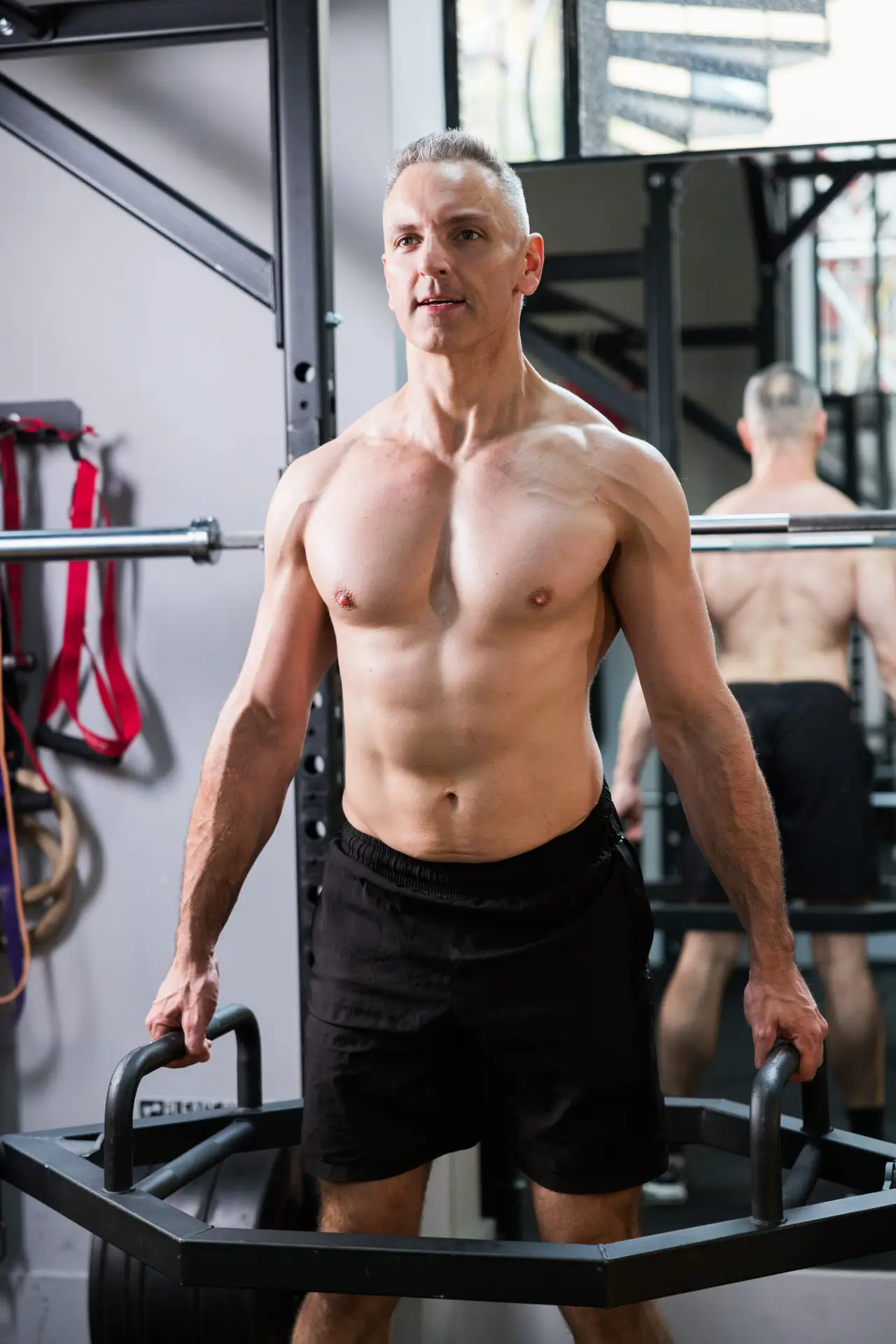
This push pull legs program is built for adults in their 40s who can train four days a week. Three days are strength sessions (push, pull and legs), and the fourth is core work plus interval cardio. It runs for 16 weeks in three phases, and each phase adds sets and load.
It suits people who have trained before and want structure back. Maybe you were active for years until work, family or lockdowns pushed training down the list. If you are used to training four or five times a week, you are ready for this plan.
Give it time. Building muscle and losing fat both take months of steady work, and this plan asks for four sessions a week for 16 weeks.

Why strength training matters in your 40s
Muscle mass and strength tend to decline as we age. According to NIH News in Health, strength training can slow or even prevent age-related muscle loss. Experts encourage training the major muscle groups on two or more days a week.
The CDC also recommends 150 minutes of moderate aerobic activity a week, or 75 minutes of vigorous activity, alongside two strength days. The three strength days cover the strength goal. The warm-ups, cool-downs and interval day count toward the aerobic target, and walking on rest days can help make up the rest.
For more on what changes with age, read strength training in your 40s and building muscle mass after 40.
Before you start: if you have a heart condition, high blood pressure or joint problems, or you take regular medication, check with your doctor before starting hard interval training.
How the 4-day push pull legs split works
- Day 1, Push: chest, shoulders and triceps.
- Day 2, Pull: back and biceps.
- Day 3, Legs: quads, hamstrings, glutes and calves.
- Day 4, Core and interval cardio: ab and trunk exercises, then a short interval session.
Grouping muscles that work together gives each strength day a clear focus. Each muscle group then gets several days to recover before you train it again.
Why mix strength training and cardio? In an eight-month trial in adults with overweight or obesity, aerobic training reduced fat mass and resistance training increased lean mass. Doing both improved body fat percentage the most. A 2022 meta-analysis on combining cardio and strength training found that adding cardio did not reduce muscle growth or maximal strength gains.
Interval cardio means alternating short, hard efforts with easier recovery periods. It fits a lot of hard work into a short session.
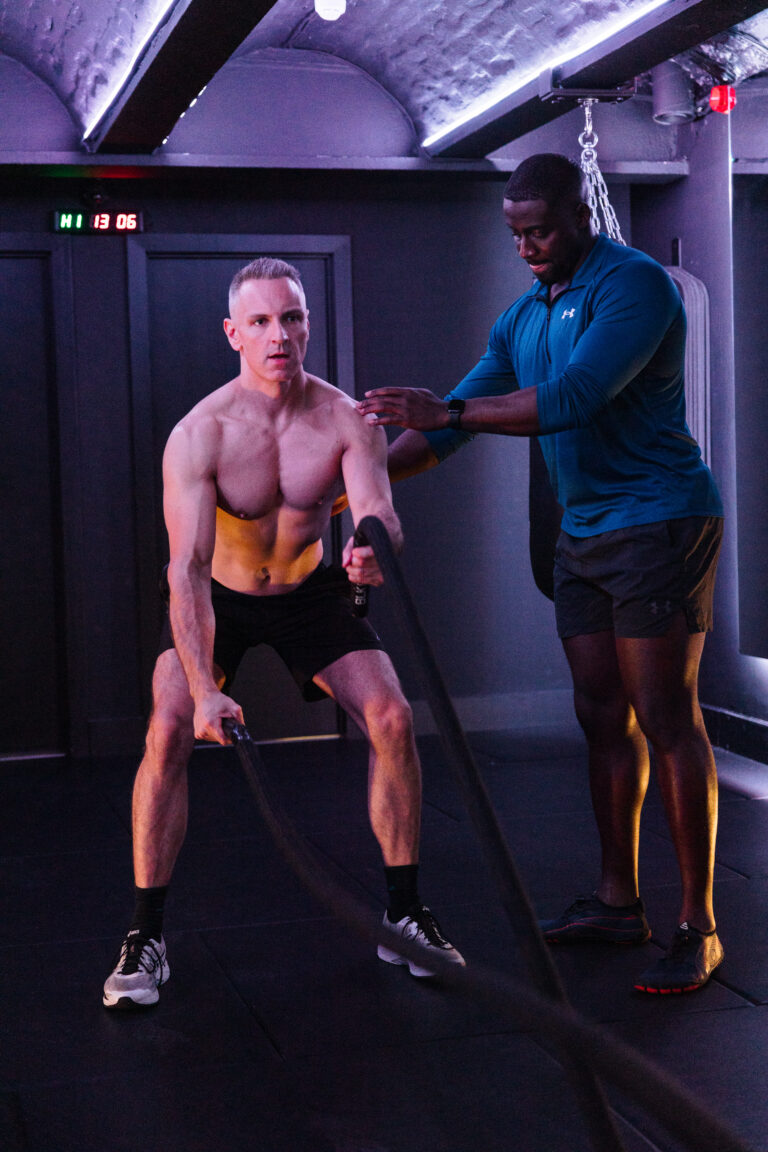
Video: How strength training helps with fat loss. If fat loss is one of your goals, this 12REPS video explains the part strength training plays.
Want a different version of this split? Compare the beginner 4-day push pull legs program, the 12-week fat loss program or the 16-week push pull legs plan with zone 3 cardio.
Nutrition: the other half of the plan
Training gives your body a reason to change. Food supports your recovery. Build meals around lean protein, vegetables, whole grains and healthy fats.
- Protein: the International Society of Sports Nutrition suggests 1.4 to 2.0 g of protein per kg of body weight a day for most people who exercise. For an 80 kg person, that is about 112 to 160 g a day, spread across your meals.
- Calories: to lose fat, you need a calorie deficit. That means eating slightly fewer calories than you burn.
- Tracking: logging your food in an app for a few weeks shows you where you are. It does not need to be perfect.
Our 12REPS nutrition guide and guide to losing weight in your 40s go into more detail.
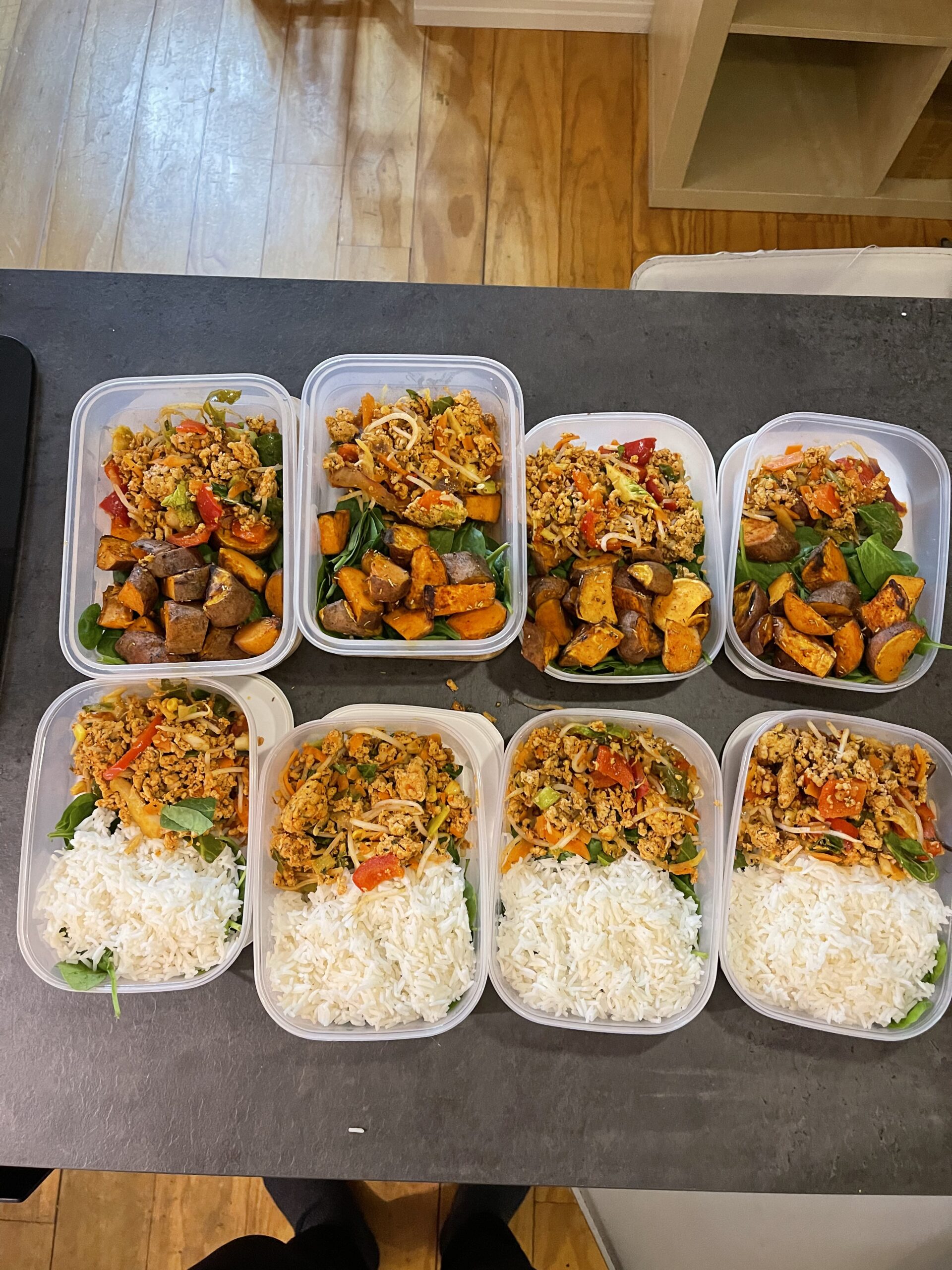
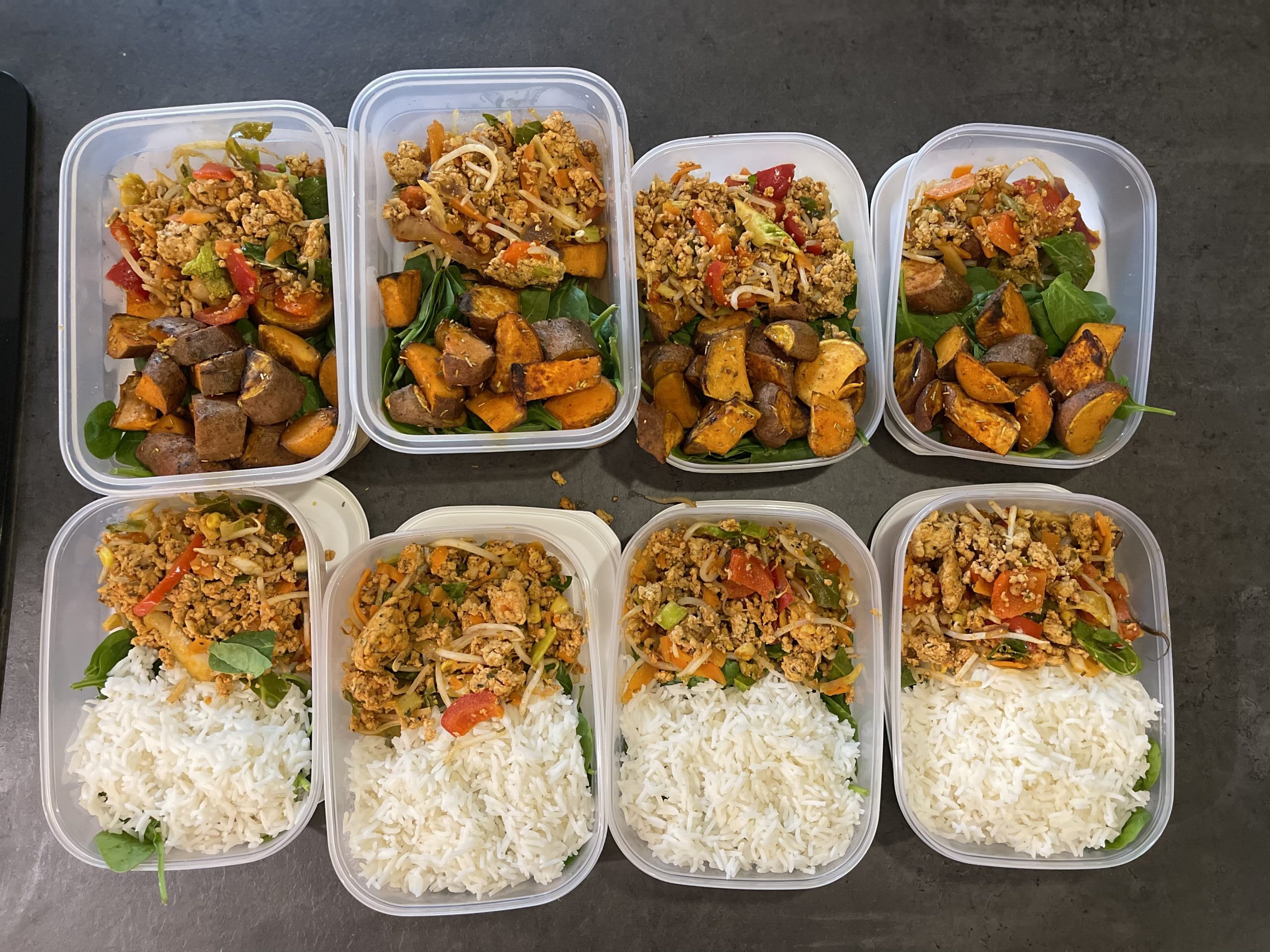
Batch cooking a few meals at once, like the meal prep above, makes it easier to hit your protein target on busy days.
The 16-week program at a glance
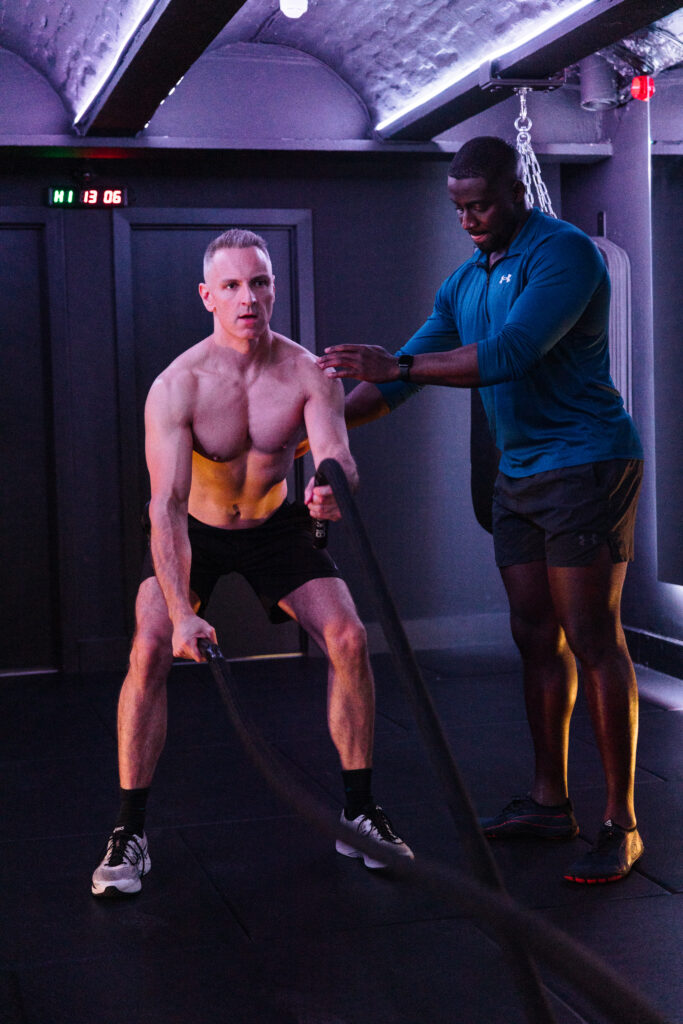
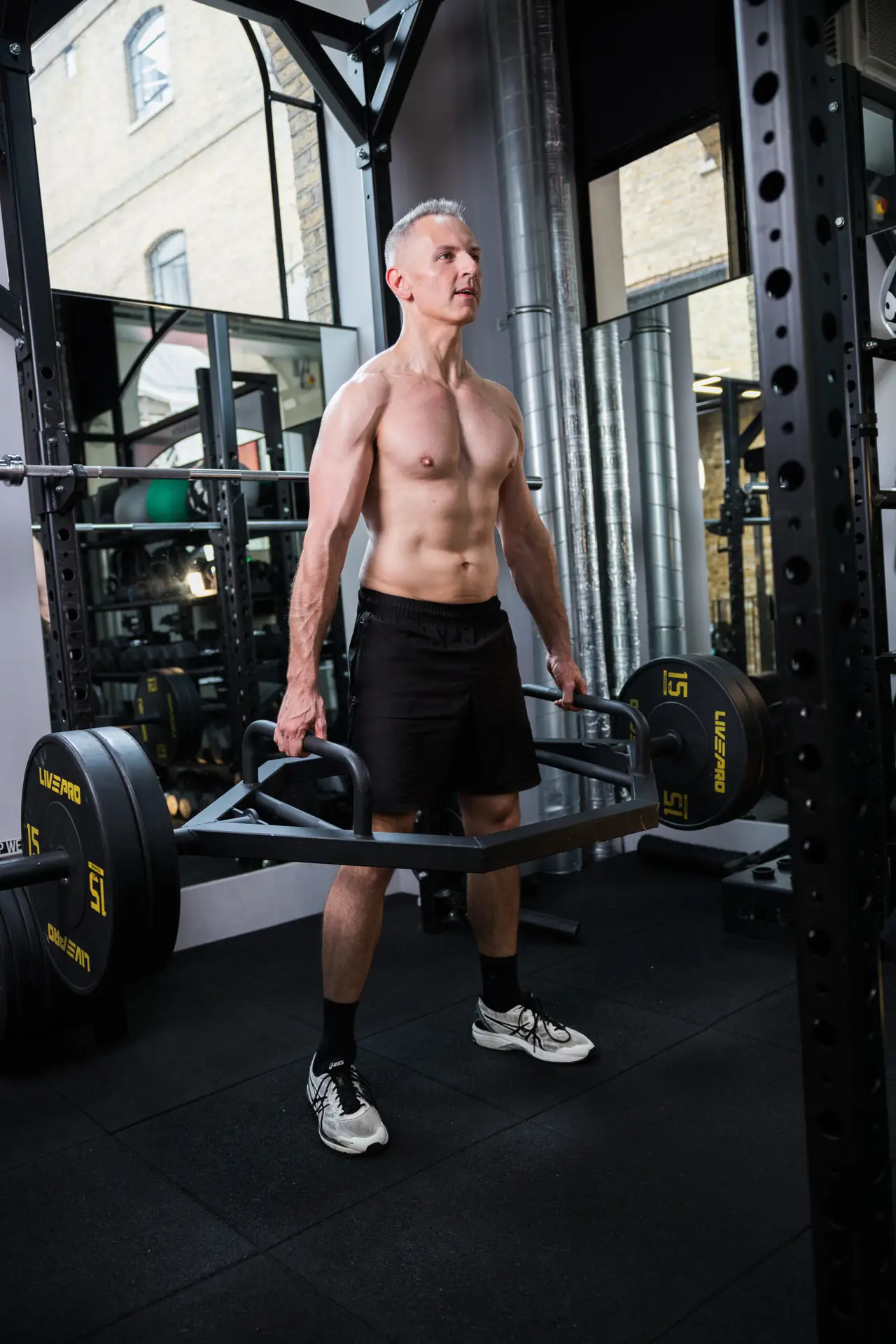
The program has three phases. Each one adds sets and load, so your body keeps adapting. You will use dumbbells, barbells, a trap bar, cables, machines, kettlebells and a TRX.
| Phase | Weeks | Working sets per exercise |
|---|---|---|
| 1: Foundation | 1 to 5 | 3 to 4 |
| 2: Building strength | 6 to 11 | 4 |
| 3: Maximum effort | 12 to 16 | 4 to 5 |
A sample week
| Day | Session |
|---|---|
| Monday | Push |
| Tuesday | Pull |
| Wednesday | Rest |
| Thursday | Legs |
| Friday | Core and interval cardio |
| Saturday and Sunday | Rest, or an easy walk |
Train four days and rest three. Move the days to fit your week, but try to keep a rest day after legs.
Warm-up, mobility and cool-down
Start every session with 10 minutes of light cardio, such as an incline walk on the treadmill or rowing. Then spend 5 to 10 minutes on these mobility moves:
| Mobility exercise | Reps or time | What it does |
|---|---|---|
| World’s greatest stretch | 5 per side | Moves your hips, hamstrings and upper back |
| Cat-cow | 10 | Takes your spine through bending and arching |
| Hamstring stretch | 30 seconds per leg | Loosens the backs of your thighs |
| Hip circles | 10 each direction | Warms up your hips for squats and lunges |
| Shoulder circles | 10 forward and 10 back | Prepares your shoulders for pressing and pulling |
Finish with a 10-minute cool-down at an easy pace on the stair climber or an incline walk. Our 3-phase warm-up guide has more ideas.
The core finisher
After each push, pull and legs session, do this core finisher. It stays the same in all three phases.
| Exercise | Sets | Reps or time | Rest |
|---|---|---|---|
| Plank | 4 | 45 seconds | 30 seconds |
| Flutter kicks | 4 | 45 seconds | 30 seconds |
| Decline sit-ups | 4 | 10 | 30 seconds |
How each session is set out
- 10-minute warm-up (incline walk or rowing)
- Mobility work (5 to 10 minutes)
- Main workout (5 exercises)
- Core finisher (strength days)
- 10-minute cool-down (stair climber or incline walk)
Warm-up sets: each table lists one warm-up set per exercise, at about 50% of the weight you will use for your working sets. Do it first, then your working sets.
Choosing weights: pick a load where the last two reps of each set are hard but your form stays clean. Our guide to RPE and RIR explains how to judge effort.
Phase 1: Foundation (weeks 1 to 5)
Learn the movements and build a base. Use controlled reps and leave a little in reserve.
Day 1: Push (chest, shoulders, triceps)
| Exercise | Warm-up set | Working sets | Reps | Rest | Notes |
|---|---|---|---|---|---|
| Dumbbell bench press | 10-12 reps at 50% | 3 | 8-10 | 90 seconds | Control every rep |
| Dumbbell shoulder press | 10-12 reps at 50% | 3 | 8-10 | 90 seconds | Keep your core tight |
| Incline dumbbell press | 10-12 reps at 50% | 4 | 10-12 | 60 seconds | Bench at 30 to 45 degrees |
| Cable chest fly | 10-12 reps at 50% | 3 | 12-15 | 60 seconds | Squeeze at the top |
| Triceps rope pushdown | 10-12 reps at 50% | 3 | 12-15 | 60 seconds | Keep elbows tucked |
Then: the core finisher (plank, flutter kicks, decline sit-ups).
Day 2: Pull (back, biceps)
| Exercise | Warm-up set | Working sets | Reps | Rest | Notes |
|---|---|---|---|---|---|
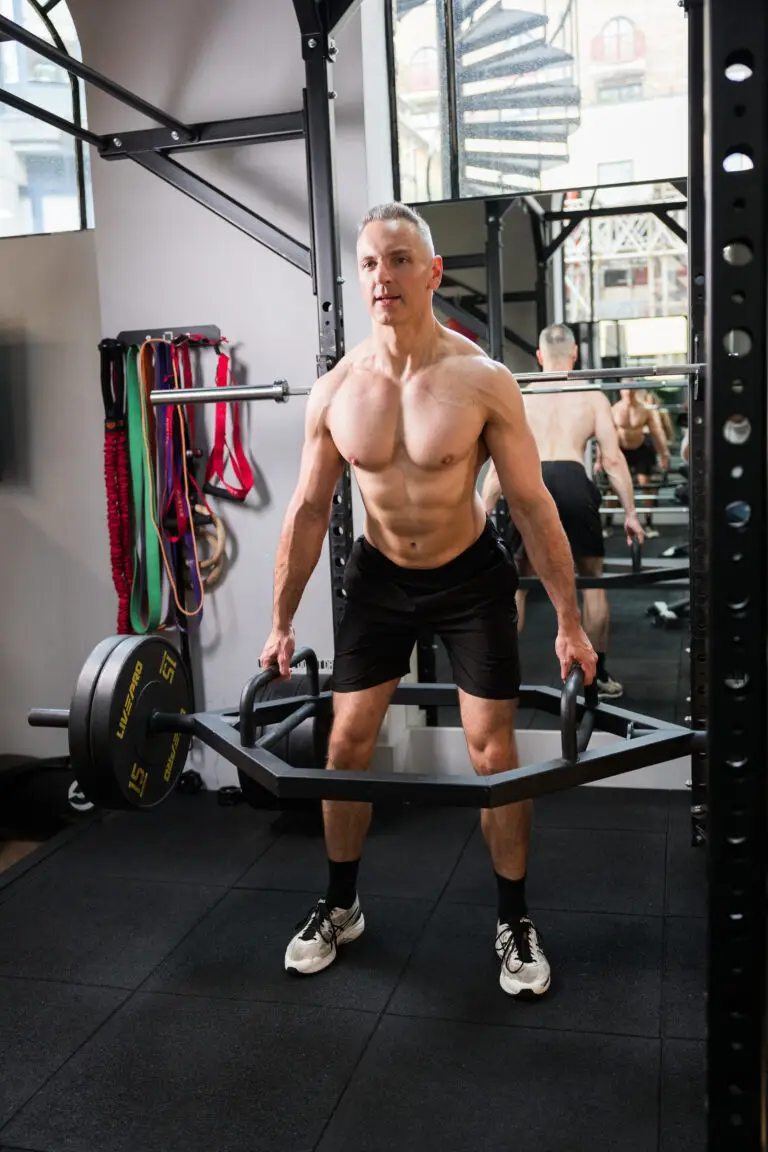
| Trap bar deadlift | 10 reps at 50% | 4 | 6-8 | 120 seconds | Keep your back neutral |
| Seated cable row | 10-12 reps at 50% | 3 | 10-12 | 90 seconds | Pull to your lower chest |
| Lat pulldown | 10-12 reps at 50% | 3 | 10-12 | 90 seconds | Wide grip |
| TRX row | 10 reps, body weight | 3 | 12-15 | 60 seconds | Body at about 45 degrees |
| Dumbbell biceps curl | 10-12 reps at 50% | 3 | 12-15 | 60 seconds | No swinging |
Then: the core finisher (plank, flutter kicks, decline sit-ups).
Day 3: Legs (quads, hamstrings, glutes, calves)
| Exercise | Warm-up set | Working sets | Reps | Rest | Notes |
|---|---|---|---|---|---|
| Goblet squat | 10-12 reps at 50% | 4 | 10-12 | 90 seconds | Hold the kettlebell at your chest |
| Dumbbell Romanian deadlift | 10 reps at 50% | 3 | 10-12 | 90 seconds | Feel the stretch in your hamstrings |
| Leg press | 10-12 reps at 50% | 3 | 12-15 | 90 seconds | Feet shoulder-width apart |
| Glute bridge (barbell or dumbbell) | 10 reps at 50% | 4 | 12-15 | 60 seconds | Squeeze your glutes at the top |
| Standing calf raise | 15 reps at 50% | 3 | 15-20 | 60 seconds | Full range of motion |
Then: the core finisher (plank, flutter kicks, decline sit-ups).
Day 4: Core and interval cardio
| Exercise | Sets | Reps or time | Rest |
|---|---|---|---|
| Plank | 4 | 60 seconds | 30 seconds |
| Russian twists | 4 | 20 (10 per side) | 30 seconds |
| Bicycle crunches | 4 | 20 (10 per side) | 30 seconds |
| Dead bug | 4 | 12 per side | 30 seconds |
| Mountain climbers | 4 | 30 seconds | 30 seconds |
Interval cardio (choose one):
- Treadmill: 5-minute warm-up walk. Then 8 rounds of 1 minute fast running (7 to 8 mph) and 1 minute walking (3 to 4 mph). Finish with a 5-minute walk.
- Air or watt bike: 5 minutes of easy pedaling. Then 8 rounds of 30 seconds at maximum effort and 90 seconds easy. Finish with 5 minutes easy.
- Stair climber: 5-minute warm-up at level 5 to 6. Then 8 rounds of 1 minute hard (level 10 to 12) and 1 minute easy (level 5 to 6). Finish with 5 minutes easy.
The speeds and levels are a guide. Choose a hard pace that you can repeat for every round.
Phase 2: Building strength (weeks 6 to 11)
Phase 2 moves to 4 working sets per exercise and adds barbell lifts. Use heavier weights than in Phase 1 and push each set closer to failure, the point where you cannot do another clean rep.
Day 1: Push (chest, shoulders, triceps)
| Exercise | Warm-up set | Working sets | Reps | Rest | Notes |
|---|---|---|---|---|---|
| Barbell bench press | 10 reps at 50% | 4 | 6-8 | 120 seconds | Control the lowering |
| Seated dumbbell shoulder press | 10 reps at 50% | 4 | 8-10 | 90 seconds | Press straight up |
| Incline barbell press | 10 reps at 50% | 4 | 8-10 | 90 seconds | Bench at about 30 degrees |
| Dumbbell lateral raise | 12 reps at 50% | 4 | 12-15 | 60 seconds | Slight bend in your elbows |
| Cable overhead triceps extension | 12 reps at 50% | 4 | 10-12 | 60 seconds | Full stretch at the bottom |
Then: the core finisher (plank, flutter kicks, decline sit-ups).
Day 2: Pull (back, biceps)
| Exercise | Warm-up set | Working sets | Reps | Rest | Notes |
|---|---|---|---|---|---|
| Trap bar deadlift | 8 reps at 50% | 4 | 5-6 | 120 seconds | Heavier than Phase 1 |
| Barbell bent-over row | 10 reps at 50% | 4 | 8-10 | 90 seconds | Pull to your lower chest |
| Pull-ups or assisted pull-ups | 5-8 reps, body weight | 4 | 6-10 | 90 seconds | Full range of motion |
| Cable face pull | 12 reps at 50% | 4 | 15-20 | 60 seconds | Pull to face level |
| Dumbbell hammer curl | 10 reps at 50% | 4 | 10-12 | 60 seconds | Palms facing each other |
Then: the core finisher (plank, flutter kicks, decline sit-ups).
Day 3: Legs (quads, hamstrings, glutes, calves)
| Exercise | Warm-up set | Working sets | Reps | Rest | Notes |
|---|---|---|---|---|---|
| Barbell back squat | 10 reps at 50% | 4 | 8-10 | 120 seconds | Aim for thighs parallel to the floor |
| Barbell Romanian deadlift | 10 reps at 50% | 4 | 8-10 | 90 seconds | Keep the bar close to your legs |
| Leg press | 10 reps at 50% | 4 | 10-12 | 90 seconds | Push through your heels |
| Dumbbell Bulgarian split squat | 8 reps at 50% | 4 | 10-12 per leg | 60 seconds | Back foot raised on a bench |
| Seated calf raise | 15 reps at 50% | 4 | 15-20 | 60 seconds | Pause at the top |
Then: the core finisher (plank, flutter kicks, decline sit-ups).
Day 4: Core and interval cardio
| Exercise | Sets | Reps or time | Rest |
|---|---|---|---|
| Plank | 4 | 60 seconds | 30 seconds |
| Hanging leg raise | 4 | 10-12 | 30 seconds |
| Cable woodchop | 4 | 12 per side | 30 seconds |
| Ab wheel rollout | 4 | 8-10 | 30 seconds |
| Mountain climbers | 4 | 40 seconds | 30 seconds |
Interval cardio (choose one):
- Treadmill: 5-minute warm-up walk. Then 10 rounds of 1 minute fast running (8 to 9 mph) and 1 minute walking (3 to 4 mph). Finish with a 5-minute walk.
- Air or watt bike: 5 minutes easy. Then 10 rounds of 30 seconds at maximum effort and 90 seconds easy. Finish with 5 minutes easy.
- Stair climber: 5-minute warm-up at level 6 to 7. Then 10 rounds of 1 minute hard (level 11 to 13) and 1 minute easy (level 6 to 7). Finish with 5 minutes easy.
Phase 3: Maximum effort (weeks 12 to 16)
Phase 3 uses your heaviest loads, with 4 to 5 working sets per exercise. Keep every rep clean. If you feel run down, take an extra rest day. Our guide on signs you need more rest can help you decide.
Day 1: Push (chest, shoulders, triceps)
| Exercise | Warm-up set | Working sets | Reps | Rest | Notes |
|---|---|---|---|---|---|
| Barbell bench press | 8 reps at 50% | 5 | 5-6 | 120 seconds | Heavy, with strict form |
| Dumbbell shoulder press | 8 reps at 50% | 5 | 6-8 | 90 seconds | Press with intent, lower with control |
| Incline dumbbell press | 8 reps at 50% | 4 | 8-10 | 90 seconds | Controlled tempo |
| Cable fly (high to low) | 10 reps at 50% | 4 | 12-15 | 60 seconds | Keep tension on the cables |
| Dips (weighted if you can) | 5-8 reps, body weight | 4 | 8-12 | 60 seconds | Lean forward to work your chest |
Then: the core finisher (plank, flutter kicks, decline sit-ups).
Day 2: Pull (back, biceps)
| Exercise | Warm-up set | Working sets | Reps | Rest | Notes |
|---|---|---|---|---|---|
| Trap bar deadlift | 6 reps at 50% | 5 | 4-5 | 150 seconds | Heaviest sets of the plan; stop if form slips |
| Barbell bent-over row | 8 reps at 50% | 5 | 6-8 | 90 seconds | Pull with intent |
| Weighted pull-ups | 5 reps, body weight | 4 | 5-8 | 90 seconds | Add weight if you can |
| Single-arm dumbbell row | 8 reps at 50% | 4 | 8-10 per arm | 60 seconds | Full stretch and squeeze |
| Barbell curl | 10 reps at 50% | 4 | 8-10 | 60 seconds | Strict form |
Then: the core finisher (plank, flutter kicks, decline sit-ups).
Day 3: Legs (quads, hamstrings, glutes, calves)
| Exercise | Warm-up set | Working sets | Reps | Rest | Notes |
|---|---|---|---|---|---|
| Barbell back squat | 8 reps at 50% | 5 | 5-6 | 150 seconds | Go heavy |
| Barbell Romanian deadlift | 8 reps at 50% | 5 | 6-8 | 90 seconds | Focus on your hamstrings |
| Leg press | 10 reps at 50% | 4 | 8-10 | 90 seconds | Heavy load |
| Dumbbell walking lunges | 8 reps at 50% | 4 | 12 steps per leg | 60 seconds | Controlled steps |
| Standing calf raise | 15 reps at 50% | 5 | 12-15 | 60 seconds | Heavy, full range |
Then: the core finisher (plank, flutter kicks, decline sit-ups).
Day 4: Core and interval cardio
| Exercise | Sets | Reps or time | Rest |
|---|---|---|---|
| Weighted plank | 5 | 60 seconds | 30 seconds |
| Hanging leg raise | 5 | 12-15 | 30 seconds |
| Cable crunch | 5 | 15-20 | 30 seconds |
| TRX pike | 4 | 10-12 | 30 seconds |
| Burpees | 4 | 15 | 30 seconds |
Interval cardio (choose one):
- Treadmill: 5-minute warm-up walk. Then 12 rounds of 45 seconds fast running (9 to 10 mph) and 75 seconds walking (3 to 4 mph). Finish with a 5-minute walk.
- Air or watt bike: 5 minutes easy. Then 12 rounds of 30 seconds at maximum effort and 90 seconds easy. Finish with 5 minutes easy.
- Stair climber: 5-minute warm-up at level 7 to 8. Then 12 rounds of 45 seconds hard (level 13 to 15) and 75 seconds easy (level 7 to 8). Finish with 5 minutes easy.
Tracking your progress with 12REPS
Over 16 weeks, a log matters more than memory. Here is how to use 12REPS with this program:
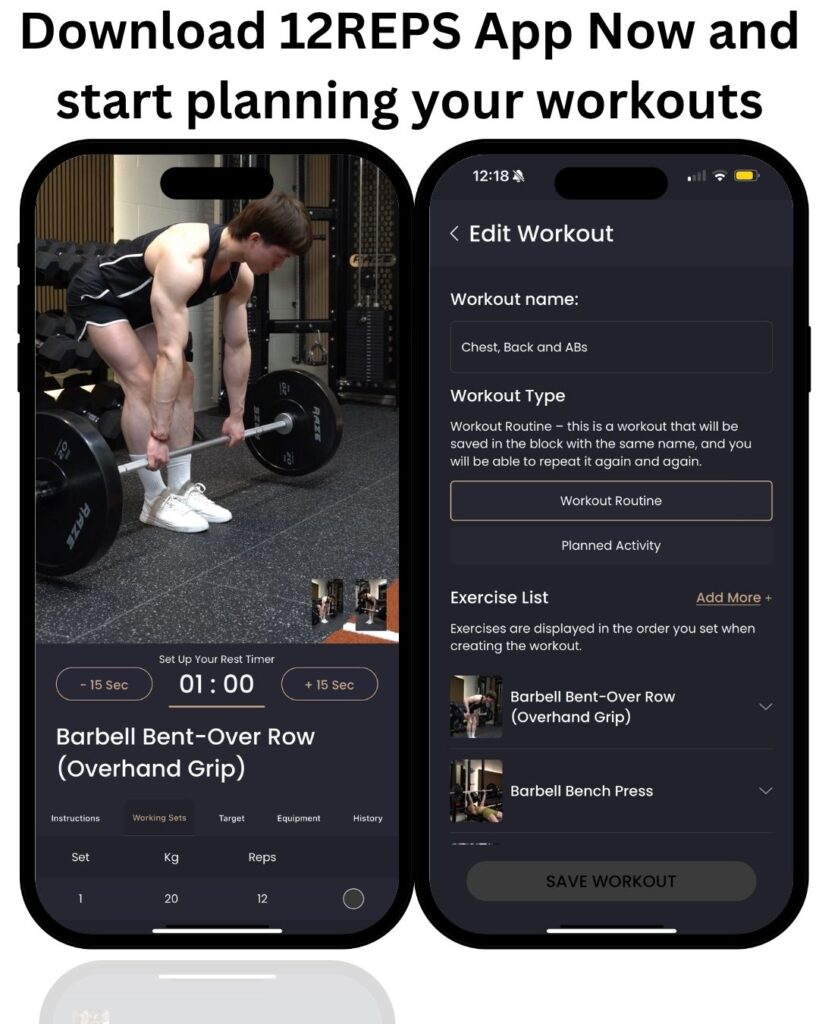
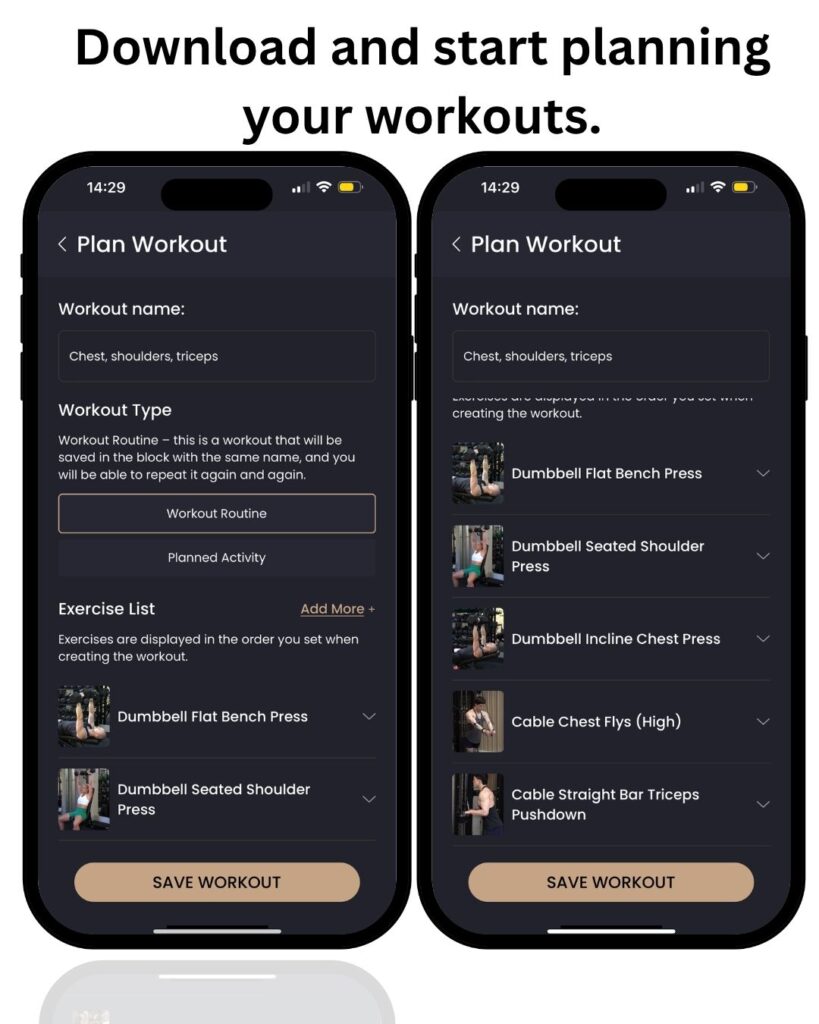
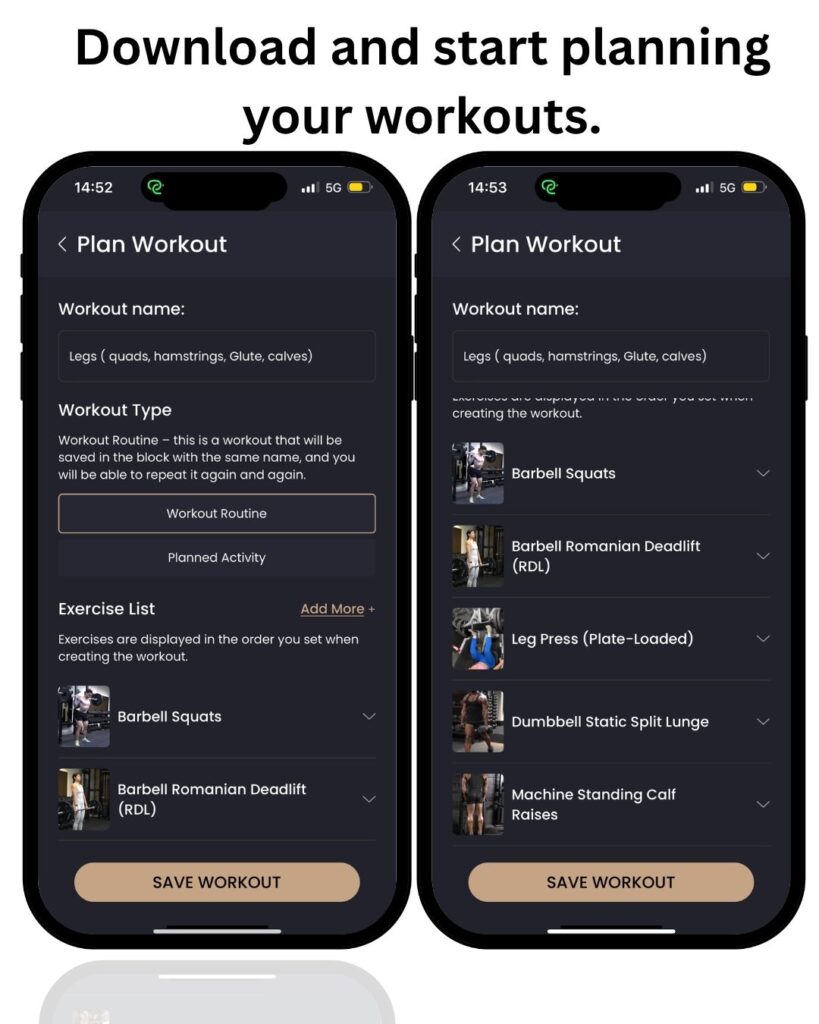
- Build each day: use Build your own to choose the muscles, equipment and time, then save each session so it is ready next week.
- Log every set: enter your reps and weight. The app remembers what you lifted, so you have a number to beat next time.
- Watch the demos: each exercise has a trainer demonstration, which helps when Phase 2 and 3 add new lifts.
- Track your body weight: log it regularly and look at the trend, not single days. Private progress photos let you compare stages.
Final thoughts
This plan asks for four sessions a week for 16 weeks, plus steady attention to food and sleep. Progress comes in small steps: a few more reps here, a little more weight there. Train four days, rest three, and log every session so you can see how far you have come.
If you would like your sessions set out for you, 12REPS builds training around your goal, your equipment and your time, with a trainer demonstration for every exercise. See how the 12REPS app works.
Push pull legs over 40: FAQs
Is push pull legs good for people over 40?
Yes, if the volume suits your recovery. Each strength day trains different muscles, so each group gets several days of rest before you train it again. If you are returning after a long break, start at the lower end of the set ranges.
Can a beginner do this program?
It is built for people with some training experience. If you are new to lifting, start with the beginner push pull legs program, then move on to this plan.
How much weight will I lose?
That depends mostly on your calorie deficit, your starting point and how consistent you are, so no plan can promise a number. Our 12-week fat loss program explains realistic rates of fat loss.
Sources
- Maintain Your Muscle. NIH News in Health, National Institutes of Health, 2020. https://newsinhealth.nih.gov/2020/03/maintain-your-muscle
- Adult Activity: An Overview. Centers for Disease Control and Prevention (CDC), 2023. https://www.cdc.gov/physical-activity-basics/guidelines/adults.html
- Effects of aerobic and/or resistance training on body mass and fat mass in overweight or obese adults. Willis LH, Slentz CA, Bateman LA and colleagues. Journal of Applied Physiology, 2012. https://pubmed.ncbi.nlm.nih.gov/23019316/
- Compatibility of Concurrent Aerobic and Strength Training for Skeletal Muscle Size and Function: An Updated Systematic Review and Meta-Analysis. Schumann M, Feuerbacher JF, Sunkeler M and colleagues. Sports Medicine, 2022. https://pubmed.ncbi.nlm.nih.gov/34757594/
- International Society of Sports Nutrition Position Stand: protein and exercise. Jager R, Kerksick CM, Campbell BI and colleagues. Journal of the International Society of Sports Nutrition, 2017. https://doi.org/10.1186/s12970-017-0177-8