


The best push pull exercises load your chest, shoulders, back and arms through a full range of motion. They also let you add weight or reps over time. For most people that means a horizontal press, an overhead press, a row and a vertical pull, plus a few isolation moves for the shoulders and arms. This guide explains how to choose them and how to put them in order.
As a personal trainer, I’ve seen countless people in the gym make the same mistake. They follow complicated routines, spend hours working out and still don’t see the muscle they want. Building muscle doesn’t have to be that complicated. A short list of well-chosen push and pull exercises, done well and progressed, goes a long way.

How to choose a push or pull exercise: 4 checks
- You feel the target muscle working. Compound moves such as presses and rows train several muscles at once. Isolation moves, such as lateral raises or curls, target one muscle that the big lifts may not fully tire.
- You can use a full range of motion. A systematic review found that training through a full range of motion helped lower-body muscle growth, while upper-body evidence was limited and mixed. As a rule, use the largest range you can control without pain.
- You can progress it. Progressive overload means making the work slightly harder over time. Pick exercises where you can add weight or reps. A 2022 study found adding load or adding reps both built muscle and strength.
- The benefit outweighs the risk for you. Every exercise carries some risk, more so with poor form or too much weight. Choose versions that suit your joints and let you stay in control.
Best push exercises for muscle building
Push exercises move weight away from your body. They mainly train your chest, shoulders and triceps.
Horizontal presses
- Flat barbell bench press: lets you lift heavy and trains your chest, front shoulders and triceps. Lower the bar to your chest and press to full extension.
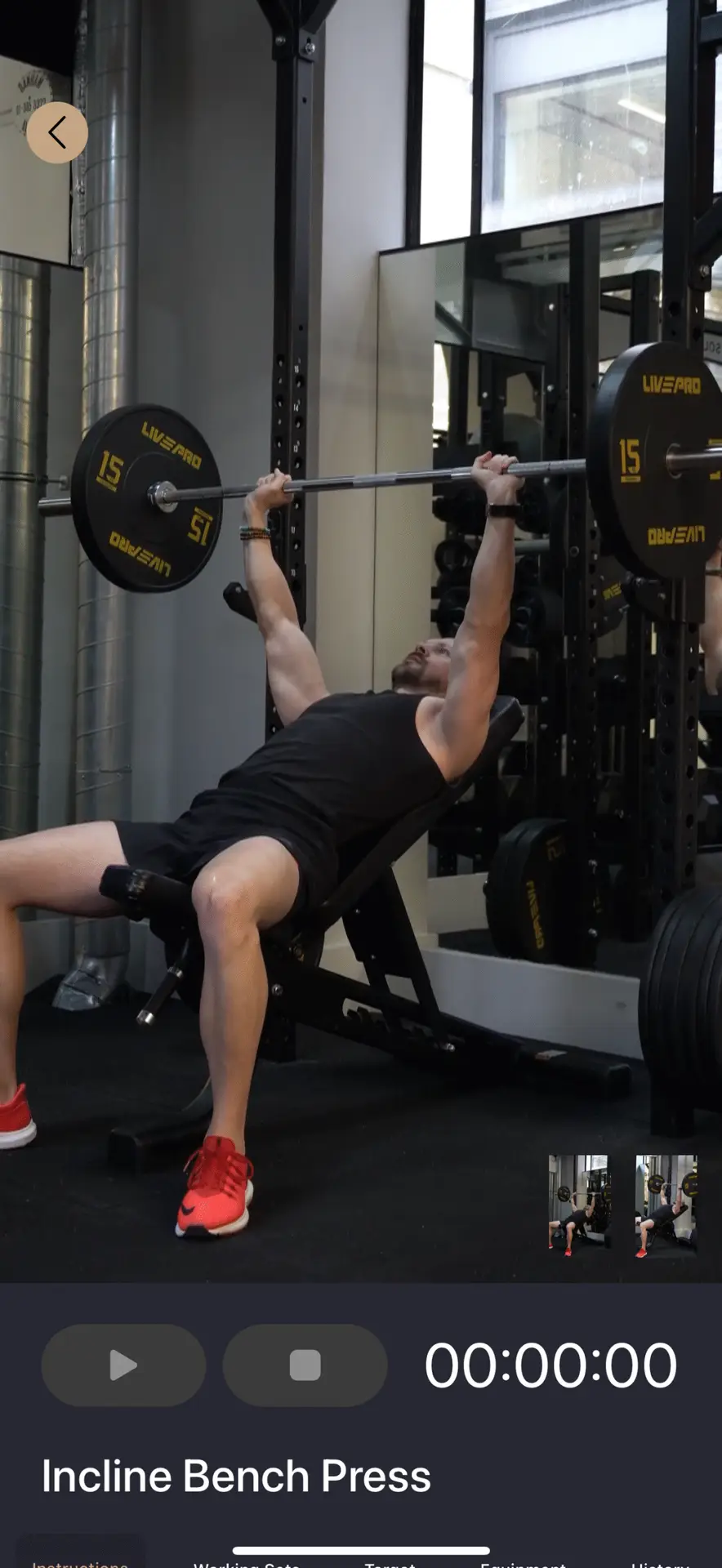
- Incline dumbbell press: a favorite for the upper chest. In one EMG study, upper chest activity peaked at about a 30-degree incline, while the front shoulders worked harder at steeper angles. EMG measures muscle activity, not growth, so treat this as a guide.
- Dumbbell presses in general: each arm works on its own, which can show you if one side is weaker.
Overhead presses
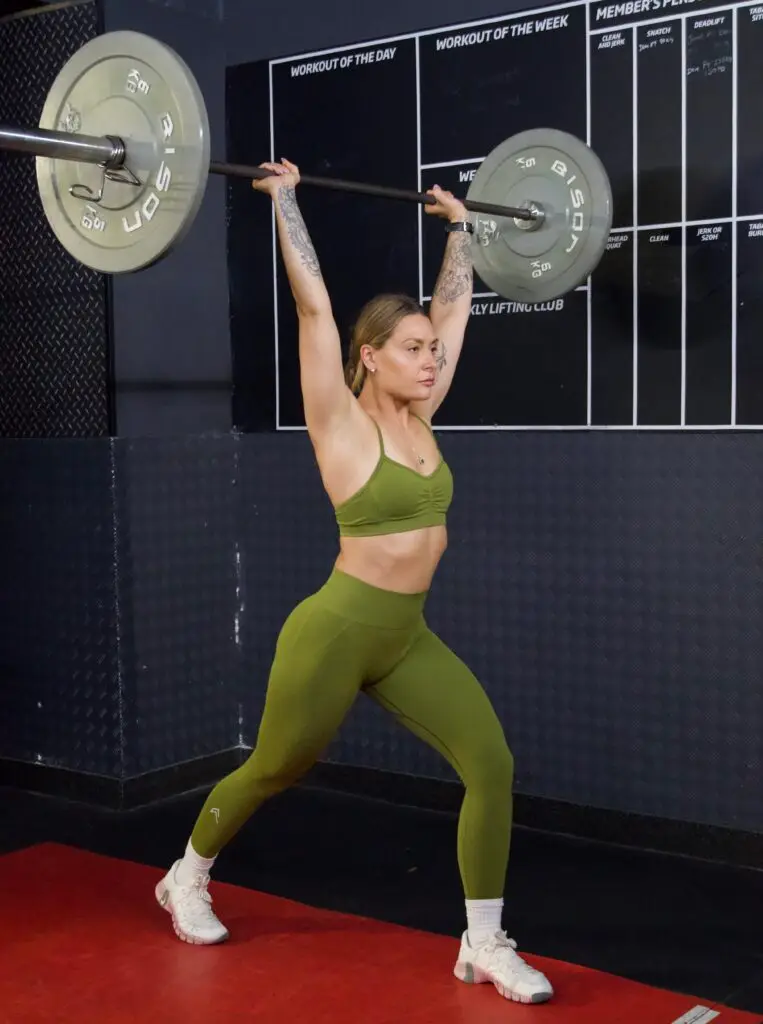
- Standing barbell overhead press: builds shoulder and triceps strength while your core keeps you stable. Squeeze your glutes and keep your ribs down.
- Seated dumbbell shoulder press: the back support makes it more stable, so you can focus on your shoulders.
Video: How to do a barbell shoulder press. Watch this before you add overhead pressing to see the grip, bar path and body position.
Dips
- Chest dips: lean your torso forward to bring more of your chest into the move.
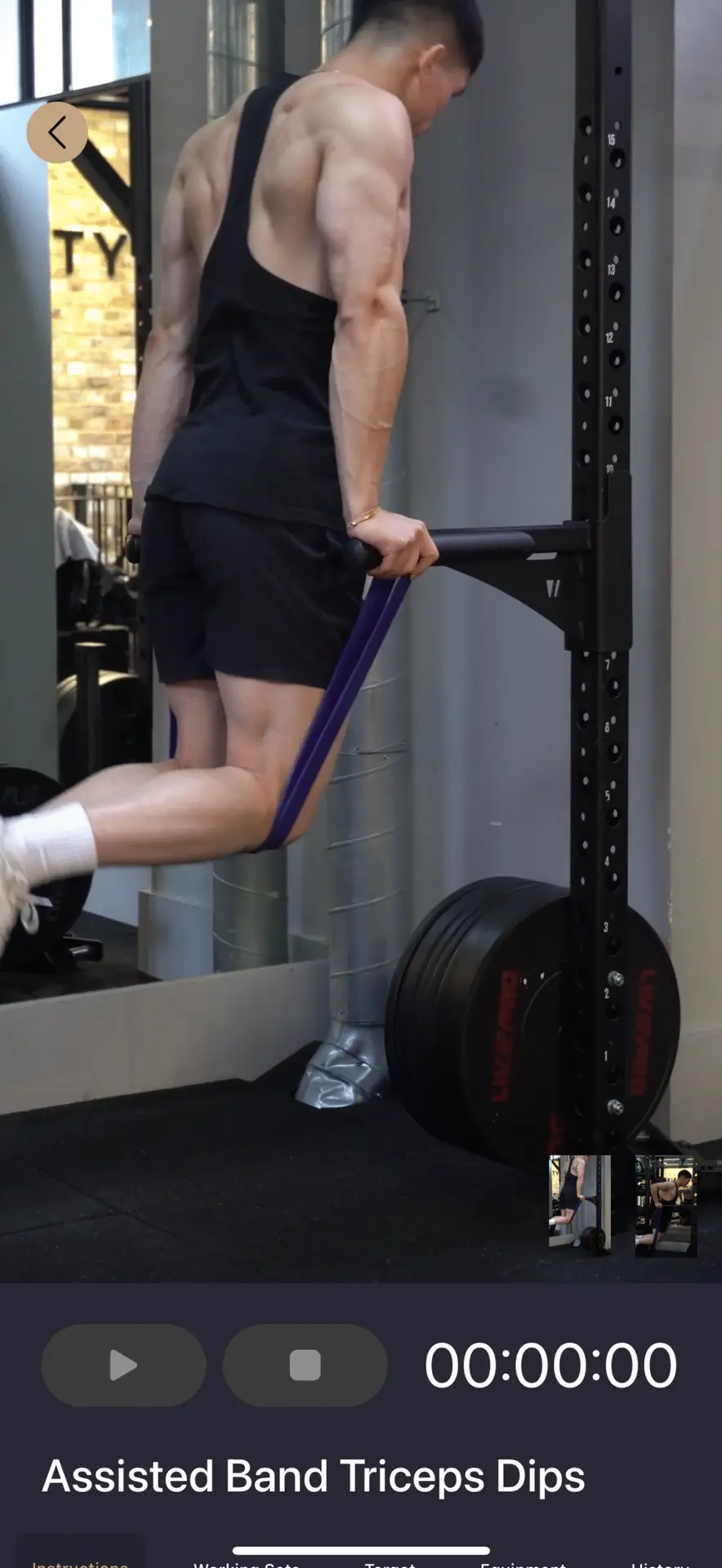
- Triceps dips: stay more upright to shift the work to your triceps.
- Weighted dips: once you can do 10 to 12 good bodyweight dips, add weight with a dip belt.
If dips feel uncomfortable on your shoulders, use presses instead.
Push isolation exercises
- Cable chest flys: keep tension on your chest through the whole movement.
- Lateral raises: target the side of your shoulders, which adds width.
- Triceps pushdowns: simple and easy to progress. Try a rope or a straight bar.
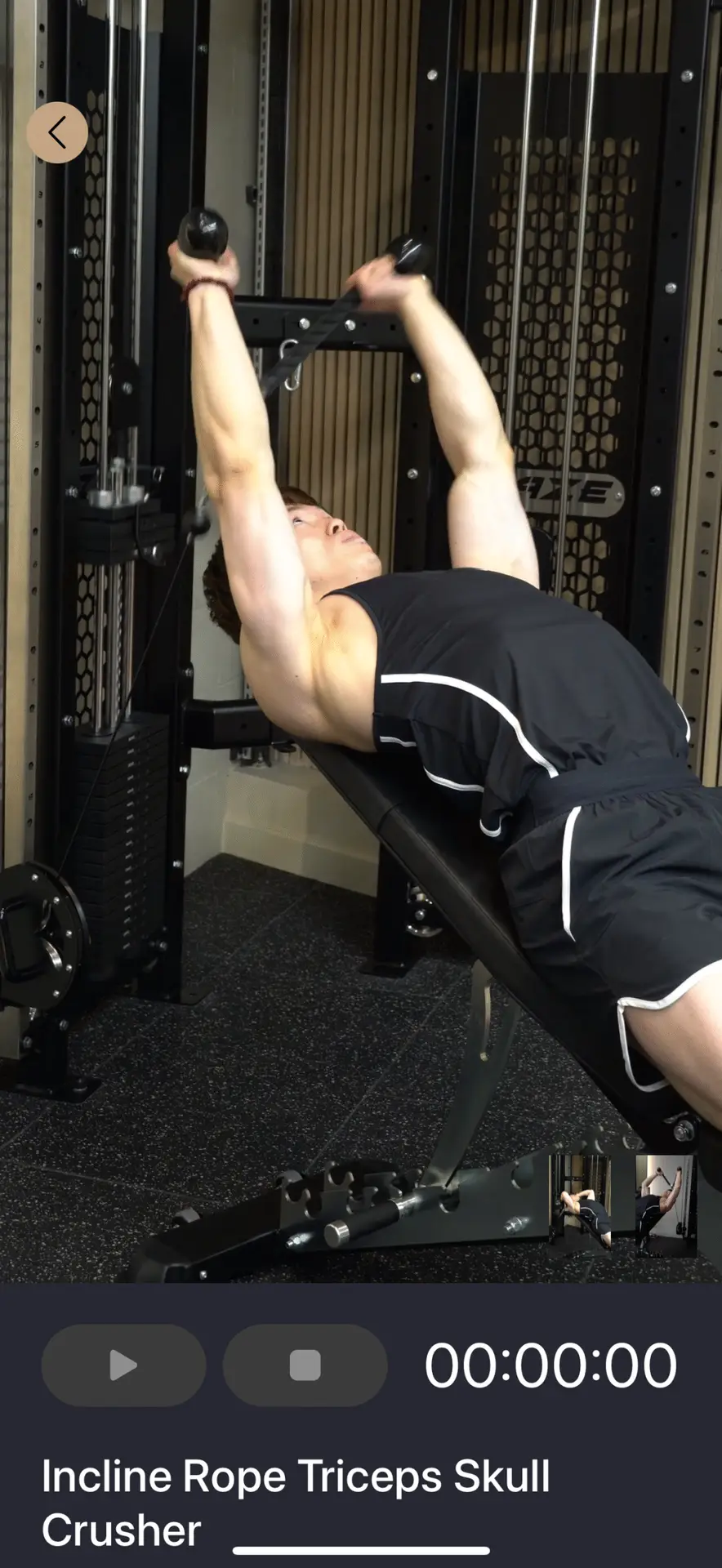
- Overhead triceps extensions: train your triceps with your arms overhead, which stretches the long head of the muscle.
Best pull exercises for muscle building
Pull exercises move weight toward your body. They build your back, rear shoulders and biceps.
Rows
- Barbell bent-over row: a classic for back thickness. It trains your lats, rhomboids and traps. Keep your back flat and your spine neutral.
- Dumbbell single-arm row: one side at a time, with the bench supporting you.
- Seated cable row: the cable keeps tension on your mid-back throughout.
Video: How to do a barbell bent-over row. Watch this before you load the bar to see the hip hinge and where the bar should travel.
Vertical pulls
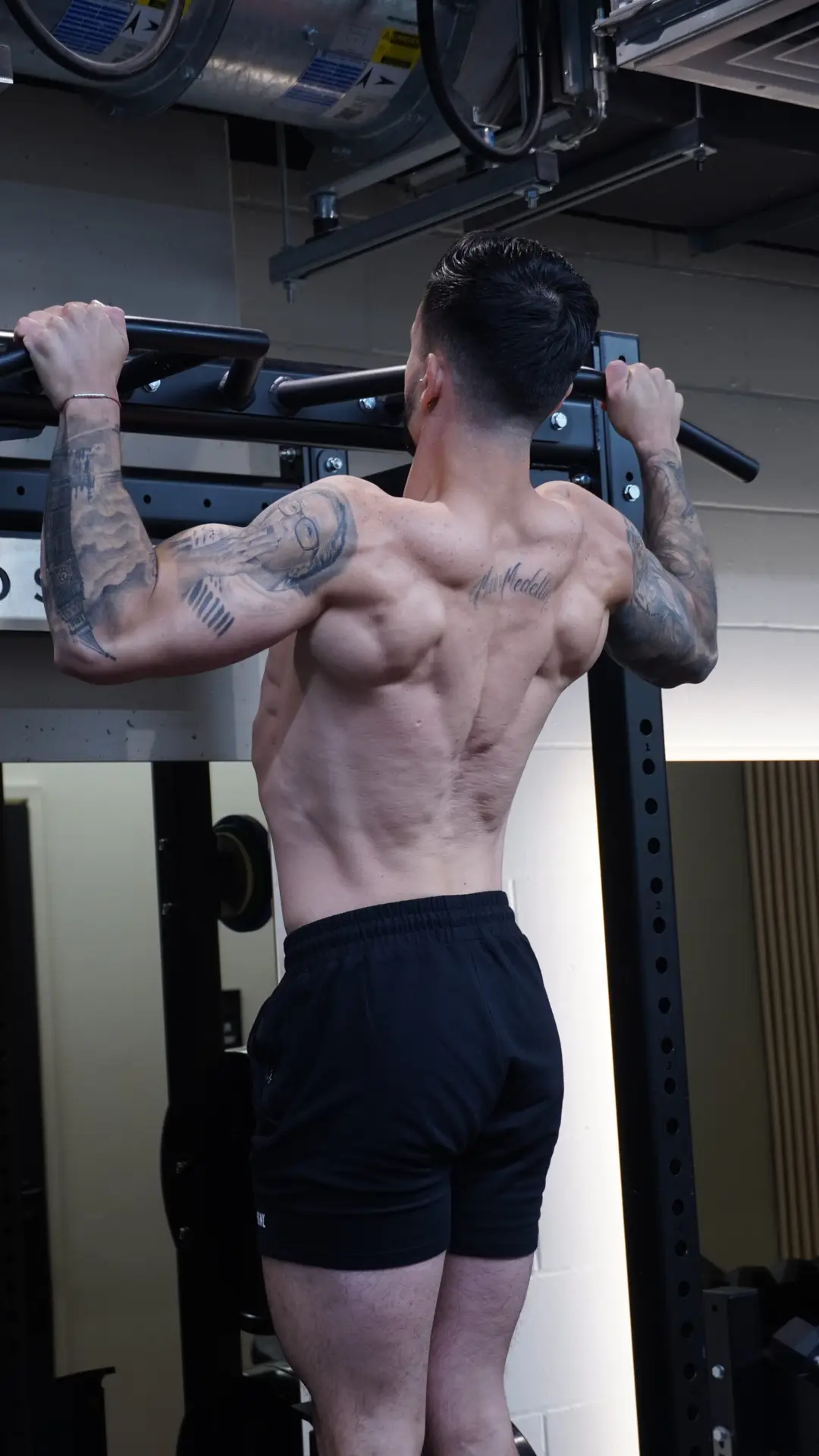
- Pull-ups (overhand grip): one of the hardest and most useful back exercises. Use bands or an assisted machine to build up. Our guide to your first pull-up shows the steps.
- Chin-ups (underhand grip): bring your biceps in more. Many people find them a little easier than pull-ups.
- Lat pulldown: a good alternative while you build up to pull-ups. You choose the weight. Try a few grip widths and use the one that lets you feel your back working.
Pull isolation exercises
- Barbell or EZ-bar curls: the classic biceps builder.
- Hammer curls: a neutral grip that also trains the brachialis, a muscle under the biceps, and the forearm.
- Face pulls: train your rear shoulders and upper back, which balance out all the pressing. See how to do face pulls.
Quick picks by muscle group
If you only choose two exercises per muscle group, start here.
| Muscle group | Compound pick | Isolation or extra pick |
|---|---|---|
| Chest | Incline dumbbell press or flat barbell bench press | Cable chest flys |
| Shoulders | Standing barbell overhead press | Lateral raises (side), face pulls (rear) |
| Triceps | Dips or close-grip bench press | Overhead triceps extensions or pushdowns |
| Back (width) | Pull-ups or lat pulldowns | Straight-arm pulldowns |
| Back (thickness) | Barbell bent-over row | Dumbbell single-arm row or seated cable row |
| Biceps | Chin-ups | Barbell curls, hammer curls |
For the lower body and core, see our guide to the best exercises for each muscle group.
How to program the best push pull exercises
Exercise order
Do the exercise that matters most to you first, while you are fresh. A review of exercise order found that you complete more reps on whichever exercise comes first. For most people, that means compound lifts first and isolation moves last.
For example, on a push day: bench press, then incline dumbbell press, then triceps pushdowns and cable flys. On a pull day: pull-ups or rows first, then other back exercises, then curls and face pulls.
How many sets per week
Volume means the total hard sets you do for a muscle group each week. ACSM’s 2026 guidance suggests around 10 sets per muscle group per week for muscle growth. Growth tends to rise with more weekly sets, so some lifters do more.
For each exercise, 3 to 4 sets of 6 to 12 reps works well. Compound lifts can sit at the lower end, around 6 to 8 reps, and isolation moves at 10 to 15. Research shows muscle grows across a wide range of loads, as long as sets are hard. Heavier loads build more maximal strength.
How often to train each muscle
Training a muscle twice a week led to more growth than once a week in one meta-analysis. When weekly sets are equal, frequency made little difference. A push, pull, rest, push, pull, rest, rest week hits each muscle twice. For ready-made plans, see the push pull workout, the beginner push pull legs program or the 12-week push pull legs plan.
When to change exercises
Stick with your main lifts long enough to get better at them. Many lifters change some exercises, rep ranges or angles every 8 to 12 weeks to keep training interesting. Keep the lifts that are still progressing.
Advanced push pull exercise variations
Once you have the basics, these variations add a new challenge. They are not for beginners.
Single-arm variations
- Single-arm dumbbell row: work one side of your back at a time.
- Single-arm cable press: press with one arm while your trunk resists twisting.
Tempo and pauses
- Slow lowering: take 3 to 5 seconds to lower the bar on bench press. It keeps the muscle working longer and makes lighter weights feel harder.
- Pause reps: pause for 1 to 3 seconds with the bar on your chest. This removes the bounce, so your muscles do more work to start the lift.
Pre-exhaustion and post-exhaustion
- Pre-exhaustion: an isolation move right before a compound lift for the same muscle, such as flys before bench press. Research suggests this may not increase chest muscle recruitment during the bench press, and it can reduce the weight you lift.
- Post-exhaustion: an isolation move right after a compound lift, such as pushdowns after overhead press.
Changing the leverage
- Close-grip bench press: a narrower grip shifts more of the work to your triceps.
- Deficit deadlifts: standing on a low platform increases the range of motion, which makes the lift harder.
Choose fewer exercises and do them well
Building muscle is a long game. Choose a short list of push and pull exercises, train them through a full range of motion and add a little weight or a few reps over time. Swap an exercise only when it hurts or stops progressing.
Want a plan built around your goal, your equipment and your time? 12REPS sets out each session and shows a trainer demonstration for every exercise, so you can check your technique as you go.
Push pull exercise FAQs
How many push and pull exercises should I do per session?
Four to six is plenty for most people: two or three compound lifts and two or three isolation moves.
Do I need both free weights and machines?
No. ACSM’s 2026 guidance found that choosing machines over free weights did not consistently change results for most healthy adults. Use what you have and can progress.
Should I train push and pull on the same day?
You can. Pairing a push with a pull saves time. A 2025 meta-analysis found that supersets cut session time, and pairing opposing muscles, such as a push with a pull, kept training volume about the same.
Sources
- Effects of range of motion on muscle development during resistance training interventions: A systematic review. Schoenfeld BJ, Grgic J. SAGE Open Medicine, 2020. https://journals.sagepub.com/doi/full/10.1177/2050312120901559
- Progressive overload without progressing load? The effects of load or repetition progression on muscular adaptations. Plotkin D et al. PeerJ, 2022. https://peerj.com/articles/14142
- Effect of Five Bench Inclinations on the Electromyographic Activity of the Pectoralis Major, Anterior Deltoid, and Triceps Brachii during the Bench Press Exercise. Rodriguez-Ridao D, Antequera-Vique JA, Martin-Fuentes I, Muyor JM. International Journal of Environmental Research and Public Health, 2020. https://www.mdpi.com/1660-4601/17/19/7339
- Exercise order in resistance training. Simao R, de Salles BF, Figueiredo T, Dias I, Willardson JM. Sports Medicine, 2012. https://pubmed.ncbi.nlm.nih.gov/22292516/
- 5 Things to Know About Creating an Effective Resistance Training Plan (2026 resistance training position stand infographic). American College of Sports Medicine, 2026. https://acsm.org/wp-content/uploads/2026/03/Resistance-Training-Position-Stand-infographic.pdf
- Dose-response relationship between weekly resistance training volume and increases in muscle mass: A systematic review and meta-analysis. Schoenfeld BJ, Ogborn D, Krieger JW. Journal of Sports Sciences, 2017. https://pubmed.ncbi.nlm.nih.gov/27433992/
- Strength and hypertrophy adaptations between low- vs. high-load resistance training: a systematic review and meta-analysis. Schoenfeld BJ, Grgic J, Ogborn D, Krieger JW. Journal of Strength and Conditioning Research, 2017. https://pubmed.ncbi.nlm.nih.gov/28834797/
- Effects of Resistance Training Frequency on Measures of Muscle Hypertrophy: A Systematic Review and Meta-Analysis. Schoenfeld BJ, Ogborn D, Krieger JW. Sports Medicine, 2016. https://pubmed.ncbi.nlm.nih.gov/27102172/
- How many times per week should a muscle be trained to maximize muscle hypertrophy? A systematic review and meta-analysis of studies examining the effects of resistance training frequency. Schoenfeld BJ, Grgic J, Krieger J. Journal of Sports Sciences, 2019. https://pubmed.ncbi.nlm.nih.gov/30558493/
- Superset Versus Traditional Resistance Training Prescriptions: A Systematic Review and Meta-analysis Exploring Acute and Chronic Effects on Mechanical, Metabolic, and Perceptual Variables. Zhang X, Weakley J, Li H, Li Z, Garcia-Ramos A. Sports Medicine, 2025. https://doi.org/10.1007/s40279-025-02176-8