By Will Duru, BSc (Hons) Sport and Exercise Science, Award-winning Personal Trainer with over 10 years of experience in strength training and optimising recovery
This 16-week push pull legs plan has four training days: push, pull, legs and functional work, then core with a zone 3 cardio session. It runs in four 4-week phases that get heavier as you go. It suits people who know the main gym lifts and want to build muscle and fitness at the same time.
As a personal trainer for over a decade, I’ve seen plenty of fitness trends come and go. A push/pull/legs split with a core day and steady cardio is a structure I keep coming back to. It is simple to follow, and it covers strength and fitness in one week.
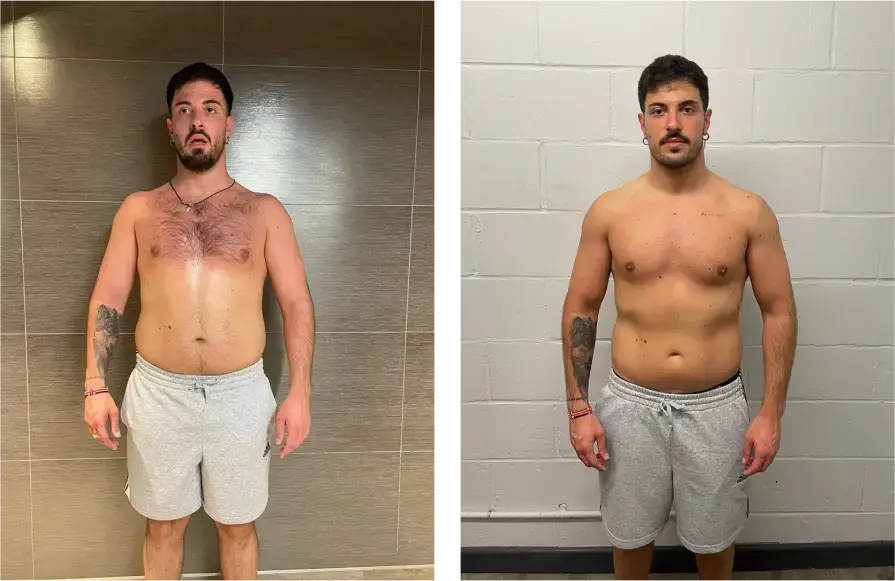
How this push pull legs and core plan works
- Day 1, Push: chest, shoulders and triceps.
- Day 2, Pull: back and biceps.
- Day 3, Legs and functional: deadlifts, squats and hip thrusts, plus box jumps and sled pushes for power and conditioning.
- Day 4, Core and zone 3 cardio: a steady cardio session and a longer core workout.
Each strength day ends with the same short core finisher. Every session starts with a warm-up and ends with a 10-minute cool-down. Spread the four sessions across the week, with rest days in between where you can.
Who this plan suits
It is a good fit if you have used a gym before but struggled to stay consistent. Many people train three days a week. Four days is a real step up, so ease in during Phase 1 and build the habit first.
- New to lifting? Start with the beginner 4-day push pull legs program.
- Prefer a shorter plan without the cardio day? Try the 12-week push/pull/legs and core program.
- In your 40s and prefer interval cardio? See push pull legs over 40.
The 16-week plan at a glance
| Phase | Weeks | Focus | Load |
|---|---|---|---|
| 1: Foundation | 1 to 4 | Learn the lifts and build the habit | Moderate |
| 2: Strength | 5 to 8 | Barbell lifts and heavier sets | Heavy |
| 3: Hypertrophy | 9 to 12 | More sets for muscle growth | Heavy, with 5 sets on main lifts |
| 4: Peak | 13 to 16 | Your heaviest sets of the plan | Very heavy |
Hypertrophy means muscle growth. The weight column in each table is a guide to effort. “Moderate” should feel challenging by the last reps. “Heavy” and “very heavy” leave fewer reps in reserve. Your form should stay clean on every rep.
Warm-up and mobility
Start each session with 10 minutes of incline walking or rowing, then do these mobility moves:
| Exercise | Sets | Reps or time | Rest |
|---|---|---|---|
| Cat-cow | 2 | 10 reps | As needed |
| World’s greatest stretch | 2 | 5 per side | As needed |
| Hamstring stretch | 2 | 30 seconds per side | As needed |
The core finisher
Do this after every push, pull and legs session, in all four phases:
| Exercise | Sets | Reps or time | Rest |
|---|---|---|---|
| Plank | 4 | 45 seconds | 30 seconds |
| Flutter kicks | 4 | 45 seconds | 30 seconds |
| Decline sit-ups | 4 | 10 | 30 seconds |
Cool-down
Finish with 10 minutes on the stair climber or an incline walk at an easy pace.

Phase 1: Foundation (weeks 1 to 4)
Day 1: Push (chest, shoulders, triceps)
| Exercise | Sets | Reps | Weight | Rest |
|---|---|---|---|---|
| Dumbbell bench press | 4 | 12 | Moderate | 90 seconds |
| Incline dumbbell press | 4 | 12 | Moderate | 90 seconds |
| Dumbbell shoulder press | 4 | 12 | Moderate | 90 seconds |
| Lateral raises | 4 | 12 | Light | 60 seconds |
| Triceps rope pushdown | 4 | 12 | Moderate | 60 seconds |
Then: the core finisher and a 10-minute cool-down.
Day 2: Pull (back, biceps)
| Exercise | Sets | Reps | Weight | Rest |
|---|---|---|---|---|
| Lat pulldown | 4 | 12 | Moderate | 90 seconds |
| Seated cable row | 4 | 12 | Moderate | 90 seconds |
| Single-arm dumbbell row | 4 | 12 | Moderate | 60 seconds |
| Face pulls | 4 | 15 | Light | 60 seconds |
| Barbell biceps curl | 4 | 12 | Moderate | 60 seconds |
Then: the core finisher and a 10-minute cool-down.
Day 3: Legs and functional
| Exercise | Sets | Reps | Weight | Rest |
|---|---|---|---|---|
| Trap bar deadlift | 4 | 10 | Moderate | 120 seconds |
| Goblet squat | 4 | 12 | Moderate | 90 seconds |
| Hip thrust machine | 4 | 12 | Moderate | 90 seconds |
| Box jumps | 4 | 10 | Body weight | 90 seconds |
| Sled push | 4 | 20 m | Moderate | 90 seconds |
Then: the core finisher and a 10-minute cool-down.
Video: Sled push. The sled push closes legs day in every phase. Watch the demo to see body angle and foot drive before you load the sled.
Video: Box jump. Box jumps also appear on every legs day. The demo shows a soft landing; step down rather than jumping back off.
Day 4: Core and zone 3 cardio
Zone 3 cardio (30 to 45 minutes): choose a treadmill run, watt bike, stair climber or elliptical. Hold a steady pace at 70 to 80% of your maximum heart rate.
| Exercise | Sets | Reps or time | Rest |
|---|---|---|---|
| Russian twists | 4 | 20 | 45 seconds |
| Bicycle crunches | 4 | 20 | 45 seconds |
| Leg raises | 4 | 12 | 45 seconds |
| Mountain climbers | 4 | 30 seconds | 45 seconds |
| Side plank (each side) | 4 | 30 seconds | 45 seconds |
Phase 2: Strength (weeks 5 to 8)
Phase 2 brings in barbell presses, rows and squats, and the main lifts move to heavy loads with fewer reps.
Day 1: Push
| Exercise | Sets | Reps | Weight | Rest |
|---|---|---|---|---|
| Barbell bench press | 4 | 10 | Heavy | 120 seconds |
| Incline dumbbell press | 4 | 10 | Heavy | 90 seconds |
| Seated dumbbell press | 4 | 10 | Heavy | 90 seconds |
| Cable lateral raises | 4 | 12 | Light | 60 seconds |
| Close-grip bench press | 4 | 10 | Heavy | 90 seconds |
Then: the core finisher and a 10-minute cool-down.
Day 2: Pull
| Exercise | Sets | Reps | Weight | Rest |
|---|---|---|---|---|
| Pull-ups (assisted if needed) | 4 | 8-10 | Body weight | 120 seconds |
| Barbell row | 4 | 10 | Heavy | 120 seconds |
| Lat pulldown (wide grip) | 4 | 12 | Moderate | 60 seconds |
| Reverse fly machine | 4 | 15 | Light | 60 seconds |
| EZ bar curl | 4 | 10 | Heavy | 60 seconds |
Then: the core finisher and a 10-minute cool-down.
Day 3: Legs and functional
| Exercise | Sets | Reps | Weight | Rest |
|---|---|---|---|---|
| Trap bar deadlift | 4 | 8 | Heavy | 150 seconds |
| Back squat | 4 | 10 | Heavy | 120 seconds |
| Barbell hip thrust | 4 | 12 | Heavy | 90 seconds |
| Box jumps | 4 | 12 | Body weight | 90 seconds |
| Sled push | 4 | 30 m | Heavy | 120 seconds |
Then: the core finisher and a 10-minute cool-down.
Day 4: Core and zone 3 cardio
Zone 3 cardio (35 to 45 minutes): choose a treadmill run, watt bike, stair climber or elliptical. Hold a steady pace at 70 to 80% of your maximum heart rate.
| Exercise | Sets | Reps or time | Rest |
|---|---|---|---|
| Weighted Russian twists | 4 | 25 | 45 seconds |
| Hanging knee raises | 4 | 12 | 45 seconds |
| Ab wheel rollout | 4 | 10 | 45 seconds |
| Plank to push-up | 4 | 12 | 45 seconds |
| Side plank with hip dip | 4 | 10 per side | 45 seconds |

Phase 3: Hypertrophy (weeks 9 to 12)
Phase 3 adds a fifth set to most main lifts. More total sets give your muscles more work to adapt to.
Day 1: Push
| Exercise | Sets | Reps | Weight | Rest |
|---|---|---|---|---|
| Dumbbell bench press | 5 | 10 | Heavy | 120 seconds |
| Incline barbell press | 5 | 10 | Heavy | 120 seconds |
| Machine shoulder press | 5 | 10 | Heavy | 90 seconds |
| Cable lateral raises | 4 | 15 | Light | 60 seconds |
| Triceps dips (weighted) | 5 | 10 | Heavy | 90 seconds |
Then: the core finisher and a 10-minute cool-down.
Day 2: Pull
| Exercise | Sets | Reps | Weight | Rest |
|---|---|---|---|---|
| Weighted pull-ups | 5 | 8 | Heavy | 120 seconds |
| Pendlay row | 5 | 10 | Heavy | 120 seconds |
| Cable row (wide grip) | 4 | 12 | Moderate | 90 seconds |
| Straight-arm pulldown | 4 | 15 | Light | 60 seconds |
| Preacher curl | 5 | 10 | Heavy | 60 seconds |
Then: the core finisher and a 10-minute cool-down.
Day 3: Legs and functional
| Exercise | Sets | Reps | Weight | Rest |
|---|---|---|---|---|
| Trap bar deadlift | 5 | 6 | Very heavy | 180 seconds |
| Front squat | 5 | 10 | Heavy | 120 seconds |
| Barbell hip thrust | 5 | 10 | Heavy | 120 seconds |
| Box jumps | 4 | 15 | Body weight | 90 seconds |
| Sled push | 4 | 40 m | Heavy | 120 seconds |
Then: the core finisher and a 10-minute cool-down.
Day 4: Core and zone 3 cardio
Zone 3 cardio (40 to 45 minutes): choose a treadmill run, watt bike, stair climber or elliptical. Hold a steady pace at 70 to 80% of your maximum heart rate.
| Exercise | Sets | Reps or time | Rest |
|---|---|---|---|
| Weighted decline sit-ups | 4 | 15 | 45 seconds |
| Hanging leg raises | 4 | 12 | 45 seconds |
| Cable woodchop | 4 | 12 per side | 45 seconds |
| Dead bug | 4 | 15 | 45 seconds |
| Plank with shoulder tap | 4 | 20 taps | 45 seconds |
Phase 4: Peak (weeks 13 to 16)
Phase 4 has the heaviest sets of the plan. “Very heavy” and “maximum” mean the most you can lift for the listed reps with good form, not a one-rep test. If your form slips, lower the weight.
Day 1: Push
| Exercise | Sets | Reps | Weight | Rest |
|---|---|---|---|---|
| Barbell bench press | 5 | 8 | Very heavy | 150 seconds |
| Incline dumbbell press | 5 | 8 | Very heavy | 120 seconds |
| Barbell overhead press | 5 | 8 | Very heavy | 120 seconds |
| Dumbbell lateral raises | 5 | 15 | Light | 60 seconds |
| Close-grip bench press | 5 | 8 | Heavy | 120 seconds |
Then: the core finisher and a 10-minute cool-down.
Day 2: Pull
| Exercise | Sets | Reps | Weight | Rest |
|---|---|---|---|---|
| Weighted pull-ups | 5 | 6 | Very heavy | 150 seconds |
| Barbell row | 5 | 8 | Very heavy | 150 seconds |
| T-bar row | 5 | 10 | Heavy | 120 seconds |
| Face pulls | 4 | 20 | Light | 60 seconds |
| Barbell curl | 5 | 8 | Heavy | 90 seconds |
Then: the core finisher and a 10-minute cool-down.
Day 3: Legs and functional
| Exercise | Sets | Reps | Weight | Rest |
|---|---|---|---|---|
| Trap bar deadlift | 5 | 5 | Maximum | 180 seconds |
| Back squat | 5 | 8 | Very heavy | 150 seconds |
| Barbell hip thrust | 5 | 8 | Very heavy | 120 seconds |
| Box jumps | 5 | 15 | Body weight | 90 seconds |
| Sled push | 5 | 50 m | Maximum | 150 seconds |
Then: the core finisher and a 10-minute cool-down.
Day 4: Core and zone 3 cardio
Zone 3 cardio (45 minutes): choose a treadmill run, watt bike, stair climber or elliptical. Hold a steady pace at 70 to 80% of your maximum heart rate.
| Exercise | Sets | Reps or time | Rest |
|---|---|---|---|
| Weighted Russian twists | 5 | 30 | 45 seconds |
| Toes to bar | 5 | 10 | 45 seconds |
| Ab wheel rollout | 5 | 12 | 45 seconds |
| Plank with leg lift | 5 | 20 lifts | 45 seconds |
| Weighted side plank | 5 | 45 seconds | 45 seconds |
Nutrition for this plan
Training four days a week needs fuel. Build your meals around lean protein, vegetables, whole grains and healthy fats.
- Protein: the International Society of Sports Nutrition suggests 1.4 to 2.0 g per kg of body weight a day for most people who exercise. In a large meta-analysis of protein and strength training, extra protein stopped adding muscle gains above about 1.6 g per kg a day.
- Carbohydrates and fats: adjust these to your activity level and goal. Eat a little more on hard training days if you feel low on energy.
- Calories: to lose fat, eat slightly fewer calories than you burn. To gain muscle with less fat, eat at or just above maintenance.
For portions and examples, see the 12REPS nutrition guide or our beginner guide to tracking macros.
Why strength training and zone 3 cardio work together
Strength training and cardio do different jobs. In an eight-month trial in adults with overweight or obesity, aerobic training reduced fat mass and resistance training increased lean mass. Combining them lowered body fat percentage the most. The aerobic sessions in that trial were done at roughly 70 to 85% of maximum heart rate.
Will cardio eat into your muscle gains? A 2022 meta-analysis found that combining cardio and strength training did not reduce muscle growth or maximal strength. Gains in explosive strength were slightly smaller, mainly when both were done in the same session. In this plan, the long cardio session has its own day.
What is zone 3 cardio?
In this plan, zone 3 means working at 70 to 80% of your maximum heart rate. It should feel steady but challenging. Heart rate zones differ between watches and coaches, so treat the numbers as a guide.
For easier steady cardio on rest days, read what zone 2 cardio is and why to do it.
Track your progress with 12REPS
A 16-week plan has a lot of numbers. 12REPS helps you keep them in one place:
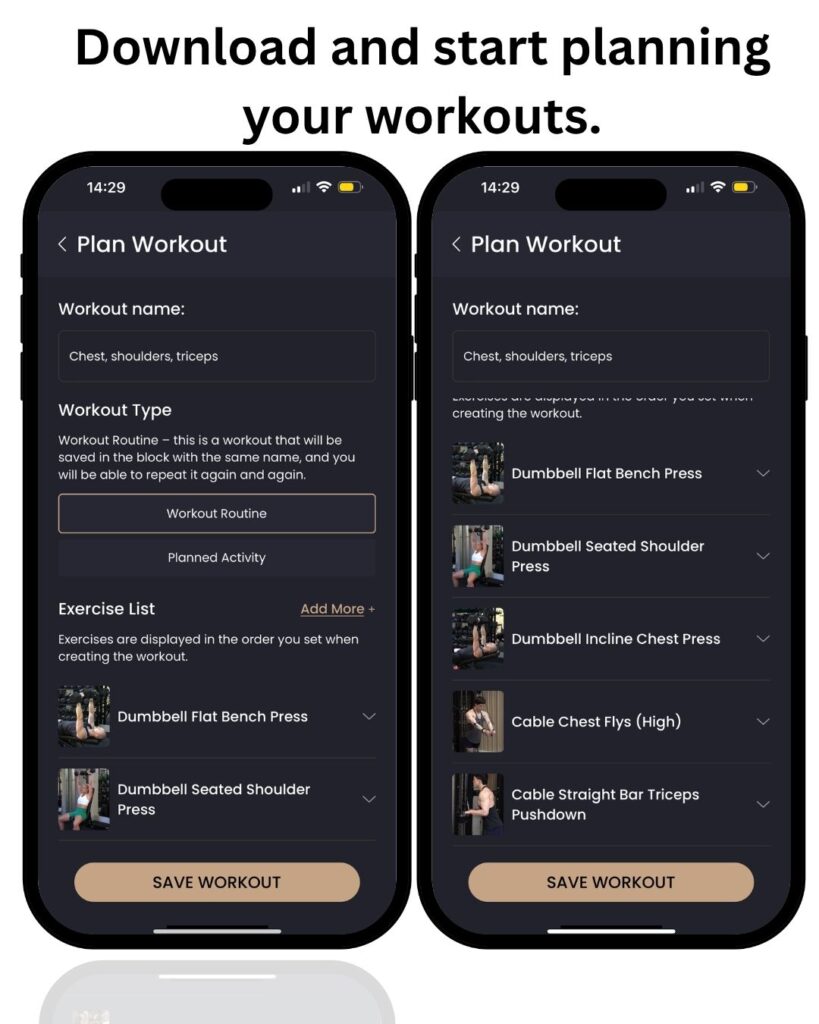
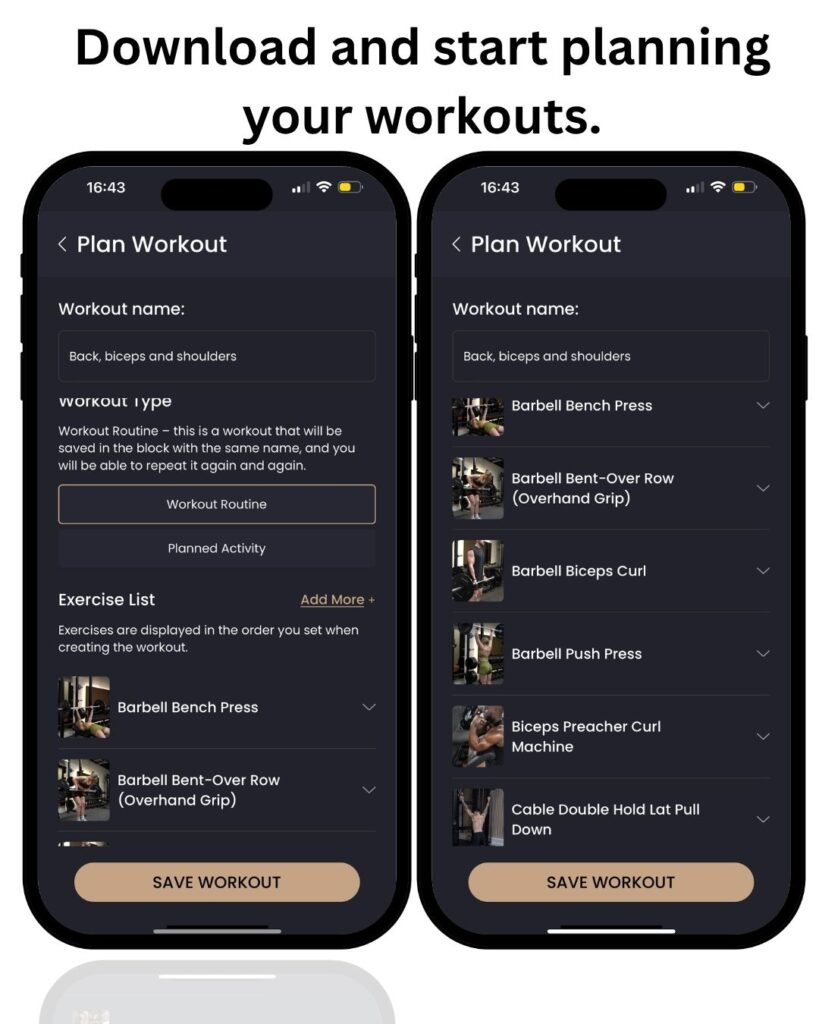
- Build your own: choose the muscles, equipment and time, and 12REPS builds the session. Save each day so it is ready next week.
- Log every set: enter your reps and weight. The app remembers what you lifted, so you have a number to beat.
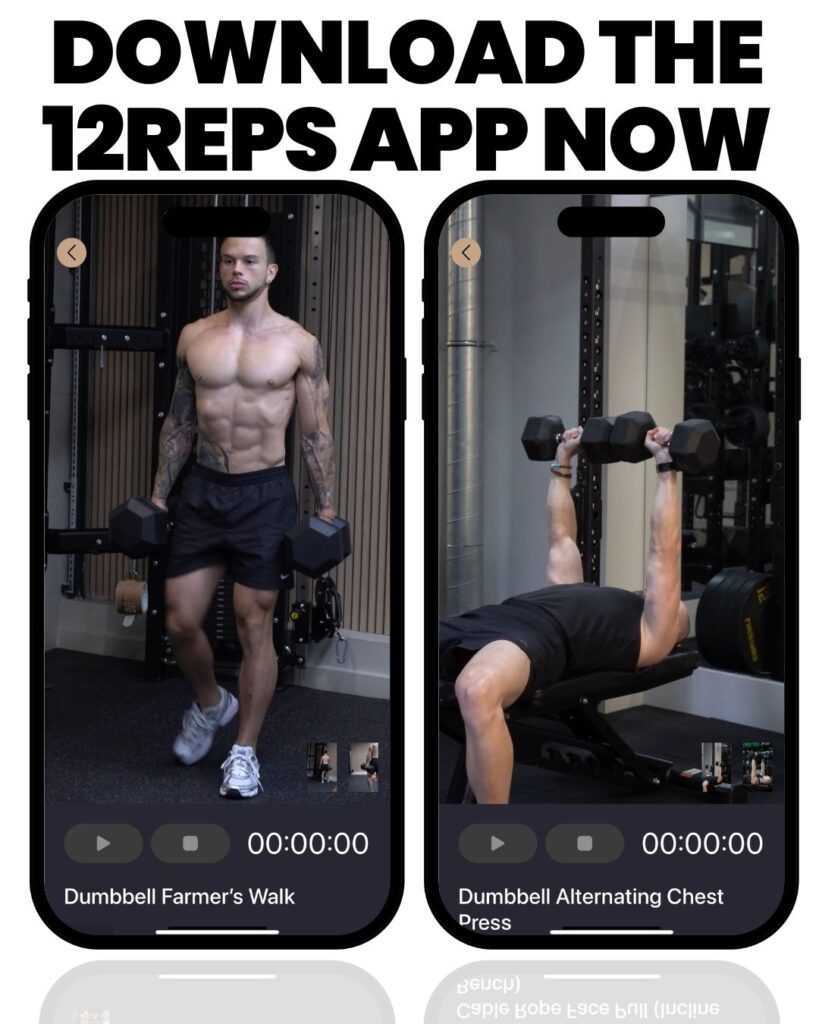
- Trainer demos: every exercise has a demonstration from a qualified personal trainer.
- Streaks and weekly goals: see whether you hit all four sessions each week.
How to adjust the plan
- Missed a session? Pick up where you left off. Do not try to fit two sessions into one day.
- Lifts stalled? Repeat the week before moving on, and check your sleep and protein.
- Feeling run down? Take an extra rest day. Our guide to signs you need more rest can help you decide.
Read our beginner’s guide to progressive overload for simple ways to keep making progress.
Final thoughts
This 16-week plan works best with consistent training, steady eating habits and a record of every session. Listen to your body, adjust the weights when you need to, and focus on beating your own numbers from phase to phase.
If you want your sessions planned around your goal, your equipment and your time, 12REPS sets out each workout with a trainer demonstration for every exercise. Find out how 12REPS works.
16-week push pull legs plan FAQs
Can I do this plan if I only have three days?
Drop the separate cardio day and add short steady cardio after one or two strength sessions instead. Or choose a 3-day plan, such as the 12-week push pull legs workout plan.
Can I build muscle and lose fat at the same time?
It is possible. In the eight-month trial of aerobic and resistance training, the group that did both lost fat mass and gained lean mass over the same period. Results depend on your eating, sleep and consistency, so track your lifts and body weight trend rather than chasing a set number.
Do I need a heart rate monitor for zone 3?
It helps but is not essential. Without one, aim for a steady pace that feels challenging but that you could keep up for the full session.
Sources
- Effects of aerobic and/or resistance training on body mass and fat mass in overweight or obese adults. Willis LH, Slentz CA, Bateman LA and colleagues. Journal of Applied Physiology, 2012. https://pubmed.ncbi.nlm.nih.gov/23019316/
- Compatibility of Concurrent Aerobic and Strength Training for Skeletal Muscle Size and Function: An Updated Systematic Review and Meta-Analysis. Schumann M, Feuerbacher JF, Sunkeler M and colleagues. Sports Medicine, 2022. https://pubmed.ncbi.nlm.nih.gov/34757594/
- International Society of Sports Nutrition Position Stand: protein and exercise. Jager R, Kerksick CM, Campbell BI and colleagues. Journal of the International Society of Sports Nutrition, 2017. https://doi.org/10.1186/s12970-017-0177-8
- A systematic review, meta-analysis and meta-regression of the effect of protein supplementation on resistance training-induced gains in muscle mass and strength in healthy adults. Morton RW, Murphy KT, McKellar SR and colleagues. British Journal of Sports Medicine, 2018. https://doi.org/10.1136/bjsports-2017-097608