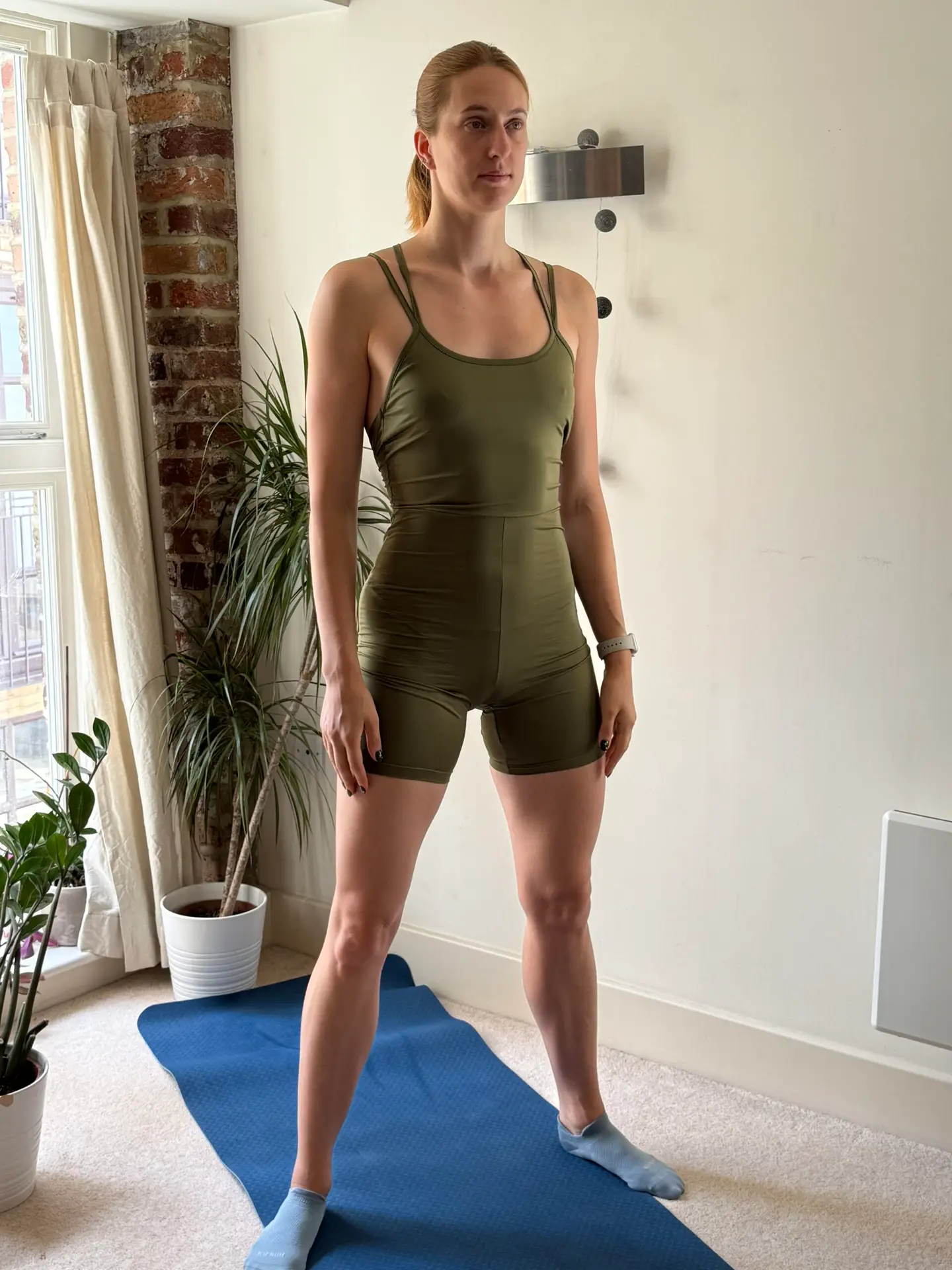



Written by Will Duru, BSc (Hons) Sport and Exercise Science, award-winning Personal Trainer with over 10 years of experience in strength training and optimising recovery .
Women’s lower body strength training means training your glutes, quads, hamstrings and calves with moves such as squats, lunges, hinges and bridges. Done two or three times a week, it builds strength for daily life and loads your bones. This beginner’s guide explains why it matters, how to train, and gives you a simple bodyweight routine to start with.
You don’t need a gym to begin. Everything in the starter routine below uses your bodyweight, so you can do it at home, in a park or in a hotel room.
Why Women's Lower Body Strength Training Matters
Your lower body holds some of your biggest muscles. Training them pays off in several ways.
Everyday life feels easier. Strong legs and glutes help you climb stairs, carry heavy shopping and get up from the floor. You use these muscles in almost every step you take.
Your bones get a training signal too. The NHS explains that muscles pulling on bones during resistance exercise helps strengthen them.
A small boost to your resting metabolism. A review of exercise studies found that resistance training raised resting metabolic rate by about 96 calories a day compared with no training. The authors noted the studies had a high risk of bias, so treat this as a modest bonus, not a fat-loss plan.
Mood and confidence. A meta-analysis of 33 trials linked resistance training to fewer depressive symptoms. Many women also find that lifting more than they thought possible builds real confidence.
The Muscles You Train
- Glutes: the muscles of your buttocks. The gluteus maximus extends your hip, as when you stand up from a squat. The gluteus medius on the side of your hip keeps your pelvis level when you stand on one leg.
- Quadriceps: the front of your thighs. They straighten your knees.
- Hamstrings: the back of your thighs. They bend your knees and help extend your hips.
- Adductors: your inner thighs. They work hard in squats and lunges.
- Core: your trunk muscles, which keep you steady while your legs work.
How Beginners Should Train Their Lower Body
Good lower body training covers four basic movement patterns:
- Squat: bending at the hips and knees together, such as a bodyweight squat.
- Lunge or single-leg: one leg working at a time, such as a reverse lunge or step-up.
- Hinge: bending mostly at the hips with a long back, such as a Romanian deadlift.
- Bridge or hip extension: driving your hips up, such as a glute bridge or hip thrust.
Three simple rules matter more than the exact exercises:
- Train at least twice a week. The CDC advises muscle-strengthening work for all major muscle groups on at least two days a week. The American College of Sports Medicine suggests 2 to 3 days a week for beginners.
- Make sets challenging. A review found that muscle growth was similar across light and heavy loads in the studies it covered, which pushed sets hard. So bodyweight is enough to start, as long as the last few reps feel tough.
- Use progressive overload. This means making your training a little harder over time. Add reps, slow down, add a pause, or move to a harder version.
Women and men gain muscle at similar relative rates. A meta-analysis found no significant difference in relative muscle growth between the sexes. So the same training principles apply to you.
Your Starter Lower Body Routine
This bodyweight routine covers the squat, lunge and bridge patterns, plus two exercises for the sides and back of your hips. The notes below each photo explain what each move trains. For full step-by-step technique on the first five, see our no-equipment lower body exercises for women at home.
| Exercise | Sets | Reps per set |
|---|---|---|
| Bodyweight squats | 4 | 12 to 20 |
| Bodyweight reverse lunges | 4 | 20 (10 per leg) |
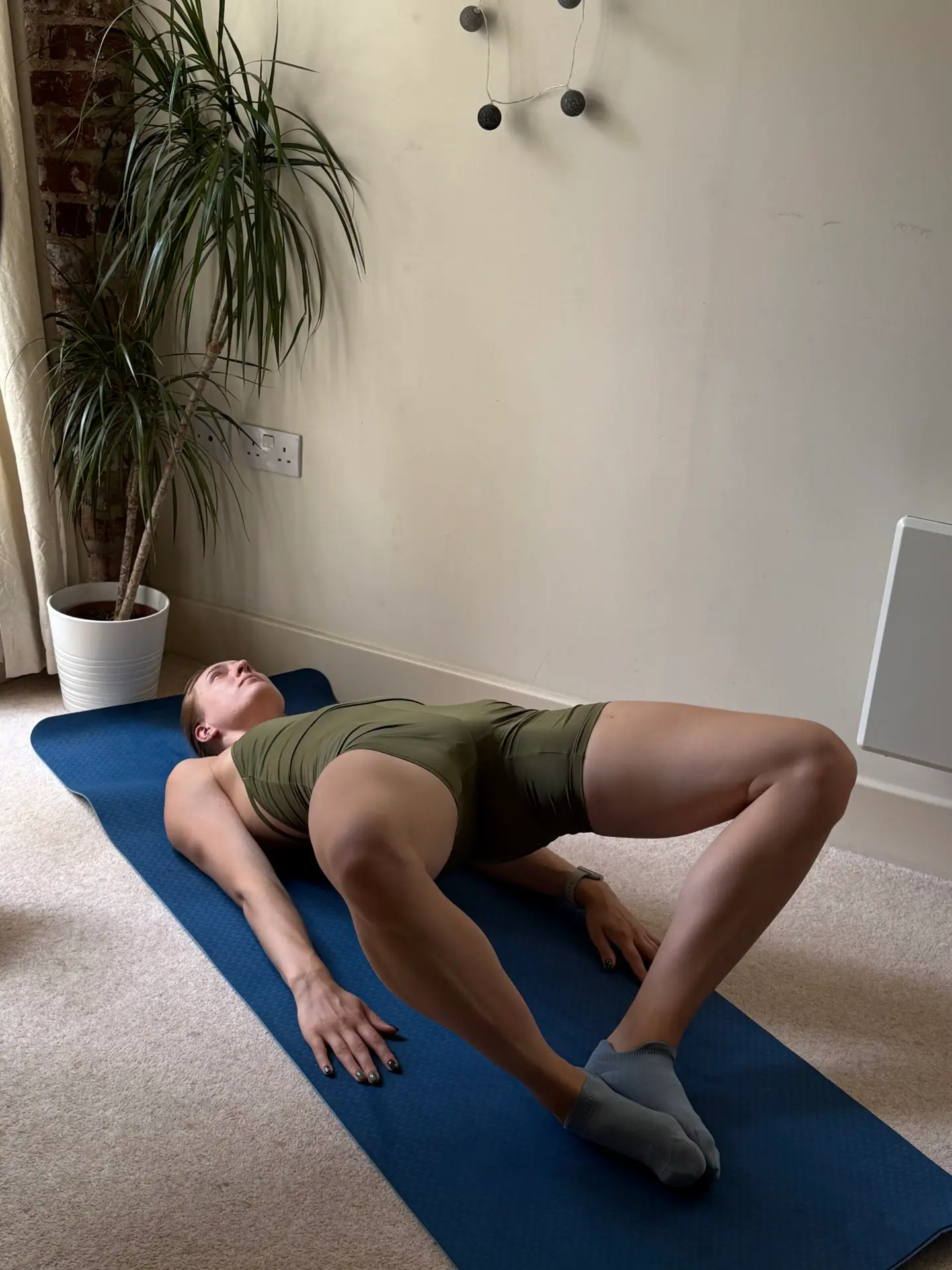
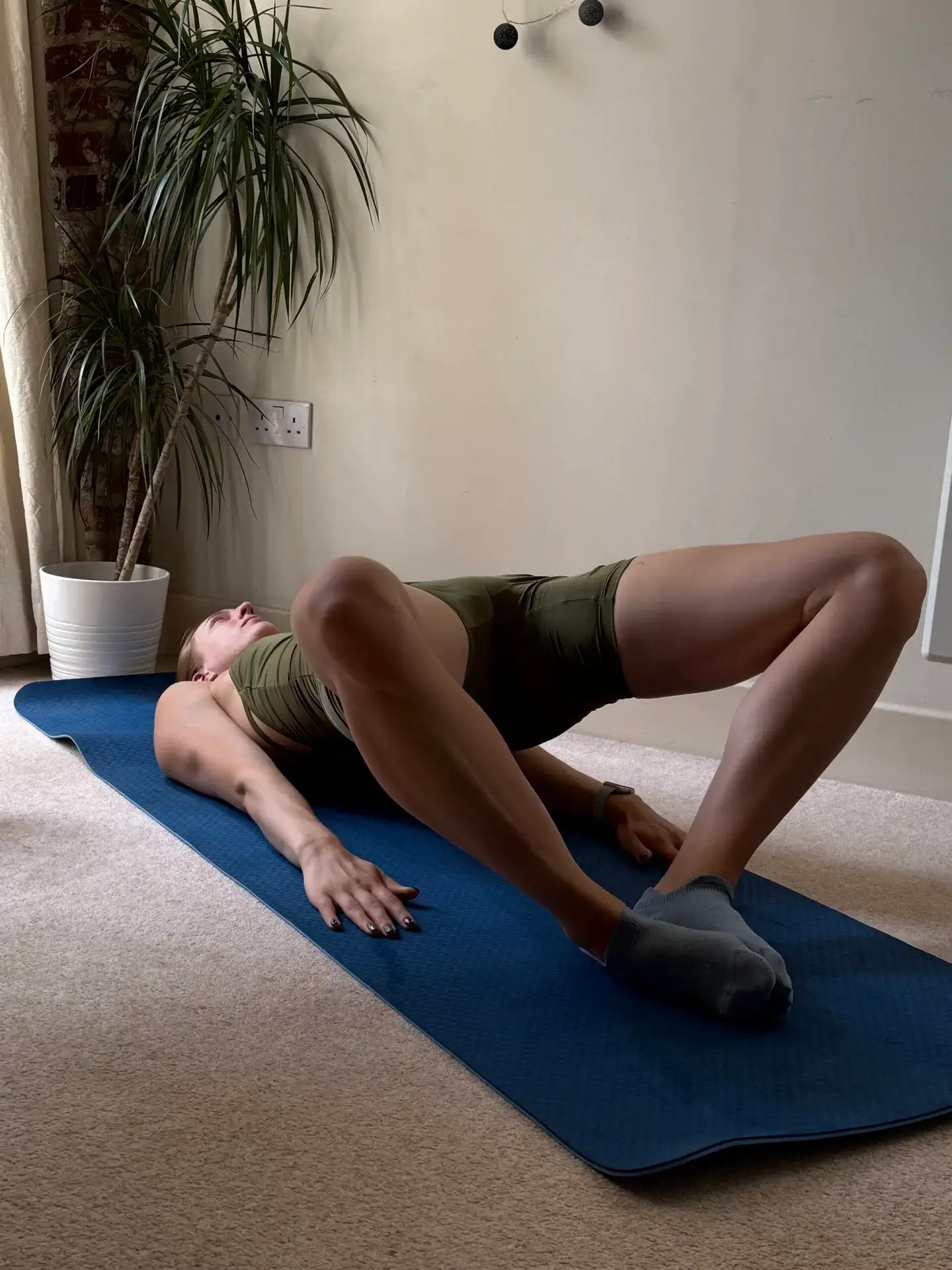
| Butterfly glute bridge | 4 | 12 to 20 |
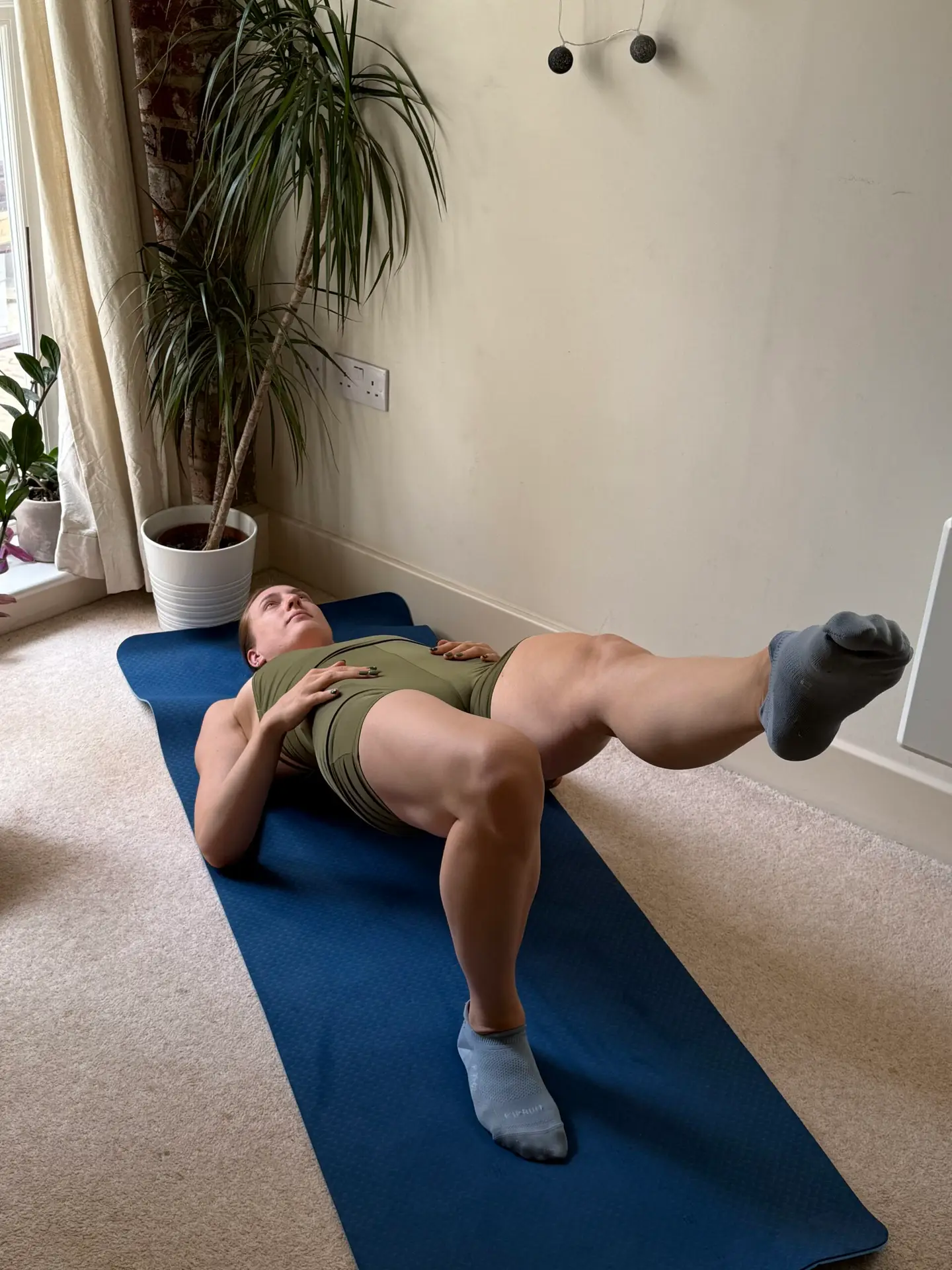
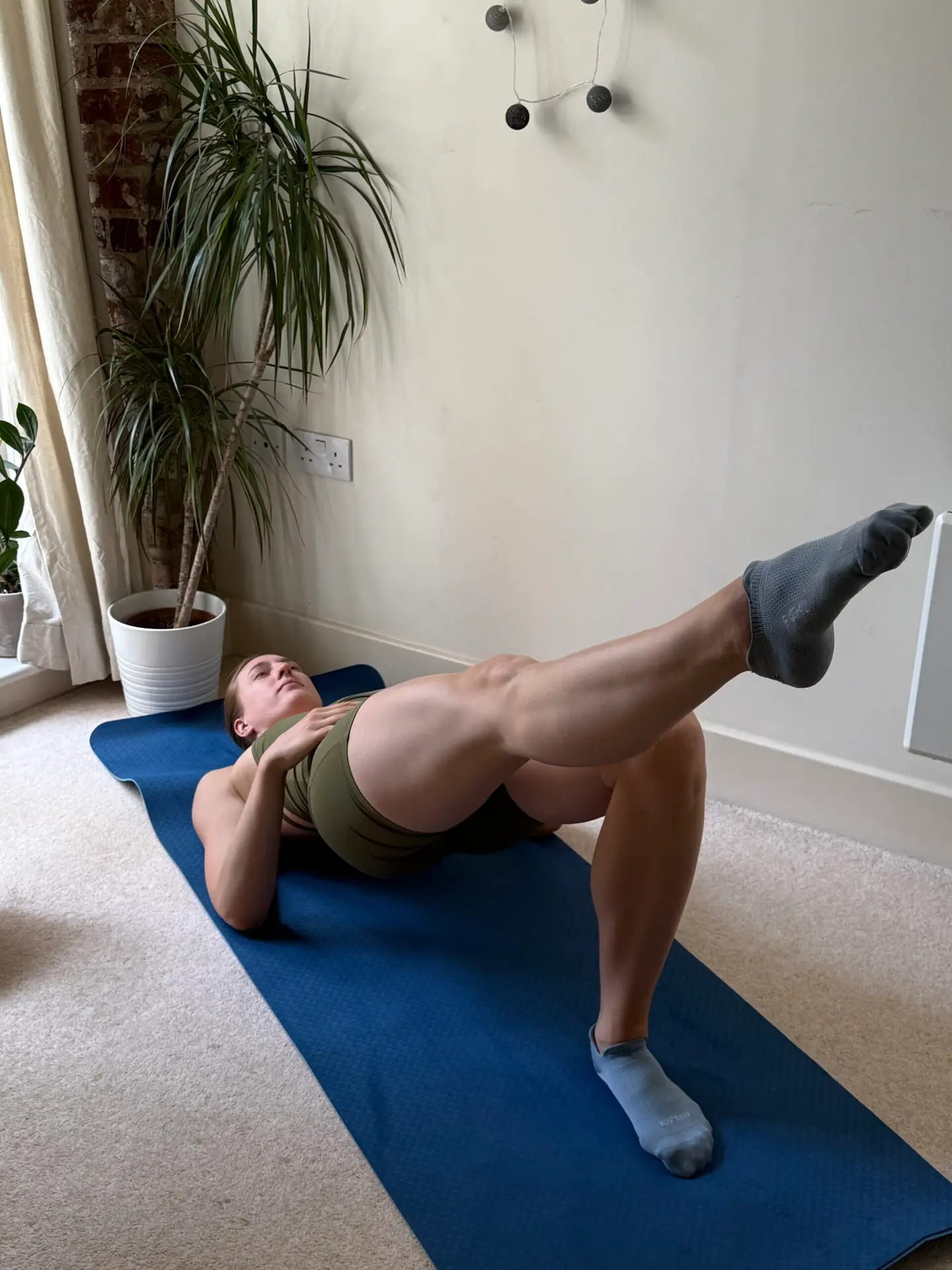
| Single-leg glute bridge | 4 | 20 (10 per leg) |
| Fire hydrant side kick | 4 | 20 (10 per leg) |
| Donkey kick | 4 | 20 (10 per leg) |
Rest: 30 to 60 seconds between sets, or longer if you need it.
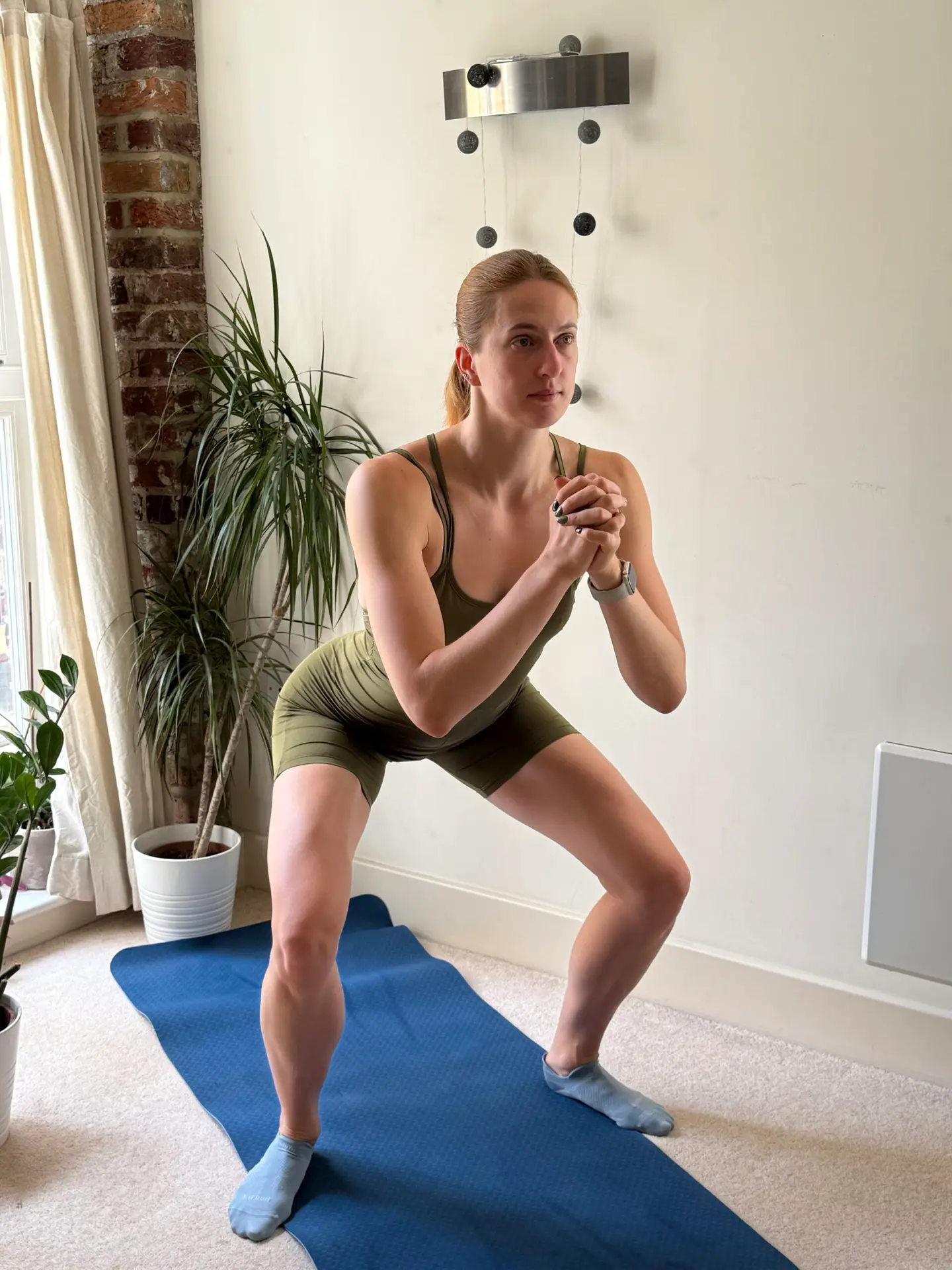
Bodyweight squats. The squat trains your quads, glutes and inner thighs. Sit your hips back as if into a chair, keep your chest up and track your knees in line with your toes.
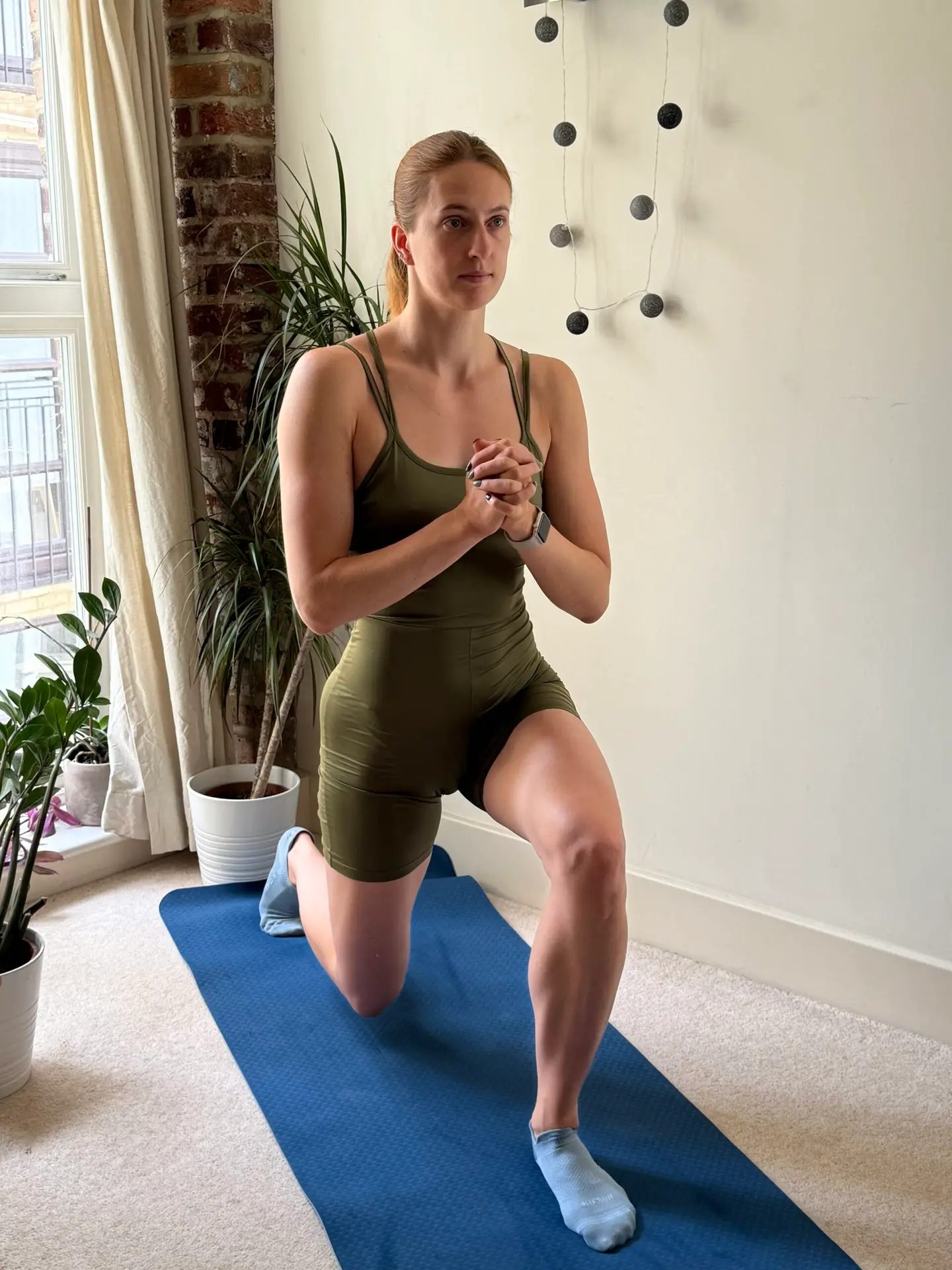
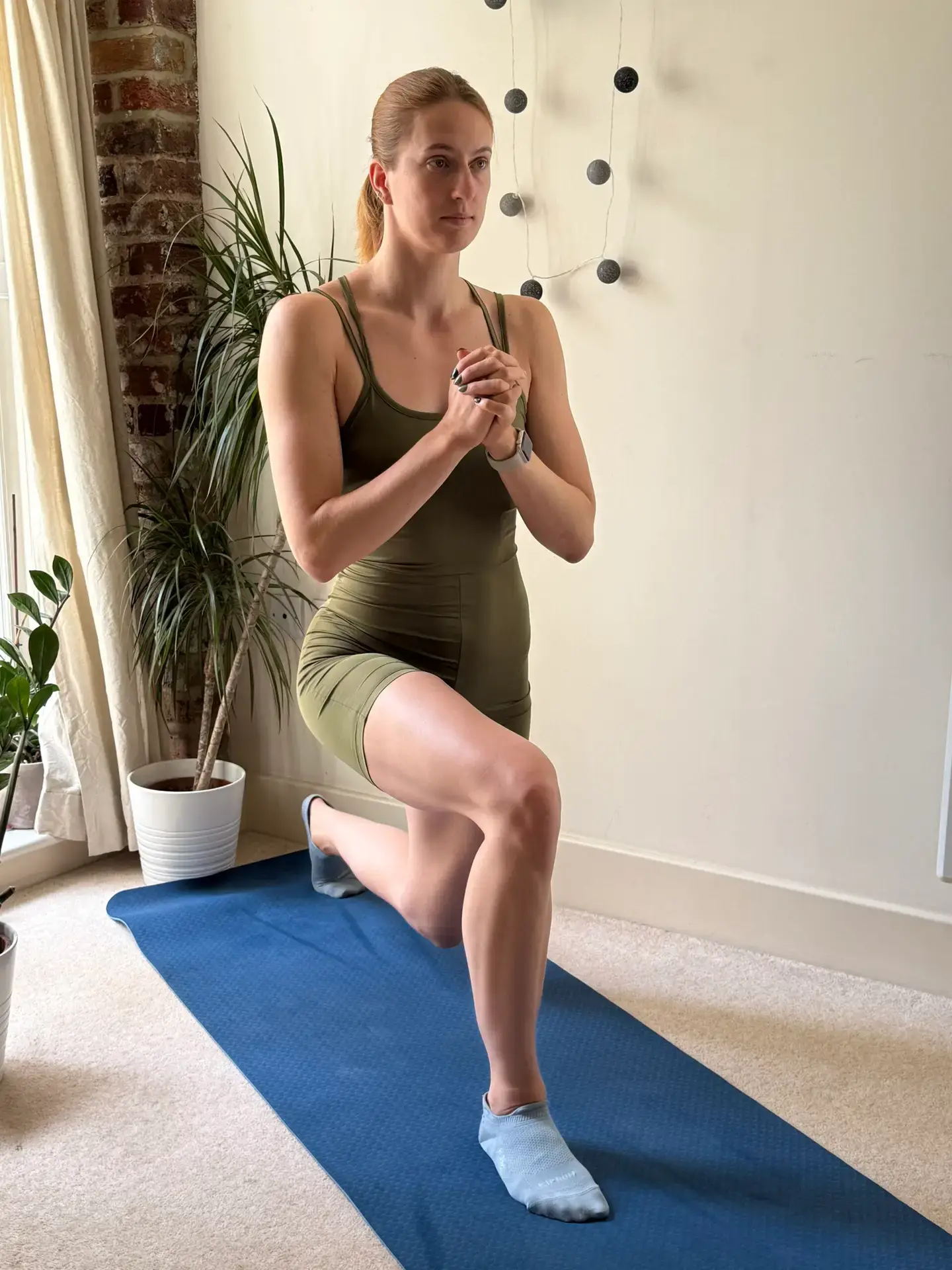
Bodyweight reverse lunges. Each leg works on its own, which builds single-leg strength and balance. Step back and keep most of your weight on your front leg. See the demo on the Bodyweight Reverse Lunge exercise page.
Butterfly glute bridge. Lie on your back, bring the soles of your feet together, let your knees open and lift your hips. Many people feel this strongly in their glutes. It is also called frog pumps, shown on the Frog Pumps exercise page.
Single-leg glute bridge. One glute does the work at a time, so you can spot and train a weaker side. Start each set with your weaker leg, and keep your hips level as you lift.
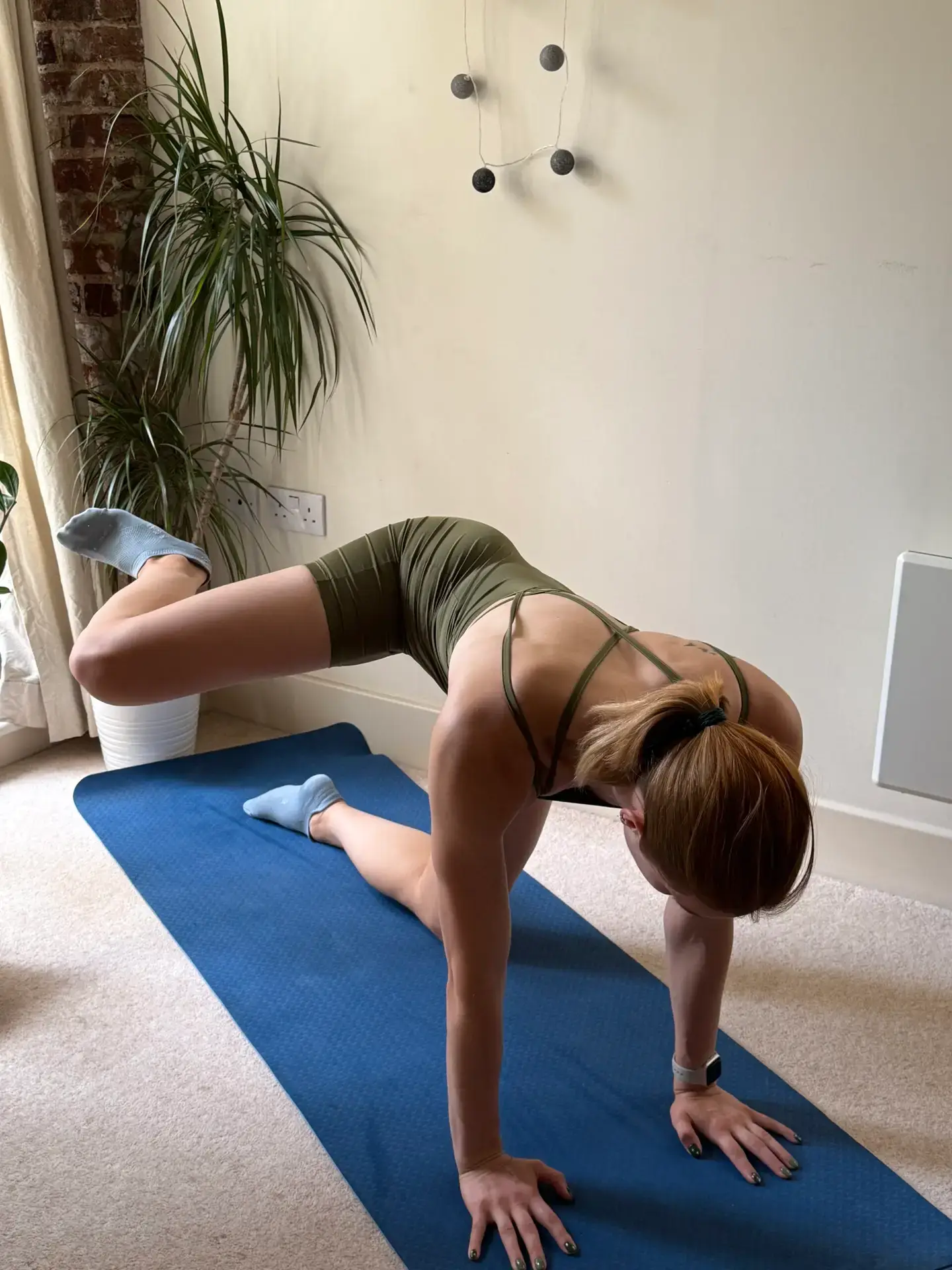
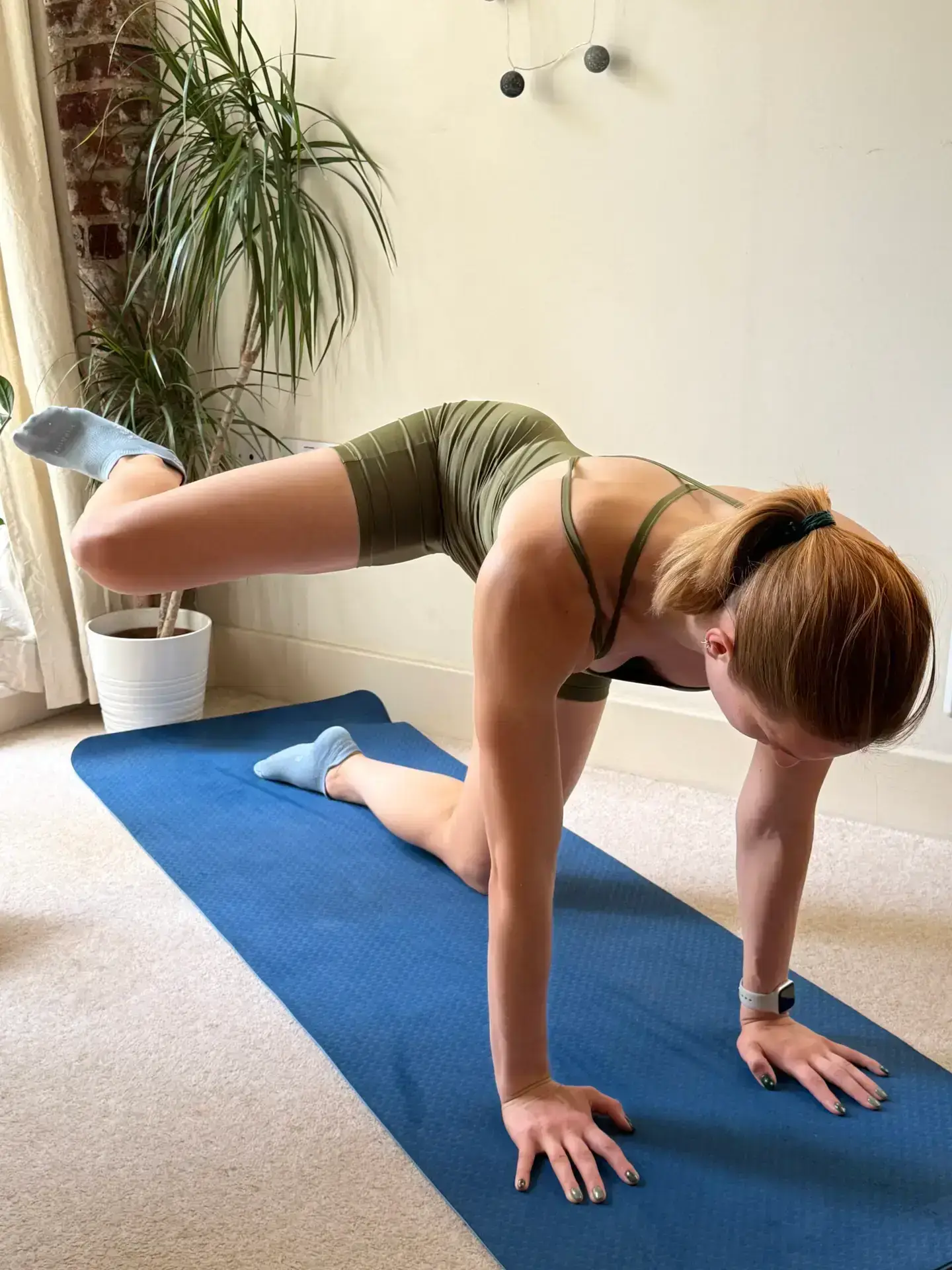
Fire hydrant side kick. From hands and knees, lift your bent leg out to the side, then kick it back. Lifting the leg sideways trains the gluteus medius, which helps keep your hips stable on one leg.
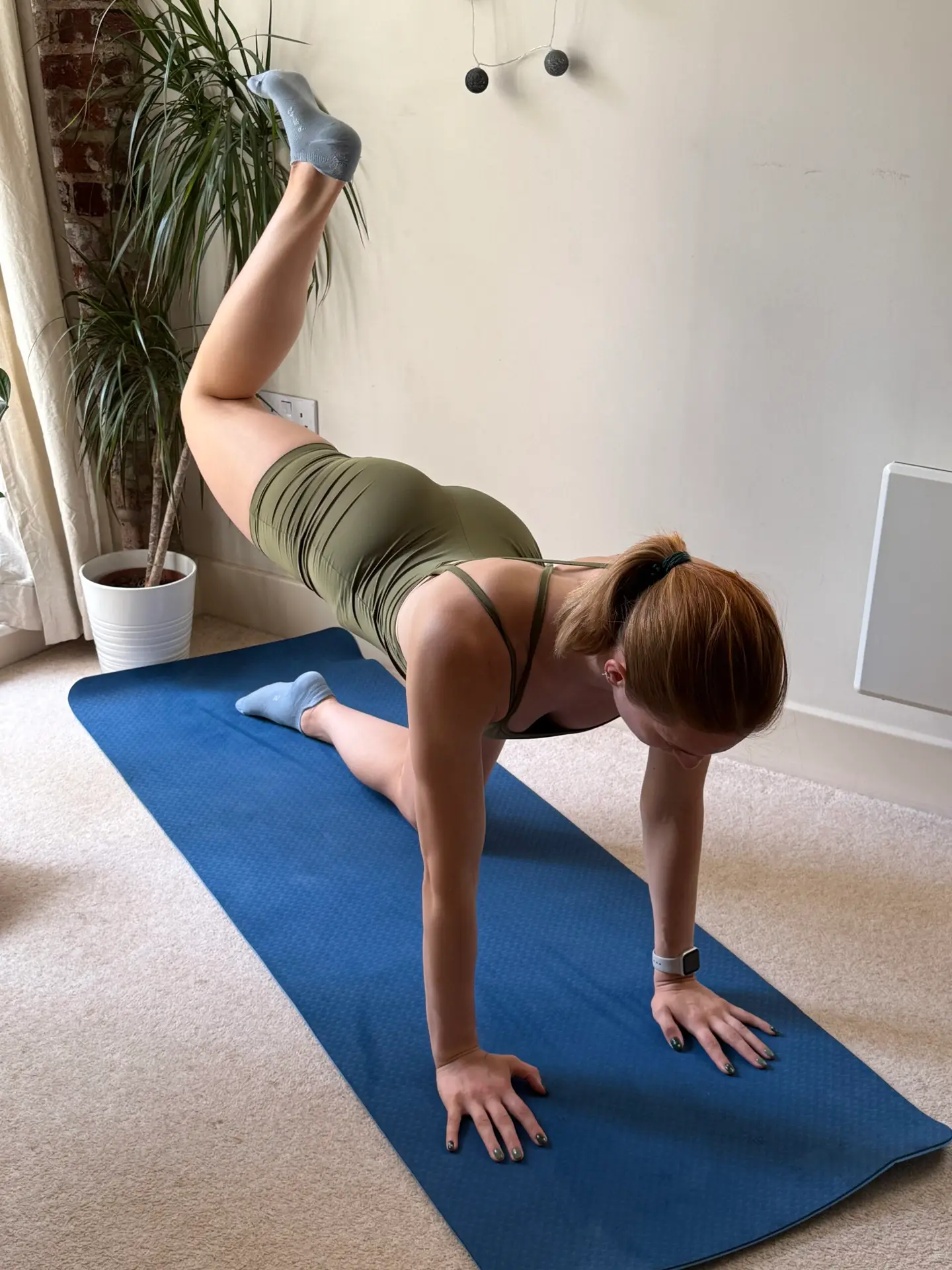
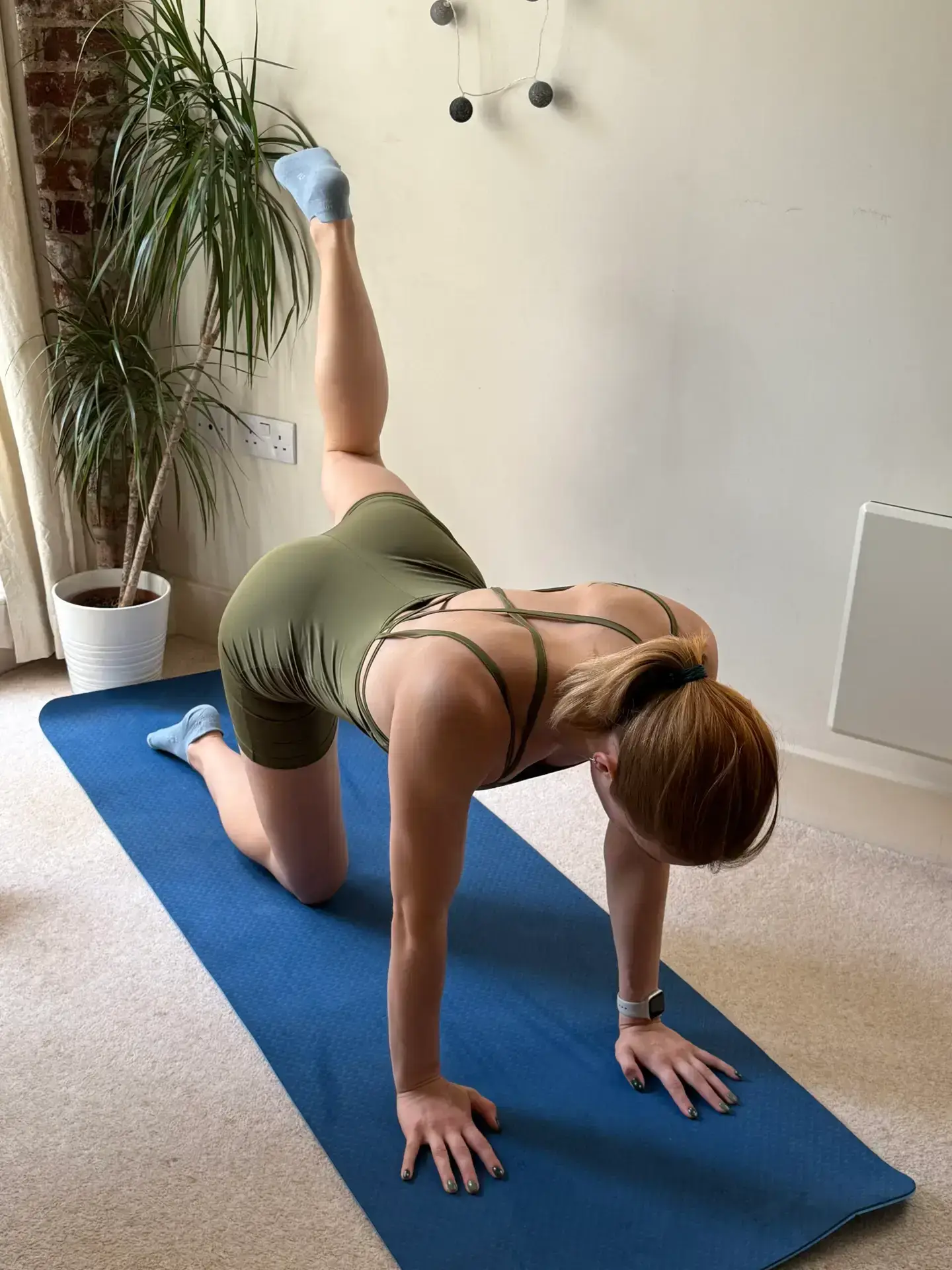
Donkey kick. From hands and knees, keep your knee bent and press your heel up toward the ceiling. This trains the gluteus maximus. Keep your core tight so your lower back does not arch.
How to Progress
Start at the lower end of the rep ranges if you are new to exercise. Add reps as you get stronger. Once you can do 20 good reps of each exercise, try these progressions one at a time:
- Add a pause at the bottom of each squat.
- Hold the top of each bridge for 3 seconds.
- Slow the movement down: 3 seconds down, 1 second up.
- Add a fifth set.
Our beginner’s guide to progressive overload explains how to keep progressing for months.
Training Tips for Beginners
- Frequency: do this routine 2 to 3 times a week, with at least one rest day between sessions.
- Form first: control matters more than speed or high reps.
- Listen to your body: some days you will feel strong, and other days you may do fewer reps. Both are normal.
- Stay consistent: progress comes from showing up regularly, not from perfect workouts.
If you are pregnant, recovering from an injury or managing a health condition, check with your doctor or physical therapist before you start.
Where to Go Next
When the starter routine feels manageable, you have three good next steps:
- Add dumbbells: try our women’s dumbbell leg day workout with split squats, step-ups, goblet squats and Romanian deadlifts.
- Train at the gym: follow the glute-focused lower body gym plan with hip thrusts and deadlifts.
- Plan your week: see how lower body days fit around upper body training in our strength training schedule for women.
Conclusion
Women’s lower body strength training does not need a gym or expensive equipment to begin. Train your glutes, quads and hamstrings two or three times a week, make each set challenging, and make the work a little harder over time.
Every rep you log is progress you can build on. If you’d like a plan to follow, 12REPS builds sessions around your goal, your equipment and your time. You can watch a trainer demo before each exercise and see last session’s numbers so you know what to beat.
Sources
- Adult Activity: An Overview. Centers for Disease Control and Prevention (CDC), accessed 2026. https://www.cdc.gov/physical-activity-basics/guidelines/adults.html
- American College of Sports Medicine position stand: Progression models in resistance training for healthy adults. Medicine & Science in Sports & Exercise, 2009. https://sfu.ca/~ryand/kin343/ACSMresistance.pdf
- Strength and hypertrophy adaptations between low- vs. high-load resistance training: a systematic review and meta-analysis (Schoenfeld, Grgic, Ogborn and Krieger). Journal of Strength and Conditioning Research, 2017. https://vuir.vu.edu.au/42281/
- Sex differences in resistance training: a systematic review and meta-analysis (Roberts, Nuckols and Krieger). Journal of Strength and Conditioning Research, 2020. https://ouci.dntb.gov.ua/works/4NeaBQv7
- Osteoporosis: Prevention. NHS, accessed 2026. https://www.nhs.uk/conditions/osteoporosis/prevention/
- The effect of exercise interventions on resting metabolic rate: a systematic review and meta-analysis (MacKenzie-Shalders et al.). Journal of Sports Sciences, 2020. https://research.bond.edu.au/en/publications/the-effect-of-exercise-interventions-on-resting-metabolic-rate-a-/
- Association of efficacy of resistance exercise training with depressive symptoms: meta-analysis and meta-regression analysis of randomized clinical trials (Gordon et al.). JAMA Psychiatry, 2018. https://search.pedro.org.au/search-results/record-detail/53565