


By Will Duru, BSc (Hons) Sport and Exercise Science, Award-winning Personal Trainer with over 10 years of experience in strength training and optimising recovery
Yes, strength training with resistance bands can build real strength and muscle. A 2019 meta-analysis found that elastic resistance gave similar strength gains to training with weights or machines. The key is to pick a band that makes the last few reps hard, then make it harder over time.
This guide explains how bands work, which types to use, the best band exercises, and how to set your sets and reps. It ends with an 8-week resistance band program you can follow at home, in the gym or when you travel.
Can You Build Muscle With Resistance Bands?
Many people think you need heavy weights and a full gym to get stronger. The research does not support that idea.
- A 2019 systematic review and meta-analysis pooled eight studies. Elastic resistance training produced similar strength gains to conventional resistance training, for both the upper and lower body.
- The American College of Sports Medicine (ACSM) 2026 position stand lists elastic bands, bodyweight exercises and home-based training as effective options. It says you do not need a gym.
- For older adults, a 2013 meta-analysis concluded that elastic resistance training can be recommended to improve muscle strength.
Muscles get stronger when you train them hard enough, often enough, and recover well. A band can supply that challenge if you choose the right resistance and keep progressing. This is called progressive overload: gradually asking your muscles to do a little more over time.
If you are new to exercise, have a health condition or are coming back from an injury, check with your doctor or physical therapist before you start.
How Resistance Bands Work
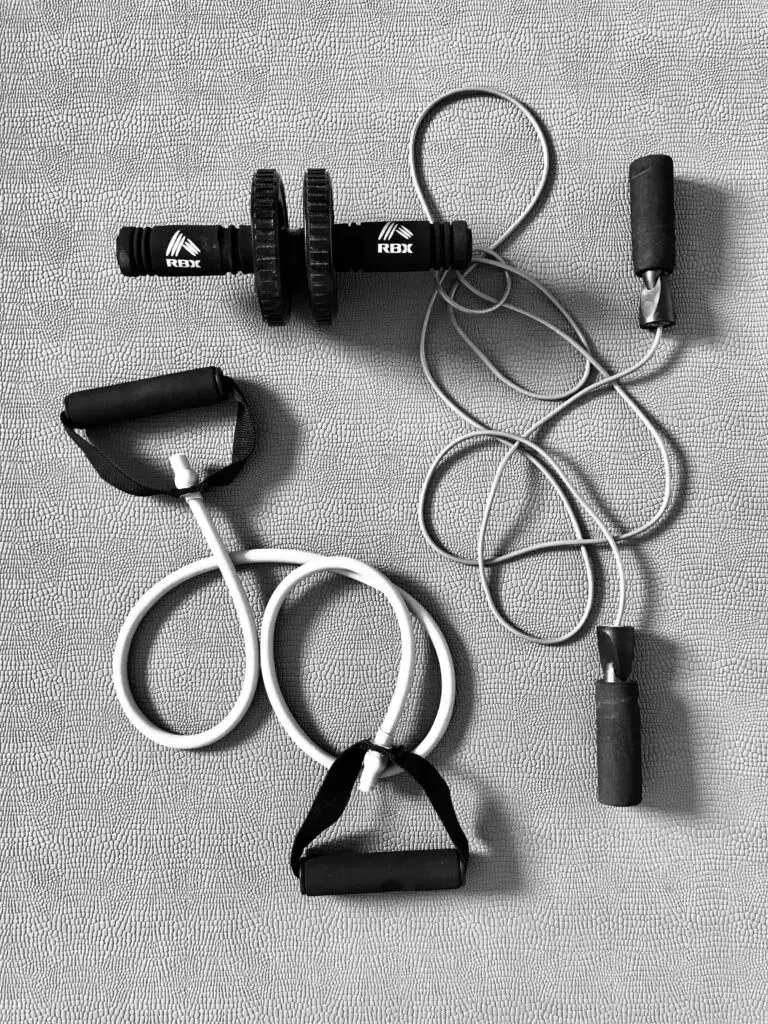
A band gets harder the more you stretch it. This is called variable resistance. A dumbbell weighs the same through the whole rep. A band is lightest at the start of the movement and heaviest at the end.
This has two practical effects. First, the hardest part of each rep comes near the end, so you need to control the band all the way through. Second, you can change the load by switching bands, standing further from the anchor, or holding the band shorter.
Portability and Convenience
Bands weigh very little and fit in a backpack, suitcase or desk drawer. That makes it simpler to keep training when you travel, have little space at home or only have a short window. Removing those barriers helps you stay consistent.
Smooth, Adjustable Resistance
Bands give a smooth, steady pull, with no heavy weight to drop or catch. Many people find this more comfortable on their joints than free weights. You can also start with very light tension and build up gradually. If you have joint pain or an injury, ask a physical therapist which exercises suit you.
Low Cost
A set of bands with several resistance levels usually costs far less than a set of dumbbells. That makes bands a practical way to start strength training before you spend money on more equipment, if you ever need to.
Useful at Every Level
Beginners can use bands for full-body strength sessions. More experienced lifters use them for warm-ups, activation work and assisted pull-ups, or to add resistance to squats, deadlifts and bench presses. Because you can adjust the tension with band choice and body position, bands work well for progressive overload.
Types of Resistance Bands and How to Use Them
Just as dumbbells come in different weights, resistance bands come in different types. Each suits different exercises.
| Band type | What it looks like | Best for |
|---|---|---|
| Mini bands | Short, flat loops | Glute and hip exercises, warm-ups |
| Long loop bands (power bands) | Long, thick continuous loops | Squats, deadlifts, rows, presses, assisted pull-ups |
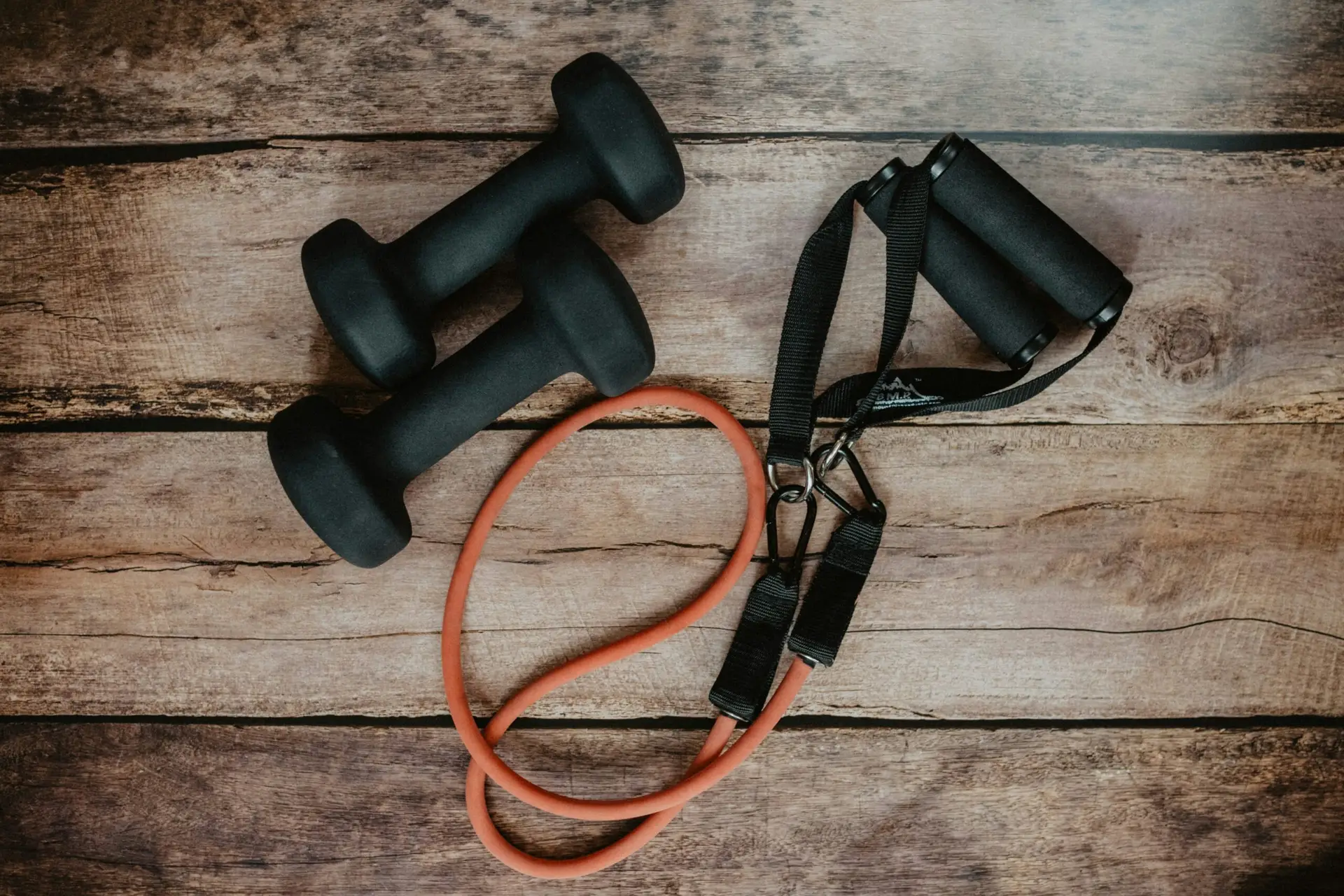
| Tube bands with handles | Tubes with a handle at each end, often with a door anchor | Chest presses, rows, shoulder presses, curls |
| Flat bands | Thin, wide sheets, often sold in rolls | Light strength work, mobility and warm-ups |
Loop Bands: Activation and Full-Body Strength
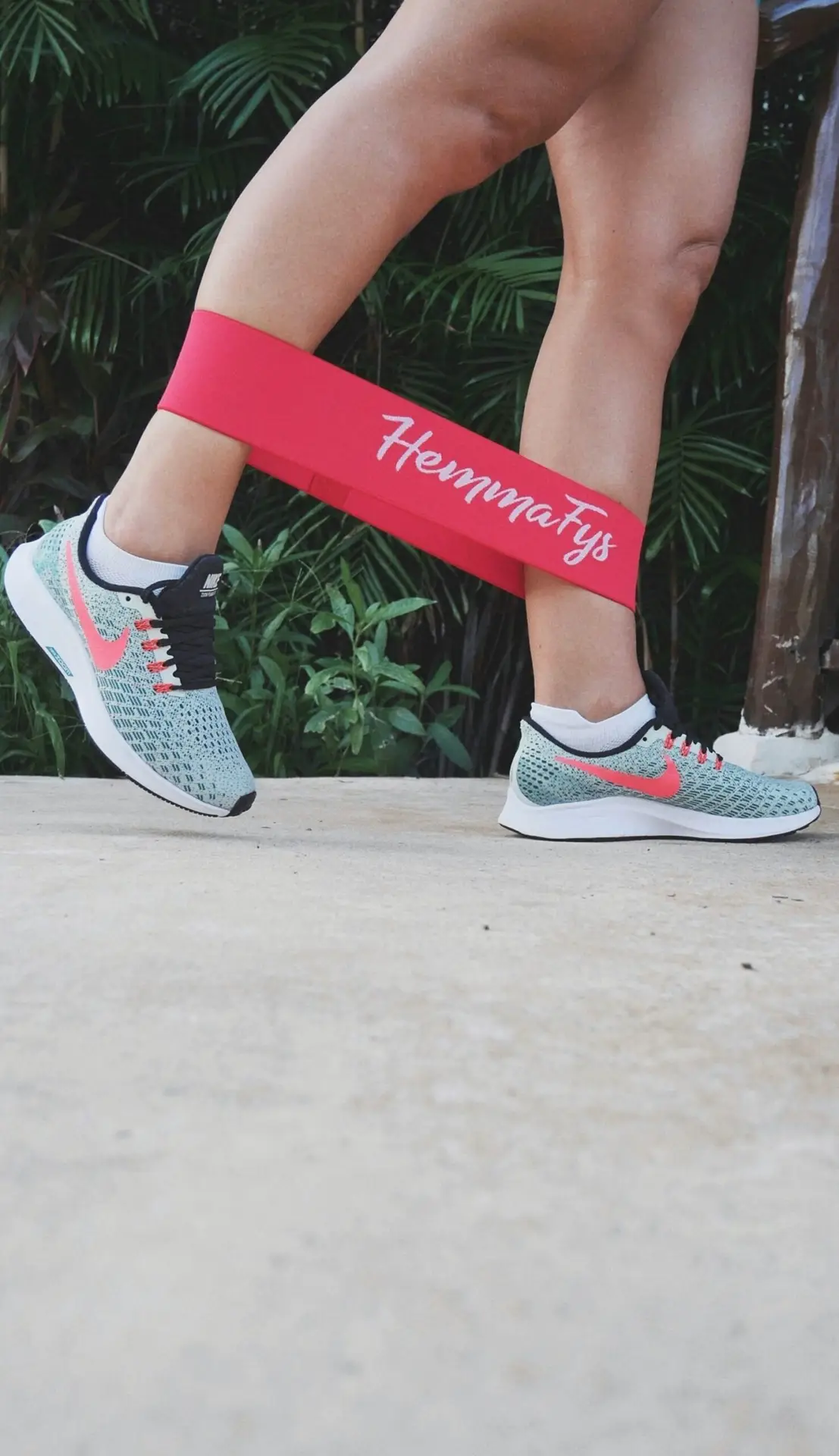
Mini bands are short loops that vary in thickness and width. The thicker the band, the more resistance it gives. Common uses include:
- Glute work: Place a mini band around your knees for exercises such as the mini band glute bridge, the mini band clamshell and the mini band crab walk.
- Smaller muscles: Add resistance to lateral raises or biceps curls for a focused challenge.
- Warm-ups: Mini bands are useful for movement-based warm-ups before harder work.
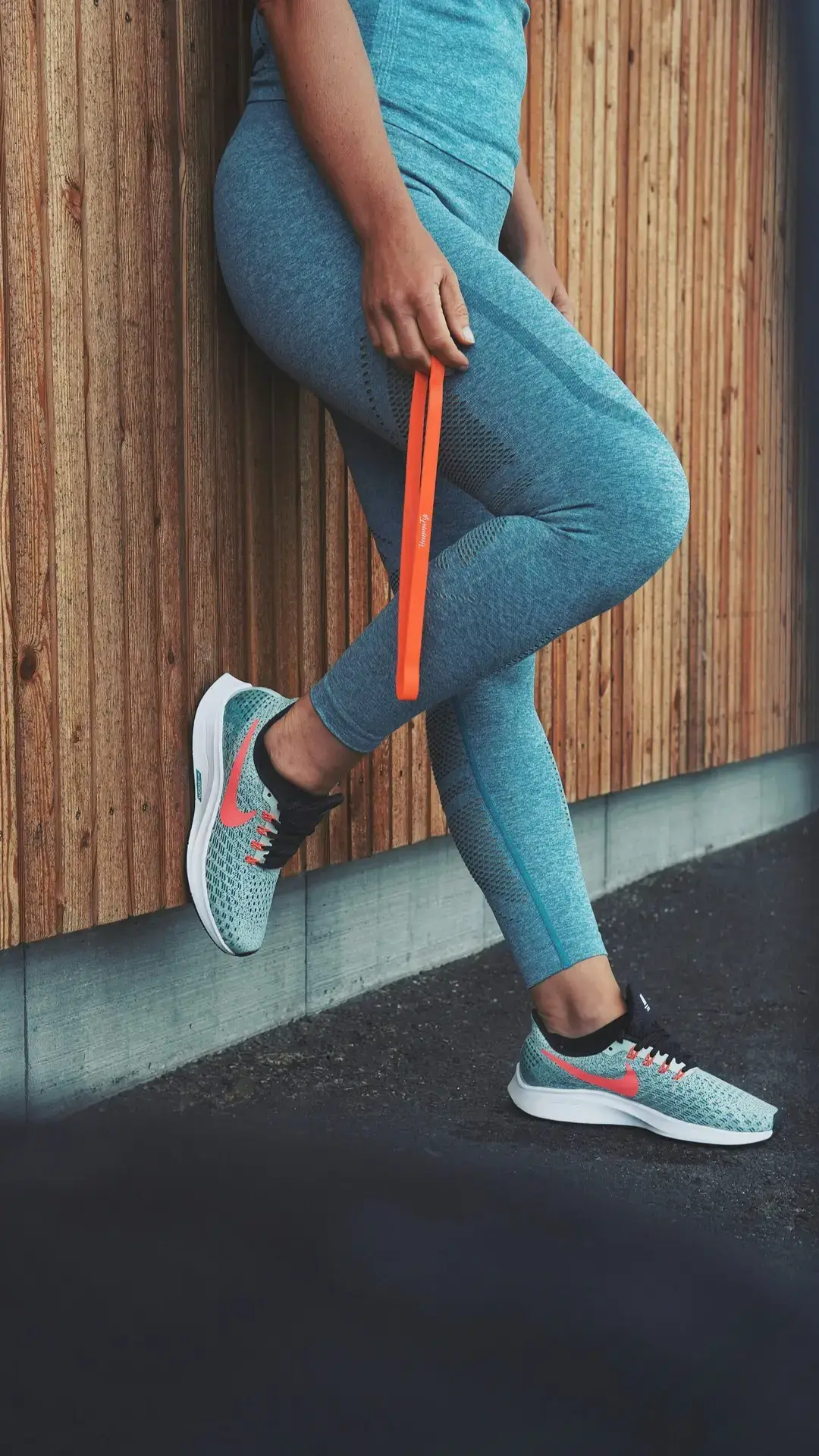
Long loop bands give much higher resistance. You will often see them used for:
- Assisted pull-ups: Loop the band over a pull-up bar and place a knee or foot in it. The band takes some of your body weight, so you can do more good reps while you build toward an unassisted pull-up. Our guide to doing your first pull-up explains the full progression.
- Compound lifts: Adding a band to squats, deadlifts or bench presses makes the top of the lift harder, because the band stretches as you stand or press. This is sometimes called accommodating resistance.
- Bodyweight exercises: A band can make push-ups, dips or rows more challenging.
Tube Bands With Handles
Tube bands have a handle at each end. With a door anchor, you can press, row and pull from different heights. They are used throughout the 8-week program below. Always check the anchor is secure before you start.
Flat Bands: Light Resistance and Mobility
Flat bands are thin, wide sheets of elastic. They usually give lighter resistance than loop or tube bands, so they suit controlled movements, mobility drills, warm-ups and cool-downs. Physical therapists often use them in rehab programs. If you are recovering from an injury, follow the plan your clinician gives you.
Choosing and Caring for Your Bands
Buy a set with several resistance levels so you can progress. Look for durable latex or fabric and resistance that feels even through the whole stretch. Check every band for nicks, tears or thinning before each session, and replace any damaged band.
Whatever band you use, form comes first. Because bands are hardest at the end of the range, control the whole rep and master the movement before you add tension.
The Best Resistance Band Exercises
These exercises cover the main movement patterns: push, pull, squat, hinge and lunge. They train all the major muscle groups. Learn good form first, then add resistance.
Upper Body: Pressing and Pulling
Your upper body needs both pushing and pulling exercises for balanced strength. Bands work well for both.
- Band chest press: Anchor a tube band or long loop behind you at chest height, for example around a sturdy post or with a door anchor. Hold the ends, palms down, and press forward from your chest. Keep your core tight and control the band both ways. This works your chest, shoulders and triceps.
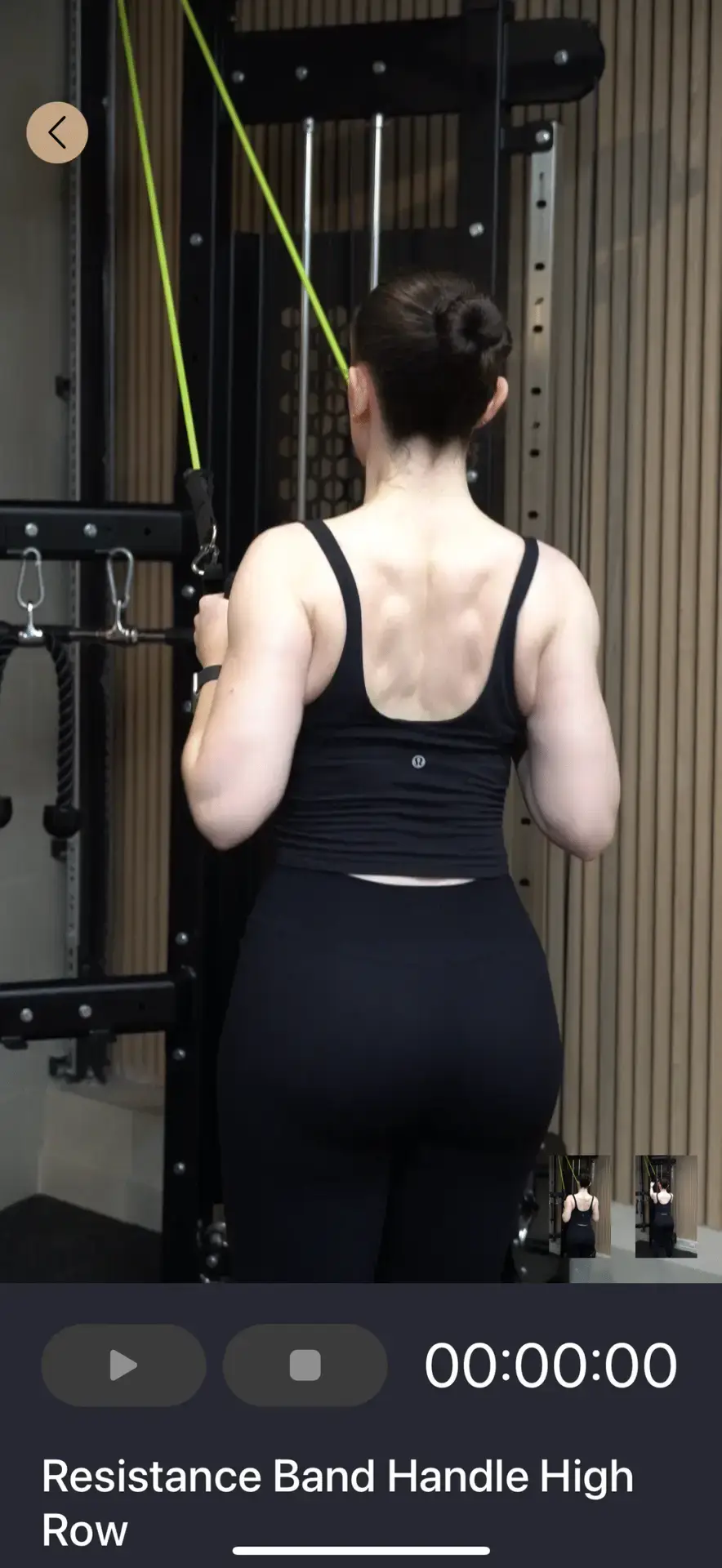
- Band row: Anchor a band in front of you, or sit with it looped around your feet. Pull the handles toward your body and squeeze your shoulder blades together. Think about driving your elbows back. This works your upper back and biceps.
- Band shoulder press: Stand on a loop band or tube band. Hold it at shoulder height and press it overhead. Keep your shoulders down, away from your ears. This works your shoulders and triceps.
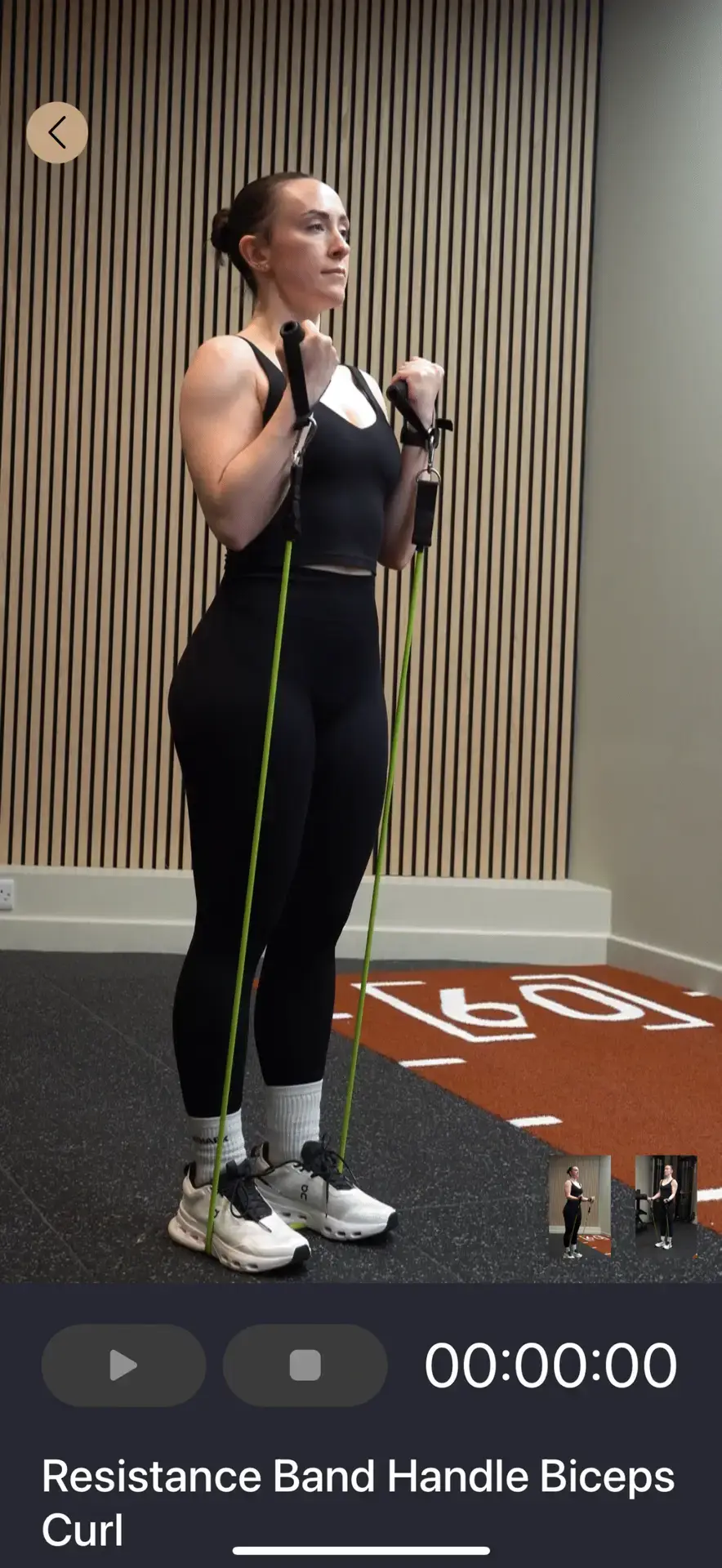
- Band biceps curl and triceps extension: For the resistance band standing biceps curl, stand on the band and curl it up toward your shoulders. For triceps extensions, anchor the band high or behind you, then straighten your elbows against the band.
Form cues: Keep every rep controlled and never let the band snap back. Brace your core to support your back. If the band feels too easy, use a stronger band or grip it closer to the anchor. If it is too hard, use a lighter band or lengthen it.
Lower Body: Strength and Stability
Your legs and hips are your foundation. Bands can build strong, stable lower-body muscles.
- Band squat: Stand on a long loop band. Hold the top of the loop at your shoulders, as in the loop band front squat, or hold tube band handles. Push your hips back and down, keep your chest up, then stand. The band adds the most resistance near the top. This works your quads and glutes.
- Band Romanian deadlift: Stand on the band and hold the top of the loop or the handles. Hinge at your hips with a flat back, lower toward the floor, then stand tall by squeezing your glutes. See the resistance band romanian deadlift demo. This works your hamstrings, glutes and lower back.
- Band lunge: Place a loop band under your front foot and hold the ends, or wear a mini band around your thighs. Lunge down with control, keeping your front knee in line with your foot. This builds single-leg strength and balance.
- Glute exercises with a mini band: Place a mini band just above your knees or around your ankles. Do glute bridges, clamshells or lateral walks to train the muscles at the back and side of your hips.
Watch a 12REPS trainer demonstrate the resistance band glute bridge:
And here is the resistance band crab walk, a sideways walk against a band:
Progression: To make these harder, use a stronger band, do more reps, or slow the movement down to increase time under tension. Single-leg versions are much harder.
Full Body: Compound Moves With Bands
Compound exercises work several muscle groups at once. Bands can add resistance to these movements too.
- Band thruster: Stand on a loop band, hold it at shoulder height and squat. As you stand up, press the band overhead in one smooth movement.
- Band mountain climbers and plank jacks: Place a mini band around your feet. From a plank, do mountain climbers or plank jumping jacks. The band adds resistance for your hips and core.
Safety first: Check your bands for wear or tears and make sure your anchor points are secure. If an exercise is new to you, practice it without the band first. Start with lighter resistance and increase it gradually.
How to Program Resistance Band Strength Training
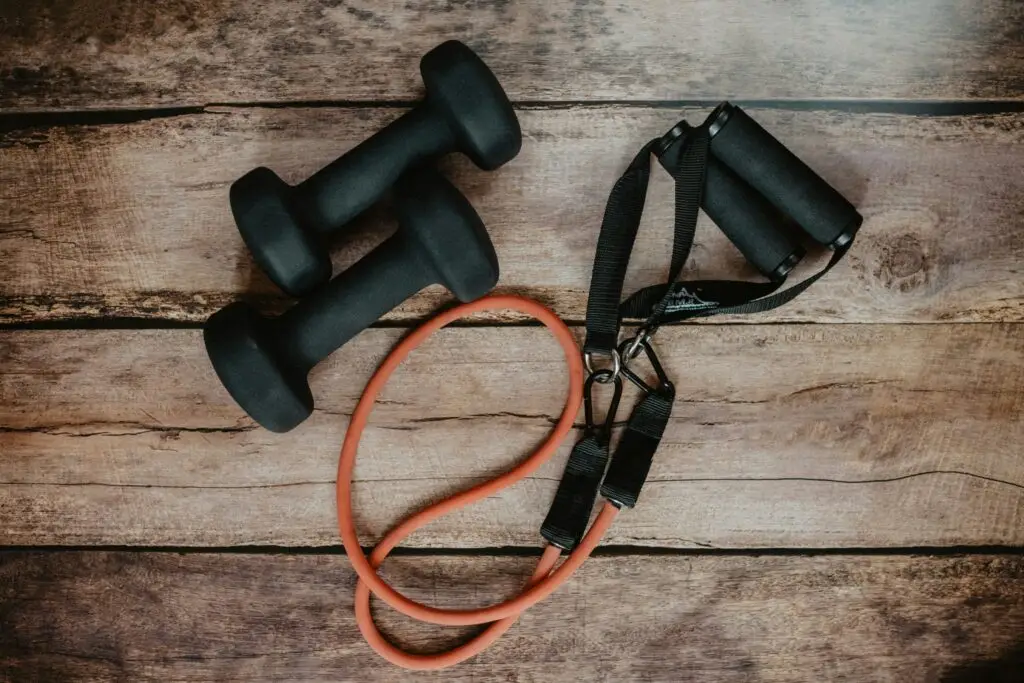
A set of bands and a few exercises is a great start. To keep building strength, you need a plan that is structured and progressive.
Bands do not show a weight in kilograms, so you judge the right band by effort. Choose a band that makes the last few reps of each set hard while your form stays clean.
Sets, Reps and Resistance
The number of sets and repetitions (reps) depends on your goal. These ranges are common starting points:
| Goal | Reps per set | Sets per exercise | Band choice |
|---|---|---|---|
| Strength | 5 to 8 | 3 to 5 | A band that makes the last few reps very hard |
| Muscle growth (hypertrophy) | 8 to 15 | 3 to 4 | A band that takes you close to failure |
| Muscular endurance | 15 to 20 or more | 2 to 3 | A lighter band and continuous movement |
For context, the ACSM 2026 position stand suggests 2 to 3 sets per exercise for strength, and about 10 sets per muscle group per week for muscle growth. It also found that training to complete failure did not consistently improve results for the average healthy adult.
Progressive Overload With Bands
Progressive overload is the most important rule for getting stronger. You need to challenge your muscles a little more over time. With bands, you can:
- Increase resistance: Use a thicker band, or combine two bands.
- Add reps or sets: Do one or two more reps, or add a set.
- Increase time under tension: Slow down, especially in the lowering (eccentric) phase.
- Shorten rest: Take shorter breaks between sets. Our guide to how long to rest between sets explains the trade-offs.
- Improve your form: A fuller, more controlled range of motion makes the target muscle work harder.
For more detail, read our complete guide to progressive overload.
How Often to Train
The NHS advises adults to do muscle-strengthening activities that work all the major muscle groups on at least two days a week. It lists working with resistance bands as one example. For most people, two to four band workouts a week works well.
- Full-body workouts: If you train two or three times a week, work all the major muscle groups in each session. This leaves time to recover between sessions.
- Split routines: If you train four or more times a week, you can split your sessions, for example upper body one day and lower body the next. Our workout split guide compares the options.
Recovery: Muscles adapt when you recover. Get enough sleep and eat well. Avoid training the same muscle group hard on two days in a row, and listen to your body.
8-Week Resistance Band Training Program
This program uses three full-body band workouts a week. Each session balances pushing, pulling, lower-body and core work. If you want a different structure, see our other resistance band strength training plan.
Equipment
- Tube bands with handles
- Long loop bands
- Mini bands (short hip and glute bands)
Frequency, Sets, Reps and Rest
- Frequency: 3 times a week, for example Monday, Wednesday and Friday
- Sets and reps: 4 sets of 10 to 12 reps per exercise
- Rest: 30 to 60 seconds between sets
How to Progress
- Weeks 1 to 2: Focus on form.
- Weeks 3 to 4: Add reps or use tighter bands.
- Weeks 5 to 6: Slow down the tempo.
- Weeks 7 to 8: Reduce rest, or increase tension or volume.
Weeks 1 to 4: Base Phase (Control and Form)
Workout A
| Exercise | Sets | Reps | Rest |
|---|---|---|---|
| Chest press (handles, standing, anchored to a door) | 4 | 10–12 | 30–60 s |
| Bent-over row (loop band under feet) | 4 | 10–12 | 30–60 s |
| Banded squat (mini band above knees) | 4 | 10–12 | 30–60 s |
| Glute kickbacks (loop band, on all fours) | 4 | 10–12 | 30–60 s |
| Dead bug (mini band around feet) | 4 | 10–12 | 30–60 s |
| Banded jumping jacks (mini band around ankles) | 4 | 10–12 | 30–60 s |
Workout B
| Exercise | Sets | Reps | Rest |
|---|---|---|---|
| Shoulder press (handles) | 4 | 10–12 | 30–60 s |
| Seated row (loop band around feet) | 4 | 10–12 | 30–60 s |
| Reverse lunge (mini band above knees) | 4 | 10–12 | 30–60 s |
| Hip thrust (loop band across hips) | 4 | 10–12 | 30–60 s |
| Plank with band pull-aparts (mini band around wrists) | 4 | 10–12 | 30–60 s |
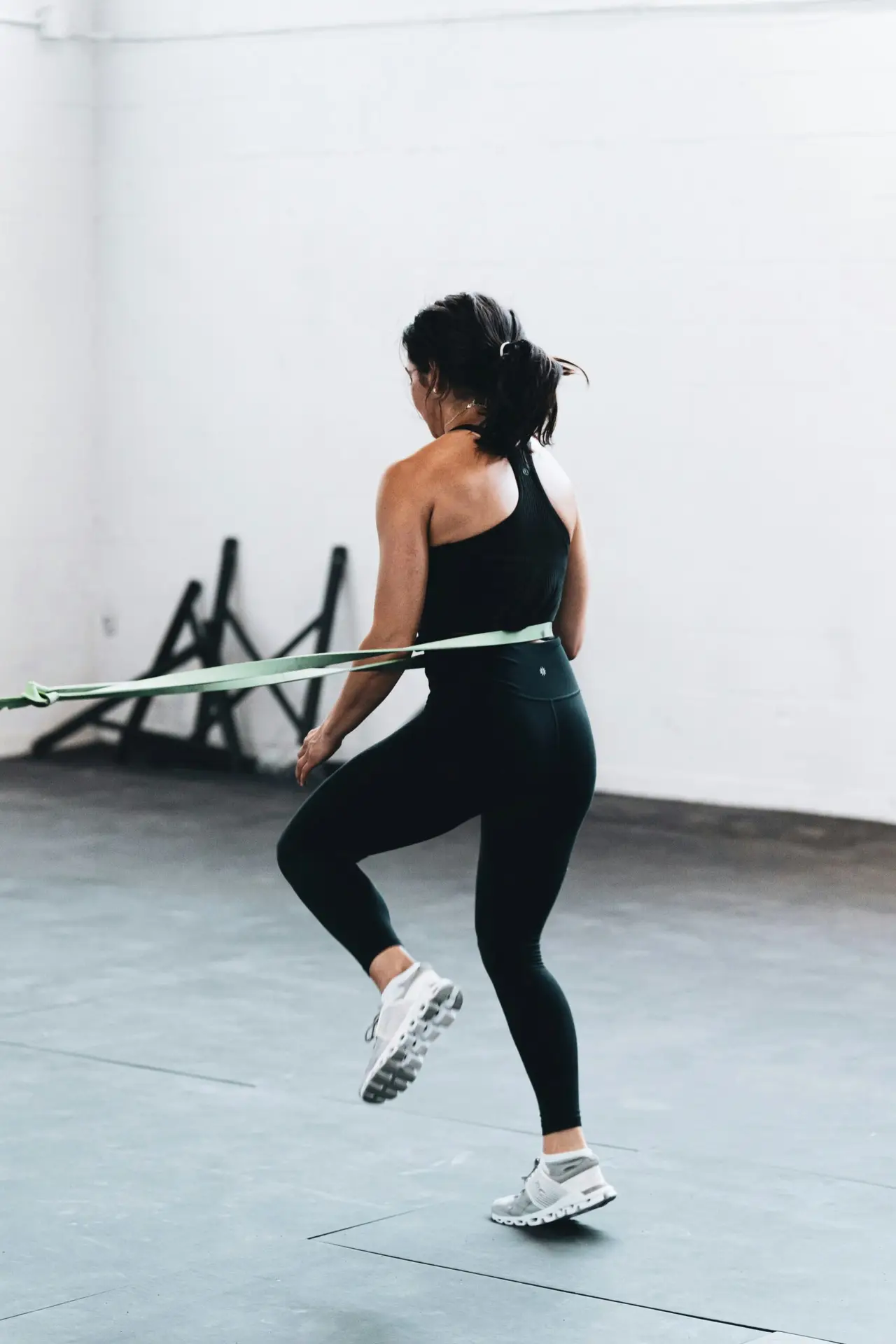
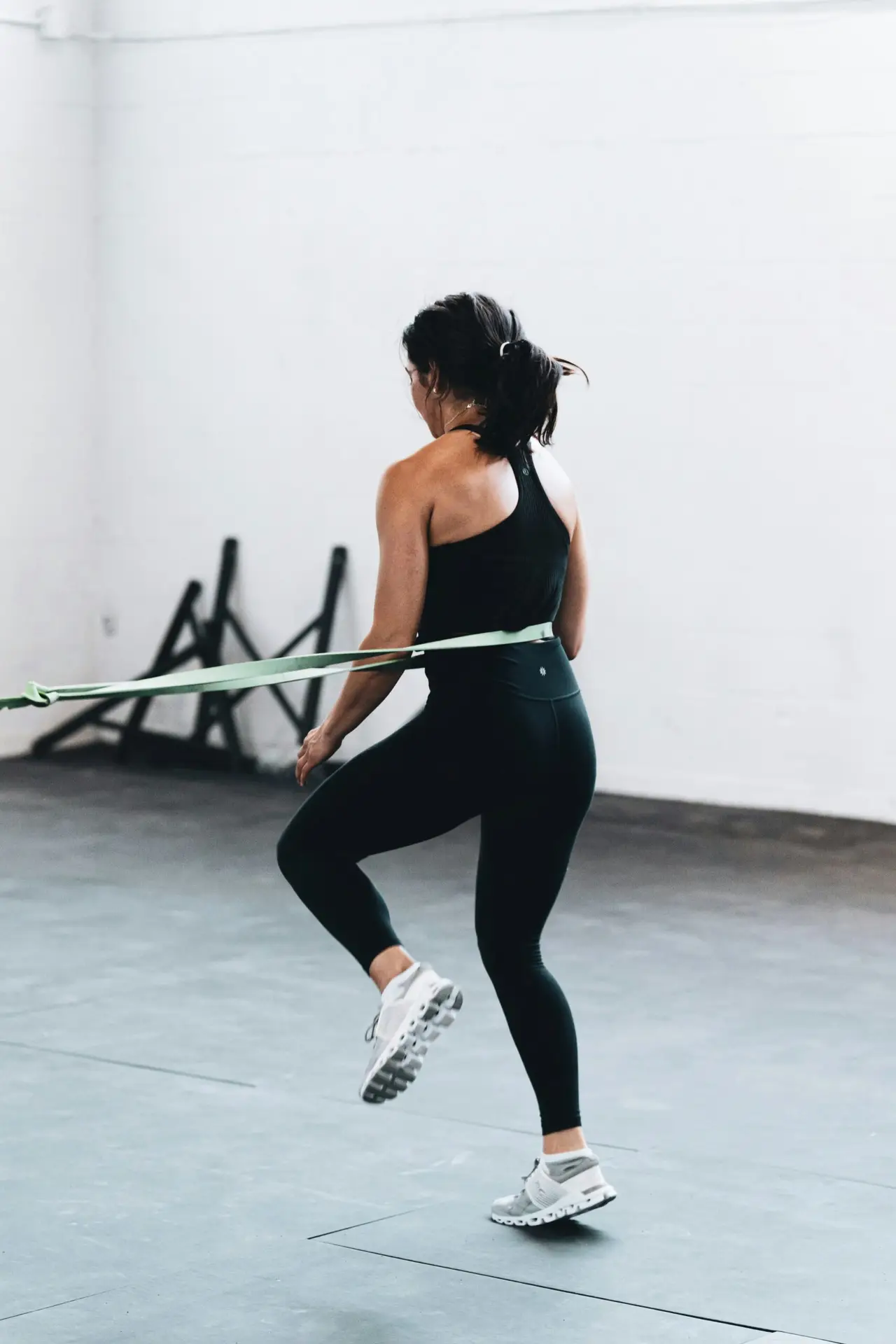
| Band sprints (loop band around waist, stationary run) | 4 | 10–12 | 30–60 s |
Workout C
| Exercise | Sets | Reps | Rest |
|---|---|---|---|
| Push-up to row (mini band around wrists, handles under palms) | 4 | 10–12 | 30–60 s |
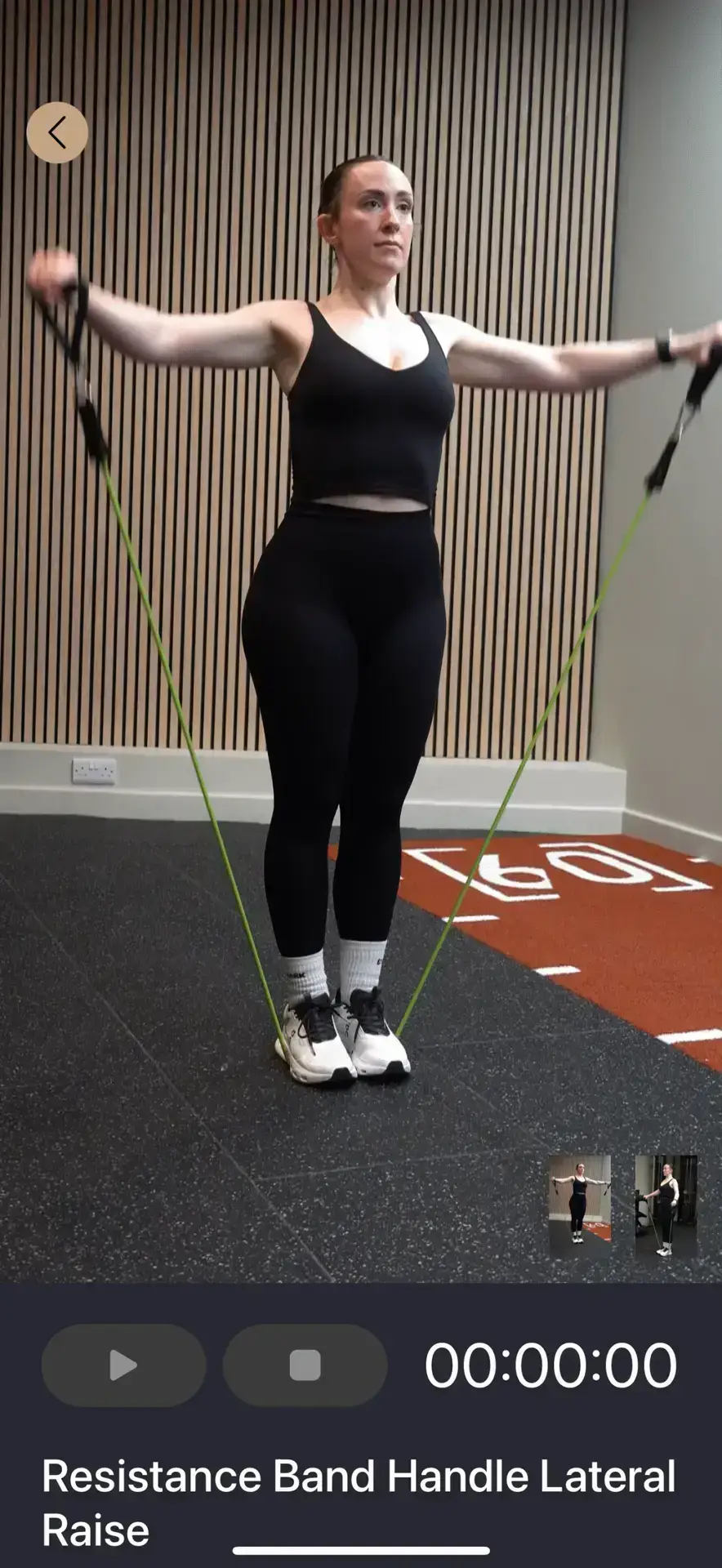
| Lateral raise (handles or loop band under feet) | 4 | 10–12 | 30–60 s |
| Banded deadlift (loop band under feet) | 4 | 10–12 | 30–60 s |
| Side-step squat (mini band above knees) | 4 | 10–12 | 30–60 s |
| Leg raises with mini band | 4 | 10–12 | 30–60 s |
| High knees (mini band around ankles) | 4 | 10–12 | 30–60 s |
Weeks 5 to 8: Strength Phase (Tempo and Volume)
Workout A
| Exercise | Sets | Reps | Rest | Notes |
|---|---|---|---|---|
| Slow-tempo chest press (handles) | 4 | 10–12 | 30–60 s | 3 seconds down |
| Loop band bent-over row with hold | 4 | 10–12 | 30–60 s | 2-second pause at the top |
| Banded Bulgarian split squat (loop band under front foot) | 4 | 10–12 | 30–60 s | — |
| Glute bridge hold and pulses (mini band) | 4 | 10–12 | 30–60 s | — |
| Russian twists with mini band | 4 | 10–12 | 30–60 s | — |
| Banded burpees (mini band above knees) | 4 | 10–12 | 30–60 s | — |
Workout B
| Exercise | Sets | Reps | Rest |
|---|---|---|---|
| Arnold press (handles) | 4 | 10–12 | 30–60 s |
| Single-arm row (loop band, anchored to a door or foot) | 4 | 10–12 | 30–60 s |
| Lateral banded walks (mini band at ankles), see the mini band crab walk | 4 | 10–12 | 30–60 s |
| Step-ups with loop band resistance | 4 | 10–12 | 30–60 s |
| Hollow hold with band pull (mini band) | 4 | 10–12 | 30–60 s |
| Jump squats with mini band | 4 | 10–12 | 30–60 s |
Workout C
| Exercise | Sets | Reps | Rest |
|---|---|---|---|
| Close-grip press (handles) | 4 | 10–12 | 30–60 s |
| Rear delt pull-apart (mini band) | 4 | 10–12 | 30–60 s |
| RDL with loop band (under feet, around hips) | 4 | 10–12 | 30–60 s |
| frog pumps (mini band above knees) | 4 | 10–12 | 30–60 s |
| Bicycle crunch with mini band | 4 | 10–12 | 30–60 s |
| Finisher: mountain climbers, band slams (anchored) and plank jacks | — | 30 seconds each | — |
Getting Started With Resistance Bands
Resistance bands are portable, low cost and effective. Research shows they can build strength comparable to conventional training when you use enough resistance and keep progressing.
Serious strength gains are possible with bands. It comes down to using them correctly, training consistently and applying progressive overload. Limited equipment or space does not have to hold you back.
Start with a set of bands, learn the main exercises and follow the 8-week plan. Record your reps and band level each week so you know when to move up.
If you want each session set out for you, 12REPS builds workouts around your goal, the equipment you have and the time you’ve got. Every exercise comes with a trainer demonstration, and the app remembers what you did last time so you have a number to beat.
Sources
- Lopes JSS, et al. Effects of training with elastic resistance versus conventional resistance on muscular strength: A systematic review and meta-analysis. SAGE Open Medicine, 2019. https://doaj.org/article/f76933a02f3a4ff08fd3d81de9169831
- 5 Things to Know About Creating an Effective Resistance Training Plan (infographic on the 2026 ACSM position stand on resistance training). American College of Sports Medicine, 2026. https://acsm.org/wp-content/uploads/2026/03/Resistance-Training-Position-Stand-infographic.pdf
- Martins WR, et al. Elastic resistance training to increase muscle strength in elderly: A systematic review with meta-analysis. Archives of Gerontology and Geriatrics (summary on McMaster Optimal Aging Portal), 2013. https://www.mcmasteroptimalaging.org/full-article/233896b999579f1667598372b226fc48
- Physical activity guidelines for adults aged 19 to 64. NHS, accessed 2026. https://www.nhs.uk/live-well/exercise/physical-activity-guidelines-for-adults-aged-19-to-64/