


By Will Duru, BSc (Hons) Sport and Exercise Science, Award-winning Personal Trainer with over 10 years of experience in strength training and optimising recovery
Strength training for men means working your muscles against resistance, such as barbells, dumbbells, machines or your bodyweight, usually 2 to 4 times a week. Start with a few compound lifts, add weight or reps over time, eat enough protein and sleep well. That simple plan can build muscle and strength at any age.
In over 10 years as a personal trainer, I’ve heard it all. Men tell me they are too old to start, they don’t have time, or they don’t want to get bulky. But the most common question is a simple, honest one: where do I even begin?
This page answers the questions men ask me most, from first sessions to building muscle, losing fat and testosterone. Each answer is short and links to a deeper guide if you want more. Women have their own guide: strength training for women, questions answered.
Why strength training is worth your time
Strength training is about more than how you look. It builds the strength to lift, carry and move well as you age.
The health research is encouraging. In a large review of cohort studies, people who did muscle-strengthening activities had a 10 to 17% lower risk of early death, heart disease, cancer and diabetes. These studies show an association, not proof that lifting causes the benefit.
Lifting may also help your mood. A meta-analysis of randomized trials found that resistance training reduced depressive symptoms. If you are struggling with your mental health, speak to your doctor as well.
Getting started
1. I'm a complete beginner. Where do I start?
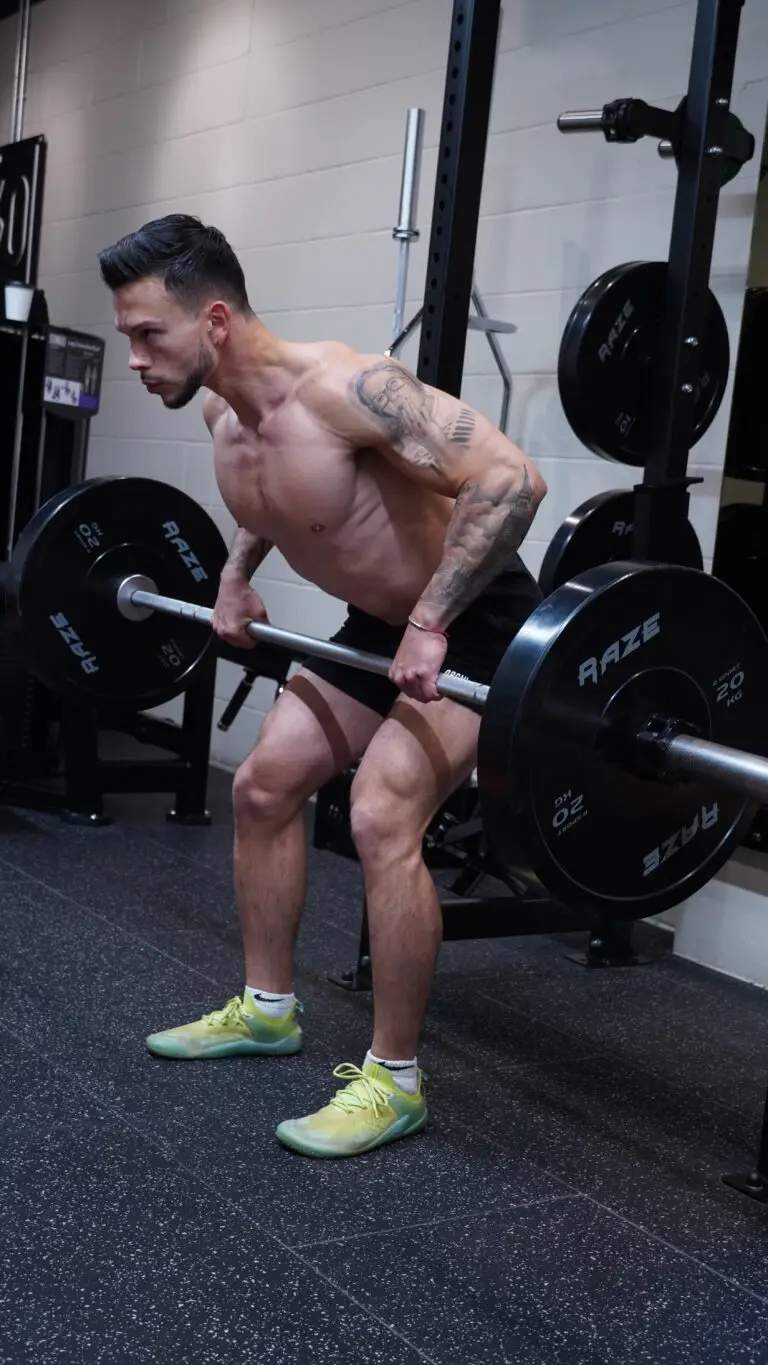
Learn five basic movement patterns: squat, hinge (like a deadlift), push, pull and carry. Most good programs are built on these.
If you are very new, start with bodyweight versions, such as squats and press-ups. Then add dumbbells, kettlebells or a barbell as your form improves. The five key compound lifts are a good next step.
Don’t wait for the perfect program. A simple plan you follow beats a clever plan you abandon. Our 3-day split for beginner men is one place to start.
2. How many days a week should I train?
Two to three days a week is a strong start for most beginners. After 6 to 12 months of steady training, many men move to 3 or 4 days.
Three solid sessions every week for a year will do more than six sessions one week and none the next. For a goal-by-goal answer, read how many times a week you should work out.
3. How long should my workouts be?
Most strength sessions take 45 to 60 minutes, including a short warm-up. A focused 30-minute session can work too. If you are often in the gym for 2 hours, you may be resting too long or doing too many exercises. See how long a workout should be.
4. How many exercises should I do per session?
Four to six is plenty for a beginner. Choose mostly compound exercises that work several muscles at once. Our guide to how many exercises per workout explains how to pick and order them.
5. Do I need a gym membership?
No. You can build real strength at home with your bodyweight, a set of adjustable dumbbells or a couple of kettlebells. Progressive overload, consistency and good form work anywhere.
A gym does make progress easier later on. You get heavier weights, more equipment and a place that is only for training.
6. Should I use free weights or machines?
Both build muscle. Machines are a simple way to learn a movement and train hard with less balance needed. Free weights let you move more naturally and train your stabilizing muscles. Most men do well with a mix.
Video: Free weights or machines for beginners. This short video explains how to choose between them when you are new to the gym.
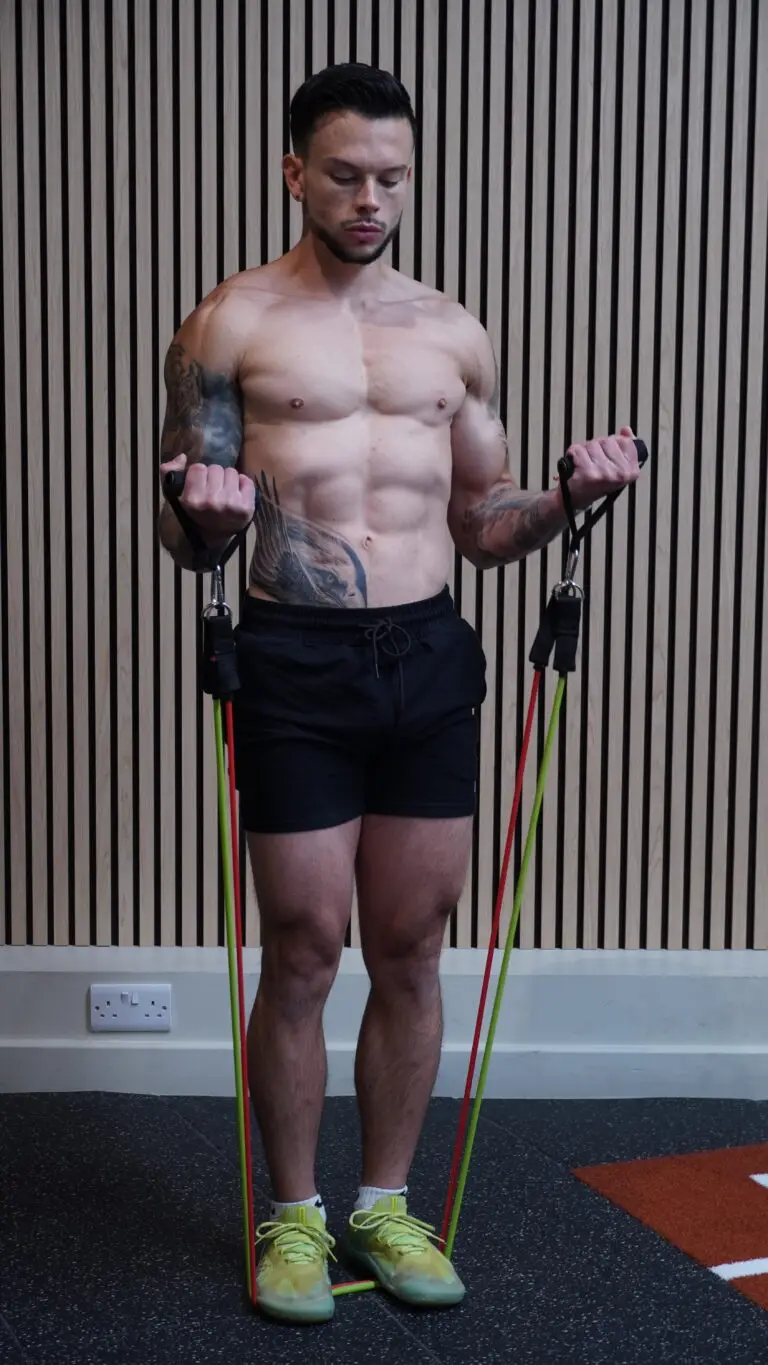
Building muscle and strength
7. What are reps, sets and working sets?
A rep (repetition) is one full movement, such as one squat. A set is a group of reps done in a row. “3 sets of 10” means 10 reps, a rest, and then two more rounds.
Warm-up sets are lighter sets before your main lift to prepare your muscles and joints. Working sets are the sets at your target weight that count toward your progress.
8. What rep range builds muscle, and what builds strength?
Hypertrophy is the scientific word for muscle growth. A meta-analysis comparing light and heavy loads found that both built similar muscle when sets were taken close to failure. Heavy loads built more maximal strength.
In practice, 6 to 15 reps is a practical range for building muscle. Sets of 1 to 5 reps with heavy weight are best for maximal strength. Your 1RM, or one-rep max, is the heaviest weight you can lift once with good form. Read how to combine strength and hypertrophy training if you want both.
9. Do I need to lift heavy to build muscle?
No. Lighter weights for higher reps can build muscle too, as long as the last few reps are hard. You do need heavier work if you want to raise your 1RM.
10. How many sets per muscle do I need each week?
More weekly sets tend to give more growth, up to a point. A meta-analysis on training volume found a graded dose-response: more weekly sets per muscle were linked to more growth.
If you are short on time, a review of time-saving training suggests a minimum of 4 hard sets per muscle group each week. Most men starting out do well somewhere between that and about 10 sets.
11. Should I train to failure?
You don’t need to. A meta-analysis on training to failure found no overall difference in strength or size between sets taken to failure and sets stopped short of it.
A good rule is to finish most sets with 1 to 3 reps left in the tank. Our guide to RPE and RIR shows how to judge it.
12. How do I keep making progress?
Use progressive overload. That means doing slightly more over time: more weight, more reps or an extra set. Write down every session so you know what to beat next time. Our progressive overload guide covers the main methods.
13. Are supersets and drop sets worth it?
A superset is two exercises done back to back with little or no rest. A drop set means you reach near failure, lower the weight and keep going. Trisets and giant sets link three or more exercises.
These methods mainly save time. A systematic review of advanced training methods found mixed results, and one 12-week study found drop sets did no better than traditional sets. Use them as tools, not as the core of your training.
14. Why am I not gaining muscle?
The usual reasons are simple:
- Not enough hard sets per muscle each week
- Lifting the same weights for months
- Not eating enough food or protein
- Poor sleep or skipped sessions
Video: Why you’re not gaining muscle. This video walks through the most common reasons muscle gain stalls.
15. How long until I see results?
Most men feel stronger within the first few weeks, as your body learns the lifts. Visible muscle takes longer. Read how long it takes to build noticeable muscle for a realistic timeline.
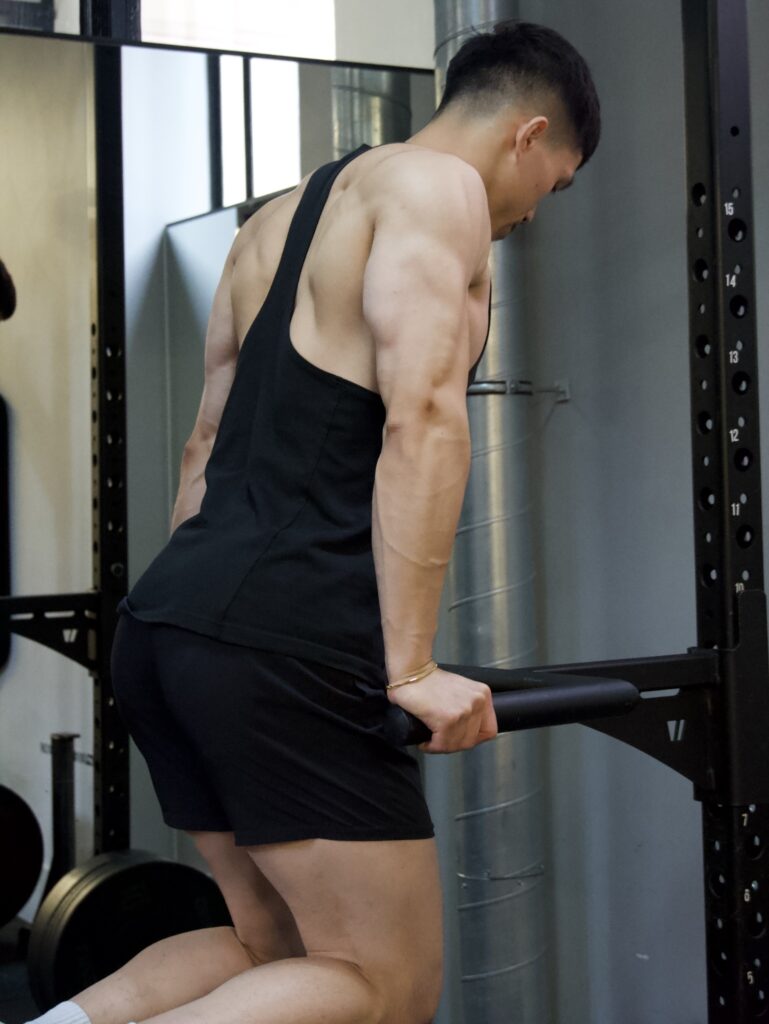
Nutrition, fat loss and supplements
16. How much protein do I need to build muscle?
A good target is about 1.6 g of protein per kilogram of body weight per day. A meta-analysis on protein and training found little extra gain in muscle above that level. For a 90 kg man, that is about 145 g a day, spread across your meals.
17. I'm skinny. How do I gain size?
You need to eat a little more than you burn, as well as train hard. Add a snack or a larger portion at each meal, and track your body weight weekly. If the scale isn’t moving after a few weeks, eat a bit more. Our nutrition guide explains how to set this up.
18. Can I build muscle and lose fat at the same time?
Yes. This is called body recomposition. It is most common in beginners and people returning to training. A review on body recomposition found it also happens in trained lifters who follow progressive training and good nutrition. For experienced lifters, separate phases of building and cutting are often easier to manage.
19. How do I lose belly fat?
You cannot choose where you lose fat. In one trial of abdominal exercise, 6 weeks of ab exercises alone did not reduce belly fat compared with a control group.
Lose fat overall with a calorie deficit and regular training, and your waist will follow. Our guide on how to get abs covers the training side.
20. Is cardio or strength training better for fat loss?
Use both. An American College of Sports Medicine position stand found strength training alone did not increase weight loss. But it can help you keep or build lean mass while you lose fat. Cardio adds to the calories you burn and supports heart health. Your diet does most of the work.
21. What supplements are worth taking?
For most men, only two are worth considering:
- Protein powder: a handy way to reach your protein target. It is food, not magic.
- Creatine monohydrate: the International Society of Sports Nutrition describes it as safe and well tolerated in healthy people, and it may support high-intensity performance.
If you have a medical condition or take medication, check with your doctor or pharmacist first.
Health, age and common myths
22. Does lifting weights raise testosterone?
Lifting causes short rises in some hormones after a session. In a study of 56 young men, those short rises in testosterone were not linked to how much muscle or strength they gained.
So train for the work itself, not the hormone spike. If you are worried about low testosterone or symptoms such as low energy or libido, see your doctor.
23. Am I too old to start at 40 or 50?
No. Men build strength and muscle well into later life. Start lighter, warm up well and progress steadily. Read strength training for men over 40 for an age-specific guide. If you have a heart condition, joint problems or take medication, check with your doctor first.
24. Do I need to be sore after every workout?
No. Soreness usually means you did something new, not that the session worked better. As your body gets used to training, you will feel less sore. Progress in your log is a better sign.
25. Will lifting make me stiff or "muscle-bound"?
No. A meta-analysis comparing strength training and stretching found they improved range of motion by a similar amount. Train through a full range of motion and you are unlikely to lose flexibility.
26. What's the biggest mistake beginners make?
Inconsistency. Results come from showing up week after week, not from one perfect workout. The second mistake is training without a plan, which leads to random sessions and slow progress.
Your next step
Strength training is a long game. Small, steady improvements add up to big changes over months and years.
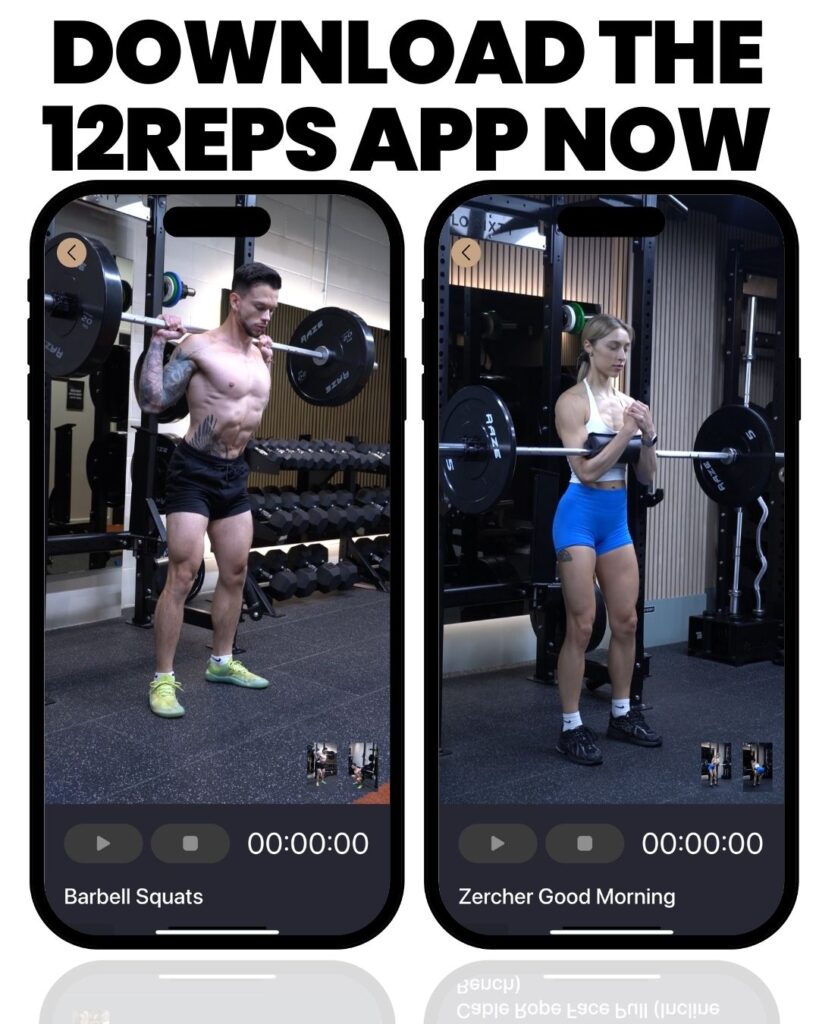
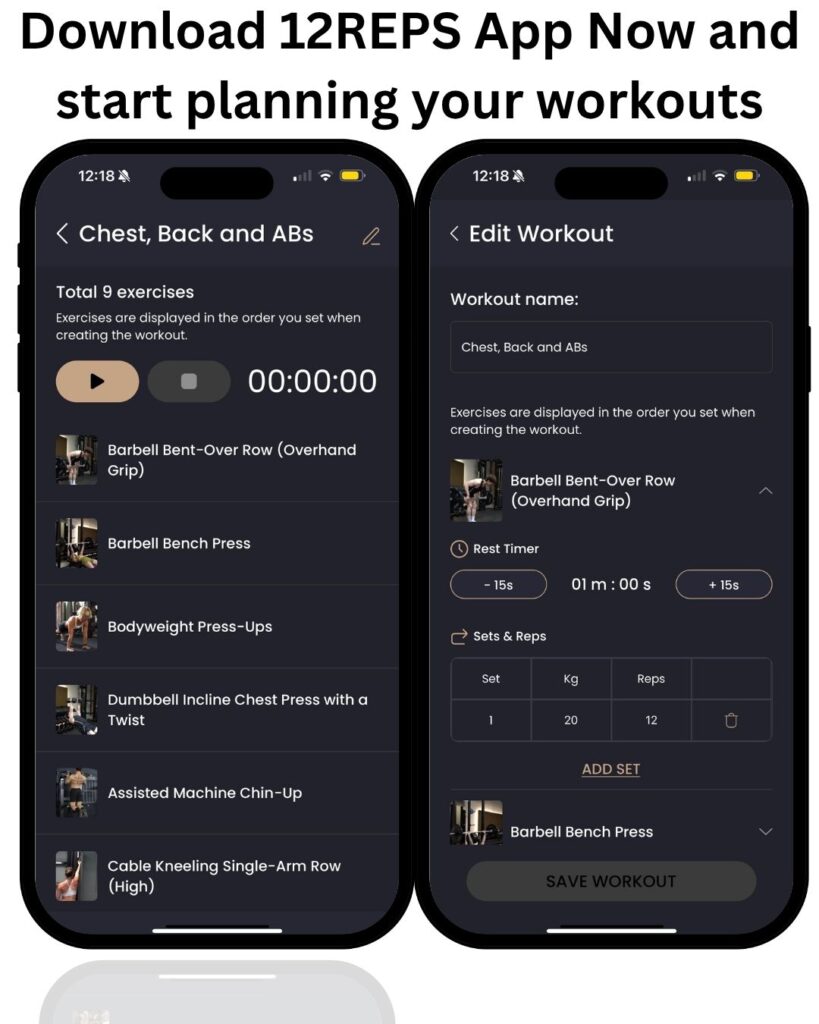
If you want a plan built around your goal, your equipment and your schedule, 12REPS sets out each session and shows a trainer demonstration for every exercise. See how the 12REPS app works, or download the 12REPS app to start.
Sources
- Dose-response relationship between weekly resistance training volume and increases in muscle mass: A systematic review and meta-analysis. Schoenfeld BJ, Ogborn D, Krieger JW. Journal of Sports Sciences, 2017. https://doi.org/10.1080/02640414.2016.1210197
- Strength and Hypertrophy Adaptations Between Low- vs. High-Load Resistance Training: A Systematic Review and Meta-analysis. Schoenfeld BJ, Grgic J, Ogborn D, Krieger JW. Journal of Strength and Conditioning Research, 2017. https://pubmed.ncbi.nlm.nih.gov/28834797/
- A systematic review, meta-analysis and meta-regression of the effect of protein supplementation on resistance training-induced gains in muscle mass and strength in healthy adults. Morton RW, Murphy KT, McKellar SR, et al. British Journal of Sports Medicine, 2018. https://doi.org/10.1136/bjsports-2017-097608
- International Society of Sports Nutrition position stand: safety and efficacy of creatine supplementation in exercise, sport, and medicine. Kreider RB, Kalman DS, Antonio J, et al. Journal of the International Society of Sports Nutrition, 2017. https://doi.org/10.1186/s12970-017-0173-z
- Muscle-strengthening activities are associated with lower risk and mortality in major non-communicable diseases: a systematic review and meta-analysis of cohort studies. Momma H, Kawakami R, Honda T, Sawada SS. British Journal of Sports Medicine, 2022. https://bjsm.bmj.com/content/56/13/755
- American College of Sports Medicine Position Stand. Appropriate physical activity intervention strategies for weight loss and prevention of weight regain for adults. Donnelly JE, et al. Medicine and Science in Sports and Exercise, 2009. https://pubmed.ncbi.nlm.nih.gov/19127177/
- Association of Efficacy of Resistance Exercise Training With Depressive Symptoms: Meta-analysis and Meta-regression Analysis of Randomized Clinical Trials. Gordon BR, McDowell CP, Hallgren M, et al. JAMA Psychiatry, 2018. https://doi.org/10.1001/jamapsychiatry.2018.0572
- Body Recomposition: Can Trained Individuals Build Muscle and Lose Fat at the Same Time?. Barakat C, et al. Strength and Conditioning Journal, 2020. https://doi.org/10.1519/SSC.0000000000000584
- Effects of resistance training performed to repetition failure or non-failure on muscular strength and hypertrophy: A systematic review and meta-analysis. Grgic J, Schoenfeld BJ, Orazem J, Sabol F. Journal of Sport and Health Science, 2022. https://doi.org/10.1016/j.jshs.2021.01.007
- Maximizing Muscle Hypertrophy: A Systematic Review of Advanced Resistance Training Techniques and Methods. Krzysztofik M, Wilk M, Wojdała G, Gołaś A. International Journal of Environmental Research and Public Health, 2019. https://doi.org/10.3390/ijerph16244897
- No Time to Lift? Designing Time-Efficient Training Programs for Strength and Hypertrophy: A Narrative Review. Iversen VM, Norum M, Schoenfeld BJ, Fimland MS. Sports Medicine, 2021. https://doi.org/10.1007/s40279-021-01490-1
- Associations of exercise-induced hormone profiles and gains in strength and hypertrophy in a large cohort after weight training. West DWD, Phillips SM. European Journal of Applied Physiology, 2012. https://doi.org/10.1007/s00421-011-2246-z
- The effect of abdominal exercise on abdominal fat. Vispute SS, Smith JD, LeCheminant JD, Hurley KS. Journal of Strength and Conditioning Research, 2011. https://doi.org/10.1519/JSC.0b013e3181fb4a46
- Strength Training versus Stretching for Improving Range of Motion: A Systematic Review and Meta-Analysis. Afonso J, Ramirez-Campillo R, Moscão J, et al. Healthcare, 2021. https://doi.org/10.3390/healthcare9040427