


By Will Duru, BSc (Hons) Sport and Exercise Science
Strength training for women means working your muscles against resistance, such as dumbbells, machines, bands or your bodyweight. Two or three sessions a week is a good start. It builds strength and muscle, can support bone health and mood, and will not make you bulky by accident.
For over a decade I’ve heard the same worries from women starting out. They don’t want to get bulky. They feel nervous in the weights area. They don’t know where to begin. This guide answers those questions and the others women ask me most.
Each answer is short and links to a deeper guide. If you are curious how the advice differs for men, see strength training for men, questions answered.
Getting started
1. I'm a complete beginner. Where do I start?
Start with five basic moves and master them before adding weight:
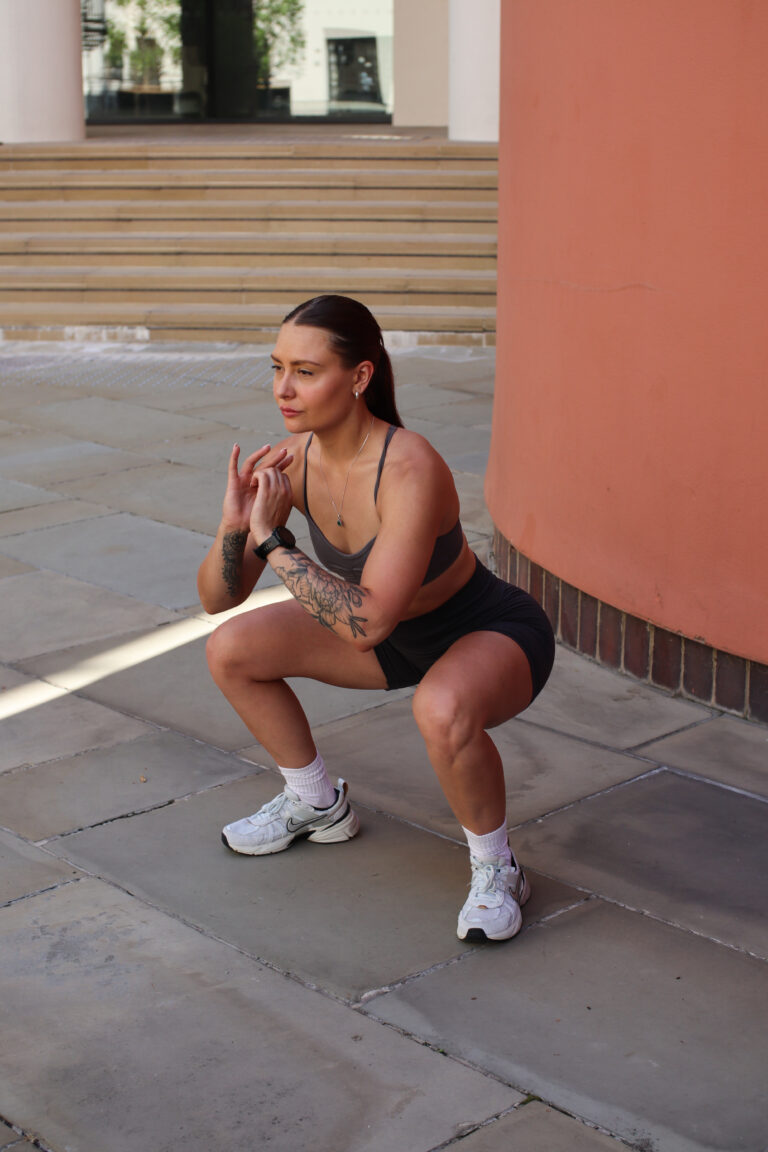
- A squat, such as a bodyweight squat or a goblet squat
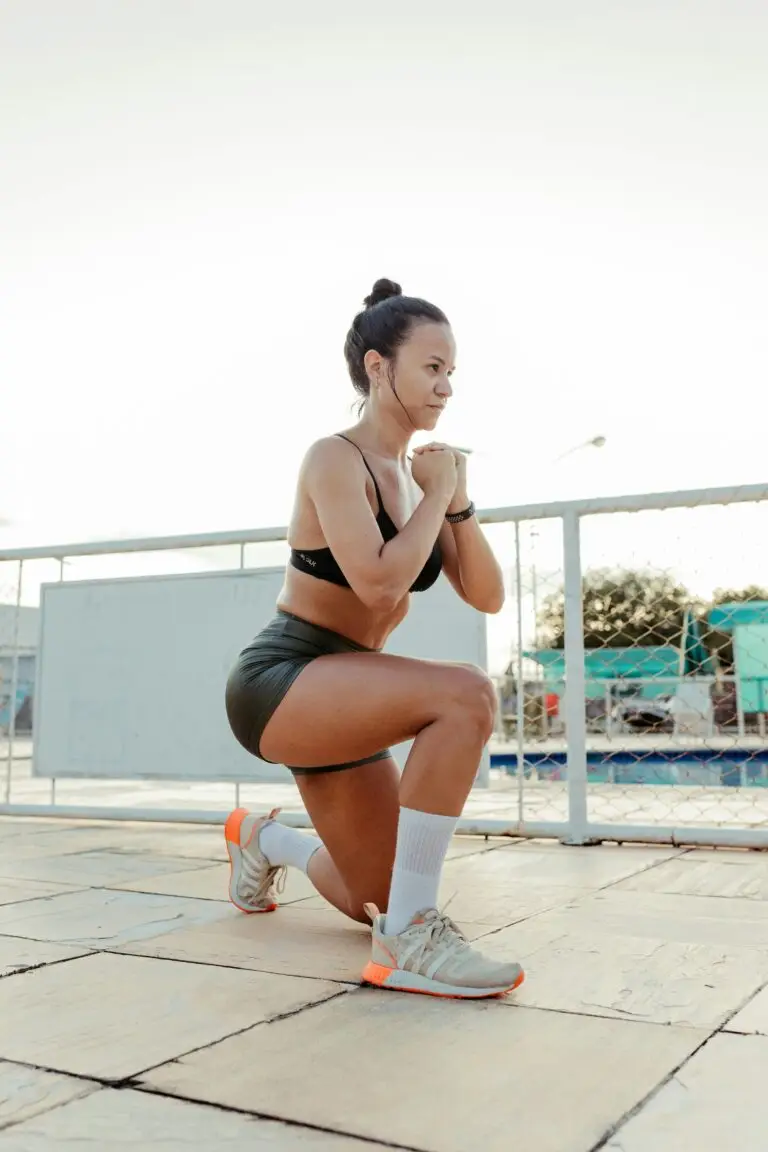
- A lunge, such as a reverse lunge
- A push, such as an elevated press-up
- A pull, such as a dumbbell single-arm row
- A hip exercise, such as a glute bridge
A simple full-body routine 2 or 3 times a week covers all of these. Our beginner’s guide to lifting weights for women takes you through your first weeks.
2. I feel nervous in the weights area. What helps?
That feeling is very common, and it fades with practice. Go in with a written plan, so you know exactly what to do. Start with exercises you have already practiced at home, and pick quieter times at first.
Everyone in the weights area was a beginner once, and most people are focused on their own session. Read more in our guide to feeling confident in the weight room.
Video: 5 tips for women new to the gym. These short tips help you feel more prepared for your first sessions.
3. How often should I train, and for how long?
Two or three sessions of 45 to 60 minutes a week is plenty to start. Once that feels routine, you can add a fourth day. For more detail, read how many times a week to work out and how many exercises to do per workout.
4. Can I train at home, and what equipment do I need?
Yes. You can get strong at home with a few pieces of kit. Good starting equipment:
- Adjustable dumbbells, roughly 2 to 12 kg (about 5 to 25 lb)
- A set of resistance bands in different strengths
- An exercise mat
- Optional: a kettlebell, a doorway pull-up bar or a suspension trainer
A gym gives you heavier weights and more choice as you progress. Our guide to strength training at home for women has a starter routine.
5. Will lifting weights make me bulky?
No, not by accident. Building a lot of muscle takes years of hard training and eating to grow. Most women find lifting makes them look firmer and more athletic, not bulky. Read the full answer in will lifting weights make me bulky.
6. Do women need a different program from men?
Mostly no. A meta-analysis on sex differences in resistance training found that men and women gained muscle at similar relative rates. Women gained more relative upper-body strength. Lower-body strength gains were similar.
So the same principles apply to you: good technique, enough hard sets and steady progress. What differs is usually your goals and preferences, not the rules.
Training basics
7. What do reps and sets mean, and how heavy should I lift?
A rep is one full movement. A set is a group of reps in a row, such as 12 squats. Do one or two lighter warm-up sets before your main sets to prepare your joints.
For your main sets, choose a weight that makes the last 2 or 3 reps feel hard while your form stays clean. If you could do 5 more reps, it is too light.
8. Should I stick to light weights and high reps?
Light weights can build muscle, but only if the set ends close to failure. A meta-analysis of light vs heavy loads found similar muscle growth when sets were hard, while heavier loads built more maximal strength.
The trap is light weights with easy reps. If you can chat through your 20th rep, it is time to pick up a heavier dumbbell.
9. How do I keep making progress?
Use progressive overload: ask a little more of your muscles over time. You can do this by:
- Adding weight: use a slightly heavier dumbbell or add plates to the bar.
- Adding reps: if you did 8 reps last time, aim for 9 or 10 with the same weight.
- Adding a set: go from 2 sets to 3.
- Improving form: a fuller, more controlled rep makes the muscle work harder.
- Training a muscle more often: for example, glutes twice a week instead of once.
Our beginner’s guide to progressive overload explains each method.
10. Should I train to failure?
It isn’t needed. Research on training to failure found similar strength and muscle gains whether or not sets were taken all the way to failure. Stopping 1 to 3 reps short is safer for your form and still works.
Your cycle, the scale and nutrition
11. Should I train around my menstrual cycle?
You don’t have to. An umbrella review found it was too early to say that cycle phase meaningfully affects strength performance or long-term gains. It also noted that many studies did not measure cycle phase well.
Listen to your body instead. If you feel low on energy or have painful periods on some days, lower the load or swap in an easier session. If your periods are very painful or irregular, speak to your doctor.
12. Why is the scale going up since I started lifting?
Early changes on the scale are often water and food in your gut, not fat. New training can also make muscles hold more water while they recover. Over months, some of the change may be new muscle.
Track more than one thing: your weight trend, how your clothes fit, progress photos and what you lift.
Video: Scale or photos for tracking progress. This video explains why women should use more than the scale to judge progress.
13. Can I lose fat and build muscle at the same time?
Often, yes, especially in your first year of lifting. A review on body recomposition found this can happen even in trained people, with progressive training and good nutrition. Eat plenty of protein, keep any calorie deficit small and keep adding weight or reps.
14. How much protein do I need?
Aim for about 1.6 g of protein per kilogram of body weight per day. A meta-analysis on protein and training found little extra benefit for muscle above that amount. For a 60 kg woman, that is about 96 g a day, or roughly 25 to 30 g at each of three or four meals.
15. Which supplements are worth considering?
- Protein powder: helpful if you struggle to eat enough protein from food.
- Creatine monohydrate: the International Society of Sports Nutrition describes it as safe and well tolerated in healthy people.
- Vitamin D: in the UK, the NHS advises adults to consider a daily 10 microgram supplement in autumn and winter.
If you are pregnant, have a medical condition or take medication, ask your doctor or pharmacist before taking any supplement.
16. Will my muscle turn to fat if I stop training?
No. Muscle and fat are different tissues, and one cannot turn into the other. If you stop, you may lose some muscle. If you keep eating the same amount while moving less, you may gain fat. The two can happen together, which is where the myth comes from.
Age, menopause and wellbeing
17. I'm in my 40s, 50s or older. Is it too late to start?
No. Women can build strength at any age. Start with lighter loads, take time to warm up and progress steadily. Read our guides to strength training for women over 40 and resistance training for women over 50.
18. Does strength training help during menopause?
It can support your bones and strength. In the LIFTMOR trial, postmenopausal women with low bone mass did 8 months of supervised, heavy strength and impact training twice a week. Their bone density and physical function improved more than in a low-intensity home group.
That training was closely supervised, so build up gradually. If you have osteoporosis, another condition or take medication, check with your doctor before starting. Our strength training plan for menopause shows how to begin.
19. Can strength training help my mental health?
It may help. A meta-analysis of randomized trials found that resistance training reduced depressive symptoms.
If you are struggling with your mood, speak to your doctor too. Training works best alongside other support, not instead of it.
20. Can I strength train while pregnant or after having a baby?
Talk to your midwife, doctor or a women’s health physiotherapist before you start or change a program during pregnancy or after birth. They can tell you what is right for your body and your recovery.
Recovery and results
21. How much rest and sleep do I need?
Leave at least a day between hard sessions for the same muscles. Your body adapts to training while you recover.
Sleep matters too. The CDC notes that adults aged 18 to 60 should get at least 7 hours a night. Read more in our guide to rest days for women who strength train.
22. What results can I expect, and when?
In the first few weeks, the exercises start to feel more natural and you often notice strength gains as your body learns the movements. Visible changes in muscle take longer, often a few months of steady training. Our guide to how long it takes to build noticeable muscle gives a realistic timeline.
23. What is the biggest mistake women make in the gym?
Staying with weights that are too light for too long. Many women stick to the smallest dumbbells for fear of getting bulky. Progress comes when you challenge your muscles, so don’t be afraid to get strong.
Your next step
Every strong woman you see in the gym started as a beginner. The difference is that she kept showing up.
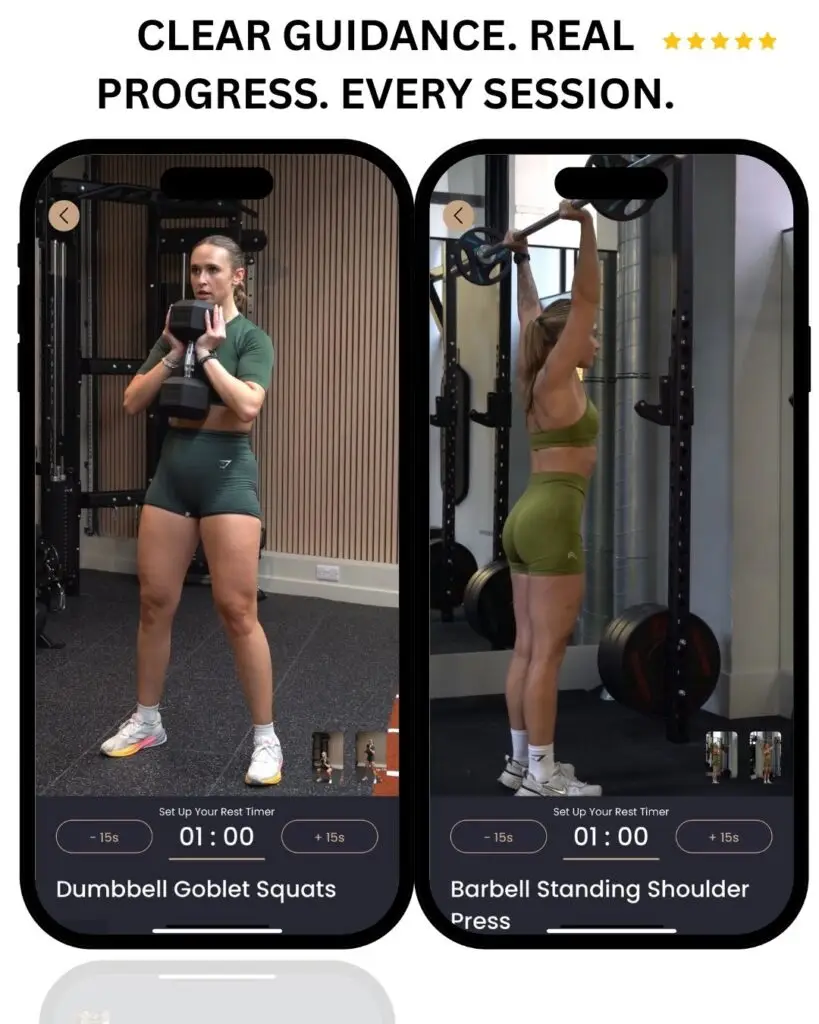
If you want a plan built around your goal, your equipment and the time you have, 12REPS sets out each session for you. A trainer demonstration for every exercise means you always know what to do next. See how the 12REPS app works, or download the 12REPS app.
Sources
- Strength and Hypertrophy Adaptations Between Low- vs. High-Load Resistance Training: A Systematic Review and Meta-analysis. Schoenfeld BJ, Grgic J, Ogborn D, Krieger JW. Journal of Strength and Conditioning Research, 2017. https://pubmed.ncbi.nlm.nih.gov/28834797/
- A systematic review, meta-analysis and meta-regression of the effect of protein supplementation on resistance training-induced gains in muscle mass and strength in healthy adults. Morton RW, Murphy KT, McKellar SR, et al. British Journal of Sports Medicine, 2018. https://doi.org/10.1136/bjsports-2017-097608
- International Society of Sports Nutrition position stand: safety and efficacy of creatine supplementation in exercise, sport, and medicine. Kreider RB, Kalman DS, Antonio J, et al. Journal of the International Society of Sports Nutrition, 2017. https://doi.org/10.1186/s12970-017-0173-z
- Sex Differences in Resistance Training: A Systematic Review and Meta-Analysis. Roberts BM, Nuckols G, Krieger JW. Journal of Strength and Conditioning Research, 2020. https://doi.org/10.1519/JSC.0000000000003521
- Current evidence shows no influence of women’s menstrual cycle phase on acute strength performance or adaptations to resistance exercise training. Colenso-Semple LM, D’Souza AC, Elliott-Sale KJ, Phillips SM. Frontiers in Sports and Active Living, 2023. https://doi.org/10.3389/fspor.2023.1054542
- Association of Efficacy of Resistance Exercise Training With Depressive Symptoms: Meta-analysis and Meta-regression Analysis of Randomized Clinical Trials. Gordon BR, McDowell CP, Hallgren M, et al. JAMA Psychiatry, 2018. https://doi.org/10.1001/jamapsychiatry.2018.0572
- Body Recomposition: Can Trained Individuals Build Muscle and Lose Fat at the Same Time?. Barakat C, et al. Strength and Conditioning Journal, 2020. https://doi.org/10.1519/SSC.0000000000000584
- Effects of resistance training performed to repetition failure or non-failure on muscular strength and hypertrophy: A systematic review and meta-analysis. Grgic J, Schoenfeld BJ, Orazem J, Sabol F. Journal of Sport and Health Science, 2022. https://doi.org/10.1016/j.jshs.2021.01.007
- High-Intensity Resistance and Impact Training Improves Bone Mineral Density and Physical Function in Postmenopausal Women With Osteopenia and Osteoporosis: The LIFTMOR Randomized Controlled Trial. Watson SL, Weeks BK, Weis LJ, et al. Journal of Bone and Mineral Research, 2018. https://doi.org/10.1002/jbmr.3284
- Vitamin D. NHS, n.d.. https://www.nhs.uk/conditions/vitamins-and-minerals/vitamin-d/
- 1 in 3 adults don’t get enough sleep. Centers for Disease Control and Prevention, 2016. https://archive.cdc.gov/www_cdc_gov/media/releases/2016/p0215-enough-sleep.html