


How do you get abs you can see? Lower your body fat slowly with your diet and strength training, and train your ab muscles so they show when the fat comes off. Crunches build the muscle, but they do not burn the fat that covers it. Most men need both parts and several months of patience.
I’m Will Duru, a personal trainer with over 10 years’ experience in London. Men often tell me they do hundreds of crunches a week and still see nothing. This guide explains why and what to do instead.
It is about visible abs: body fat, ab training and realistic expectations. If your main goal is losing fat around your middle, start with our men’s guide to losing belly fat and building muscle.
Why you can't see your abs yet
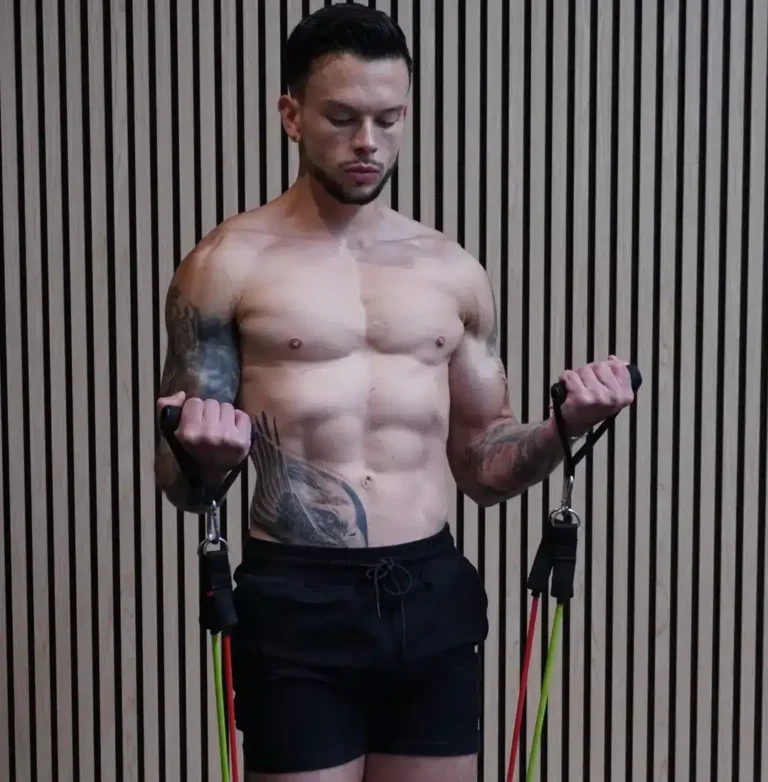
Everyone has ab muscles. The main one, the rectus abdominis, runs down the front of your trunk from your lower ribs to your pelvis. Bands of connective tissue cross it, which gives the six-pack shape.
What hides it is the layer of fat under your skin. When that layer is thin enough, the muscle shows. When it is thicker, even strong abs stay hidden.
There is no single body fat number where abs appear for everyone. It depends on where your body stores fat, your genetics and how developed the muscle is. Some people store more fat around the trunk, as the NSCA notes, so for them the abs can be one of the last places to show.
So the honest answer is that you need to get lean enough for your body. You will not know exactly where that is until you get there.
Why crunches alone won't give you abs
You cannot choose where you lose fat. The NSCA explains that training a muscle does not burn the fat over that area. It cites a 6-week study in which seven ab exercises did not reduce belly fat compared with no ab training.
Ab exercises are small movements, so they add little to the energy you use each day. Fat loss comes from your overall energy balance over weeks and months.
Crunches still have a job. They train the muscle, so it looks better when you are lean. They just cannot do the fat-loss part.
Video: Sit ups. A basic ab exercise. Watch the controlled curl up and the slow return to the floor.
Step 1: Lower your body fat slowly
To lose fat, you need to use more energy than you eat over time. This is called a calorie deficit. Keep it modest rather than extreme.
- Lose weight gradually. The NHS suggests aiming to lose 0.5 to 1 kg a week and warns against losing weight suddenly with diets.
- Go slower as you get leaner. The ISSN position stand on diets notes that leaner people should lose weight more slowly to keep more lean mass.
- Eat enough protein. The ISSN suggests 1.4 to 2.0 g of protein per kg of body weight a day for most people who exercise. It notes that trained lifters may need more while dieting to keep their muscle.
- Keep lifting. Strength training while you lose fat helps you keep your muscle, so you end up lean rather than just smaller.
- Track your food honestly. Log what you eat for a couple of weeks. It is easy to miss calories from cooking oils, snacks and drinks.
This guide does not give a calorie target, because the right deficit depends on your size, activity and history. For a step-by-step way to find yours, see how many calories to eat. For protein, see how much protein you need.
If you have a medical condition, take medication or have a history of disordered eating, talk to your doctor before you change your diet.
Where cardio fits
Cardio is optional for fat loss, but useful. It adds to the energy you use and is good for your general fitness. Keep strength training as your priority so you hold on to muscle. See cardio and weights on the same day.
Step 2: Train your abs like any other muscle
Treat your abs like the rest of your training: hard sets, a mix of exercises and more challenge over time. Bodyweight crunches at the same reps forever soon stop being a challenge.
Cover the main jobs your trunk does:
- Bending forward: cable crunch, sit-up.
- Lifting your legs: hanging knee tuck, hanging leg raise.
- Resisting your back arching: plank, ab wheel rollout.
- Rotating and resisting rotation: side plank, Russian twist.
Core workout A (twice a week)
| Exercise | Sets | Reps or time | Rest |
|---|---|---|---|
| Cable crunch | 3 | 12 to 15 | 90 sec |
| Hanging leg raise (or knee tuck) | 3 | 10 to 15 | 90 sec |
| Plank, weighted when 60 seconds is easy | 3 | 30 to 60 sec | 90 sec |
Core workout B (optional third session)
| Exercise | Sets | Reps | Rest |
|---|---|---|---|
| Ab wheel rollout | 3 | 8 to 12 | 90 sec |
| Weighted Russian twist | 3 | 10 each side | 90 sec |
Add these to the end of your strength sessions, for example Monday and Thursday, with workout B on Saturday if you want it.
How to do each exercise
- Cable crunch: kneel facing a high pulley and hold the rope by your head. Curl your ribs toward your hips. Your arms stay still.
- Hanging leg raise: hang from a bar and lift your knees, or straight legs for a harder version, without swinging. Start with the hanging knee tuck, then move to the hanging leg raise.
- Plank: forearms down, body in a straight line, glutes squeezed. See how to do a plank properly.
- Ab wheel rollout: roll out only as far as you can without your lower back sagging, then pull back with your abs.
- Russian twist: sit leaning back with your feet up, hold a weight at your chest and turn side to side under control.
Video: Hanging knee tuck. The first step toward hanging leg raises. Watch how the knees lift without the body swinging.
Video: Bodyweight plank. Check your plank position: a straight line from head to heels, with hips neither sagging nor piked.
How to progress your ab training
- Cable crunch: when you hit 15 reps on every set, move up one weight step.
- Hanging raises: go from knee tucks to straight-leg raises, then slow down the lowering.
- Plank: when 60 seconds is easy, add a plate on your back rather than holding for minutes.
- Ab wheel: extend your range bit by bit until you can roll out fully from your knees.
Log your weights, reps and hold times like any other lift. Our workout tracking guide shows a simple way to do it.
What to expect
How long it takes depends on where you start. If you have a lot of fat to lose, think in months, not weeks. At the NHS pace of 0.5 to 1 kg a week, even 5 kg of weight loss takes about 5 to 10 weeks.
Progress is rarely smooth. Your weight swings day to day with water and food, so watch the trend over two to four weeks.
Use more than the scale. Take photos in the same light every few weeks and measure your waist. Our guide to body composition and how to track it explains the options.
Very low body fat is hard for most people to keep. Aim for a lean level you can live with, not a photo-shoot look.
Common ab mistakes
- Trying to lose belly fat with ab exercises. Fat loss comes from your overall diet and activity.
- Crash dieting. Very large deficits make it harder to keep muscle and to stick with the plan. Lose weight gradually.
- Swapping strength training for cardio. Keep lifting so you keep your muscle.
- Never adding load to ab work. Progress your core exercises like any other lift.
- Expecting abs while bulking. When you eat more to build muscle, some fat gain is normal. Pick one main goal at a time, or see if body recomposition suits you.
Core training with 12REPS
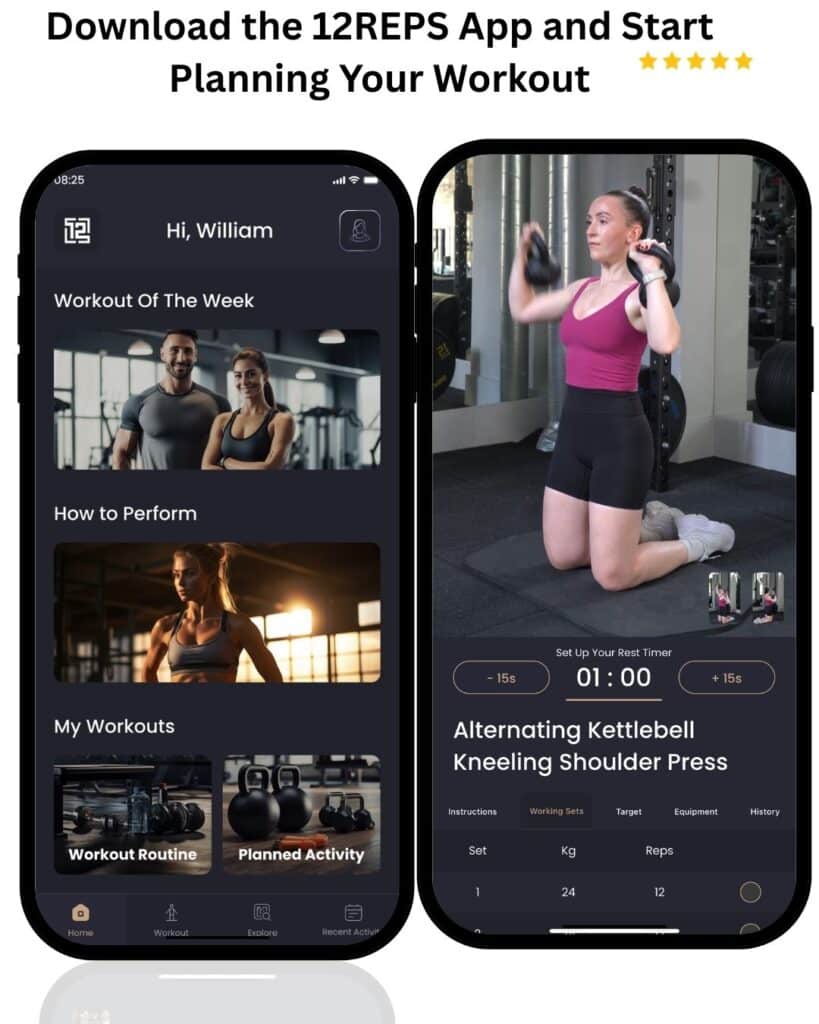
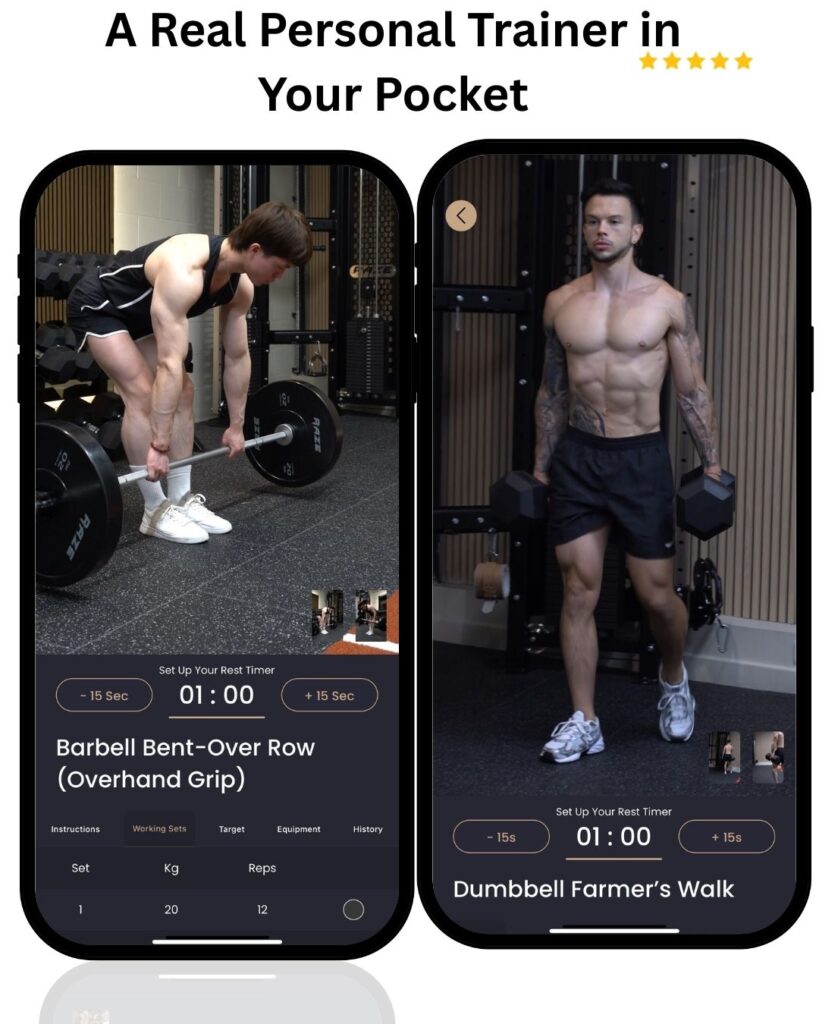
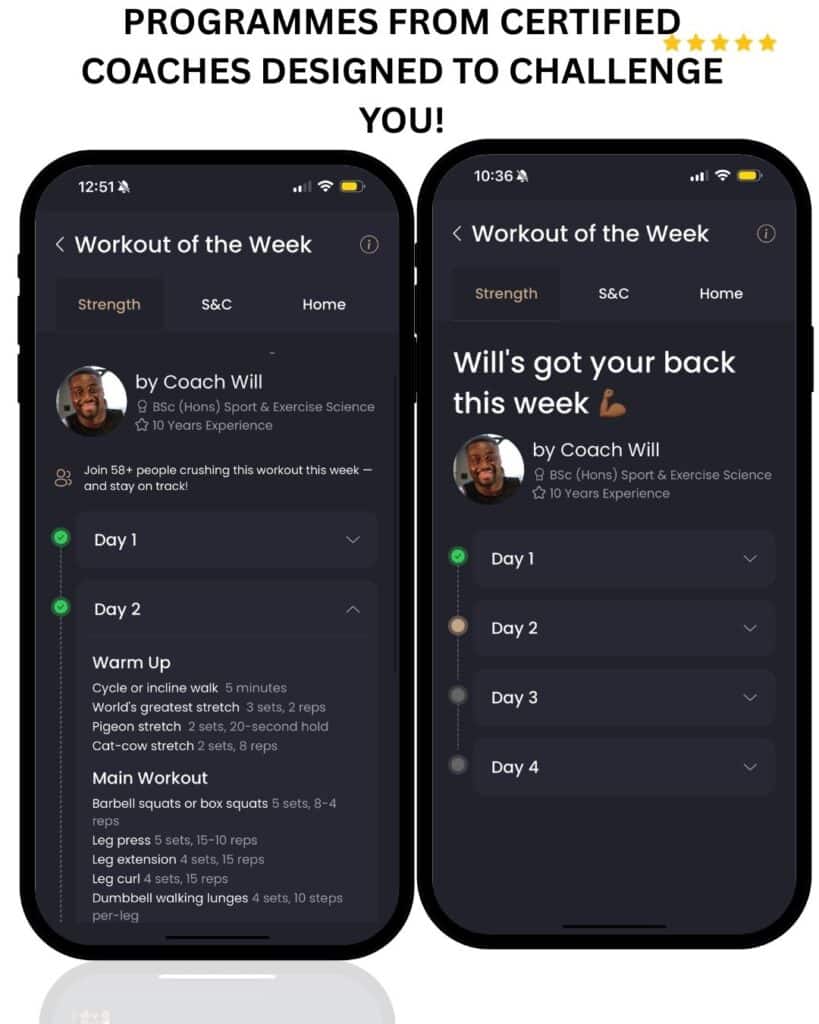
Want core work that progresses, not random crunches? 12REPS builds your training around your goal, your equipment and the time you have. You can choose abs on the body map, pick your equipment and time, and the app builds a session. Every exercise has a trainer demonstration, and the app logs your weights, reps and streaks so you can see your progress.
How to get abs: FAQs
Can I get abs without a gym?
Yes. Fat loss happens through your diet and activity wherever you train. At home, use planks, dead bugs, leg raises and band or dumbbell exercises, and make them harder over time.
Should I train abs every day?
No. Two or three focused sessions a week, with progression, is enough for most people.
What body fat percentage do you need for abs?
There is no single number. It depends on your genetics, where you store fat and how developed your abs are.
Will ab exercises flatten my stomach?
They strengthen the muscle, but they will not burn the fat over it. A flatter stomach comes from overall fat loss.
Sources
- TrainerTips: Spot reduction. National Strength and Conditioning Association (NSCA), undated. https://www.nsca.com/contentassets/60c4deb55cd640549806ed8f3f170b9e/trainertips_spot-reduction.pdf
- Tips to help you lose weight. NHS, accessed 2026. https://www.nhs.uk/live-well/healthy-weight/managing-your-weight/12-tips-to-help-you-lose-weight/
- International Society of Sports Nutrition position stand: diets and body composition. Aragon AA et al., Journal of the International Society of Sports Nutrition, 2017. https://doi.org/10.1186/s12970-017-0174-y
- International Society of Sports Nutrition position stand: protein and exercise. Jager R et al., Journal of the International Society of Sports Nutrition, 2017. https://doi.org/10.1186/s12970-017-0177-8