

The Exercise You Hate May Be the Exercise Exposing What You Need
Bulgarian split squats have a reputation. Your front leg burns, your balance disappears and the second side often feels harder than the first.
That discomfort does not prove the exercise is bad. It usually means one leg must produce force while your hips, knee, ankle and mid-section work to keep you stable. There is less room to hide a weaker side.
Set the exercise up properly, and it becomes one of the most useful movements for building quadriceps, glutes and single-leg strength. Set it up badly, and you spend the whole set fighting the bench.
Why Bulgarian Split Squats Feel So Hard
- Most of your body weight is supported by one working leg.
- The rear leg provides support but should not drive the movement.
- Your hips and mid-section must control side-to-side movement.
- A long range of motion creates a strong challenge with less total load than many bilateral exercises.
- Each side has to work separately, so strength differences become obvious.
Muscles Worked
The front-leg quadriceps and gluteus maximus perform most of the work. The hamstrings, adductors, calves and smaller hip muscles assist. Your abdominal muscles and spinal stabilisers help keep your pelvis and upper body controlled.
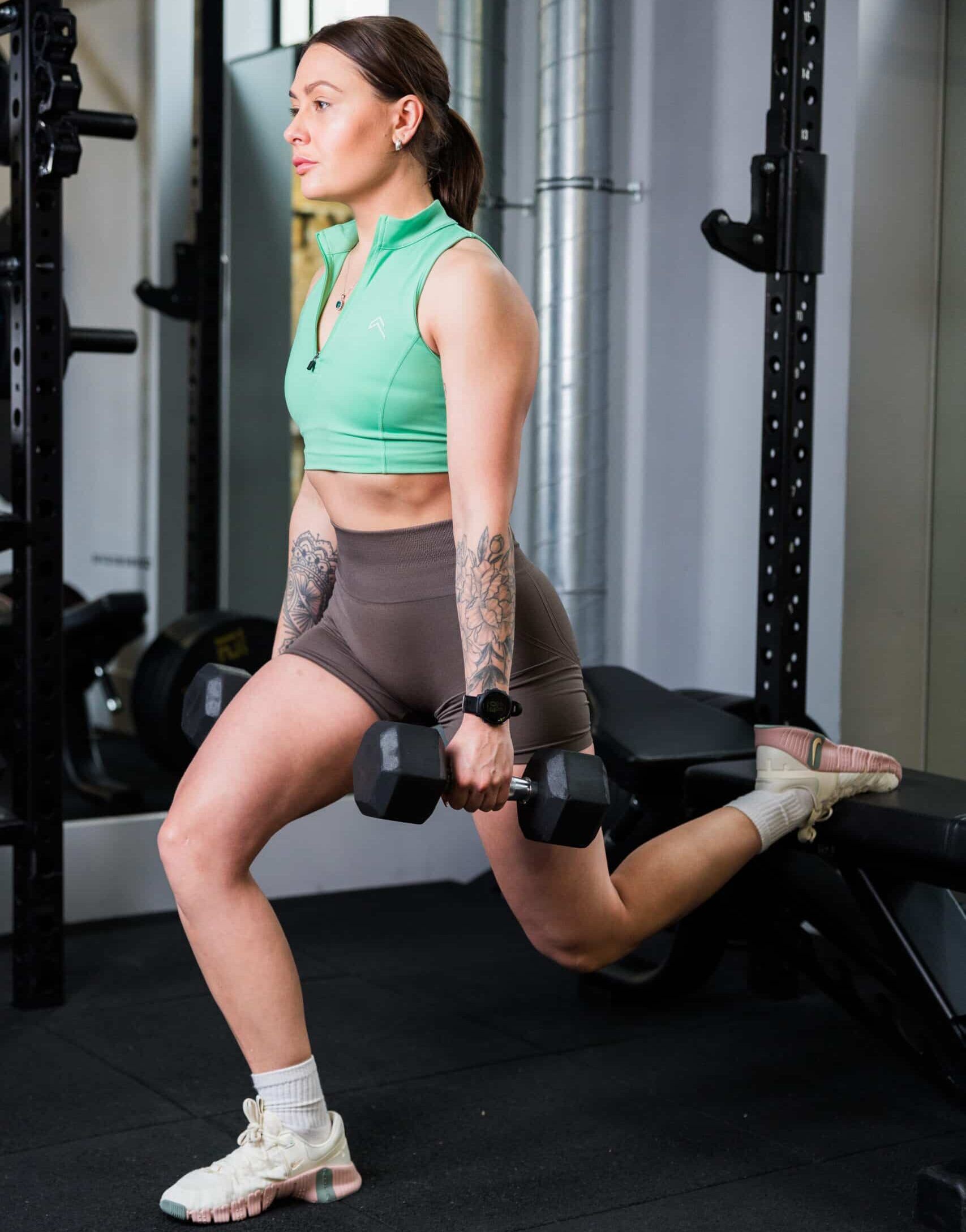
How to Set Up the Bulgarian Split Squat
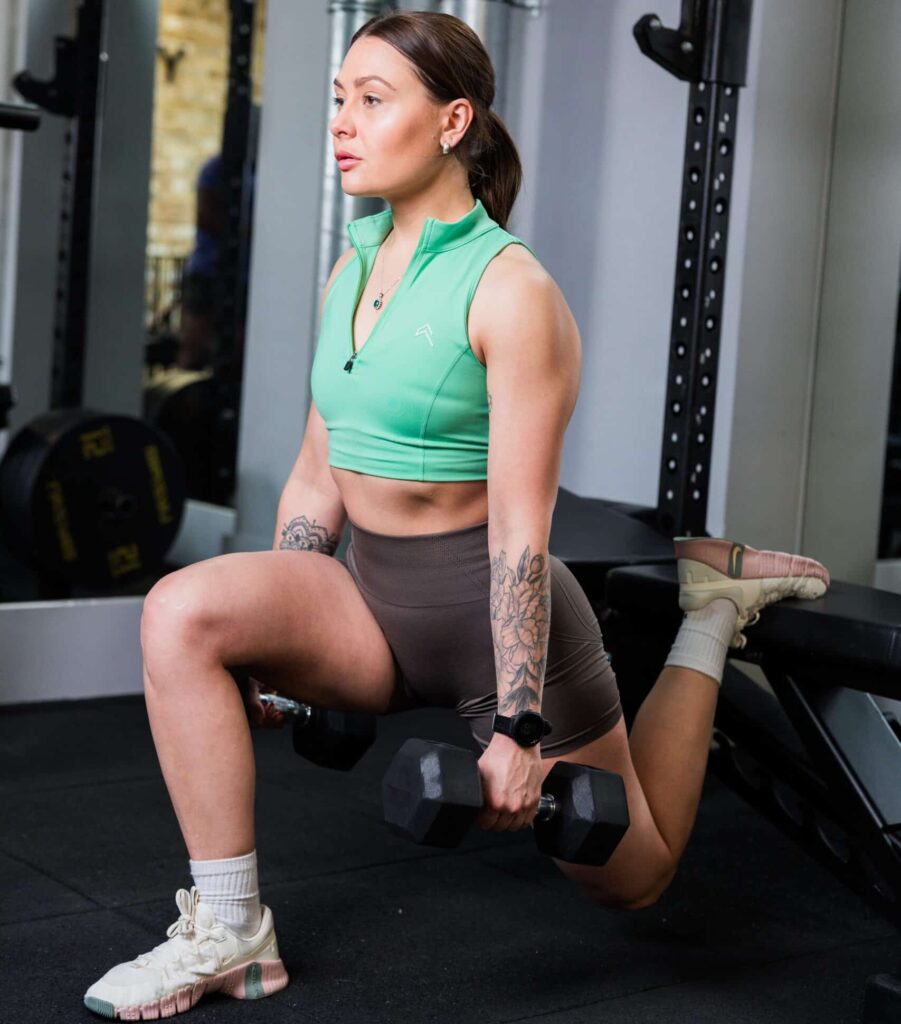
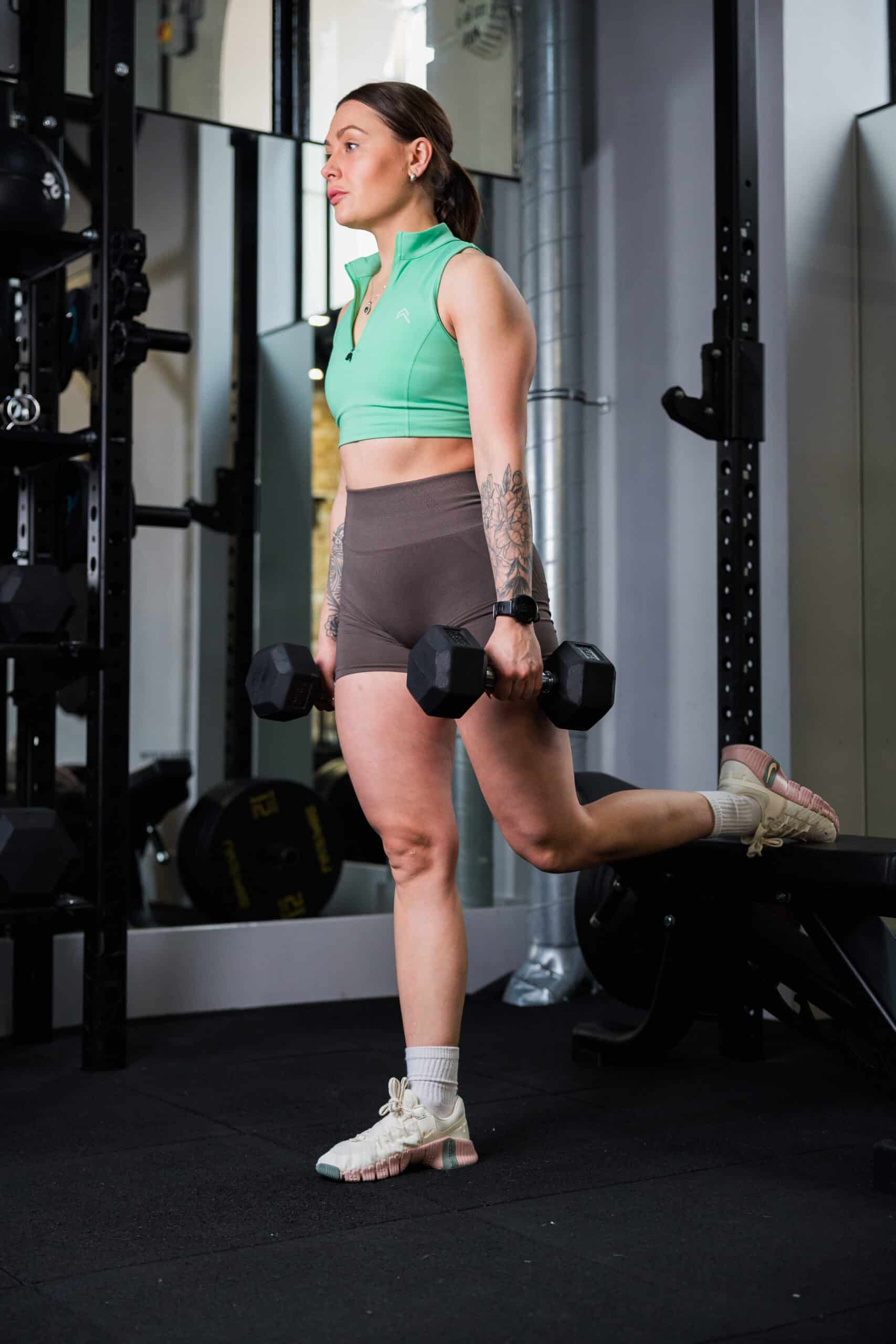
- Stand a short distance in front of a stable bench or box.
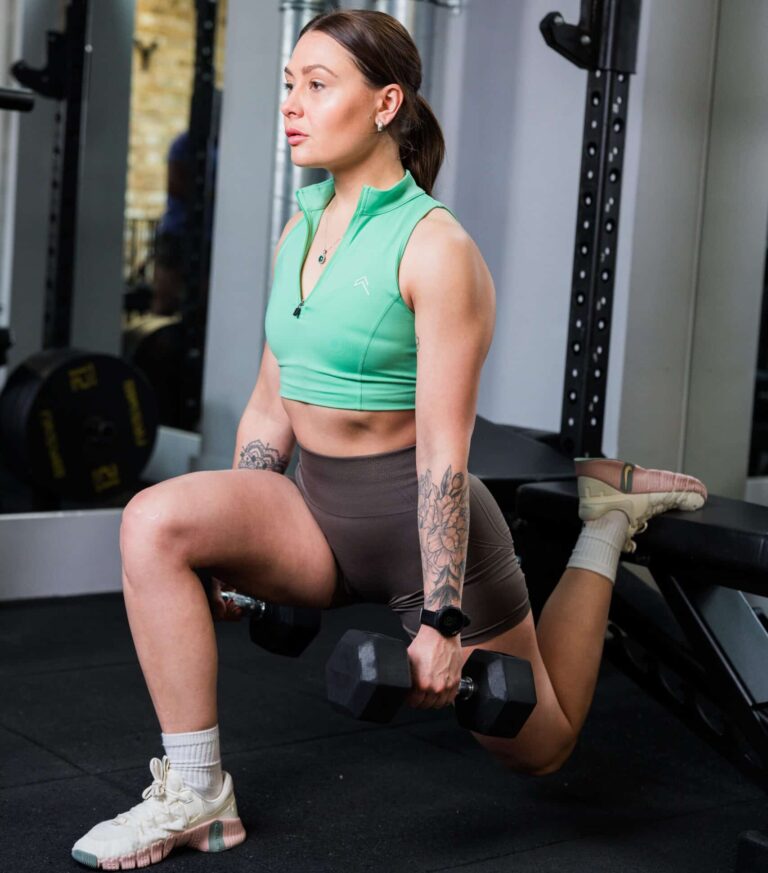
- Place the top of one foot behind you on the bench. A lower bench often feels better than a high one.
- Keep most of your weight through the front foot. The rear foot is there for support.
- Use a stance long enough for the front heel to remain flat as you descend.
- Square your hips and brace your mid-section before starting.
- Fix your eyes on one point in front of you to help your balance.
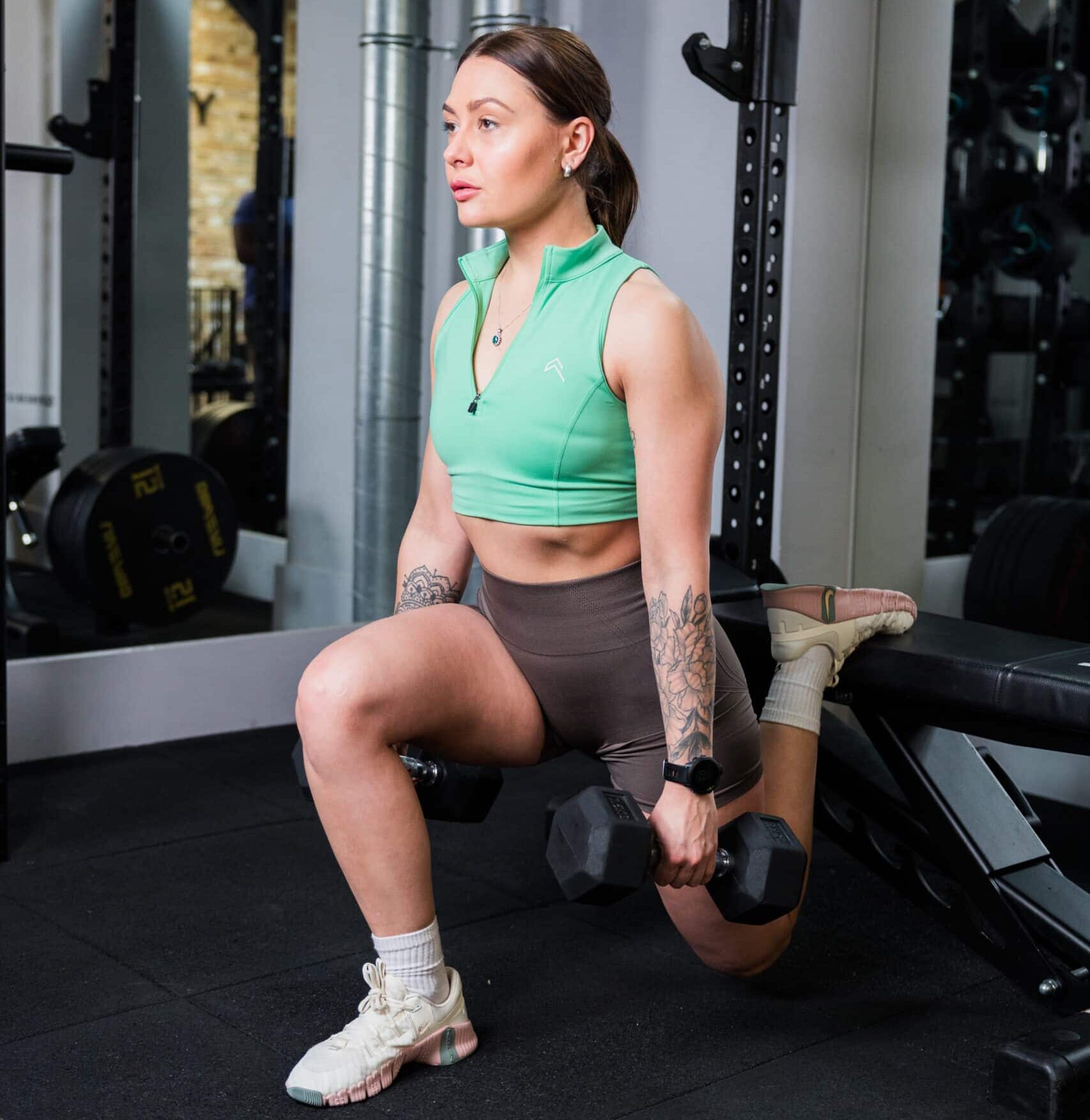
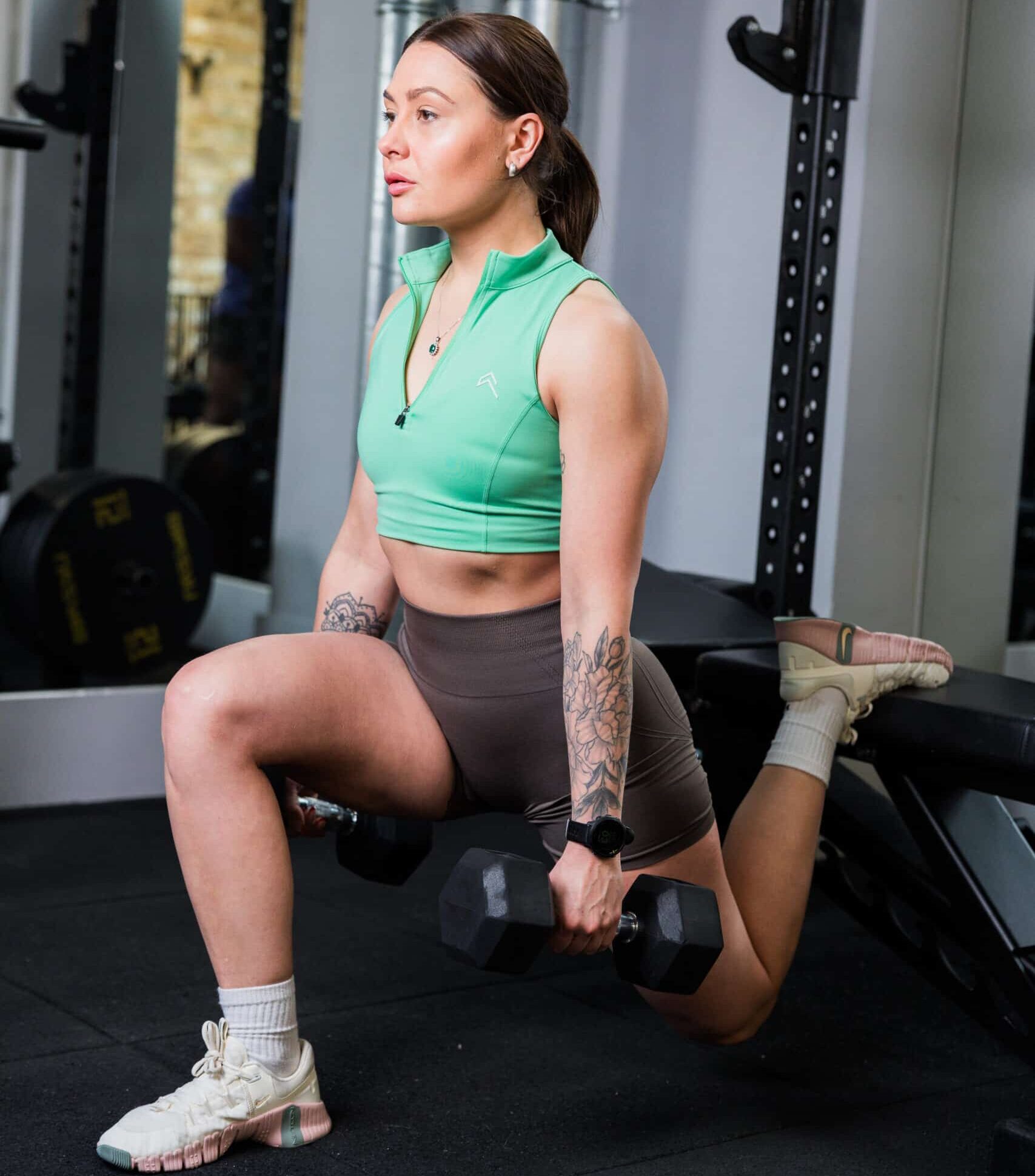
How to Perform Each Repetition
- Bend the front knee and lower the rear knee towards the floor.
- Let the front knee track in the same direction as your toes.
- Keep the whole front foot connected to the floor.
- Lower only as far as you can maintain balance and control.
- Drive through the front foot to stand.
- Finish all repetitions on one side before changing legs.
Choose Your Torso Position Based on Your Goal
- More upright torso: usually places greater emphasis on the quadriceps.
- Slight forward lean from the hips: often increases the glute challenge.
- Neither position should involve rounding your back or collapsing your chest.
PT Will’s Coaching Cues
- Front foot flat.
- Rear leg relaxed.
- Drop down, not forwards.
- Keep the knee tracking over the toes.
- Drive through the midfoot.
- Control the lowering phase.
- Use support before poor balance limits your leg strength.
Common Bulgarian Split Squat Mistakes
Standing too close to the bench
A short stance can crowd the front knee and make the movement uncomfortable. Move the front foot forward until you can lower with the heel down.
Standing too far away
An excessively long stance can turn the movement into an unstable stretch. Bring the front foot back until you can control the full repetition.
Pushing through the rear leg
The front leg should do most of the work. Use the rear foot for balance rather than trying to stand on it.
Using a bench that is too high
A high bench can pull the rear hip into an awkward position. Use a lower box or step when needed.
Letting the front knee collapse inward
Keep the knee tracking in line with the toes. Reduce the load or use support if control is lost.
Balancing on the toes
Keep the front heel and midfoot down. Adjust your stance if the heel lifts.
Rushing the descent
Dropping quickly removes control. Lower for two to three seconds and keep tension through the working leg.
Loading the exercise too early
Master the bodyweight version first. Add dumbbells only when your setup and balance are repeatable.
Treating every wobble as failure
Some balance demand is normal. Use a rack or TRX for light support so the target leg can work hard.
How Many Sets and Reps Should You Do?
Goal | Sets | Reps | Rest |
Learn the movement | 2-3 | 8-12 each leg | 60-90 seconds |
Build muscle | 3-4 | 8-12 each leg | 90-120 seconds |
Build strength | 3-5 | 5-8 each leg | 2-3 minutes |
Conditioning | 2-3 | 12-15 each leg | 45-75 seconds |
A Simple Progression From Beginner to Advanced
- Supported split squat with both feet on the floor.
- Bodyweight split squat.
- Supported Bulgarian split squat.
- Bodyweight Bulgarian split squat.
- Goblet Bulgarian split squat.
- Dumbbell Bulgarian split squat.
- Front-foot-elevated or tempo variation.
Where to Put Them in Your Workout
Place Bulgarian split squats after your main squat or hinge when they are an accessory exercise. Put them earlier when single-leg strength or glute development is the main goal.
- Leg strength: squat, Romanian deadlift, Bulgarian split squat, calf raise.
- Glute focus: hip thrust, Bulgarian split squat, cable kickback, frog pumps.
- Full body: chest press, back row, Bulgarian split squat, shoulder press, plank.
One Exercise Is Useful. A Complete Training System Is Better.
Knowing how to perform Bulgarian split squats solves one problem. Building a balanced workout still requires the right squat, hinge, push, pull, core and conditioning exercises.
12REPS brings exercise demonstrations, muscle and equipment filters, workout building and progress tracking into one place. You can learn the movement, add it to your plan and record the numbers you need to beat next time.
40 Strength, Bodyweight and Cable Exercises From the 12REPS Library
Each exercise name links to its 12REPS guide. The sets and repetitions are practical starting points and should be adjusted to your goal and experience.
Exercise | Main focus | Sets | Recommended reps | Best use |
Quadriceps and glutes | 3-4 | 8-12 each leg | Single-leg strength | |
Legs, glutes and balance | 3 | 8-12 each leg | Supported loading | |
Legs and glutes | 3 | 8-12 each leg | Lunge foundation | |
Legs and glutes | 3 | 8-12 each leg | Forward lunge pattern | |
Glutes and quadriceps | 3 | 8-12 each leg | Increased range | |
Glutes and legs | 3 | 10-12 each leg | Accessory lunge | |
Glutes and quadriceps | 3 | 8-12 each leg | Single-leg strength | |
Legs and balance | 3 | 10-15 each leg | Beginner single-leg work | |
Leg strength and control | 3 | 6-10 each leg | Advanced single-leg work | |
Quadriceps, glutes and balance | 3 | 6-10 each leg | Supported pistol squat | |
Quadriceps and glutes | 3-4 | 8-15 | Squat pattern | |
Quadriceps and glutes | 3-4 | 8-12 | Cable squat | |
Legs and core | 3-4 | 8-12 | Box squat control | |
Lower-body power | 3 | 5-10 | Power training | |
Hamstrings and glutes | 3-4 | 8-12 | Hip hinge | |
Glutes | 3-4 | 10-20 | Glute strength | |
Glutes and stability | 3 | 10-15 | Glute accessory | |
Glutes and control | 3 | 8-12 each leg | Unilateral glute work | |
Glutes | 3 | 12-20 each leg | Glute isolation | |
Glutes | 2-3 | 15-30 | Glute finisher | |
Calves | 3-4 | 12-20 | Calf strength | |
Chest, triceps and core | 3-4 | 8-15 | Upper-body push | |
Upper chest and shoulders | 3-4 | 6-12 | Main chest press | |
Chest and triceps | 3-4 | 8-12 | Cable press | |
Chest | 3 | 10-15 | Chest accessory | |
Lats and upper back | 3-4 | 8-12 | Vertical pull | |
Upper back | 3-4 | 8-12 | Supported row | |
Mid-back | 3-4 | 8-12 | Horizontal pull | |
Back and rear shoulders | 3 | 10-15 | Back accessory | |
Back and biceps | 3-4 | 8-15 | Bodyweight pull | |
Rear shoulders and upper back | 3 | 12-20 | Shoulder balance | |
Shoulders and triceps | 3-4 | 8-12 | Shoulder press | |
Side shoulders | 3 | 12-20 | Shoulder accessory | |
Biceps | 3 | 8-15 | Arm training | |
Triceps | 3 | 10-15 | Triceps accessory | |
Mid-section | 3 | 30-60 seconds | Core stability | |
Abdominals | 3 | 8-15 | Core strength | |
Core and conditioning | 3 | 20-40 total | Conditioning finisher | |
Full body and conditioning | 4 | 20-40 seconds | Conditioning | |
Grip, core and full body | 4 | 20-40 metres | Loaded carry |
A Complete Lower-Body Workout Using the Library
- Cable straight-bar front squat: 4 sets of 8-10 repetitions.
- Cable straight-bar Romanian deadlift: 4 sets of 8-12 repetitions.
- Bodyweight or loaded Bulgarian split squat: 3 sets of 8-10 repetitions per leg.
- Cable step-up: 3 sets of 10 repetitions per leg.
- Cable glute kickback: 3 sets of 12-15 repetitions per leg.
- Machine standing calf raise: 3 sets of 15-20 repetitions.
Why 12REPS Is the Best Next Step
- Watch the exercise demonstration before starting.
- Filter movements by muscle group and equipment.
- Replace an exercise when a bench or machine is unavailable.
- Build a complete lower-body workout.
- Record your sets, repetitions and weight.
- Follow a trainer-built programme when you want more structure.
Stop Avoiding the Exercise. Start Progressing It.
Bulgarian split squats will probably never feel easy. They should feel more controlled, more stable and more productive as your strength improves.
12REPS gives you the exercise guidance, workout structure and training log needed to make that progress visible. Learn the movement, add it to your plan and give yourself a clear number to beat next time.
Learn the movement. Build the workout. Track every rep.
Explore the 12REPS strength training exercise library before your next session.
About PT Will Duru
Will Duru is a personal trainer with more than a decade of experience and a Sport and Exercise Science BSc (Hons). He created 12REPS to help people train with structure and make measurable progress. Learn more at PTWill.com.
Will has been featured in Men’s Health, The Times, The Telegraph, The Sun and Men’s Fitness.