



By Will Duru, BSc (Hons) Sport and Exercise Science, Award-winning Personal Trainer with over 10 years of experience in strength training and optimising recovery
A weight lifting planner tells you what to lift each session: the exercises, sets, reps and target weights. A tracker records what you actually lifted. Together, they let you apply progressive overload, adding a rep or a little weight once you have earned it.
Here, “weight lifting” means lifting weights for strength and muscle, not the Olympic sport of weightlifting.
In more than 10 years of coaching, I have seen one pattern again and again. People who follow a structured plan and track it tend to keep progressing. People who train at random often stay stuck. That is why I built 12REPS: to put a plan, trainer demonstrations and tracking in one place.
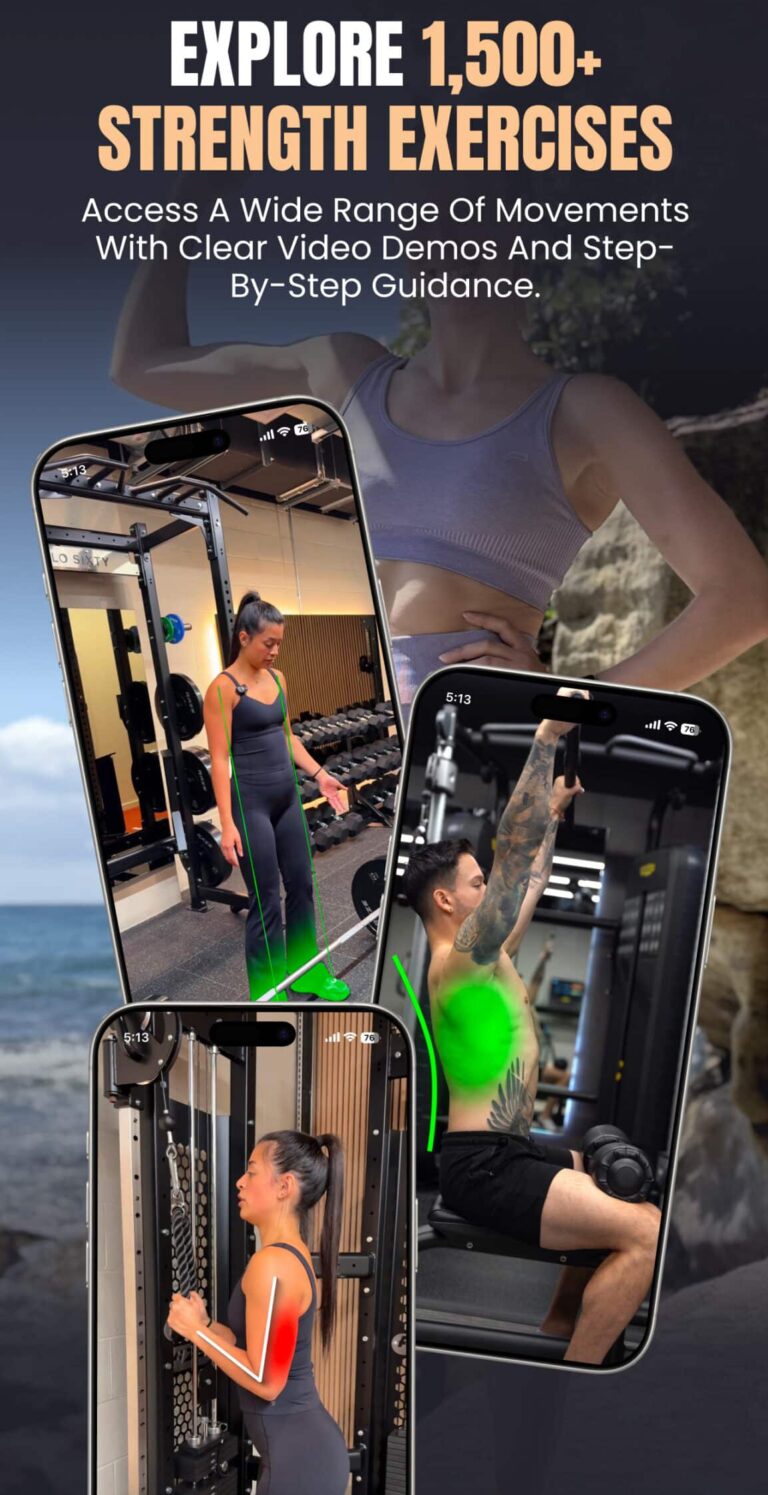
What a weight lifting planner should include
A useful plan answers your questions before you walk in. For each session, it should list:
- Exercises, in order. Big compound lifts first, such as squats, presses and rows, while you are fresh.
- Sets and a rep target. For example, 3 sets of 8 to 12 reps.
- A starting weight. Based on what you lifted last time.
- An effort target. How close to failure each set should be.
- Rest periods. Longer for heavy compound lifts, shorter for smaller exercises.
Across the week, the plan should cover all major muscle groups. For health, the CDC recommends muscle-strengthening activity on at least 2 days a week. How you split the week matters less than doing the work; our workout split guide compares the options.
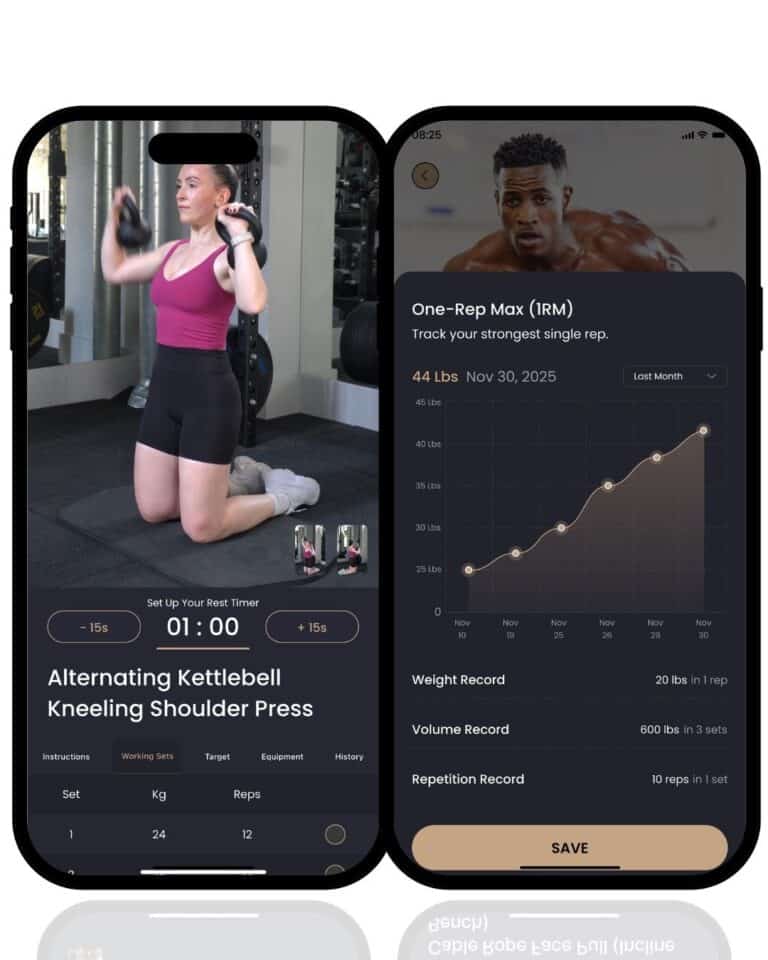
How to track your lifts
Log every working set as you finish it: the weight, the reps and how many more reps you could have done. That last number is reps in reserve (RIR). It shows how hard the set was, which the weight alone cannot.
RIR comes from a resistance training effort scale where RPE 10 means no reps left and RPE 9 means one rep left. Your estimates will not be perfect. A review of rep-prediction studies found lifters underestimated their remaining reps by about one rep on average.
Over time, your log also shows your training volume: the number of hard sets you do for each muscle each week. A meta-analysis on weekly training volume linked more weekly sets with more muscle growth. One influential study had a large effect on the size of that link, so build volume gradually.
For a full method, read how to track your workouts, or see why a workout tracker helps you progress.
How 12REPS works for weight lifting
12REPS is a strength training app that gives you direction in the gym. It fills the gap between a gym membership and ongoing personal coaching.
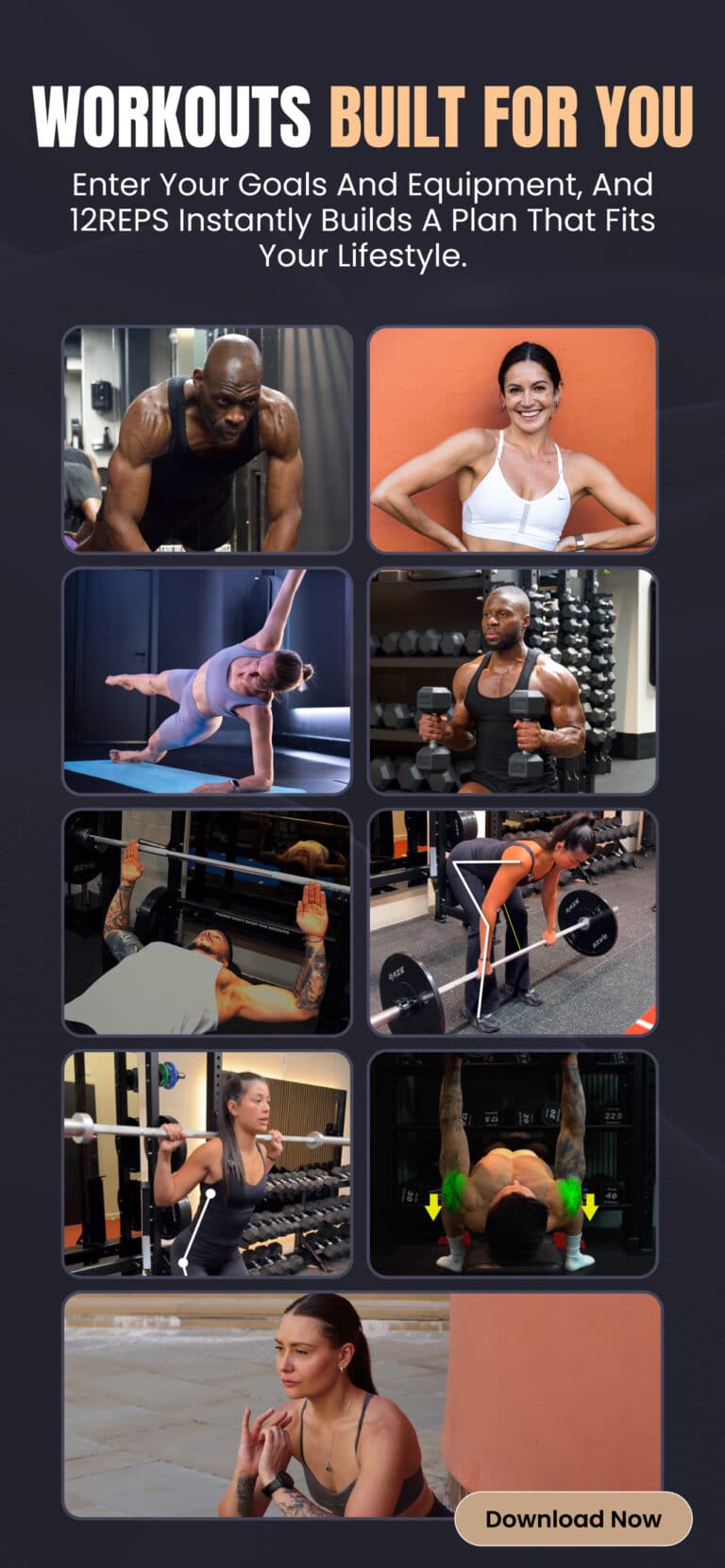
A plan built for you
Training is built around your goal, your equipment and the time you have. Open the app and your workout is ready, for example Chest & Back, 60 minutes, 6 exercises.
Trainer demonstrations
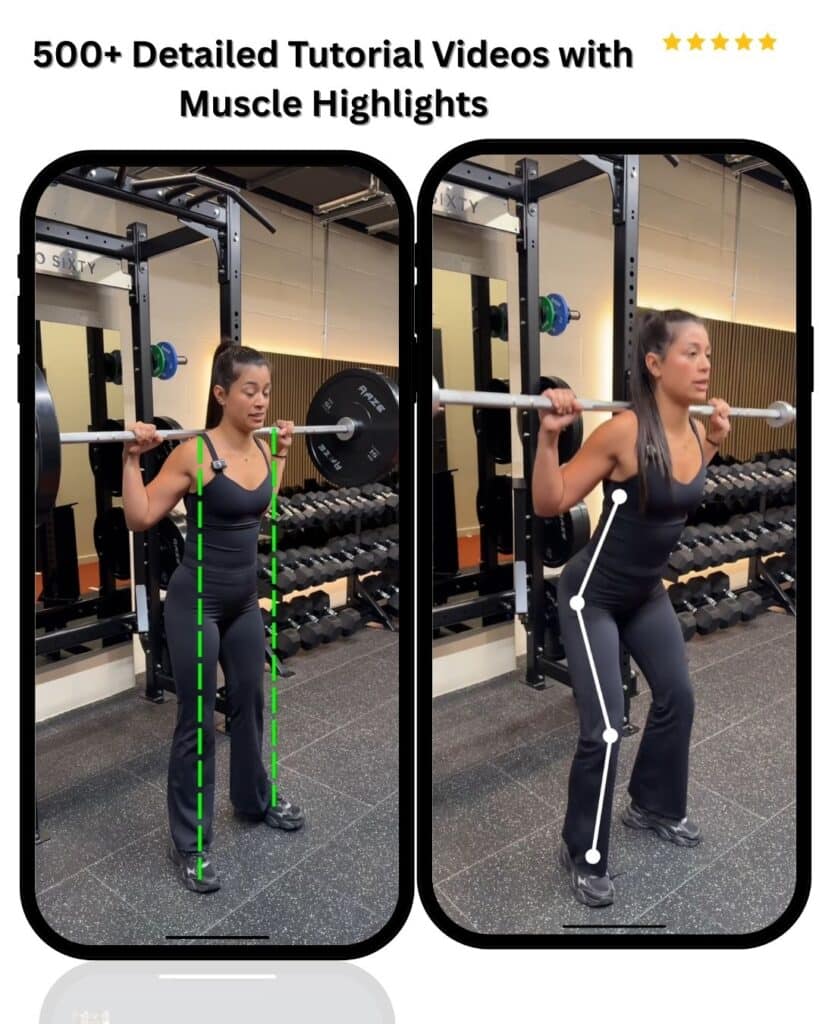
Exercise demonstrations and technique breakdowns come from real, qualified personal trainers. You can check your technique before you start a set.
Set-by-set tracking
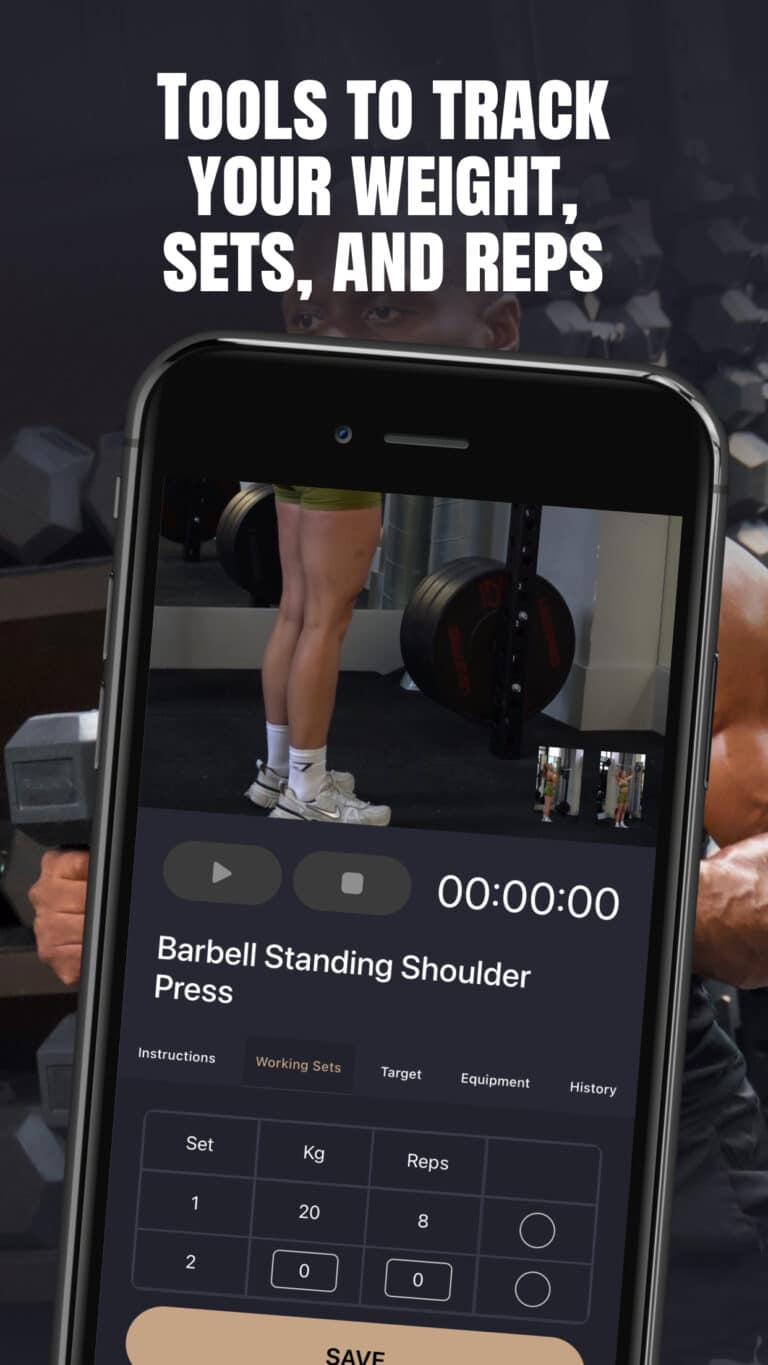
Tap Start Workout, watch the demo, then enter reps and weight for each set. The app remembers what you lifted, so you always have a number to beat.
Build your own session
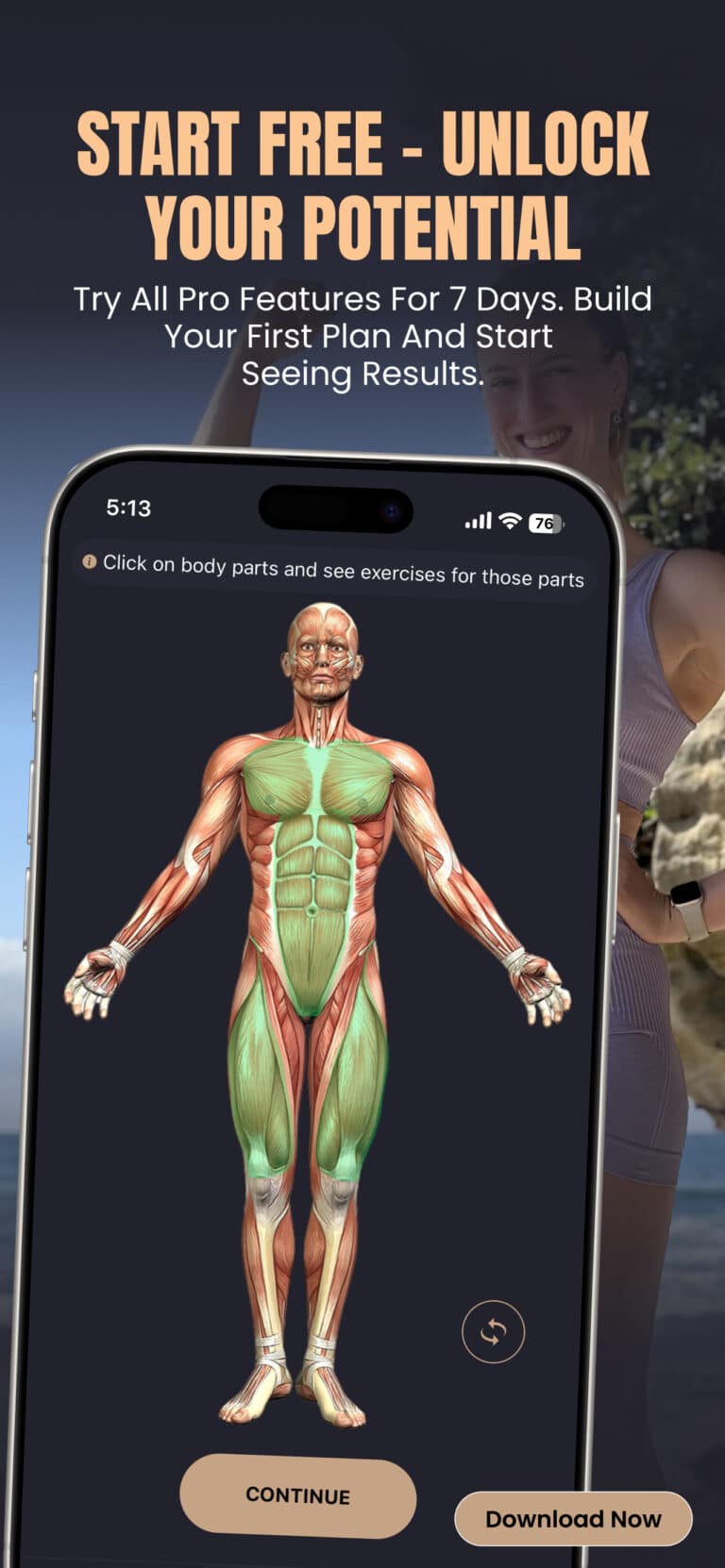
Use the body map to choose the muscle, equipment and time. 12REPS builds the session. Save it and train.
Accountability and progress
The app tracks workouts, sets, reps, weights and streaks, with challenges, awards, a weekly goal and a community. You can also log body weight to see your trend and keep progress photos in private storage.
How to apply progressive overload with your log
Progressive overload means gradually increasing the demand on your muscles. A simple way to do it is double progression: build reps first, then add weight.
- Pick a rep range, such as 8 to 12.
- Choose a weight you can lift for the bottom of the range with good form.
- Add reps each session until you reach the top of the range on every set.
- Then add a small amount of weight and start again near the bottom of the range.
This matches the ACSM position stand on progression, which suggests a 2 to 10% load increase once you can do one or two reps beyond your target. It also fits newer evidence. A 2022 study in trained lifters found that adding reps and adding load built similar muscle, with load progression slightly better for maximal strength.
Example: barbell bent-over row
| Session | Weight | Reps (3 sets) | Next step |
|---|---|---|---|
| 1 | 40 kg | 8, 8, 8 | Add reps |
| 2 | 40 kg | 10, 9, 9 | Add reps |
| 3 | 40 kg | 12, 11, 10 | Add reps |
| 4 | 40 kg | 12, 12, 12 | Add weight |
| 5 | 42.5 kg | 9, 8, 8 | Add reps |
These numbers are an example only. The jump from 40 to 42.5 kg is about 6%, inside the 2 to 10% range. Learn the lift with our barbell bent-over row guide, and read the beginner’s guide to progressive overload for more ways to progress.
Video: Barbell bent-over row in the 12REPS app. This demo shows the row from the example above. Watch it before your first set to check your hip hinge and where the bar travels.
Who a weight lifting planner helps most
Almost anyone who lifts can benefit from a plan and a log. It helps most if you are:
- A beginner who needs direction. A plan and trainer demonstrations show you what to do and how to do it.
- An intermediate lifter who has stalled. Your log shows where progress stopped, so you can change one thing at a time.
- Short on time. A ready plan means you walk in and start, without deciding what to do.
- Training at home with limited equipment. A plan built around what you own still gives you a clear path. See our gym and home workout planner guide.
What the research says
The core ideas behind planning and tracking are well supported:
- Progression: the ACSM recommends increasing the load as you get stronger.
- Volume: more weekly sets are linked with more muscle growth, though one influential study had a large effect on the result (Schoenfeld and colleagues).
- Self-monitoring: recording your own behavior is one of the most useful parts of physical activity programs (Michie and colleagues).
- Coaching: supervised training tends to produce larger strength gains than training alone (Fisher and colleagues).
Getting started with 12REPS
- Download 12REPS from the App Store or Google Play.
- Tell the app your goal, the equipment you have and the time you can train.
- Open your first workout and tap Start Workout.
- Watch the trainer demonstration for any exercise you are unsure about.
- Enter your reps and weight for every set.
- Next session, aim to beat the numbers from last time.
Want a plan built around your goal, equipment and time, with a number to beat every session? See how the 12REPS app works.
Video: Barbell full-body workout with the 12REPS app. This video shows a planned barbell session. Watch it to see how a full-body lifting day fits together, from the first lift to the last.

Frequently asked questions
Is 12REPS suitable for beginners?
Yes. Your plan is built around your goal, equipment and time, and trainer demonstrations show you how to do each exercise.
Can I use 12REPS at home?
Yes. Training is built around the equipment you have, so you can plan sessions for a home setup as well as a gym.
How do I know what weight to lift?
Start with a weight you can lift for the bottom of your rep range with good form. 12REPS remembers what you lifted last time, so each session you have a number to beat.
Is there a community feature?
Yes. 12REPS has a community, plus challenges, awards and a weekly goal.
Who makes the exercise demonstrations?
Real, qualified personal trainers provide the exercise demonstrations and technique breakdowns.
Is weight lifting the same as Olympic weightlifting?
No. Olympic weightlifting is a sport built on two lifts, the snatch and the clean and jerk. This article uses “weight lifting” to mean strength training with weights.
Related reading
- Strength training workout planner: how to plan your week
- Personal trainer workout planner: what coaches should look for
- Complete beginner’s guide to strength training
- Strength vs hypertrophy training: a personal trainer’s guide
- Best weightlifting apps compared
About the author: Will Duru holds a BSc (Hons) in Sport and Exercise Science and is an award-winning personal trainer with over 10 years of experience. He built the 12REPS app to make trainer-led strength training guidance available to more people.
Sources
- American College of Sports Medicine position stand: Progression models in resistance training for healthy adults. American College of Sports Medicine. Medicine and Science in Sports and Exercise, 2009. https://pubmed.ncbi.nlm.nih.gov/19204579/
- Adult Activity: An Overview. Centers for Disease Control and Prevention, 2023. https://www.cdc.gov/physical-activity-basics/guidelines/adults.html
- Novel Resistance Training-Specific Rating of Perceived Exertion Scale Measuring Repetitions in Reserve. Zourdos MC, Klemp A, Dolan C, et al. Journal of Strength and Conditioning Research, 2016. https://pubmed.ncbi.nlm.nih.gov/26049792/
- Accuracy in Predicting Repetitions to Task Failure in Resistance Exercise: A Scoping Review and Exploratory Meta-analysis. Halperin I, Malleron T, Har-Nir I, et al. Sports Medicine, 2022. https://pubmed.ncbi.nlm.nih.gov/34542869/
- Dose-response relationship between weekly resistance training volume and increases in muscle mass: A systematic review and meta-analysis. Schoenfeld BJ, Ogborn D, Krieger JW. Journal of Sports Sciences, 2017. https://doi.org/10.1080/02640414.2016.1210197
- Progressive overload without progressing load? The effects of load or repetition progression on muscular adaptations. Plotkin D, Coleman M, Van Every D, et al. PeerJ, 2022. https://doi.org/10.7717/peerj.14142
- Effective techniques in healthy eating and physical activity interventions: a meta-regression. Michie S, Abraham C, Whittington C, McAteer J, Gupta S. Health Psychology, 2009. https://pubmed.ncbi.nlm.nih.gov/19916637/
- The Role of Supervision in Resistance Training; an Exploratory Systematic Review and Meta-Analysis. Fisher J, Steele J, Wolf M, Androulakis Korakakis P, Smith D, Giessing J. International Journal of Strength and Conditioning, 2022. https://doi.org/10.47206/ijsc.v2i1.101