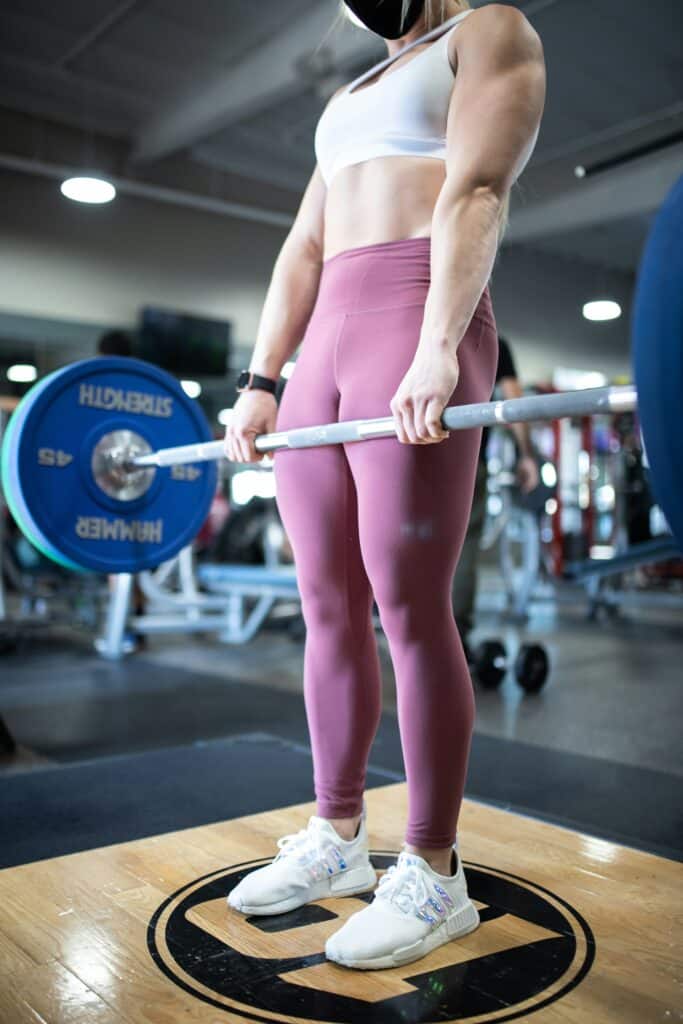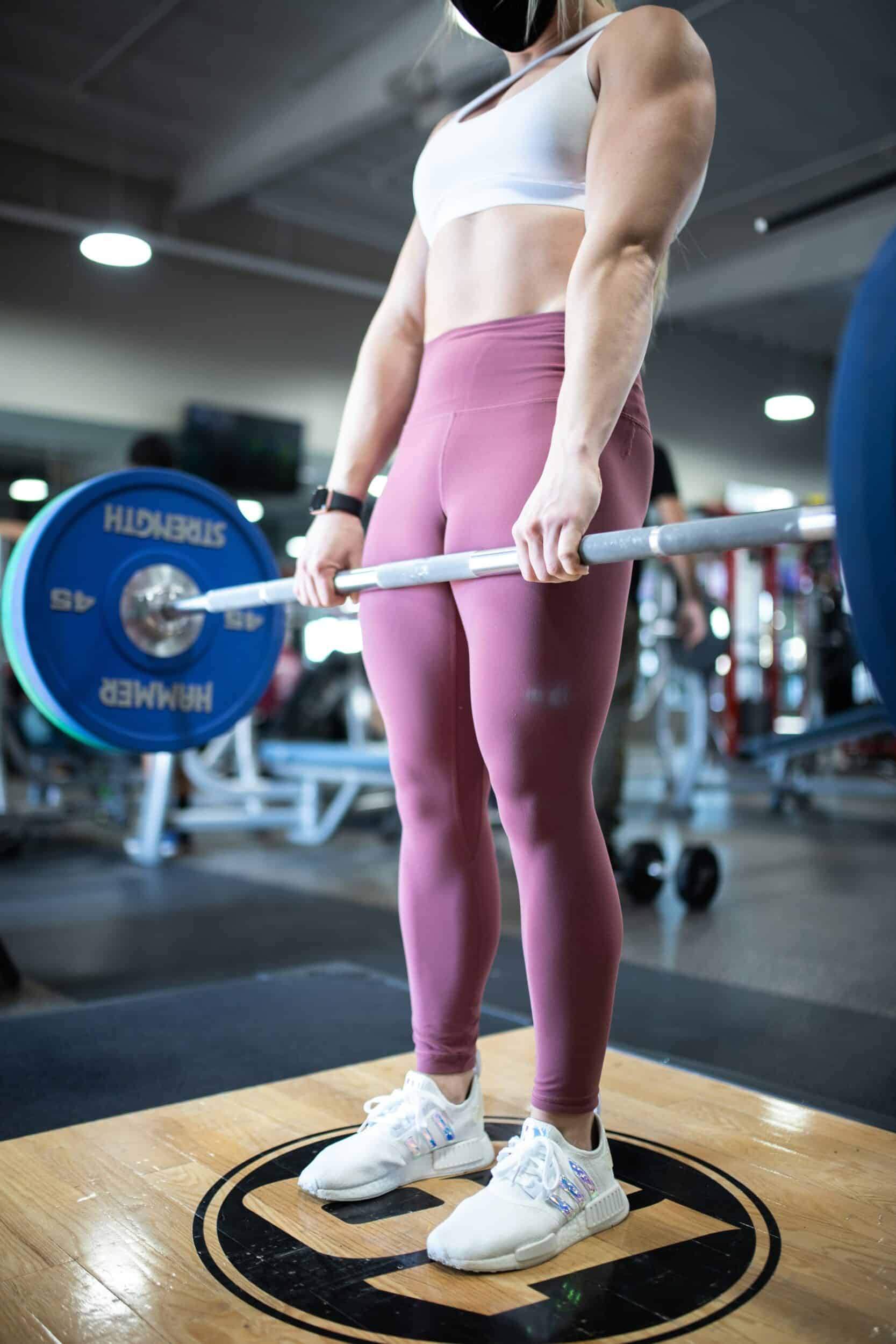



Full body vs upper/lower vs PPL: all three build muscle and strength when your weekly sets are similar. The best one is the split that fits the days you can train and your training stage. As a rule, full body suits 2 to 3 days a week, upper/lower suits 4, and push/pull/legs (PPL) suits 5 to 6.
Search for the “best workout split” and you get twenty answers. Full body, upper/lower, push/pull/legs, body part splits. It is easy to worry you have picked wrong.
I’m Will Duru, a personal trainer with over 10 years’ experience in London. The pattern I see most: beginners try to do too much, such as six days of PPL. People with a year or more of training sometimes stay on a plan they have outgrown. This guide helps you match the split to where you are now, and shows when to move on.
If you are brand new, our split guide for beginners goes deeper on your first months. For women, see full body vs split training for women.

Full body, upper/lower and PPL compared
| Full body | Upper/lower | Push/pull/legs | |
|---|---|---|---|
| What each session trains | All major muscles | Upper body or lower body | Push muscles, pull muscles or legs |
| Usual days a week | 2 to 3 | 4 | 6 (3 is possible) |
| Times each muscle is trained a week | 2 to 3 | 2 | 2 on 6 days, 1 on 3 days |
| Best fit | Beginners, busy weeks | After 6 to 12 months of training, 4 free days | Experienced lifters with 5 to 6 free days |
Full body
You train every major muscle in each session, usually Monday, Wednesday and Friday. A typical session has a squat, a hinge such as the Romanian deadlift (RDL), a press and a row.
Upper/lower
You alternate upper-body and lower-body days, for example Monday upper, Tuesday lower, Thursday upper, Friday lower. Each muscle gets two sessions a week.
Push/pull/legs
You group muscles by how they move. One day covers the pressing muscles (chest, shoulders, triceps), one the pulling muscles (back, biceps) and one the legs. Run the three days twice in a 6-day week to train each muscle twice.
What the research says
A 2024 meta-analysis of 14 studies with 392 adults found split and full-body routines gave similar strength and muscle gains when weekly volume was matched. The authors concluded you can choose by preference (Ramos-Campo et al., 2024).
Frequency matters less than you might think. When weekly sets are equal, how often you train a muscle makes little difference to growth (Schoenfeld et al., 2019). An earlier 2016 review found training a muscle twice a week beat once a week (Schoenfeld et al., 2016). When the 2019 analysis matched weekly sets, that advantage was not significant.
The ACSM 2026 position stand recommends training at least twice a week with all major muscles worked. Its review linked about 10 or more weekly sets per muscle with more growth, and returns tapered off past roughly 18 to 20 sets (ACSM, 2026). Your split is simply the way you spread those sets across the week.
Which split for your training stage
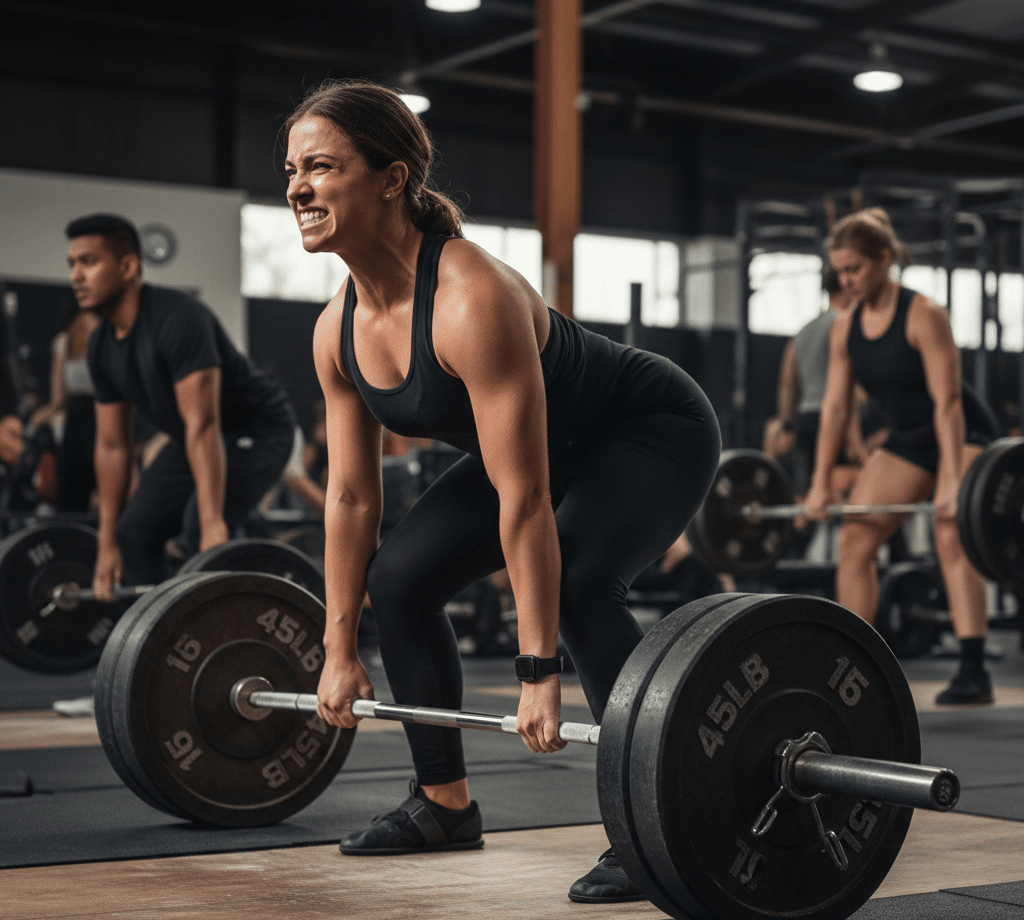
ACSM’s 2009 guidance suggests 2 to 3 days a week for novices and 3 to 4 days for intermediates. Advanced lifters train 4 to 5 days (ACSM, 2009). The stages below follow that idea. The months are my coaching guide, not fixed rules.
Beginners (about 0 to 12 months): full body, 3 days a week
Full body lets you practice each lift often while the movements are new. Sessions take about 45 to 60 minutes. I usually keep people here for 6 to 12 months before a split.
| Exercise | Sets | Reps |
|---|---|---|
| Squat | 3 | 8 to 10 |
| Bench press | 3 | 8 to 10 |
| Barbell row | 3 | 8 to 10 |
| Romanian deadlift | 3 | 10 to 12 |
| Overhead press | 2 | 8 to 10 |
| Lat pulldown | 2 | 10 to 12 |
Video: How to do a barbell shoulder press. The overhead press is the one vertical press in this session. Watch this before your sets to check your grip, brace and bar path.
Intermediate (about 6 to 18 months): upper/lower, 4 days a week
Once full-body sessions get long because you need more sets, upper/lower gives each half of the body its own day. Each muscle is still trained twice a week.
- Monday: Upper A (chest and back focus)
- Tuesday: Lower A (quad focus)
- Thursday: Upper B (shoulders and arms focus)
- Friday: Lower B (hip and hamstring focus)
| Upper A | Sets x reps | Lower A | Sets x reps |
|---|---|---|---|
| Bench press | 4 x 6 to 8 | Squat | 4 x 6 to 8 |
| Barbell row | 4 x 6 to 8 | Romanian deadlift | 3 x 8 to 10 |
| Incline dumbbell press | 3 x 8 to 10 | Leg press | 3 x 10 to 12 |
| Lat pulldown | 3 x 10 to 12 | Leg curl | 3 x 10 to 12 |
| Face pull | 2 x 12 to 15 | Calf raise | 3 x 12 to 15 |
Video: Best lower body workout. Use it to see how a dedicated lower-body day flows when legs and glutes get the whole session.
Advanced (about 18 months or more): PPL 6 days, or upper/lower 5 days
PPL gives each muscle its own focused session twice a week. If six days is too many, an upper/lower week with a fifth day gives similar frequency with more flexibility.
- Monday: Push A (chest focus)
- Tuesday: Pull A (back focus)
- Wednesday: Legs A (quad focus)
- Thursday: Push B (shoulder focus)
- Friday: Pull B (upper back focus)
- Saturday: Legs B (hip and hamstring focus)
- Sunday: Rest
| Push | Pull | Legs |
|---|---|---|
| Bench press | Deadlift | Squat |
| Overhead press | Barbell row | Romanian deadlift |
| Incline dumbbell press | Pull-ups | Hip thrust |
| Lateral raise | Face pull | Leg curl |
| Triceps extension | Biceps curl | Calf raise |
For full PPL routines with sets and reps, see push/pull/legs for women.
Four questions that decide your split
1. How many days can you train every week?
Use the comparison table above: 2 or 3 days points to full body, 4 to upper/lower, and 6 to PPL. With 5 days, run upper/lower plus one extra day, or push, pull, legs, upper, lower.
Pick the number you can keep for months, not your best week. A plan you follow beats a better-looking plan you skip.
2. How long can each session be?
Training more often lets each session be shorter. In my programming, full body usually takes the longest per session, upper/lower sits in the middle, and a 6-day PPL can fit into 40 to 45 minutes.
3. How well do you recover?
Six training days leave one rest day. That works best with good sleep, enough food and steady stress. If those are shaky, 3 or 4 days will often get you further.
4. What is your goal?
For strength, practicing your main lifts two or three times a week helps, which full body and upper/lower do well. For muscle, any split works if each muscle gets enough hard sets (ACSM, 2026).
When to switch splits
Consider moving to the next split when most of these are true:
- You have trained steadily for at least 6 to 12 months.
- Your lifts have stalled for several weeks despite good sleep and food.
- Your full-body sessions now run long because you need more sets.
- You can reliably train one more day a week.
Before you switch, check the basics. Are you adding weight or reps over time? See progressive overload. Are you due a lighter week? See deload weeks.
Common split mistakes
1. Starting with 6-day PPL as a beginner
Six days of hard training is a lot to recover from while you are still learning the lifts. Start with full body 3 days a week.
2. Doing PPL 3 days a week with too few sets
Once-a-week training can still build muscle when the weekly sets add up (Schoenfeld et al., 2019). The problem is fitting enough sets into one session. If you only have 3 days, full body is usually easier to get right.
3. Changing splits every few weeks
Muscles do not need “confusing”. They respond to steady, progressive work. Pick one split and give it at least 12 weeks, tracking your lifts, before you judge it. Read how to track your workouts.

The bottom line
In full body vs upper/lower vs PPL, results are similar when weekly sets match. Choose by your stage and your week:
- Beginner, or 2 to 3 days: full body.
- 6 to 12 months in, 4 days: upper/lower.
- Experienced, 5 to 6 days: PPL, or upper/lower with an extra day.
Women weighing the first two options can also read upper/lower vs full body for women: two weekly plans compared.
A split that fits your week
12REPS builds your plan around your goal, your equipment and the time you have, so each session is ready when you open the app. Every exercise has a trainer demonstration, and the app remembers what you lifted last time. See how the 12REPS app works.
Sources
- American College of Sports Medicine Position Stand. Resistance Training Prescription for Muscle Function, Hypertrophy, and Physical Performance in Healthy Adults: An Overview of Reviews. Currier BS, Phillips SM et al., American College of Sports Medicine, Medicine & Science in Sports & Exercise, 2026. https://doi.org/10.1249/MSS.0000000000003897
- American College of Sports Medicine position stand. Progression models in resistance training for healthy adults. American College of Sports Medicine, Medicine & Science in Sports & Exercise, 2009. https://pubmed.ncbi.nlm.nih.gov/19204579/
- Effects of Resistance Training Frequency on Measures of Muscle Hypertrophy: A Systematic Review and Meta-Analysis. Schoenfeld BJ, Ogborn D, Krieger JW, Sports Medicine, 2016. https://pubmed.ncbi.nlm.nih.gov/27102172/
- How many times per week should a muscle be trained to maximize muscle hypertrophy? A systematic review and meta-analysis of studies examining the effects of resistance training frequency. Schoenfeld BJ, Grgic J, Krieger J, Journal of Sports Sciences, 2019. https://pubmed.ncbi.nlm.nih.gov/30558493/
- Efficacy of Split Versus Full-Body Resistance Training on Strength and Muscle Growth: A Systematic Review With Meta-Analysis. Ramos-Campo DJ, Benito-Peinado PJ, Andreu Caravaca L, Rojo-Tirado MA, Rubio-Arias JA, Journal of Strength and Conditioning Research, 2024. https://pubmed.ncbi.nlm.nih.gov/38595233/