



By Will Duru, BSc (Hons) Sport and Exercise Science, Award-winning Personal Trainer with over 10 years of experience in strength training and optimising recovery
A gym and home workout planner gives you one training plan that works in both places. It matches each session to the equipment you have that day and keeps one log, so your progress carries over wherever you train.
Some days you get to the gym for a heavy session. Other days you fit in a short workout at home. Without a plan that covers both, it is easy to lose track. This guide shows you how to plan a mixed week, which exercises to swap and how to keep progressing.
Why mix gym and home workouts?
Mixing locations gives you more ways to hit your weekly target. The CDC recommends muscle-strengthening activity on at least 2 days a week, working all major muscle groups. If a late meeting rules out the gym, a home session still counts.
Home training can build real strength too. A meta-analysis comparing elastic bands with conventional weights found similar strength gains from both. What matters is that the work is hard enough and gets harder over time.
Consistency matters more than any single session. In a study of habit formation, missing one opportunity did not stop a habit from forming. A home backup plan helps you avoid missing whole weeks.
Video: 12REPS app, strength training for gym and home. This short video shows how the app works whether you train in a gym or at home. Watch it to see the workout flow before you plan your week.
How to plan a week across gym and home
Start with the days you can reliably reach the gym. Put your heaviest sessions there, where you have barbells, racks and machines. Fill the other days with home sessions that use what you own.
| Day | Where | Session focus |
|---|---|---|
| Monday | Gym | Lower body: squat and Romanian deadlift |
| Wednesday | Home | Upper body: dumbbell press, rows and push-ups |
| Friday | Gym | Full body: bench press, rows and lunges |
| Saturday (optional) | Home | Short full-body session |
This is an example layout, not a fixed prescription. Our home workout plan and workout split guide help you fill in the details.
Swap exercises by movement pattern
Choose home exercises that train the same movement as your gym lifts:
| Gym exercise | Home swap | Movement |
|---|---|---|
| Barbell squat | Goblet squat or split squat | Squat |
| Barbell Romanian deadlift | Dumbbell Romanian deadlift | Hip hinge |
| Barbell bench press | Push-up or dumbbell floor press | Horizontal push |
| Barbell bent-over row | Dumbbell single-arm row | Horizontal pull |
| Lat pulldown | Resistance band pulldown | Vertical pull |
| Barbell military press | Dumbbell shoulder press | Vertical push |
Track each version separately
A goblet squat number is not a barbell squat number. Log each exercise under its own name, then compare like with like. Progress on either one counts.
When your home weights start to feel light, add reps, slow down the lowering phase or pause at the hardest point. Those changes keep the work challenging without heavier dumbbells. A 2022 study in trained lifters found that adding reps built similar muscle to adding load.
Video: Dumbbell upper-body workout with the 12REPS app. This video shows an upper-body session using dumbbells. Use it as a model for your home days when you have limited equipment.

What to look for in a gym and home workout planner
Before you choose a planner for mixed training, check that it can do these things:
- Use only the equipment you have. You should be able to tell the planner what is available, so each session fits.
- Fit the time you have. A 30-minute home session and a 60-minute gym session need different plans.
- Keep one history. Every set, rep and weight in one log, wherever you trained.
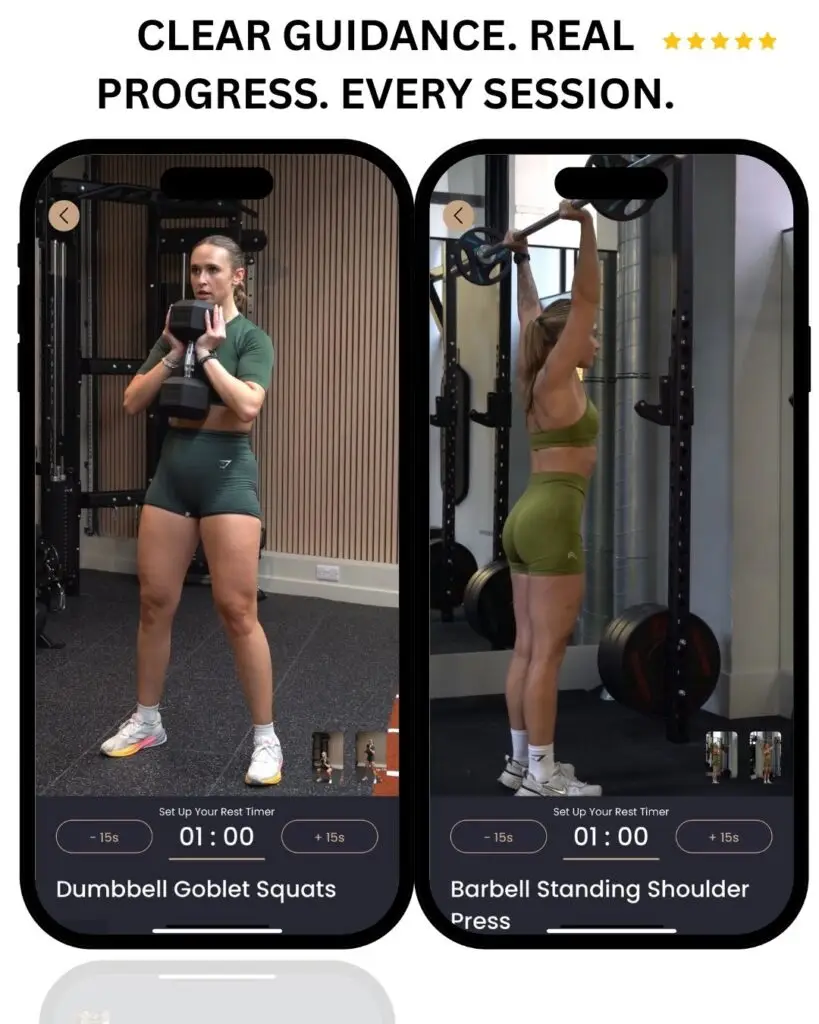
- Show clear demonstrations. New home exercises are easier to learn with a video.
- Build a new session when plans change. You should not have to write one from scratch on the spot.
How 12REPS plans gym and home workouts
12REPS is a strength training app that builds training around your goal, your equipment and the time you have. That makes it a good fit for weeks split between a gym and home.
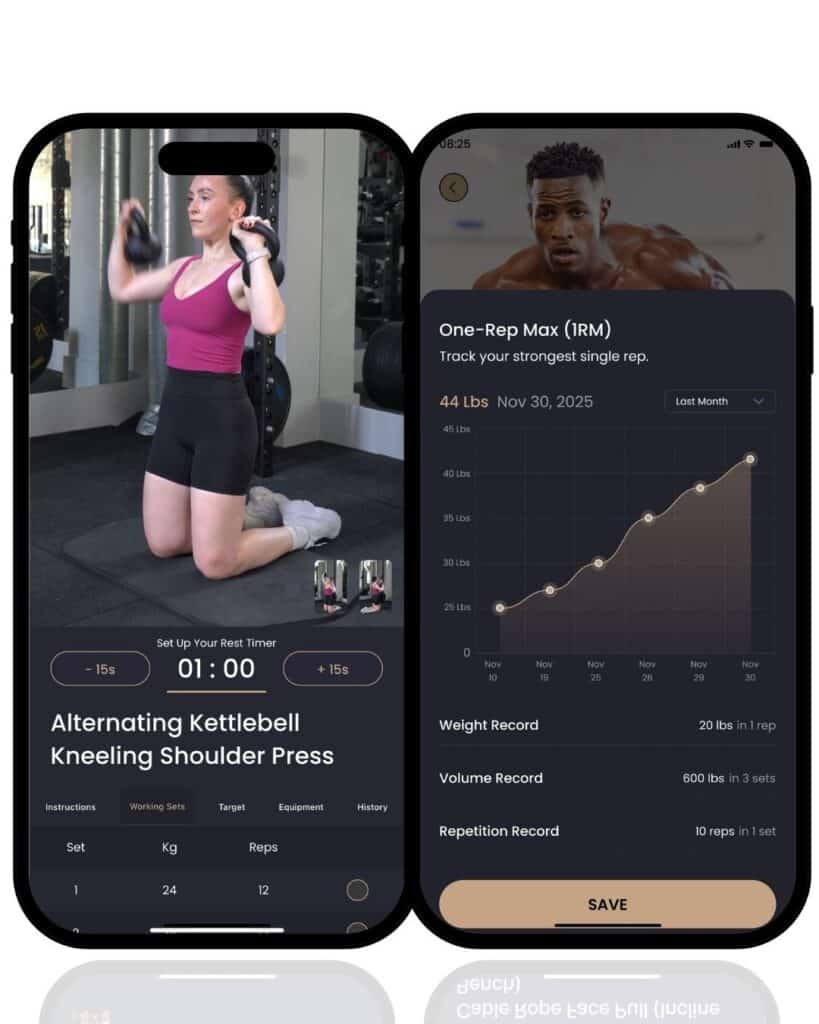
- Ready-made sessions: open the app and your workout is ready, for example Chest & Back, 60 minutes, 6 exercises.
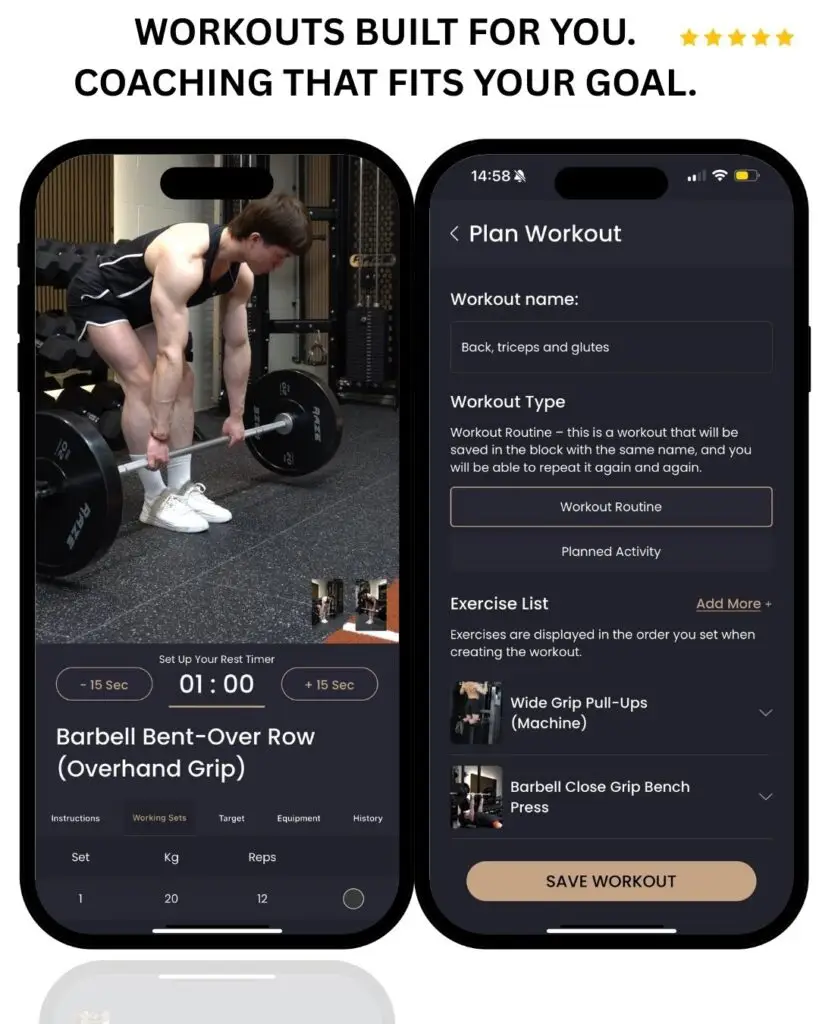
- Build your own: use the body map to choose the muscle, equipment and time. 12REPS builds the session, and you can save it and train.
- Trainer demonstrations: exercise demos and technique breakdowns come from real, qualified personal trainers.
- Set-by-set logging: enter reps and weight for each set. The app remembers what you lifted, so you have a number to beat.
- Accountability: streaks, a weekly goal, challenges, awards and a community help you keep going.
12REPS is available on the App Store and Google Play.
Key takeaways
- One plan and one log across gym and home keeps your progress in one place.
- Put your heaviest sessions on gym days and use home days for dumbbell, band or bodyweight work.
- Swap exercises by movement pattern, and log each version under its own name.
- Make home sessions harder over time with more reps, slower lowering or pauses.
If your week moves between the gym and home, 12REPS builds each session around the equipment and time you have that day. Every set goes into one log, so you always know what to beat.
Related reading
Sources
- Adult Activity: An Overview. Centers for Disease Control and Prevention, 2023. https://www.cdc.gov/physical-activity-basics/guidelines/adults.html
- Effects of training with elastic resistance versus conventional resistance on muscular strength: A systematic review and meta-analysis. Lopes JSS, Machado AF, Micheletti JK, de Almeida AC, Cavina AP, Pastre CM. SAGE Open Medicine, 2019. https://doi.org/10.1177/2050312119831116
- How are habits formed: Modelling habit formation in the real world. Lally P, van Jaarsveld CHM, Potts HWW, Wardle J. European Journal of Social Psychology, 2010. https://doi.org/10.1002/ejsp.674
- Progressive overload without progressing load? The effects of load or repetition progression on muscular adaptations. Plotkin D, Coleman M, Van Every D, et al. PeerJ, 2022. https://doi.org/10.7717/peerj.14142
