

By Will Duru, BSc (Hons) Sport and Exercise Science, Award-winning Personal Trainer with over 10 years of experience in strength training and optimising recovery
A personal trainer workout planner is a tool for setting out each client’s sessions and recording what they lift. The features that matter most are clear exercise demos, simple set-by-set logging and a training history you can review together. Used well, it keeps clients training with purpose between your sessions.
Are you spending more time on spreadsheets than on coaching? This article covers why trainers use a planner and tracker, which features to look for and how to build one into your coaching. It also explains, honestly, where the 12REPS app fits.
Why personal trainers use a workout planner and tracker
Less admin, more coaching
Paper notes and scattered spreadsheets are slow to update and easy to lose. Keeping each client’s plan and history in one place cuts the time you spend writing programs and hunting for last week’s numbers.
Clients know what to do between sessions
Many clients do some of their training without you. A clear plan on their phone, with demonstrations, means those sessions follow your program instead of guesswork.
Better check-ins
Self-monitoring works best alongside feedback. A meta-regression of physical activity and healthy eating programs found that programs combining self-monitoring with techniques such as goal setting and feedback were more effective. A client’s log gives you something concrete to give feedback on.
Your coaching still matters
An app does not replace a coach. A 2022 systematic review and meta-analysis on supervision found larger strength gains with supervised resistance training than with unsupervised training. The effect on body composition was trivial.
In one 12-week trial in moderately trained men, the supervised group lifted heavier loads, progressed faster and gained more maximal strength than the unsupervised group. A planner works best as support for your coaching.
Video: How I built my fitness app from scratch. In this video, Will talks about building 12REPS as a personal trainer.
Key features of a personal trainer workout planner
Before you commit to any tool, check these features against how you coach:
| Feature | Why it matters | What to check |
|---|---|---|
| Program builder | You write a plan once, then reuse and adjust it | Can you start from a template and edit it per client? |
| Exercise demonstrations | Clients repeat the technique you taught | Are demos clear, and do they match your cues? |
| Set-by-set logging | You see what was really lifted | Can clients log reps and weight in a few taps? |
| Effort rating | Load alone does not show how hard a set was | Can clients record RIR or RPE? |
| History and progress | Trends show what is working | Can you see past sessions for each exercise? |
| Communication | Feedback keeps clients engaged | Is there a way to share notes or messages? |
| Client data | Health and training data is personal | How is data stored, and who can see it? |
RPE (rating of perceived exertion) and RIR (reps in reserve) both describe how hard a set felt. A resistance training RPE scale based on reps in reserve links the two: RPE 10 means no reps left, and RPE 9 means one rep left.
Client estimates are not exact. A review of studies on predicting reps to failure found people underestimated their remaining reps by about one rep on average. Use effort ratings as a guide, and check them against what you see in session.
How to use a planner and tracker with clients
- Start with a proper intake. Record goals, schedule, equipment and training history. Follow your usual health screening. If a client has a medical condition or takes medication, ask them to check with their doctor before starting.
- Write the plan. Set the exercises, sets, rep targets and rest for each session. Keep most exercises the same for a few weeks so progress is easy to see.
- Teach logging in the first session. Show clients how to enter reps and weight for every set, and how to rate their effort.
- Agree a progression rule. The ACSM position stand on progression suggests a 2 to 10% load increase once a client can do one or two reps beyond the target.
- Review the log before each check-in. Look for missed sessions, stalled lifts and effort ratings that drift.
- Give short, specific feedback. One clear note per session is more useful than a long report.
For more on progression, see our complete guide to progressive overload. For logging basics you can share with clients, see how to track your workouts.
Where 12REPS fits for coaches and clients
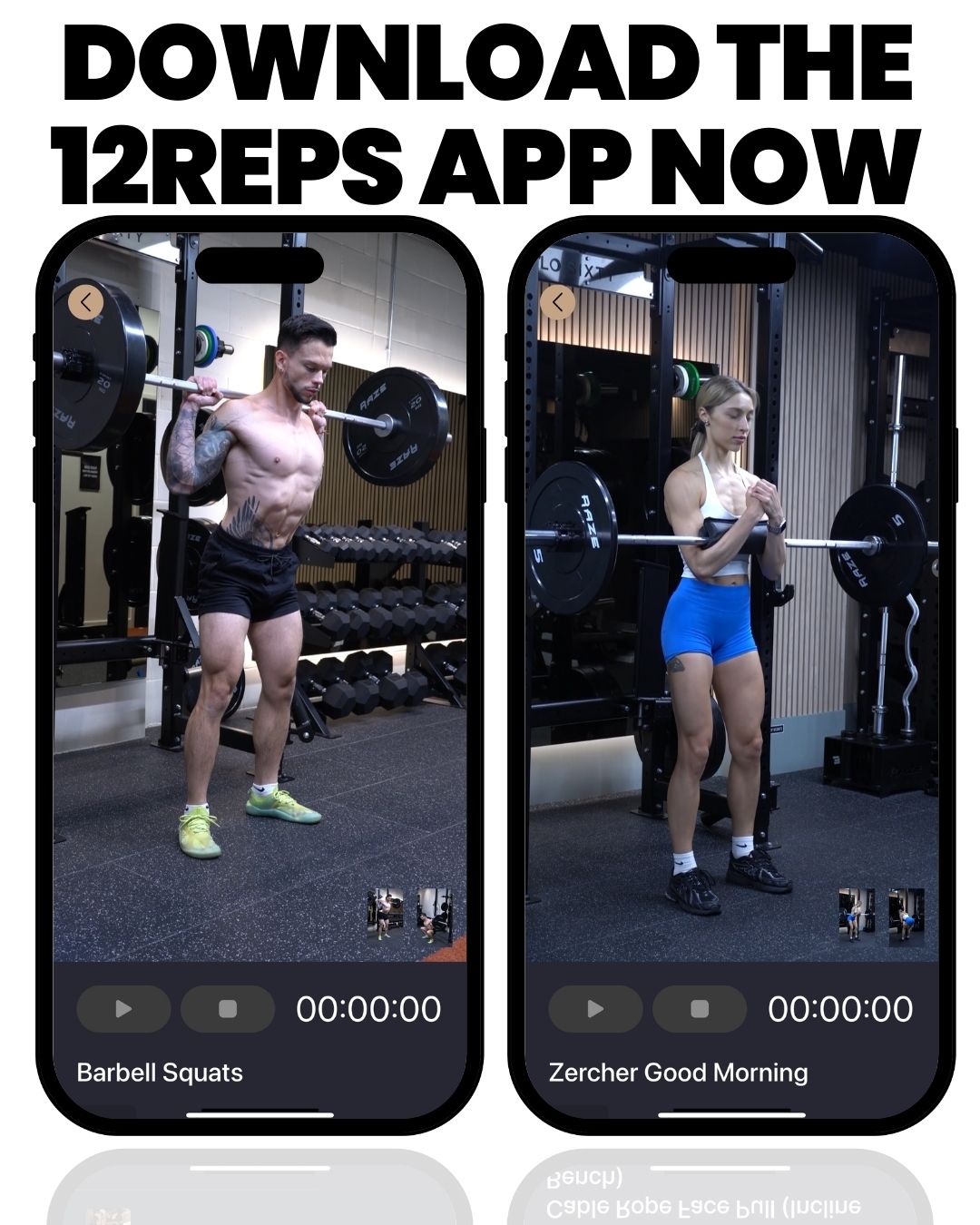
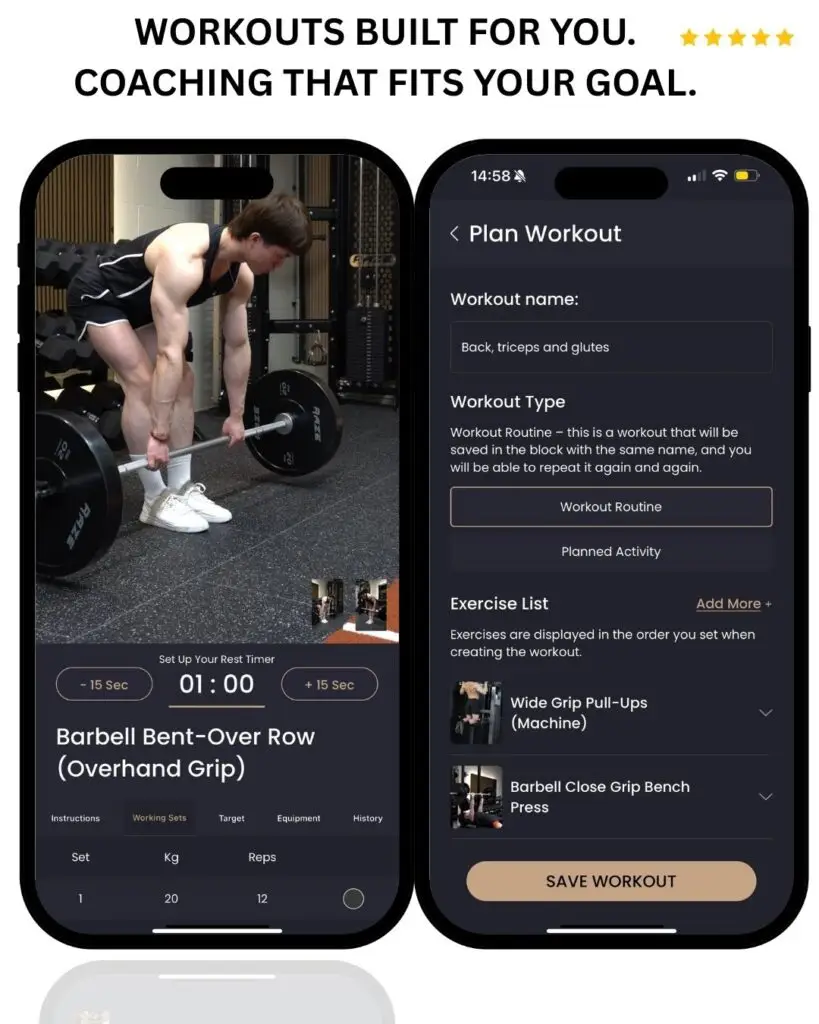
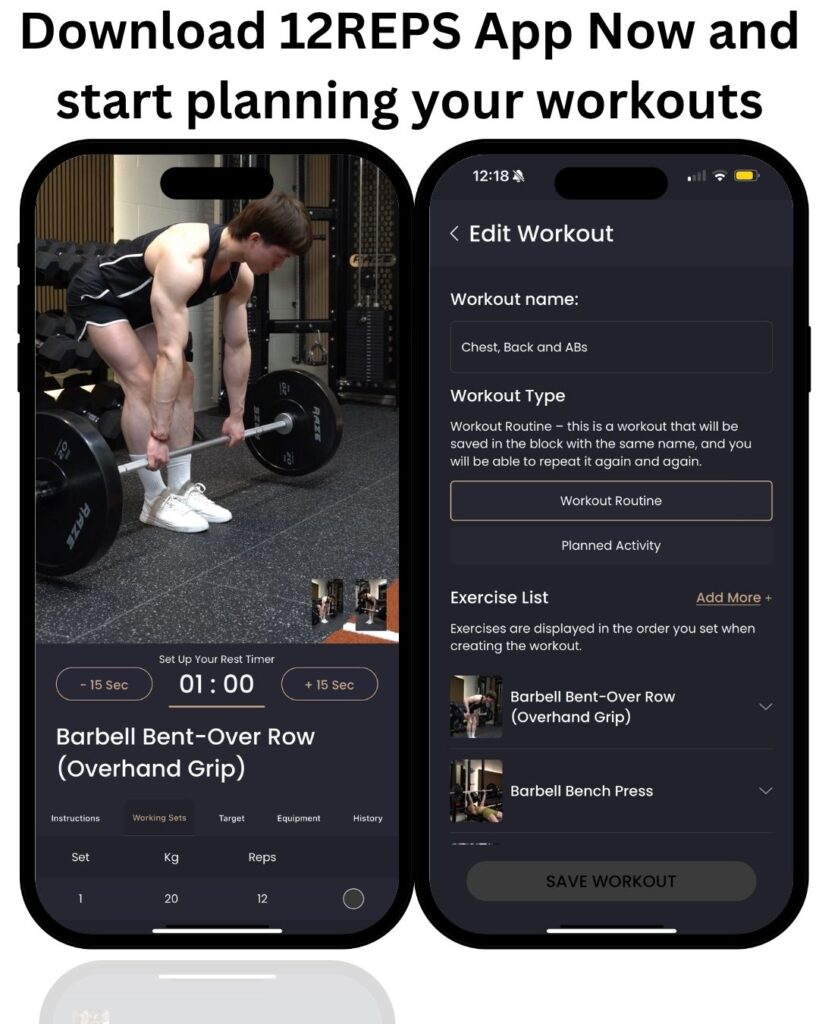
12REPS is a strength training app built for the person doing the training. It fills the gap between a gym membership and ongoing personal coaching. The 12REPS app page lists these features:
- A plan built around the user’s goal, equipment and time.
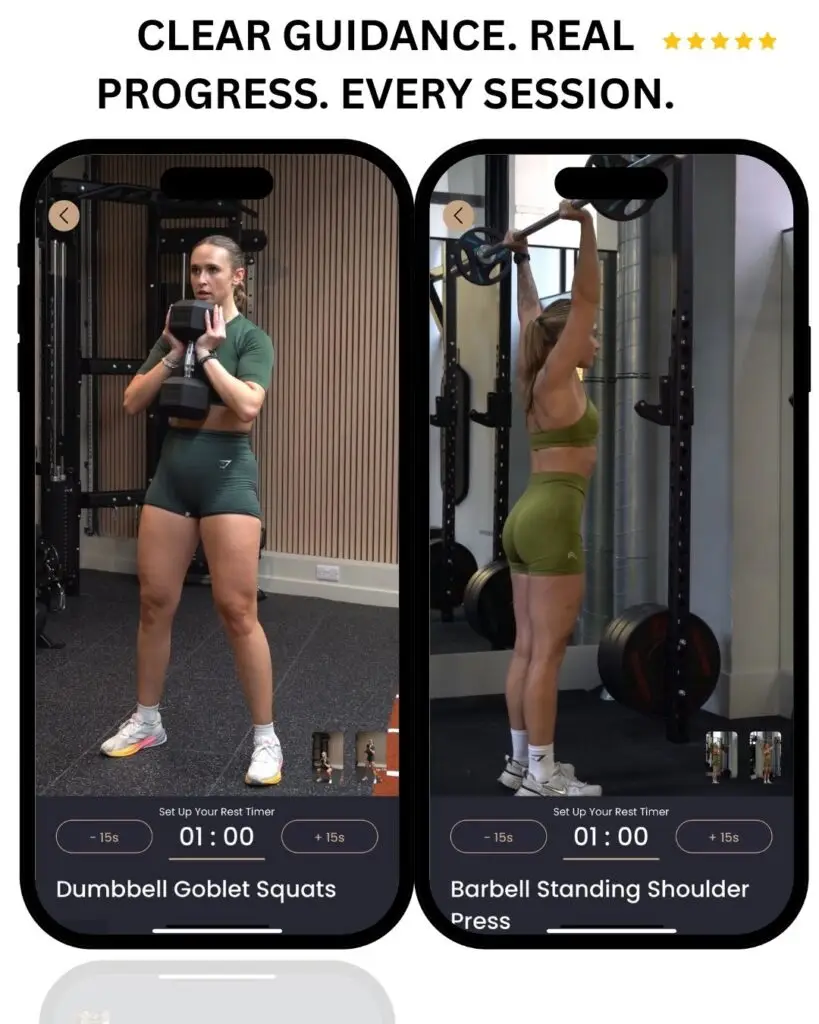
- Exercise demonstrations and technique breakdowns from real, qualified personal trainers.
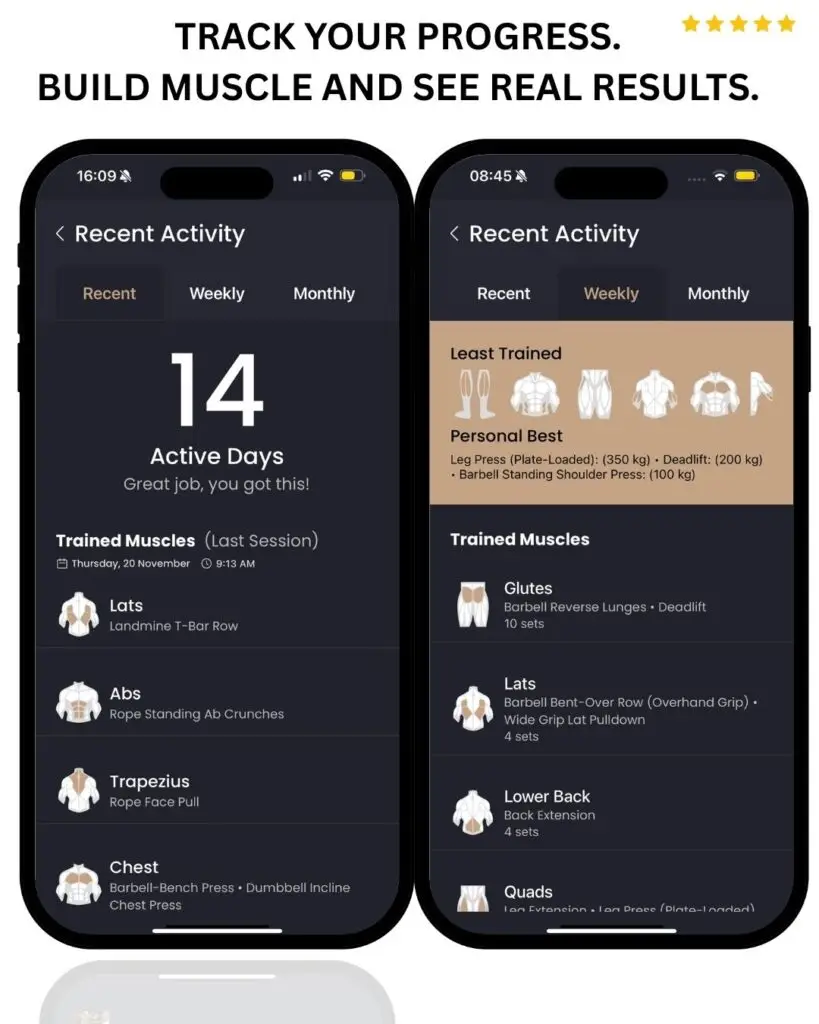
- Set-by-set logging of reps and weight, with last session’s numbers to beat.
- A body map for building a session by muscle, equipment and time.
- Streaks, a weekly goal, challenges, awards and a community.
- Body weight trends and private progress photos.
That makes it a fit for clients who train on their own between sessions, or who are moving on from regular coaching. The app page does not list coach tools such as client dashboards, plan assignment or in-app messaging. If you need those, look at a dedicated coaching platform.
Video: 12REPS app, strength training for gym and home. Watch this short overview to see the workout flow a client would use, in the gym or at home.

Key takeaways
- A planner saves admin time and keeps clients on your program between sessions.
- Clear demos and fast logging matter more than a long feature list.
- Ask clients to log effort as well as load, and treat their estimates as a guide.
- Review logs before check-ins and give short, specific feedback.
- Supervision still adds value, so use the app to support your coaching, not replace it.
If your clients need structure on the days they train alone, 12REPS gives them a plan built around their goal, equipment and time. They get trainer demonstrations and a log of every set.
Related reading
Sources
- The Role of Supervision in Resistance Training; an Exploratory Systematic Review and Meta-Analysis. Fisher J, Steele J, Wolf M, Androulakis Korakakis P, Smith D, Giessing J. International Journal of Strength and Conditioning, 2022. https://doi.org/10.47206/ijsc.v2i1.101
- The influence of direct supervision of resistance training on strength performance. Mazzetti SA, Kraemer WJ, Volek JS, et al. Medicine and Science in Sports and Exercise, 2000. https://pubmed.ncbi.nlm.nih.gov/10862549/
- Effective techniques in healthy eating and physical activity interventions: a meta-regression. Michie S, Abraham C, Whittington C, McAteer J, Gupta S. Health Psychology, 2009. https://pubmed.ncbi.nlm.nih.gov/19916637/
- Novel Resistance Training-Specific Rating of Perceived Exertion Scale Measuring Repetitions in Reserve. Zourdos MC, Klemp A, Dolan C, et al. Journal of Strength and Conditioning Research, 2016. https://pubmed.ncbi.nlm.nih.gov/26049792/
- Accuracy in Predicting Repetitions to Task Failure in Resistance Exercise: A Scoping Review and Exploratory Meta-analysis. Halperin I, Malleron T, Har-Nir I, et al. Sports Medicine, 2022. https://pubmed.ncbi.nlm.nih.gov/34542869/
- American College of Sports Medicine position stand: Progression models in resistance training for healthy adults. American College of Sports Medicine. Medicine and Science in Sports and Exercise, 2009. https://pubmed.ncbi.nlm.nih.gov/19204579/