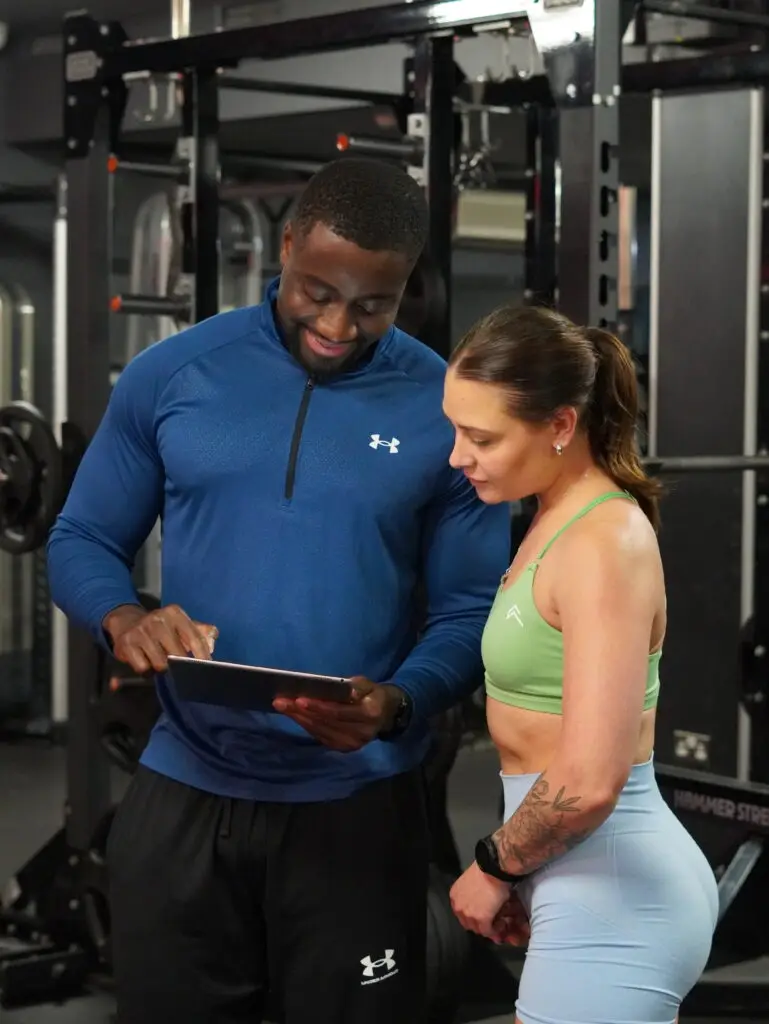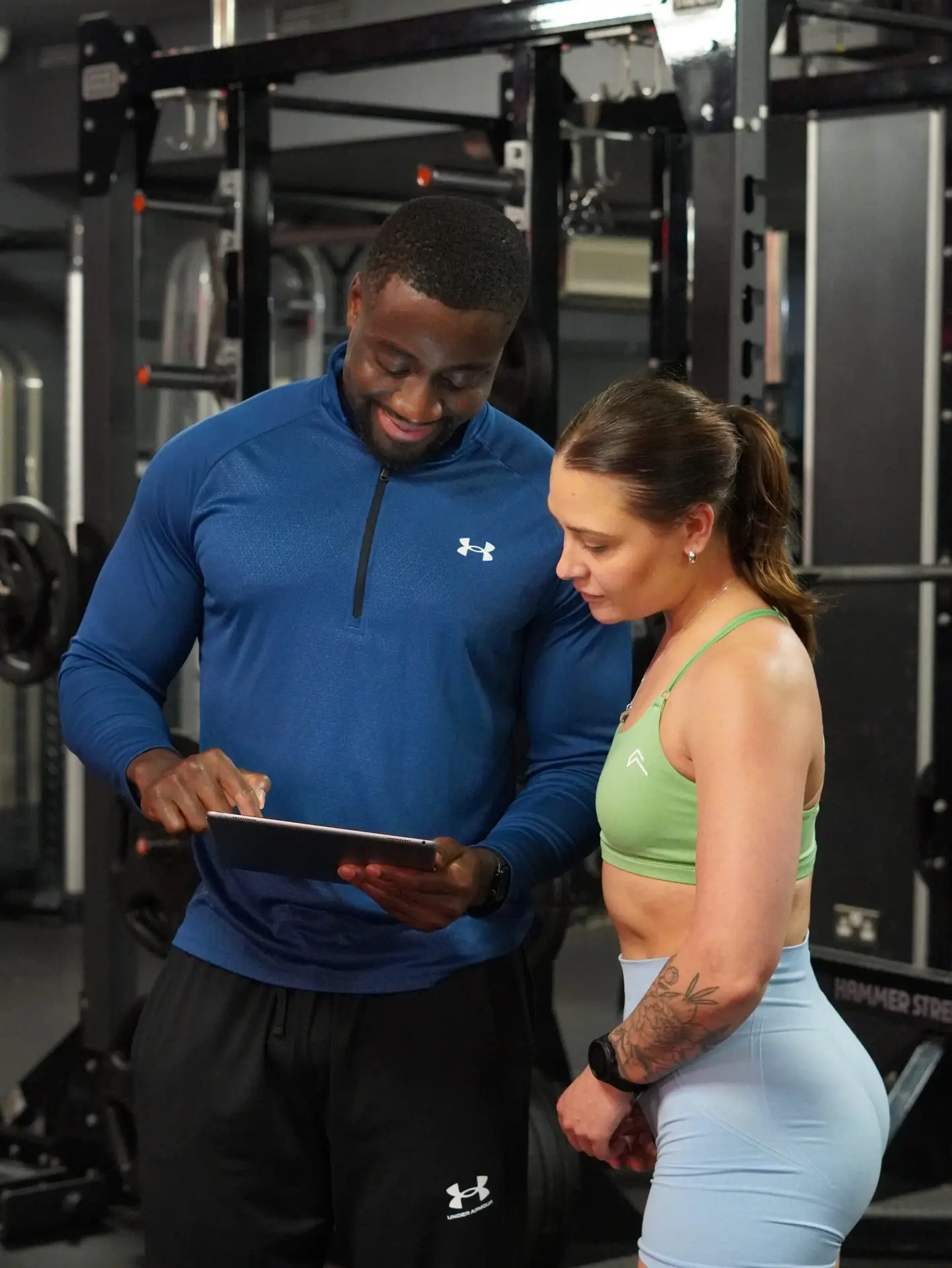



By Will Duru, BSc (Hons) Sport and Exercise Science, Award-winning Personal Trainer with over 10 years of experience in strength training and optimising recovery.
Strength training for menopause means lifting weights or using resistance two or more times a week to keep muscle, support bone health and feel strong. This 12-week plan uses dumbbells, kettlebells, machines, bodyweight moves and mini bands. You train twice a week and rotate through push, pull, legs and core workouts.
I have coached many women through perimenopause and menopause, and it is a stage that is often misunderstood. This guide shares how I set up training for this stage, and a plan you can follow.
If you have a health condition, take medication or have not exercised for a while, check with your doctor before you start.
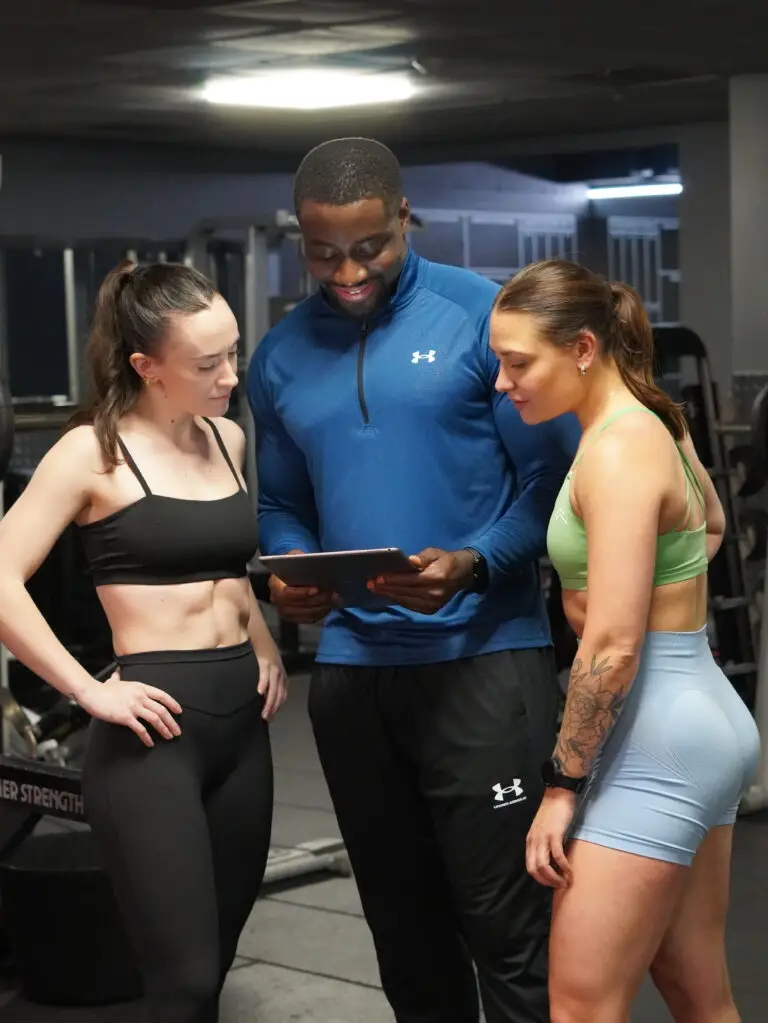
Make training comfortable first
Many women come to the gym during menopause feeling frustrated. They are dealing with hot flushes, night sweats, fatigue and a body that feels different. Exercise can feel daunting.
The first thing I suggest is to be kind to yourself and set up a training space that works for you:
- Stay cool: train in a well-ventilated space, near a fan or air conditioning if you can. The NHS lists lightweight clothing, a fan and a cold drink among simple ways to cope with hot flushes.
- Keep water close: sip between sets to stay comfortable.
- Dress light: choose soft, breathable fabrics.
- Take your full rest: use the rest periods in the plan. If you feel dizzy or light-headed, stop and sit down.
- Control each rep: slow, deliberate movements matter more than speed or exhaustion.
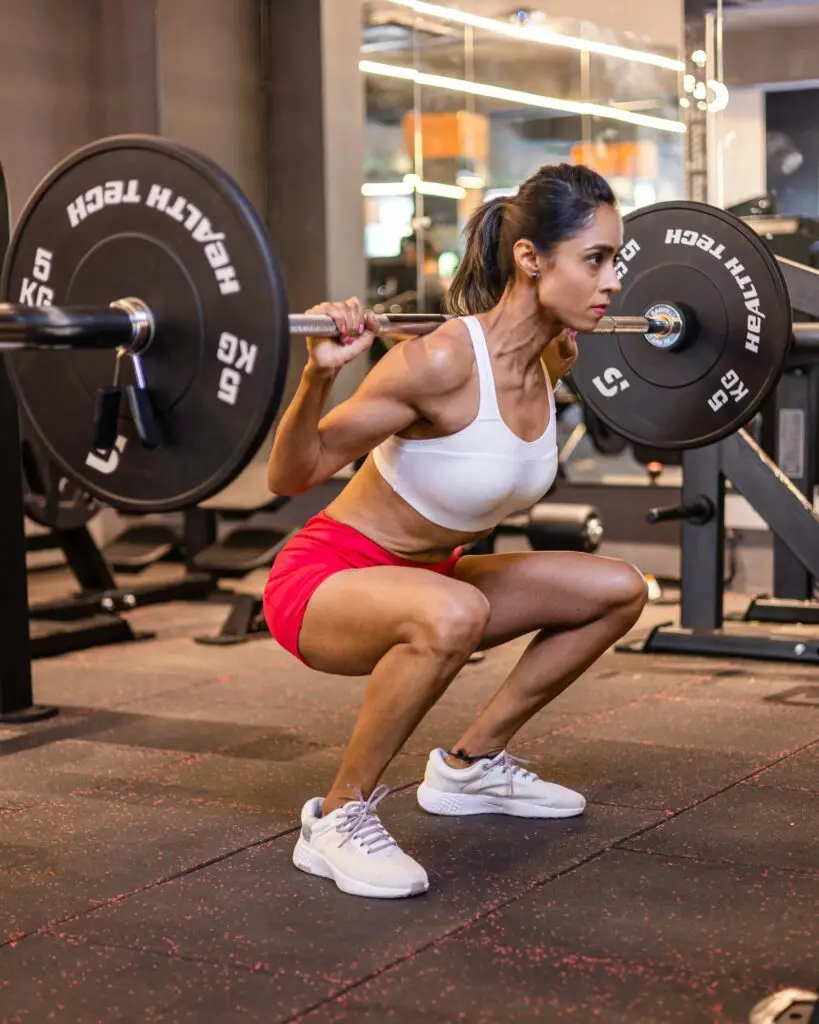
Why strength training helps during menopause
Strength training is not about becoming a bodybuilder. It is about building a strong, capable body for the years ahead.
- Keeps muscle: a study of 234 Finnish women found that the menopausal transition was linked with muscle loss, and that women who were more physically active kept more muscle.
- Supports bone health: the NHS recommends weight-bearing and resistance exercise such as lifting weights to help protect your bones. In the LIFTMOR trial, supervised heavy resistance and impact training improved bone density in postmenopausal women with low bone mass.
- Helps mood: the NHS notes that regular exercise can help with mood changes.
- Builds confidence: feeling strong and capable in your body is a real benefit in itself.
What about hot flushes? The evidence is mixed. A Cochrane review found too little good evidence to say whether exercise reduces hot flushes. Train for strength, bone and mood, and talk to your doctor about symptom treatment.
The International Menopause Society recommends two or more days of resistance or strength training each week. This plan gives you exactly that. Read more in our guide to strength training in menopause and on improving bone density after menopause.
Your 12-week strength training plan for menopause
This plan uses a push, pull, legs and core split. It works all your major muscle groups without doing too much in one session. I have left out complex lifts, so the plan suits most women who are new to the gym.
How the 12 weeks are set up
- Train twice a week, for example Monday and Thursday.
- Rotate the four workouts: one week do Push and Pull, the next week do Legs and Core. Then repeat.
- Weeks 1 to 4, Foundation: learn the movements with moderate weights.
- Weeks 5 to 8, Building: keep the same workouts and add a little weight when the top of the rep range feels easy.
- Weeks 9 to 12, Strength: switch to the heavier Push and Pull workouts below. Keep rotating with Legs and Core.
Workout 1: Push (weeks 1 to 8)
| Exercise | Sets | Reps | Rest | Equipment |
|---|---|---|---|---|
| Dumbbell chest press (bench or floor) | 3 | 10-12 | 90 seconds | Dumbbells |
| Seated dumbbell shoulder press | 3 | 10-12 | 90 seconds | Dumbbells |
| Chest press machine | 3 | 10-12 | 90 seconds | Machine |
| Triceps dips (assisted or on a bench) | 3 | 8-10 | 90 seconds | Bodyweight |
| Mini band chest fly | 3 | 12-15 | 60 seconds | Mini resistance band |
Workout 2: Pull (weeks 1 to 8)
| Exercise | Sets | Reps | Rest | Equipment |
|---|---|---|---|---|
| Lat pulldown machine | 3 | 10-12 | 90 seconds | Machine |
| Seated cable row | 3 | 10-12 | 90 seconds | Machine |
| Dumbbell single-arm row | 3 | 10-12 each arm | 90 seconds | Dumbbell |
| Mini band pull-aparts | 3 | 15-20 | 60 seconds | Mini resistance band |
| Dumbbell biceps curls | 3 | 10-12 | 90 seconds | Dumbbells |
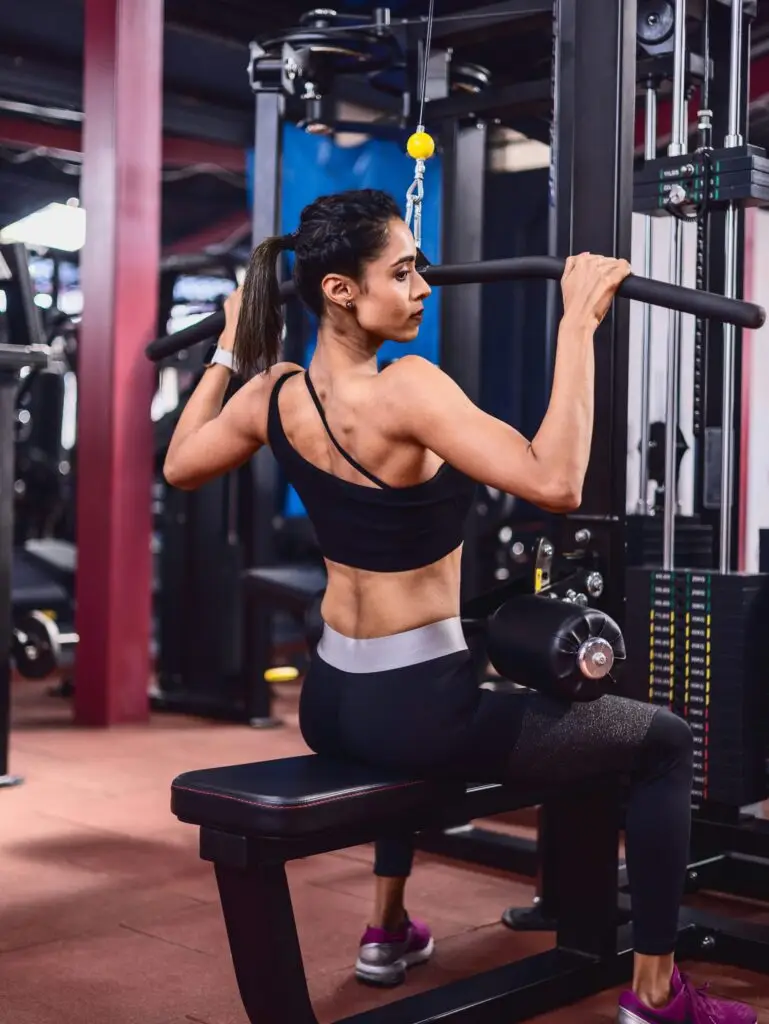
Video: How to do a lat pulldown. The lat pulldown opens the Pull workout. Watch this to see the grip, the path of the bar and how to keep your chest lifted.
Workout 3: Legs (all 12 weeks)
| Exercise | Sets | Reps | Rest | Equipment |
|---|---|---|---|---|
| Goblet squat | 3 | 10-12 | 90 seconds | Kettlebell or dumbbell |
| Leg press machine | 3 | 10-12 | 90 seconds | Machine |
| Dumbbell Romanian deadlift | 3 | 10-12 | 90 seconds | Dumbbells |
| Leg curl machine | 3 | 10-12 | 90 seconds | Machine |
| Mini band glute bridge | 3 | 12-15 | 60 seconds | Mini resistance band |
Video: How to do a goblet squat. The goblet squat opens the Legs workout. Watch this to see how to hold the weight close and sit down between your heels.
Workout 4: Core (all 12 weeks)
| Exercise | Sets | Reps | Rest | Equipment |
|---|---|---|---|---|
| Plank hold | 3 | 20-30 seconds | 60 seconds | Bodyweight |
| Dead bug | 3 | 10-12 each side | 60 seconds | Bodyweight |
| Pallof press | 3 | 10-12 each side | 60 seconds | Cable or mini resistance band |
| Bird dog | 3 | 10-12 each side | 60 seconds | Bodyweight |
| Seated Russian twist | 3 | 12-15 each side | 60 seconds | Dumbbell or bodyweight |
Weeks 9 to 12: heavier push and pull
In the last four weeks, the main lifts move to 4 sets of 8 to 10 reps with 2 minutes of rest. Use a weight that makes the last 2 reps hard while your form stays clean. Legs and Core stay the same, so keep adding a little weight there when you can.
Workout 1B: Push (weeks 9 to 12)
| Exercise | Sets | Reps | Rest | Equipment |
|---|---|---|---|---|
| Dumbbell chest press | 4 | 8-10 | 2 minutes | Dumbbells |
| Kettlebell overhead press | 4 | 8-10 | 2 minutes | Kettlebell |
| Chest press machine | 3 | 10-12 | 90 seconds | Machine |
| Dumbbell triceps extension | 3 | 10-12 | 90 seconds | Dumbbell |
| Mini band lateral raises | 3 | 12-15 | 60 seconds | Mini resistance band |
Workout 2B: Pull (weeks 9 to 12)
| Exercise | Sets | Reps | Rest | Equipment |
|---|---|---|---|---|
| Lat pulldown machine | 4 | 8-10 | 2 minutes | Machine |
| Dumbbell bent-over row | 4 | 8-10 | 2 minutes | Dumbbells |
| Face pulls with band | 3 | 12-15 | 60 seconds | Mini resistance band |
| Hammer curls | 3 | 10-12 | 90 seconds | Dumbbells |
| Seated cable row | 3 | 10-12 | 90 seconds | Machine |
Example rotation for weeks 9 to 12
- Week 9: Monday Push, Thursday Pull
- Week 10: Monday Legs, Thursday Core
- Week 11: Monday Push, Thursday Pull
- Week 12: Monday Legs, Thursday Core
If you also run, our guide to running during menopause shows how to fit strength work around your runs.
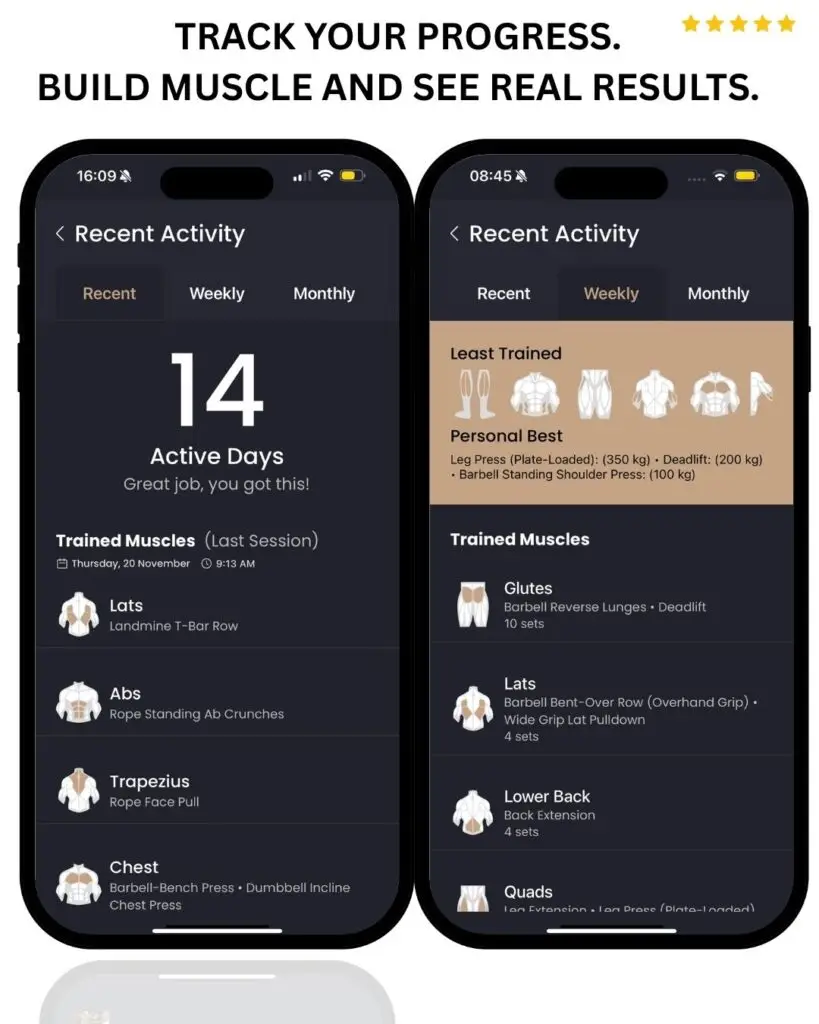
Using the 12REPS app with this plan
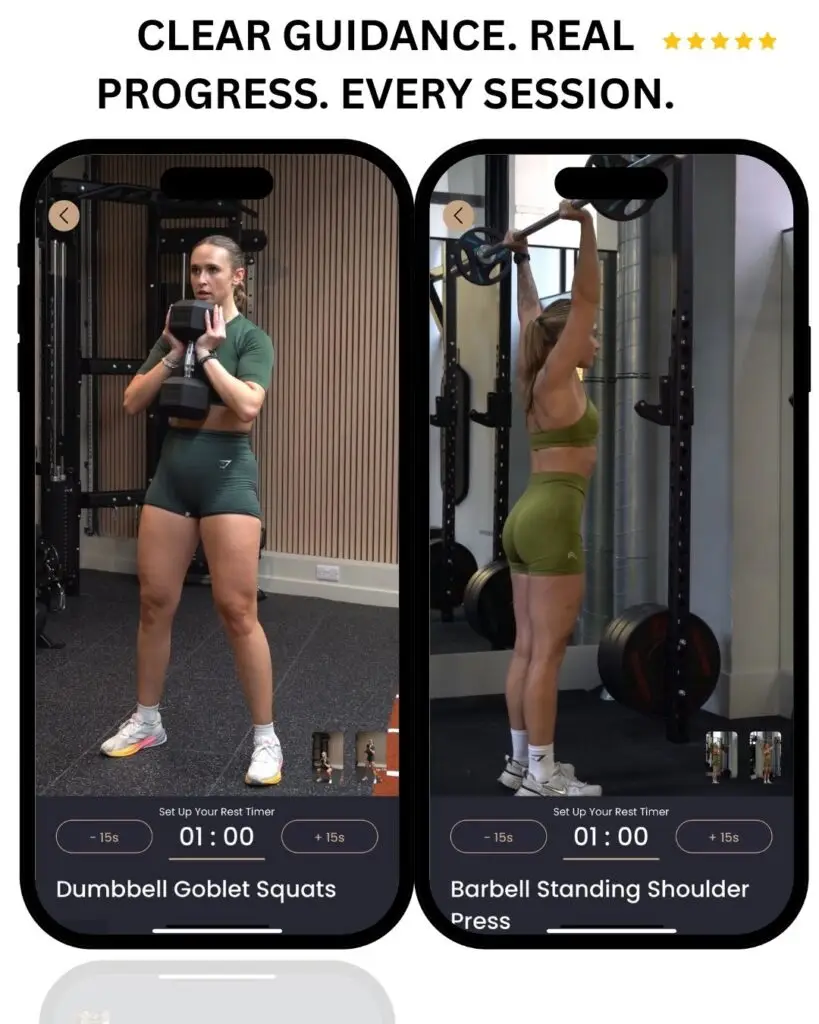
Starting a new routine can feel like a lot. 12REPS can make this plan easier to follow:
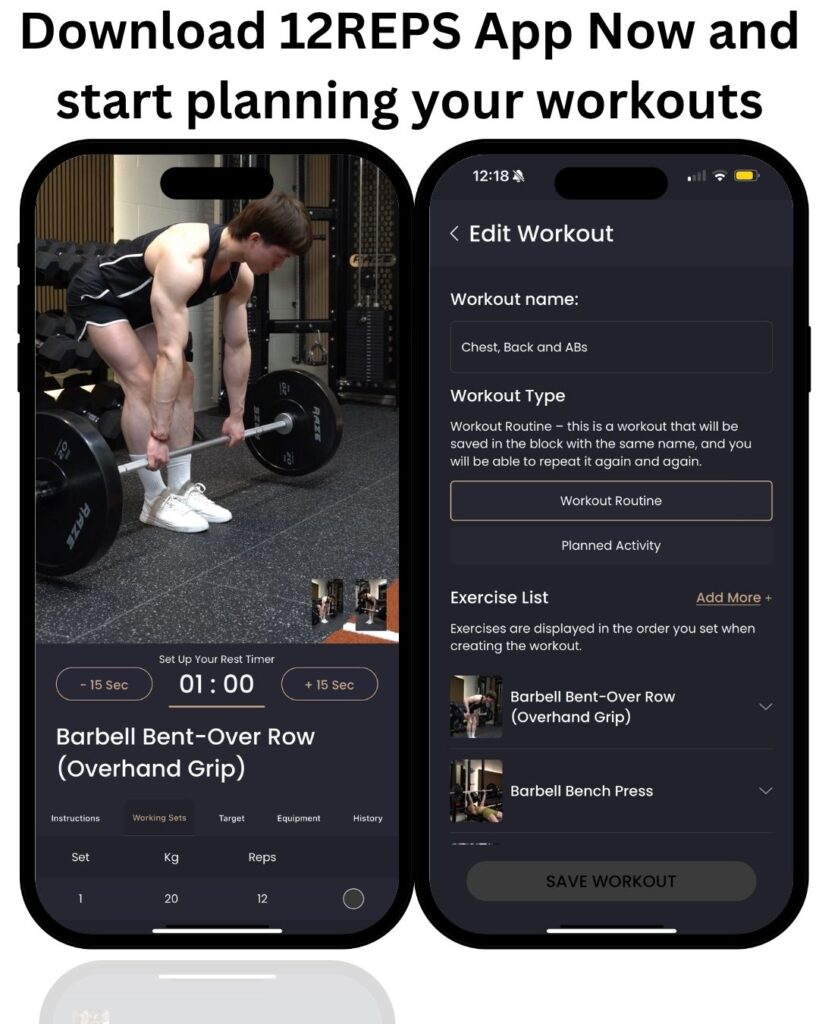
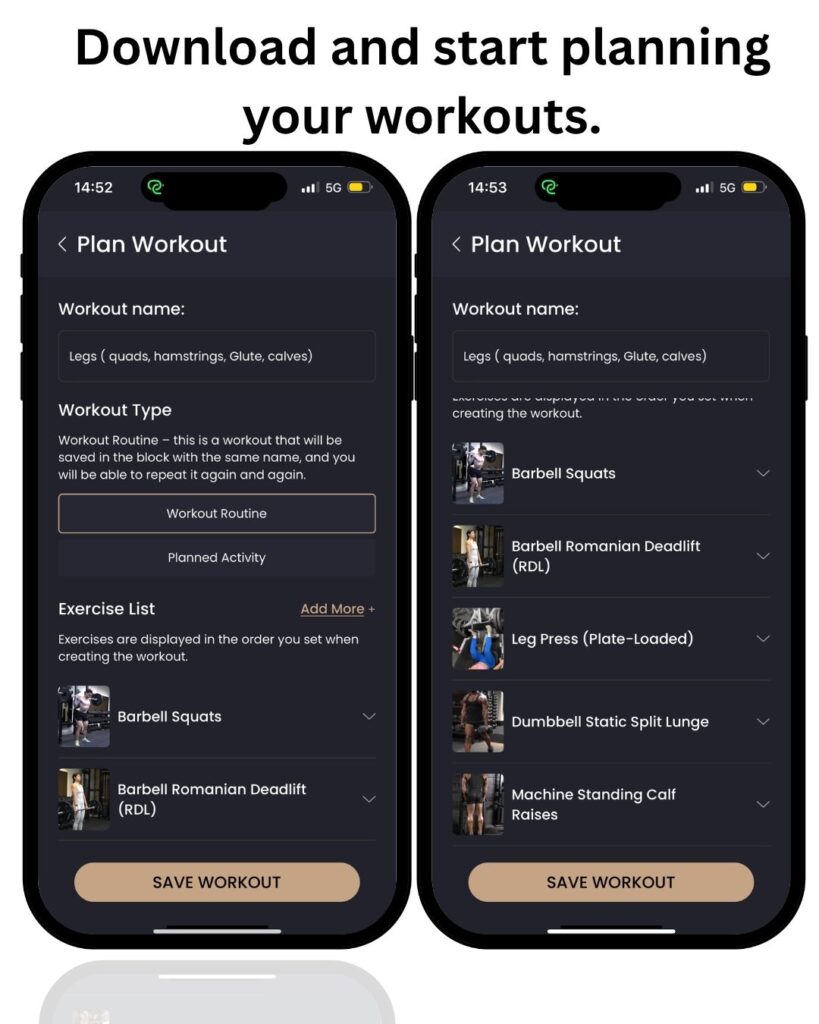
- Build your own session: choose the muscle, your equipment and your time, and 12REPS builds the workout. Save it and train.
- Log every set: enter your reps and weight for each set. The app remembers what you lifted, so you have a number to beat next time.
- Watch the technique: every exercise has a demonstration from a qualified personal trainer.
- Stay accountable: track workouts, streaks and a weekly goal.
See how the 12REPS app works and set up your first session.
Your strongest chapter yet
Menopause is not an ending. It is a good time to put your health first, and strength training is one of the most useful ways to do that.
Start with comfortable sessions, follow the plan twice a week, and add weight slowly. After 12 weeks, repeat the plan with heavier weights or move to a three-day program such as our resistance training program for women over 50. If you are in your 40s, see our perimenopause strength guide for women over 40.
Sources
- Things you can do to help menopause and perimenopause symptoms. NHS, 2026. https://www.nhs.uk/conditions/menopause-and-perimenopause/things-you-can-do/
- Role of Menopausal Transition and Physical Activity in Loss of Lean and Muscle Mass: A Follow-Up Study in Middle-Aged Finnish Women. Juppi HK, et al. Journal of Clinical Medicine, 2020. https://doi.org/10.3390/jcm9051588
- High-Intensity Resistance and Impact Training Improves Bone Mineral Density and Physical Function in Postmenopausal Women With Osteopenia and Osteoporosis: The LIFTMOR Randomized Controlled Trial. Watson SL, et al. Journal of Bone and Mineral Research, 2018. https://academic.oup.com/jbmr/article/33/2/211/7605709
- Exercise for vasomotor menopausal symptoms. Daley A, Stokes-Lampard H, Thomas A, MacArthur C. Cochrane Database of Systematic Reviews, 2014. https://www.cochrane.org/evidence/CD006108_exercise-treating-menopausal-symptoms
- World Menopause Day 2025 resources, Factsheet 2: Physical Activity. International Menopause Society, 2025. https://www.imsociety.org/?p=16657