



By Will Duru, BSc (Hons) Sport and Exercise Science, Award-winning Personal Trainer with over 10 years of experience in strength training and optimising recovery.
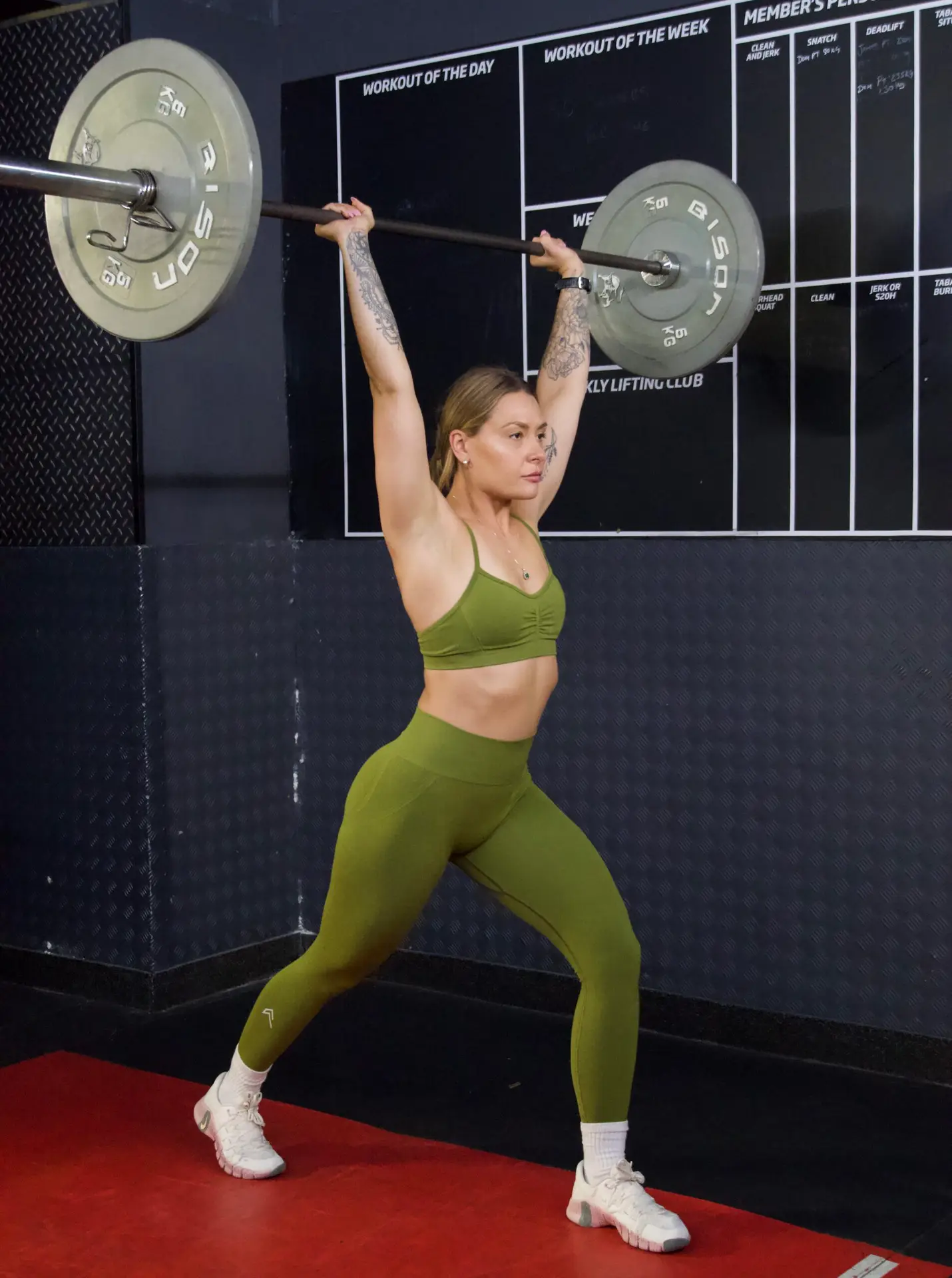
This 12-week push/pull/legs and core program is a four-day gym split for building muscle and strength. You train push, pull and legs on separate days, then give your core its own session. It runs in phases, starting with straight sets and moving to supersets once your technique is solid.
When I first started training people, I noticed the same thing again and again. People would wander from machine to machine, do a few random exercises and leave frustrated. They had the tools, but no plan. This program gives you that plan.
It suits beginners who are ready for a structured gym routine, and regular gym-goers who want more direction. You will need dumbbells, a barbell, cable and leg machines, a TRX, a kettlebell and a medicine ball.
Which 12REPS plan should you choose?
- Muscle and strength over 12 weeks, four days a week: this program.
- Never lifted before: start with the beginner's guide to strength training.
- Fat loss is your main goal: try the 12-week fat loss program.
- Only two sessions a week: use the 6-week push/pull program.

How the push/pull/legs and core split works
Each day trains muscles that work together:
- Push day: chest, shoulders and triceps. Think bench presses, overhead presses and dips.
- Pull day: back and biceps. Think rows, pulldowns and curls.
- Legs day: quads, hamstrings, glutes and calves. Think squats, deadlifts and lunges.
- Core day: your midsection, using planks, slams and rotation work, plus some conditioning.
In this split, you train each muscle group directly about once a week, with plenty of sets each time. Is that enough? A meta-analysis on training frequency found that, when weekly sets are the same, how often you train a muscle makes little difference to growth. Total weekly work and steady progress matter more.
So the best split is the one you will stick to. If you are unsure, compare upper/lower, push/pull/legs and full-body splits for beginners.
Video: Why you are not gaining muscle. This short 12REPS video covers common reasons people stop making progress. Watch it before week 1 so you know what to avoid.
Before you start: set yourself up to stay consistent
- Pick a gym you will actually use. A short trip beats fancy features. Check it has the equipment in the tables below.
- Visit at your training time. Some gyms are packed at 6 PM and quiet at 6 AM. Choose a time when you can get the kit you need.
- Book an induction. Many gyms offer a free session with a trainer. Use it to learn the machines and the basic lifts.
- Wear clothes you can move in and shoes with good support. Bring a towel and water.
- Be realistic. Four days a week is a big step if you have not trained for a while. Consistency beats intensity.
Most people in the gym are focused on their own sessions. Nobody minds if you start light.

Warm-up and cool-down
A warm-up is worth the time. A meta-analysis on warming up found it improved performance in 79% of the measures studied. Use this simple order:
- General warm-up (about 5 minutes): easy cycling, rowing or brisk walking.
- Moving stretches (5 to 8 minutes): arm circles, leg swings, hip circles and walking lunges.
- Movement prep (3 to 5 minutes): lighter versions of your first exercise, such as push-ups before push day or body-weight squats before legs day.
Save long static holds for after training. A systematic review on stretching found larger drops in performance when each muscle was held in a static stretch for 60 seconds or more.
A cool-down is optional. A review on cooling down found that an active cool-down does not reduce muscle soreness and does not appear to lower injury risk. A few minutes of easy movement and stretching can still help you relax. For more detail, read our 3-phase warm-up guide.

The 12-week program
The program has three 4-week blocks. Weeks 1 to 4 build your technique with straight sets. Weeks 5 to 8 add heavier main lifts and supersets. Weeks 9 to 12 build on Phase 2.
Weekly schedule
| Day | Session |
|---|---|
| Monday | Push (chest, shoulders, triceps) |
| Tuesday | Pull (back, biceps) |
| Wednesday | Rest or light cardio |
| Thursday | Legs (quads, hamstrings, glutes, calves) |
| Friday | Core |
| Saturday | Rest or active recovery, such as a walk |
| Sunday | Rest |
You can move the days to suit your week. Try to keep a rest day after legs.
Phase 1: Foundation (weeks 1 to 4)
Some loads are shown as a percentage of 1RM (one-rep max), the most you can lift once with good form. You do not need to test it. Choose a weight you can lift for every rep with clean technique, where the last two reps feel hard.
Push day
| Exercise | Equipment | Sets | Reps | Load | Rest |
|---|---|---|---|---|---|
| Dumbbell Bench Press | Dumbbells | 4 | 10-12 | 60-70% of 1RM | 90 seconds |
| Overhead Press (Standing) | Dumbbells | 4 | 10-12 | 60-70% of 1RM | 90 seconds |
| Incline Dumbbell Press | Dumbbells | 4 | 10-12 | 60-70% of 1RM | 90 seconds |
| Lateral Raises | Dumbbells | 4 | 10-12 | Light-Moderate | 60 seconds |
| Triceps Dips | Bodyweight | 4 | 10-12 | Body weight | 60 seconds |
| Overhead Triceps Extension | Dumbbells | 4 | 10-12 | Moderate | 60 seconds |
- Start with the dumbbell bench press to groove your pressing technique.
- Keep your core braced on every press.
- Control each rep: 2 seconds down, a 1-second pause, 2 seconds up.
Pull day
| Exercise | Equipment | Sets | Reps | Load | Rest |
|---|---|---|---|---|---|
| Bent-Over Dumbbell Rows | Dumbbells | 4 | 10-12 | 60-70% of 1RM | 90 seconds |
| Lat Pulldowns | Machine | 4 | 10-12 | 60-70% of 1RM | 90 seconds |
| Single-Arm Dumbbell Rows | Dumbbells | 4 | 10-12 | 60-70% of 1RM | 90 seconds |
| TRX Rows | TRX | 4 | 10-12 | Body weight | 60 seconds |
| Dumbbell Biceps Curls | Dumbbells | 4 | 10-12 | Moderate | 60 seconds |
| Hammer Curls | Dumbbells | 4 | 10-12 | Moderate | 60 seconds |
- Start each pull by drawing your shoulder blades back and down, then bend your arms.
- Squeeze your back at the end of each rep.
Legs day
Video: Dumbbell goblet squats. Legs day opens with this squat. Watch the demo before your first set to check your setup and technique.
| Exercise | Equipment | Sets | Reps | Load | Rest |
|---|---|---|---|---|---|
| Goblet Squats | Dumbbells | 4 | 10-12 | 60-70% of 1RM | 90 seconds |
| Romanian Deadlifts | Dumbbells | 4 | 10-12 | 60-70% of 1RM | 90 seconds |
| Bulgarian Split Squats | Bodyweight | 4 | 10-12 | Body weight | 90 seconds |
| Leg Press | Machine | 4 | 10-12 | 60-70% of 1RM | 90 seconds |
| Walking Lunges | Bodyweight | 4 | 10-12 | Body weight | 60 seconds |
| Calf Raises | Bodyweight | 4 | 10-12 | Body weight | 60 seconds |
- Learn the hip hinge with Romanian deadlifts: push your hips back and keep the weights close to your legs.
- Keep your knees in line with your toes when you squat and lunge.
- Use the fullest range of motion you can control.
Core day
| Exercise | Equipment | Sets | Reps | Load | Rest |
|---|---|---|---|---|---|
| Plank | Bodyweight | 4 | 30-45 sec | Body weight | 60 seconds |
| Russian Twists | Medicine Ball | 4 | 10-12 | Medicine Ball | 60 seconds |
| Dead Bug | Bodyweight | 4 | 10-12 | Body weight | 60 seconds |
| Mountain Climbers | Bodyweight | 4 | 10-12 | Body weight | 60 seconds |
| Bicycle Crunches | Bodyweight | 4 | 10-12 | Body weight | 60 seconds |
| TRX Pike | TRX | 4 | 10-12 | Body weight | 60 seconds |
- Quality over speed on every rep.
- Breathe normally during planks.
- Focus on resisting movement: no sagging hips in planks, no twisting in dead bugs. Our dead bug guide shows the technique.
Phase 2: Strength and supersets (weeks 5 to 8)
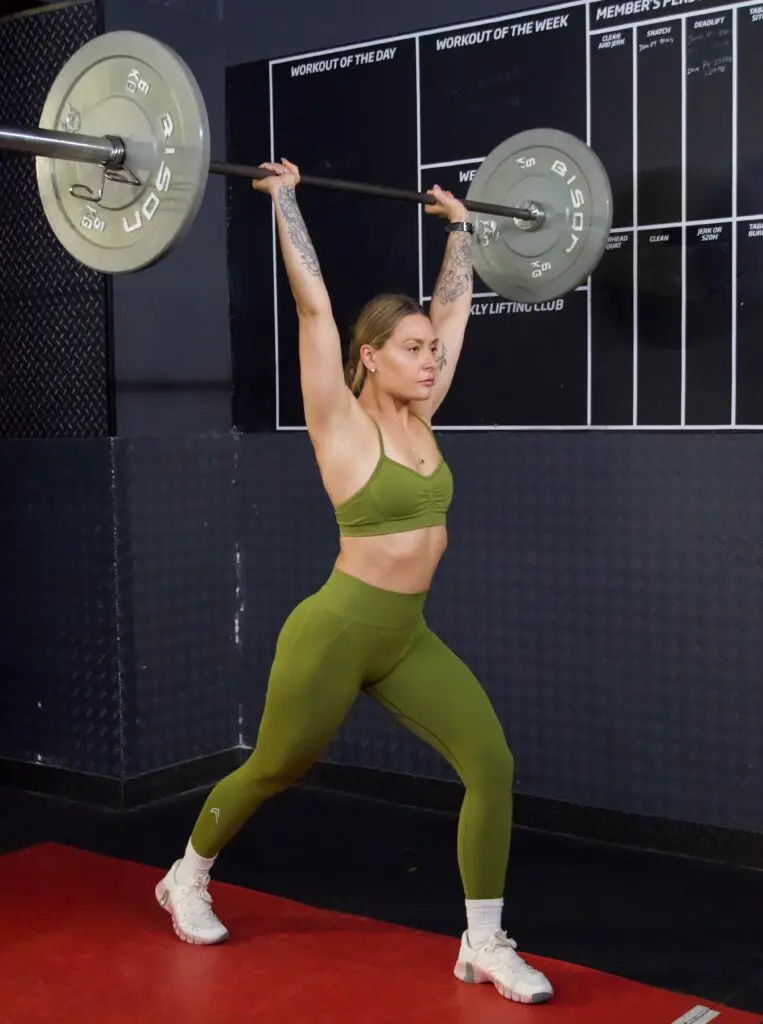
Phase 2 adds barbell lifts and raises the main loads to 70 to 80% of 1RM. It also adds supersets: two exercises done back to back, then a rest. For example, do A1, go straight into A2, then rest 90 seconds.
Supersets save time without cutting the work. A review on saving training time found that supersets and similar methods roughly halve session time.
If 10 to 12 reps at 70 to 80% feels too heavy, lower the weight. Clean reps matter more than the number on the bar.
Push day
| Exercise | Equipment | Sets | Reps | Load | Rest |
|---|---|---|---|---|---|
| Barbell Bench Press | Barbell | 4 | 10-12 | 70-80% of 1RM | 2 minutes |
| A1: Incline Dumbbell Press | Dumbbells | 4 | 10-12 | 70-80% of 1RM | 90 seconds |
| A2: Dumbbell Flyes | Dumbbells | 4 | 10-12 | Moderate | 90 seconds |
| B1: Military Press | Barbell | 4 | 10-12 | 70-80% of 1RM | 90 seconds |
| B2: Lateral Raises | Dumbbells | 4 | 10-12 | Moderate | 90 seconds |
| Close-Grip Push-ups | Bodyweight | 4 | 10-12 | Body weight | 60 seconds |
Pull day
| Exercise | Equipment | Sets | Reps | Load | Rest |
|---|---|---|---|---|---|
| Deadlifts | Barbell | 4 | 10-12 | 70-80% of 1RM | 2 minutes |
| A1: Pull-ups/Assisted Pull-ups | Bodyweight | 4 | 10-12 | Body weight | 90 seconds |
| A2: Seated Cable Rows | Machine | 4 | 10-12 | 70-80% of 1RM | 90 seconds |
| B1: T-Bar Rows | Barbell | 4 | 10-12 | 70-80% of 1RM | 90 seconds |
| B2: Barbell Curls | Barbell | 4 | 10-12 | Moderate | 90 seconds |
| TRX Face Pulls | TRX | 4 | 10-12 | Body weight | 60 seconds |
Legs day
| Exercise | Equipment | Sets | Reps | Load | Rest |
|---|---|---|---|---|---|
| Barbell Back Squats | Barbell | 4 | 10-12 | 70-80% of 1RM | 2 minutes |
| A1: Romanian Deadlifts | Barbell | 4 | 10-12 | 70-80% of 1RM | 90 seconds |
| A2: Leg Curls | Machine | 4 | 10-12 | 70-80% of 1RM | 90 seconds |
| B1: Leg Press | Machine | 4 | 10-12 | 70-80% of 1RM | 90 seconds |
| B2: Leg Extensions | Machine | 4 | 10-12 | 70-80% of 1RM | 90 seconds |
| Kettlebell Swings | Kettlebell | 4 | 10-12 | Moderate | 60 seconds |
Core day
| Exercise | Equipment | Sets | Reps | Load | Rest |
|---|---|---|---|---|---|
| A1: Weighted Plank | Weight Plate | 4 | 30-45 sec | Light Weight | 60 seconds |
| A2: Medicine Ball Slams | Medicine Ball | 4 | 10-12 | Heavy | 60 seconds |
| B1: Hanging Leg Raises | Pull-up Bar | 4 | 10-12 | Body weight | 90 seconds |
| B2: Russian Twists | Medicine Ball | 4 | 10-12 | Medicine Ball | 90 seconds |
| TRX Mountain Climbers | TRX | 4 | 10-12 | Body weight | 60 seconds |
| Sledgehammer Swings | Sledgehammer | 4 | 10-12 | Heavy | 60 seconds |
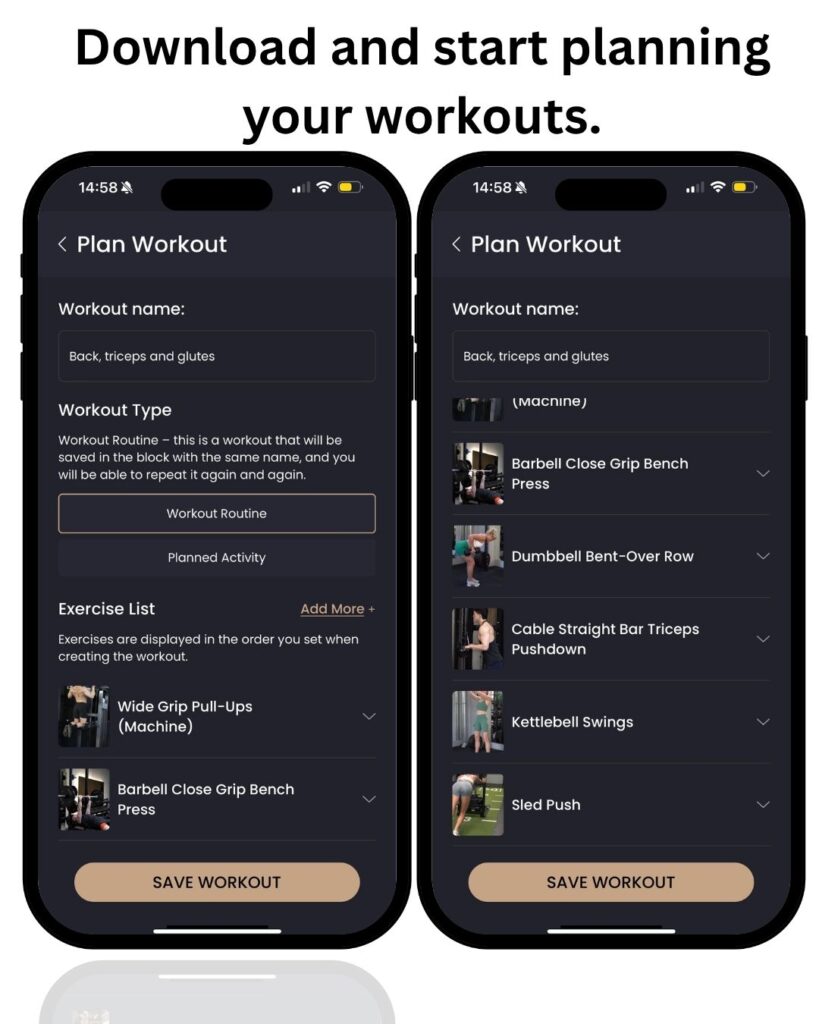
Weeks 9 to 12: build on Phase 2
Keep the Phase 2 sessions for the final four weeks and focus on beating your numbers. The American College of Sports Medicine suggests a simple rule. When you can do one or two reps more than your target with good form, add 2 to 10% to the load.
Rest between sets as shown in the tables. To learn more, read how long to rest between sets. Our guide to RPE and RIR explains how to judge how hard a set is.
Why it is worth 12 weeks of your time
Strength training is about more than how you look. A meta-analysis of cohort studies linked muscle-strengthening activity with a 10 to 17% lower risk of early death, heart disease, cancer and diabetes. These studies show an association, not proof of cause.
Tracking your progress with 12REPS
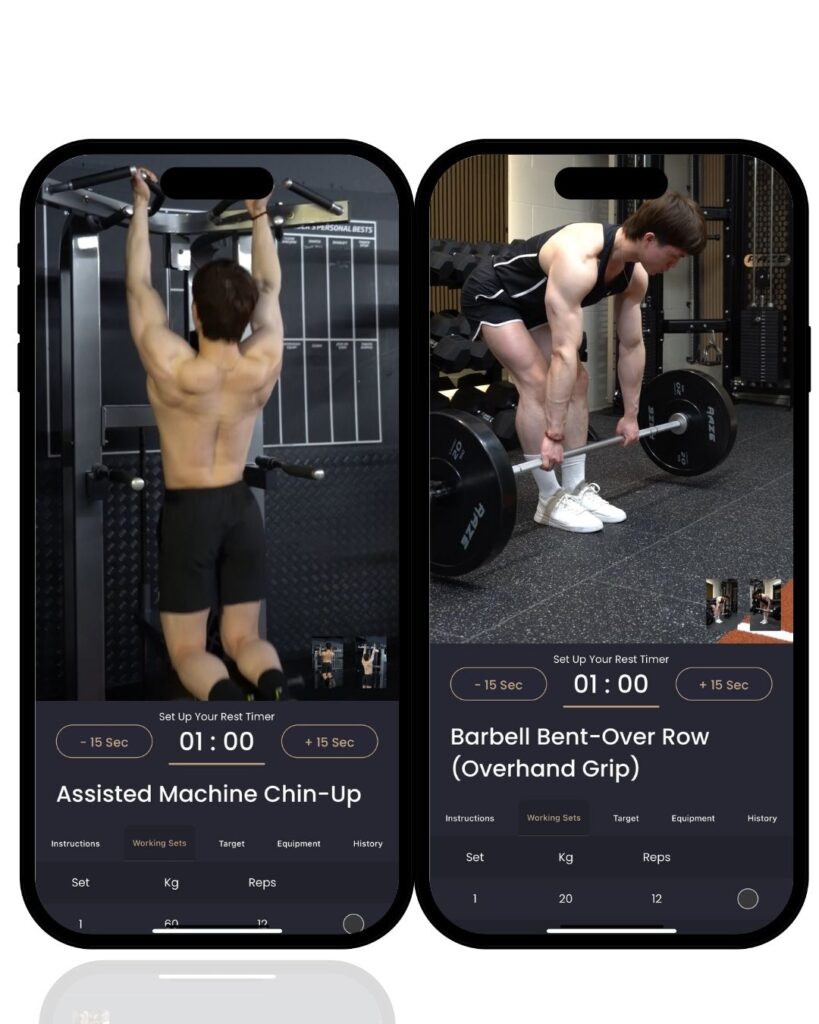
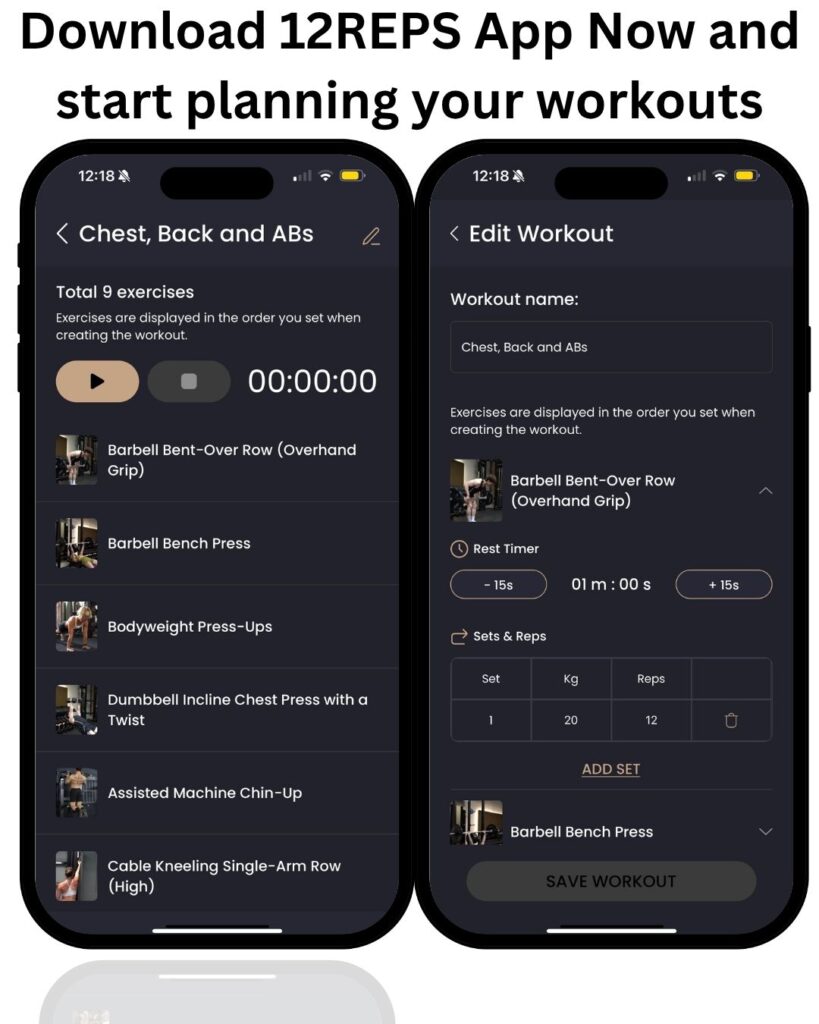
- Trainer demonstrations: watch the demo before each exercise, especially when a movement is new.
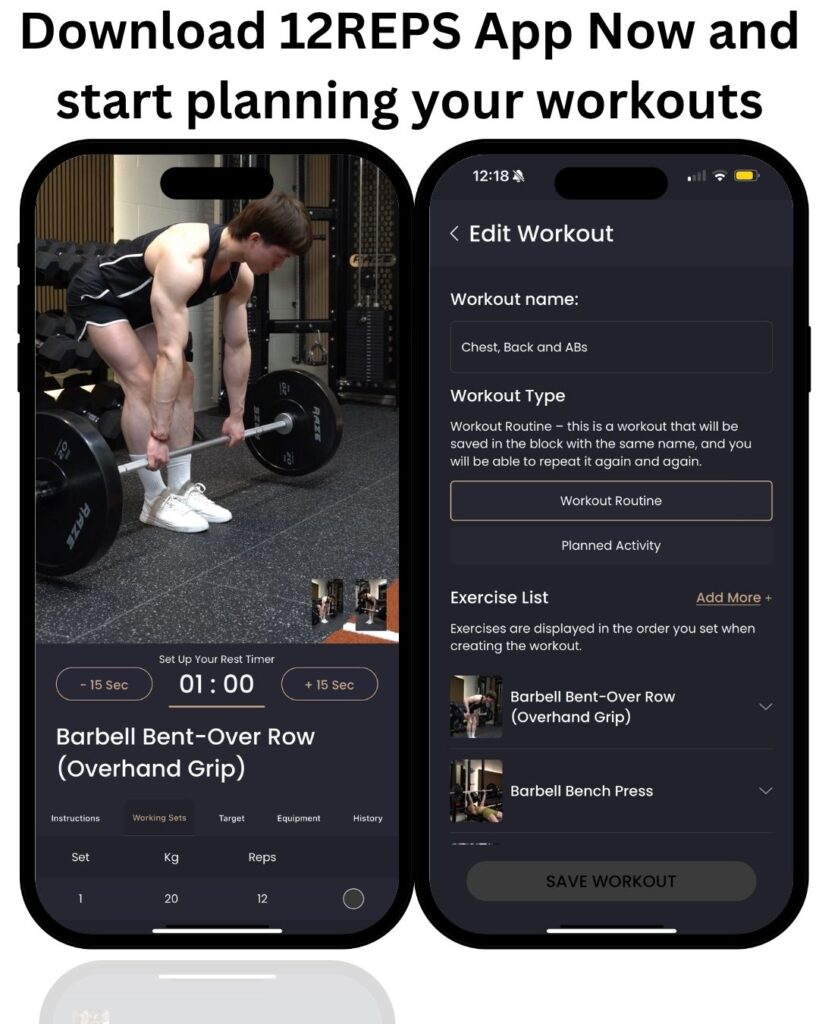
- Log every set: enter your reps and weight. The app remembers what you lifted, so you have a number to beat next time.
- Streaks and weekly goals: see whether you hit all four sessions each week.
Final thoughts
This 12-week push/pull/legs and core program gives you a clear job for every session. Learn the lifts in Phase 1, push harder with supersets in Phase 2, then spend the last four weeks beating your own numbers.
Progress may feel slow some weeks. That is normal. Look back at your logged weights after a month, and you will see how far you have come.
If you want your sessions planned for you, the 12REPS app builds training around your goal, your equipment and the time you have. Every exercise comes with a trainer demonstration, and your sets, reps and weights are saved for next time.
About the author: Will Duru holds a BSc (Hons) in Sport and Exercise Science and is an award-winning personal trainer with over 10 years of experience in strength training and optimizing recovery. He is the founder of the 12REPS app and has been featured in Men’s Health, Men’s Fitness, Women’s Fitness, Women’s Health, The Telegraph, The Sun and Coachweb.
Sources
- How many times per week should a muscle be trained to maximize muscle hypertrophy? A systematic review and meta-analysis of studies examining the effects of resistance training frequency. Schoenfeld BJ, Grgic J, Krieger J. Journal of Sports Sciences, 2019. https://doi.org/10.1080/02640414.2018.1555906
- American College of Sports Medicine position stand. Progression models in resistance training for healthy adults. American College of Sports Medicine. Medicine and Science in Sports and Exercise, 2009. https://pubmed.ncbi.nlm.nih.gov/19204579/
- No Time to Lift? Designing Time-Efficient Training Programs for Strength and Hypertrophy: A Narrative Review. Iversen VM and colleagues. Sports Medicine, 2021. https://doi.org/10.1007/s40279-021-01490-1
- Effects of warming-up on physical performance: a systematic review with meta-analysis. Fradkin AJ, Zazryn TR, Smoliga JM. Journal of Strength and Conditioning Research, 2010. https://pubmed.ncbi.nlm.nih.gov/19996770/
- Acute effects of muscle stretching on physical performance, range of motion, and injury incidence in healthy active individuals: a systematic review. Behm DG, Blazevich AJ, Kay AD, McHugh M. Applied Physiology, Nutrition, and Metabolism, 2016. https://doi.org/10.1139/apnm-2015-0235
- Do We Need a Cool-Down After Exercise? A Narrative Review of the Psychophysiological Effects and the Effects on Performance, Injuries and the Long-Term Adaptive Response. Van Hooren B, Peake JM. Sports Medicine, 2018. https://doi.org/10.1007/s40279-018-0916-2
- Muscle-strengthening activities are associated with lower risk and mortality in major non-communicable diseases: a systematic review and meta-analysis of cohort studies. Momma H, Kawakami R, Honda T, Sawada SS. British Journal of Sports Medicine, 2022. https://bjsm.bmj.com/content/56/13/755
