


By Will Duru, BSc (Hons) Sport and Exercise Science, Award-winning Personal Trainer with over 10 years of experience in strength training and optimising recovery
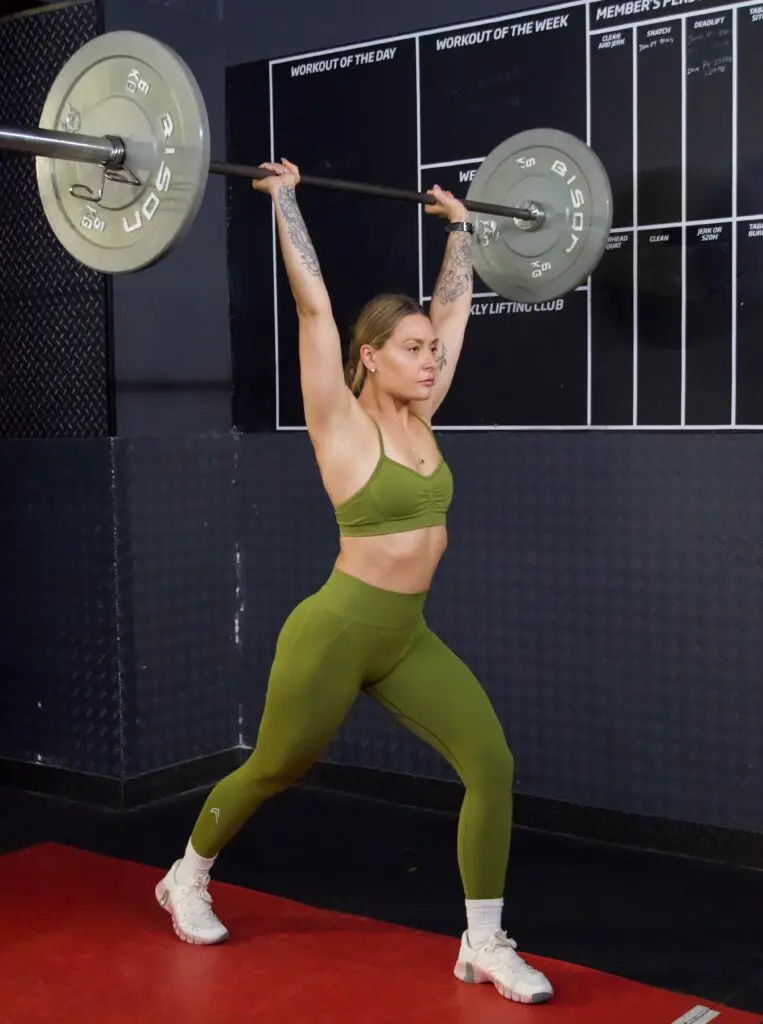
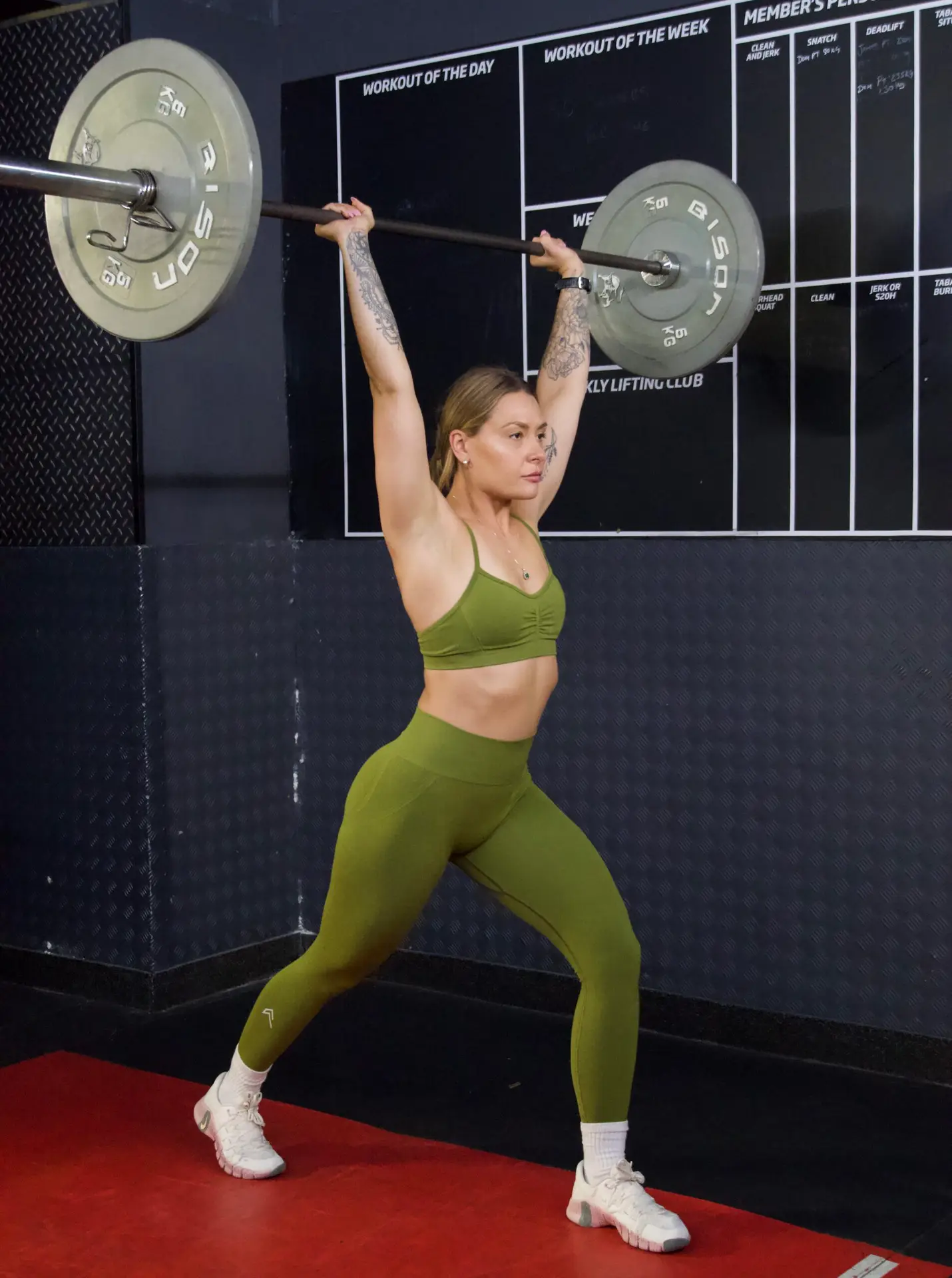
This 6-week push/pull program gives you two upper-body gym sessions a week: one push day and one pull day. Each workout has six exercises, done for 4 sets of 10 to 12 reps. Every two weeks the exercises get a little harder and the weights go up.
Most people do not need a harder workout plan. They need one they can actually follow. If you work long hours, have family commitments or keep starting and stopping, this plan is built for you.
- Push day trains your chest, shoulders and triceps.
- Pull day trains your back and biceps.
An important note: this plan does not train your legs
The World Health Organization recommends muscle-strengthening activity on 2 or more days a week that works all the major muscle groups. This program covers your upper body only.
If you can, add a short lower-body session, such as this dumbbell leg day. If you can train four days a week, the 12-week push/pull/legs and core program covers your whole body.
Why two workouts a week can work
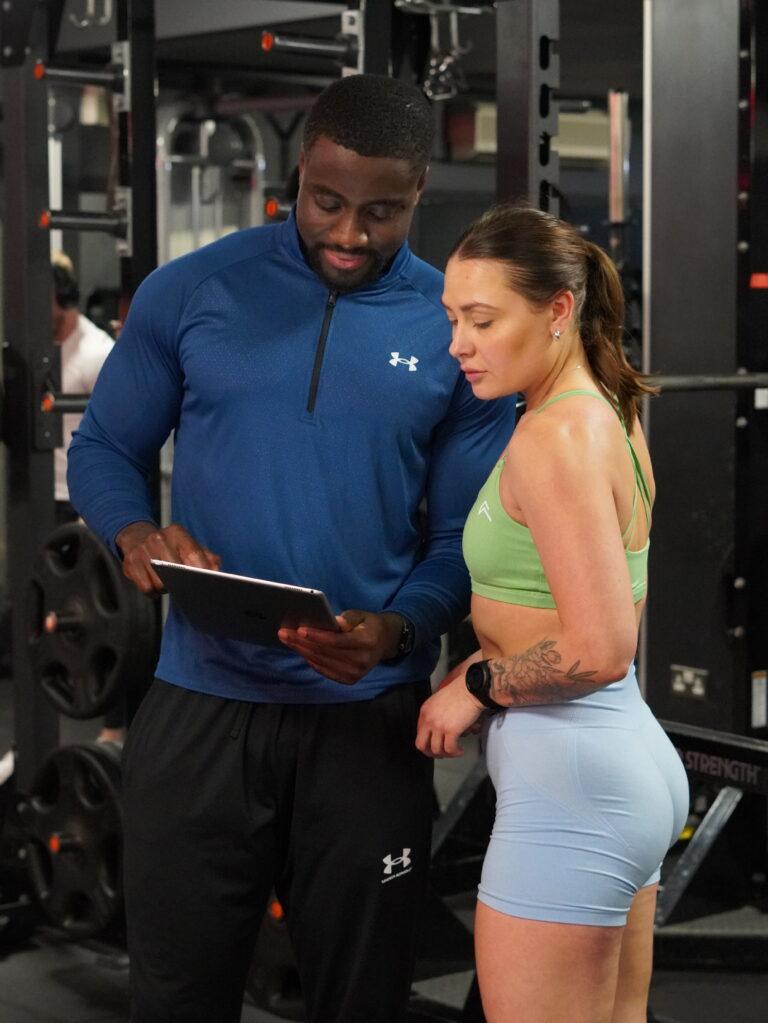
You do not need to live in the gym to get stronger. What matters most is the total work you do each week and whether you build on it.
- Frequency matters less than you think. A meta-analysis on training frequency found that, when weekly sets are the same, training a muscle once or more each week makes little difference to growth.
- You get enough sets. A review on training when you are short of time suggests a minimum of 4 weekly sets per muscle group. Each session here gives your main muscles far more than that.
- It is good for your health. A meta-analysis of cohort studies linked muscle-strengthening activity with a lower risk of early death, heart disease and cancer. The biggest drop, about 10 to 20%, came at 30 to 60 minutes a week. This is an association, not proof of cause.
You will not become a bodybuilder in six weeks. That is not the promise. But you can get stronger, learn the main lifts and finally stop guessing what to do.
The 6-week push/pull program at a glance
| Detail | Plan |
|---|---|
| Length | 6 weeks, in three 2-week phases |
| Sessions | 2 a week: push, then pull |
| Equipment | Barbells, dumbbells, cables and machines |
| Exercises | 6 per workout |
| Sets and reps | 4 sets of 10 to 12 reps |
Weekly schedule
Leave at least 72 hours between your two workouts. Two options that work well:
- Option A: push on Monday, pull on Thursday.
- Option B: push on Tuesday, pull on Friday.
Two terms you will see
- 1RM (one-rep max): the most weight you can lift once with good form. You do not need to test it. The percentages are a rough guide.
- RIR (reps in reserve): how many more reps you could have done at the end of a set. Read more in our guide to RPE and RIR.
Video: Bench press. The barbell bench press opens every push workout in Phases 1 and 2. Watch this demo before your first set.
Video: How to do a lat pulldown. The lat pulldown starts pull day in weeks 1 and 2. Watch the demo before your first pull workout.
Phase 1: Foundation (weeks 1 and 2)
Phase 1 is about clean technique and building the habit. There are no supersets. Do straight sets with the rest shown, and leave 2 to 3 reps in reserve on each set.
Push workout: weeks 1 and 2
| Exercise | Equipment | Sets | Reps | Load | Rest |
|---|---|---|---|---|---|
| Barbell Bench Press | Barbell | 4 | 10-12 | 60-70% of 1RM | 2 minutes |
| Dumbbell Shoulder Press | Dumbbells | 4 | 10-12 | Moderate | 90 seconds |
| Incline Dumbbell Press | Dumbbells | 4 | 10-12 | Moderate | 90 seconds |
| Lateral Raises | Dumbbells | 4 | 10-12 | Light-Moderate | 75 seconds |
| Triceps Dips | Machine / Assisted | 4 | 10-12 | Body weight+ | 75 seconds |
| Overhead Triceps Extension | Dumbbell | 4 | 10-12 | Light-Moderate | 75 seconds |
Pull workout: weeks 1 and 2
| Exercise | Equipment | Sets | Reps | Load | Rest |
|---|---|---|---|---|---|
| Lat Pulldown | Machine | 4 | 10-12 | Moderate-Heavy | 2 minutes |
| Barbell Rows | Barbell | 4 | 10-12 | Moderate | 90 seconds |
| Seated Cable Rows | Machine | 4 | 10-12 | Moderate | 90 seconds |
| Dumbbell Biceps Curls | Dumbbells | 4 | 10-12 | Light-Moderate | 75 seconds |
| Hammer Curls | Dumbbells | 4 | 10-12 | Light-Moderate | 75 seconds |
| Face Pulls | Cable Machine | 4 | 10-12 | Light | 75 seconds |
Phase 2: Heavier loads (weeks 3 and 4)
Phase 2 raises the intensity but still uses straight sets, with a clear rest between each one. That keeps the plan simple and makes your progress easy to track.
Lift slightly heavier than in weeks 1 and 2, in the same 10 to 12 rep range. Keep your technique tidy and your reps controlled.
Push workout: weeks 3 and 4
| Exercise | Equipment | Sets | Reps | Load | Rest |
|---|---|---|---|---|---|
| Barbell Bench Press | Barbell | 4 | 10-12 | 65-75% of 1RM | 2 minutes |
| Push-ups | Body weight | 4 | 10-12 | Body weight | 90 seconds |
| Dumbbell Shoulder Press | Dumbbells | 4 | 10-12 | Moderate-Heavy | 90 seconds |
| Lateral Raises | Dumbbells | 4 | 10-12 | Light-Moderate | 75 seconds |
| Close-Grip Bench Press | Barbell | 4 | 10-12 | Moderate | 90 seconds |
| Triceps Rope Pushdowns | Cable Machine | 4 | 10-12 | Moderate | 75 seconds |
Pull workout: weeks 3 and 4
| Exercise | Equipment | Sets | Reps | Load | Rest |
|---|---|---|---|---|---|
| Pull-ups or Lat Pulldown | Bar / Machine | 4 | 10-12 | Body weight / Heavy | 2 minutes |
| Barbell Rows | Barbell | 4 | 10-12 | Moderate-Heavy | 90 seconds |
| T-Bar Rows | Machine | 4 | 10-12 | Moderate | 90 seconds |
| Reverse Flyes | Dumbbells | 4 | 10-12 | Light | 75 seconds |
| Barbell Curls | Barbell | 4 | 10-12 | Moderate | 75 seconds |
| Cable Hammer Curls | Cable Machine | 4 | 10-12 | Light-Moderate | 75 seconds |
Phase 3: Advanced (weeks 5 and 6)
Now the plan gets more demanding. The exercises are slightly more advanced and the weights go up again. There are still no supersets, so you can lift with control and track each set.
Train closer to failure, leaving 1 to 2 reps in reserve. The last reps should feel hard, but your form should stay strong.
Push workout: weeks 5 and 6
| Exercise | Equipment | Sets | Reps | Load | Rest |
|---|---|---|---|---|---|
| Incline Barbell Press | Barbell | 4 | 10-12 | 70-80% of 1RM | 2 minutes |
| Decline Push-ups | Body weight | 4 | 10-12 | Body weight | 90 seconds |
| Dumbbell Flyes | Dumbbells | 4 | 10-12 | Moderate | 90 seconds |
| Arnold Press | Dumbbells | 4 | 10-12 | Moderate | 90 seconds |
| Diamond Push-ups | Body weight | 4 | 10-12 | Body weight | 90 seconds |
| Overhead Cable Extension | Cable Machine | 4 | 10-12 | Moderate | 75 seconds |
Pull workout: weeks 5 and 6
| Exercise | Equipment | Sets | Reps | Load | Rest |
|---|---|---|---|---|---|
| Weighted Pull-ups | Body weight + Weight | 4 | 10-12 | Body weight + 10-20 lb (about 4.5-9 kg) | 2 minutes |
| Wide-Grip Lat Pulldown | Machine | 4 | 10-12 | Heavy | 90 seconds |
| Pendlay Rows | Barbell | 4 | 10-12 | Heavy | 2 minutes |
| Cable Reverse Flyes | Cable Machine | 4 | 10-12 | Light-Moderate | 75 seconds |
| 21s Biceps Curls | Barbell | 4 | 21 total | Light-Moderate | 90 seconds |
| Cable Concentration Curls | Cable Machine | 4 | 10-12 | Light-Moderate | 75 seconds |
What are 21s? One set of 21s is 7 reps through the bottom half of a curl, 7 through the top half, then 7 full reps, with no rest.
Not ready for weighted pull-ups? Do body-weight or assisted pull-ups, or use the lat pulldown instead.
How to progress through the 6 weeks
The plan works through progressive overload: asking a little more of your muscles over time.
| Weeks | Load | Effort |
|---|---|---|
| 1 and 2 | Moderate, about 60 to 70% of 1RM on the main lifts | 2 to 3 reps in reserve |
| 3 and 4 | Add 5 to 10% to your Phase 1 weights | Hard, with good form |
| 5 and 6 | Add another 5 to 10% | 1 to 2 reps in reserve |
These steps fit the American College of Sports Medicine advice to add 2 to 10% to the load once you can do one or two reps more than your target. If a jump in weight costs you good form, make a smaller jump.
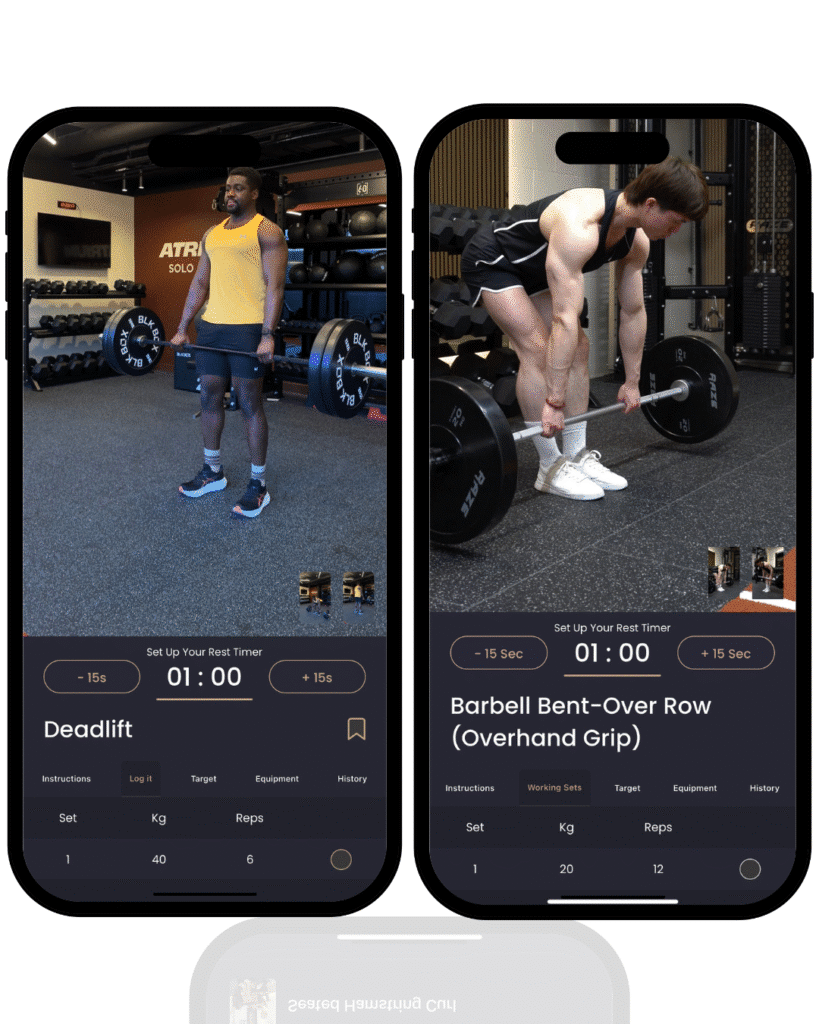
Log every set. When you can see what you lifted last time, you know exactly what to beat.
What to do after six weeks
- Run it again with heavier weights, starting from your week 5 and 6 numbers.
- Add a leg day if you have not already.
- Move to four days a week with the 12-week push/pull/legs and core program, or start with the beginner's guide to strength training if lifting is new to you.
Final thoughts
Two focused workouts a week, done well and repeated, will build strength. The people who get results are not always the ones who do the most. They repeat the right things for long enough.
Before you start:
- Take “before” photos and measurements.
- Put both workouts in your calendar.
- Commit to all six weeks.
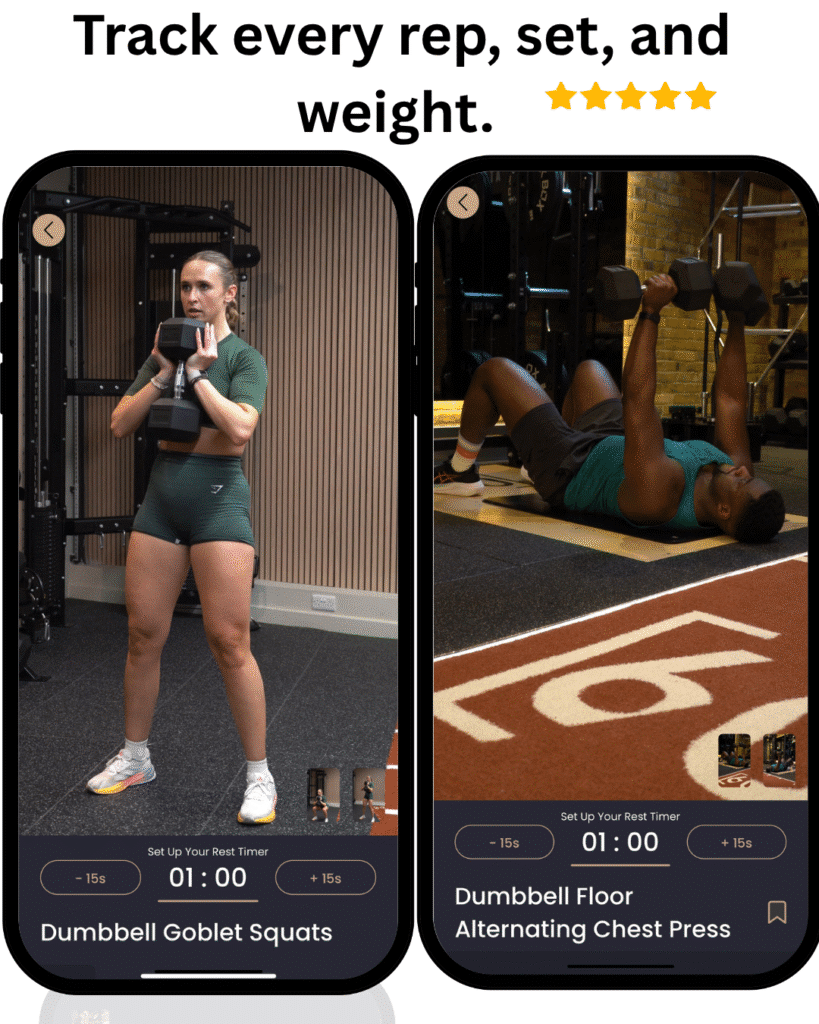
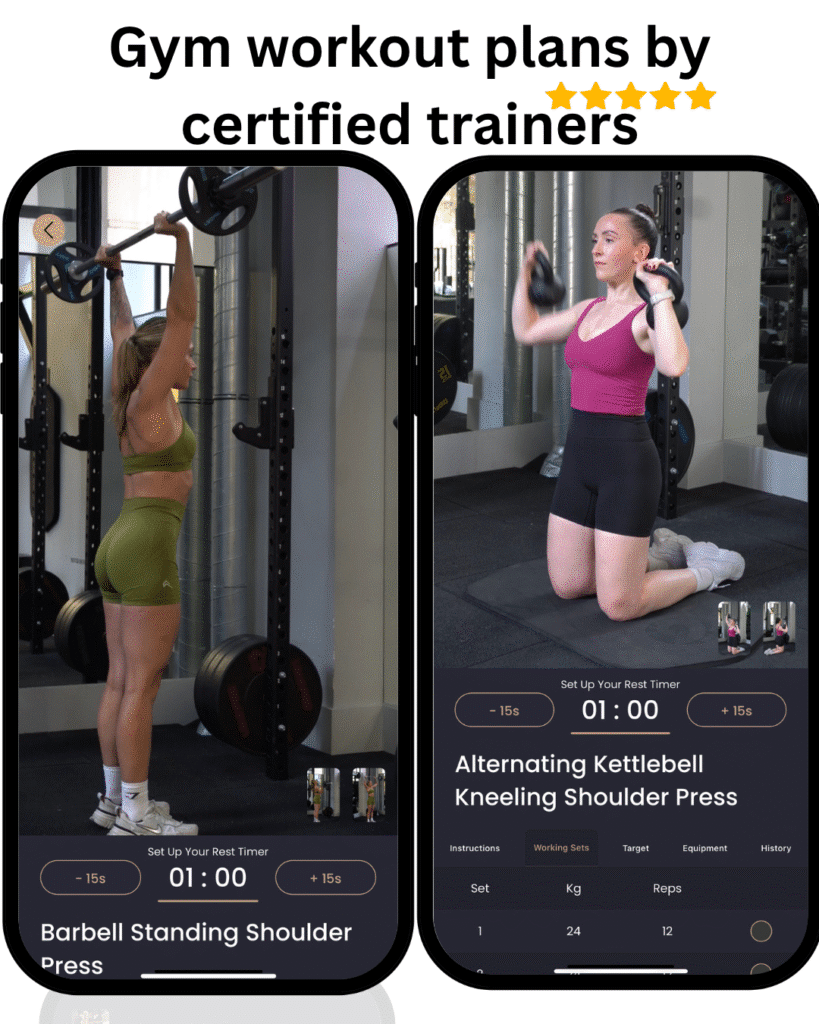
If you would like your sessions set out for you, the 12REPS app builds a plan around your goal, your equipment and the time you have. Each exercise has a trainer demonstration, and the app remembers what you lifted so you always have a number to beat.
About the author: Will Duru is a BSc (Hons) Sport and Exercise Science graduate and award-winning personal trainer with over 10 years of experience in strength training and optimizing recovery. He is the founder of the 12REPS app and has been featured in Men’s Health, Women’s Fitness, The Telegraph and other fitness publications.
Sources
- WHO guidelines on physical activity and sedentary behaviour. World Health Organization, 2020. https://www.who.int/publications/i/item/9789240015128
- How many times per week should a muscle be trained to maximize muscle hypertrophy? A systematic review and meta-analysis of studies examining the effects of resistance training frequency. Schoenfeld BJ, Grgic J, Krieger J. Journal of Sports Sciences, 2019. https://doi.org/10.1080/02640414.2018.1555906
- No Time to Lift? Designing Time-Efficient Training Programs for Strength and Hypertrophy: A Narrative Review. Iversen VM and colleagues. Sports Medicine, 2021. https://doi.org/10.1007/s40279-021-01490-1
- Muscle-strengthening activities are associated with lower risk and mortality in major non-communicable diseases: a systematic review and meta-analysis of cohort studies. Momma H, Kawakami R, Honda T, Sawada SS. British Journal of Sports Medicine, 2022. https://bjsm.bmj.com/content/56/13/755
- American College of Sports Medicine position stand. Progression models in resistance training for healthy adults. American College of Sports Medicine. Medicine and Science in Sports and Exercise, 2009. https://pubmed.ncbi.nlm.nih.gov/19204579/