


By Will Duru, BSc (Hons) Sport and Exercise Science, Award-winning Personal Trainer with over 10 years of experience.
This glute workout for women at the gym uses four exercises: Smith machine reverse lunges, barbell Romanian deadlifts, barbell hip thrusts and glute-focused back extensions. Do it once or twice a week. Add a little weight or one more rep when you can, and log every set so you know what to beat next time.
A common question is which glute exercises are worth your time. This guide explains what each move does, how to do it well, and how to turn the four into a plan you can follow for months.
What your glutes do
Your glutes are three muscles on each side: gluteus maximus, gluteus medius and gluteus minimus. The gluteus maximus is the largest. It extends your hip, which is the movement you use to stand up from a squat, climb stairs or push forward when you run.
The gluteus medius and minimus sit higher, on the side of your hip. They help keep your pelvis level when you stand on one leg, for example in a lunge or a step-up.
Why these four exercises
A 2020 systematic review of glute activation found that step-ups produced the highest gluteus maximus activity. Loaded deadlifts, hip thrusts, lunges and squats came next. Activation is not the same as growth, but it shows which moves work the glutes hard.
Growth studies point the same way. In a 9-week trial in untrained young adults, hip thrusts and back squats grew the glutes by a similar amount. The squat group also grew more muscle on the front and inside of the thighs.
So no single exercise is essential. This workout pairs a single-leg move (reverse lunge), a hip hinge (Romanian deadlift), a thrust (hip thrust) and a back extension done with a glute focus. Together they load your glutes from several angles.
Progressive overload: how your glutes keep getting stronger
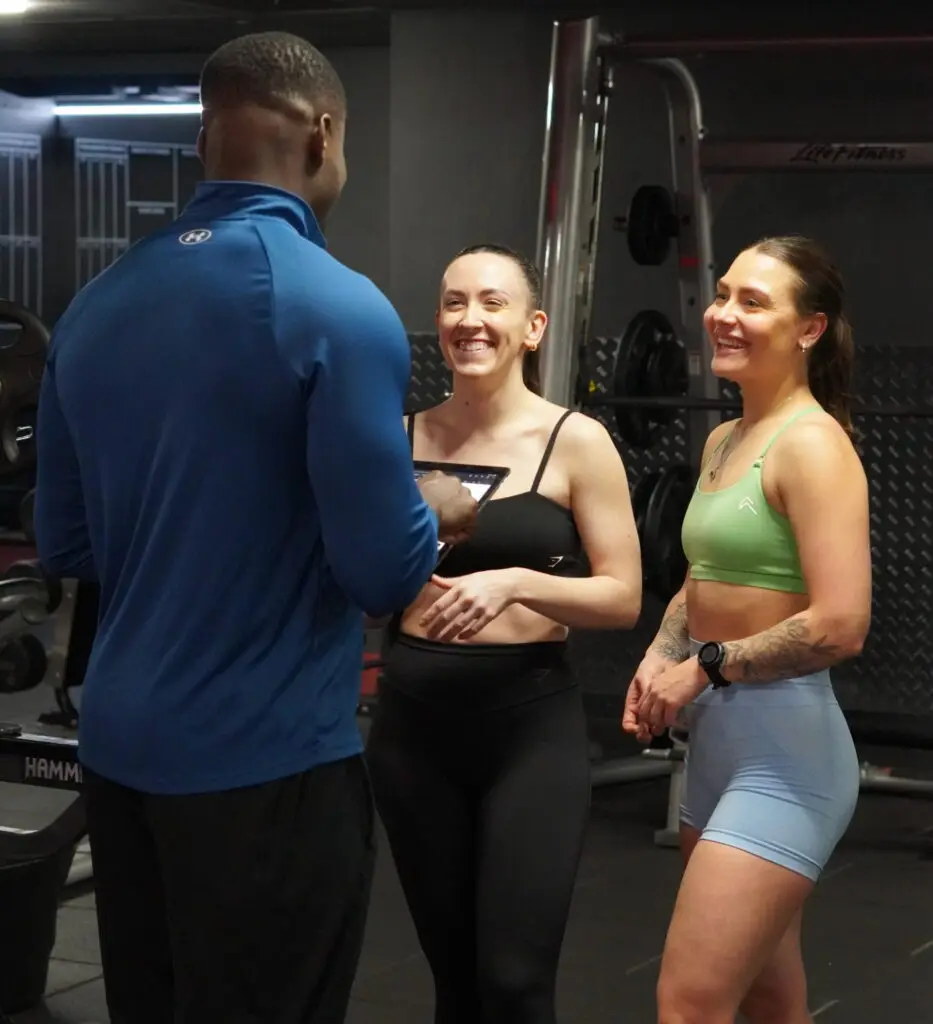
Progressive overload means asking your muscles to do a little more over time. If you lift the same weight for the same reps every week, your body has little reason to adapt.
You can progress in several ways:
- Add a small amount of weight to the bar.
- Do one more rep with the same weight.
- Add a set.
- Slow down the lowering phase while keeping good form.
The 2026 ACSM position stand recommends progressive resistance training for healthy adults. It also found that muscle growth was greater with higher training volumes of 10 or more sets a week.
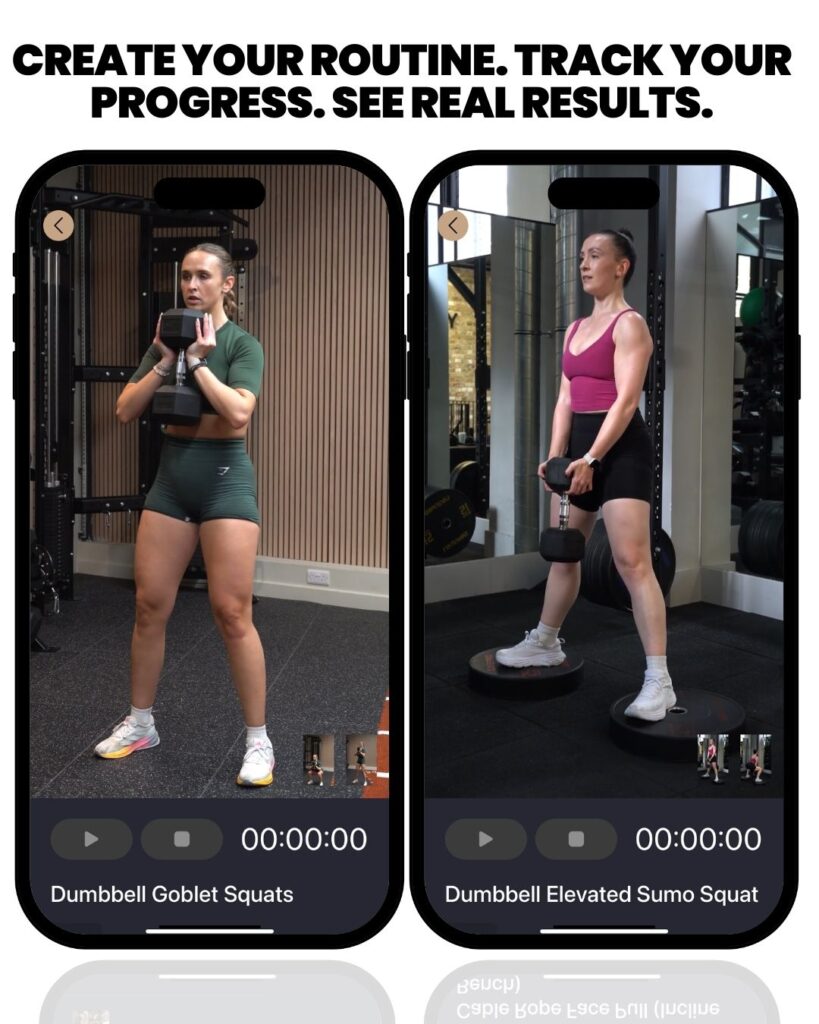
Progress is only clear if you write it down. In 12REPS you enter the reps and weight for each set, and the app remembers what you lifted, so you have a number to beat next session. For a fuller explanation, read our beginner’s guide to progressive overload.

Eating to support glute growth
Training gives your glutes a reason to grow. Food gives them the building blocks. You do not need a strict diet, but protein, carbohydrates and fats all play a part.
Protein
A 2018 meta-analysis found that muscle gains from strength training leveled off at about 1.6 grams of protein per kilogram of body weight per day. The authors suggested up to 2.2 g/kg for people who want to be sure of the full benefit.
For a 65 kg woman, that is about 104 grams a day, or up to about 143 grams. One review suggests aiming for about 0.4 g/kg per meal across at least four meals. For the same woman, that is roughly 26 grams per meal.
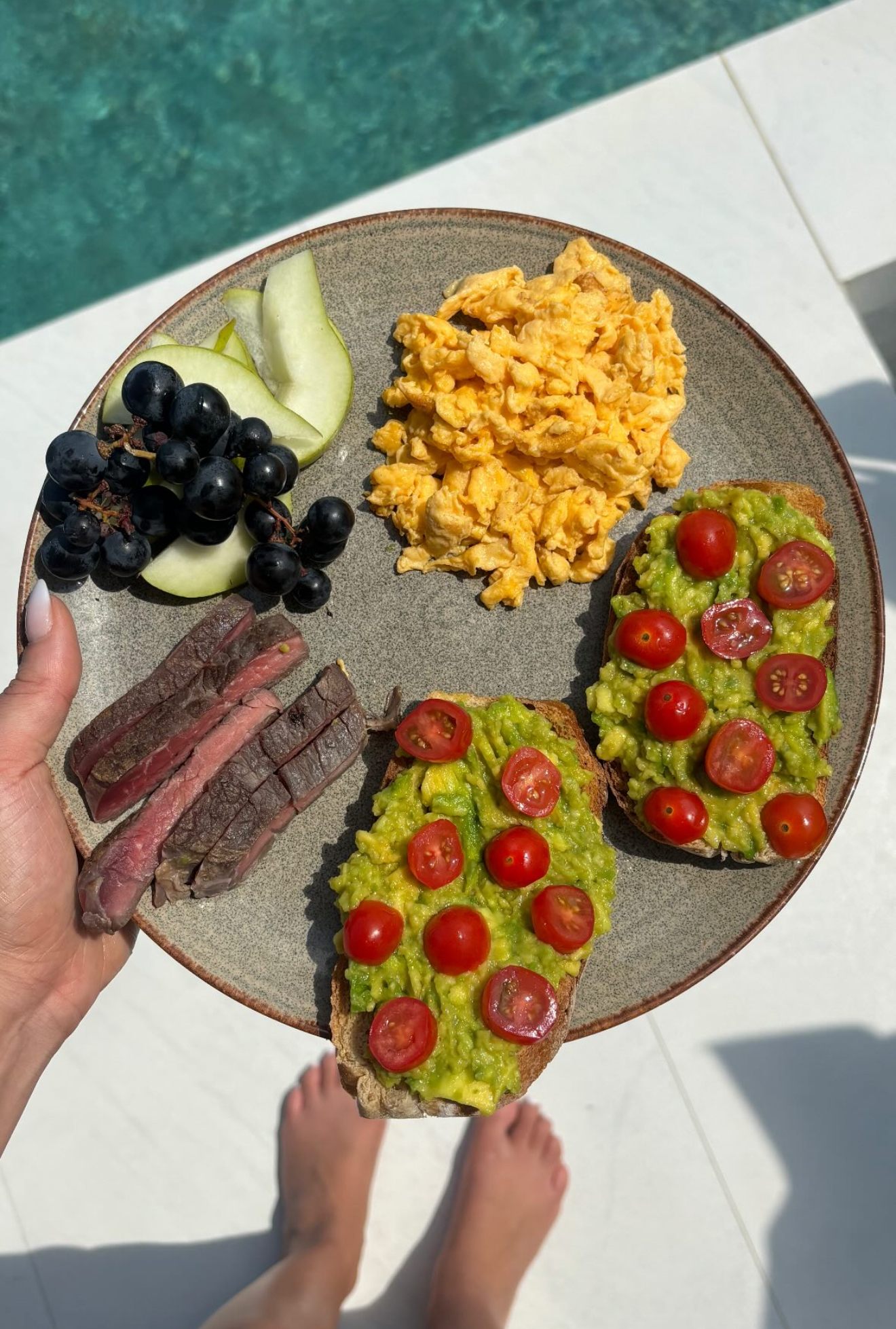
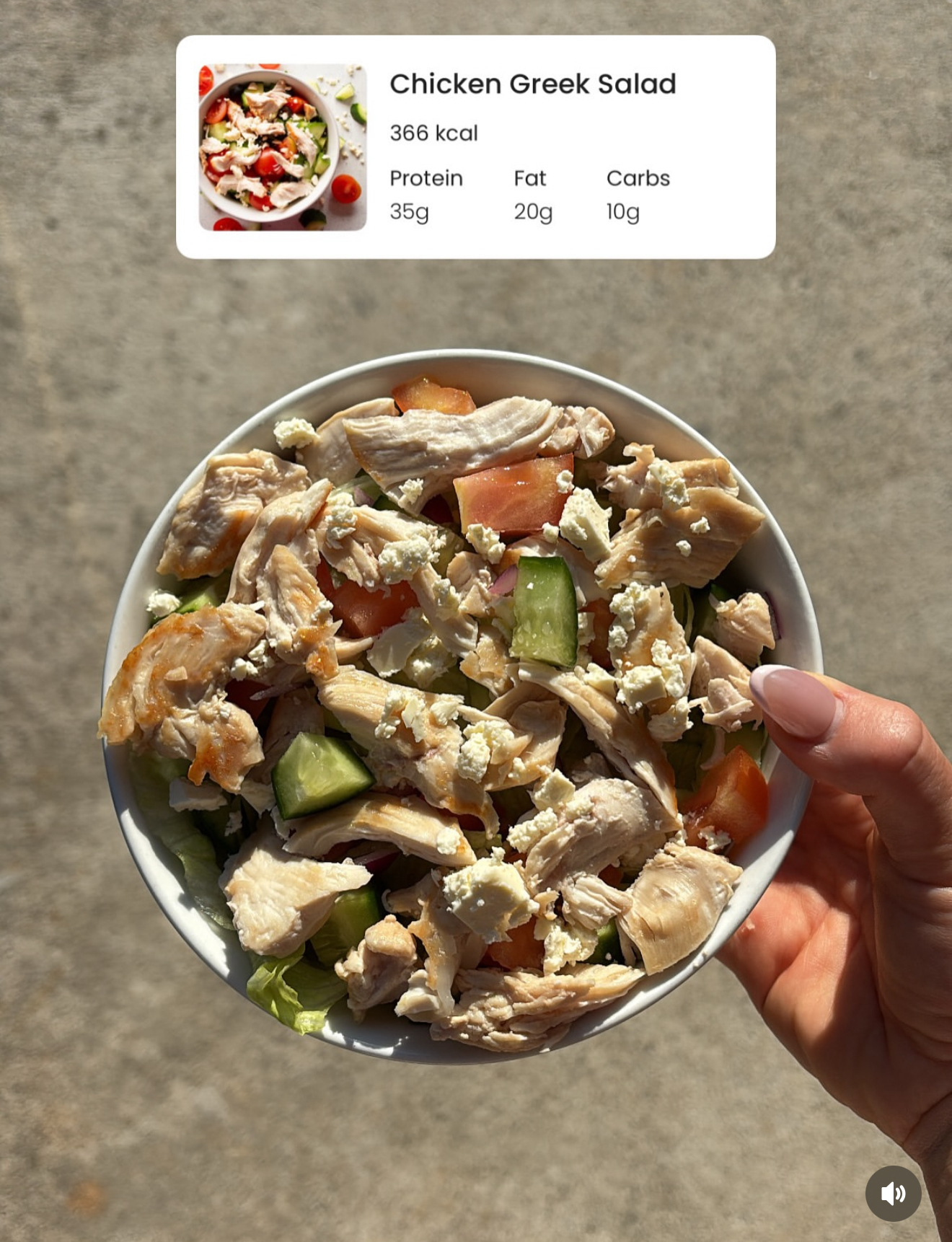
Good sources include chicken, turkey, lean beef, fish, eggs, Greek yogurt, cottage cheese, tofu, tempeh, lentils and chickpeas. Our guide to how much protein women need for strength training goes into more detail.
Carbohydrates
Carbohydrates are a main fuel for hard training sessions. Oats, rice, potatoes, whole-grain bread, fruit and vegetables are simple options. Read how many carbs women need for strength training for amounts.
Fats
Fats are part of a balanced diet. Choose mostly unsaturated sources, such as olive oil, nuts, seeds, avocado and oily fish.
The 4 best glute exercises for this workout
Each exercise below has a 12REPS demo video. Watch it once before your first set.
1. Smith machine reverse lunge
The Smith machine guides the bar on a fixed track, so you can focus on your front leg instead of your balance. Training one leg at a time also shows you if one side is weaker.
- Set the bar at about shoulder height. Step under it so it rests across your upper back.
- Rotate the bar to unhook it and stand with your feet hip-width apart.
- Step one foot back and lower your back knee toward the floor.
- Keep most of your weight on your front foot, with your torso leaning slightly forward.
- Push through your whole front foot to return to standing. Finish all reps, then switch legs.
Coaching cue: a slight forward lean usually helps you feel the lunge in your glutes. Stay taller if you feel it in your lower back. Training at home? The bodyweight reverse lunge teaches the same pattern.
2. Barbell Romanian deadlift (RDL)
The Romanian deadlift is a hip hinge. You push your hips back and lower the bar along your legs, which loads your glutes and hamstrings as they lengthen.
- Stand tall holding the bar at hip height, hands just outside your thighs.
- Soften your knees slightly and keep them in that position.
- Push your hips back as if you were closing a door behind you. Keep the bar close to your legs.
- Lower until you feel a strong stretch in your hamstrings, keeping your back flat. For many people this is around knee height or a little lower.
- Squeeze your glutes and drive your hips forward to stand tall.
Start light while you learn the hinge. Our RDL form guide for women covers the most common mistakes.
3. Barbell hip thrust
The hip thrust trains your glutes through hip extension while your upper back rests on a bench. It lets you load your glutes heavily without holding a bar on your back.
- Sit on the floor with your upper back against a bench, just below your shoulder blades.
- Roll a padded barbell over your hips.
- Plant your feet about hip-width apart, so your shins are close to vertical at the top.
- Tuck your chin slightly and drive your hips up until your body is straight from shoulders to knees.
- Pause and squeeze your glutes, then lower with control.
Avoid arching your lower back at the top. Our guide on how to do barbell hip thrusts correctly shows the usual errors. New to the lift? Start with the bodyweight hip thrust.
4. Glute-focused back extension
The 45-degree back extension, also called a hyperextension, can train your glutes and hamstrings if you move from your hips rather than your lower back.
- Set the pad so it sits just below your hip bones, leaving your hips free to bend.
- Hook your heels under the foot pads.
- Keep your back straight and lower your torso by bending at the hips.
- Squeeze your glutes to lift your torso until your body forms a straight line. Do not lean back past that line.
Once bodyweight feels light, hold a weight plate against your chest. No machine? Try the Swiss ball back extension.
The glute workout: sets, reps and rest
Here is the full session. Before each exercise, warm up with 2 to 3 light sets of 10 to 15 reps, using an empty bar or your body weight. Move slowly and feel the target muscles work.
| Exercise | Sets | Reps | Rest | Effort (RPE) |
|---|---|---|---|---|
| Smith machine reverse lunge | 4 | 8-12 per leg | 60-90 seconds | 7-8 |
| Barbell Romanian deadlift | 4 | 8-12 | 90-120 seconds | 8-9 |
| Barbell hip thrust | 4 | 8-12 | 90-120 seconds | 8-9 |
| Glute-focused back extension | 4 | 8-12 | 60-90 seconds | 7-8 |
RPE (rating of perceived exertion) is a 1 to 10 scale of how hard a set feels, where 10 is your limit. An RPE of 8 means you could have done about two more reps. Coaches also call this 2 reps in reserve (RIR).
How to progress week to week
Use a simple method called double progression:
- Pick a weight you can lift for 8 good reps at the target RPE.
- Each week, try to add a rep to each set.
- When you reach 12 reps on every set, add a small amount of weight and go back to 8 reps.
- If you cannot reach 8 reps with good form, lower the weight.
How often should you train glutes?
The NHS physical activity guidelines recommend strengthening activities for all major muscle groups on at least 2 days a week. One or two sessions of this workout a week fits well within that. If you do it twice, leave a day or two between sessions.
For more detail, see how often you should train glutes. For a balanced week, pair this session with our upper body strength training guide for women.
Video: Stronger legs and glutes for women. Watch this 12REPS video on lower body strength training for women to see how glute work fits into a full leg day.
Common glute training mistakes
- Rushing the lowering phase. Control each rep on the way down.
- Arching your lower back. On hip thrusts and back extensions, stop when your body is in a straight line.
- Never adding weight. If 12 reps feels easy, the weight is too light.
- Changing exercises every week. Stick with the same moves long enough to see your numbers go up.
Track your progress
Your training log tells you more than the mirror on any single day. Write down the weight and reps for every set. Photos taken in the same light every few weeks can also help.
Video: How women should track progress, scale or photos. This short 12REPS video explains why the scale is only one way to judge progress.
Want a plan built around your goal, your equipment and the time you have? 12REPS sets out each session and shows a trainer demonstration for every exercise. You log each set as you go, so you always know the number to beat.
Key takeaways
- Use a mix of glute exercises: a lunge, a hinge, a thrust and a back extension.
- Hip thrusts and squats grew the glutes by a similar amount in one 9-week trial, so pick the moves you can progress.
- Add reps first, then weight, and log every set.
- Aim for about 1.6 g of protein per kg of body weight a day, spread across your meals.
Can I do this glute workout at home?
Yes, with swaps. Use bodyweight or dumbbell reverse lunges, dumbbell Romanian deadlifts, bodyweight hip thrusts and Swiss ball back extensions. Our guide on splitting glute training between gym and home shows how to combine both.
Sources
- Gluteus Maximus Activation during Common Strength and Hypertrophy Exercises: A Systematic Review. Krause Neto W, Soares EG, Vieira TL, et al. Journal of Sports Science and Medicine, 2020. https://pubmed.ncbi.nlm.nih.gov/32132843/
- Hip thrust and back squat training elicit similar gluteus muscle hypertrophy and transfer similarly to the deadlift. Plotkin DL, Rodas MA, Vigotsky AD, et al. Frontiers in Physiology, 2023. https://www.frontiersin.org/journals/physiology/articles/10.3389/fphys.2023.1279170/full
- American College of Sports Medicine Position Stand. Resistance Training Prescription for Muscle Function, Hypertrophy, and Physical Performance in Healthy Adults: An Overview of Reviews. Currier BS, D’Souza AC, Singh MAF, et al. Medicine & Science in Sports & Exercise, 2026. https://doi.org/10.1249/MSS.0000000000003897
- A systematic review, meta-analysis and meta-regression of the effect of protein supplementation on resistance training-induced gains in muscle mass and strength in healthy adults. Morton RW, Murphy KT, McKellar SR, et al. British Journal of Sports Medicine, 2018. https://bjsm.bmj.com/content/52/6/376
- How much protein can the body use in a single meal for muscle-building? Implications for daily protein distribution. Schoenfeld BJ, Aragon AA. Journal of the International Society of Sports Nutrition, 2018. https://doi.org/10.1186/s12970-018-0215-1
- Physical activity guidelines for adults aged 19 to 64. NHS, 2024. https://www.nhs.uk/live-well/exercise/physical-activity-guidelines-for-adults-aged-19-to-64/