
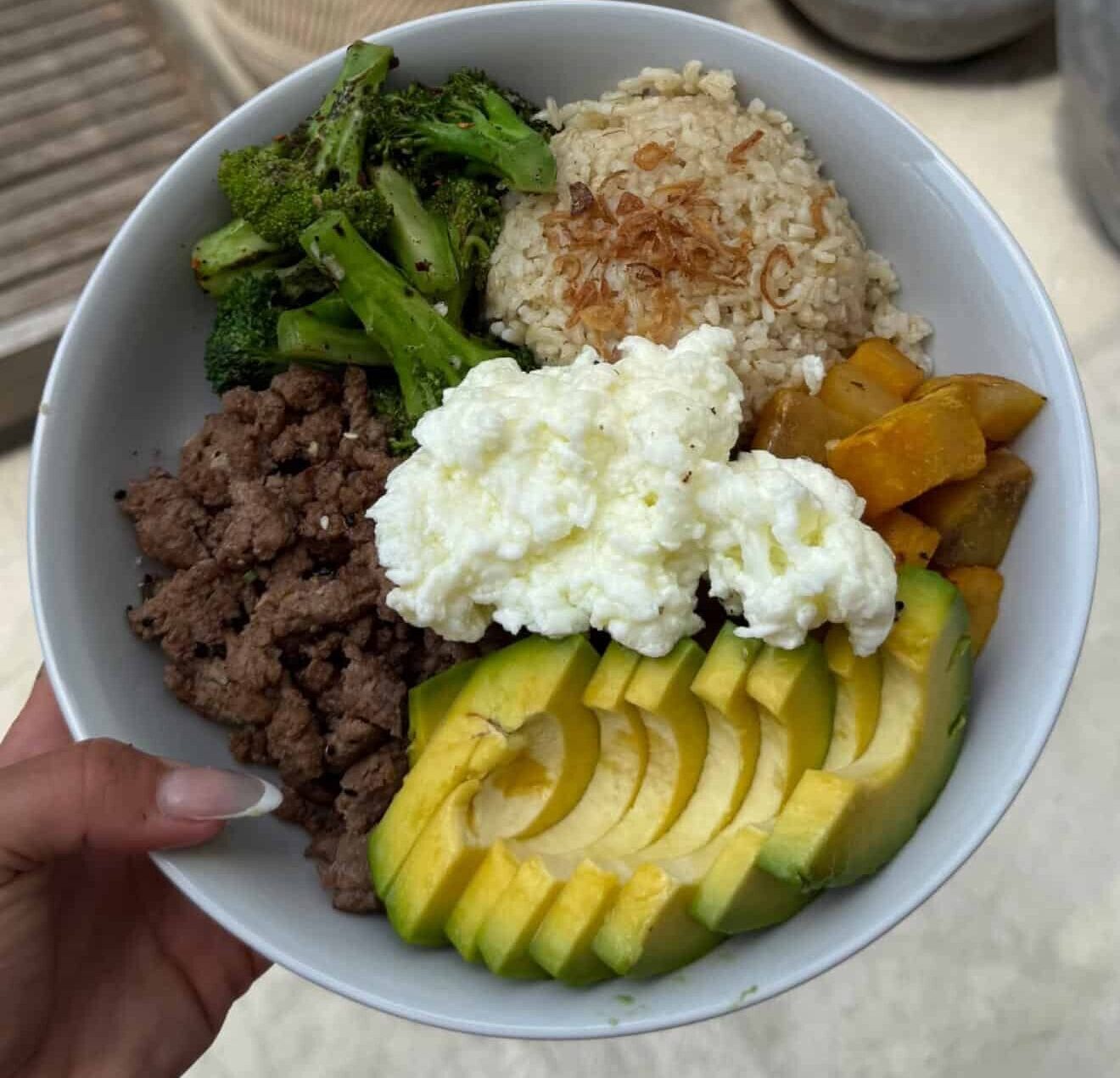



When should you eat carbs for strength training? For most sessions, getting enough carbs across the day matters more than exact timing. Eat a meal with carbs 1 to 4 hours before you lift, or a small carb snack if you would otherwise train fasted. Then include carbs in your next meal. Timing matters more for long, high-volume sessions and for training twice in a day.
Women at the gym often ask me about the “right” time to eat carbs, or avoid them before the gym in case they slow fat loss. This guide is about where to put your carbs on training days and rest days. For how many grams to eat when building muscle or losing fat, read carbs for female lifters: muscle gain vs fat loss.
Do you have diabetes or take medication that affects blood sugar? Check with your doctor or a registered dietitian before changing when or how much you eat.
Do carbs matter for strength training?
Yes, but less than many people think for a typical session. Your muscles store carbohydrate as glycogen, and hard sets draw on it.
A 2022 systematic review of 49 studies found that, if you have already eaten, extra carbs are unlikely to improve workouts of up to 10 sets per muscle group. The authors saw possible benefits for longer, higher-volume sessions.
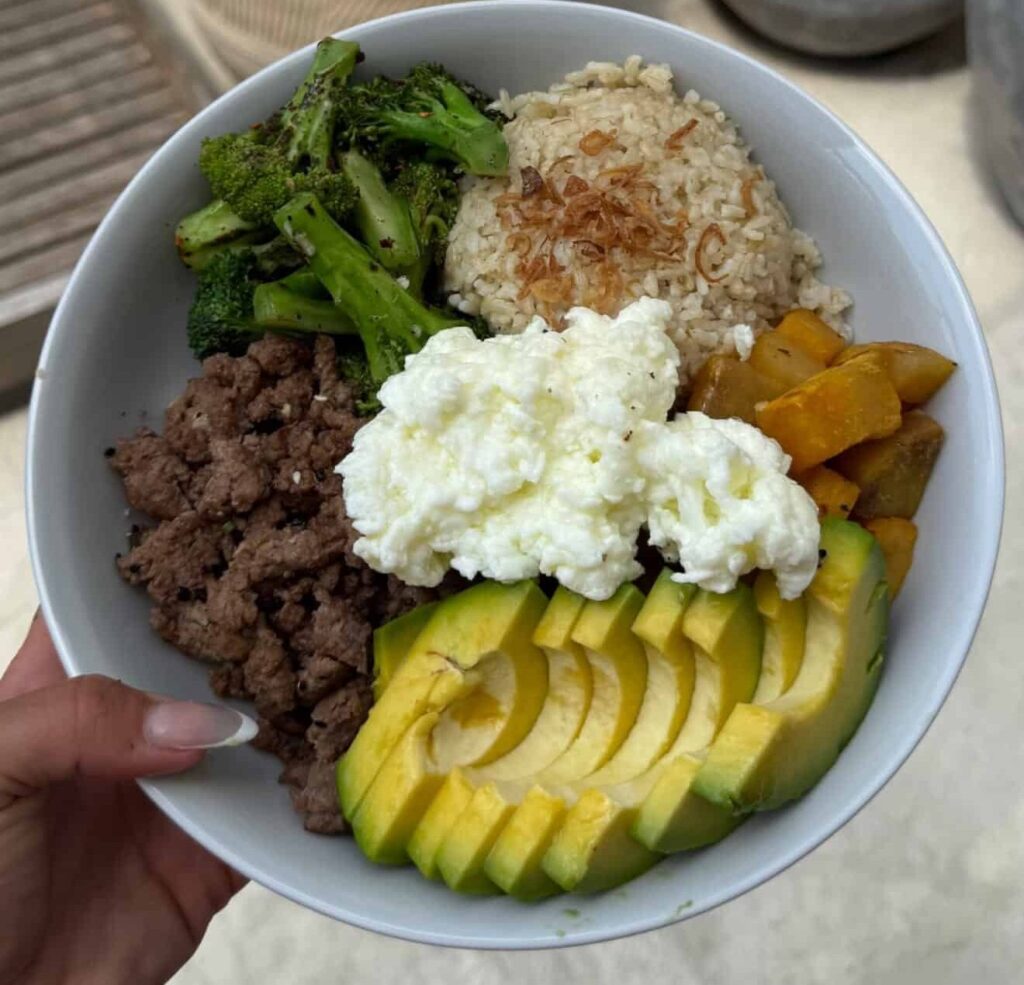
Step 1: Get your daily carbs right first
Timing only fine-tunes what you eat across the day. If your total is far too low, no timing trick will fix it.
For people who keep active but have no performance goal, the British Dietetic Association suggests 3 to 5 g of carbs per kg of body weight a day. The ACSM joint position statement gives the same 3 to 5 g/kg for light or skill-based training. Our guide to carbs for female lifters, linked above, shows how to adjust this for muscle gain or fat loss.
Once your daily amount is roughly right, use the steps below to place it.
Step 2: Place carbs around your session

Before you lift: 1 to 4 hours out
For sessions over an hour, the ACSM suggests 1 to 4 g/kg of carbs eaten 1 to 4 hours before. That upper end is aimed at endurance events, so most lifters need far less. The BDA suggests a low-fat, high-carb snack or a light meal two to three hours before exercise.
Closer to training, choose foods that are low in fat and fiber with only moderate protein. The ACSM says these are less likely to cause stomach problems (Thomas et al., 2016).
- 3 to 4 hours before: a normal meal, such as rice, chicken and vegetables.
- 1 to 2 hours before: a smaller, lower-fat option, such as a bagel with jam or a banana with yogurt.
- Under an hour before: something light, such as a banana or toast with honey.
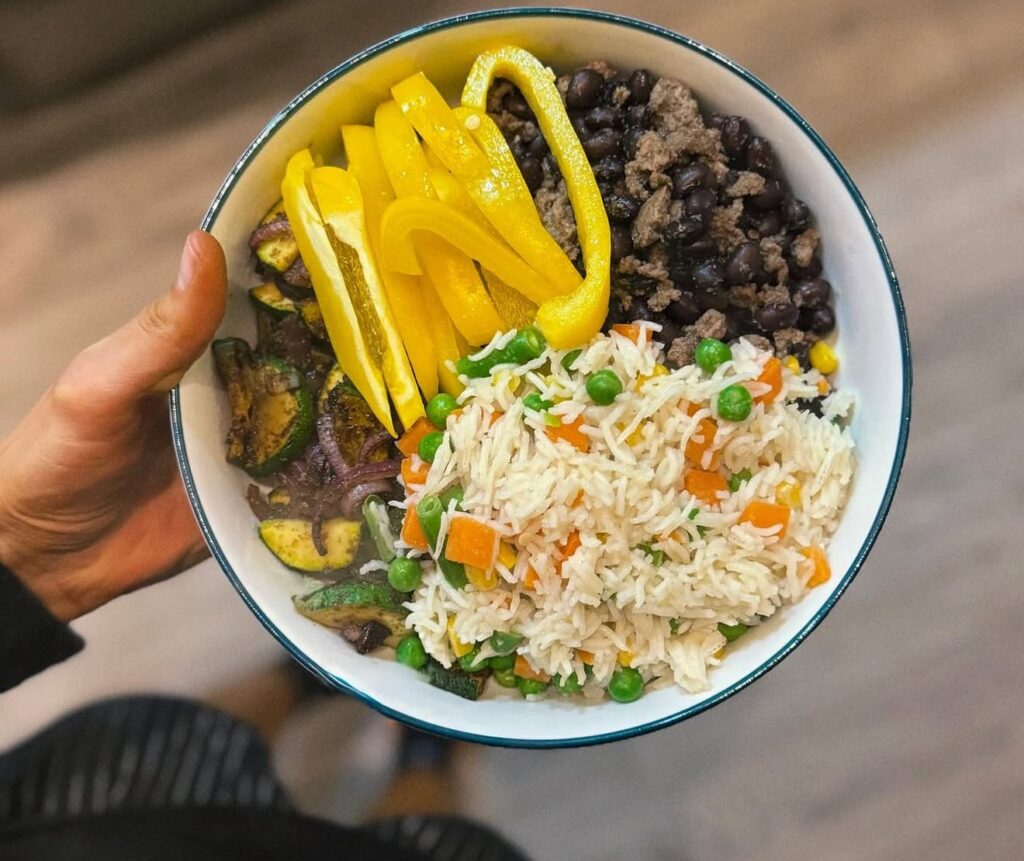
If you train first thing in the morning
Training after an overnight fast is where carbs make the clearest difference. The 2022 review advises at least 15 g of carbs, plus some protein, within 3 hours before training. If you would otherwise lift fasted, a small snack covers this.
That is a small amount. Half a banana, a slice of toast with jam or a small glass of fruit juice will do. The BDA lists two medium-large bananas or 500 ml of fruit juice as about 50 g of carbs, so a third of either is plenty (BDA, 2026).
If you feel fine training fasted and your sessions are short, you do not have to change. If your lifts feel flat early in the morning, try a small snack first.
During your session
For most gym sessions, you do not need to eat during training. The ACSM says fuel is not needed for exercise under 45 minutes.
If your session runs long, with more than about 10 hard sets per muscle group, carbs may help. The 2022 review flagged these higher-volume workouts as the main exception (Henselmans et al., 2022). A sports drink or a banana between exercises is enough. Water is fine for everything else.
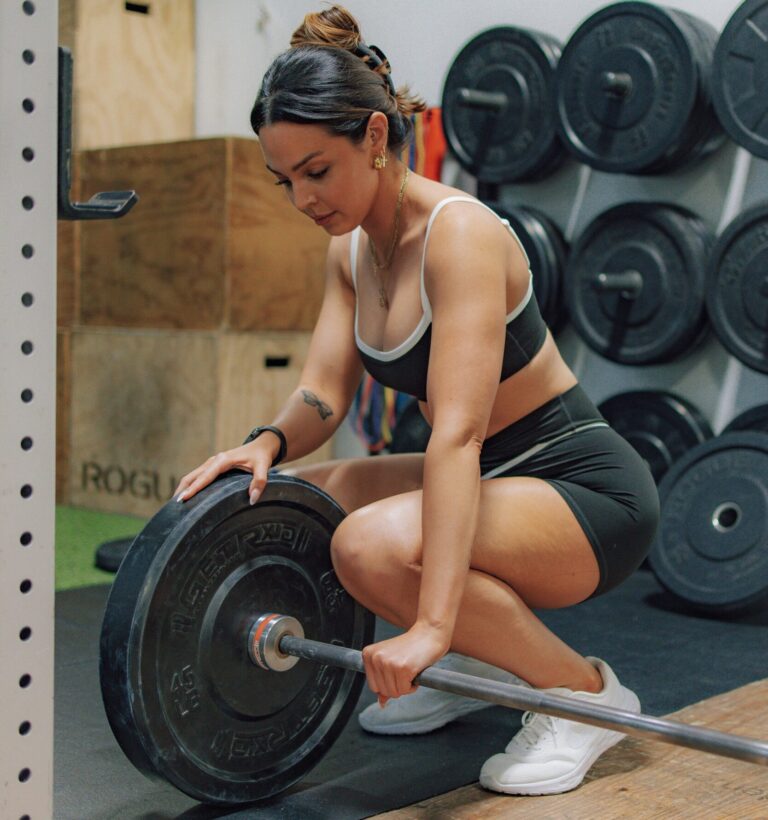
After you lift
The BDA advises starting to replenish glycogen with a high-carb snack or meal after exercise. Pair it with protein. The ISSN says protein eaten up to 2 hours after training strongly stimulates muscle building. It suggests doses of 20 to 40 g.
If your next session is the next day or later, there is no rush. The ACSM notes that glycogen stores can be refilled within 24 hours of reduced training and adequate fuel intake. Your normal next meal is enough.
Speed matters only if you train twice in one day. With less than 8 hours between two hard sessions, the ACSM suggests 1 to 1.2 g/kg of carbs an hour for 4 hours (Thomas et al., 2016). The ISSN gives a similar rate when recovery is under 4 hours (Kerksick et al., 2017). Most women who lift will never need this.
Training days vs rest days
The ACSM says nutrition should be periodized around the needs of daily training. In plain terms, eat a little more carbohydrate on days you train hard and a little less on rest days.
| Training day | Rest day | |
|---|---|---|
| Carbs | Slightly more, with some in the meals either side of your session | Slightly less, spread through the day |
| Protein | Steady, with a portion after training | Same as training days |
| Example plate | Bigger portion of rice, potatoes or pasta at the meal after the gym | Smaller starch portion, more vegetables |
Keep the change small. Cutting carbs sharply on rest days can leave you under-fueled for the next session. If you track calories, keep your weekly average on target. Our guide to how many calories to eat to build muscle or lose fat explains how.

Carb timing by type of session
| Session | Before | During | After |
|---|---|---|---|
| Short session, under 45 minutes | Your normal meals | Water | Your next normal meal |
| Typical 45 to 75 minute lifting session | Meal with carbs 2 to 4 hours before, or a light snack 1 hour before | Water | Meal with carbs and 20 to 40 g protein within about 2 hours |
| Early morning, before breakfast | At least 15 g carbs, such as half a banana | Water | Breakfast with carbs and protein |
| Long, high-volume session | Meal with carbs 2 to 4 hours before | Optional sports drink or banana | Meal with carbs and protein |
| Two sessions in one day | Meal with carbs before the first | Optional | Carbs soon after the first session to refuel for the second |
For full meal and snack examples, see what to eat before and after the gym. For a broader timing guide, read what to eat before and after a workout.

Carbs and your menstrual cycle
The ISSN position stand on female athletes suggests more carbs in the luteal phase, the roughly two weeks before your period. It also suggests more in the active pill weeks if you take the pill. Our carbs for female lifters guide covers what this means for your daily total.
You do not need a complex plan. If you feel hungrier or more tired in the week or two before your period, adding a carb snack before training is a sensible first step.
If your periods become irregular or stop while you are training and dieting, see your doctor.
Common carb timing myths
"Carbs at night turn into fat"
Fat loss is driven by a sustained calorie deficit, so your total intake over days and weeks matters far more than the clock. If you train in the evening, carbs at dinner help you refuel for your next session.
"You must eat within 30 minutes of training"
Not for most lifters. Eating within about 2 hours works well, and the ISSN uses that window for protein after training (Kerksick et al., 2017). Fast refueling only matters if you train again the same day.
"Training fasted burns more fat, so it is better"
Fat loss depends on your calorie deficit over time (Aragon et al., 2017), not on whether one session was fasted. Choose fasted or fed training based on how you feel and perform. If you want more on low-carb diets, read our article on keto for muscle building or weight loss.
The bottom line
Get your daily carbs about right, then place some in the meal before and the meal after you lift. If you train early on an empty stomach, have a small carb snack first. Save fast refueling for days you train twice.
Timing helps most when your training is consistent. 12REPS builds each workout around your goal, your equipment and the time you have. It also shows a trainer demonstration for every exercise, so you know exactly what each session involves before you plan your meals around it.
For the full series, read how much protein women need for strength training next.
Sources
- The Effect of Carbohydrate Intake on Strength and Resistance Training Performance: A Systematic Review. Henselmans M, Bjørnsen T, Hedderman R, Vårvik FT, Nutrients, 2022. https://doi.org/10.3390/nu14040856
- American College of Sports Medicine Joint Position Statement. Nutrition and Athletic Performance. Thomas DT, Erdman KA, Burke LM, Medicine & Science in Sports & Exercise, 2016. https://doi.org/10.1249/MSS.0000000000000852
- Sport and exercise: Food Fact Sheet. British Dietetic Association, 2026. https://www.bda.uk.com/resource/sport-exercise-nutrition.html
- International society of sports nutrition position stand: nutrient timing. Kerksick CM et al., Journal of the International Society of Sports Nutrition, 2017. https://doi.org/10.1186/s12970-017-0189-4
- International society of sports nutrition position stand: nutritional concerns of the female athlete. Sims ST et al., Journal of the International Society of Sports Nutrition, 2023. https://doi.org/10.1080/15502783.2023.2204066
- Fundamentals of glycogen metabolism for coaches and athletes. Murray B, Rosenbloom C, Nutrition Reviews, 2018. https://doi.org/10.1093/nutrit/nuy001
- International society of sports nutrition position stand: diets and body composition. Aragon AA et al., Journal of the International Society of Sports Nutrition, 2017. https://doi.org/10.1186/s12970-017-0174-y
