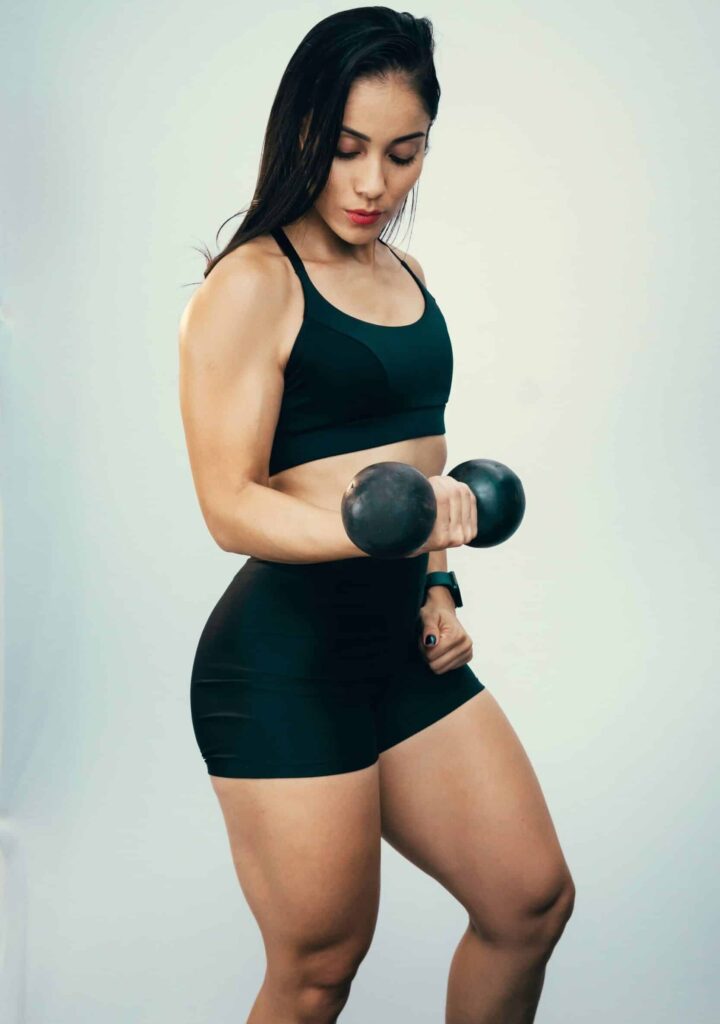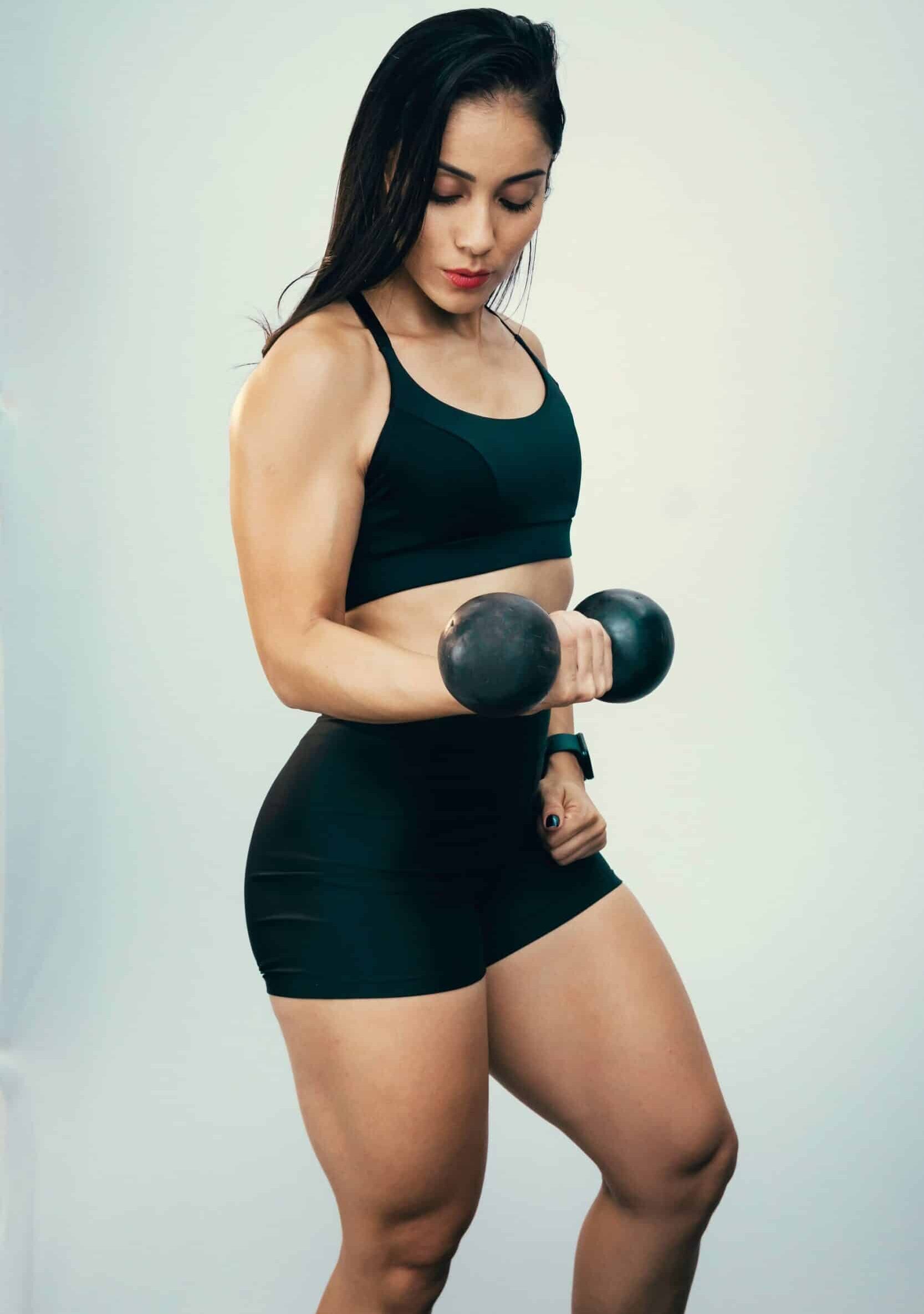



Yes, you can build muscle with a home workout plan. It needs three things. Train every major muscle at least twice a week and push most sets close to failure. Then make the work harder over time with more reps, more load or a tougher variation. A pair of adjustable dumbbells and a pull-up bar or bands cover most of what you need.
Many people quit the gym because of cost, travel time or crowds, then find that most plans online assume a full gym. I have coached plenty of people who train at home with very little kit. The difference between those who build muscle and those who stall is rarely the equipment. It is whether the plan gets harder.
This guide is for building muscle at home with whatever you have, from bodyweight to a full home gym. If you are a complete beginner, start with our 12-week home strength plan for beginners. For the key no-equipment moves, see bodyweight strength training at home.
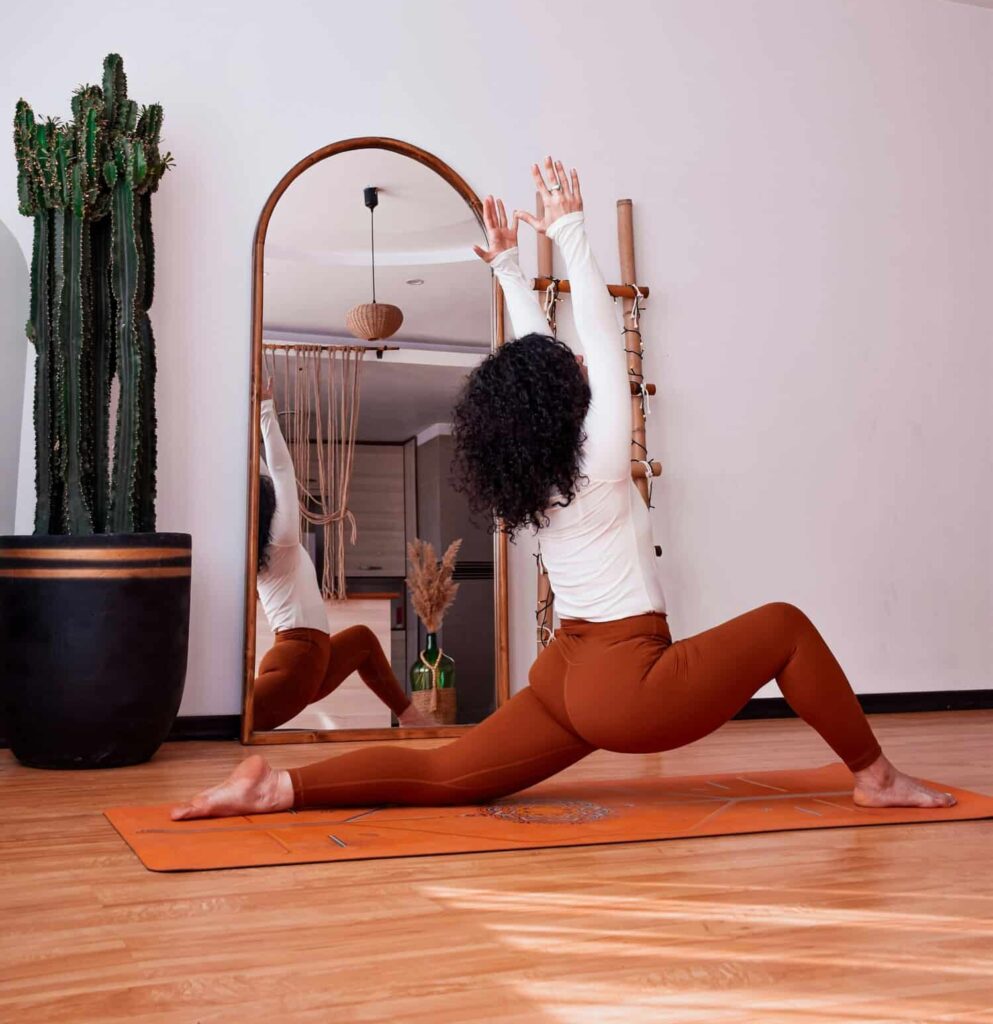
Can you build muscle at home?
Yes. Muscle responds to hard work, not to where you train.
- Equipment type matters less than effort. The 2026 ACSM position stand on resistance training found that equipment type had little consistent effect on results. Higher weekly volume, about 10 or more sets per muscle group, was linked to more muscle growth.
- Lighter loads can work. A meta-analysis found similar muscle growth with light and heavy loads when sets are hard. Heavy loads were better for maximum strength.
- Push-ups and bands count. Both have held up well against free weights in studies. Our bodyweight strength training guide covers that research.
The limit at home is load. Once bodyweight or light dumbbells feel easy, you need other ways to make each set hard. That is what the rest of this guide covers.
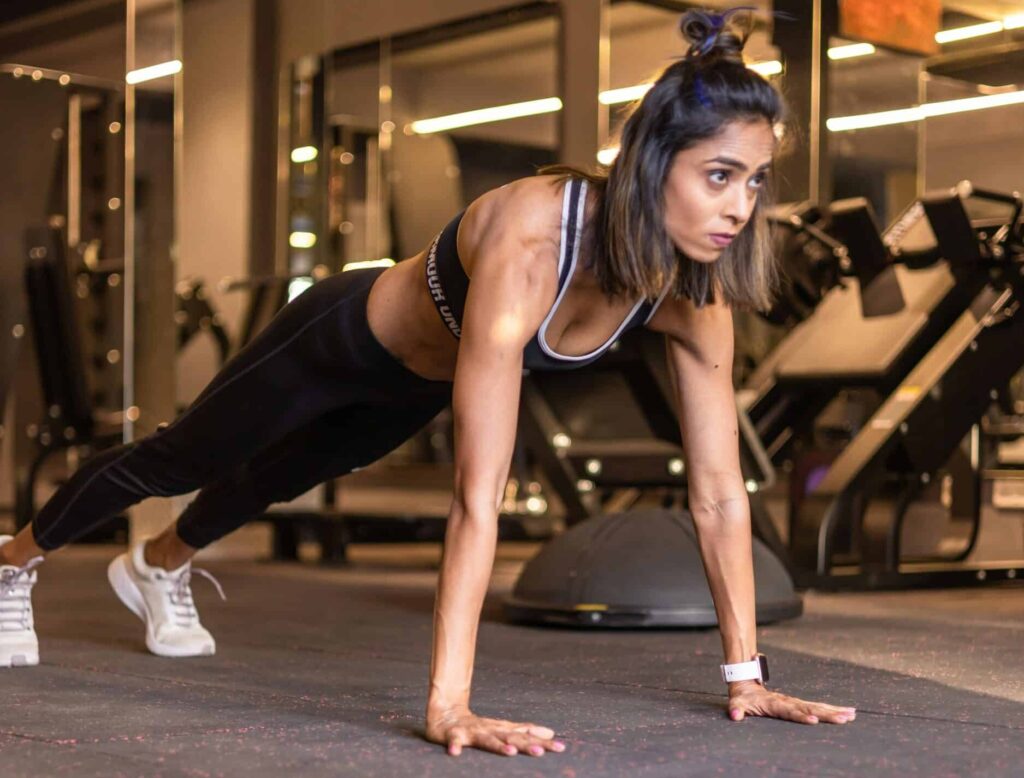
What equipment you need: three home setups
| Setup | Kit | What it lets you do | Main limit |
|---|---|---|---|
| 1. Bodyweight | Floor space, a sturdy chair or step; a pull-up bar if you can | Push-ups, squats, lunges, split squats, glute bridges, planks | Legs and back get easy; pulling is hard without a bar |
| 2. Basic home gym | Adjustable dumbbells, a pull-up bar or bands, an optional bench | Presses, rows, goblet squats, RDLs, curls, weighted pull-ups | The heaviest dumbbell you own |
| 3. Full home gym | Rack, barbell and plates, bench, dumbbells | Everything a commercial gym offers for strength | Space and cost |
For most people, setup 2 is the sweet spot. Adjustable dumbbells and a pull-up bar or a set of bands cover every movement pattern. Bands are cheap, light and useful for rows, presses, pull-aparts and assisted pull-ups.

How to progress without heavy weights
Progressive overload means doing a little more over time. At home, you have five ways to do it:
- Add reps. Same exercise, more reps. In trained adults doing lower-body exercises, adding reps worked about as well as adding load for muscle growth over 8 weeks.
- Add load. Heavier dumbbells, a weighted backpack or a thicker band.
- Use a harder variation. Move along a ladder, for example from a raised push-up to a floor push-up to a feet-raised push-up.
- Slow down or pause. Take three seconds to lower, or pause for two seconds at the bottom. This makes a light load feel heavier.
- Add a set. Go from 2 to 3 hard sets, as long as you recover well.
Progression ladders
| Pattern | Easier | Middle | Harder |
|---|---|---|---|
| Push | Elevated knee press-up | Press-up | Feet-raised or weighted press-up |
| Pull | Band row | Ring row | Pull-up, then weighted pull-up |
| Squat | Bodyweight squat | Goblet squat | Bulgarian split squat or single-leg box squat |
| Hinge | Glute bridge | Dumbbell RDL | Single-leg RDL |
Move up a step when you can do the top of your rep range on every set with good form. If the harder step is too hard, use it for your first set and finish on the easier one.
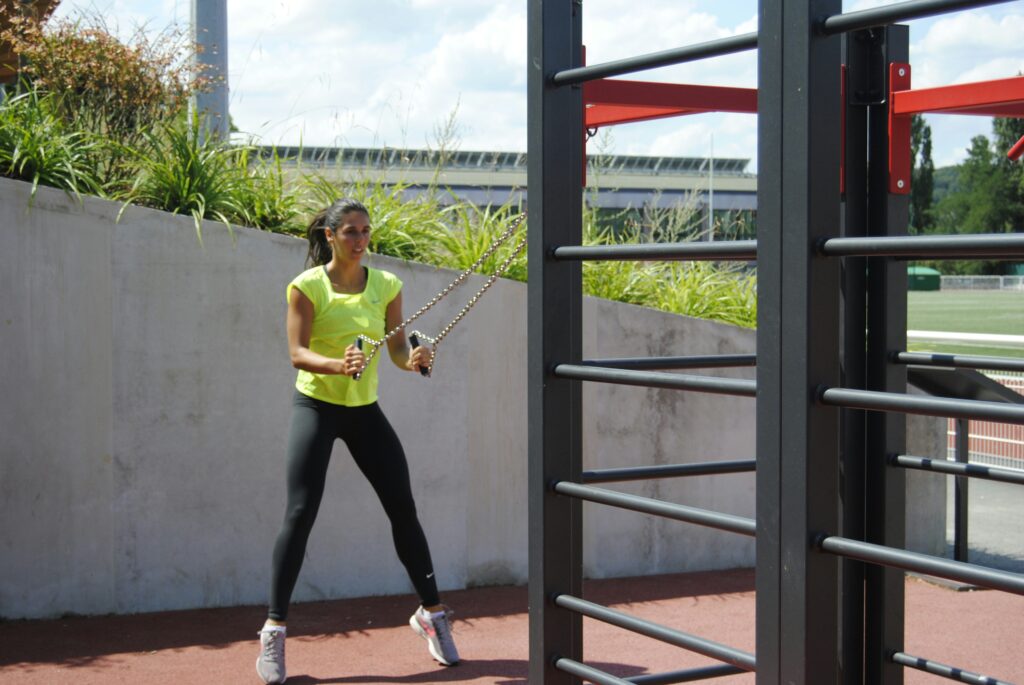
Your home workout plan: 3 full-body days
This plan is for setup 2: bodyweight, dumbbells and a pull-up bar. Train on three non-consecutive days, for example Monday, Wednesday and Friday. Each muscle gets worked three times a week, which also meets the NHS advice to do strengthening activities on at least 2 days a week.
Choose a weight or variation that leaves one to three good reps in reserve at the end of each set. Rest 60 to 120 seconds between sets.
Day A
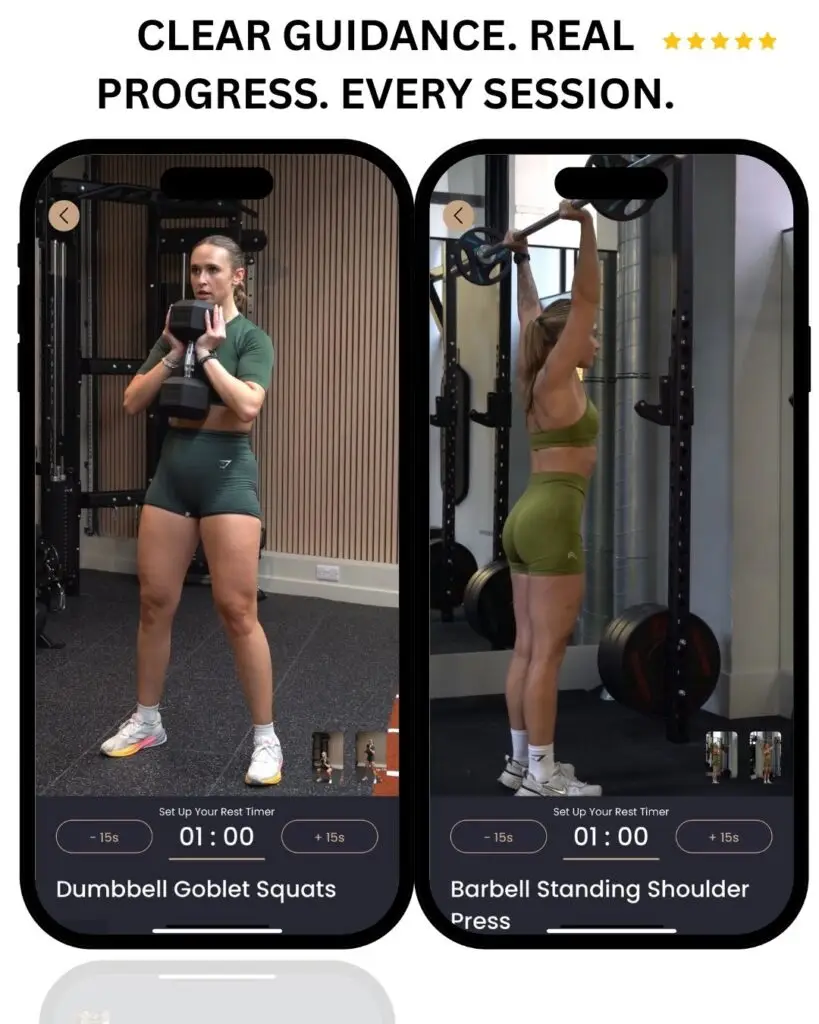
- Goblet squat: 4 x 8 to 10
- Feet-raised push-up: 3 x 10 to 12
- Pull-up (or band-assisted): 3 x 6 to 8
- Bulgarian split squat: 3 x 10 each leg
- Dumbbell shoulder press: 3 x 8 to 10
- Plank: 3 x 45 to 60 seconds
Video: Dumbbell goblet squats. The first exercise of Day A. Watch how the dumbbell stays at the chest and the hips sit down between the knees.
Day B
- Dumbbell Romanian deadlift: 4 x 10 to 12
- Dips between two sturdy chairs or bench dips: 3 x 8 to 10
- One-arm dumbbell row: 3 x 10 to 12 each arm
- Dumbbell reverse lunge: 3 x 12 each leg
- Close-grip push-up: 3 x 12 to 15
- Dead bug: 3 x 12 each side
Day C
- Assisted single-leg squat (to a box or holding a support): 3 x 6 each leg
- Weighted push-up (backpack): 3 x 8 to 10
- Chin-up (or band-assisted): 3 x 6 to 8
- Single-leg dumbbell RDL: 3 x 10 each leg
- Pike push-up: 3 x 10 to 12
- Hollow body hold: 3 x 30 to 45 seconds
New to the lunge or the RDL? See our guides on how to do lunges and Romanian deadlift form.
Only have bodyweight? Swap the dumbbell moves for the bodyweight steps on the ladders above. Only have two days? Do Day A and Day B.
How to run the plan week to week
- Write it down. Log the reps, weight or variation for every set. Your goal each week is to beat one number.
- Progress one thing at a time. Add reps first. When you hit the top of the range on every set, add load or move up the ladder.
- Check effort. If you finish a set feeling you could do many more reps, the set did not count as hard. Make it harder next time.
- Back off when needed. If you feel run down for a week or more, cut a set from each exercise for a week, then build back up.
To see how full-body training compares with other ways of splitting your week, read full body vs split training.
How to train your back at home
Push-ups and squats are easy to do anywhere. Back and biceps work is not, because you need something to pull on. Options, from cheapest:
- Resistance bands anchored in a door for rows and pulldowns.
- Dumbbell rows, one arm at a time, with a hand on a chair.
- Rings or a suspension trainer for rows, hung from a sturdy beam or door anchor.
- A doorway pull-up bar for pull-ups and chin-ups. Use bands to assist until you can do full reps.
Avoid improvised setups like the edge of a table or a chair that could tip. Use kit made for the job. Pull-ups take time to build, so start with assisted reps or slow lowering from the top.
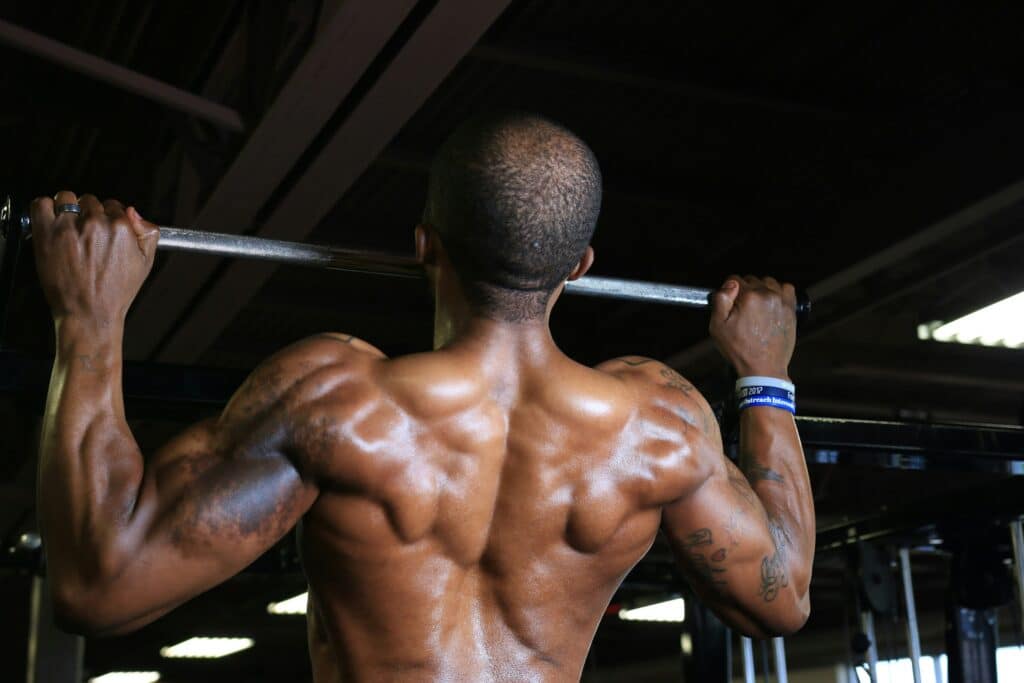
Video: Pull ups. Watch the full pull-up you are working toward, then use the assisted options above until you can do full reps.
Common home training mistakes
- Random workouts. A different circuit each day makes it hard to know if you are getting stronger. Repeat the same plan for 6 to 8 weeks.
- Doing the same push-ups forever. Once 20 reps feel easy, make the exercise harder rather than doing more and more reps.
- Skipping legs. Without heavy weights, legs need single-leg work and slow tempos to stay challenged.
- No pulling. Most home plans are push-heavy. Balance every push exercise with a pull.
- Too easy, too often. Lots of easy sets do less than fewer hard ones.
When more kit or a gym helps
Home training works for a long time, but some people hit a ceiling. The usual signs: your heaviest dumbbell feels light even on single-leg moves, or you want to train a maximal squat or deadlift. That is when a heavier set of dumbbells, a barbell and rack, or a gym membership earns its place.
If you split your week between gym and home, our guide to splitting training between gym and home shows how.
Home training with 12REPS
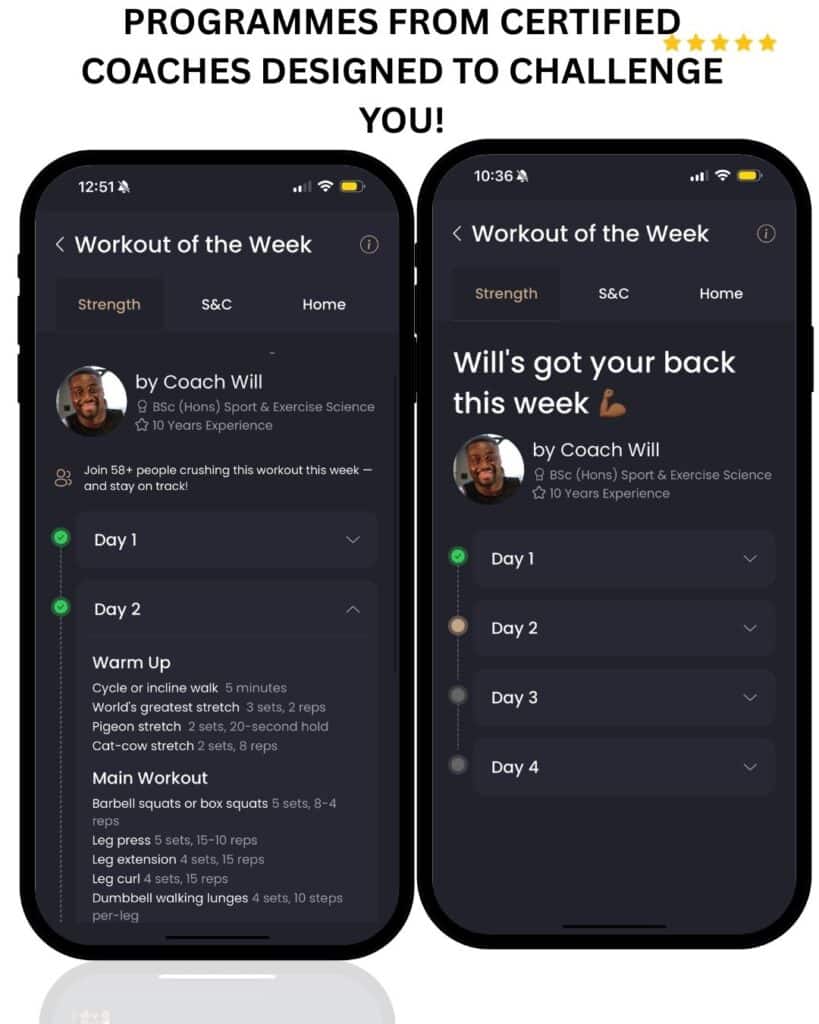
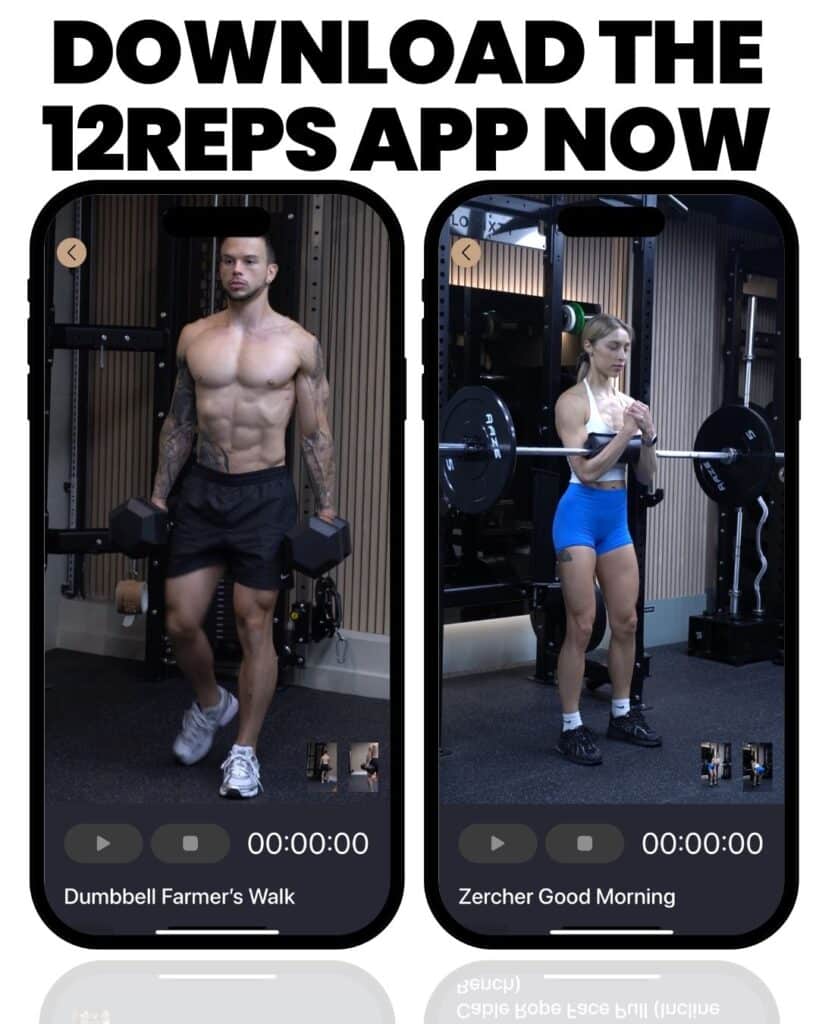
Rather not plan every session yourself? 12REPS builds each one around your goal, the kit you have at home and the time you have. Open the app and your workout is ready, with a trainer demonstration for every exercise.
You can also use the body map to build your own session: choose the muscle, your equipment and your time. As you log each set, the app remembers what you lifted, so you have a number to beat next time.
Home workout FAQs
How many days a week should I work out at home?
Three full-body days suit most people. Two days still works. The NHS recommends strengthening activities on at least 2 days a week.
Can I build muscle with bodyweight only?
Yes, especially in your first months, if you keep moving up the progression ladders. Legs and back usually need added load or bands sooner than chest and arms.
What dumbbells should I buy first?
An adjustable pair gives you the widest range in the least space. Pick a set that goes heavy enough for goblet squats and RDLs, not just for curls.
How long should a home workout take?
The plan above takes about 45 to 60 minutes. If you have less time, do the first four exercises of each day.
Sources
- American College of Sports Medicine Position Stand. Resistance training prescription for muscle function, hypertrophy, and physical performance in healthy adults: an overview of reviews. Currier BS et al., Medicine and Science in Sports and Exercise, 2026. https://doi.org/10.1249/MSS.0000000000003897
- Strength and hypertrophy adaptations between low- vs. high-load resistance training: a systematic review and meta-analysis. Schoenfeld BJ, Grgic J, Ogborn D, Krieger JW, Journal of Strength and Conditioning Research, 2017. https://pubmed.ncbi.nlm.nih.gov/28834797/
- Progressive overload without progressing load? The effects of load or repetition progression on muscular adaptations. Plotkin D et al., PeerJ, 2022. https://doi.org/10.7717/peerj.14142
- Physical activity guidelines for adults aged 19 to 64. NHS. https://www.nhs.uk/live-well/exercise/physical-activity-guidelines-for-adults-aged-19-to-64/