


Written by Will Duru, BSc (Hons) Sport and Exercise Science, Level 3 Personal Trainer
Bodyweight strength training uses your own body as the resistance. If you train close to failure and make each exercise harder over time, it can build real strength and muscle at home with no equipment.
Five moves cover most of your body: push-ups, squats, lunges, planks and glute bridges. This guide shows how to do each one, how to make it easier or harder, and how to put them into a simple home workout.
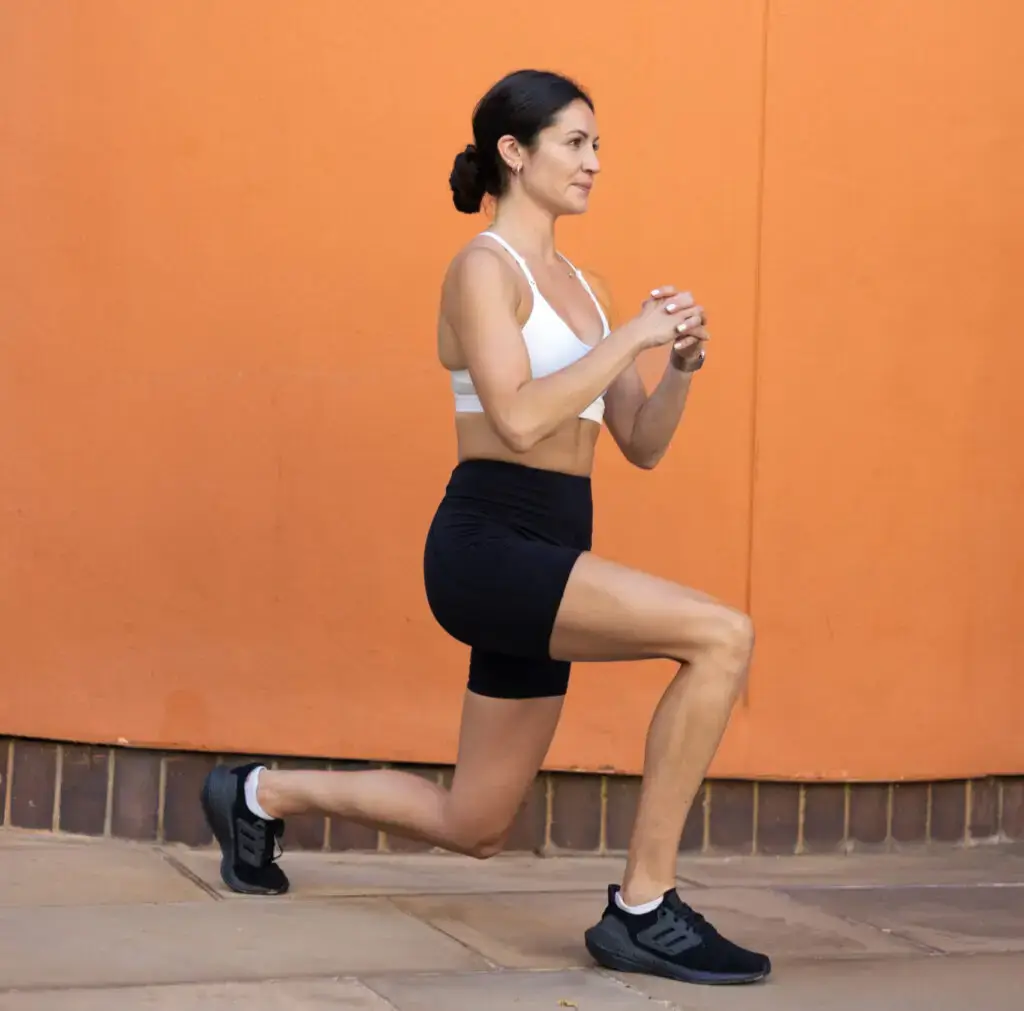
Can you build strength with bodyweight training?
Yes, as long as the exercise is hard enough for you. Your muscles respond to effort and tension, not to whether the resistance is a barbell or your body.
In one small 8-week study, young men who did push-ups gained similar muscle size and bench press strength to a group doing light bench presses. The push-up load was matched to 40% of their bench press max.
Another study found that light loads lifted to failure built muscle as well as heavy loads. Heavy loads still gave bigger gains in maximal strength. That matters for bodyweight work: an easy set will not do much, but a hard set close to failure can.
Health guidance counts bodyweight work too. The NHS lists push-ups and sit-ups as strengthening activities and advises them on at least 2 days a week.
Why train with bodyweight at home?
- No cost: you need floor space and, for a few moves, a sturdy chair or step.
- No travel: you can train in your living room, a hotel room or a park.
- Easy to scale: change your body angle, use one leg or slow down to adjust the difficulty.
- Whole-body movements: a push-up works your chest, shoulders and triceps while your core keeps your body straight.
The trade-off is that some moves become too easy. Once you can do lots of squats, adding more reps gives less return. That is when you need a harder version.
How to progress bodyweight exercises
Progressive overload means making an exercise a little harder over time so your body keeps adapting. With weights you add load. With bodyweight, use these options:
- Add reps: if 12 push-ups feel comfortable, aim for 13 or 14 next session.
- Use a harder variation: move from incline push-ups to floor push-ups, or from two-leg squats to split squats.
- Go one side at a time: single-leg moves put more of your body weight through each leg.
- Slow the lowering phase: taking 3 seconds to lower makes each rep harder and helps you reach a challenging set sooner.
- Add a pause: holding the bottom of a squat or push-up for a second removes the bounce.
Slower reps are a tool, not magic. A review found similar muscle growth with rep durations from 0.5 to 8 seconds. Use tempo to make an easy move hard enough, then switch to a harder variation.
A useful way to judge effort is reps in reserve (RIR): how many more good reps you could have done. For strength and muscle, most sets should end close to failure, with only a few good reps left.
For more ways to progress, read our beginner guide to progressive overload.
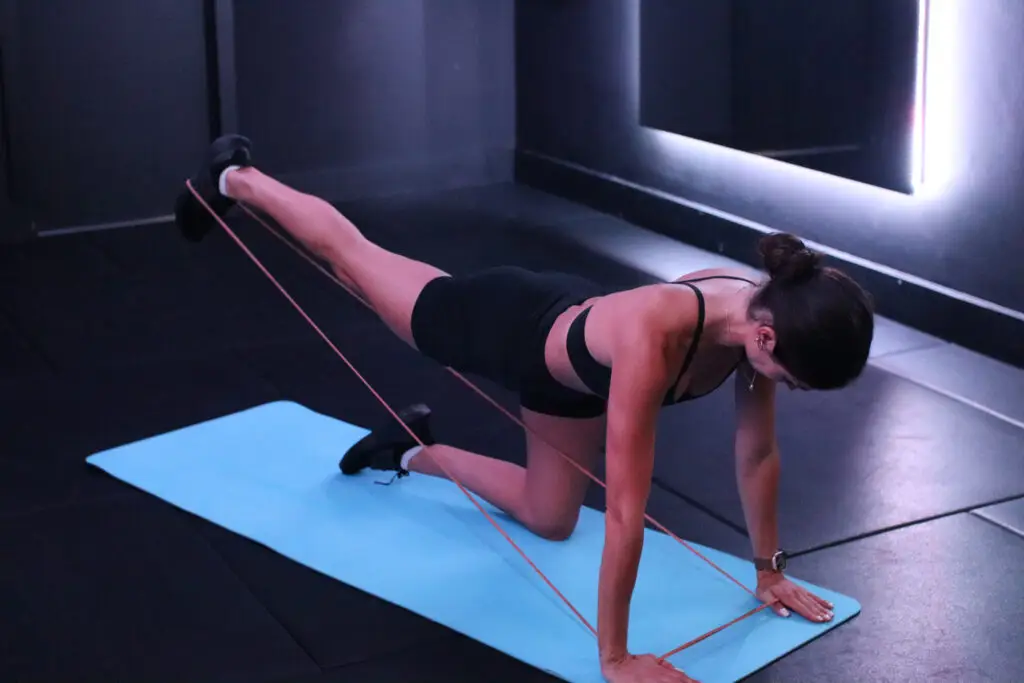
The 5 best bodyweight exercises for strength at home
These five moves train your legs, glutes, chest, shoulders, arms and core. Start with the version that lets you do clean reps, then progress.
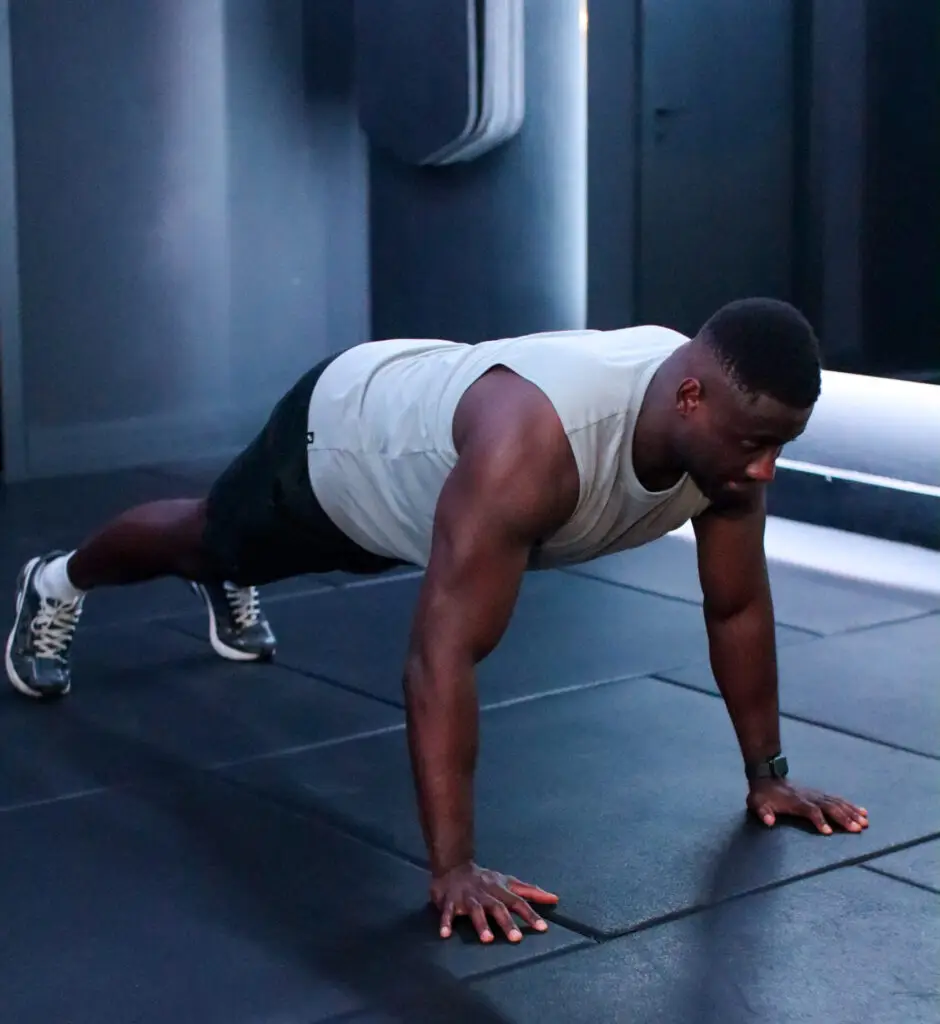
1. Push-ups
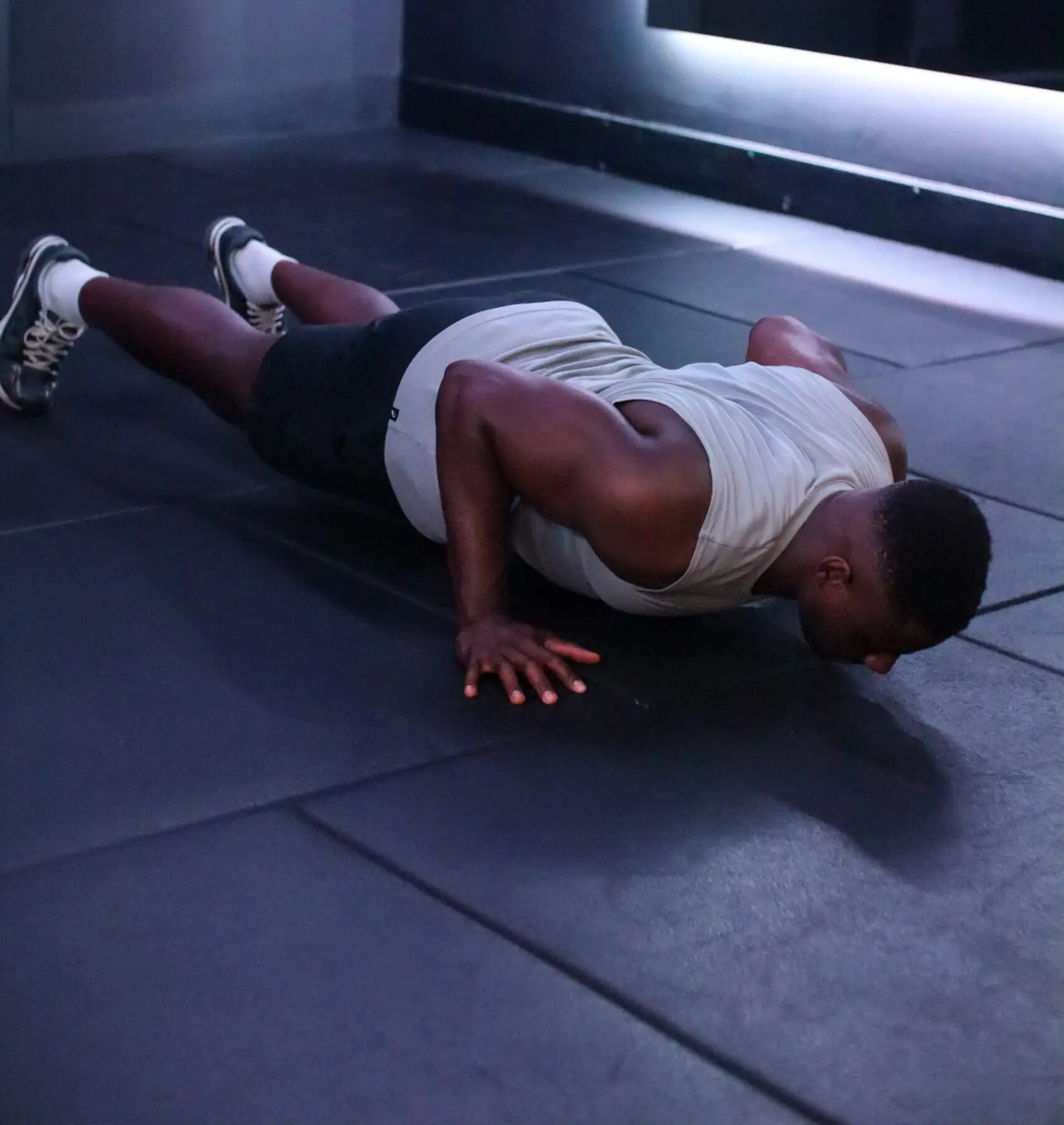
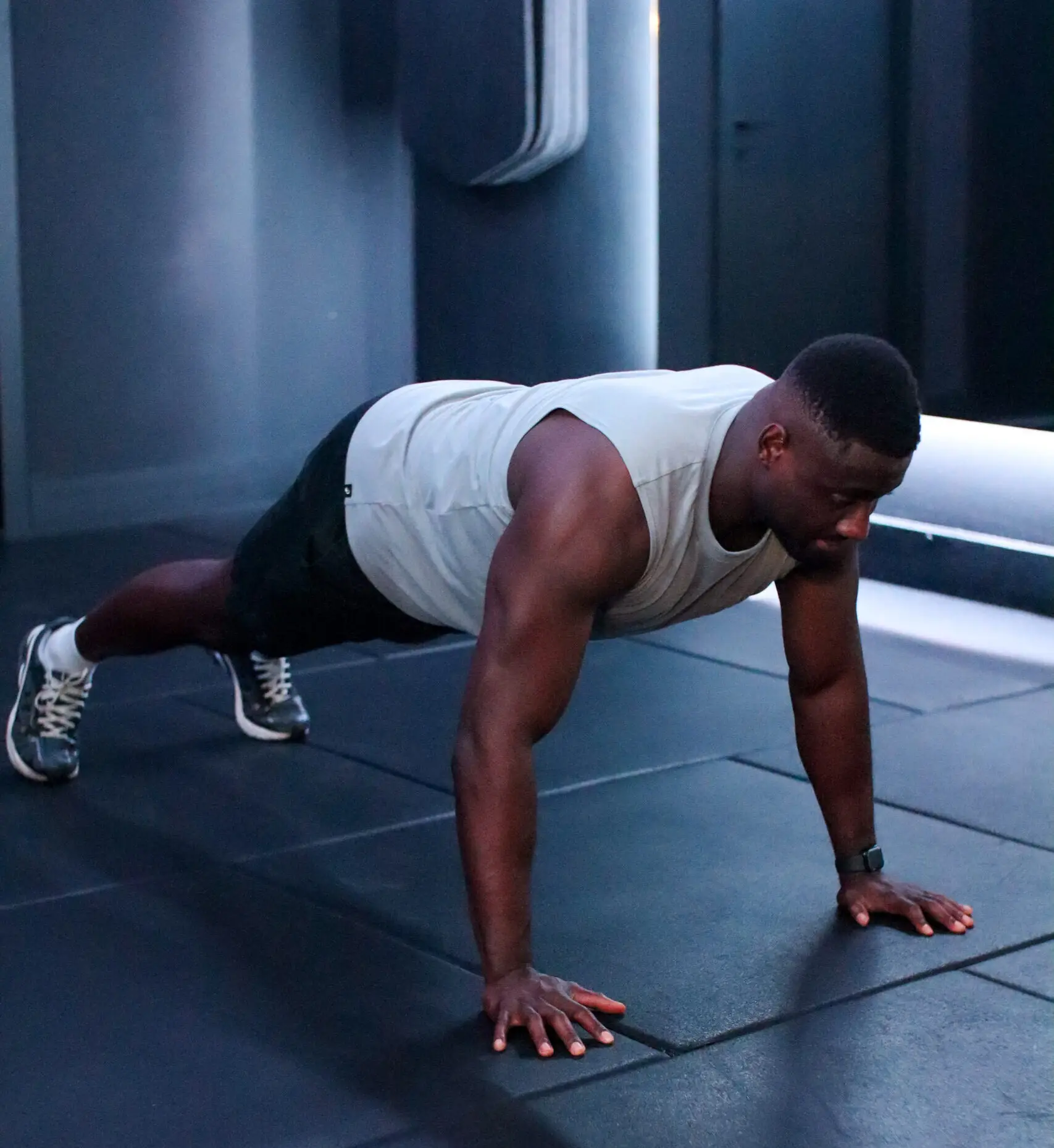
The push-up (press-up) trains your chest, shoulders and triceps, while your core holds your body in line.
- Place your hands slightly wider than shoulder-width, arms straight.
- Step your feet back so your body forms a straight line from head to heels.
- Brace your stomach and lower your chest to just above the floor.
- Press back up without letting your hips sag.
- Easier: wall push-ups, then an incline push-up on a bench or knee push-ups with hands raised.
- Standard: floor push-ups. Aim for 8 to 12 good reps to start.
- Harder: feet-elevated push-ups, close-hand push-ups for more triceps work, then one-arm progressions.
Once you can do about 15 to 20 clean reps, move to a harder variation.
Video: How to do press ups. Watch this before your first set to see the straight body line and how low to go.
2. Bodyweight squats
Squats train your quadriceps (front of the thighs) and glutes, with help from your hamstrings and core.
- Stand with your feet about shoulder-width apart, toes turned out slightly.
- Sit your hips back and down, keeping your chest up.
- Let your knees travel in line with your toes.
- Go as low as you can with control, ideally thighs parallel to the floor.
- Push through your whole foot to stand up.
- Easier: squat to a chair or box, or hold a door frame for balance.
- Standard: full-range bodyweight squats. Aim for 10 to 15 good reps.
- Harder: pause squats, split squats, then a single-leg box squat. A backpack with books adds load.
Video: Bodyweight squats. Use this demo to check your depth and knee position before you add reps or move to a harder version.

3. Lunges
Lunges train your glutes, quads and hamstrings one leg at a time. They also challenge your balance.
- Stand tall, then step one foot back (reverse lunge) or forward (forward lunge).
- Lower until your front thigh is close to parallel and your back knee hovers above the floor.
- Push through your front foot to return to standing.
- Repeat on the other leg.
- Easier: a split squat (feet stay in place) holding a chair, or a reverse lunge, which many people find easier to control.
- Standard: forward lunges or walking lunges. Start with 6 to 8 per leg.
- Harder: a Bulgarian split squat with your back foot on a chair, which puts more load on the front leg.
4. Plank
The plank is an isometric core exercise, which means your muscles work while you hold still. It trains your abdominals and the muscles that keep your spine steady.
- Rest on your forearms and toes, elbows under your shoulders.
- Make a straight line from head to heels.
- Brace your stomach and squeeze your glutes.
- Breathe steadily. Stop when your hips start to sag or lift.
- Easier: plank on your knees.
- Standard: forearm plank. Start with 20 to 30 seconds and build toward 60 seconds.
- Harder: side planks, plank shoulder taps, or lifting one leg.

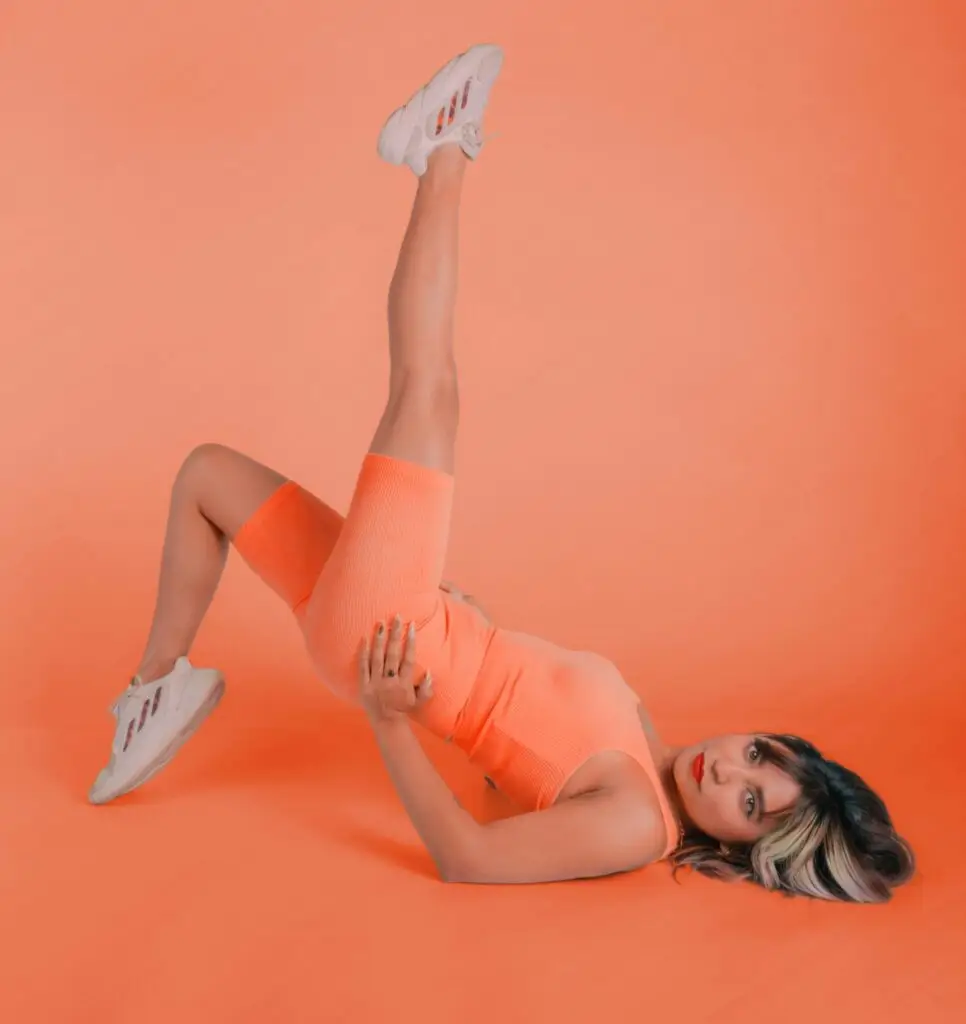
5. Glute bridge
The glute bridge trains your glutes and hamstrings, the muscles that straighten your hips.
- Lie on your back, knees bent, feet flat and hip-width apart.
- Squeeze your glutes and lift your hips until your body forms a line from shoulders to knees.
- Pause for a second at the top.
- Lower under control.
- Easier: a smaller range of motion, or hold the top for a few seconds.
- Standard: 12 to 15 reps, squeezing at the top.
- Harder: single-leg glute bridges, frog pumps for more glute work, or a bodyweight hip thrust with your shoulders on a sofa.
The gap in bodyweight training: pulling
All five moves above are pushes, squats, lunges or holds. None of them trains your back and biceps through a pulling movement.
To fill that gap, add a row. A ring row works if you have gymnastic rings or a suspension trainer. A long resistance band also works. See our guide to resistance band strength training for band rows.
Sample no-equipment workout
This circuit uses the five moves above. Do each exercise in order, then rest.
| Exercise | Reps or time |
|---|---|
| Bodyweight squats | 15 reps |
| Push-ups (or your variation) | 10 reps |
| Lunges | 8 reps each leg |
| Glute bridges | 12 reps |
| Plank | 30 seconds |
- Rest for 1 minute after each round.
- Complete 2 to 3 rounds.
- Train 3 times a week with a rest day between sessions.
- Choose the variation that lets you finish each set with good form and only a few reps left.
When the circuit feels easy, add reps, add a round or move to a harder variation of each exercise. Good form comes before speed.
If your knees or hips get sore with lunges or deep squats, our guide to low-impact strength training has joint-friendly swaps. For a longer plan, try our home workout plan for building muscle without a gym or the only bodyweight workout you need.
Train at home with a plan
12REPS builds each session around your goal, the equipment you have and the time you have, with a trainer demonstration for every exercise. See how the 12REPS app works, or read how to use the 12REPS workout planner for gym and home.
Sources
- Low-load bench press and push-up induce similar muscle hypertrophy and strength gain. Kikuchi N, Nakazato K. Journal of Exercise Science & Fitness, 2017. https://pubmed.ncbi.nlm.nih.gov/29541130/
- Resistance exercise load does not determine training-mediated hypertrophic gains in young men. Mitchell CJ et al. Journal of Applied Physiology, 2012. https://pubmed.ncbi.nlm.nih.gov/22518835/
- Effect of Repetition Duration During Resistance Training on Muscle Hypertrophy: A Systematic Review and Meta-Analysis. Schoenfeld BJ, Ogborn DI, Krieger JW. Sports Medicine, 2015. https://pubmed.ncbi.nlm.nih.gov/25601394/
- Physical activity guidelines for adults aged 19 to 64. NHS, 2024. https://www.nhs.uk/live-well/exercise/physical-activity-guidelines-for-adults-aged-19-to-64/