


Strength training but not losing weight? The scale may be hiding progress. Water, stored carbs, your menstrual cycle and new muscle can all mask fat loss for a few weeks. But if your weekly average weight, waist and photos have not changed for four weeks or more, you are probably not yet in a calorie deficit.
Women at the gym tell me this often. Their lifts are going up and their clothes fit better, but the number on the scale has not moved, and they wonder if lifting is working.
This guide is a checklist. It covers the seven most common reasons the scale stalls, what to measure instead, and when to change your plan. For what the research says about lifting and weight loss in general, read strength training and weight loss.

What the scale actually measures
Your scale weight is everything at once: fat, muscle, bone, water, stored carbohydrate and the food in your gut. It cannot tell you which one changed.
So a stable number can still hide real change. You may have lost fat and gained some water or muscle in the same weeks.
Reason 1: Water and stored carbs
Your muscles store carbohydrate as glycogen. A nutrition review notes that each gram of glycogen is stored with at least 3 g of water. Weight often rises as glycogen stores refill.
That matters when you start lifting or eat more carbs after a low-carb spell. Your muscles store more fuel and water, so the scale can go up even while you lose fat. Salty meals and a hard leg session can add temporary water too.
Reason 2: Your menstrual cycle
Fluid retention changes across your cycle. A year-long study followed 62 women. Self-reported fluid retention was highest on the first day of the period and lowest in the middle of the first half of the cycle.
So compare your weight with the same point in your last cycle, not with last week.

Reason 3: You are gaining some muscle while losing fat
A 2022 meta-analysis of 114 trials looked at resistance training in adults with overweight or obesity. Training alone reduced fat mass by about 1.0 kg and raised lean mass by about 0.8 kg compared with no training.
Those changes nearly cancel out on the scale. In that analysis, body weight fell mainly in programs that also included a calorie-reduced diet or aerobic exercise (Lopez et al., 2022). Lifting improves your body composition, but the scale only drops clearly once you eat in a deficit as well.
Video: How strength training helps with fat loss. Watch this for why lifting is still worth it during a fat-loss phase, even when the scale is slow.
Reason 4: You are eating more than you think
This is the most common fixable cause. In a review of diet tracking studies, the most common finding was that people underreported what they ate by 20 to 30% on average.
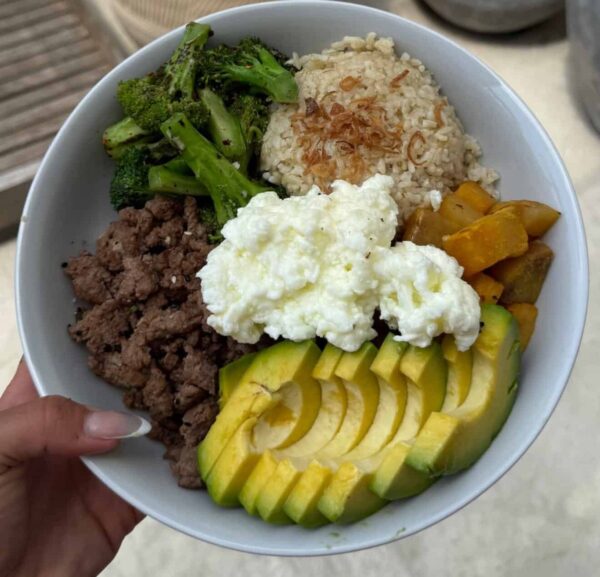
Easy things to miss:
- Cooking oil, butter and dressings
- Milky coffees and drinks
- Nut butter, nuts and granola, where portions grow without you noticing
- Tastes while cooking and leftovers from the kids’ plates
- Weekends. Two big days can undo five careful ones.
- Eating “back” the calories from a workout
Log everything for one honest week, weighing the foods you usually guess. Our guide to how many calories to eat to build muscle or lose fat shows how to set a target from there.
Reason 5: Your deficit is too big to keep up
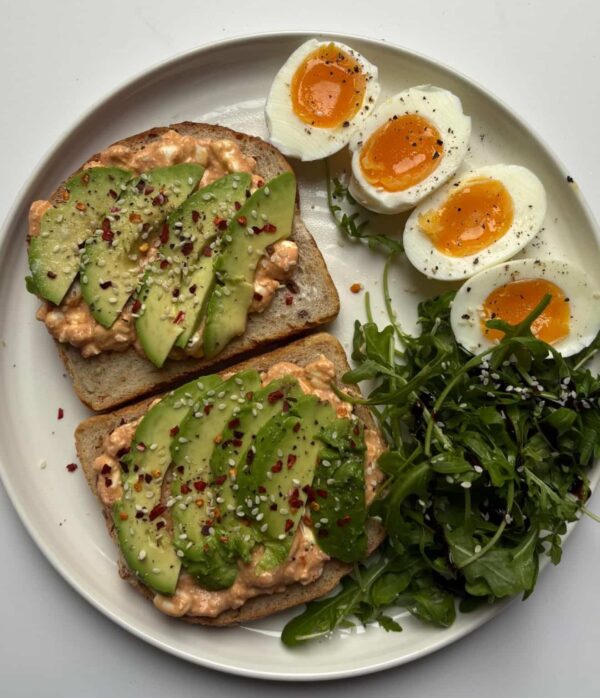
Very low calories are hard to sustain. Hunger builds, energy drops and many people end up overeating at weekends, so the weekly total evens out.
The ACSM suggests a moderate cut of about 250 to 500 calories a day for a slow rather than rapid loss. A meta-analysis found that a deficit of about 500 calories a day prevented gains in lean mass in people who lift. A smaller deficit you can keep up beats a large one you abandon.
Reason 6: Your training is not progressing
Lifting helps you keep and build muscle while you lose fat, but only if the challenge grows over time. Signs your training has stalled:
- You have used the same weights for months.
- Your sets end when you get bored, not when they feel hard.
- You skip the big moves, such as squats, hip thrusts, rows and presses.
- Your sessions change so often you cannot tell whether you are getting stronger.
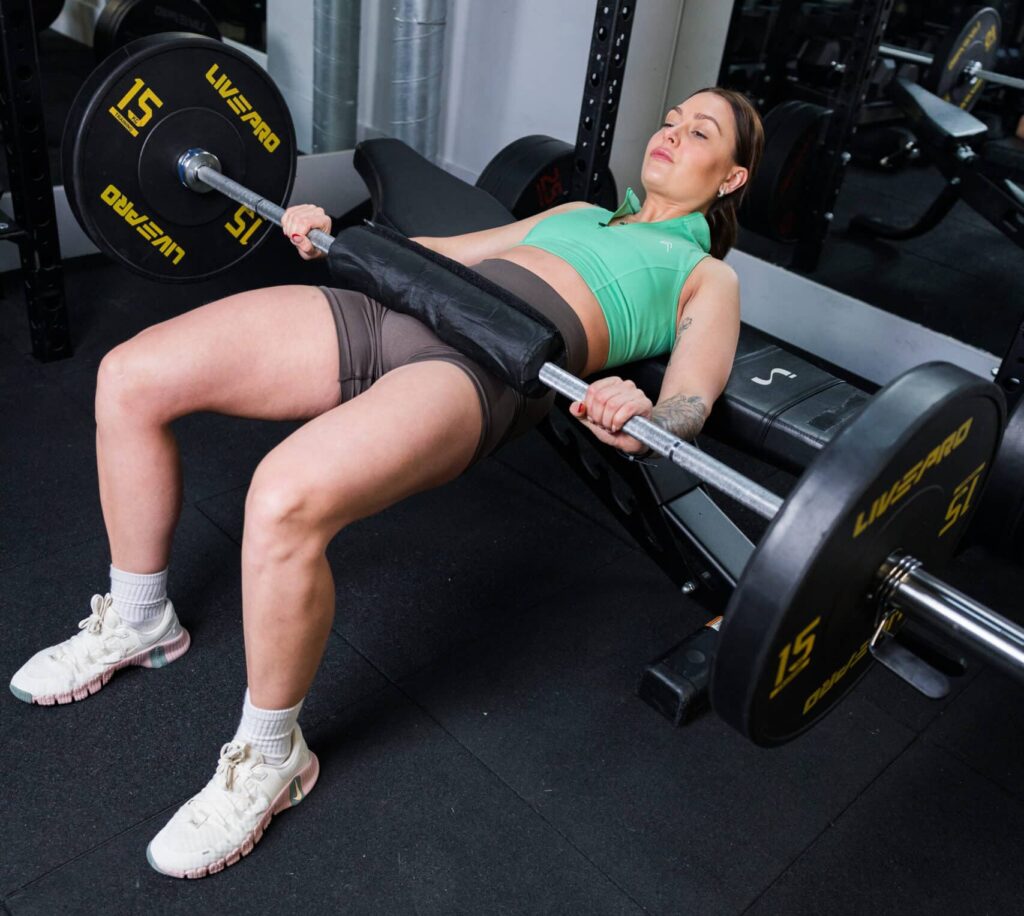
The fix is progressive overload: add a little weight or a rep or two when a set starts to feel easier. Finish most sets feeling that only a few more good reps were left. Read how progressive overload works and when to increase your weights. If hip thrusts are new to you, start with the Swiss ball hip thrust.
Reason 7: A health condition or medication
Some conditions can make weight harder to lose. For example, the NHS lists putting on weight as a common symptom of an underactive thyroid, along with tiredness and feeling cold. Some medicines can also affect weight or appetite.
If you have been in a carefully tracked deficit for two months with no change in weight or waist, or you have other symptoms, see your GP. Speak to your doctor or pharmacist before changing any medication.
What to measure instead of the scale
- Weekly average weight. Weigh three or more mornings a week and compare the averages. Weekly averages smooth out daily swings, as a nutrition review recommends.
- Waist measurement. The NHS suggests measuring midway between the bottom of your ribs and the top of your hips, after breathing out naturally. Measure every two to four weeks.
- Progress photos. Same light, same spot, same clothes, every four weeks.
- Your strength log. If your lifts keep going up, your training is working.
- How your clothes fit. Looser at the waist but snugger at the thighs or glutes is a good sign.
Body composition scans can add detail. Use the same machine at the same time of day each time, as results vary between methods.
Video: How women should track progress: scale or photos. This short video compares the two and shows why photos often reveal changes the scale misses.
A 4-week check before you change anything
- Track your food honestly for at least two weeks.
- Weigh in three or more times a week and compare weekly averages.
- Measure your waist at the start and end of the four weeks.
- Log every session and look for steady increases in weight or reps.
- Compare weights at the same point in your cycle.
If your weekly average and waist have not moved after four weeks, lower your intake by about 100 to 200 calories a day. Then check again in two to four weeks.
Track it all in one place
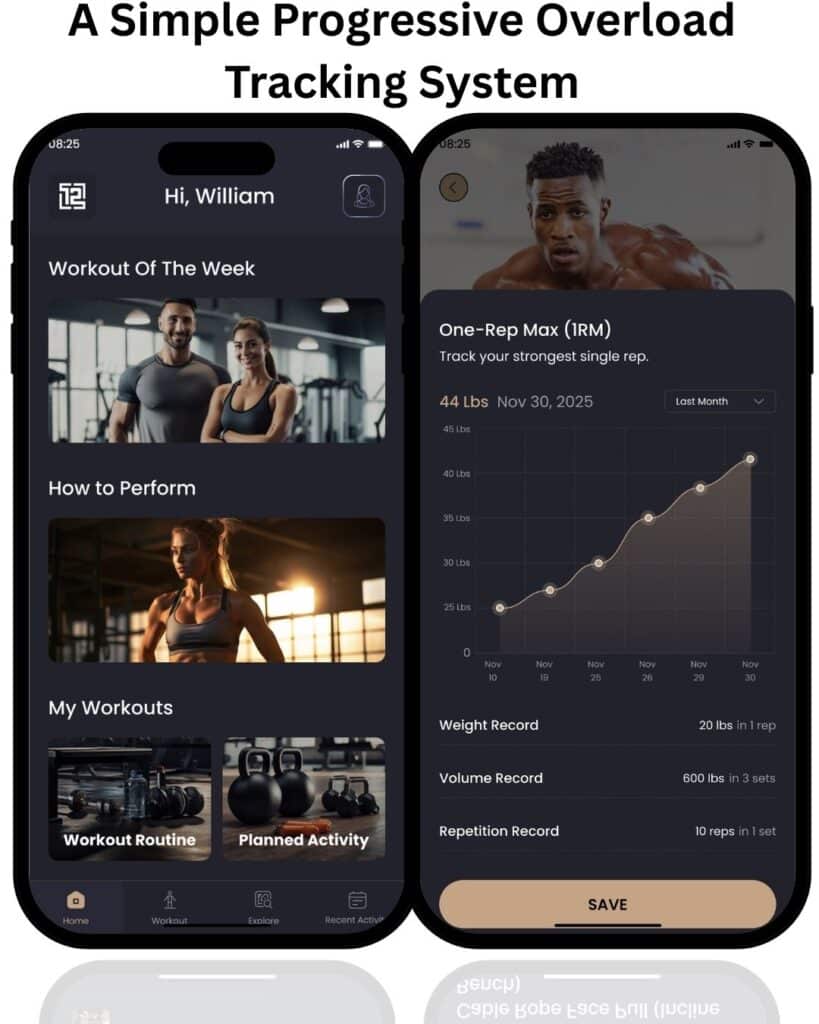
12REPS lets you log your body weight and see the trend from your start weight. You can store private progress photos and compare stages. It also records your sets, reps and weights, so you can see your strength going up even when the scale is slow.
What is a realistic rate of loss?
The NHS suggests aiming for 0.5 to 1 kg (1 to 2 lb) a week. Some weeks will show more and some none at all, especially in the first month of lifting. Slower rates help leaner people keep muscle, according to the ISSN position stand on diets and body composition.
FAQs
Why am I gaining weight after starting strength training?
A small rise in the first few weeks is usually water and stored carbohydrate in your muscles. Watch your waist and weekly average over a month before you decide anything.
Should I stop lifting and do more cardio?
No. Lifting helps you keep muscle while you lose fat. In the 2022 meta-analysis, lifting plus a calorie-reduced diet gave the biggest drop in body fat (Lopez et al., 2022). Add a deficit rather than swapping weights for cardio.
How long before the scale moves?
If you are in a real deficit, the weekly average usually starts to drop within a few weeks. Use the 4-week check above.
The bottom line
Not losing weight while strength training? Check water, your cycle, muscle gain, your real intake, your deficit, your training and your health. Measure your waist, photos and lifts as well as your weight. Then adjust in small steps.
Sources
- Resistance training effectiveness on body composition and body weight outcomes in individuals with overweight and obesity across the lifespan: A systematic review and meta-analysis. Lopez P et al., Obesity Reviews, 2022. https://doi.org/10.1111/obr.13428
- Fundamentals of glycogen metabolism for coaches and athletes. Murray B, Rosenbloom C, Nutrition Reviews, 2018. https://doi.org/10.1093/nutrit/nuy001
- Fluid Retention over the Menstrual Cycle: 1-Year Data from the Prospective Ovulation Cohort. White CP, Hitchcock CL, Vigna YM, Prior JC, Obstetrics and Gynecology International, 2011. https://doi.org/10.1155/2011/138451
- Traditional Self-Reported Dietary Instruments Are Prone to Inaccuracies and New Approaches Are Needed. Ravelli MN, Schoeller DA, Frontiers in Nutrition, 2020. https://doi.org/10.3389/fnut.2020.00090
- American College of Sports Medicine Joint Position Statement. Nutrition and Athletic Performance. Thomas DT, Erdman KA, Burke LM, Medicine & Science in Sports & Exercise, 2016. https://doi.org/10.1249/MSS.0000000000000852
- Energy deficiency impairs resistance training gains in lean mass but not strength: A meta-analysis and meta-regression. Murphy C, Koehler K, Scandinavian Journal of Medicine & Science in Sports, 2022. https://doi.org/10.1111/sms.14075
- International society of sports nutrition position stand: diets and body composition. Aragon AA et al., Journal of the International Society of Sports Nutrition, 2017. https://doi.org/10.1186/s12970-017-0174-y
- Tips to help you lose weight. NHS, 2023. https://www.nhs.uk/live-well/healthy-weight/managing-your-weight/12-tips-to-help-you-lose-weight/
- Why is my waist size important?. NHS, 2014. https://www.nhs.uk/CHQ/Pages/849.aspx
- Underactive thyroid (hypothyroidism): symptoms. NHS, 2025. https://www.nhs.uk/conditions/underactive-thyroid-hypothyroidism/symptoms/
- Nutrition Recommendations for Bodybuilders in the Off-Season: A Narrative Review. Iraki J, Fitschen P, Espinar S, Helms E, Sports, 2019. https://doi.org/10.3390/sports7070154