


By Will Duru, BSc (Hons) Sport and Exercise Science Award-winning Personal Trainer with over 10 years of experience in strength training and optimising recovery
When to increase weight: go up when you can do 1 to 2 more reps than your target on your last set, with the same technique, in two sessions in a row. A weight is too heavy if you cannot reach the bottom of your rep range or your technique changes early in the set. When you do go up, make the smallest jump you can.
Many women in the gym get comfortable with one set of dumbbells and stay there for months. Usually it is not because they cannot lift more. It is because nothing tells them clearly that they are ready.
This guide gives you that signal. If you are still choosing your first weights, start with how much weight a woman should lift as a beginner, then come back here.
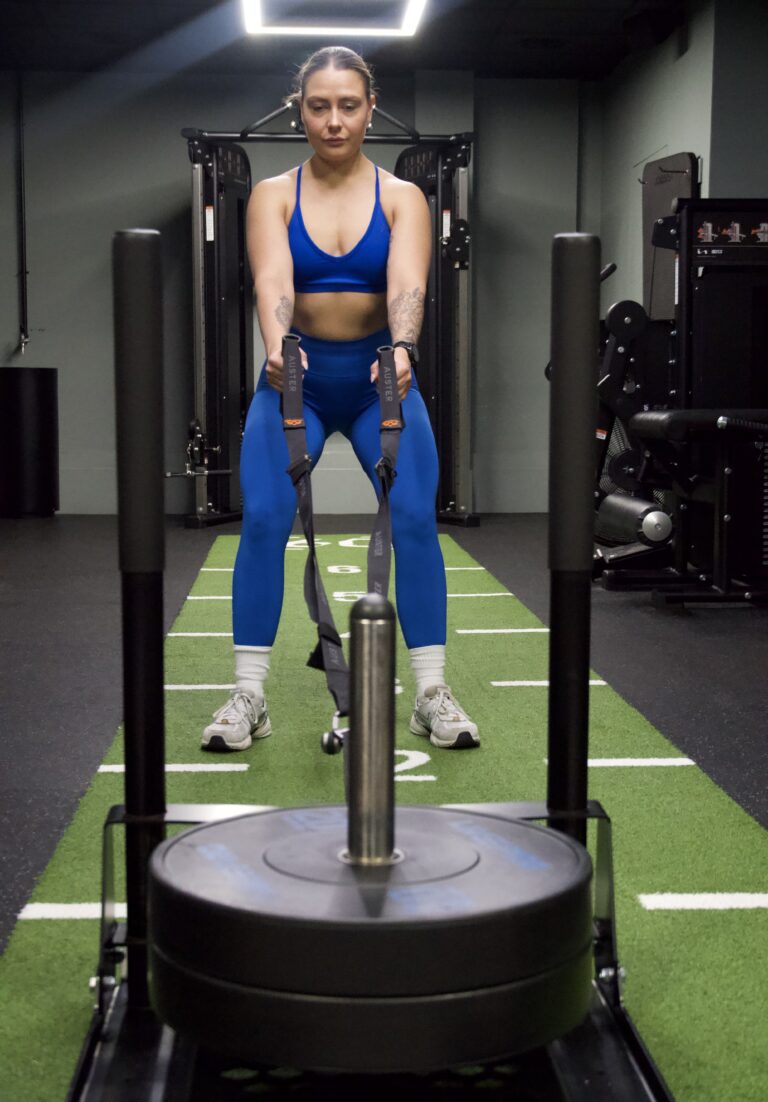
How heavy is too heavy? 4 signs
A weight is too heavy for now if any of these happen:
- You cannot reach the bottom of your rep range. If your plan says 8 to 12 reps and you stall at 5 or 6, drop the weight.
- Your technique changes in the first few reps. Swinging, a shorter range of motion or a change in your back position all mean the load is ahead of you.
- Your first set ends in failure. You have nothing left for the rest of the session. Going all the way to failure is not needed for progress (ACSM, 2026).
- It hurts in a sharp or joint-specific way. Hard effort in the muscle is normal. Sharp pain is not, so stop and get it checked.
Signs a weight is too light
- You finish your target reps with 4 or more good reps left.
- Every set feels the same from first rep to last.
- You have used the same weight and reps for several weeks and nothing has changed.
If you see these signs, the weight has stopped challenging you. The rule below tells you when to move.
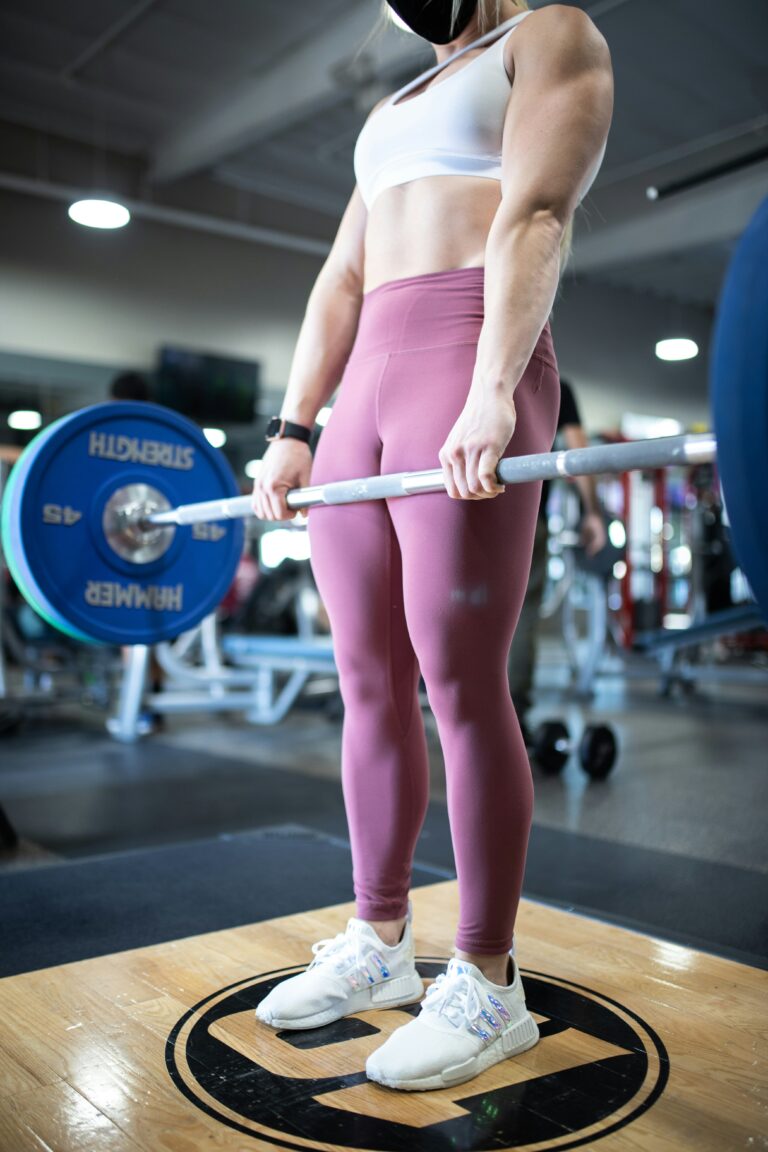
When to increase weight: the 2-for-2 rule
The American College of Sports Medicine (ACSM) gives a simple trigger. Increase the load when you can do 1 to 2 reps more than your target in two consecutive sessions (ACSM, 2009). Trainers often call this the 2-for-2 rule.
Use it on your last set. That is the set where fatigue shows, so it is the fairest test.
Worked example: goblet squats
- Plan: 3 sets of 10 reps with a 10 kg dumbbell.
- Session 1: sets of 10, 10 and 12 reps. Log the 12.
- Session 2: sets of 10, 10 and 12 reps again. That is your signal.
- Session 3: move to a 12 kg dumbbell and aim for 3 sets of 8 to 10.
Asking for two sessions in a row filters out one-off good days. A single strong session might just mean you slept well.
Video: Dumbbell goblet squats. Watch it to check your depth and position. Keep those the same when you move up a weight, so the extra load is real progress.
Expect your reps to drop
After a jump, you might go from 12 reps to 8. That is normal. Work back up through the rep range over the next few sessions, then apply the rule again.
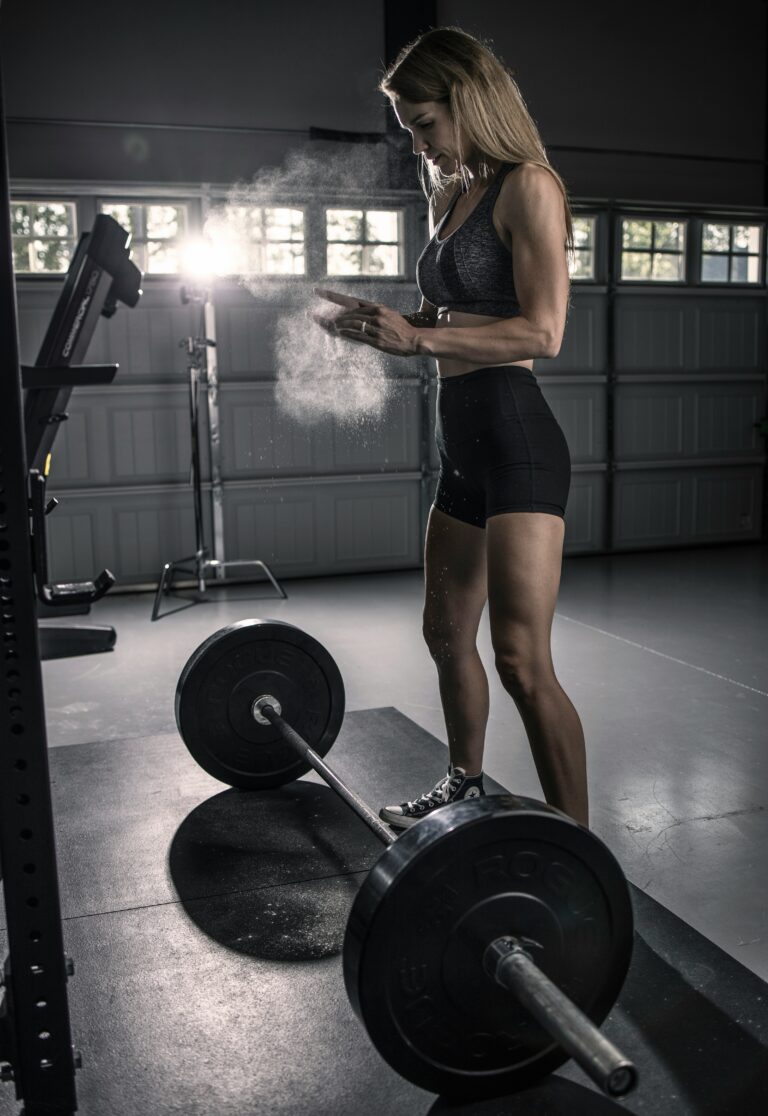
How much to increase: why small jumps matter for women
ACSM suggests raising the load by 2 to 10% at a time. Use the lower end for small-muscle exercises such as lateral raises and curls (ACSM, 2009).
This matters more for many women than for men. Many women are much stronger in their legs than in their arms and shoulders; read why women’s upper and lower body strength differ. So many women use light dumbbells for upper-body work, where a fixed 2 kg step is a big jump.
| Move from | Move to | Size of the jump |
|---|---|---|
| 4 kg | 6 kg | 50% heavier |
| 8 kg | 10 kg | 25% heavier |
| 20 kg | 22 kg | 10% heavier |
When the next dumbbell is too big a step, use one of these instead:
- Add reps first. Keep the weight and build from 8 reps toward 12 or 15 before you move up. In an 8-week study of trained men and women, adding reps worked about as well as adding load for muscle growth. Adding load had a slight edge for maximal strength, though the difference was small and uncertain (Plotkin et al., 2022).
- Use smaller plates. On a barbell, add 1.25 kg a side, or smaller fractional plates if your gym has them.
- Use a machine or cable. Many have small increments or add-on weights.
- Add a set. Doing one extra set at the same weight also increases the work.
For more ways to keep progressing, see the beginner’s guide to progressive overload.
How fast should a woman increase weights?
Often faster than you expect, at least at first. A meta-analysis found women gained muscle and lower-body strength at similar rates to men. Women showed larger relative gains in upper-body strength (Roberts et al., 2020).
In your first months you may hit the 2-for-2 rule every week or two on some exercises. Later, increases slow down. That is normal, and it is why logging matters. For a realistic picture of change over time, read how long it takes to build noticeable muscle.
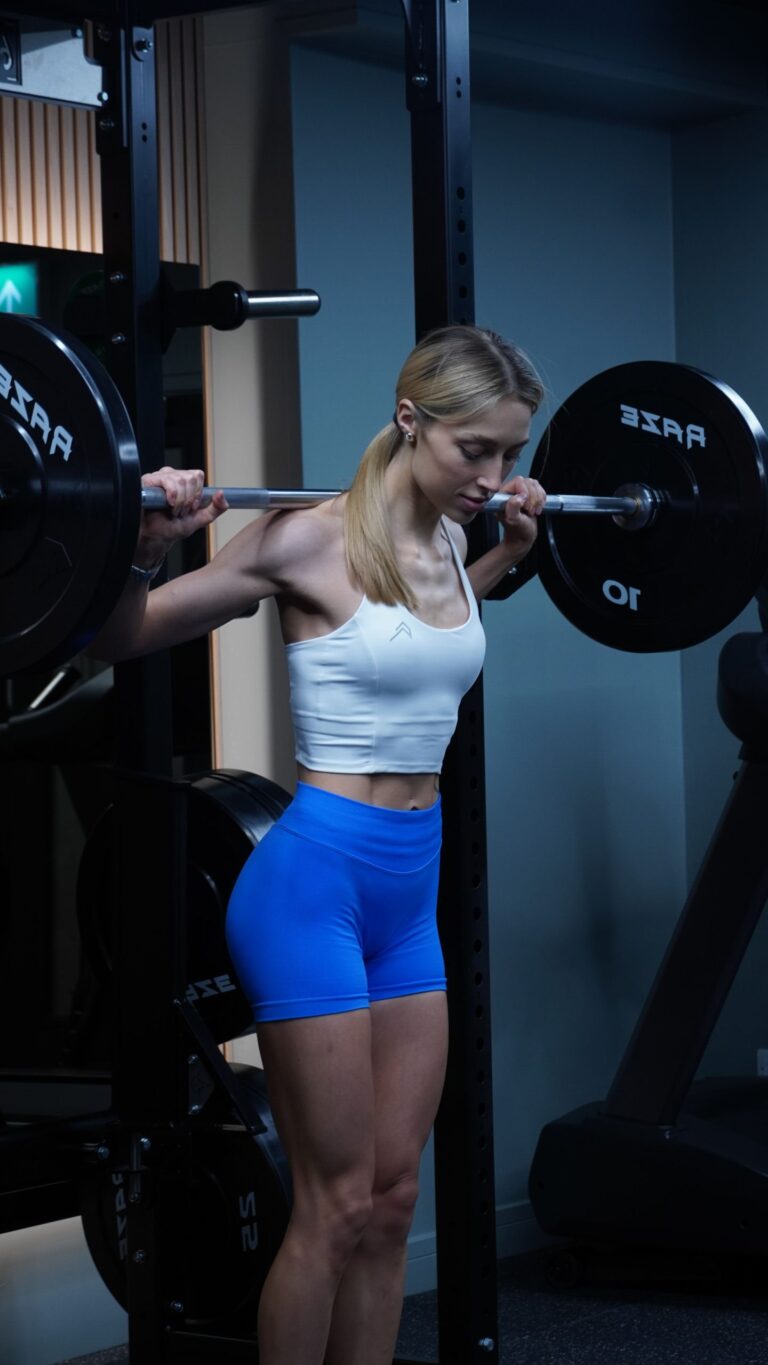
When not to increase the weight
- You only hit your reps by changing your technique. Extra reps with a shorter range or more swing do not count.
- You are short on sleep or unwell. Repeat last session’s weight. Progress does not need to happen every session.
- You have stalled for several weeks. Check your sleep, food and stress first. A lighter week can also help; see when to take a deload week.
Progression is what keeps results coming over time. The 2026 ACSM review notes it is not needed to benefit at first, but it is likely needed for continued long-term progress (ACSM, 2026).
Log every set so you know when you are ready
The 2-for-2 rule only works if you know what you did last time. Write down the weight and reps for every set, or use an app. Read how to track your workouts for a simple system.
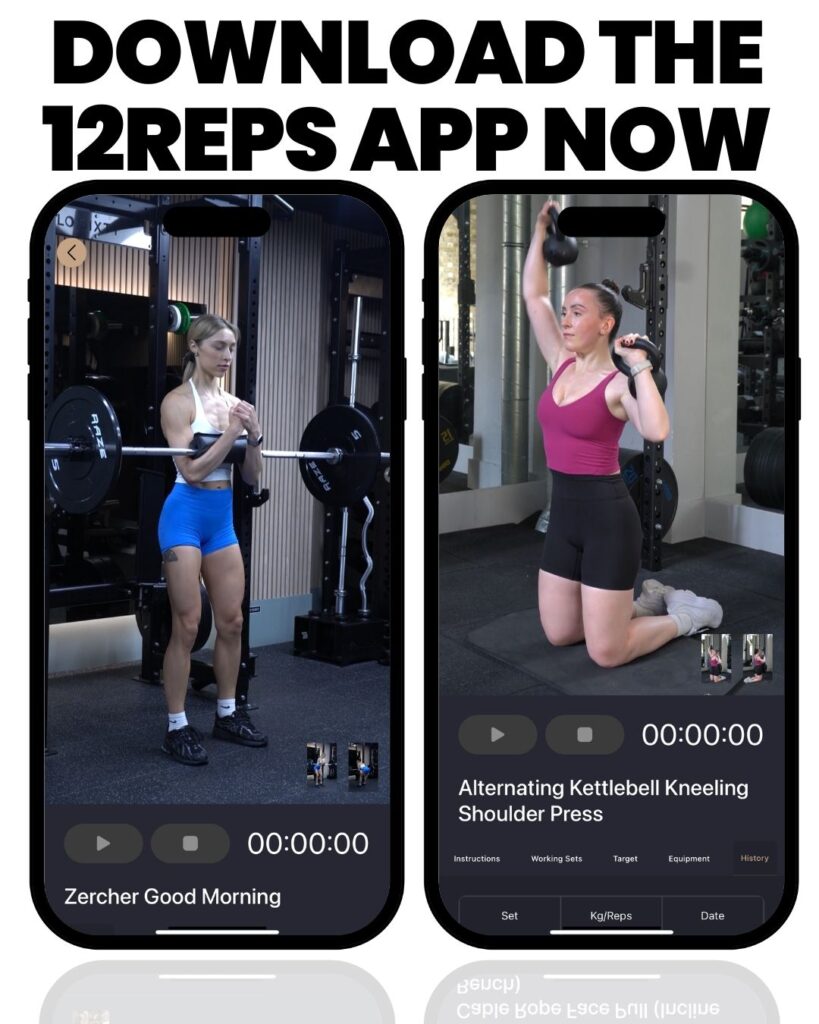
With 12REPS, you enter your reps and weight for each set and the app remembers them. Next session you can see the number to beat. Every exercise also has a trainer demonstration, so your technique stays consistent as the weight goes up.
Increasing weight FAQs
Should I increase the weight every week?
No. Increase it when the 2-for-2 rule says so. For some exercises that is often; for others it may take several weeks.
Is it OK to go back down in weight?
Yes. If a jump was too big and you cannot reach the bottom of your rep range, go back one step. Build more reps there, then try again.
Should I lift lighter during my period?
You do not have to. A 2023 review found it is premature to say that menstrual cycle phase changes strength or training results (Colenso-Semple et al., 2023). Go by how you feel on the day. If you have painful or heavy periods, or a medical condition, check with your doctor. Our guide to how many days a week women should strength train covers this in more detail.
Sources
- American College of Sports Medicine position stand. Progression models in resistance training for healthy adults. American College of Sports Medicine, Medicine & Science in Sports & Exercise, 2009. https://pubmed.ncbi.nlm.nih.gov/19204579/
- Resistance training prescription for muscle function, hypertrophy, and physical performance in healthy adults: an overview of reviews (ACSM position stand). Currier BS et al., American College of Sports Medicine, Medicine & Science in Sports & Exercise, 2026. https://doi.org/10.1249/MSS.0000000000003897
- Progressive overload without progressing load? The effects of load or repetition progression on muscular adaptations. Plotkin D et al., PeerJ, 2022. https://doi.org/10.7717/peerj.14142
- Sex differences in resistance training: a systematic review and meta-analysis. Roberts BM, Nuckols G, Krieger JW, Journal of Strength and Conditioning Research, 2020. https://doi.org/10.1519/JSC.0000000000003521
- Current evidence shows no influence of women’s menstrual cycle phase on acute strength performance or adaptations to resistance exercise training. Colenso-Semple LM, D’Souza AC, Elliott-Sale KJ, Phillips SM, Frontiers in Sports and Active Living, 2023. https://doi.org/10.3389/fspor.2023.1054542