

Written by Will Duru, BSc (Hons) Sport and Exercise Science, award-winning Personal Trainer with over 10 years of experience in strength training and optimising recovery .
These five kettlebell exercises at home train your legs, glutes, back and grip: the goblet squat, reverse lunge, single-arm row, gorilla row and Romanian deadlift. Together they cover a squat, a lunge, two rows and a hip hinge. You need one kettlebell for most of them and two for the gorilla row.
A kettlebell is a cast-iron ball with a handle. It is small enough to keep at home, and one bell is enough to start. Research on kettlebells is still limited, and a 2019 scoping review found that most studies were small. The basics of strength training still apply: train your major muscles at least twice a week and add load gradually (ACSM, 2026).
Each exercise below has setup steps, sets and reps, and mistakes to avoid. If you do not have a kettlebell yet, start with our beginner bodyweight leg workout.
1. Kettlebell Goblet Squat
The goblet squat trains your quads and glutes. Holding the kettlebell at your chest helps you stay upright, so it is a good way to learn how to squat. For a full breakdown, see our goblet squat form guide.
How to do it
- Stand with your feet a little wider than your shoulders, toes turned out slightly.
- Hold the kettlebell by the horns (the sides of the handle) against your chest. Keep your elbows tucked in.
- Push your hips back and bend your knees, as if sitting into a chair. Keep your chest up and your back flat.
- Lower as far as you can with good form. Your elbows may pass between your knees.
- Push through your whole foot to stand back up. Squeeze your glutes at the top.
Sets and reps: 4 sets of 12 reps.
Avoid: rounding your back, letting your knees cave in, and stopping short when you could go lower with good form.
2. Kettlebell Reverse Lunge
The reverse lunge trains one leg at a time, mainly your quads and glutes. It also challenges your balance. Stepping back, rather than forward, tends to make the movement easier to control. Our lunge guide covers forward, reverse and walking lunges.
How to do it
- Stand tall and hold a kettlebell in one hand. Hold it on the same side as your front leg, or on the opposite side for more of a challenge.
- Step one leg back and land on the ball of your foot. Keep your front foot flat.
- Lower your back knee toward the floor until both knees bend to about 90 degrees. Keep your chest up and your core tight.
- Push through your front foot to return to the start.
- Do all your reps on one leg, then switch sides.
Sets and reps: 4 sets of 10 reps on each leg.
Avoid: leaning too far forward, letting your front knee cave inward, and rushing the step so you lose balance. Your front knee should stay in line with your foot.
3. Kettlebell Single-Arm Row
The single-arm row trains your upper back, including your lats and the muscles between your shoulder blades. Your biceps help too. Working one arm at a time lets you train each side on its own and notice if one side is weaker.
How to do it
- Stand with your feet hip-width apart. Place your free hand on a bench or sturdy chair.
- Hinge at your hips and push your bottom back. Keep your back flat and close to parallel with the floor.
- Let the kettlebell hang straight down from your working hand.
- Pull the kettlebell toward your hip with your elbow close to your body. Squeeze your shoulder blade back at the top.
- Lower it slowly and with control. Finish all your reps, then switch arms.
Sets and reps: 4 sets of 10 reps on each arm.
Avoid: rounding your back, using momentum to swing the weight, and shrugging your shoulder up toward your ear.
4. Kettlebell Gorilla Row
The kettlebell gorilla row is an alternating row from a wide, bent-over stance. It trains your upper back, shoulders and arms. Your core works hard to stop your body twisting, and holding the bells challenges your grip. You need two kettlebells.
How to do it
- Place two kettlebells on the floor about shoulder-width apart. Stand over them with your feet slightly wider than shoulder-width.
- Hinge at your hips with a flat back and grab both handles. Your arms should be straight.
- Row one kettlebell toward your hip and squeeze your shoulder blade. Keep your core tight so your body does not twist.
- Lower that kettlebell back to the floor with control, then row the other side. Keep the resting bell on the floor and brace against it.
- Keep alternating arms while your body stays strong and still.
Sets and reps: 4 sets of 12 reps in total (6 on each arm).
Avoid: rounding your back, swinging your body, and dropping the kettlebell instead of lowering it.
5. Kettlebell Romanian Deadlift (RDL)
The kettlebell Romanian deadlift (RDL) trains your hamstrings and glutes. The muscles along your spine work to keep your back flat. It teaches the hip hinge: bending forward from your hips while your back stays straight. Our RDL form guide has more detail.
How to do it
- Stand tall with your feet hip-width apart. Hold one kettlebell with both hands in front of your thighs.
- Keep a slight bend in your knees. Push your hips straight back and let the kettlebell lower close to your legs.
- Keep your back flat and your core tight. You should feel a stretch in your hamstrings.
- Stop when you feel a good stretch, often around or just below your knees. Do not go so low that your back rounds.
- Squeeze your glutes and push your hips forward to stand back up. Keep the kettlebell close to your body.
Sets and reps: 4 sets of 12 reps.
Avoid: rounding your back, squatting instead of hinging, and letting the kettlebell drift away from your legs.
How to Put These Kettlebell Exercises Together
Do the five moves in order as one session, two or three times a week. The NHS advises strengthening activities on at least 2 days a week that work all the major muscle groups.
| Exercise | Main muscles | Sets and reps |
|---|---|---|
| Goblet squat | Quads, glutes | 4 x 12 |
| Reverse lunge | Quads, glutes | 4 x 10 each leg |
| Single-arm row | Upper back, biceps | 4 x 10 each arm |
| Gorilla row | Upper back, core, grip | 4 x 12 in total |
| Romanian deadlift | Hamstrings, glutes | 4 x 12 |
This session has no pushing exercise for your chest, shoulders and triceps. To cover those muscles, add a pushing move such as the bodyweight press-up.
Start light and progress
Choose a kettlebell you can control for every rep. Move up in weight only when you can finish all your sets with good technique. This is progressive overload: making training a little harder over time so your body keeps adapting. Our beginner’s guide to progressive overload explains how.
Once these moves feel solid, try our kettlebell and bodyweight superset workout. It pairs several of them with bodyweight exercises for a harder session.
Train with a Plan
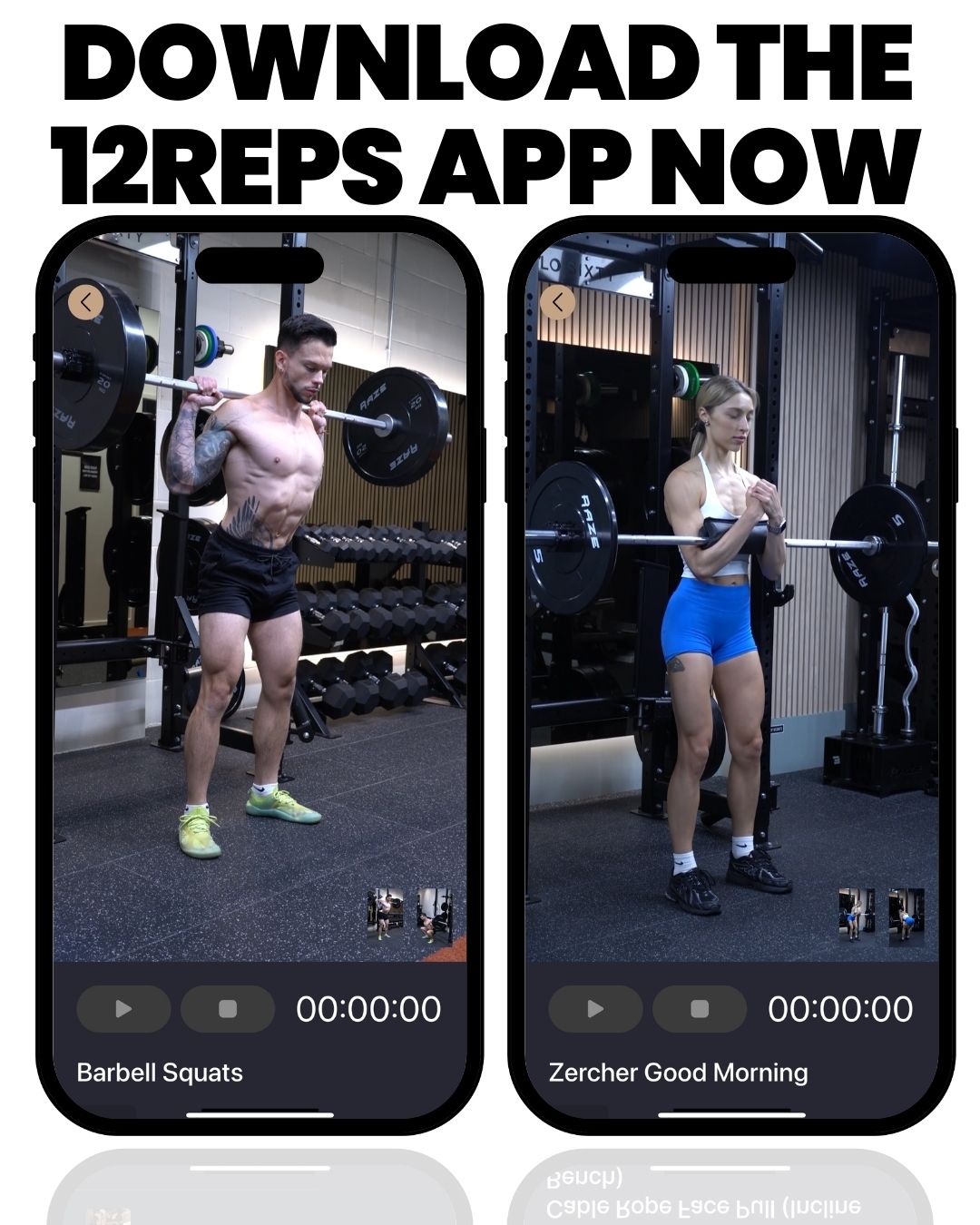
If you want each session set out for you, 12REPS builds your training around your goal, your equipment and the time you have. Each exercise comes with a trainer demonstration, and the app remembers what you lifted so you have a number to beat. See how the 12REPS app works.

Sources
- Kettlebell training in clinical practice: a scoping review (Meigh NJ, Keogh JWL, Schram B, Hing WA). BMC Sports Science, Medicine and Rehabilitation, 2019. https://bmcsportsscimedrehabil.biomedcentral.com/track/pdf/10.1186/s13102-019-0130-z
- 5 Things to Know About Creating an Effective Resistance Training Plan (ACSM position stand infographic). American College of Sports Medicine, 2026. https://acsm.org/wp-content/uploads/2026/03/Resistance-Training-Position-Stand-infographic.pdf
- Physical activity guidelines for adults aged 19 to 64. NHS, 2024. https://www.nhs.uk/live-well/exercise/physical-activity-guidelines-for-adults-aged-19-to-64/