By Will Duru, BSc (Hons) Sport and Exercise Science, Award-winning Personal Trainer with over 10 years of experience in strength training and optimising recovery.
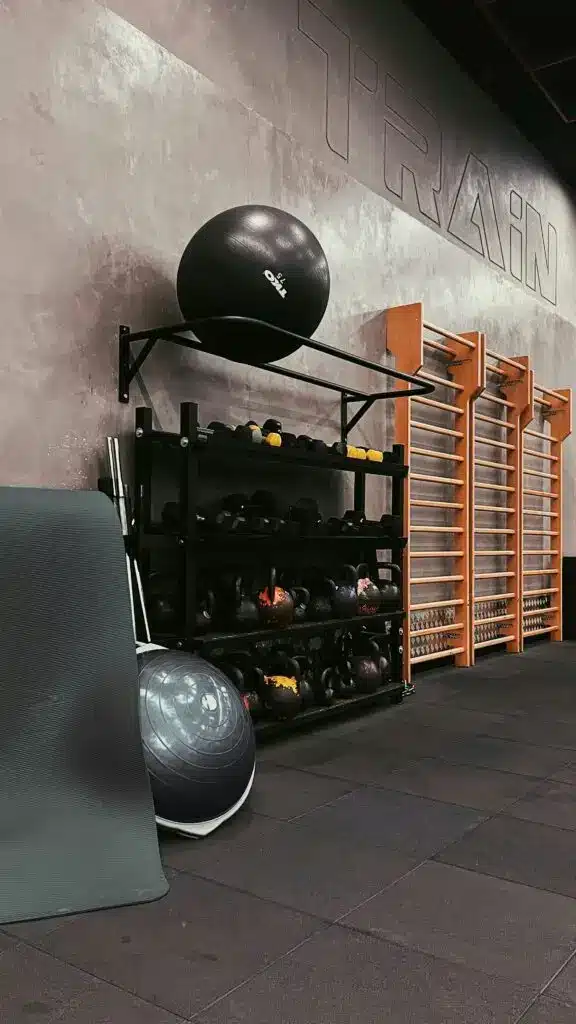
This gym leg day workout uses five exercises and four types of equipment: kettlebell box front squats, barbell Romanian deadlifts, kettlebell reverse lunges, dumbbell goblet squats and leg extensions. Each exercise gets 4 sets, and you rest 60 to 75 seconds between them. Your quads, glutes and hamstrings do the work, and the plan shows you how to add weight over time.
With over a decade of experience as a personal trainer, I’ve seen what works for building lower-body strength. If you have a full gym, use all the tools in it rather than sticking to one type of equipment.
This is a legs-only session for people who already know the basic lifts. If that is not you yet, start with one of these:
- New to the gym: start with this beginner workout on two machines and dumbbells.
- Legs and abs in one gym visit: try the machines, dumbbells and TRX session.
- Training at home or on the road: use the home dumbbell leg workout or the travel workout with dumbbells and a TRX.
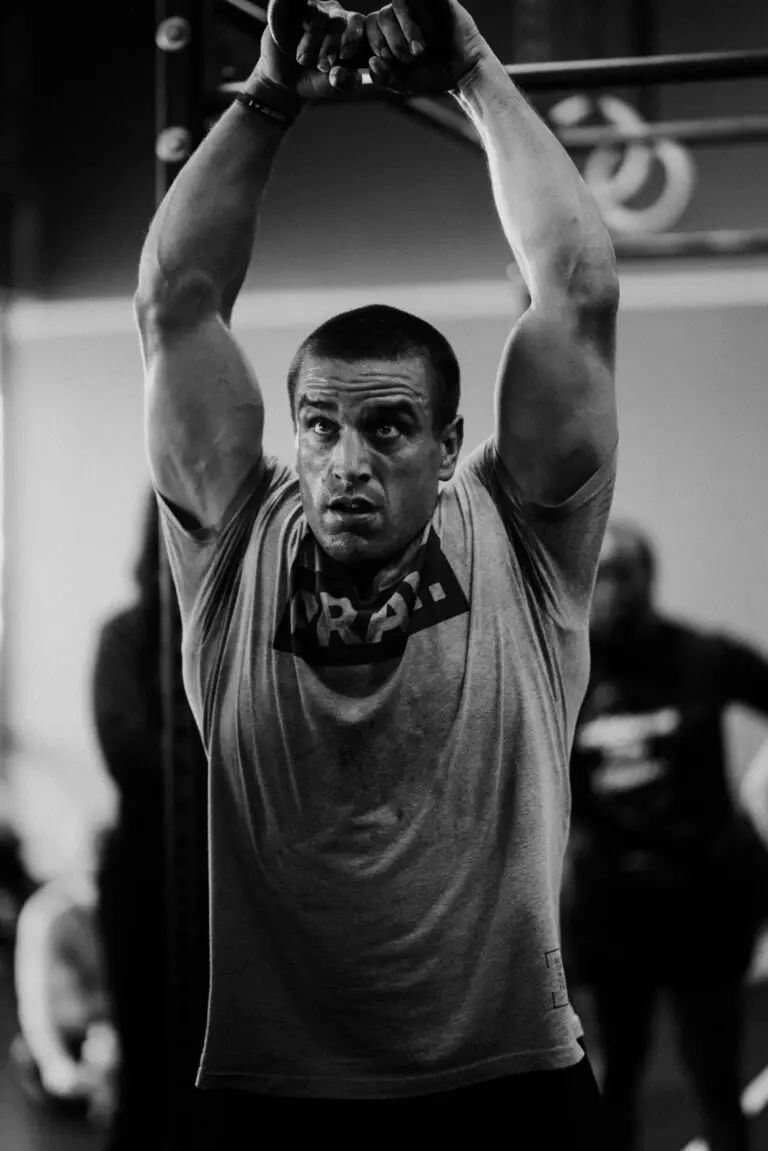
Why use kettlebells, barbells, dumbbells and machines?
Each piece of equipment has a job in this session.
Kettlebells to start. Holding a kettlebell in front of you keeps your torso upright as you squat. Squatting to a box gives you the same depth on every rep. The kettlebell reverse lunge then trains one leg at a time.
A barbell for the heaviest lift. The barbell Romanian deadlift (RDL) lets you load your hamstrings and glutes with more weight than the other exercises. It is the main strength lift of the day.
Dumbbells for extra squat volume. The goblet squat adds more quad and glute work with a simple setup.
A machine to finish. The leg extension isolates your quadriceps, the four muscles at the front of the thigh. It works well at the end, when your legs are already tired.
Big lifts first and the single-joint machine last is the order the ACSM recommends, because it helps you keep the load high on your main lifts (ACSM, 2009). Mixing equipment is a choice, not a must. A 2023 review of 13 studies found that neither free weights nor machines had a clear overall edge for strength or muscle size (Haugen and colleagues, 2023).
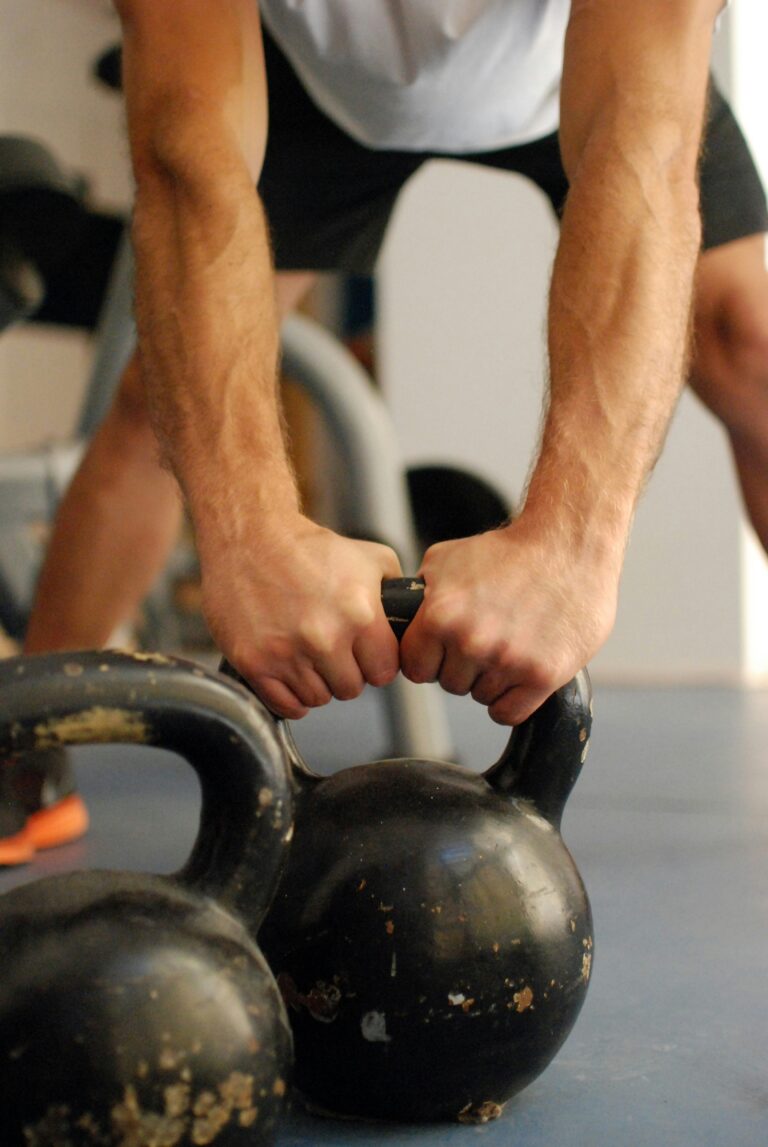
The gym leg day workout
Start with the kettlebell work, move to the heavy barbell lift, add dumbbells, and finish on the machine.
| Exercise | Sets | Reps | Weight | Rest |
|---|---|---|---|---|
| Kettlebell box front squat | 4 | 12 | Challenging | 60 seconds |
| Barbell Romanian deadlift (RDL) | 4 | 12 | Heavy | 75 seconds |
| Kettlebell reverse lunge | 4 | 6 per leg | Challenging | 60 seconds |
| Dumbbell goblet squat | 4 | 12 | Moderate | 60 seconds |
| Leg extension | 4 | 15 | Moderate | 60 seconds |
“Heavy” means the last reps of each set are hard but your form holds. “Challenging” is a little lighter, and “moderate” leaves a few reps in reserve. Not sure where to start? See how much weight to lift.
How to apply progressive overload
Progressive overload means making your training a little harder over time so your muscles keep adapting. For load, the ACSM position stand recommends a 2 to 10% increase whenever you can complete one or two reps beyond the number you planned (ACSM, 2009). Here is how to use it in this session:
- Go heavier on the barbell. The barbell RDL is your main strength lift. Add a small amount of weight when all 4 sets of 12 feel controlled.
- Move up a kettlebell or dumbbell. Once you complete every set and rep with good form, pick up the next weight.
- Add reps on the leg extension. Push for an extra rep or two each session before you increase the weight.
- Trim your rest. As you get fitter, cut your rest by 5 to 10 seconds to make the session harder.
Log every set, rep and weight so you know exactly what to beat next time.
Warm up before your first set with 5 minutes of easy cardio, such as walking or a light jog on a treadmill. Then do a light set of the first exercise. This guide on warming up before lifting has more ideas.
How to do each exercise
1. Kettlebell box front squat
- Stand in front of a box or bench with your feet about shoulder-width apart.
- Hold the kettlebell close to your chest.
- Push your hips back and bend your knees until you lightly touch the box.
- Drive through your whole foot to stand, without rocking off the box.
Keep your chest up and your elbows in. See the kettlebell box front squat exercise page for more.
2. Barbell Romanian deadlift (RDL)
- Stand tall holding the bar at your hips, with your hands just outside your thighs.
- Bend your knees slightly and drive your hips back.
- Keep your back flat as the bar slides down past your knees, and stop when your hamstrings are fully stretched.
- Drive your hips forward to stand tall again.
The bar stays close to your legs the whole time. For more detail, read the Romanian deadlift form guide.
Video: How to do RDL (Romanian deadlifts). Short technique tips for the hip hinge. Watch it before you load the bar for your first heavy set.
3. Kettlebell reverse lunge
- Hold a kettlebell in each hand by your sides, or one at your chest.
- Step back and bend both knees until your back knee is a few inches from the floor.
- Your front foot stays flat and carries most of the load.
- Stand by driving through that front foot. Do 6 reps on one leg, then 6 on the other.
The lunge technique guide covers foot position and common mistakes.
4. Dumbbell goblet squat
- Grip the top end of the dumbbell with both hands and hold it vertically at your chest.
- Squat down so your elbows travel inside your knees.
- Go as deep as you can with a flat back and your heels down.
- Drive up until you are standing tall again.
Read the full goblet squat guide for depth and stance tips.
5. Leg extension
- Sit back against the pad with the roller just above your ankles.
- Straighten your legs until your knees are almost locked.
- Pause, then lower slowly under control.
Aim for all 15 reps with a smooth pace rather than swinging the weight up.
Eat to recover from leg day
Training gives your muscles the signal to adapt. Food, and protein in particular, gives them the building blocks.
A review in the Journal of the International Society of Sports Nutrition suggests at least 1.6 g of protein per kilogram of body weight a day for muscle building. It also discusses intakes up to 2.2 g/kg. It recommends spreading that across at least four meals of about 0.4 g/kg each (Schoenfeld and Aragon, 2018). For a 70 kg person, that works out to about 28 g of protein per meal.
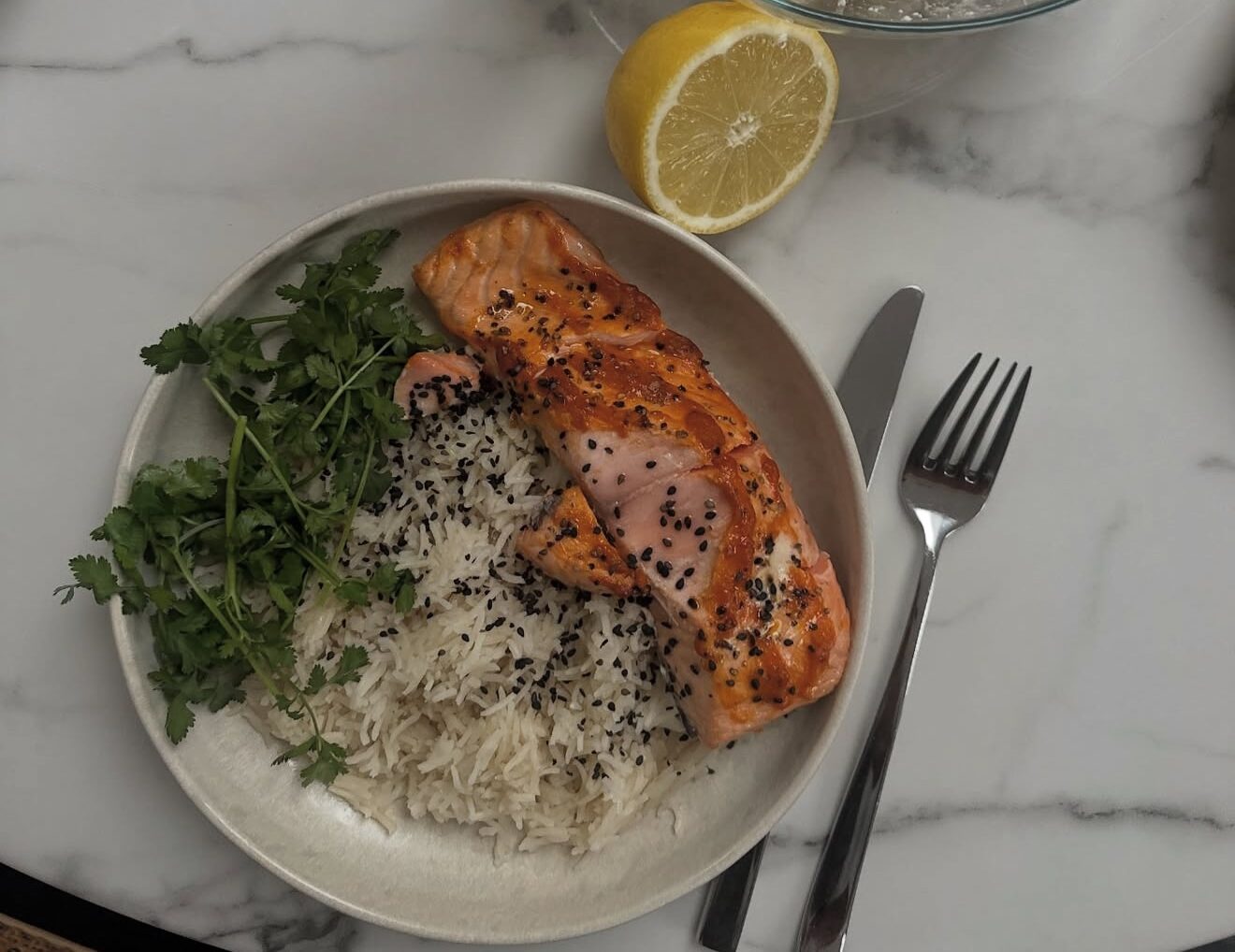
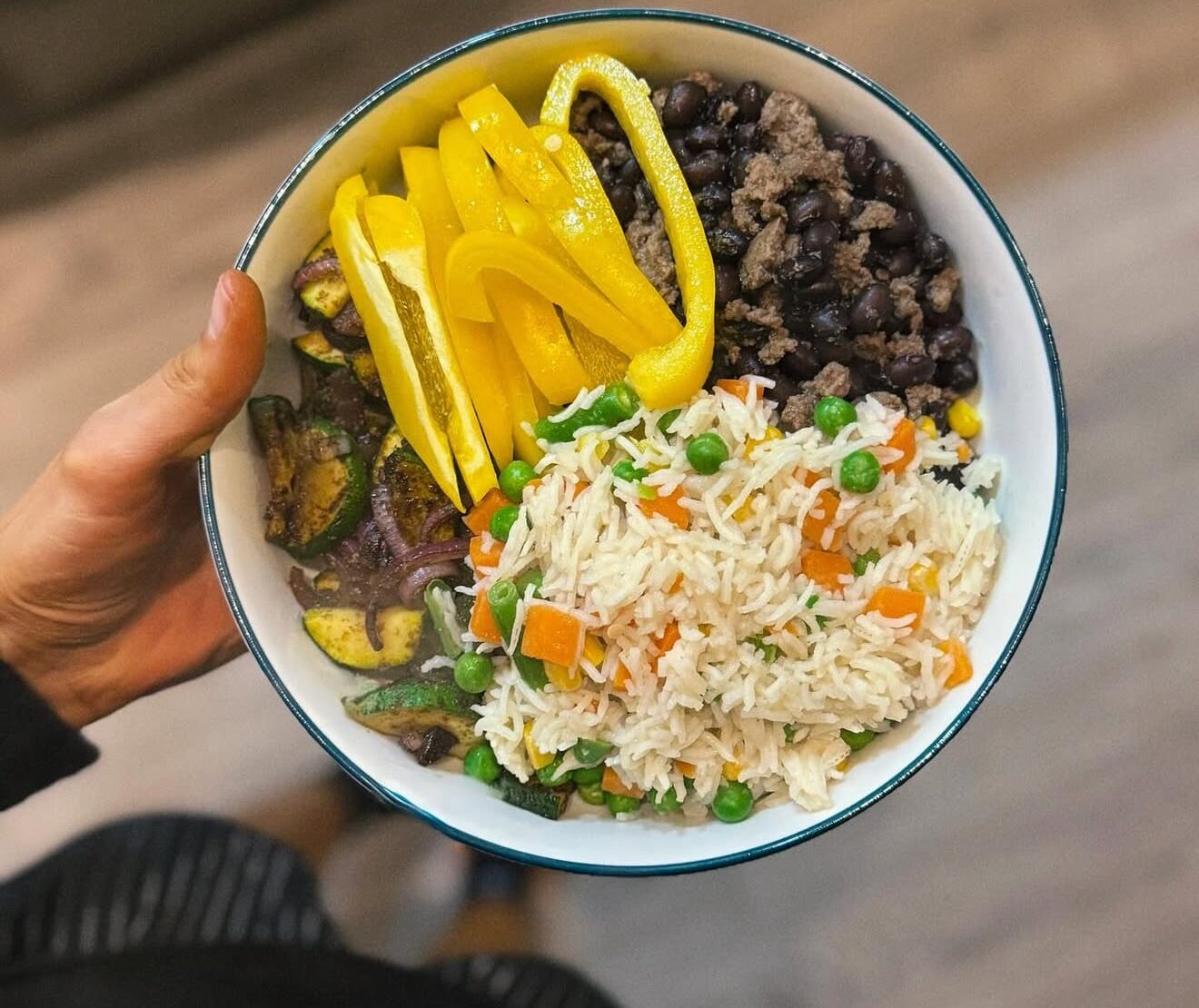
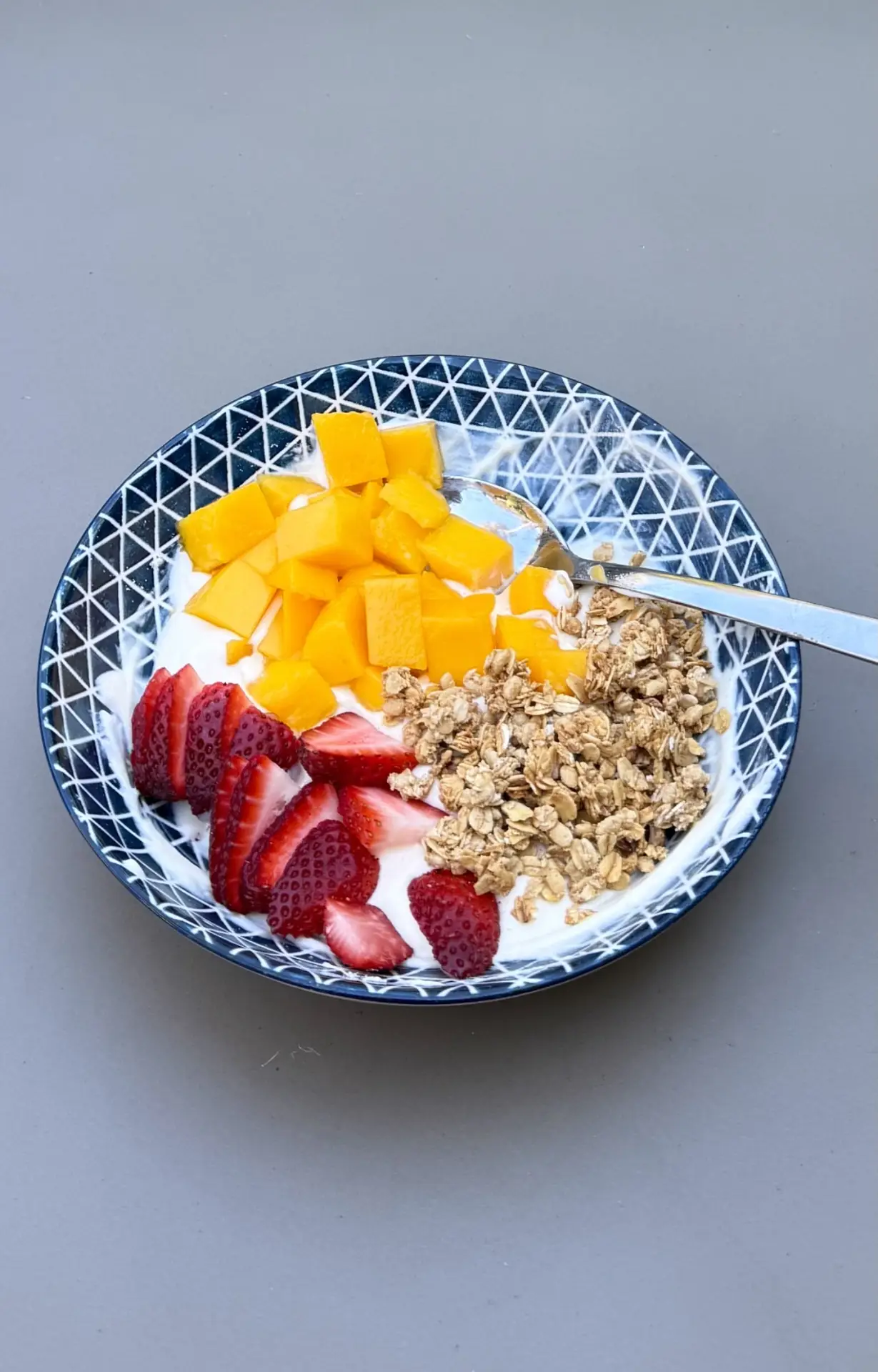
Build meals around protein foods such as chicken, fish, lean beef, eggs, beans and Greek yogurt. Add carbohydrates such as oats, rice or potatoes, plus some healthy fats from nuts, avocado or olive oil. For more detail, read how much protein you need to build muscle.
If you have kidney disease or another medical condition, check with your doctor before you raise your protein intake.
Video: Why you’re not gaining muscle. A short 12REPS video on the common reasons progress stalls. Use it as a checklist if your legs stop growing.
Plan and track your leg day in 12REPS
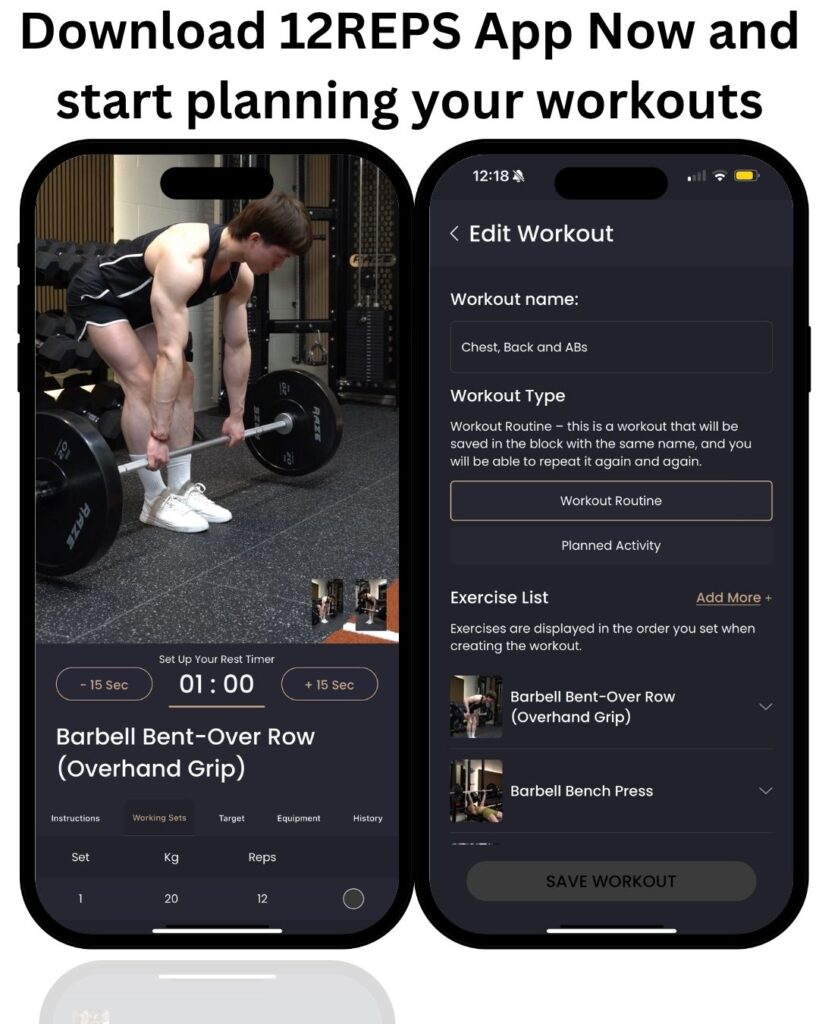
The 12REPS app gives you a plan built around your goal, your equipment and the time you have. Open it and your workout is ready.
- Build your own: choose the muscle group, the equipment and your time, and 12REPS builds a session you can save.
- Trainer demos: watch a qualified personal trainer demonstrate each exercise before you start.
- Track every set: enter reps and weight as you go. The app remembers what you lifted, so you always have a number to beat.
- Stay accountable: streaks, a weekly goal and challenges help you keep showing up.
Where this leg day fits in your week
When weekly training volume was equal, hitting a muscle group two times a week built more muscle than one weekly session. That was the finding when Schoenfeld and colleagues (2016) pooled the frequency studies. Whether three times beats two is still unknown.
So plan for two leg days a week. You can run this session once a week alongside a second, different leg session, or repeat it twice with a rest day separating the two. Either way, your legs are trained twice a week.
For a second leg day with a leg press and walking lunges, use the leg workout for strength and size. Women who want a hip-thrust-led gym session can follow the intermediate lower body workout for women.
Sources
- American College of Sports Medicine position stand. Progression models in resistance training for healthy adults. American College of Sports Medicine. Medicine and Science in Sports and Exercise, 2009. https://pubmed.ncbi.nlm.nih.gov/19204579/
- Effect of free-weight vs. machine-based strength training on maximal strength, hypertrophy and jump performance: a systematic review and meta-analysis. Haugen ME, Vårvik FT, Larsen S, Haugen AS, van den Tillaar R, Bjørnsen T. BMC Sports Science, Medicine and Rehabilitation, 2023. https://doi.org/10.1186/s13102-023-00713-4
- How much protein can the body use in a single meal for muscle-building? Implications for daily protein distribution. Schoenfeld BJ, Aragon AA. Journal of the International Society of Sports Nutrition, 2018. https://pubmed.ncbi.nlm.nih.gov/29497353/
- Effects of Resistance Training Frequency on Measures of Muscle Hypertrophy: A Systematic Review and Meta-Analysis. Schoenfeld BJ, Ogborn D, Krieger JW. Sports Medicine, 2016. https://pubmed.ncbi.nlm.nih.gov/27102172/