


By Will Duru, BSc (Hons) Sport and Exercise Science, Award-winning Personal Trainer with over 10 years of experience in strength training and optimising recovery.
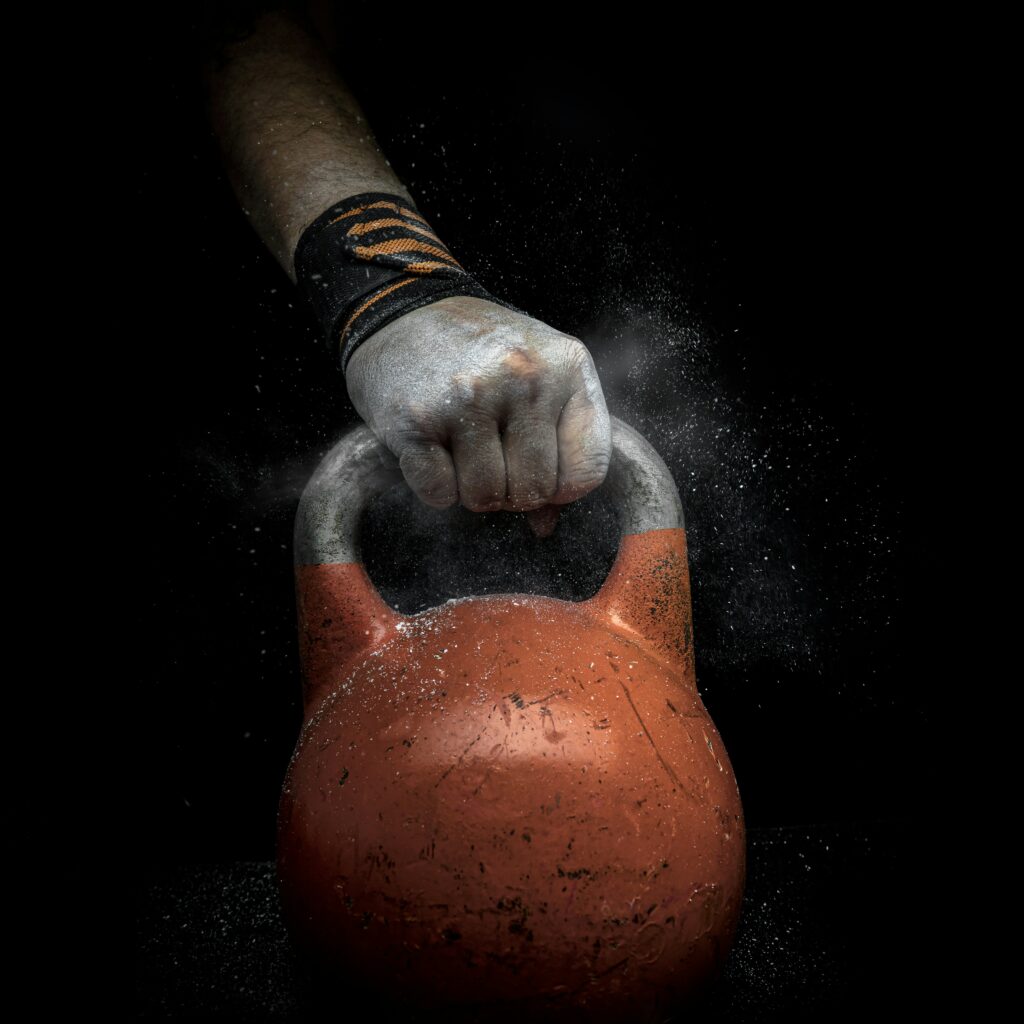
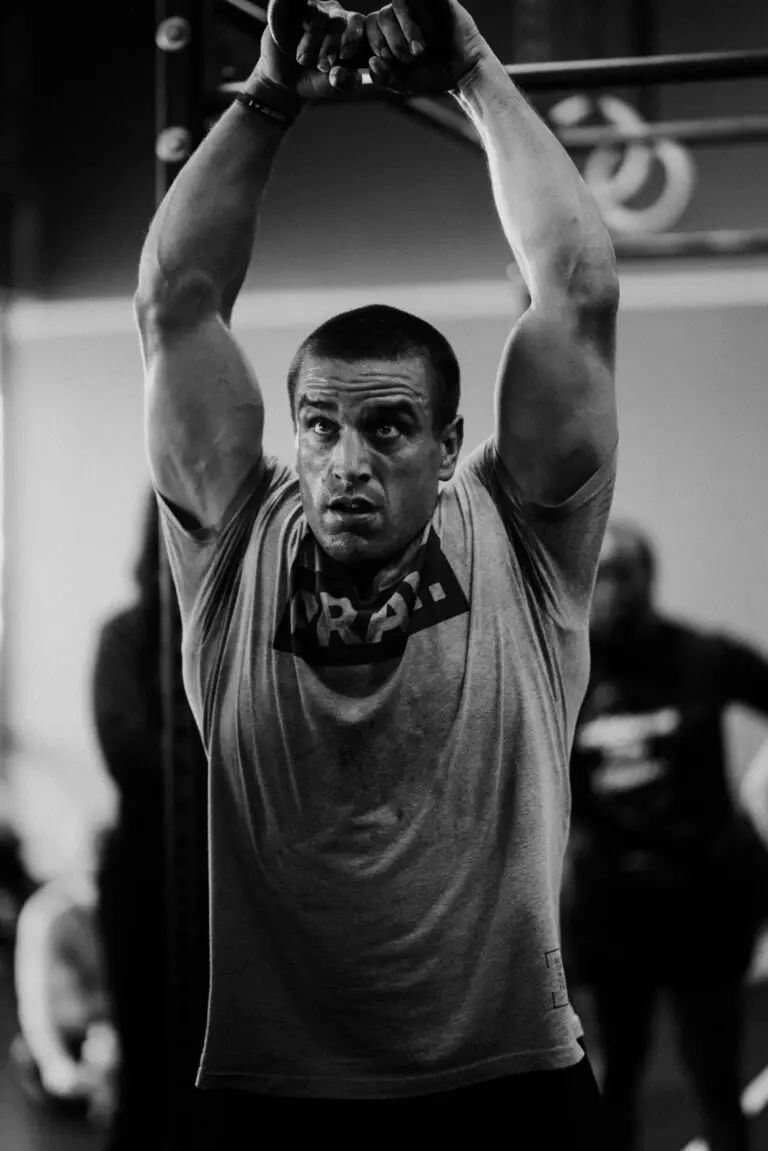
This kettlebell and machine leg workout starts with four kettlebell moves and finishes on the leg extension machine. Box front squats, reverse lunges, split squats and step-ups build strength on both legs and one leg at a time. The leg extension then works your quads directly, after they are already tired. Every exercise is 4 sets, with 60 seconds between sets.
This is a gym session. You need a kettlebell, a box or bench, a step and a leg extension machine.
Who it suits
- You train in a gym and like free weights, but want some machine work too.
- Your main goal is bigger, stronger quads and glutes.
- You can already squat and lunge with good form.
Training at home with one bell? Use the one-kettlebell leg workout for strength. Want barbells and dumbbells in the mix too? See the gym leg day with kettlebell, barbell, dumbbell and machine.

Why combine kettlebells and machines?
Free weights and machines both build muscle. A 2023 meta-analysis of 13 studies found no difference in muscle growth between free-weight and machine training. Strength gains tended to be specific to the equipment people trained with, and were clearest for free weights (Haugen and colleagues, 2023). The authors concluded the choice comes down to your preferences and goals.
So a mix makes sense. Kettlebell squats, lunges and step-ups make you control your balance and train one leg at a time. The machine holds you in place, so you can focus on one muscle group.
Why the leg extension?
Your quads are four muscles. One of them, the rectus femoris, crosses both your hip and your knee.
In one 10-week study of 17 men, squat training grew the quads overall, and full squats also grew the glutes and inner thigh muscles. But the rectus femoris and hamstrings did not change (Kubo and colleagues, 2019). In another study of 11 men, 12 weeks of knee extension training grew the rectus femoris more than the other quad muscles (Ema and colleagues, 2013).
Both studies were small. Still, they suggest the leg extension adds work that squat-type moves may miss.
Why the machine comes last
The American College of Sports Medicine advises doing large-muscle and multi-joint exercises before single-joint ones (ACSM, 2009). A multi-joint exercise moves several joints at once, like a squat. A single-joint exercise moves one, like the leg extension.
The kettlebell moves need the most balance and coordination, so do them while you are fresh. The machine supports your body, so you can still work your quads hard when you are tired.
This session is focused on quads and glutes, and it has no hip hinge. Train your hamstrings on another day with a hinge such as the kettlebell swing. Our kettlebell swing guide shows how.
The kettlebell and machine leg workout
Warm up gently for a few minutes and do one or two lighter sets of box front squats. Then work down the list, finishing each exercise before the next.
| Exercise | Sets | Reps | Weight | Rest |
|---|---|---|---|---|
| Kettlebell Box Front Squats | 4 | 12 | Challenging | 60 seconds |
| Kettlebell Reverse Lunges | 4 | 6 per leg | Challenging | 60 seconds |
| Kettlebell Split Squats | 4 | 10 per leg | Moderate | 60 seconds |
| Kettlebell Step-Ups | 4 | 8 per leg | Moderate | 60 seconds |
| Leg Extension | 4 | 15 | Moderate | 60 seconds |
- Challenging: a weight where the last couple of reps take real effort without your form breaking down.
- Moderate: a weight that leaves you a few good reps short of your limit.
Progressing the plan
Muscles adapt to a load they have already handled, so the work has to creep up over time. That is progressive overload. Here it can mean:
- Increase the kettlebell weight once you can hit all your reps with good form.
- Increase the machine weight whenever you can complete all 15 leg extension reps.
- Add reps. Before you go heavier, add a rep or two to your kettlebell sets each week.
- Shorter breaks. Drop your rest to 45 seconds for a tougher session.
For more ideas, see our beginner guide to progressive overload. Log every set so you know when to move up.
Exercise technique
A 12REPS demo sits under each heading. Use the video for the movement and the steps for the key checkpoints.
1. Kettlebell box front squat
- Use a box tall enough that you reach it with your thighs near parallel to the floor.
- Hold the kettlebell upright against your chest.
- Squat down to a light touch on the box, keeping tension in your legs, then stand back up.
Track your knees over your toes on the way down and up. See the kettlebell box front squat page for more cues.
2. Kettlebell reverse lunge
- Stand tall holding the bell at your chest.
- Step one foot back and lower your back knee toward the floor.
- Keep most of your weight on your front foot, with your front knee over your foot.
- Push through your front foot to return to standing. Finish all reps, then switch legs.
Our lunge guide covers the forward, reverse and walking versions.
Video: Smith machine reverse lunges. If balance is limiting you, try this machine version. The Smith machine guides the bar so you can focus on your legs.
3. Kettlebell split squat
- Stand in a long split stance, back heel lifted, with the bell held at your chest or hanging at one side.
- Sink your back knee toward the floor, bending both knees.
- Press up through your front foot without moving your feet. Do all the reps on one side before swapping.
Unlike the lunge, your feet stay still for every rep. That makes it easier to keep tension on your front leg.
4. Kettlebell step-up
- Face a stable step holding the kettlebell at your chest or at your side.
- Put one foot fully on the step and drive through it to stand up straight.
- Lower yourself back down slowly. Repeat on the same leg for all your reps, then change.
The leg on the step should lift you. If you bounce off the back foot, use a lower step.
5. Leg extension
- Adjust the seat so your knees line up with the machine’s pivot point.
- Set the pad just above your ankles and hold the handles.
- Straighten your knees to lift the pad, then pause briefly at the top.
- Lower it slowly. Do not let the weight stack crash down.
For a full machine-based session, see our machine leg day workout.
Recovery and protein
A session that ends on leg extensions leaves your quads tired, so recovery matters. Spread your protein across the day, eat carbohydrates around training, and prioritize sleep.
Daily targets and food ideas are in our article on protein needs for building muscle.
Track your leg days in 12REPS
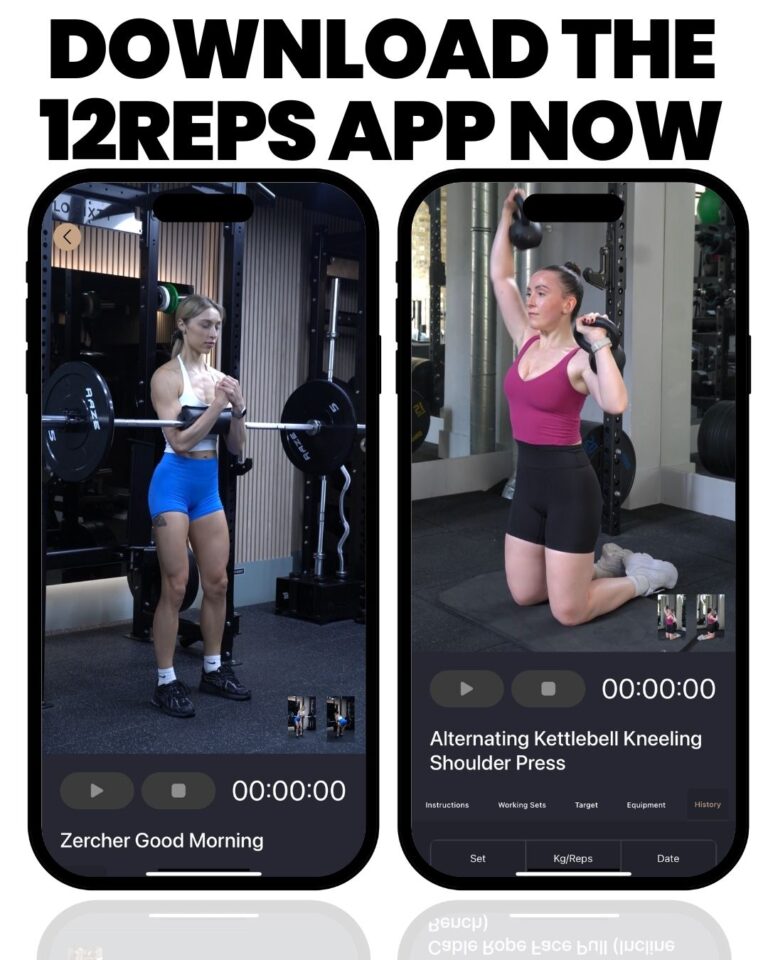
Mixing kettlebells and machines means more numbers to remember. 12REPS stores the weight and reps you enter for each set, from the box front squat to the leg extension, so you have a number to beat next time. Your workouts are set out to fit your goal, your equipment and your time, with a trainer demo for each exercise.
Kettlebell and machine leg workout FAQs
Are machines worse than free weights for building leg muscle?
Not on current evidence. The 2023 meta-analysis above found similar muscle growth with both. Pick the tools you enjoy and can progress on.
Can I do this workout without a leg extension machine?
Yes. Do the four kettlebell moves on their own. You lose the direct quad work at the end, but your legs still get a full session.
Where does this fit in my week?
Use it as your quad-focused leg day. Pair it with a session that includes a hip hinge, such as this lower body strength workout with Romanian deadlifts, so your hamstrings get work too.
Sources
- Effect of free-weight vs. machine-based strength training on maximal strength, hypertrophy and jump performance: a systematic review and meta-analysis. Haugen ME, Vårvik FT, Larsen S, et al. BMC Sports Science, Medicine and Rehabilitation, 2023. https://doi.org/10.1186/s13102-023-00713-4
- Effects of squat training with different depths on lower limb muscle volumes. Kubo K, Ikebukuro T, Yata H. European Journal of Applied Physiology, 2019. https://doi.org/10.1007/s00421-019-04181-y
- Inhomogeneous architectural changes of the quadriceps femoris induced by resistance training. Ema R, Wakahara T, Miyamoto N, et al. European Journal of Applied Physiology, 2013. https://pubmed.ncbi.nlm.nih.gov/23949789/
- American College of Sports Medicine position stand. Progression models in resistance training for healthy adults. American College of Sports Medicine. Medicine and Science in Sports and Exercise, 2009. https://pubmed.ncbi.nlm.nih.gov/19204579/