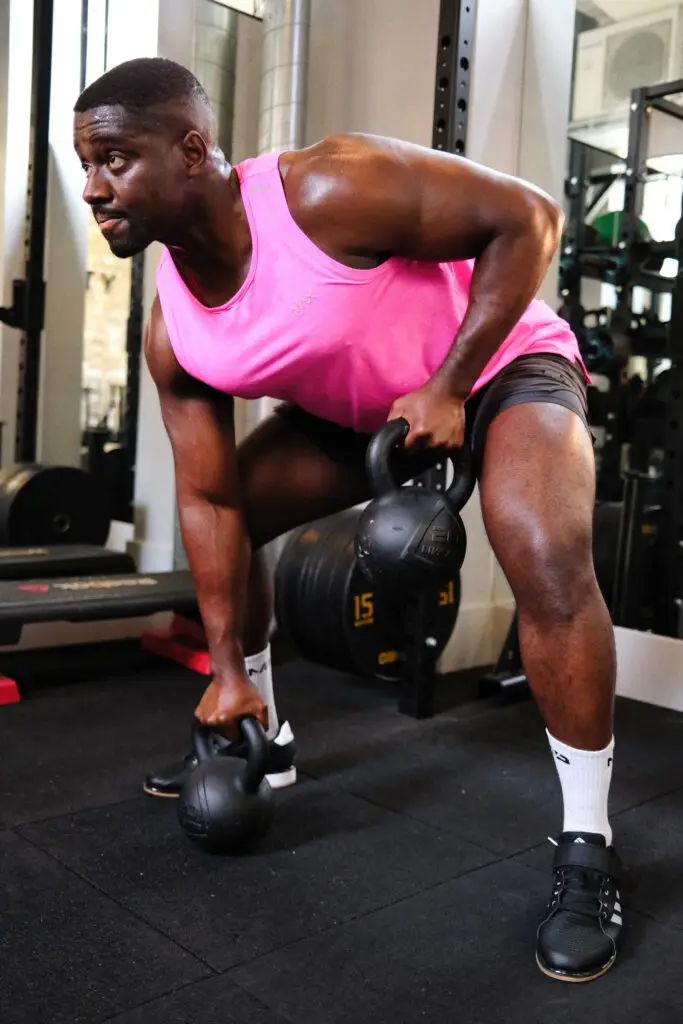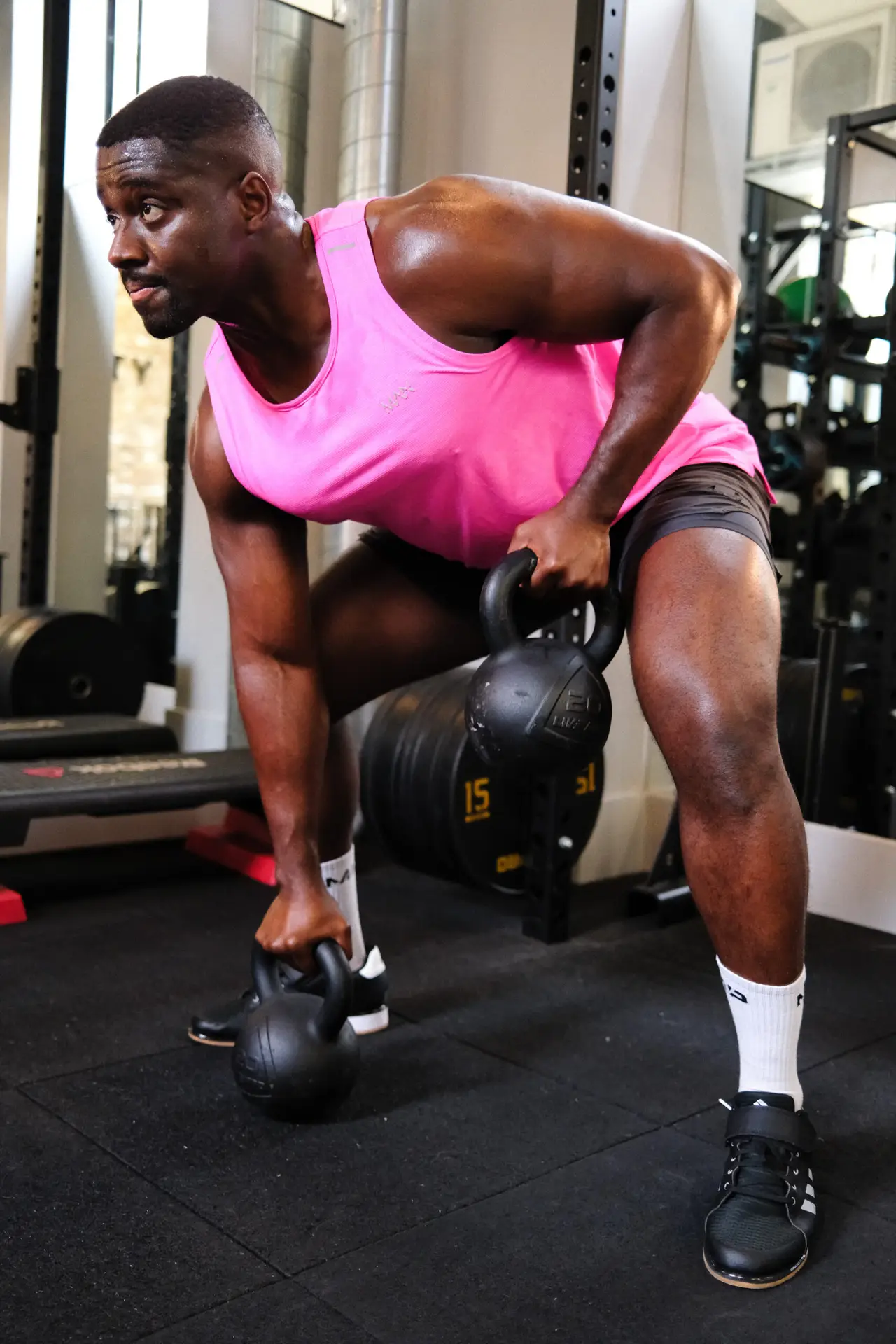



How many times a week should I work out? It depends on your goal. For general health, do muscle-strengthening work 2 or more days a week plus at least 150 minutes of moderate cardio. To build muscle or strength, most people train 3 to 4 times a week. For fat loss, combine 2 to 4 strength sessions with more daily movement and a small calorie deficit.
As a personal trainer, how often to train is a question I hear often. The best number depends on what you are training for. A mistake I often see is believing that extra sessions always bring extra progress, when the quality of each session and your recovery matter just as much.
This guide answers the question by goal. If you want to plan your week by experience level, with rest days and sample schedules, read how many days a week should I work out.
Want a training week planned around your goal? Download the 12REPS app.
Quick answer: workout frequency by goal
| Your main goal | Strength sessions per week | Cardio | What matters most |
|---|---|---|---|
| General health | 2 or more | At least 150 minutes of moderate activity | Doing both, every week |
| Build muscle | 3 to 4 (each muscle about twice) | Optional, 1 to 3 sessions | Enough hard sets per muscle |
| Get stronger | 3 to 4 | Optional, 1 to 3 sessions | Practicing your main lifts often |
| Lose fat | 2 to 4 | 3 to 5 sessions or more daily walking | A calorie deficit you can keep up |
These ranges assume you have trained for a few months. If you are just starting, begin at the low end and add a session once you recover well between workouts.
For general health: twice a week is the minimum
The World Health Organization advises adults to do muscle-strengthening activities on 2 or more days a week, alongside at least 150 minutes of moderate activity. Our guide to planning your training week shows how to fit both in.
You do not need hours of lifting for health benefits. A meta-analysis of cohort studies linked muscle-strengthening activities with a 10 to 17% lower risk of early death, heart disease, cancer and diabetes. For early death, heart disease and cancer, the largest reductions were seen at about 30 to 60 minutes a week. These studies show an association, not proof of cause and effect.
For example, two 30-minute full-body sessions plus a brisk 20 to 30-minute walk on most days would meet the guideline.
To build muscle: train each muscle about twice a week
Training a muscle group twice a week appears better than once for growth. A meta-analysis on training frequency found that twice weekly beat once weekly. It was not clear whether three times beats twice.
A later meta-analysis added an important detail. When the total number of weekly sets was the same, training frequency made no significant difference. So frequency is mainly a tool for spreading your sets across the week.
That is useful in practice. Twenty hard sets for your legs in one session is miserable. Ten sets on two different days is far more manageable, and the quality of each set stays higher.
Common ways to train each muscle about twice a week:
- 3 full-body sessions
- 4 sessions of an upper/lower split
- 6 sessions of push/pull/legs, if you have the time and recover well
For more on the research, read how often you should lift for muscle growth.

To get stronger: practice your main lifts often
Strength is partly a skill. Your body gets better at producing force in the movements you practice, such as the squat, bench press and deadlift.
A meta-analysis on frequency and strength found that when weekly volume was matched, low and high frequency gave similar strength gains. So, like muscle growth, total work matters more than the number of days.
Many lifters still like to practice their main lifts 2 or 3 times a week. It lets them use heavy loads with fewer sets per session. The American College of Sports Medicine suggests 2 to 3 days a week for beginners, 3 to 4 for intermediate lifters and 4 to 5 for advanced lifters.
If your main goal is strength, our guide to strength training frequency has sample 2, 3 and 4-day schedules.
To lose fat: strength training plus daily movement
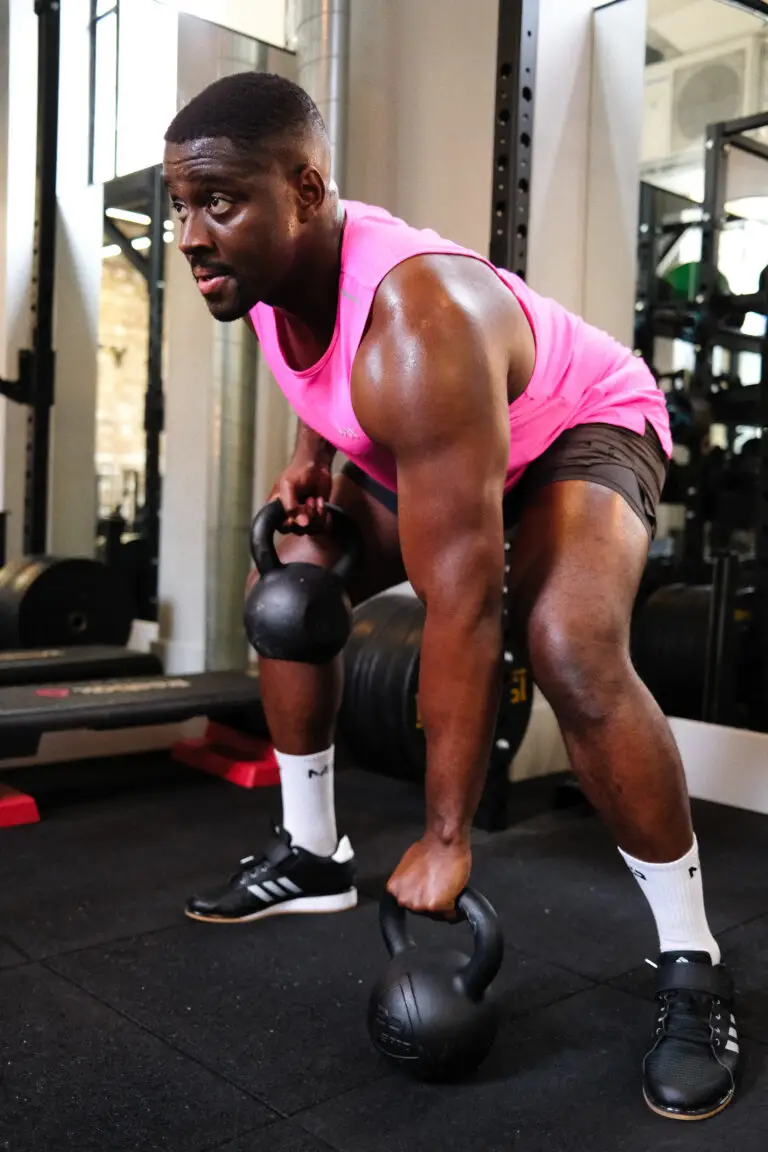
For fat loss, how often you train matters less than your total energy balance. You need to eat a little less than you burn, week after week.
An American College of Sports Medicine position stand on weight loss found that 150 to 250 minutes a week of moderate activity gives only modest weight loss on its own. More than 250 minutes a week was linked to larger losses. Strength training alone did not increase weight loss. It can help you keep or gain lean mass while you lose fat.
A sensible fat-loss week looks like this:
- 2 to 4 strength sessions to keep your muscle
- Walking most days, plus some extra cardio if you enjoy it
- A steady, sustainable calorie deficit
The NHS suggests aiming to lose 0.5 to 1 kg (1 to 2 lb) a week. Training more often will not make up for eating more than you burn.
Video: How strength training helps with fat loss. This video explains why lifting still belongs in a fat-loss plan, even though the calorie deficit drives the weight loss.
If you run or play sport as well
Your runs or matches count toward your weekly activity, so plan your gym days around them rather than on top of them. Protect your hardest sport sessions and fit strength work into the days that are left.
Running does not have to undo your lifting. A 2022 meta-analysis found that adding aerobic work did not blunt muscle growth or gains in maximal strength, though explosive strength improved less. For timing tips, read cardio and weights on the same day.
When you have more than one goal
Most people want a mix: some muscle, less fat and better fitness. Pick the goal that matters most for the next 8 to 12 weeks and set your frequency for that. Then fit the rest around it.
For example, if muscle is your priority, protect your 3 or 4 lifting sessions first. Add cardio on other days or after lifting. If fat loss is the priority, keep 2 or 3 lifting sessions and put more time into walking and food habits.
How to tell if your frequency is working
Look at your training log every few weeks. Your frequency is about right if:
- You add weight or reps to your main lifts over time.
- You turn up to most sessions feeling ready to train.
- Soreness is gone, or nearly gone, before you train that muscle again.
- You can keep the schedule going for months, not just weeks.
If your lifts stall, you sleep badly or you feel worn down for weeks, cut a session or take a deload week. If you recover well and progress has stalled, add a session.
Plan your week with 12REPS
Choosing a frequency is easier when the plan is done for you. 12REPS builds your workouts around your goal, your equipment and the time you have. You can set a weekly goal, track your streaks and see your sets, reps and weights over time. See how 12REPS plans your training week.

Frequently asked questions
Is working out 3 times a week enough?
Yes, for most goals. Three full-body sessions can train each muscle about three times a week. Add some walking or cardio on other days and you also cover the health guidelines.
Is training a muscle three times a week better than twice?
Not necessarily. The 2016 meta-analysis could not say whether three times beats twice. The 2019 analysis found no clear difference when weekly sets were matched. Choose the schedule that lets you do all your sets well.
Is twice a week enough to build muscle?
It can be, if each session trains the whole body with enough hard sets. A 45-minute full-body workout done twice a week is a good starting point for busy people.
How many exercises should each session have?
That depends on your split and experience. Our guide to how many exercises per workout explains how to choose.
Sources
- Effects of Resistance Training Frequency on Measures of Muscle Hypertrophy: A Systematic Review and Meta-Analysis. Schoenfeld BJ, Ogborn D, Krieger JW. Sports Medicine, 2016. https://pubmed.ncbi.nlm.nih.gov/27102172/
- How many times per week should a muscle be trained to maximize muscle hypertrophy? A systematic review and meta-analysis of studies examining the effects of resistance training frequency. Schoenfeld BJ, Grgic J, Krieger J. Journal of Sports Sciences, 2019. https://doi.org/10.1080/02640414.2018.1555906
- Weekly training frequency effects on strength gain: a meta-analysis. Ralston GW, Kilgore L, Wyatt FB, Buchan D, Baker JS. Sports Medicine – Open, 2018. https://doi.org/10.1186/s40798-018-0149-9
- Physical activity. World Health Organization, n.d.. https://who.int/initiatives/behealthy/physical-activity
- Muscle-strengthening activities are associated with lower risk and mortality in major non-communicable diseases: a systematic review and meta-analysis of cohort studies. Momma H, Kawakami R, Honda T, Sawada SS. British Journal of Sports Medicine, 2022. https://bjsm.bmj.com/content/56/13/755
- American College of Sports Medicine Position Stand. Appropriate physical activity intervention strategies for weight loss and prevention of weight regain for adults. Donnelly JE, et al. Medicine and Science in Sports and Exercise, 2009. https://pubmed.ncbi.nlm.nih.gov/19127177/
- Tips to help you lose weight. NHS, n.d.. https://www.nhs.uk/live-well/healthy-weight/managing-your-weight/12-tips-to-help-you-lose-weight/
- American College of Sports Medicine position stand. Progression models in resistance training for healthy adults. American College of Sports Medicine. Medicine and Science in Sports and Exercise, 2009. https://pubmed.ncbi.nlm.nih.gov/19204579/
- Compatibility of Concurrent Aerobic and Strength Training for Skeletal Muscle Size and Function: An Updated Systematic Review and Meta-Analysis. Schumann M, et al. Sports Medicine, 2022. https://doi.org/10.1007/s40279-021-01587-7