



By Will Duru, BSc (Hons) Sport and Exercise Science, Award-winning Personal Trainer with over 10 years of experience in strength training and optimising recovery
How many days a week should I work out? Most adults do well with 3 to 5 active days a week. Aim for strength training on at least 2 of them, and enough cardio across the week to reach at least 150 minutes of moderate activity. Beginners can start with 2 or 3 days and add more as recovery allows.
After workout length, the next question I often hear as a personal trainer is “How many days a week should I work out?” It depends on your experience, your goals, the type of training and, most of all, how well you recover.
The biggest mistake I see is thinking more is always better. Your body adapts in the hours and days after training, so rest days are part of the plan, not a break from it.
This guide is about planning your whole week, strength and cardio together. If you only want to know how often to lift, read strength training frequency.

The minimum: what health guidelines say
The World Health Organization (WHO) recommends that adults aged 18 to 64 do at least 150 minutes of moderate aerobic activity a week, or 75 minutes of vigorous activity, or a mix. It also recommends muscle-strengthening activity for the major muscle groups on at least 2 days a week. For extra health benefits, it suggests building up to 300 minutes of moderate activity (WHO).
The American Heart Association gives the same targets and adds that activity is best spread throughout the week (AHA).
Here is what that can look like in days:
- 5 days of 30 minutes of brisk walking or cycling, plus strength training on 2 of those days.
- 3 days of 25 minutes of running or hard intervals, plus 2 strength sessions.
- 3 full-body strength sessions, plus walking on most days.
How many days a week to work out by experience
Beginners: 2 to 3 days a week
If you are new to structured exercise, 2 to 3 days a week is a good starting point. It is enough to start building strength and fitness, with time to recover in between.
A full-body workout suits most beginners, because it trains all the major muscles in each session. Repeating the same movements several times a week also helps you learn them.
Consistency matters more than intensity at this stage. Many beginners go all-out for a few weeks, then burn out. Starting with fewer days makes it easier to keep going.
Video: What every new gym beginner should know. If you are starting from scratch, watch this before your first week for practical pointers on getting started in the gym.
Intermediate: 3 to 5 days a week
After about six months to a year of consistent training, you can add days if you want more volume. This is often when people move from full-body sessions to a split, such as upper/lower or push/pull/legs.
Add one day at a time. Keep it for a few weeks and check how you feel before adding another.
More days are an option, not a requirement. In an 8-week study of untrained adults, weekly sets were kept equal. Training each muscle twice or four times a week gave similar gains in strength and muscle size (Evangelista et al., 2021).
Advanced: up to 6 days a week
People with several years of serious training may use up to 6 days a week. This only works if recovery is managed carefully: sleep, food, stress and planned easier weeks.
Most people do not need this many days. For a detailed plan, see the 6-day split guide.
| Experience | Strength days | Cardio days | Typical setup |
|---|---|---|---|
| Beginner | 2 to 3 | 2 to 3 | Full body |
| Intermediate | 3 to 5 | 3 to 4 | Upper/lower or push/pull/legs |
| Advanced | 4 to 6 | 3 to 5 | Split routine with planned recovery |

How to fit strength and cardio into one week
Many people worry that cardio will cancel out their strength work. A 2022 meta-analysis of 43 studies found that doing both did not reduce gains in muscle size or maximal strength. It did find smaller gains in explosive strength, mainly when both were done in the same session (Schumann et al., 2022).
So for most people, cardio and lifting fit together well. If jumping or sprinting power matters to you, keep hard cardio and strength work at least a few hours apart, or on different days.
- Easy cardio, such as walking or relaxed cycling, can be done on most days.
- Hard intervals are tiring. Most people do better with two or three a week, not every day.
- Same-day sessions work if time is short. See cardio and weights on the same day for how to order them.
Sample weekly schedules
| Days a week | Strength | Cardio | Rest |
|---|---|---|---|
| 2 days | Mon and Thu: full body | Walk on other days if you can | 5 days (active rest) |
| 3 days | Mon, Wed, Fri: full body | Optional easy walk on weekends | Tue, Thu, Sat, Sun |
| 4 days | Mon and Thu: upper body. Tue and Fri: lower body | Optional 20 minutes after two sessions | Wed, Sat, Sun |
| 5 days | Mon, Wed, Fri: strength | Tue and Sat: cardio | Thu, Sun |
| 6 days | Mon to Sat: split routine | Easy cardio on 2 or 3 of those days | Sun |
For ready-made full-body sessions, try the 45-minute full-body workout you can do twice a week. To compare splits, read upper/lower vs push/pull/legs vs full body.
Video: Barbell full-body workout with 12REPS. This shows a full-body session of the kind used in the 2 and 3-day schedules above.
Rest days and recovery
Training is the stimulus. Recovery is when your body adapts to it. Most people need a day or two before training the same muscles hard again. Soreness, sleep and how your lifts feel are good guides.
Sleep
The American Academy of Sleep Medicine and the Sleep Research Society recommend that adults aged 18 to 60 get at least 7 hours of sleep each night (CDC, 2016). If you are sleeping less, adding training days is unlikely to help.
Signs you are doing too much
A joint consensus statement from the European College of Sport Science and the American College of Sports Medicine describes a range of states (Meeusen et al., 2013):
- Functional overreaching: a short drop in performance after hard training that recovers within days to weeks.
- Non-functional overreaching: performance stalls or drops for weeks or months.
- Overtraining syndrome: a long-term decline that can take months to recover from.
The statement lists persistent fatigue, unexplained underperformance, mood changes and poor sleep among the signs. Its main cause is too much training for the recovery available, often made worse by poor sleep, illness or stress. If you notice these signs for more than a week or two, cut back your training days. Speak to your doctor if they do not improve.
A planned lighter week can help too. Read when and how to take a deload week.
Staying consistent
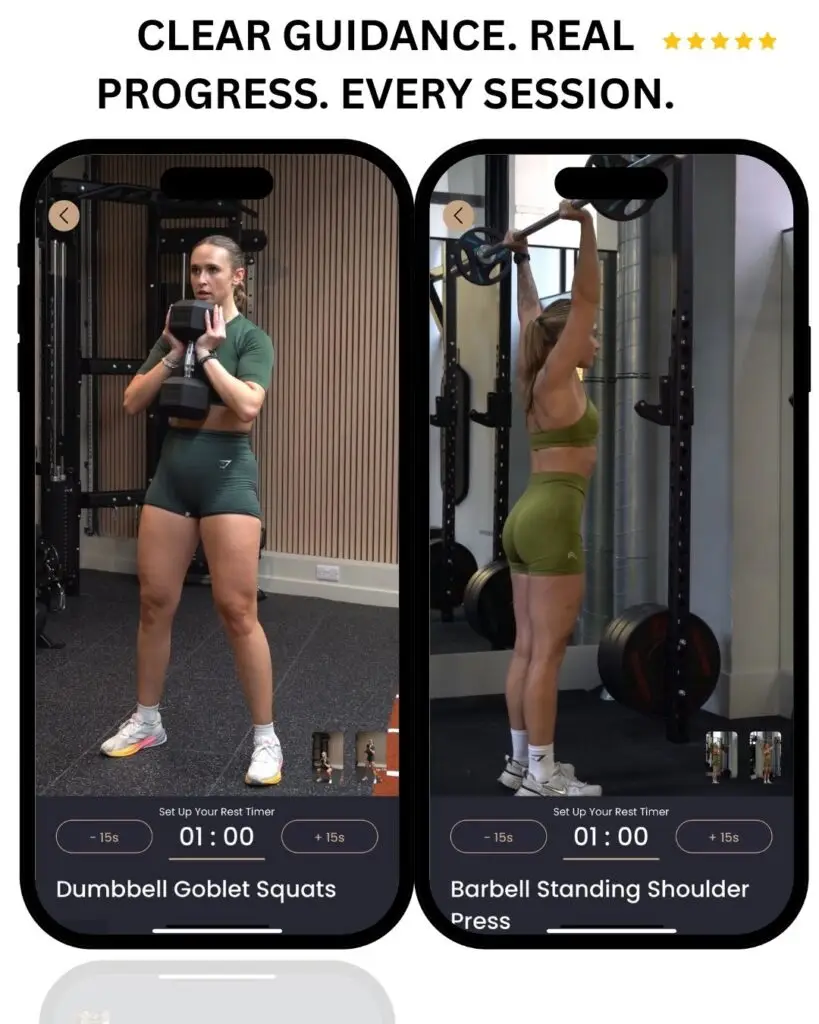
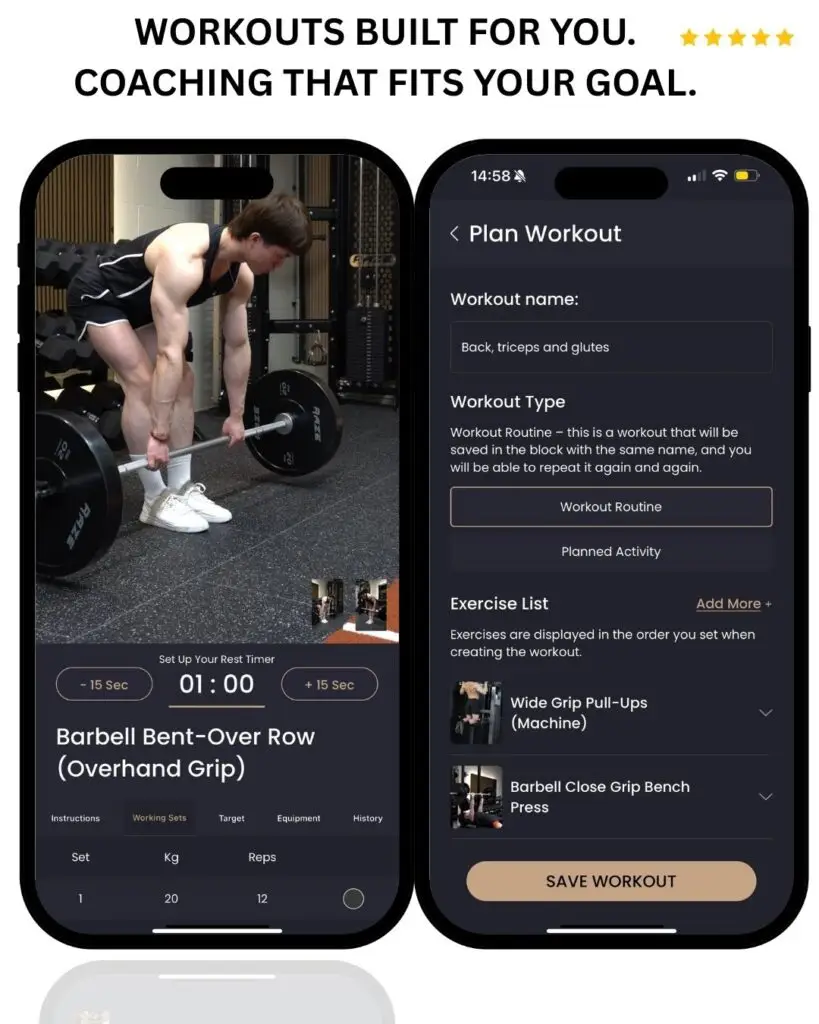
The right number of days is the number you can keep doing. In 12REPS you can set a weekly goal, and the app tracks your workouts and streaks, so you can see whether your plan is working in real life.
How to choose your number of days
- Start with the minimum. Two strength days and 150 minutes of moderate activity a week.
- Check your calendar. Pick the days you can protect most weeks, not your best week.
- Match the split to the days. Two or three days suits full body. Four suits upper/lower. Five or six suits a split routine.
- Add slowly. Add one day, keep it for a few weeks, then review.
- Watch recovery. If your lifts drop and you feel flat, take a day out.
If you want sessions built around your goal, your equipment and the days you have, 12REPS sets out each workout with trainer demonstrations and helps you hit your weekly goal.

Frequently asked questions
Is it OK to work out every day?
Yes, if you vary the type and effort. Easy walks or light cycling can be daily. Hard strength or interval sessions need rest days in between for the same muscles.
Do walks and active jobs count?
Yes. Brisk walking counts toward your weekly moderate activity. Strength training still needs its own sessions.
What if I miss a day?
Move on to the next planned session. One missed day makes little difference over a month. A schedule you can keep is better than a perfect one you keep missing.
How many days a week do I need to build muscle?
Two to four strength days, training each muscle about twice a week, works for most people. For the research on how often to lift, see strength training frequency. For a full beginner plan, try the 12-week weight training routine for women.
Sources
- Physical activity. World Health Organization, n.d.. https://who.int/initiatives/behealthy/physical-activity
- American Heart Association Recommendations for Physical Activity in Adults and Kids. American Heart Association, 2024. https://www.heart.org/en/healthy-living/fitness/fitness-basics/aha-recs-for-physical-activity-in-adults
- Split or full-body workout routine: which is best to increase muscle strength and hypertrophy?. Evangelista AL et al., Einstein (Sao Paulo), 2021. https://doi.org/10.31744/einstein_journal/2021AO5781
- Compatibility of concurrent aerobic and strength training for skeletal muscle size and function: an updated systematic review and meta-analysis. Schumann M et al., Sports Medicine, 2022. https://doi.org/10.1007/s40279-021-01587-7
- Prevention, diagnosis, and treatment of the overtraining syndrome: joint consensus statement of the European College of Sport Science and the American College of Sports Medicine. Meeusen R et al., Medicine & Science in Sports & Exercise, 2013. https://doi.org/10.1249/MSS.0b013e318279a10a
- 1 in 3 adults don’t get enough sleep. Centers for Disease Control and Prevention, 2016. https://archive.cdc.gov/www_cdc_gov/media/releases/2016/p0215-enough-sleep.html