



Yes, you can do cardio and weights on the same day without losing your gains. When researchers pooled 43 studies in 2022, adding cardio did not reduce gains in maximum strength or muscle size on average. Explosive power gains were a little smaller, mostly when both were done in one session, so lift first or leave a few hours between them.
You want to build strength and keep your heart and lungs fit. But you have heard that cardio “kills your gains”. So should you do both on the same day, and if so, how?
I’m Will Duru, a personal trainer with over 10 years’ experience in London. In my coaching, people who add two or three moderate cardio sessions a week keep making progress in the gym. The ones who struggle are usually doing a lot of long, hard cardio on top of heavy lifting, and not eating or sleeping enough for it.
This guide is about the same-day setup: one session or two, how long to wait, which cardio fits which lifting day, and what to eat in between. For the order question on its own, read cardio or weights first. For the wider background, see how to combine strength training and cardio.

What the research says about cardio and weights on the same day
Mixing cardio and lifting in one plan is known as concurrent training. The fear is an interference effect, where the cardio holds back what you gain from the weights.
Schumann and colleagues pooled 43 studies with 1,090 healthy adults in a 2022 meta-analysis (Schumann et al., 2022). Compared with lifting alone, adding cardio showed:
- Maximum strength: no reduction when cardio was added.
- Muscle size: no reduction when cardio was added.
- Explosive strength, such as jumping: a small reduction.
Timing mattered for that last point, and it is the key fact for same-day training. The drop in explosive strength was larger when cardio and lifting were done within 20 minutes of each other. With at least 3 hours between them, it was no longer significant.
So for most people who want to get stronger and build muscle, doing both on one day is fine. If you play a sport that needs jumping or sprinting power, separating them matters more.
Health guidance asks for both. The NHS adult guidelines call for 150 minutes or more of moderate activity each week and strength work on 2 or more days. Pairing them on the same day is one way to hit both targets.

Option 1: one session, weights first
If you only get to the gym once that day, lift first and do your cardio after.
Order matters a little, mostly for leg strength. Lifting first gave about 7% more lower-body strength gain in a 2018 meta-analysis, with no difference in muscle growth or aerobic fitness (Eddens et al., 2018).
How I set up a combined session:
- Warm up with 5 to 10 minutes of easy cardio. Keep it light. This is a warm-up, not your cardio workout.
- Do your strength training. Your main lifts get your freshest effort.
- Finish with your cardio. 15 to 20 minutes of moderate cardio fits most sessions.
Training for a race? Then your key run or ride goes first on that day. The full order question, goal by goal, is in cardio or weights first.

Option 2: two sessions in one day
If you can train twice, for example before work and in the evening, leave a gap between the sessions.
- In the 2022 meta-analysis, the drop in explosive strength gains was no longer significant with a gap of at least 3 hours (Schumann et al., 2022).
- A 2016 trial in 58 amateur rugby players compared 0, 6 and 24 hours between strength and aerobic sessions. Strength gains were smaller with no gap than with 6 or 24 hours. Aerobic fitness improved most with 24 hours. The authors suggested at least 6 hours between the two (Robineau et al., 2016).
A practical day might look like this:
- Morning: strength training.
- Lunch: a proper meal with protein and carbohydrate.
- Evening: cardio, such as a run, a cycle or a class.
The rugby trial was small and in young athletes, so treat the 6-hour figure as a guide, not a rule. Any gap you can manage helps.
Match the cardio to the lifting day
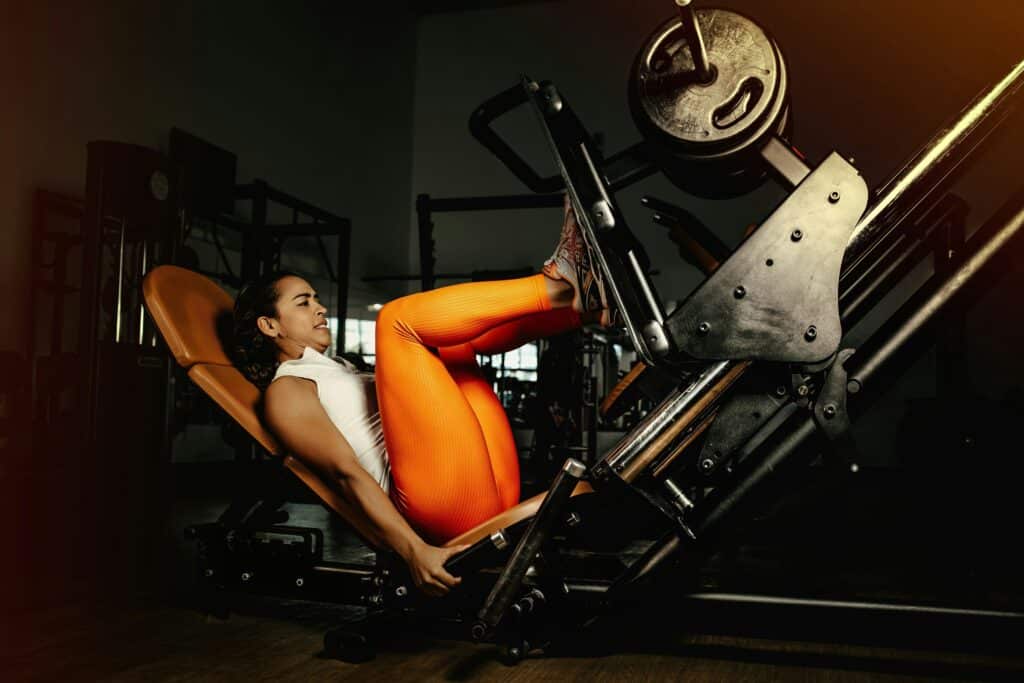
Some cardio sits better with some lifting days. The evidence here is mixed. A 2012 meta-analysis found that lifting combined with running reduced muscle and strength gains, while cycling did not (Wilson et al., 2012). The larger 2022 analysis found no clear difference between running and cycling (Schumann et al., 2022).
Here is how I pair them, based on that evidence and my coaching:
| Cardio type | Best paired with | My coaching guide if strength is your priority |
|---|---|---|
| Incline walking | Any day | Rarely affects lifting; good after any session |
| Cycling | Upper-body days or separate days | Less interference than running for many people; about 3 sessions of 30 to 40 minutes a week |
| Running | Upper-body days or separate days | About 2 sessions a week; avoid right before or after leg day |
| Rowing or ski machine | Lower-body days | Works the back and arms, so keep it away from upper-body days |
| Intervals (HIIT) | Separate days if you can | No more than about 2 sessions a week |
The more often and the longer you do cardio, the more it may cut into your lifting. The 2012 meta-analysis found that higher cardio frequency and duration were linked to smaller strength and muscle gains (Wilson et al., 2012). Easy, steady cardio is the simplest to add. Read what zone 2 cardio is.
Video: Airbike. This demo shows how to set up and ride the air bike, a low-impact option for the cycling row above. Its handles move too, so keep the effort steady if your arms are tired from lifting.
Video: Skier. The ski machine uses your back and arms, so this demo suits the end of a lower-body day.

What to eat between sessions
Two sessions in one day need more fuel than one. Keep it simple:
- Eat protein after lifting. The International Society of Sports Nutrition (ISSN) backs 20 to 40 g of protein every 3 to 4 hours for building muscle (Kerksick et al., 2017).
- Refuel if the gap is short. With less than about 4 hours to recover, the ISSN suggests carbohydrate soon after the first session to restore energy stores (Kerksick et al., 2017).
- Eat enough overall. A big calorie deficit on top of lifting and cardio makes recovery harder. See how many calories to eat to build muscle and lose fat.
If you have a medical condition or take medication, check with your doctor before changing how you eat.
Three sample weeks
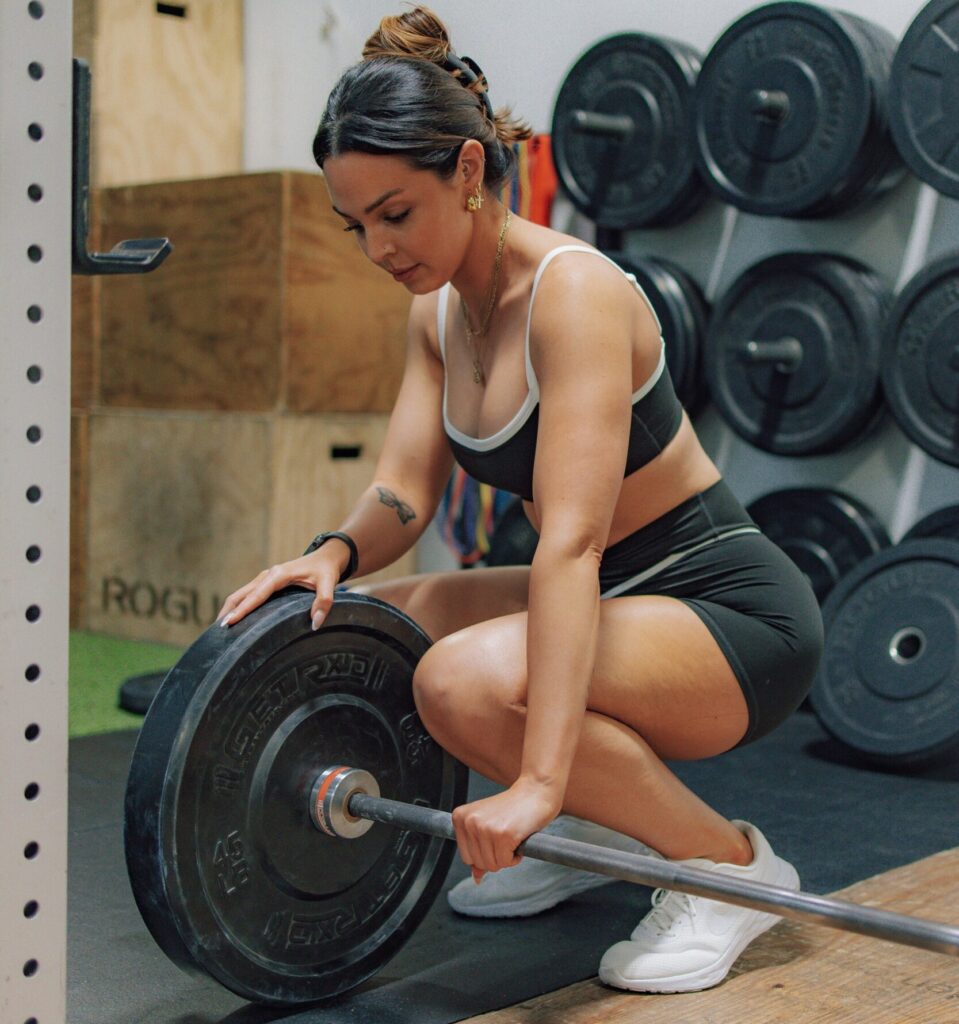
These are the weekly layouts I use most. Pick the one that matches your priority.
Week 1: strength first
| Day | Session |
|---|---|
| Monday | Lower-body strength (50 min) |
| Tuesday | Moderate cardio: incline walk or cycle (30 min) |
| Wednesday | Upper-body strength (50 min) |
| Thursday | Rest or a light walk |
| Friday | Full-body strength (50 min) |
| Saturday | Moderate cardio (30 min) |
| Sunday | Rest |
Total: 3 strength sessions (150 minutes) and 2 cardio sessions (60 minutes). Every lifting day starts fresh.
Week 2: balanced strength and fitness
| Day | Session |
|---|---|
| Monday | Strength (45 min), then cardio (20 min) |
| Tuesday | Moderate cardio (40 min) |
| Wednesday | Strength (45 min), then cardio (20 min) |
| Thursday | Moderate cardio (40 min) |
| Friday | Strength (45 min), then cardio (20 min) |
| Saturday | Light activity: walk or yoga |
| Sunday | Rest |
Total: 3 strength sessions (135 minutes) and 5 cardio sessions (140 minutes). In my experience, strength builds a little more slowly than in Week 1, but steadily.
Week 3: short on time
| Day | Session |
|---|---|
| Monday | Full-body strength (50 min), then cardio (15 min) |
| Wednesday | Full-body strength (50 min), then cardio (15 min) |
| Friday | Full-body strength (50 min), then cardio (15 min) |
| Saturday | Cardio only (30 to 40 min) |
Total: 3 strength sessions (150 minutes) and 4 cardio sessions (75 to 85 minutes), all in 4 days.
Common same-day mistakes
1. Long, hard cardio right before lifting
A 45-minute hard run before heavy squats leaves your legs tired, so you lift less. That is plain fatigue. Lift first, or do the run on another day.
2. Too much cardio on top of lifting
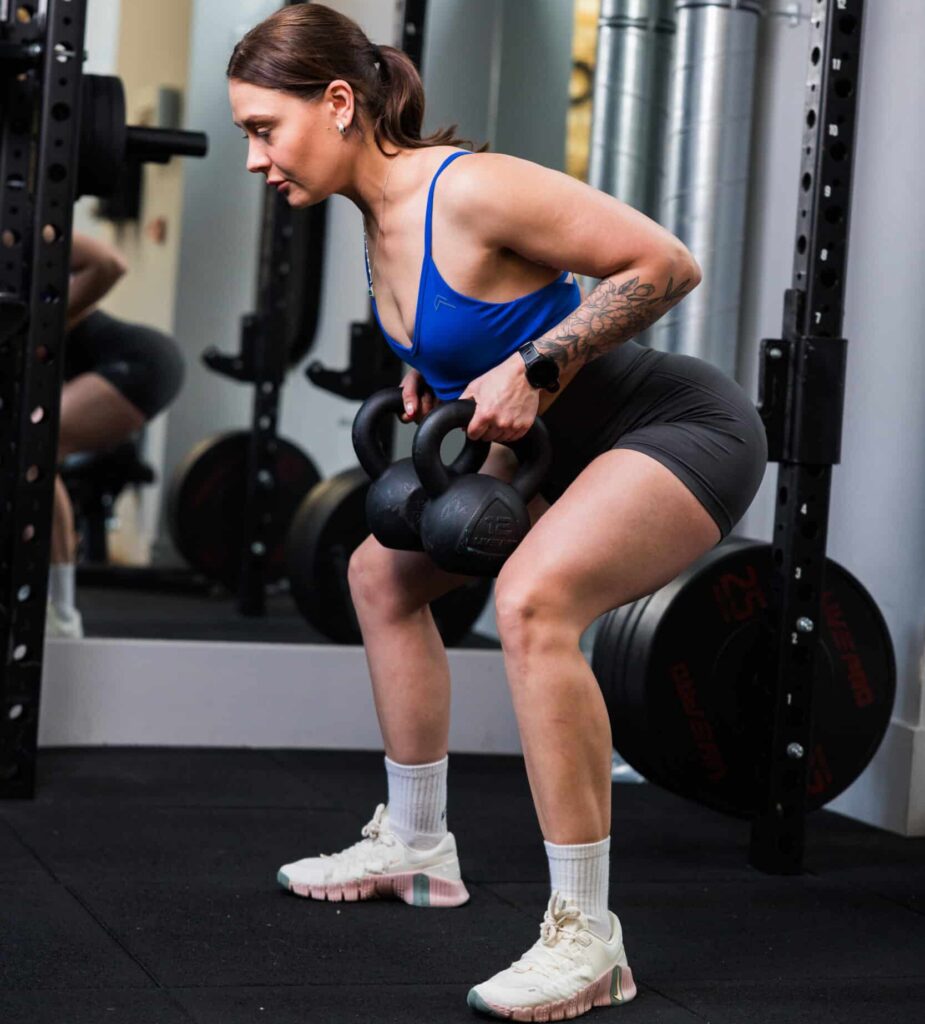
Five or six long cardio sessions a week plus three or four strength sessions is a lot to recover from. If your lifts stall and you feel tired all the time, cut cardio to 2 or 3 sessions, or shorten them.
3. Not eating enough
Two sessions in a day on a low intake is hard to sustain. Eat enough to support the training you are doing.
4. No rest days
You adapt between sessions, not during them. Keep at least one or two full rest days a week. If you are unsure, read signs you need more rest.

The bottom line
Cardio and weights on the same day work well together for most people. On average, research shows no loss of strength or muscle gains from adding cardio, with only a small cost to explosive power when the two are close together.
- One session: lift first, then do your cardio.
- Two sessions: leave at least a few hours between them, and eat in between.
- Pair leg-heavy cardio with upper-body days, and keep the total cardio sensible.
To choose how many lifting days to plan around, see full body vs upper/lower vs PPL.
Make your lifting days count
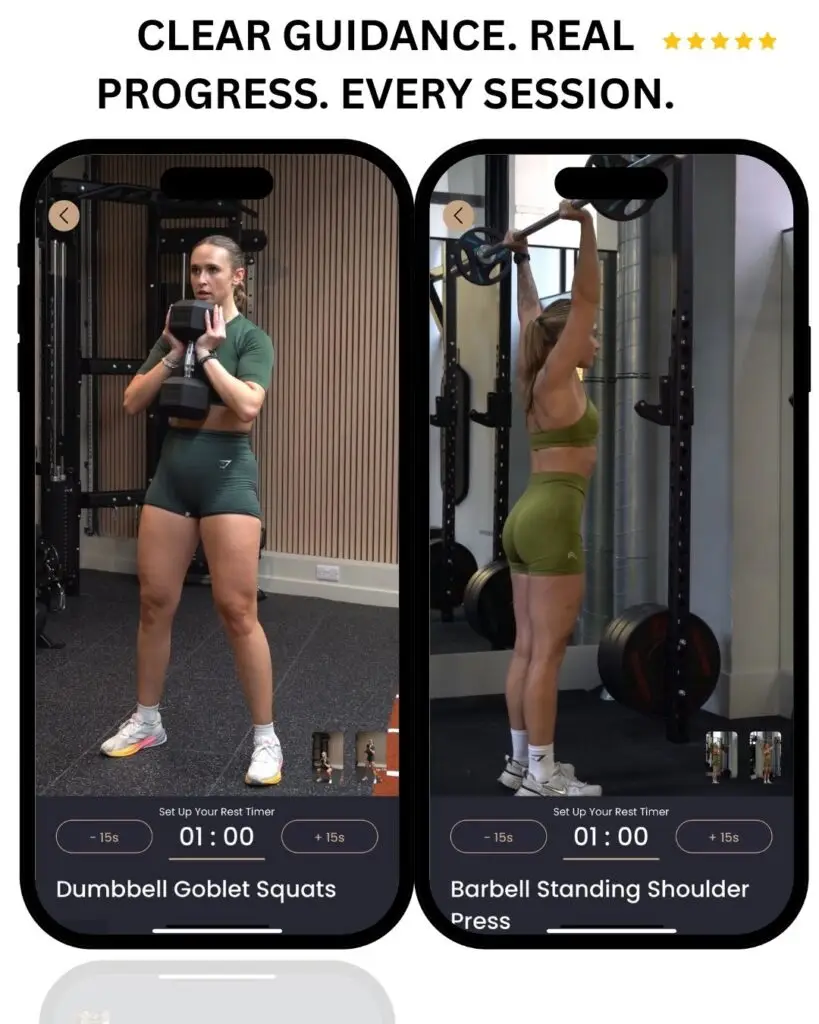
12REPS sets out each strength session around your goal, your equipment and the time you have, so it fits around the cardio you enjoy. It tracks your workouts, sets and weights, so you can see your lifts keep improving. See how the 12REPS app works.
Sources
- Compatibility of Concurrent Aerobic and Strength Training for Skeletal Muscle Size and Function: An Updated Systematic Review and Meta-Analysis. Schumann M, Feuerbacher JF, Sünkeler M, Freitag N, Rønnestad BR, Doma K, Lundberg TR, Sports Medicine, 2022 (52:601-612, doi:10.1007/s40279-021-01587-7). https://pubmed.ncbi.nlm.nih.gov/34757594/
- The Role of Intra-Session Exercise Sequence in the Interference Effect: A Systematic Review with Meta-Analysis. Eddens L, van Someren K, Howatson G, Sports Medicine, 2018. https://pubmed.ncbi.nlm.nih.gov/28917030/
- Specific Training Effects of Concurrent Aerobic and Strength Exercises Depend on Recovery Duration. Robineau J et al., Journal of Strength and Conditioning Research, 2016. https://pubmed.ncbi.nlm.nih.gov/25546450/
- Concurrent training: a meta-analysis examining interference of aerobic and resistance exercises. Wilson JM, Marin PJ, Rhea MR, Wilson SMC, Loenneke JP, Anderson JC, Journal of Strength and Conditioning Research, 2012. https://pubmed.ncbi.nlm.nih.gov/22002517/
- International society of sports nutrition position stand: nutrient timing. Kerksick CM, Arent S, Schoenfeld BJ et al., Journal of the International Society of Sports Nutrition, 2017. https://doi.org/10.1186/s12970-017-0189-4
- Physical activity guidelines for adults aged 19 to 64. NHS, 2024. https://www.nhs.uk/live-well/exercise/physical-activity-guidelines-for-adults-aged-19-to-64/