



Written by Will Duru, BSc (Hons) Sport and Exercise Science, award-winning Personal Trainer with over 10 years of experience in strength training and optimising recovery .
Kettlebell training for women is a practical way to build full-body strength with one or two kettlebells, at home or in the gym. Swings, goblet squats, presses and rows train your legs, hips, back, shoulders and arms in a 20 to 30 minute session. Start with a weight you can control, learn the swing first and progress gradually.
I have seen fitness trends come and go. The kettlebell has stayed one of the most useful tools I use as a trainer. Women often tell me they want workouts that fit a busy schedule, build strength and do not need a lot of equipment. A kettlebell covers all three.
This guide covers why kettlebells work well, the key exercises, how to choose a weight, safety and a 6-week push/pull/legs plan.
Why Kettlebells Work Well for Women
- Time. A kettlebell workout of 20 to 30 minutes can combine strength work with a raised heart rate.
- Space and equipment. You need a few square meters and one or two kettlebells.
- Everyday strength. Kettlebell movements copy real tasks such as lifting, carrying and swinging a load.
- Scalable. Beginners and experienced lifters use the same movements, just with different weights.
What the research says
The research on kettlebells is promising but limited. A 2019 scoping review found few long-term studies, most of them small and of low quality, with effects that were usually trivial to small (Meigh and colleagues, 2019).
- In a 6-week study of young men, twice-weekly kettlebell swing training improved half-squat strength and jump height about as much as jump squat training (Lake and Lauder, 2012).
- One study looked at older women with sarcopenia (age-related muscle loss). Eight weeks of twice-weekly kettlebell training improved their grip strength, back strength and sarcopenia score compared with women who did not train (Chen and colleagues, 2018).
So kettlebells are a good tool, not a magic one. Like any strength training, the results come from regular training and gradual progress. Health guidelines recommend muscle-strengthening activity for all major muscle groups on at least 2 days a week, and kettlebell sessions can count toward that (CDC).
Essential Kettlebell Exercises for Women
Kettlebell swing
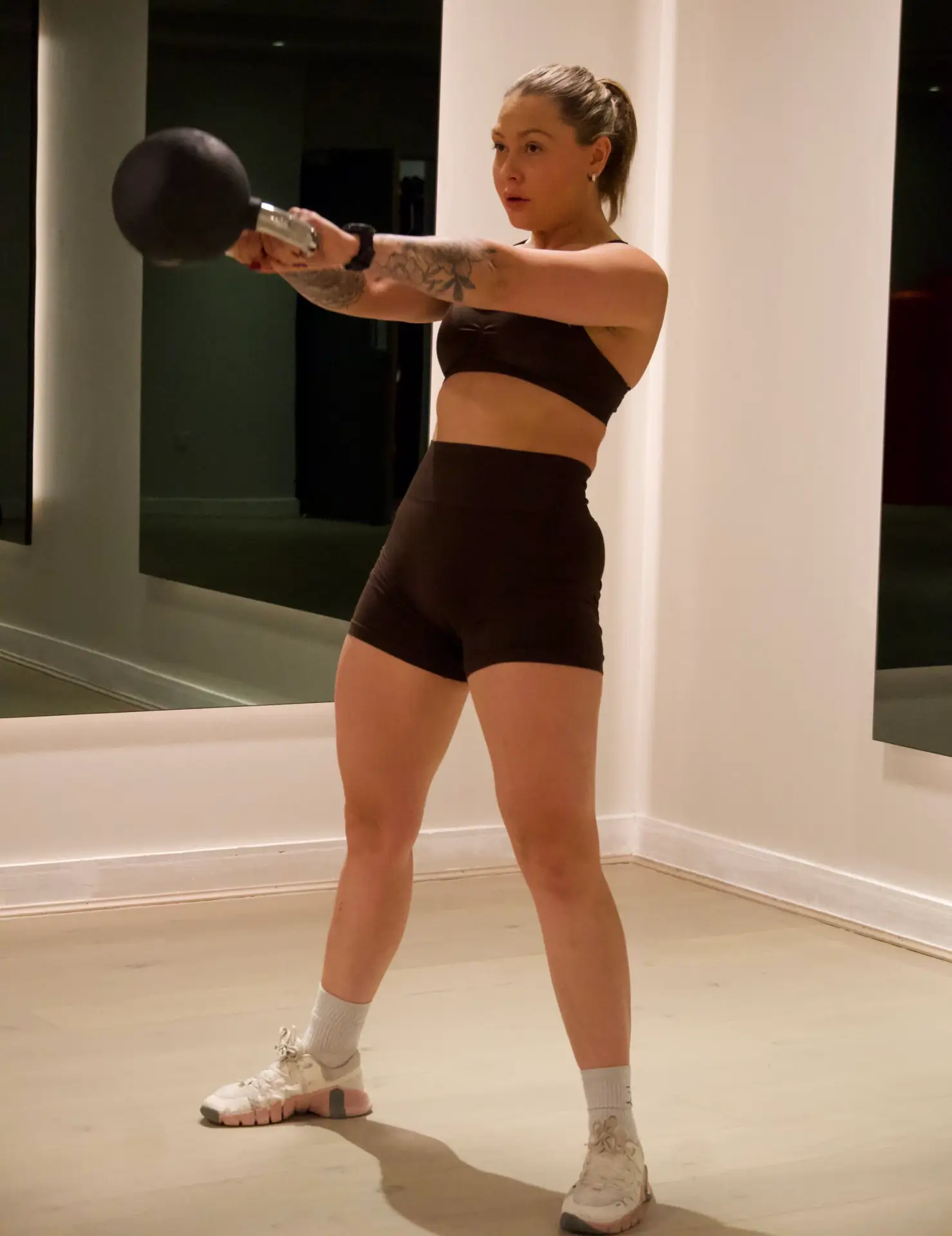
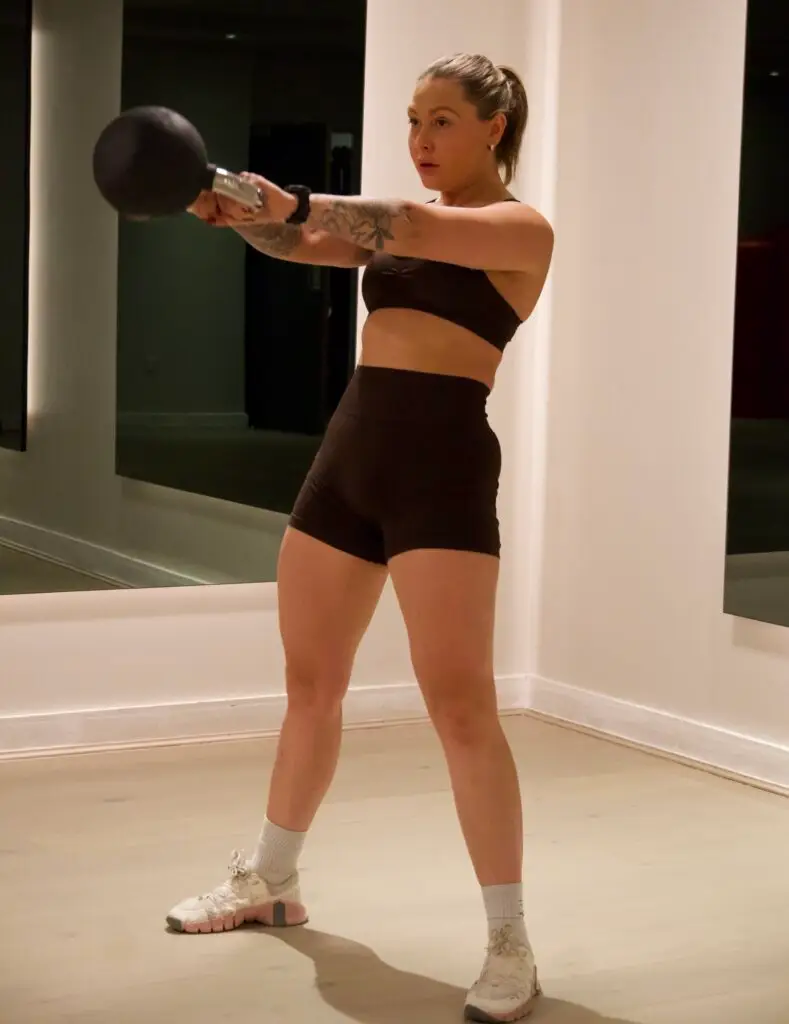
The swing is the foundation of kettlebell training. It works your glutes, hamstrings, core and shoulders, and it raises your heart rate.
The key is the hip hinge. Many women first try to squat the bell up, using the front of the thighs. Think of the swing as a hip snap instead. The power comes from driving your hips forward, not from bending your knees or lifting with your arms. Read how to do a kettlebell swing for full form cues.
Video: Kettlebell swings. Watch this 12REPS swing demo before your first set. Notice that the bell is driven by the hips, not lifted by the arms.
Goblet squat
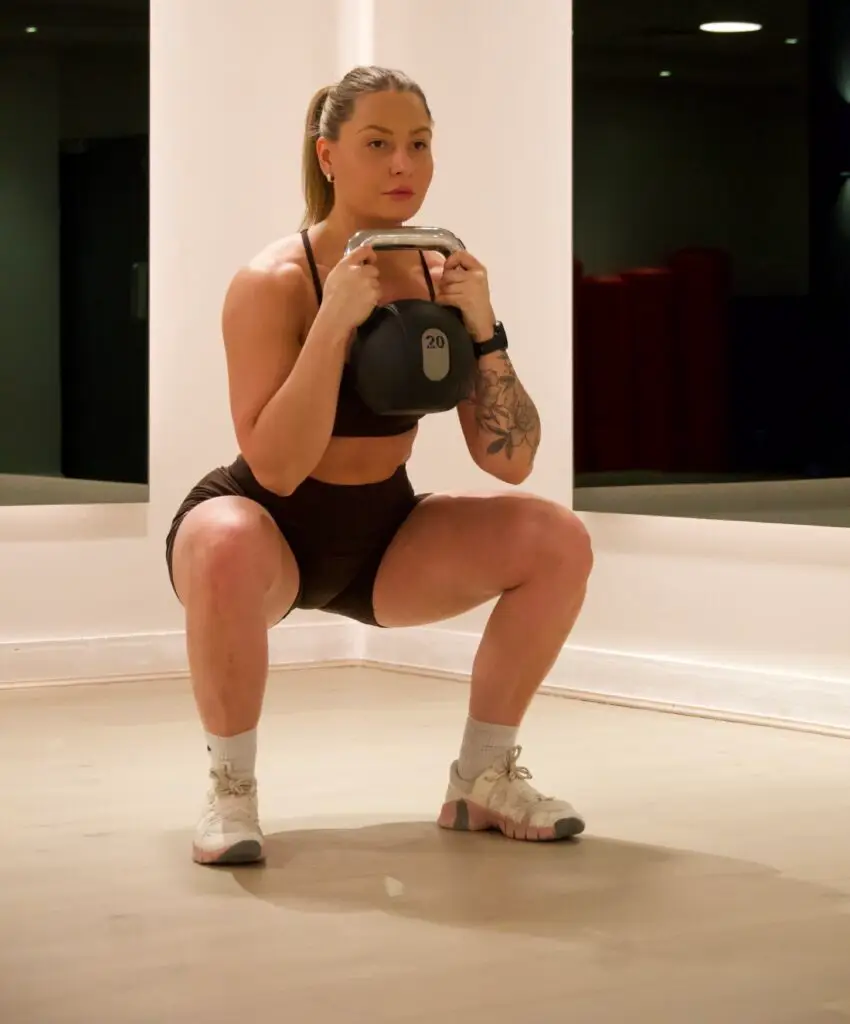
Holding the kettlebell at your chest helps you stay upright and keep your knees in line with your toes. It builds your quadriceps, glutes and core. See how to do a goblet squat.
Turkish get-up
The get-up takes you from lying on the floor to standing while you hold a kettlebell overhead. It needs strength, mobility, stability and coordination. Learn it with no weight, or a very light bell, first.
Presses and rows
The overhead press, push press and bottoms-up press build shoulder and arm strength in different ways. Rows, such as the kettlebell bent-over row and kettlebell gorilla row, train your back. Kettlebell training is a good way to include upper body work, which many women skip.
Choosing a Kettlebell Weight
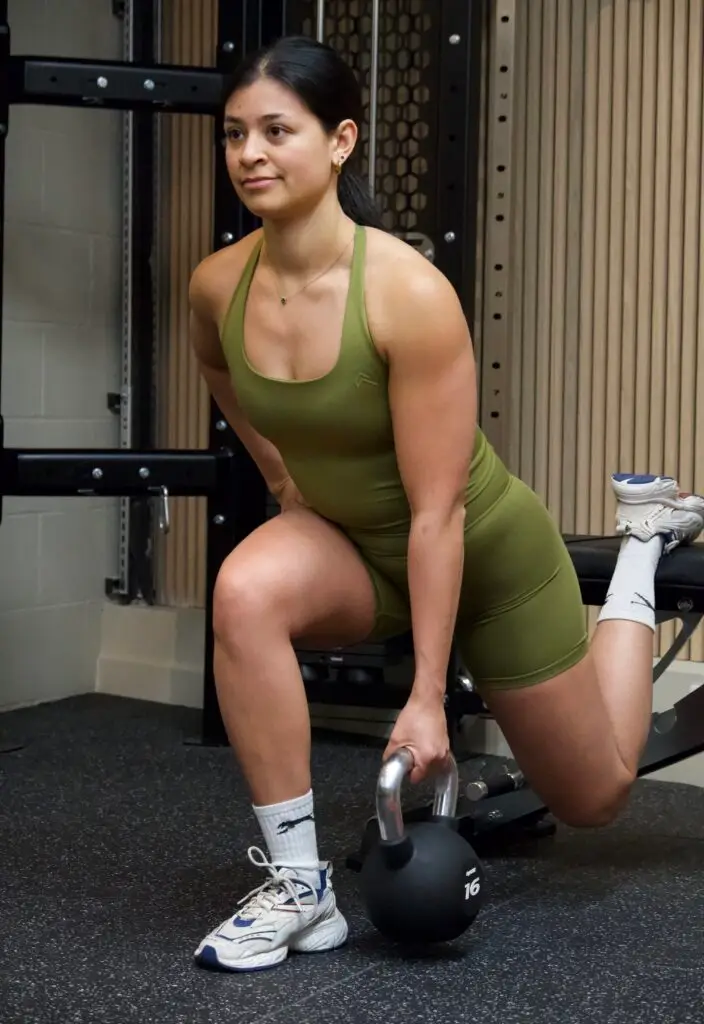
For most women, I recommend starting with an 8 kg (18 lb) kettlebell for swings and a 12 kg (26 lb) kettlebell for squats and presses. Women with strength training experience can often start heavier.
The weight should feel challenging but let you keep good form through the whole set. If the bell pulls you out of position, it is too heavy. If the last few reps feel easy, it is time to go up.
Safety and Technique
- Control first. Common errors include using momentum instead of muscle, letting the kettlebell pull you out of position and rushing. Speed comes as your technique improves.
- Warm up. Kettlebell training is demanding on the hips, shoulders and upper back. Use a short moving warm-up, such as leg swings, arm circles and bodyweight squats.
- Technique before load. Spend your first sessions learning the movements with a light bell, and add weight only when your form is consistent.
- Get coaching if you are new. If you have never used kettlebells, one session with a qualified instructor is a worthwhile investment.
If you are pregnant, have recently given birth or have a health condition, check with your doctor, midwife or a pelvic health physiotherapist before starting kettlebell training.
How to Progress Over Time
- Beginner: start with 2 to 3 exercises per session and 2 to 3 sets of each. Sessions of 15 to 20 minutes are enough at first.
- Intermediate: add the Turkish get-up, single-arm swing and press variations. You can train 3 to 4 times a week.
- Advanced: add snatches, windmills and bottoms-up presses, and use heavier bells.
Matching your training to your goal
Fat loss. Shorter rests and circuits of 4 to 5 exercises keep your heart rate up. Fat loss also depends on your overall diet. Pair your training with a modest calorie deficit, which means eating slightly less energy than you use.
Strength. Use heavier kettlebells, fewer reps and longer rests. This lets you push the load up over time, which is the key driver of strength.
Power. Swings, cleans and snatches train you to move a load fast. That is useful if you play a sport.
For a harder, sport-focused plan, see the 8-week kettlebell plan for athletic women. For a shorter gym session, try the 5-move full body kettlebell workout.
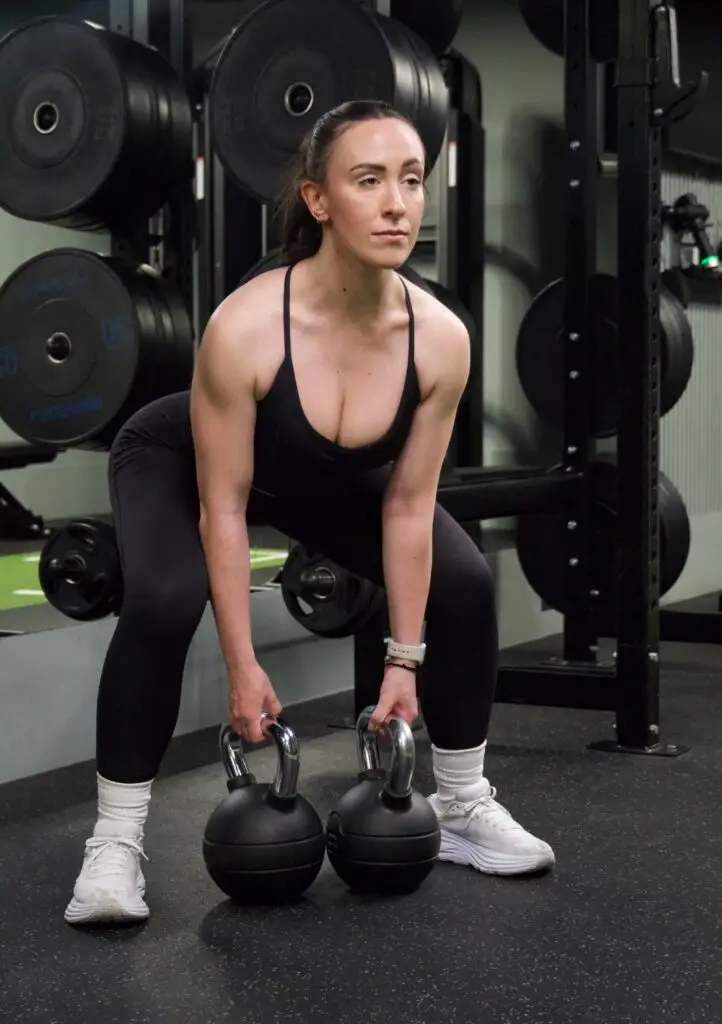
6-Week Kettlebell Push/Pull/Legs Program for Women
This plan uses kettlebells and bodyweight only. It follows a push/pull/legs split, 3 days a week, with a rest day between sessions. It moves from bodyweight and light kettlebell work to harder kettlebell supersets.
Every row is a superset, two exercises done back to back. Do Exercise A, rest 30 seconds, then Exercise B. Rest 60 seconds (week 1) or 90 seconds (weeks 2-6) before repeating the pair. Start with an 8-12 kg kettlebell for most exercises and adjust it to your strength.
Video: 30-minute kettlebell full-body workout. Want to try a full kettlebell session before you start the 6-week plan? Follow along with this 12REPS workout.
Week 1: Foundation (bodyweight and light kettlebell)
Day 1: Push (chest, shoulders, triceps)
| Exercise A | Sets x reps | Exercise B (superset) | Sets x reps |
|---|---|---|---|
| Push-ups | 3 x 8-12 | Kettlebell overhead hold | 3 x 20-30 s |
| Pike push-ups | 3 x 5-8 | Kettlebell halo (light) | 3 x 5 each way |
| Triceps dips | 3 x 6-10 | Kettlebell floor press | 3 x 8-12 |
Day 2: Pull (back, biceps)
| Exercise A | Sets x reps | Exercise B (superset) | Sets x reps |
|---|---|---|---|
| Inverted rows | 3 x 5-8 | Kettlebell deadlift | 3 x 10-15 |
| Superman hold | 3 x 15-20 s | Kettlebell high pull | 3 x 8-12 |
| Reverse fly (bodyweight) | 3 x 10-15 | Kettlebell upright row | 3 x 10-12 |
Day 3: Legs (quads, glutes, hamstrings)
| Exercise A | Sets x reps | Exercise B (superset) | Sets x reps |
|---|---|---|---|
| Bodyweight squats | 3 x 15-20 | Kettlebell goblet squat | 3 x 10-15 |
| Lunges | 3 x 8 each | Kettlebell sumo squat | 3 x 12-15 |
| Glute bridges | 3 x 15-20 | Kettlebell swing | 3 x 15-20 |
Weeks 2-3: Strength building (bodyweight and kettlebell supersets)
Day 1: Push
| Exercise A | Sets x reps | Exercise B (superset) | Sets x reps |
|---|---|---|---|
| Push-ups | 4 x 8-12 | Kettlebell press | 4 x 6-10 |
| Pike push-ups | 4 x 6-10 | Kettlebell push press | 4 x 8-12 |
| Triceps dips | 4 x 8-12 | Kettlebell floor press | 4 x 10-15 |
Day 2: Pull
| Exercise A | Sets x reps | Exercise B (superset) | Sets x reps |
|---|---|---|---|
| Inverted rows | 4 x 6-10 | Kettlebell single-arm row | 4 x 8-12 each |
| Superman hold | 4 x 20-30 s | Kettlebell high pull | 4 x 10-15 |
| Pull-ups or assisted pull-ups | 4 x 3-8 | Kettlebell upright row | 4 x 12-15 |
Day 3: Legs
| Exercise A | Sets x reps | Exercise B (superset) | Sets x reps |
|---|---|---|---|
| Jump squats | 4 x 8-12 | Kettlebell goblet squat | 4 x 12-15 |
| Reverse lunges | 4 x 10 each | Kettlebell swing | 4 x 20-25 |
| Single-leg glute bridges | 4 x 8 each | Kettlebell sumo deadlift | 4 x 10-15 |
Weeks 4-6: Higher volume kettlebell training
Day 1: Push
| Exercise A | Sets x reps | Exercise B (superset) | Sets x reps |
|---|---|---|---|
| Kettlebell press | 5 x 8-12 | Push-ups | 5 x 10-15 |
| Kettlebell push press | 5 x 10-15 | Kettlebell halo | 5 x 6 each way |
| Kettlebell floor press | 4 x 12-15 | Kettlebell bottoms-up press | 4 x 5-8 each |
| Kettlebell see-saw press | 4 x 8 each | Pike push-ups | 4 x 8-12 |
Day 2: Pull
| Exercise A | Sets x reps | Exercise B (superset) | Sets x reps |
|---|---|---|---|
| Kettlebell single-arm row | 5 x 10-15 each | Kettlebell high pull | 5 x 12-15 |
| Kettlebell bent-over row | 5 x 12-15 | Inverted rows | 5 x 8-12 |
| Kettlebell upright row | 4 x 15-20 | Kettlebell clean | 4 x 6-10 each |
| Kettlebell single-arm swing | 4 x 10 each | Superman hold | 4 x 30-45 s |
Day 3: Legs
| Exercise A | Sets x reps | Exercise B (superset) | Sets x reps |
|---|---|---|---|
| Kettlebell goblet squat | 5 x 15-20 | Kettlebell swing | 5 x 20-25 |
| Kettlebell lunge | 5 x 10 each | Kettlebell single-leg deadlift | 5 x 8 each |
| Kettlebell sumo squat | 4 x 12-15 | Kettlebell Cossack squat | 4 x 6 each |
| Kettlebell thruster | 4 x 10-15 | Kettlebell figure-8 | 4 x 10-15 |
Program notes
- Rest one day between training sessions.
- Progress by adding reps, then sets, then weight.
- Focus on good form over a heavy kettlebell.
- Log each session so you know what to beat next time.
Want more leg and glute work? Add ideas from the women’s lower body strength training guide. To build toward push-ups and pull-ups, see the upper body strength training guide for women.
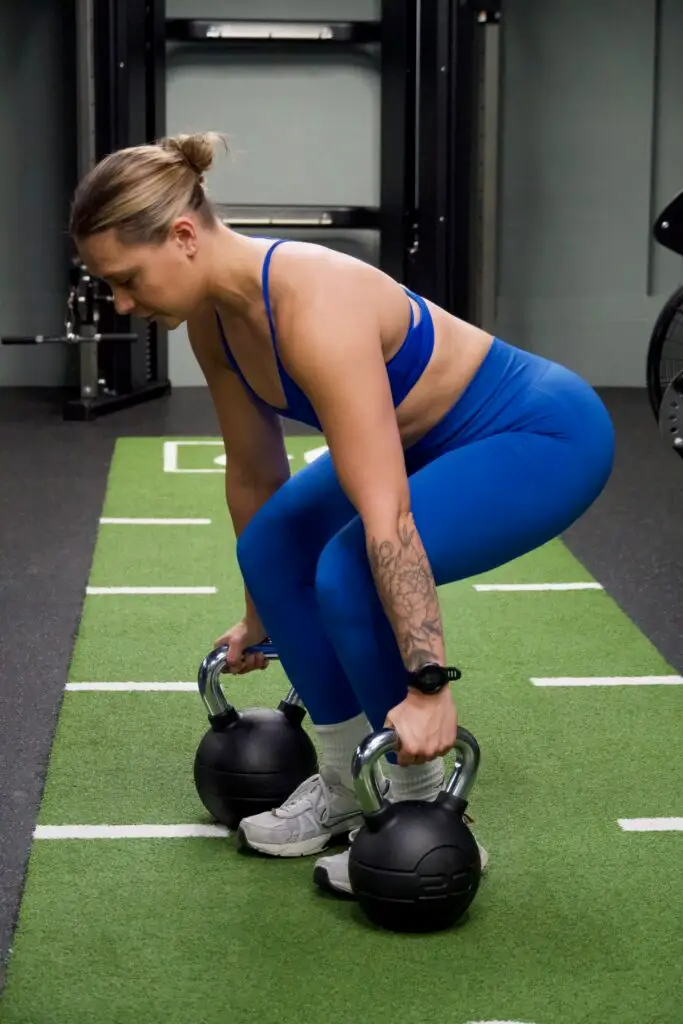
Start Your Kettlebell Training
Kettlebell training gives you a flexible way to build strength and fitness with very little equipment. Three sessions a week of 20 to 30 minutes is a realistic place to start. Master the swing and goblet squat, then build from there.
Consistency matters more than any single workout. If you want sessions set out for you, 12REPS builds training around your goal, the equipment you have and your time. Each exercise has a trainer demonstration, and the app tracks your workouts, streaks and weekly goal so you keep showing up.
Sources
- Kettlebell training in clinical practice: a scoping review. Meigh NJ, Keogh JWL, Schram B, Hing WA. BMC Sports Science, Medicine and Rehabilitation, 2019. https://doi.org/10.1186/s13102-019-0130-z
- Kettlebell swing training improves maximal and explosive strength. Lake JP, Lauder MA. Journal of Strength and Conditioning Research, 2012. https://pubmed.ncbi.nlm.nih.gov/22580981/
- Effects of 8-week kettlebell training on body composition, muscle strength, pulmonary function, and chronic low-grade inflammation in elderly women with sarcopenia. Chen HT, et al. Experimental Gerontology, 2018. https://pubmed.ncbi.nlm.nih.gov/30243898/
- Adult Activity: An Overview. Centers for Disease Control and Prevention (CDC), 2023. https://www.cdc.gov/physical-activity-basics/guidelines/adults.html
