


By Will Duru, BSc (Hons) Sport and Exercise Science, Award-winning Personal Trainer with over 10 years of experience in strength training and optimising recovery.
A 5-day workout split for busy dads trains push, pull, legs, push and pull on five days, then gives you two rest days. Each session takes about 45 minutes. Over 12 weeks, you build a base with straight sets, then add supersets to train harder in the same time.
This plan suits dads who can get to the gym on most weekdays and want more training volume than a 2- or 3-day plan gives. If five days sounds like too much right now, start with fewer and build up.

What lifting five days a week can and cannot do
Strength training builds muscle and strength. It also helps with fat loss, but the effect on its own is modest. A 2022 meta-analysis found that resistance training cut body fat percentage by about 1.5 percentage points on average, compared with not exercising.
Cardio and diet still matter. In an 8-month trial, aerobic training reduced fat mass more than resistance training, while resistance training added more lean mass. Combining the two lowered body fat percentage the most. That is why this plan includes an optional steady run on a rest day.

Is a 5-day split right for you?
More days are not always better. The best plan is the one you can repeat for 12 weeks. Use this quick guide:
| Days you can train | Plan to choose |
|---|---|
| 2 days a week | 2-day workout split for busy dads |
| 3 days a week | 3-day strength training split for busy dads |
| 5 days a week | This plan |
A 5-day split trains your chest, shoulders, back and arms twice a week and your legs once. If you are unsure which suits you, read 3-day vs 5-day workout split.
You may also have read that lifting “boosts testosterone”. Short rises after a session are real, but a review of hormonal responses to training notes that resting levels often do not change. The 2-day plan explains what the research says in more detail.
How to make five days work around family life
Five sessions only work if they have a fixed place in your week. The dads I see stick with it tend to treat training as an appointment, not a bonus.
- Book the slots. Put all five sessions in your calendar on Sunday night.
- Train close by. A gym near your home or office removes travel time.
- Have a short-week plan. If you can only train three days, do push, pull and legs, then pick up where you left off.
- Do not stack missed days. Skip the missed session rather than doubling up the next day.
Broken sleep is part of life with young children. If that is you, read how to train on 6 hours of sleep. For ways to keep going when life gets busy, see how to stay motivated to exercise as a busy dad.

Rest days and the optional run
The two rest days are part of the plan. They give your muscles and joints time to recover between hard sessions.
On one rest day, you can add a steady run of 30 to 45 minutes for your heart and lungs. Keep it at a moderate pace. The CDC talk test is a simple check: at moderate intensity you can talk, but not sing.
The NHS activity guidelines recommend 150 minutes of moderate activity a week, plus strengthening on at least 2 days. This run counts toward the 150 minutes, and your lifting covers the strength part.

The 12-week 5-day workout split
Warm-up before every session
- 5 to 10 minutes of light cardio, such as an incline walk or a steady cycle.
- 5 minutes of mobility: cat-cow, the world’s greatest stretch and arm rotations.
Choose weights that make the last few reps of each set hard while your form stays good. When you reach the top of the rep range on every set with good form, add a little weight next time.
Phase 1: The foundation (weeks 1-6)
Train push, pull, legs, push and pull on five days, then take two rest days.
Day 1: Push (chest, shoulders, triceps)
| Exercise | Sets | Reps | Rest (seconds) |
|---|---|---|---|
| Dumbbell bench press | 3 | 8-12 | 60-90 |
| Incline dumbbell press | 3 | 8-12 | 60-90 |
| Seated dumbbell shoulder press | 3 | 10-15 | 60 |
| Cable straight bar triceps pushdown | 3 | 12-15 | 45 |
| Overhead dumbbell extension | 3 | 12-15 | 45 |
Day 2: Pull (back, biceps)
| Exercise | Sets | Reps | Rest (seconds) |
|---|---|---|---|
| Lat pulldown | 3 | 8-12 | 60-90 |
| Seated cable row | 3 | 8-12 | 60-90 |
| Dumbbell biceps curl | 3 | 10-15 | 60 |
| Hammer curl | 3 | 10-15 | 60 |
| Rope face pulls | 3 | 15-20 | 45 |
Video: How to do a lat pulldown. The lat pulldown opens Day 2. Watch where the bar travels and how to pull with your back rather than your arms.
Day 3: Legs and core
Day 4: Push (strength focus)
| Exercise | Sets | Reps | Rest (seconds) |
|---|---|---|---|
| Barbell bench press | 4 | 6-8 | 90-120 |
| Weighted or assisted dips | 4 | 8-10 | 60-90 |
| Dumbbell Arnold press | 3 | 8-10 | 60 |
| Dumbbell or EZ bar skull crushers | 3 | 10-12 | 60 |
Day 5: Pull (width and thickness focus)
| Exercise | Sets | Reps | Rest (seconds) |
|---|---|---|---|
| Pull-ups (or assisted) | 4 | To failure | 90-120 |
| T-bar row or landmine V-bar row | 4 | 8-10 | 60-90 |
| Preacher curls | 3 | 10-12 | 60 |
| Reverse pec deck | 3 | 12-15 | 45 |
“To failure” means stop when you cannot complete another rep with good form. Use an assisted machine or a band if you cannot yet do several pull-ups.
Video: Pull-ups. Day 5 starts with pull-ups. Use this demo to check your start position and range of motion before your first set.
Phase 2: Add supersets (weeks 7-12)
A superset means doing two exercises back to back with no rest. Rest only after the second exercise of each pair. This lets you do more work in the same session length.
Day 1: Push (supersets)
| Exercise | Sets | Reps | Rest (seconds) |
|---|---|---|---|
| A1: Incline dumbbell press | 4 | 8-12 | 0 |
| A2: Bodyweight push-ups | 4 | To failure | 90 |
| B1: Seated dumbbell shoulder press | 4 | 10-15 | 0 |
| B2: Lateral raises | 4 | 15-20 | 60 |
| C1: Triceps pushdown | 4 | 12-15 | 0 |
| C2: Overhead dumbbell extension | 4 | 12-15 | 60 |
Day 2: Pull (supersets)
| Exercise | Sets | Reps | Rest (seconds) |
|---|---|---|---|
| A1: Lat pulldown | 4 | 8-12 | 0 |
| A2: TRX rows or dumbbell reverse fly | 4 | To failure | 90 |
| B1: Seated cable row | 4 | 10-15 | 0 |
| B2: Cable rope face pulls | 4 | 15-20 | 60 |
| C1: Dumbbell biceps curl | 4 | 12-15 | 0 |
| C2: Dumbbell hammer curl | 3 | 12-15 | 60 |
Day 3: Legs and core (supersets)
| Exercise | Sets | Reps | Rest (seconds) |
|---|---|---|---|
| A1: Goblet squat | 5 | 10-12 | 0 |
| A2: Bodyweight squats | 5 | To failure | 90 |
| B1: Leg press | 5 | 15-20 | 0 |
| B2: Sled push | 5 | 20 yards | 90 |
| C1: Plank | 3 | Hold 60 seconds | 0 |
| C2: Medicine ball slams | 3 | 15 | 60 |
Days 4 and 5: repeat Phase 2 Day 1 and Day 2. This gives your upper body more weekly volume.
Nutrition to support the plan
Five sessions a week will not out-train a diet that gives you more calories than you use. To lose fat, you need a moderate calorie deficit: fewer calories in than out.
Keep the deficit small enough that you can still train hard. The NHS suggests aiming for 0.5 to 1kg of weight loss a week. Your own rate will vary.
- Protein: a meta-analysis of protein and resistance training found muscle gains leveled off at about 1.6g per kilogram of body weight a day. Up to 2.2g per kilogram may help some people.
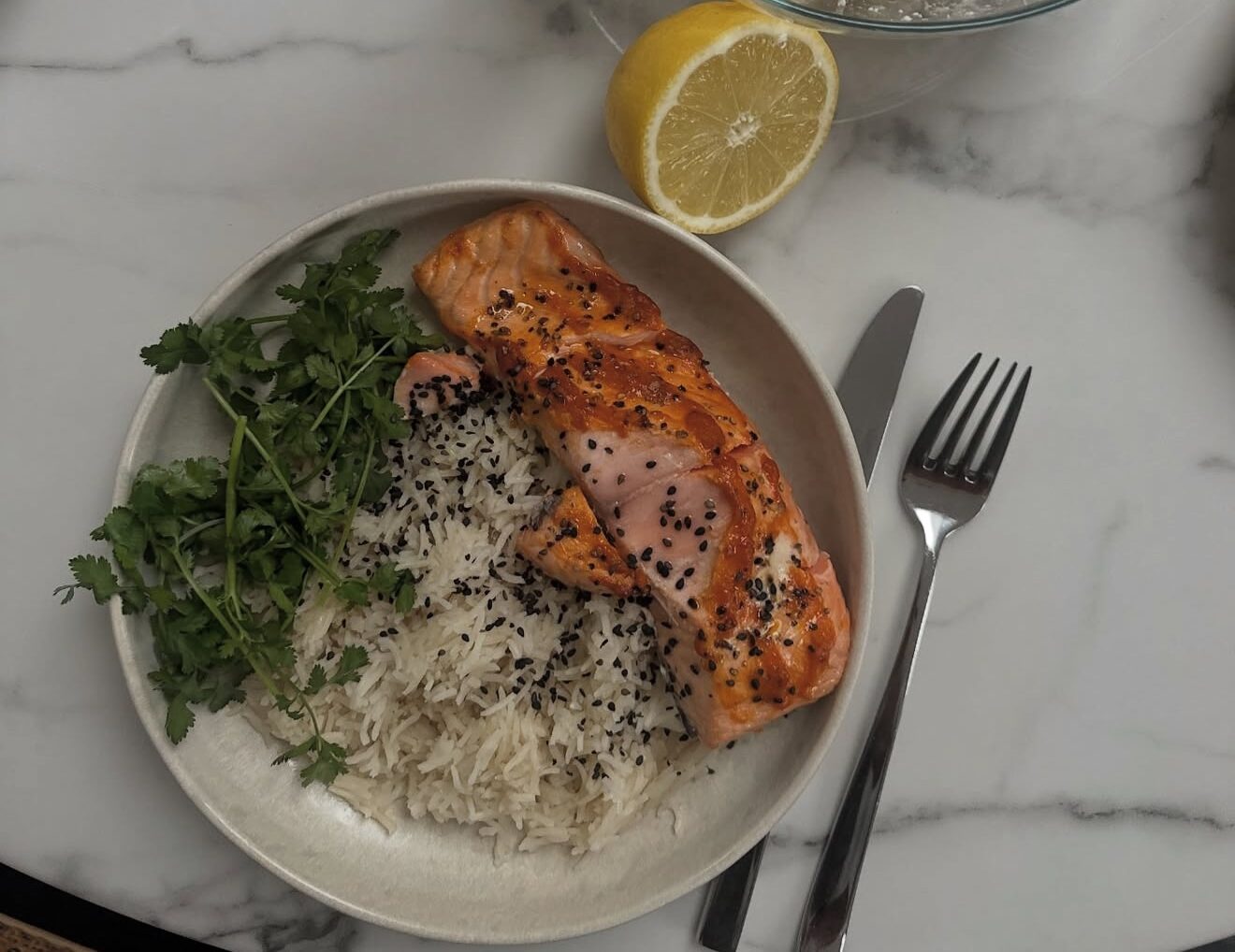
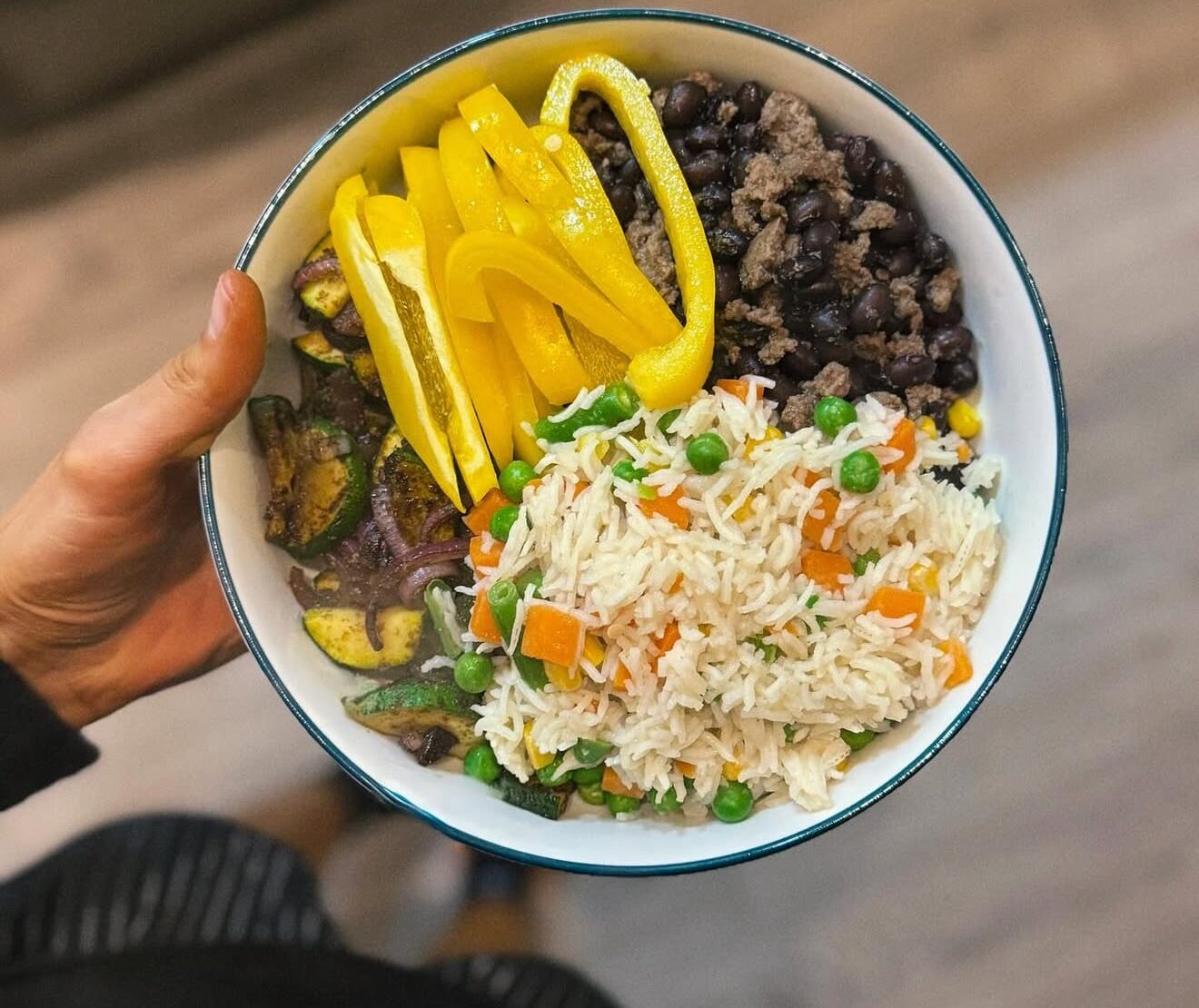
- Carbohydrates: fuel your sessions with foods such as oats, rice, potatoes and fruit.
- Fats: include sources such as olive oil, nuts, seeds and avocado.
Logging your food in an app for a few weeks shows you where your calories come from. For a deeper look at protein, read how much protein you need to build muscle.
Supplements: helpful, not essential
Whey protein is a practical way to reach your protein target when food falls short, according to the ISSN position stand on protein. Clear whey is a lighter, juice-style option.
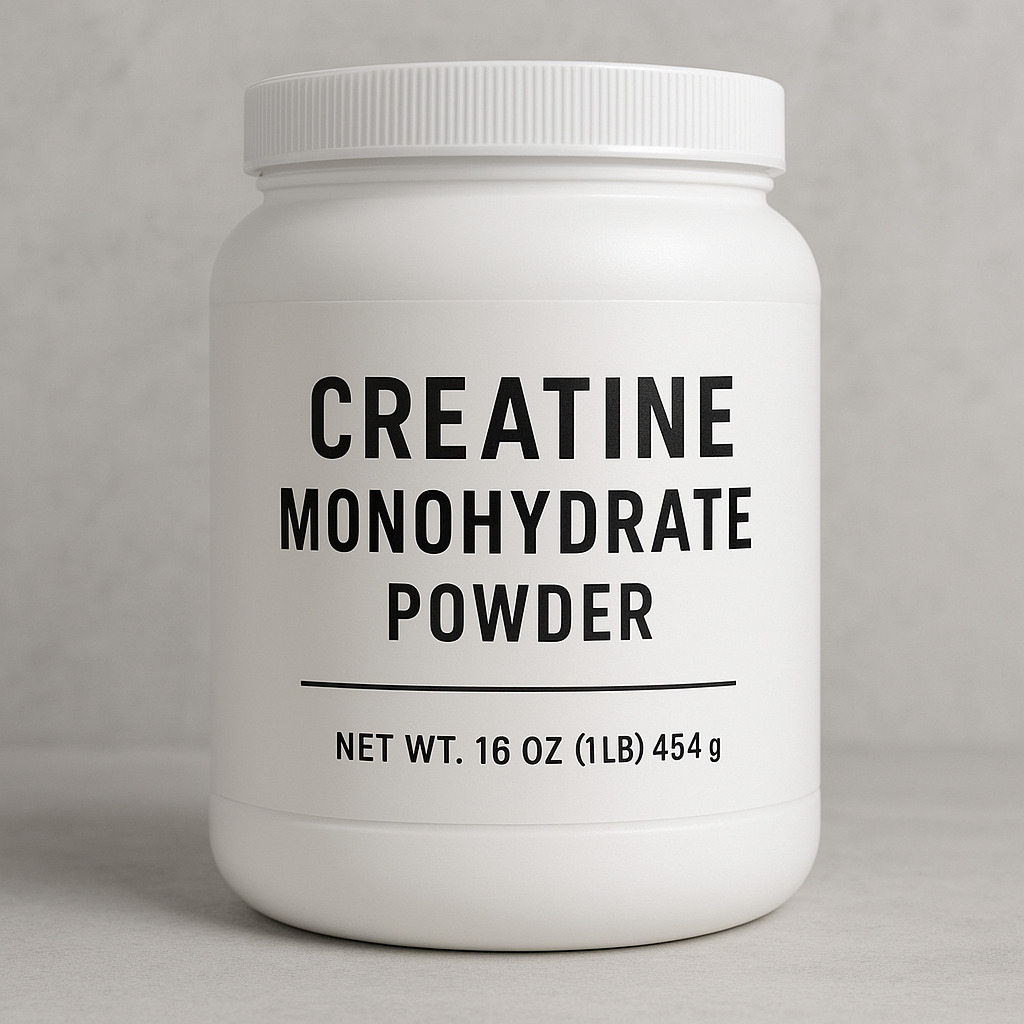
Creatine monohydrate can support gains in strength and muscle during resistance training. The NSCA gives a daily maintenance dose of 2 to 5g, so 5g a day sits within that range.
If you have a medical condition or take medication, check with your doctor or pharmacist before you start any supplement.
Track your progress
Progressive overload means doing slightly more over time: more weight, more reps or better form. You need a record of last week to do that.
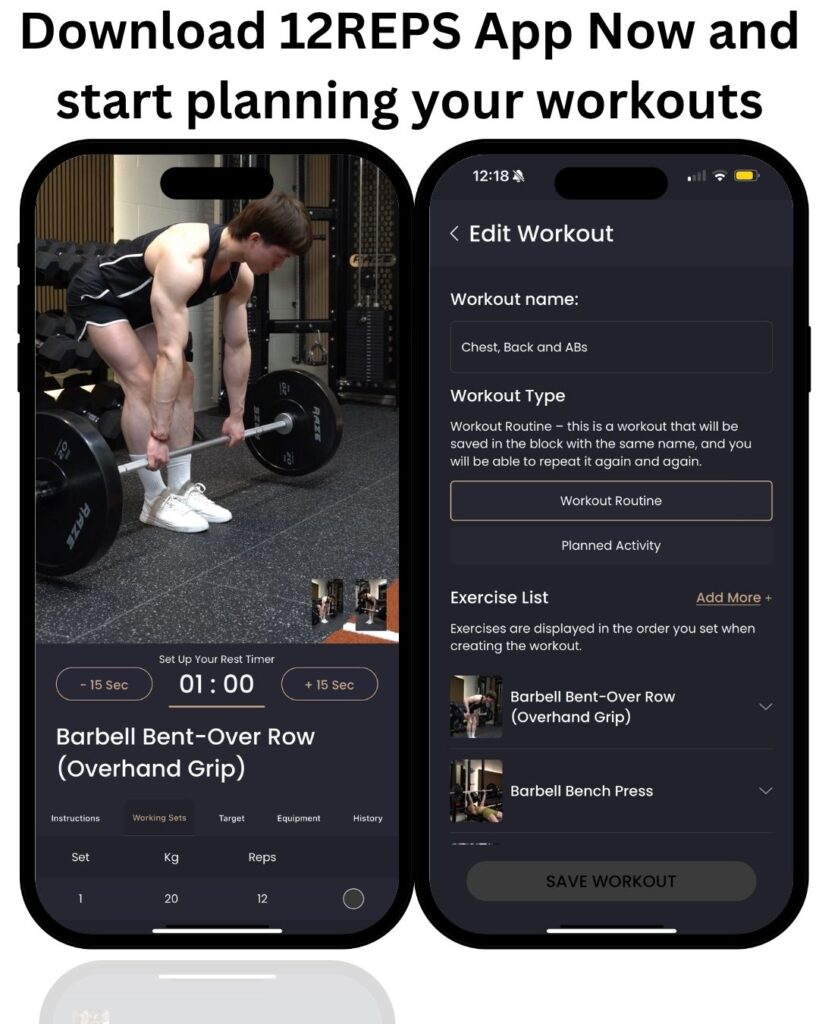
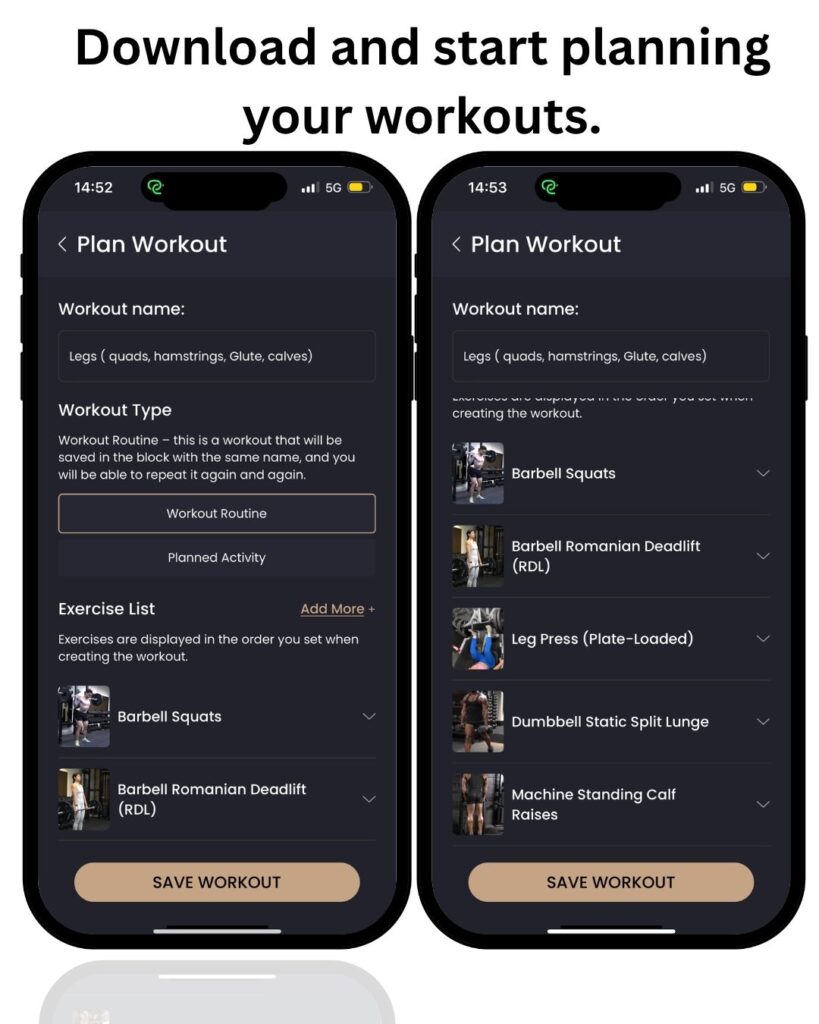
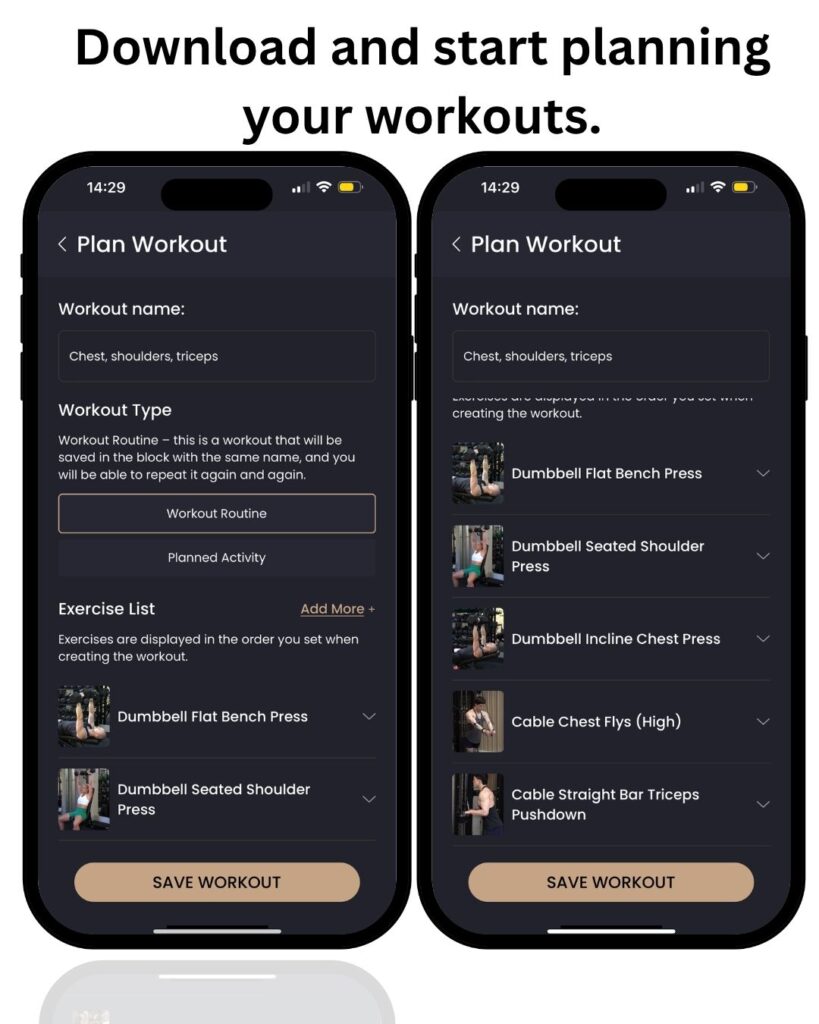
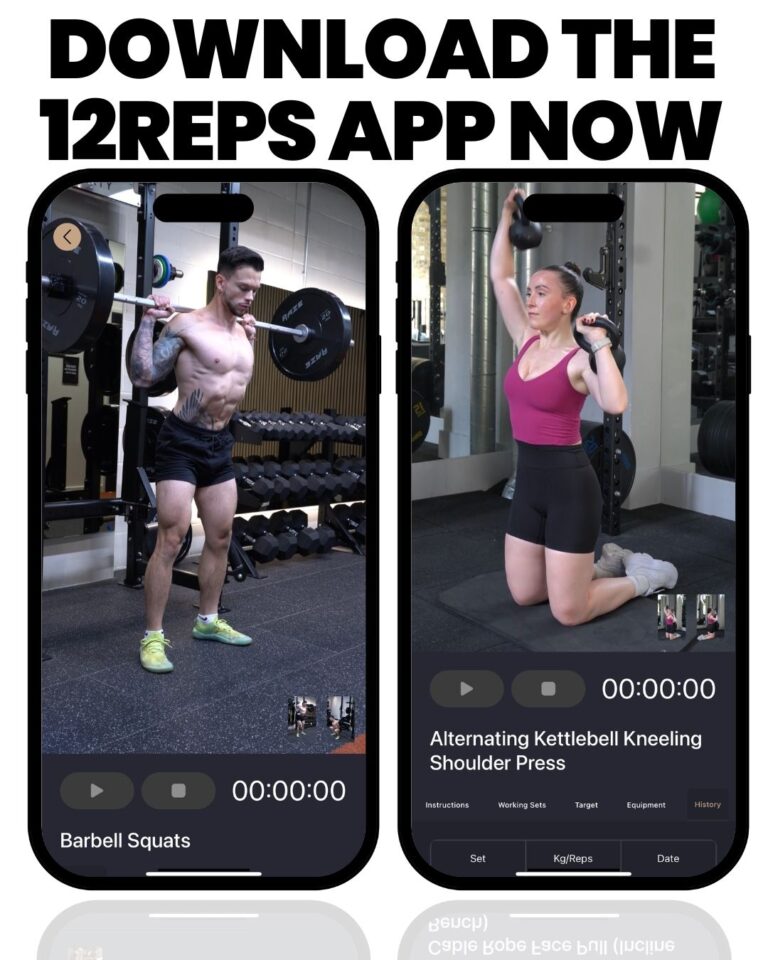
In 12REPS you can build each of these five sessions with the build-your-own option, watch a trainer demo for every exercise and log your reps and weight for each set. The app remembers what you lifted, so every session starts with a number to beat. Streaks and a weekly goal help you keep all five days on track.
Key points
- Train push, pull, legs, push, pull, then rest for two days.
- Phase 1 builds technique and strength. Phase 2 adds supersets.
- Fat loss comes mostly from your diet. Lifting helps you keep and build muscle while it happens.
- If five days stops fitting your life, drop to the 2- or 3-day plan rather than stopping.
If you want all five workouts set out with trainer demos and your last weights ready to beat, see how the 12REPS app works.
Sources
- The effect of resistance training in healthy adults on body fat percentage, fat mass and visceral fat: a systematic review and meta-analysis. Wewege MA, Desai I, Honey C, et al. Sports Medicine, 2022. https://pubmed.ncbi.nlm.nih.gov/34536199/
- Effects of aerobic and/or resistance training on body mass and fat mass in overweight or obese adults. Willis LH, Slentz CA, Bateman LA, et al. Journal of Applied Physiology, 2012. https://pubmed.ncbi.nlm.nih.gov/23019316/
- Hormonal responses and adaptations to resistance exercise and training. Kraemer WJ, Ratamess NA. Sports Medicine, 2005. https://pubmed.ncbi.nlm.nih.gov/15831061/
- How to Measure Physical Activity Intensity. Centers for Disease Control and Prevention (CDC), 2025. https://www.cdc.gov/physical-activity-basics/measuring/
- Physical activity guidelines for adults aged 19 to 64. NHS, 2024. https://www.nhs.uk/live-well/exercise/physical-activity-guidelines-for-adults-aged-19-to-64/
- Tips to help you lose weight. NHS, 2023. https://www.nhs.uk/live-well/healthy-weight/managing-your-weight/12-tips-to-help-you-lose-weight/
- A systematic review, meta-analysis and meta-regression of the effect of protein supplementation on resistance training-induced gains in muscle mass and strength in healthy adults. Morton RW, Murphy KT, McKellar SR, et al. British Journal of Sports Medicine, 2018. https://pubmed.ncbi.nlm.nih.gov/28698222/
- International Society of Sports Nutrition Position Stand: protein and exercise. Jäger R, Kerksick CM, Campbell BI, et al. Journal of the International Society of Sports Nutrition, 2017. https://pubmed.ncbi.nlm.nih.gov/28642676/
- Creatine (excerpt from NSCA’s Guide to Sport and Exercise Nutrition). National Strength and Conditioning Association (NSCA), Kinetic Select, 2019. https://www.nsca.com/education/articles/kinetic-select/creatine/