
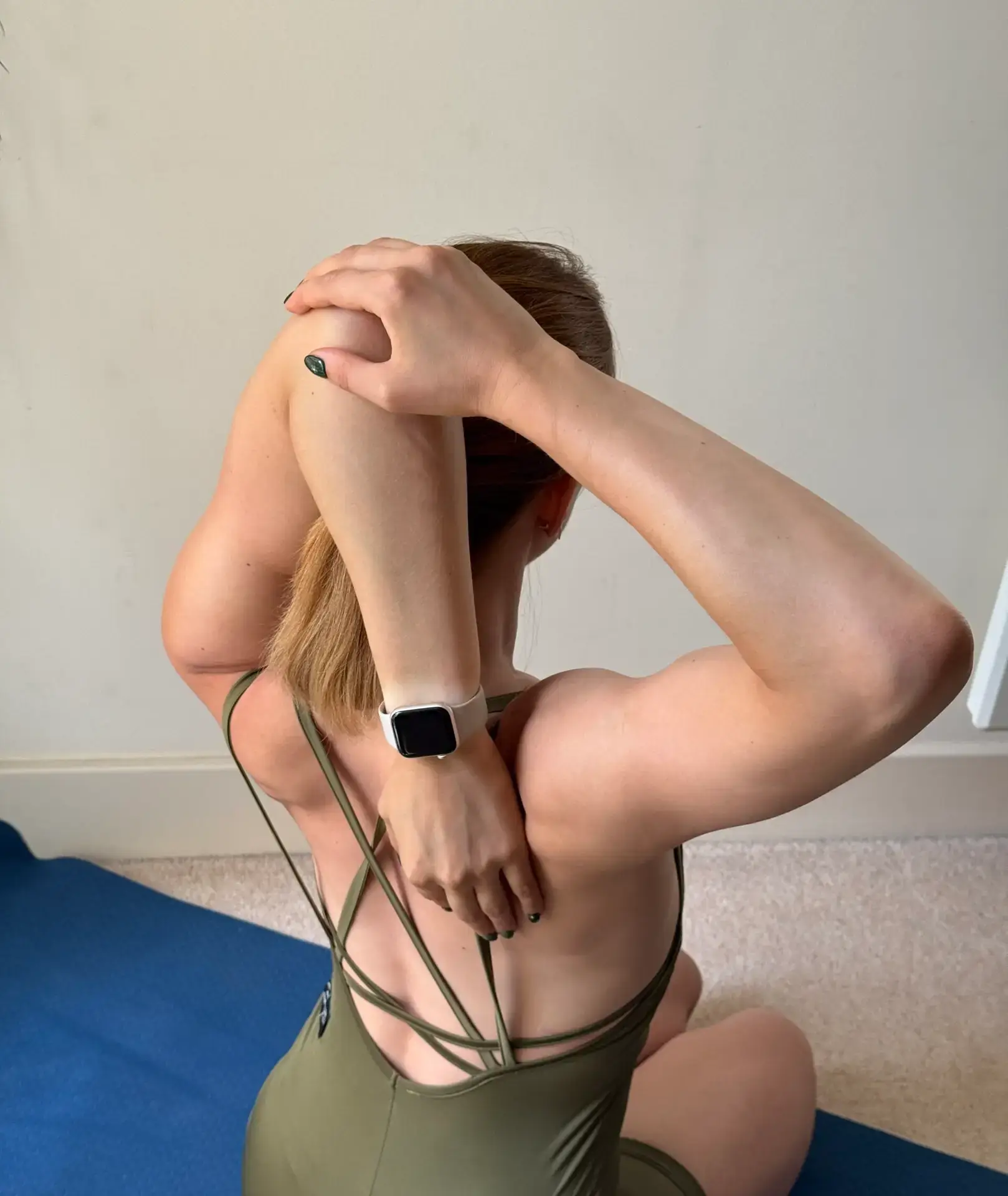



Written by Will Duru, BSc (Hons) Sport and Exercise Science, award-winning Personal Trainer with over 10 years of experience in strength training and optimising recovery.
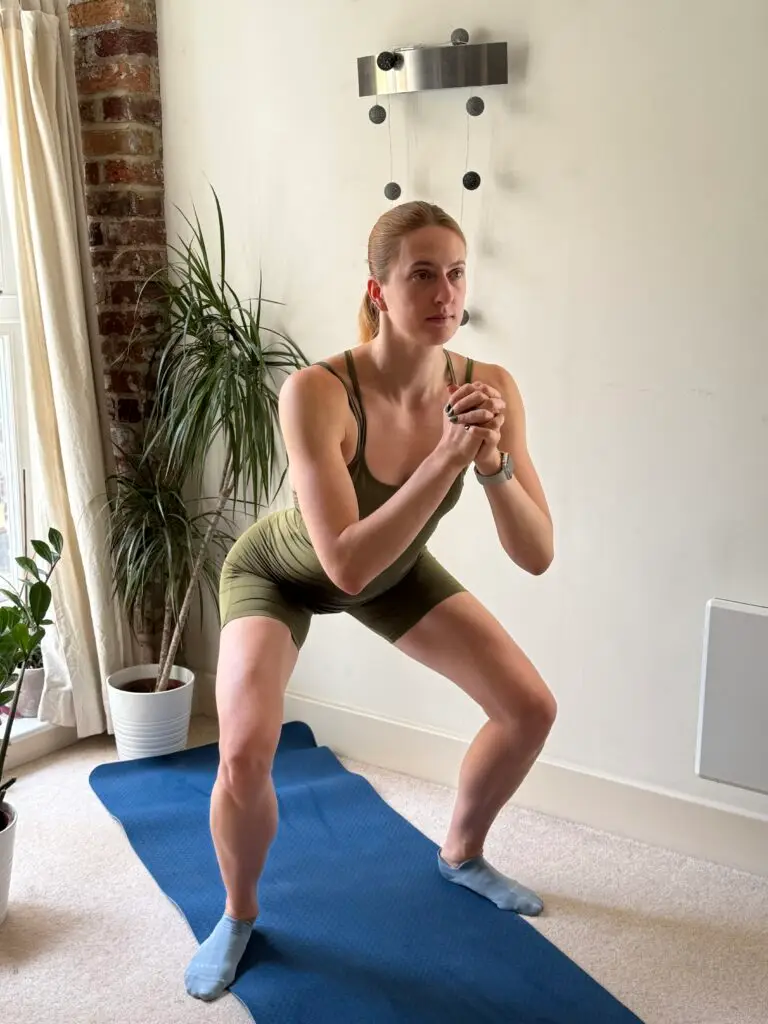
Post-workout stretches for strength training are a calm way to end a session. Done regularly, they can improve your flexibility. They are not a recovery shortcut: research shows stretching after exercise does little for next-day soreness, strength recovery or injury risk.
This guide gives you 10 simple stretches for the areas lifting works hardest. It also explains what the evidence does and doesn’t support, so you can decide how much time to give them.
What research says about stretching after lifting
Many people stretch after training to feel less sore or to avoid injury. Here is what the best available evidence shows.
| Common belief | What the evidence shows |
|---|---|
| Stretching reduces soreness | Not by a meaningful amount. In a Cochrane review, stretching after exercise lowered next-day soreness by about 1 point on a 100-point scale (Herbert et al., 2011). |
| Stretching speeds up recovery | A 2021 meta-analysis found no difference between stretching and simply resting for recovery of strength or soreness. Confidence in the evidence was very low (Afonso et al., 2021). |
| Stretching lowers injury risk | A review of randomized trials found no clear effect of stretching on sports injuries. Strength training cut injuries to less than a third (Lauersen et al., 2014). |
| Stretching improves flexibility | Yes, with regular practice (ACSM, 2021). One meta-analysis found strength training improved range of motion about as much as stretching (Afonso et al., 2021, Healthcare). |
Delayed-onset muscle soreness (DOMS) is the ache you feel a day or two after hard or new exercise. If that is your main concern, read our guide on feeling sore after every workout.
So why stretch at all? It can help you keep or improve flexibility, and many people find a few minutes of stretching a good way to wind down. If those things matter to you, the routine below is a simple place to start.
How to do post-workout stretches
These are static stretches. You move into a position and hold it still.
- Go to mild tension. Stretch to the point of tightness or slight discomfort, never pain (ACSM, 2021).
- Hold, don’t bounce. ACSM recommends holding a static stretch for 10 to 30 seconds for most adults. Older adults may benefit from 30 to 60 seconds.
- Breathe slowly. Slow, steady breathing helps you relax into each position.
- Be regular. ACSM advises stretching at least 2 to 3 times a week, and notes that daily stretching works best.
If you have an injury, a joint problem or pain that doesn’t settle, check with a doctor or physical therapist before you start.
10 post-workout stretches for strength training
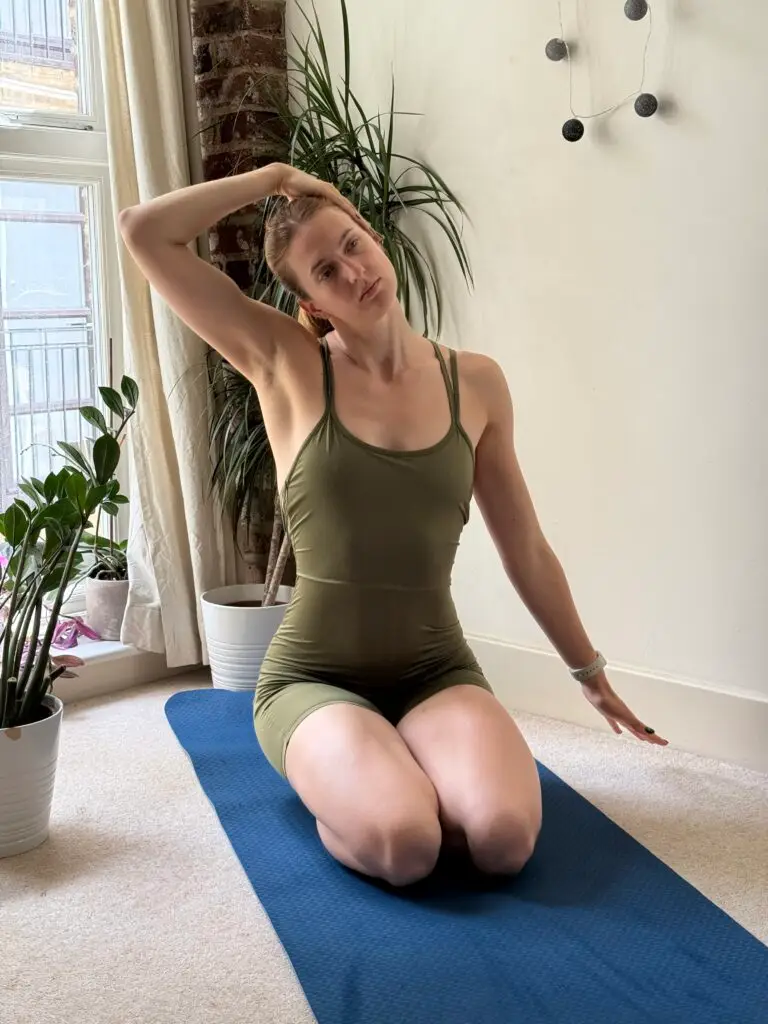
1. Neck stretch
Many lifters feel tension in the neck and upper shoulders after pressing and pulling. This stretch targets the side of the neck and the upper trapezius.
- Sit or stand tall with your shoulders relaxed.
- Tilt your head to one side, bringing your ear toward your shoulder. Don’t lift the shoulder to meet it.
- For a little more stretch, rest your hand on the side of your head. Don’t pull.
- Hold for 10 to 30 seconds, then switch sides.
Keep the pressure gentle and steady. Your neck needs patience, not force.
2. Cross-body shoulder stretch
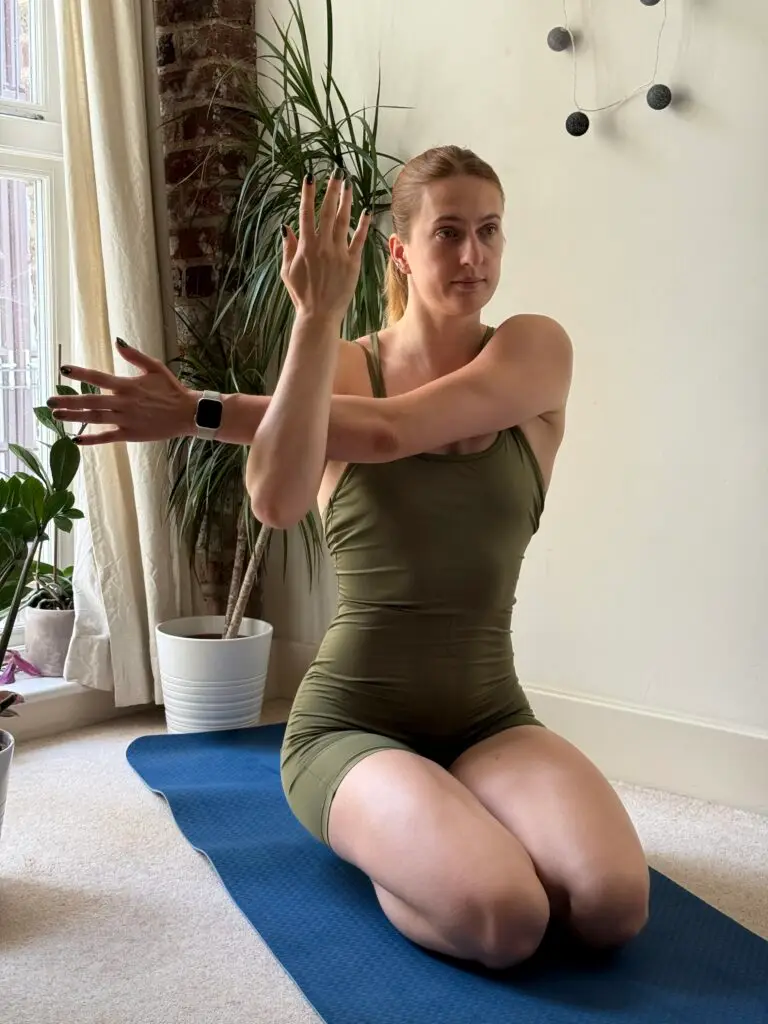
This stretch targets the back of the shoulder, which works hard during rows, pull-ups and lat pulldowns.
- Bring one arm across your body at chest height.
- Use your other hand to draw it closer to your chest. Press on the upper arm, above the elbow, not on the joint.
- Feel the stretch in the back of your shoulder.
- Hold for 10 to 30 seconds, then switch arms.
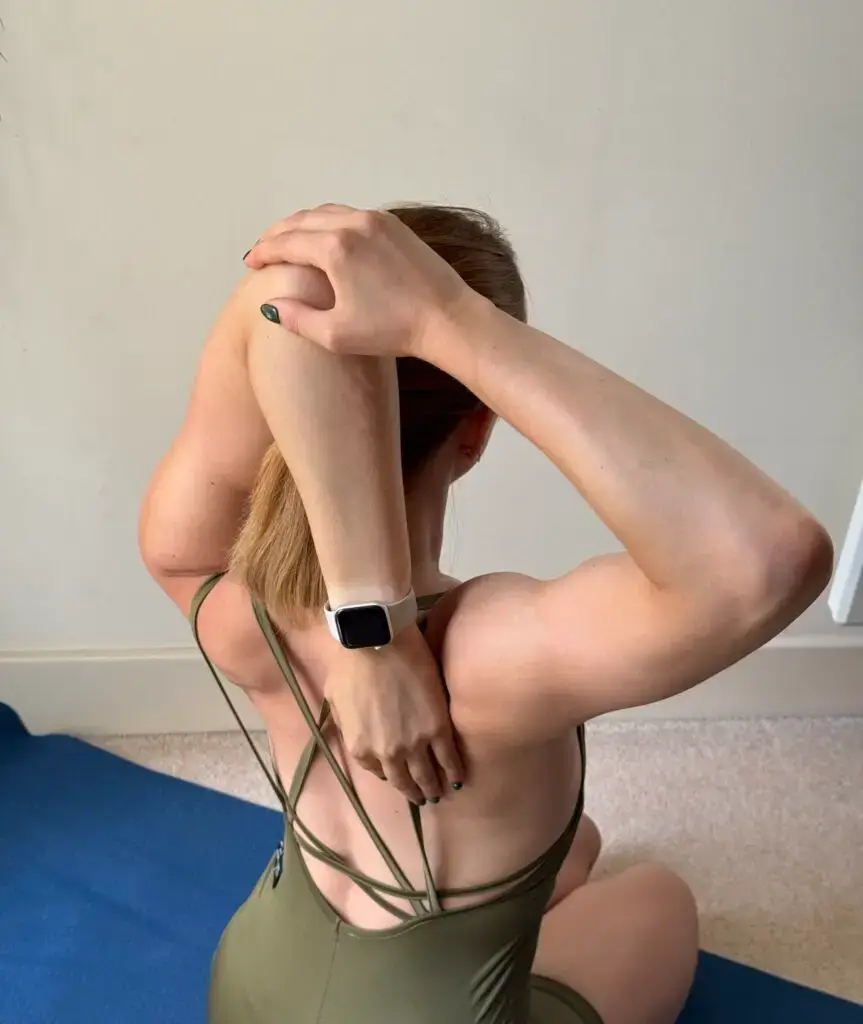
3. Overhead triceps stretch
Your triceps work in every press, from the bench press to the overhead press. This stretch can also reach the lats, the large muscles along the sides of your back.
- Raise one arm overhead and bend the elbow so your hand drops behind your head.
- Use your other hand to guide the elbow gently toward the center of your head.
- Keep your ribs down. Don’t arch your lower back to get further.
- Hold for 10 to 30 seconds, then switch arms.
You should feel it along the back of your arm, not in the elbow or shoulder joint.
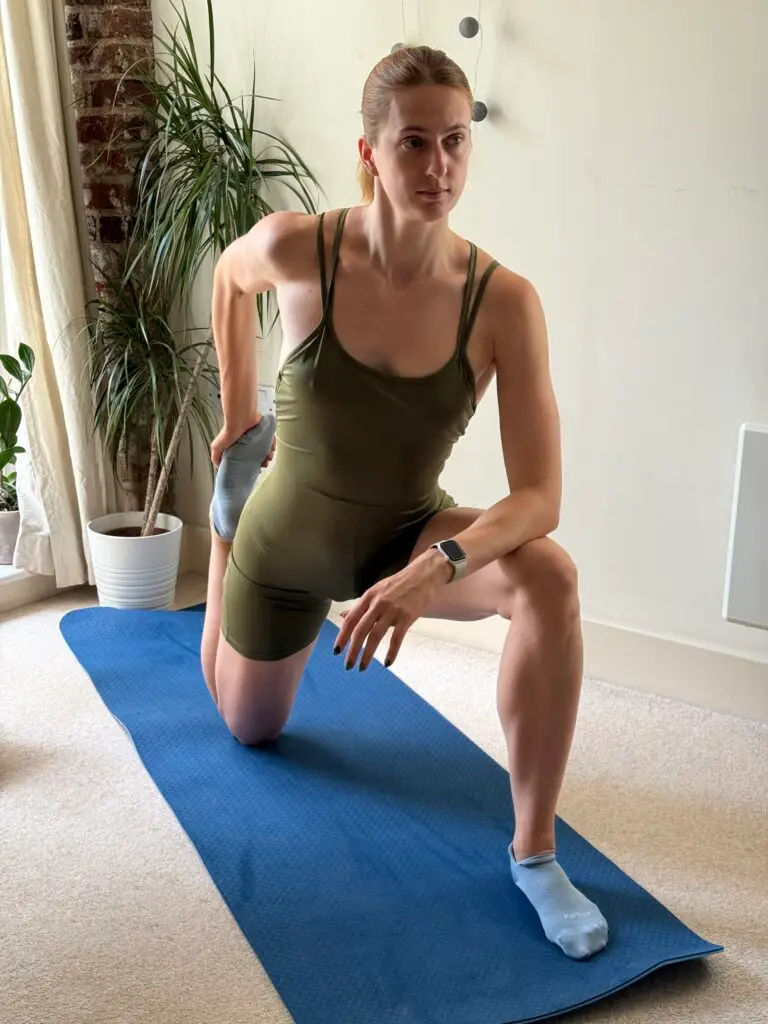
4. Standing quad stretch
The quadriceps on the front of your thigh do much of the work in squats and lunges. One of them, the rectus femoris, also crosses the hip, so you may feel this at the front of the hip too.
- Stand tall. Hold a wall or chair for balance if you need it.
- Bend one knee and bring your heel toward your glutes. Hold your ankle or foot with the same-side hand.
- Keep your knees close together and your torso upright.
- Hold for 10 to 30 seconds, then switch legs.
Avoid leaning forward or pulling your foot out to the side.
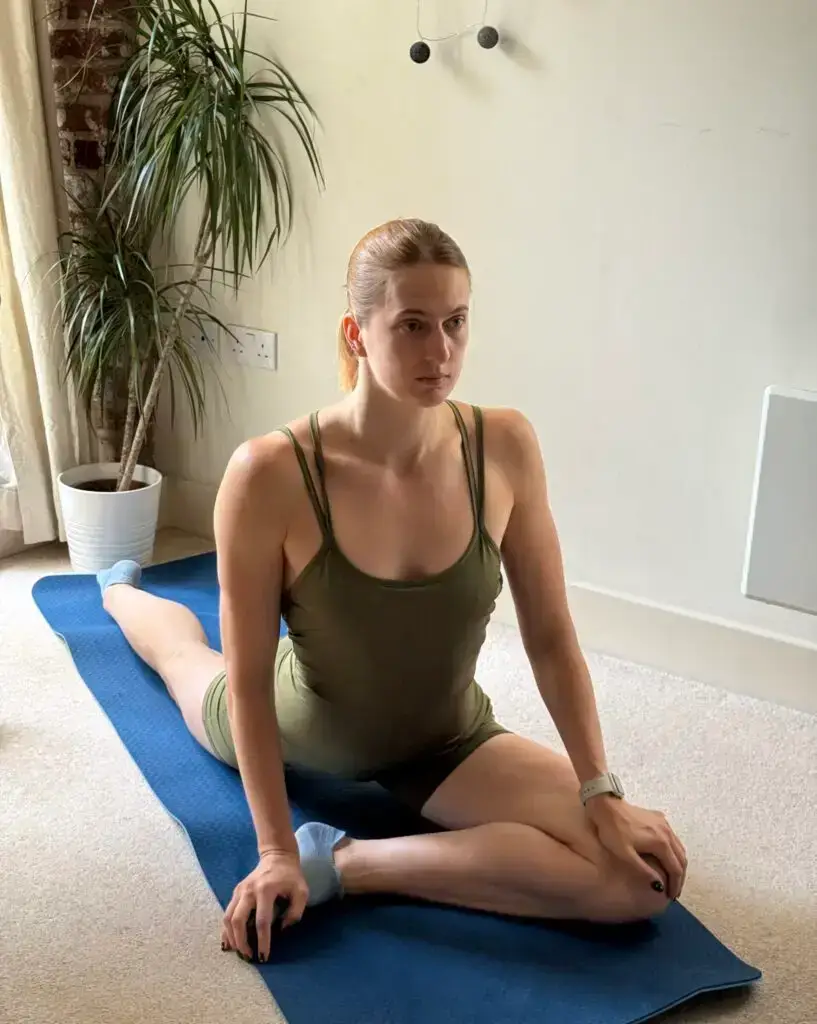
5. Pigeon stretch
This stretch targets the glutes and outer hip of your front leg. The back leg may feel a stretch at the front of the hip.
- Start on your hands and knees.
- Bring one knee forward toward the same-side hand and let that shin angle across in front of you.
- Slide your other leg straight back behind you.
- Stay on your hands, or lower to your forearms if that feels comfortable.
- Hold for 10 to 30 seconds, or longer if it feels comfortable, then switch sides.
Put a cushion under the hip of your front leg if it doesn’t reach the floor. If you feel it in your knee, use the figure four stretch instead.
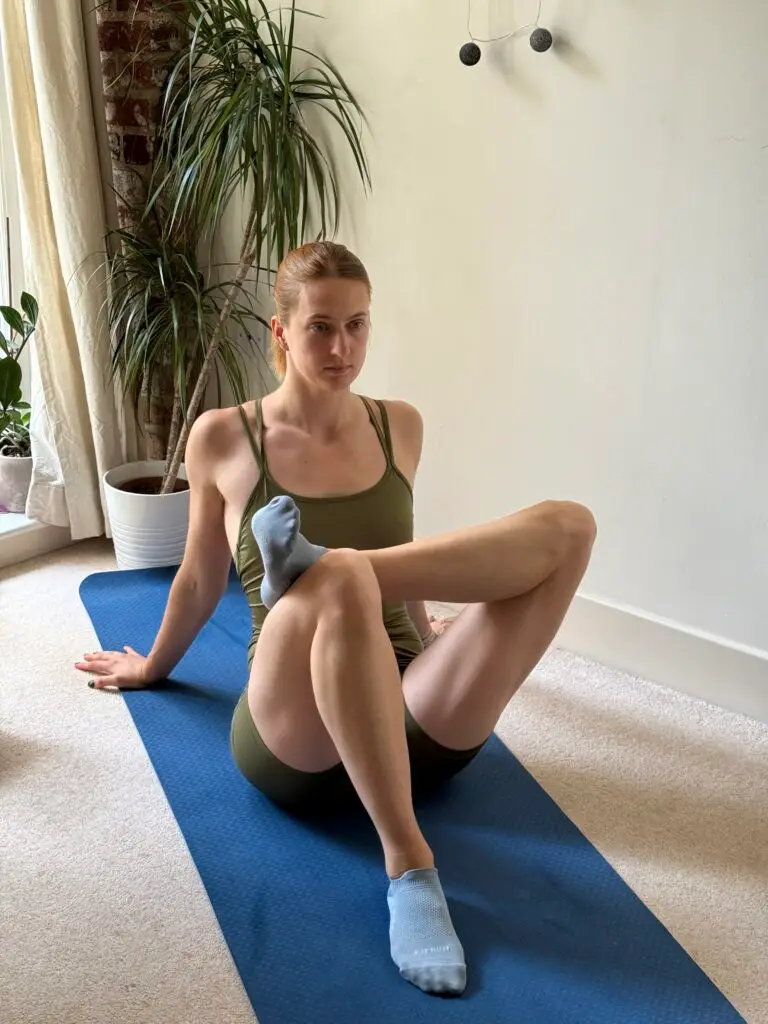
6. Figure four stretch
This lying stretch targets the glutes and the deep hip rotators, including the piriformis. It is a gentler option than the pigeon.
- Lie on your back with both knees bent.
- Cross one ankle over the opposite knee to make a “4” shape.
- Hold behind the thigh of the uncrossed leg and draw it gently toward your chest.
- Feel the stretch in the glute of the crossed leg. Hold for 10 to 30 seconds, then switch sides.
Keep your head and shoulders relaxed on the floor.
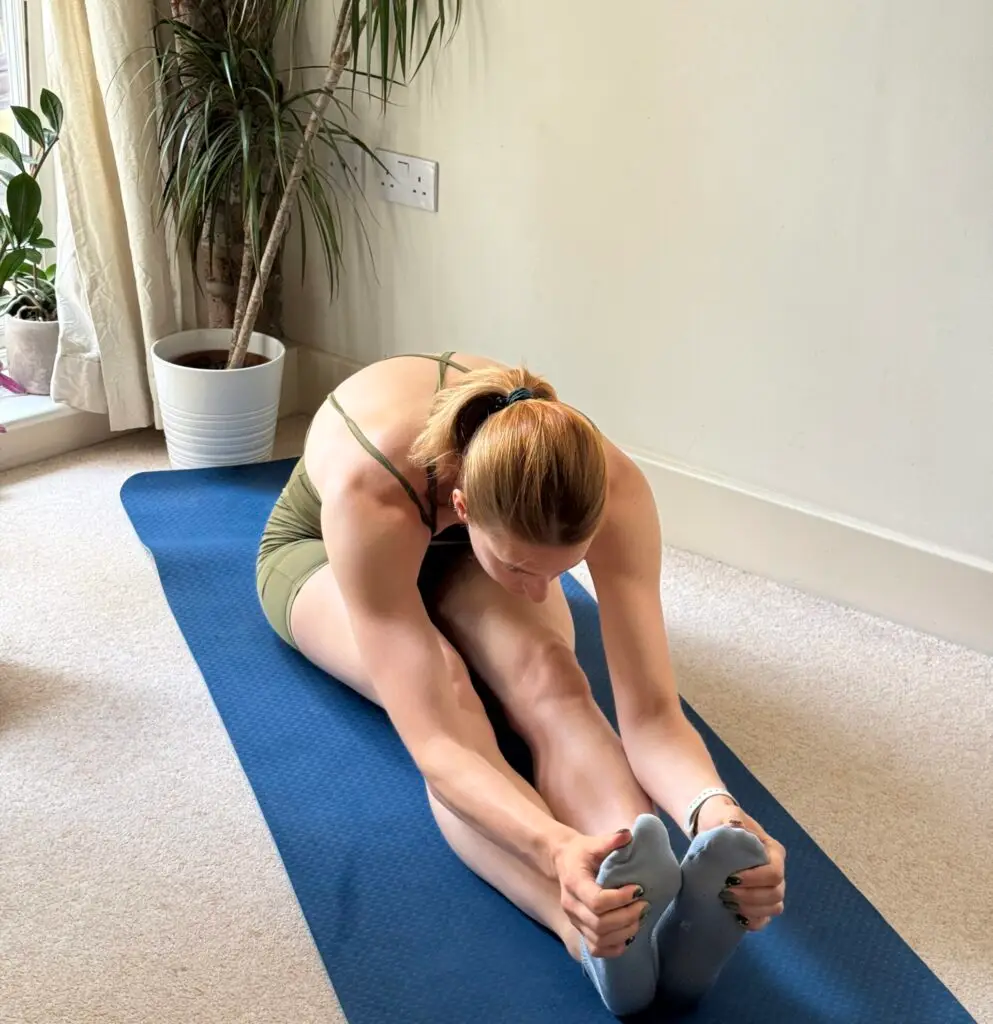
7. Seated hamstring stretch
Your hamstrings work hard in deadlifts, Romanian deadlifts and many other leg exercises.
- Sit on the floor with one leg straight. Bend the other leg and rest that foot against your inner thigh.
- Hinge forward from your hips toward the foot of your straight leg, keeping your back long.
- Stop when you feel tension along the back of your thigh.
- Hold for 10 to 30 seconds, then switch legs.
Think about bringing your chest forward rather than pulling your head down.
8. Doorway chest stretch
This stretch opens the chest and the front of the shoulders after pressing work such as the bench press and press-ups.
- Stand in a doorway. Place your forearm on the frame with your elbow bent to about 90 degrees.
- Step forward gently until you feel a stretch across your chest and the front of your shoulder.
- Move your arm higher or lower on the frame to feel it in different parts of the chest.
- Hold for 10 to 30 seconds, then switch sides.
Step forward slowly. A big step can push the shoulder further than it wants to go.
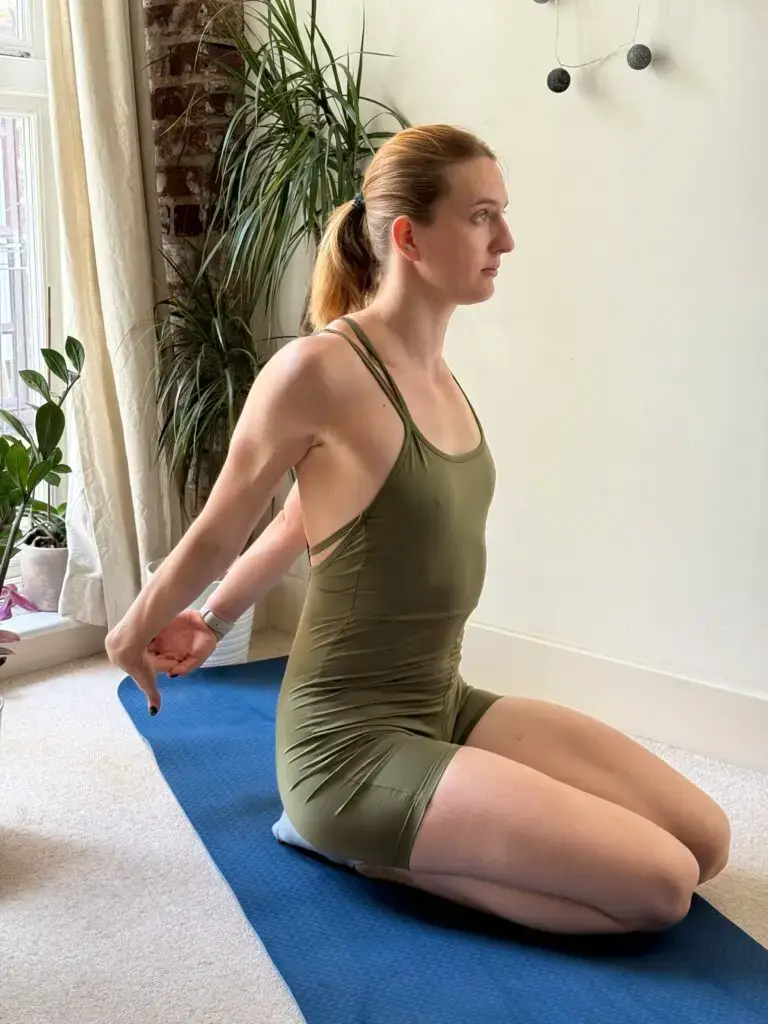
9. Child's pose
This kneeling stretch reaches the lats, shoulders and lower back. It is also a simple way to slow your breathing at the end of a session.
- Kneel with your knees wider than hip-width apart.
- Sit back toward your heels and reach your arms forward along the floor.
- Lower your chest toward the floor and rest your forehead down if that is comfortable.
- Hold for 10 to 30 seconds or longer, breathing slowly.
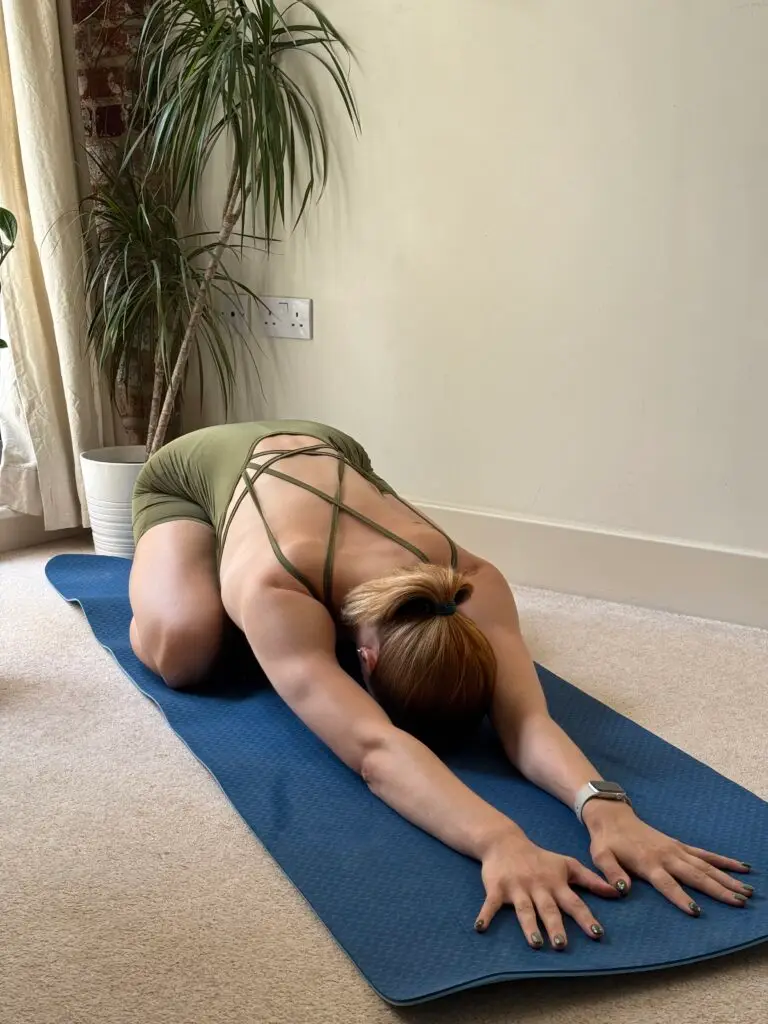
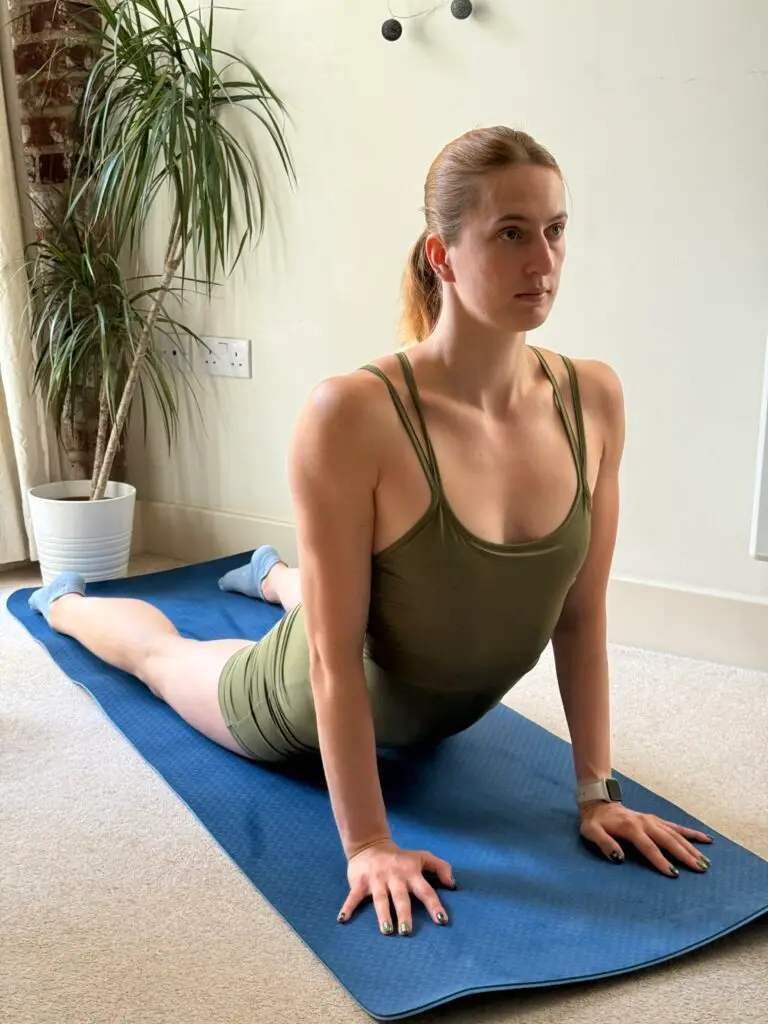
10. Cobra stretch
This stretch targets the front of your trunk, especially the abdominals.
- Lie face down with your hands under your shoulders.
- Press up slowly, lifting your chest while your hips stay on the floor.
- If that is too much, stay on your forearms instead.
- Hold for 10 to 30 seconds.
Rise only as high as feels comfortable. Keep your neck long and your shoulders away from your ears. If you feel a pinch in your lower back, come down a little.
How to structure your post-workout stretching routine
Stretching straight after training is convenient, because you are already warm and on the mat. For flexibility, what matters most is stretching regularly (ACSM, 2021).
A routine of 10 to 15 minutes is plenty. If you are short on time, choose stretches for the muscles you just trained:
- Upper-body day: neck, cross-body shoulder, overhead triceps, doorway chest and child’s pose.
- Lower-body day: quad, pigeon or figure four, and hamstring stretches.
Order matters less than doing it. A simple flow is standing stretches first, then floor stretches, so you only get down once.
Breathe slowly through each stretch. Holding your breath makes it harder to relax into the position.
Common post-workout stretching mistakes
- Bouncing. Static stretches should be slow and still. Ease into the position and hold it.
- Pushing into pain. Stretch to tightness or slight discomfort, not sharp pain (ACSM, 2021). If something hurts, back off.
- Very short holds. Aim for 10 to 30 seconds per stretch, as ACSM recommends for most adults.
- Expecting stretching to fix soreness. The evidence says it makes little difference (Herbert et al., 2011). Read our guide to muscle soreness after workouts.
- All or nothing. If you can’t do the whole routine, pick three or four stretches for the areas that feel tightest.

Your post-workout stretching plan
After your next strength session, choose five stretches for the muscles you just worked. Hold each for 10 to 30 seconds. As the habit sticks, add the others.
For the first month, note in your training log or calendar when you stretch. Seeing it written down makes the habit easier to keep.
Flexibility changes take weeks, not days. Aim for at least 2 to 3 stretching sessions a week (ACSM, 2021).
The bottom line
Stretching after strength training is useful for flexibility and for winding down. It is not a proven way to reduce soreness, speed up recovery or lower injury risk. Strength training itself has much stronger evidence for lowering injury risk (Lauersen et al., 2014).
If you’d like a longer stretching session on its own, try our 15-minute daily stretching routine. To end your sessions with calmer focus, see our guide to mindful strength training.
The best recovery starts with a sensible training plan. 12REPS builds each session around your goal, your equipment and your time, with a trainer demonstration for every exercise. See how the 12REPS app works.
Sources
- Stretching to prevent or reduce muscle soreness after exercise. Cochrane Database of Systematic Reviews (Herbert RD, de Noronha M, Kamper SJ), 2011. https://www.cochrane.org/evidence/CD004577_stretching-prevent-or-reduce-muscle-soreness-after-exercise
- The Effectiveness of Post-exercise Stretching in Short-Term and Delayed Recovery of Strength, Range of Motion and Delayed Onset Muscle Soreness: A Systematic Review and Meta-Analysis of Randomized Controlled Trials. Frontiers in Physiology (Afonso J, et al.), 2021. https://www.frontiersin.org/articles/10.3389/fphys.2021.677581/full
- The effectiveness of exercise interventions to prevent sports injuries: a systematic review and meta-analysis of randomised controlled trials. British Journal of Sports Medicine (Lauersen JB, Bertelsen DM, Andersen LB), 2014. https://bjsm.bmj.com/content/48/11/871
- Strength Training versus Stretching for Improving Range of Motion: A Systematic Review and Meta-Analysis. Healthcare (Afonso J, et al.), 2021. https://estudogeral.uc.pt/handle/10316/104612?mode=full
- Stretching and Flexibility Guidelines Update. American College of Sports Medicine (ACSM), 2021. https://www.acsm.org/blog-detail/acsm-certified-blog/2021/03/18/stretching-and-flexibility-guidelines-update
