



By Will Duru, personal trainer and founder of 12REPS.
The Short Answer
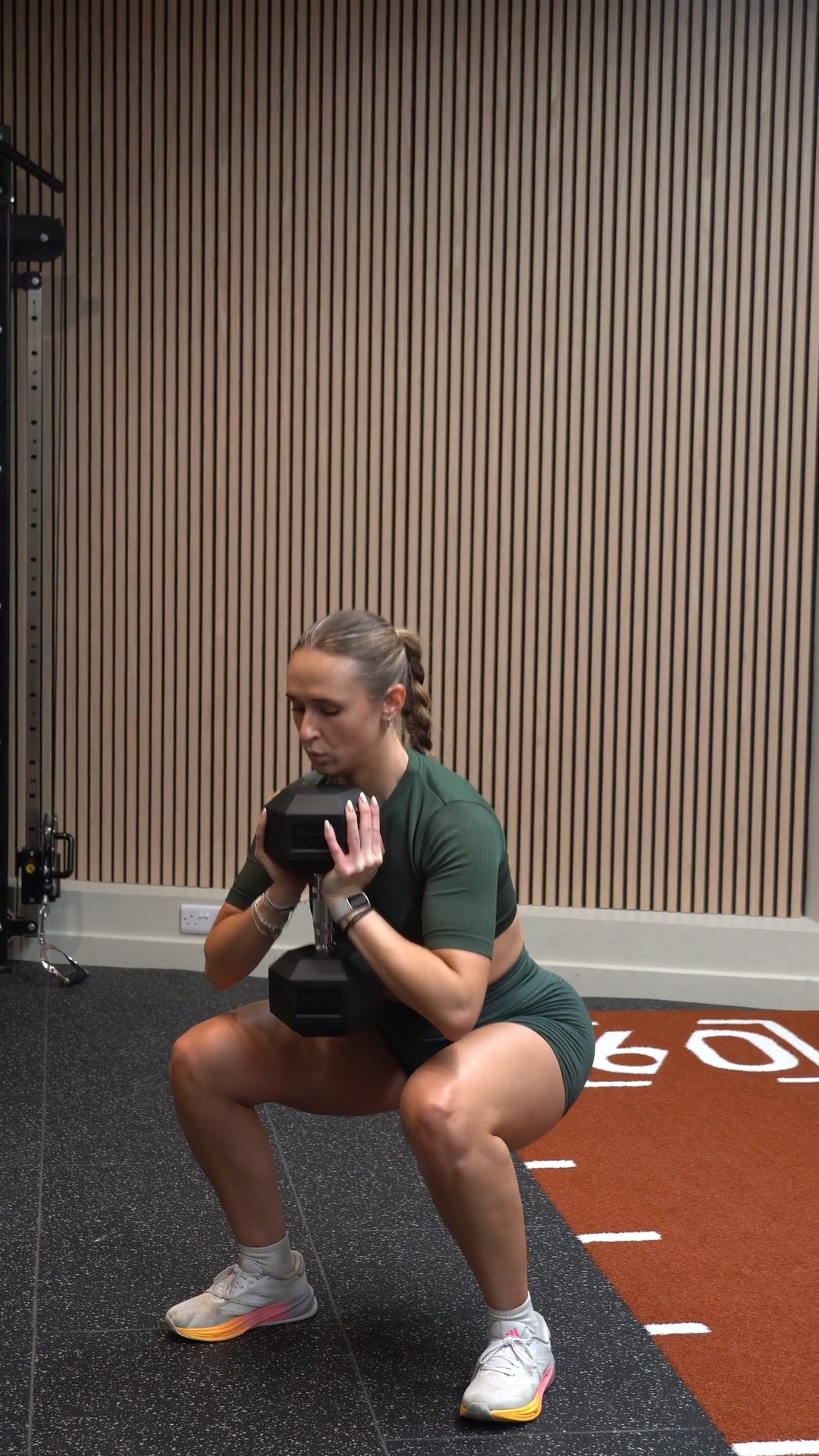
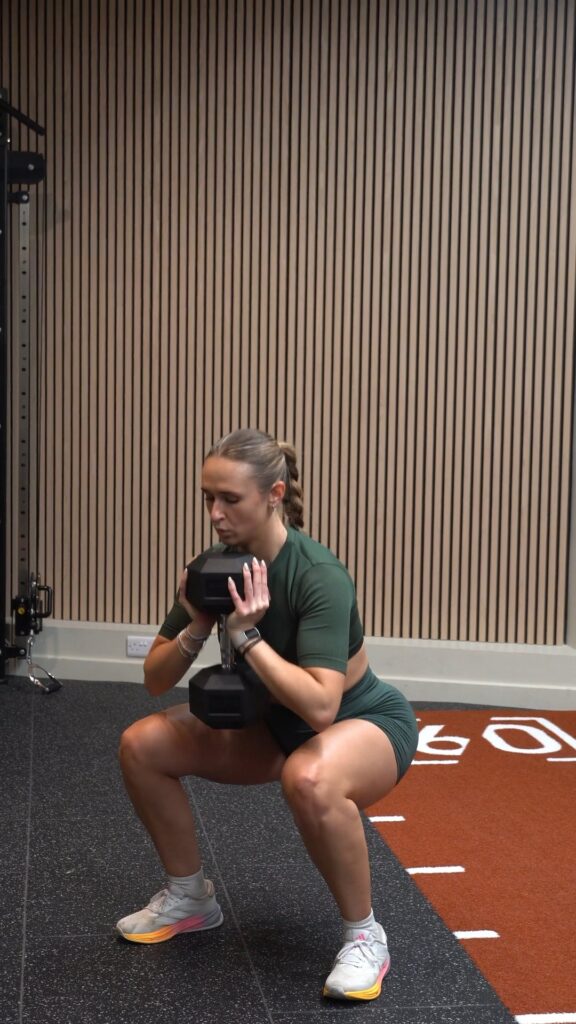
No, letting your knees go past your toes when you squat isn’t bad for healthy knees. For most people, it’s a normal part of squatting deep, especially if you have long legs, short feet or squat with a more upright torso.
Forcing your knees to stay behind your toes takes a little stress off your knees, but moves a lot more onto your hips and lower back. What matters more is that your knees track in line with your toes, you control the movement, and you use a weight you can handle.
Where Did the “Knees Behind Toes” Rule Come From?
The advice dates back to research from the 1970s and 1980s showing that knee stress rises as the knees move forward. That part is true. But the rule ignored what happens to the rest of the body when you stop the knees from moving.
What the Research Says
- Restricting your knees shifts stress to your hips and back. In a 2003 study by Fry and colleagues, people squatted normally and with a barrier stopping their knees from passing their toes. As summarized in a later review, knee torque (the twisting force at the joint) was about 22% lower when knees were restricted (117 vs 150 Nm). But hip torque was roughly ten times higher (303 vs 28 Nm), and people had to lean much further forward.
- A similar pattern in another study. A 2009 conference study of five people found restricted squats lowered knee moments by about 10 to 11% but raised hip moments by about 14 to 16% with light loads. The authors suggested this likely means more load on the lower back.
- Deep squats don’t appear to raise knee injury risk in healthy people. A 2013 analysis by Hartmann and colleagues concluded that deep squats don’t increase the risk of knee injury, and that very heavy partial squats may be more of a concern for the knees and spine over time.
These are mostly short-term studies of joint forces in healthy people, not long-term injury studies. But they point the same way: some forward knee travel is normal, and stopping it has trade-offs.
Why Your Knees Move Forward When You Squat
- Depth: the deeper you squat, the further your knees travel.
- Your body shape: longer thighs and shorter feet mean more forward knee travel.
- Bar position: front squats and goblet squats keep your torso upright, so your knees move further forward than in a low-bar back squat.
- Ankle mobility: more ankle flexibility allows more forward knee travel.
For more on how squat type changes your position, see front squat vs back squat.
Knees Behind Toes vs Natural Knee Travel
| Knees forced behind toes | Natural knee travel | |
|---|---|---|
| Knee stress | Slightly lower | Slightly higher |
| Hip and lower back stress | Much higher | Lower |
| Torso position | Leans further forward | More upright |
| Squat depth | Often limited | Easier to reach full depth |
What Actually Matters for Healthy Knees
- Knees in line with your toes. Let your knees move forward and slightly out, following the direction of your toes. Avoid letting them cave inward.
- Control. Lower under control rather than dropping into the bottom.
- Sensible load. Add weight gradually. Big jumps in weight cause more problems than knee position.
- Whole foot on the floor. Keep your heels down and your weight spread across your foot.
- Pain-free range. If a certain depth hurts, work just above it and build up.
See my full guides to how to squat properly and how deep you should squat.
Can Knees Forward Ever Be a Problem?
Yes, for some people. If you have current knee pain or a knee injury, or you’re recovering from surgery, a physical therapist may limit how far your knees travel for a while. That’s a treatment decision for your situation, not a rule for everyone.
A box squat is one way to reduce knee travel when you need to, because you sit back further to reach the box. See box squats.
Try It: Heel-Elevated Squats
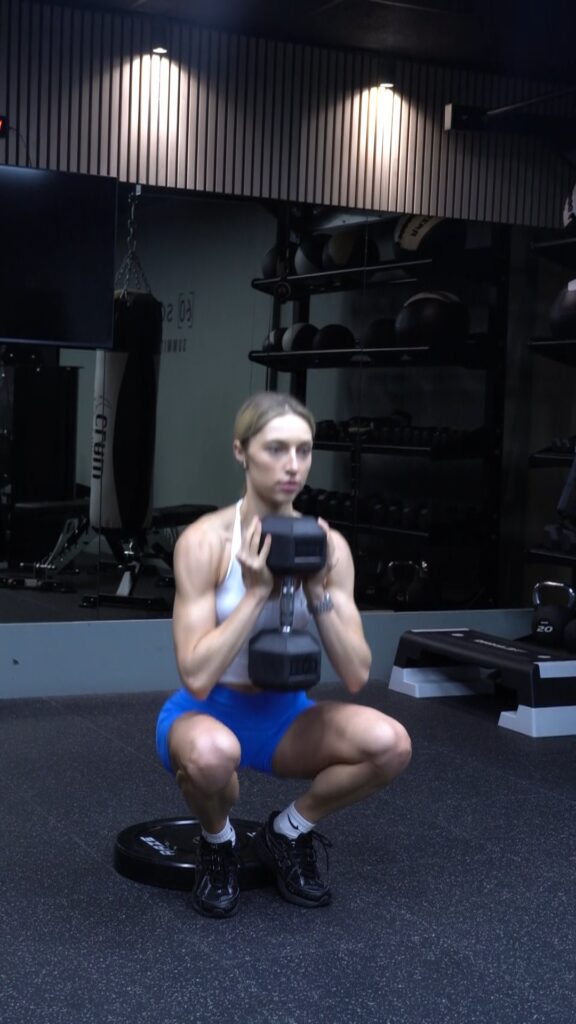
If you want to train your quads, raising your heels on a small wedge or plates lets your knees travel further forward and helps you stay upright. Here’s the barbell version from the 12REPS exercise library:
Summary
- Knees going past your toes is normal in a deep squat and isn’t bad for healthy knees.
- Research shows restricting knee travel slightly lowers knee stress but greatly increases hip and lower back stress.
- Focus on knees tracking in line with your toes, control and sensible loads.
- If you have knee pain or an injury, follow advice from a health professional.
Squat With Confidence
Not sure your squat form is right? Every exercise in 12REPS has a demo and a coach tutorial from me, so you can see exactly how each squat variation should look.
Pick your workout time and equipment, and the app builds a leg session that fits. Your log shows what you lifted last time, so you know when to add weight.
Download 12REPS and see what you’ll get:
Sources
- Fry AC, Smith JC, Schilling BK. Effect of knee position on hip and knee torques during the barbell squat. J Strength Cond Res. 2003;17(4):629–633.
- Encyclopedia MDPI. Anterior knee displacement in the squat (summary of Fry et al. 2003 and Hartmann et al. 2013).
- Comparison of angles and the corresponding moments in knee and hip during restricted and unrestricted squats. ISBS Conference Proceedings. 2009;27(1):270–273.
- Hartmann H, Wirth K, Klusemann M. Analysis of the load on the knee joint and vertebral column with changes in squatting depth and weight load. Sports Med. 2013;43(10):993–1008.
Related Reading
- How deep should you squat?
- How to squat properly
- How to do a goblet squat
- Front squat vs back squat
- Are leg extensions bad for your knees?
I’m Will Duru, a personal trainer and the founder of 12REPS. I hold a BSc (Hons) in Sport and Exercise Science and have more than a decade of experience coaching people in strength training. This article is for general education and isn’t medical advice.
