




To squat properly, stand with your feet about hip to shoulder width apart and your toes turned out slightly. Sit your hips down and back while your knees travel forward in line with your toes. Go as deep as you can with your heels down and your back steady, then push through your whole foot to stand. There is no single correct stance: the right one is the one that fits your hips and ankles.
This guide helps you find your own squat. It covers stance width, depth, what to do when your heels lift or your knees ache, and how to progress from bodyweight to a barbell. For why squats are worth learning, read why women should do barbell squats and deadlifts.
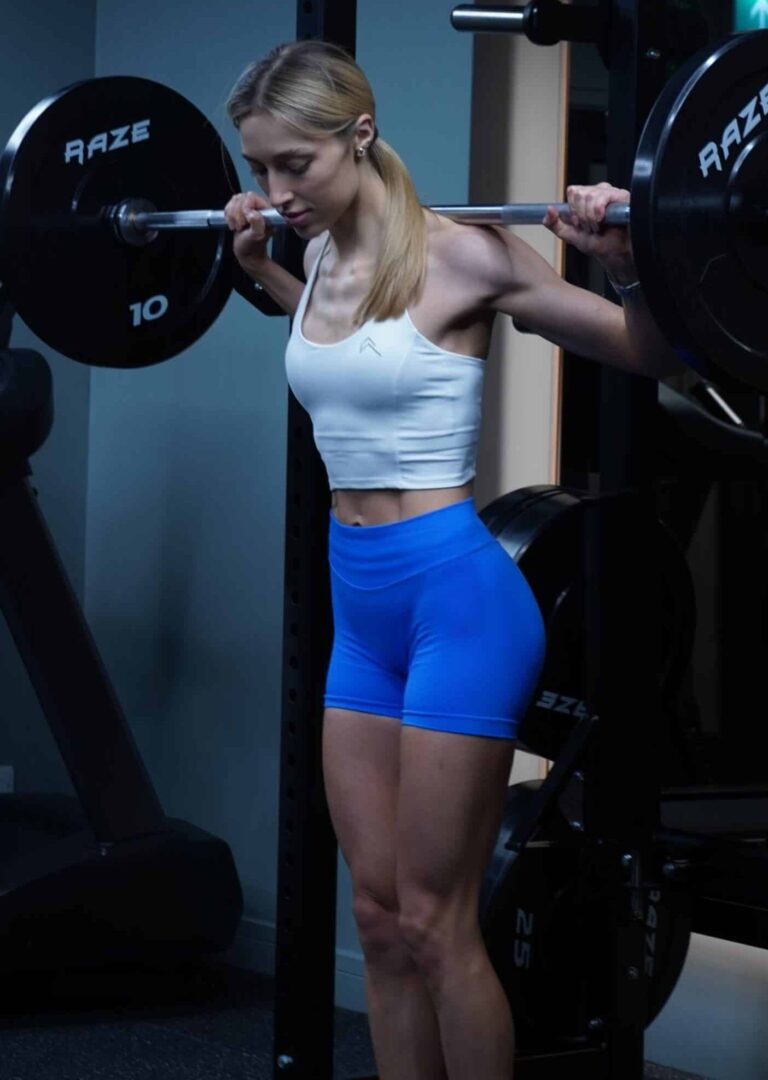
Muscles worked in the squat
- Main muscles: quadriceps (front of the thighs), gluteus maximus and adductors (inner thighs).
- Supporting muscles: hamstrings, calves, trunk muscles and the muscles along your spine. With a barbell, your upper back holds the bar in place.
How to find your squat stance
Hip shape, leg length and ankle mobility vary from person to person. That is why two women can both squat well with very different stances. Use these steps to find yours:
- Start at hip width with your toes turned out a little, roughly 10 to 30 degrees.
- Do five slow bodyweight squats. Note how deep you get with your heels down and your back steady.
- Widen your stance a few centimeters and turn your toes out a touch more. Do five more.
- Keep the stance that lets you go deepest with the least strain. Use it every session so you can track progress.
Stance width also shifts the work a little. In a small study of six experienced male lifters, the widest stance produced the highest gluteus maximus activity during back squats. Quadriceps, hamstring and adductor activity did not change with stance (Paoli et al., 2009). A review of squat mechanics advises against extreme foot angles in either direction (Schoenfeld, 2010).
A goblet squat is a good way to test your stance with a little load. Holding a weight at your chest helps you stay upright. Our goblet squat guide covers it step by step.
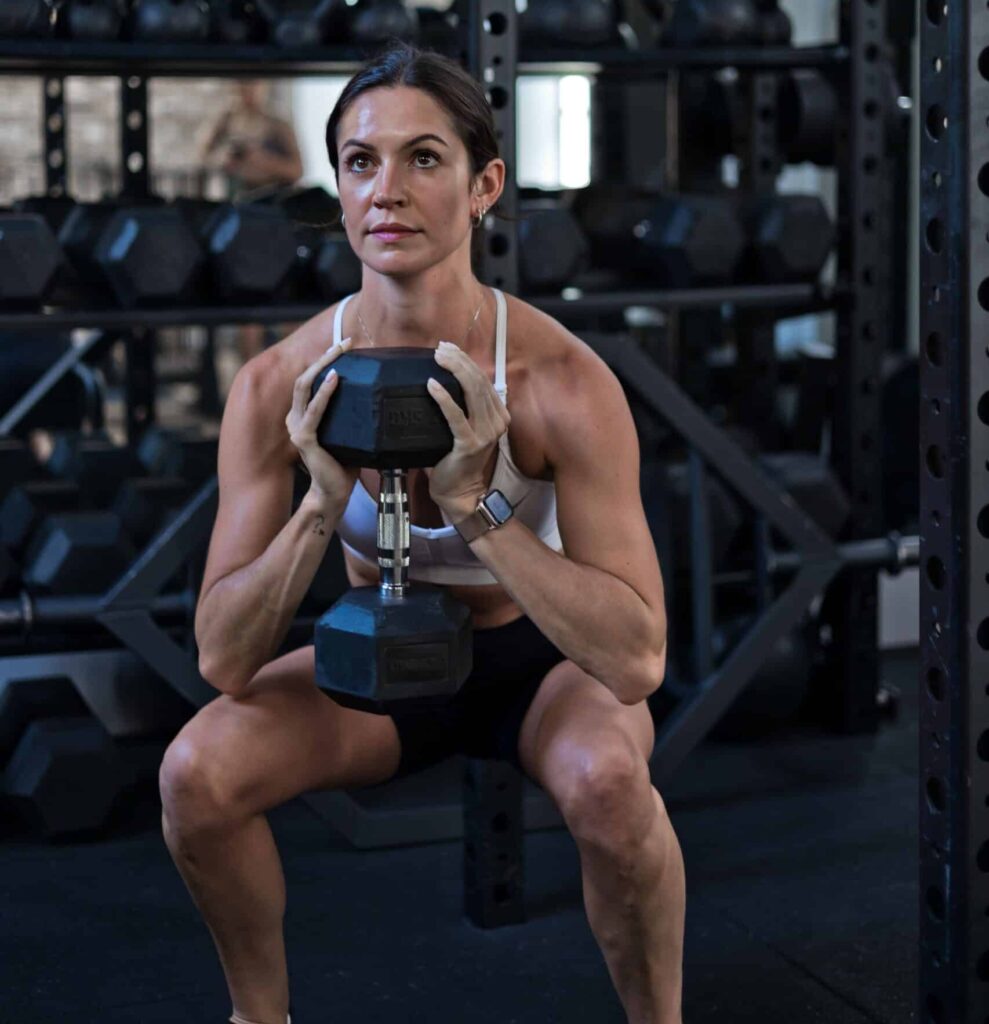
How to squat properly: step by step
Learn it with your body weight first. The same steps apply when you hold a weight or a bar.
- Set your feet. Use the stance you found above. Spread your weight across your big toe, little toe and heel.
- Brace. Breathe in and tighten your trunk all the way around your waist.
- Sit down and back. Bend at your hips and knees at the same time. Your hips move back as your knees move forward.
- Track your knees. Keep them pointing the same way as your toes. Do not let them collapse inward.
- Keep your chest up. Your torso will lean forward a little. That is normal.
- Find your depth. Go as low as you can with your heels down and your lower back steady.
- Stand up. Push the floor away through your whole foot. Your hips and chest rise together.
- Breathe. Breathe out near the top, then reset your breath and brace before the next rep.
Three coaching cues
- “Tripod foot.” Big toe, little toe and heel stay on the floor.
- “Knees follow toes.” Gently spread the floor apart with your feet.
- “Chest and hips together.” Neither one should race ahead on the way up.
Video: How to perform squats properly. Watch the knee path and how the heels stay down at the bottom.
How deep should you squat?
Squat as deep as you can while your heels stay down and your back stays steady. For most people that is around thighs parallel to the floor or lower.
Depth seems to matter for the glutes. In a 10-week study of 17 men, full squats grew the gluteus maximus and adductors more than half squats. Quadriceps growth was similar in both groups, and the hamstrings did not grow in either (Kubo et al., 2019). Because it included only men, the results may not carry over exactly to women.
If you cannot reach your chosen depth yet, squat to a box or bench. Lower the box as your control improves.
Is it OK for your knees to go past your toes?
For most people, yes. Your knees need to move forward for you to squat deep with your torso fairly upright. A review of squat research describes a study that blocked forward knee travel. Load at the hips rose sharply, because the lifters had to lean much further forward (Schoenfeld, 2010). What matters more is that your knees stay in line with your toes and your heels stay down.
What if your heels lift?
Heels lifting usually means your ankles run out of range before you reach the bottom. Try these:
- Widen your stance and turn your toes out slightly.
- Put a small plate or wedge under each heel for now.
- Squat to a box at a height you can reach with flat feet.
- Work on calf and ankle mobility between sessions.
Raising the heels is a reasonable option, especially for beginners. In a study of back squats, novices showed more loading at the lower back than experienced lifters on a flat floor. That difference was no longer significant when their heels were raised (Sayers et al., 2020).
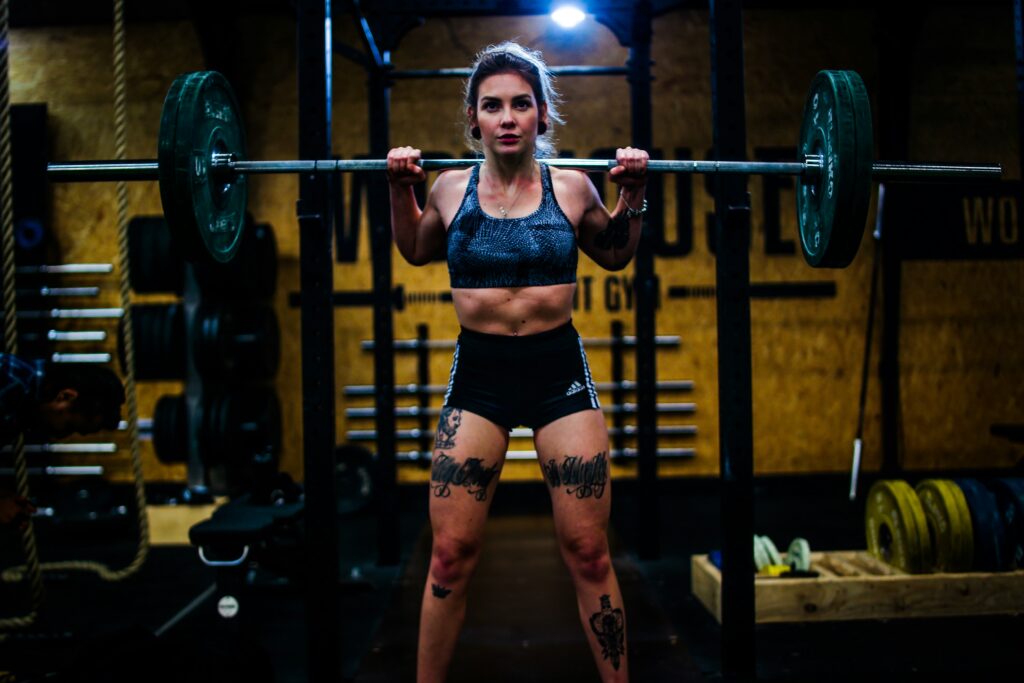
Common squat mistakes and fixes
Knees caving in
Your knees drift toward each other on the way down or up. Think “knees follow toes” and spread the floor with your feet. A light mini band just above the knees gives you something to push against. If it keeps happening, reduce the load.
Heels lifting
See the fixes above: a wider stance, heel plates or a box.
Folding forward
Your chest drops and your hips rise first out of the bottom. Try a goblet squat, which helps you stay upright. Brace before each rep and drive your chest and hips up together. Trunk work such as the dead bug and upper-back work such as the barbell row help too.
Cutting the depth short
You stop well above your usual depth as the weight gets heavier. Lower the load until you hit the same depth every rep, or use a box as a depth target.
Looking at the ceiling
Craning your neck pulls your body out of line. Look straight ahead or at a spot on the floor a couple of meters in front of you.
Losing your breath and brace
Brace for each rep, then breathe out near the top and take a fresh breath before the next one.
Squat progression: from bodyweight to barbell
Move to the next step when every rep looks the same at your target depth. The original guide had beginners do 3 to 4 sets of 12 to 15 bodyweight squats, two or three times a week, before adding weight.
- Box squat. Sit to a box or bench, then stand. Good for learning depth and confidence.
- Bodyweight squat. The same depth without the box.
- Goblet squat. Hold a dumbbell or kettlebell at your chest. Try the Swiss ball dumbbell goblet squat or the kettlebell box front squat for variety.
- Barbell back squat. Start with an empty bar in a squat rack with the safety bars set just below your bottom position. See the barbell squat demo.
Video: Box squats. See how the box sets a consistent depth on every rep.
Setting up a barbell back squat
- Set the bar in the rack at about collarbone height.
- Duck under and settle the bar on the muscle of your upper back, below the bony bump at the base of your neck.
- Grip the bar a little wider than shoulder width and squeeze your upper back.
- Stand up to lift it off the rack, take two or three steps back and set your stance.
- Brace, then squat exactly as you practiced with your body weight.
Video: Barbell squats. Watch the walk-out from the rack and the bar position on the upper back.
Other squat variations
- Front squat: the load sits in front of you, which keeps you more upright. Try the cable straight-bar front squat.
- Sumo squat: a wide stance with toes turned out more. Suits some hip shapes better.
- Bulgarian split squat: one leg at a time. See our Bulgarian split squat guide.
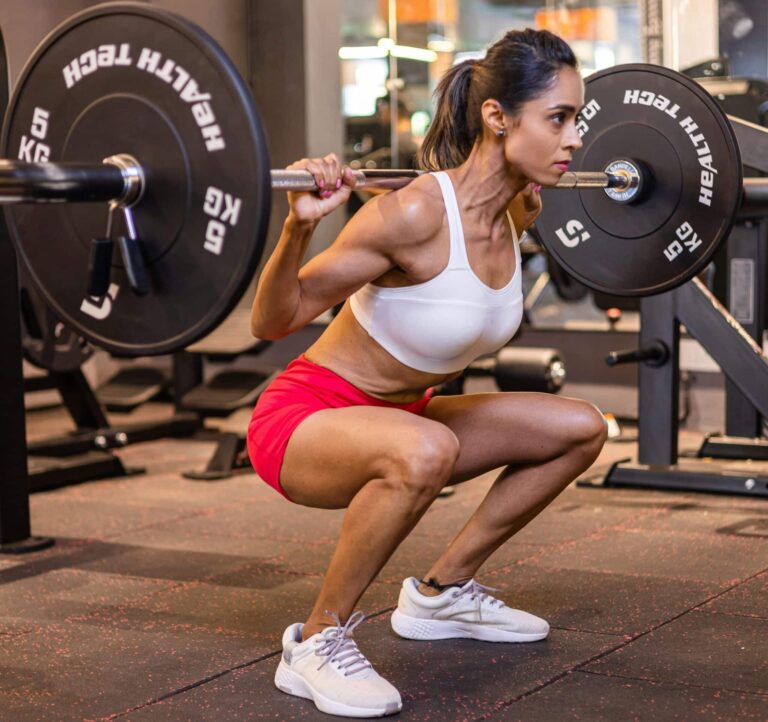
Squat troubleshooting
"My knees hurt when I squat."
Film yourself and check that your knees track over your toes. Try a slightly different stance, reduce the load or squat to a box. If the pain continues, or you have a knee condition, see a physiotherapist or doctor.
"I can't squat deep without losing my position."
Squat to a box at a depth you control and raise your heels. Practice holding the bottom of a goblet squat for a few breaths. Depth usually improves with regular practice.
"I'm scared of getting stuck under the bar."
Always set the rack safety bars just below your lowest position. If you miss a rep, sit down onto them and step out. Start light and add weight in small steps. Our guide to good form vs lifting heavy explains when to add load.
Squat with a plan
Choosing the right squat for you is half the work. The other half is doing it regularly and adding a little over time.
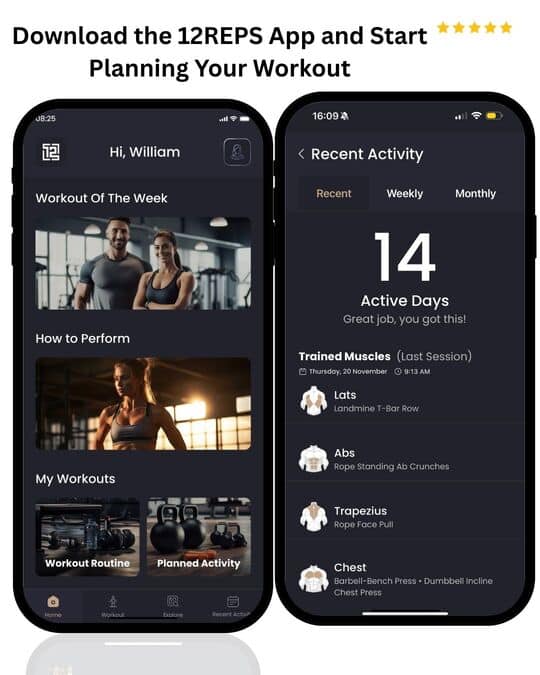
When you open 12REPS, your session is ready: built around your goal, the equipment you have and your time, with a qualified trainer demonstrating each exercise. Log the reps and weight of every set and the app keeps the record, so you can watch your squat move up week by week.
Squat FAQs
Should women squat differently from men?
The technique is the same. Your stance and depth depend on your own hips, legs and ankles, not your sex.
Do I need squat shoes?
No. Flat, firm shoes work well. Lifting shoes have a raised heel, which can help if your heels lift, but small plates under your heels do a similar job.
Squat or deadlift first?
Put the lift that matters most to you first in the session. See our deadlift guide and hip thrust guide for the other main lower-body lifts.
Sources
- The effect of stance width on the electromyographical activity of eight superficial thigh muscles during back squat with different bar loads. Paoli A, Marcolin G, Petrone N. Journal of Strength and Conditioning Research, 2009. https://pubmed.ncbi.nlm.nih.gov/19130646/
- Squatting kinematics and kinetics and their application to exercise performance. Schoenfeld BJ. Journal of Strength and Conditioning Research, 2010. https://pubmed.ncbi.nlm.nih.gov/20182386/
- Effects of squat training with different depths on lower limb muscle volumes. Kubo K, Ikebukuro T, Yata H. European Journal of Applied Physiology, 2019. https://doi.org/10.1007/s00421-019-04181-y
- The effect of elevating the heels on spinal kinematics and kinetics during the back squat in trained and novice weight trainers. Sayers M, et al. Journal of Sports Sciences, 2020. https://doi.org/10.1080/02640414.2020.1738675

