




By Will Duru, personal trainer and founder of 12REPS.
The Short Answer
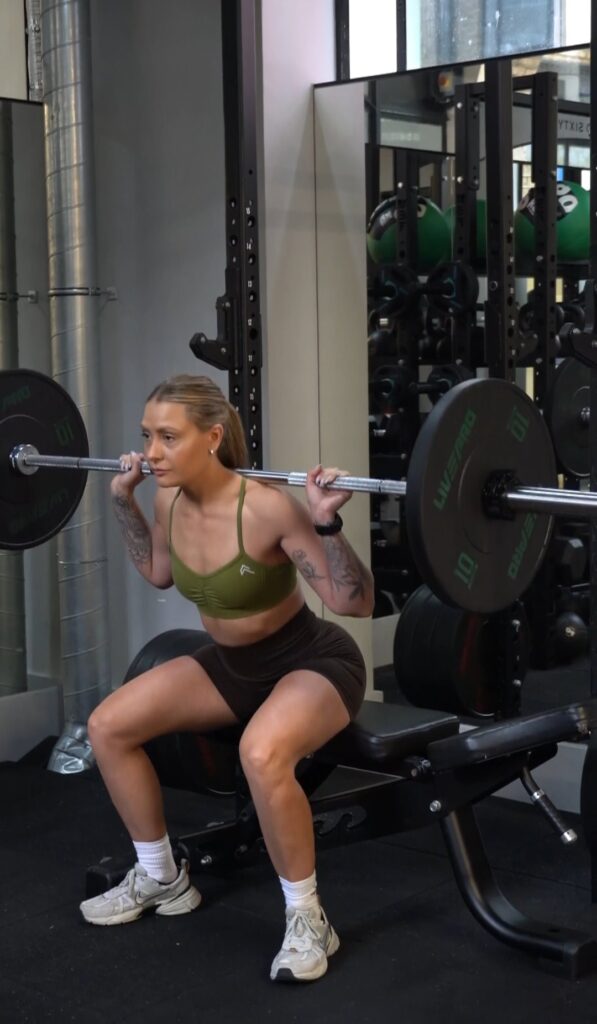
A box squat is a squat where you sit back onto a box or bench at the bottom, pause briefly, then stand up. The box shows you how deep to go every rep and removes the bounce out of the bottom.
Research shows box squats produce similar force and power to regular squats, with slightly less muscle activity. They’re a great tool for learning squat depth, building strength from a dead stop and training around limited mobility. Most people should use them alongside regular squats, not instead of them.
What Muscles Do Box Squats Work?
- Glutes and hamstrings: work hard as you sit back and drive your hips up from the box.
- Quadriceps: straighten your knees as you stand.
- Adductors: the inner thigh muscles, especially with a wider stance.
- Core and back: keep your torso braced while you pause on the box.
What the Research Says
- Similar force and power to a regular squat. In a 2010 study by McBride and colleagues, eight trained men did squats and box squats at 60%, 70% and 80% of their one-rep max. Peak force and power were similar overall. Peak force at 70% and peak power at 80% were actually slightly higher in the box squat.
- Slightly less muscle activity. In the same study, muscle activity in the quads, hamstrings and lower back was generally higher in the regular squat. The authors concluded the differences were small and that removing the bounce with a box had little negative effect on performance.
- Different body positions. A 2012 study by Swinton and colleagues compared a traditional squat, a wide-stance powerlifting squat and a box squat in 12 powerlifters. The box squat and powerlifting squat used a wide stance with a more vertical shin. The box squat placed the lowest stress on the lower back and ankles of the three.
Both studies were small and measured single sessions, not long-term training. But they suggest the box squat is a useful variation that doesn’t cost you much strength or power.
How to Do a Box Squat
- Set the box height. Choose a box or bench that puts your thighs at about parallel to the floor when you sit on it. Place it just behind you.
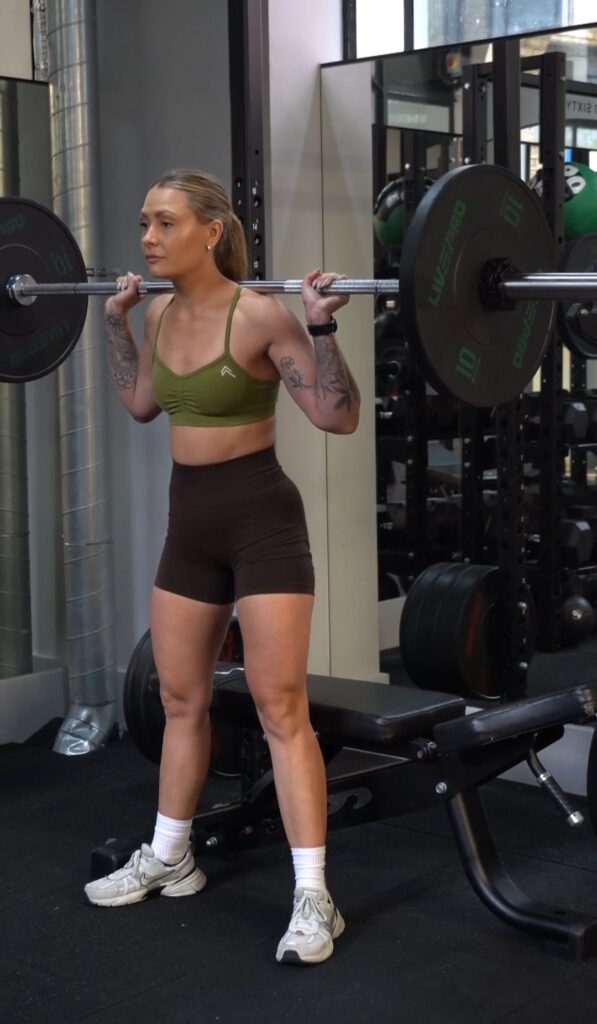
- Set your stance. Stand with your feet about shoulder width or a little wider, toes turned slightly out.
- Brace. Take a breath into your belly and tighten your midsection.
- Sit back. Push your hips back and bend your knees, keeping your shins fairly vertical. Lower under control until you touch the box.
- Pause. Sit on the box for about a second. Stay tight, don’t fully relax or rock backward.
- Stand up. Drive your feet into the floor and your hips forward to stand tall.
Box Squat Variations
| Variation | How it works | Best for |
|---|---|---|
| Bodyweight box squat | No weight, sit to a bench | Beginners learning the squat |
| Goblet box squat | Hold a dumbbell or kettlebell at your chest | Learning depth with light weight |
| Kettlebell box front squat | Hold a kettlebell in front | Upright torso and quads |
| Barbell box squat | Bar on your upper back | Building strength from a dead stop |
| Wide-stance box squat | Wider feet, sit further back | More glute and hip work |
Here’s the kettlebell version from the 12REPS exercise library:
Box Squat vs Regular Squat
| Box squat | Regular squat | |
|---|---|---|
| Depth | Set by the box | Set by you |
| Bounce out of the bottom | No | Yes |
| Muscle activity | Slightly lower in research | Slightly higher |
| Force and power | Similar | Similar |
| Lower back and ankle stress | Lower in research | Higher |
| Best for | Learning depth, strength from a stop, limited mobility | General strength and muscle |
For more on regular squatting, see how to squat properly, front squat vs back squat and how deep should you squat.
Who Should Use Box Squats?
- Beginners: the box gives you a clear target and builds confidence.
- People who cut their squats short: the box makes you hit the same depth every rep.
- Lifters who struggle out of the bottom: pausing on the box builds strength from a dead stop.
- People with limited mobility: a higher box lets you train within a comfortable range, then lower it over time.
Common Mistakes
- Dropping onto the box. Lower under control. Crashing down puts stress on your spine.
- Relaxing completely. Stay braced while you sit on the box.
- Rocking to stand up. Don’t lean back and swing forward. Drive straight up.
- Using a box that’s too low. If your back rounds before you reach the box, raise it.
- Box too far away. Keep it close enough that you don’t have to reach for it.
How to Add Box Squats to Your Program
- Sets and reps: 3 to 4 sets of 3 to 8 reps for strength, or 3 sets of 8 to 12 with lighter loads.
- As a teaching tool: start with a goblet box squat for a few weeks before moving to free squats.
- As a strength variation: use barbell box squats on one leg day and regular squats on another.
- Progress: lower the box over time, or add weight at the same height.
Warm up first with lighter sets. See my 3-phase warm-up guide.
Summary
- A box squat means sitting back to a box, pausing, then standing up.
- Research shows similar force and power to regular squats, with slightly less muscle activity.
- It’s useful for learning depth, building strength from a stop and working around mobility limits.
- Lower under control, stay braced on the box and drive straight up.
Plan Your Leg Day With 12REPS
Want box squats in a plan that fits your week? In 12REPS, tap the leg muscles you want to train, pick your workout time and equipment, and the app builds your session.
Every exercise has a demo and a coach tutorial from me, and your log shows what you lifted last time, so you know when to add weight.
Download 12REPS and see what you’ll get:
Sources
- McBride JM, Skinner JW, Schafer PC, Haines TL, Kirby TJ. Comparison of kinetic variables and muscle activity during a squat vs. a box squat. J Strength Cond Res. 2010.
- Swinton PA, Lloyd R, Keogh JWL, Agouris I, Stewart AD. A biomechanical comparison of the traditional squat, powerlifting squat, and box squat. J Strength Cond Res. 2012;26(7):1805–1816.
Related Reading
- How to squat properly
- How deep should you squat?
- How to do a goblet squat
- Front squat vs back squat
- How to warm up before strength training
I’m Will Duru, a personal trainer and the founder of 12REPS. I hold a BSc (Hons) in Sport and Exercise Science and have more than a decade of experience coaching people in strength training.
