




By Will Duru, personal trainer and founder of 12REPS.
The Short Answer
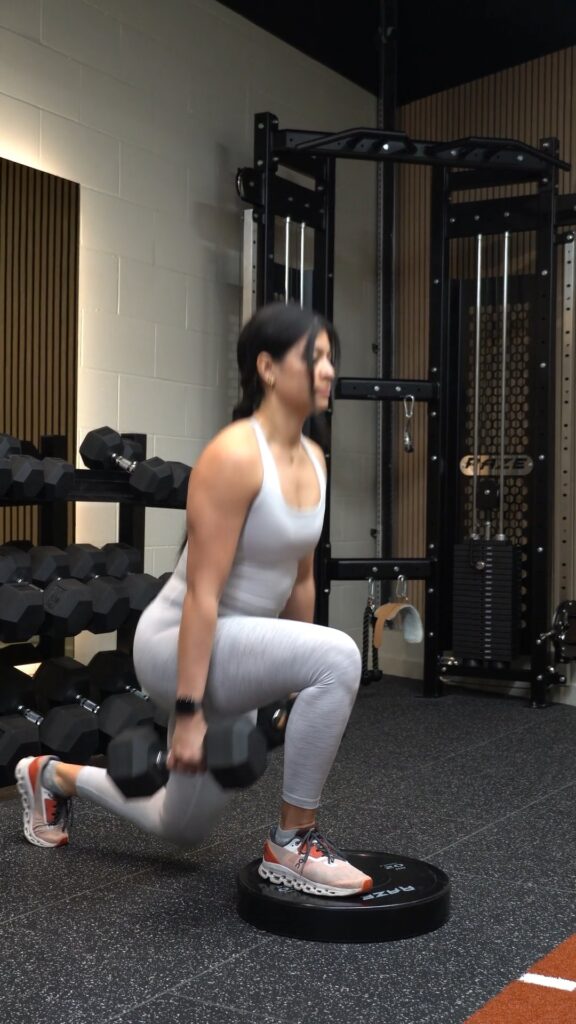
A deficit reverse lunge is a reverse lunge where you stand on a low platform, like a weight plate or step, and step back down to the floor. The platform lets your back knee drop lower, so your front leg works through a bigger range of motion.
That extra depth puts more stretch on your glutes and quads. It’s a great progression once regular reverse lunges feel easy, especially if your goal is glute growth.
Why Range of Motion Matters
There isn’t research on deficit lunges specifically, but there is good research on training through a deeper range.
In a 2019 study by Kubo and colleagues, men trained with either full squats or half squats twice a week for 10 weeks. MRI scans showed the full-squat group grew their glutes by about 6.7% compared with 2.2% for the half-squat group, and their inner thighs by 6.2% compared with 2.7%. Quad growth was similar in both groups.
That study used squats, not lunges, so it doesn’t prove deficit lunges build more glute. But it supports the idea behind them: going deeper can mean more work for your glutes. More in how deep should you squat? and partial reps vs full range of motion.
How to Do a Deficit Reverse Lunge
- Stand on a stable platform 5–10 cm (2–4 inches) high, such as a weight plate or a low step. Hold dumbbells by your sides or keep your hands on your hips.
- Step one foot back off the platform and onto the floor.
- Lower until your back knee nearly touches the floor, keeping your front foot flat on the platform.
- Lean your torso slightly forward to load your glutes.
- Push through your front foot to step back up onto the platform. Finish all reps on one side, then switch.
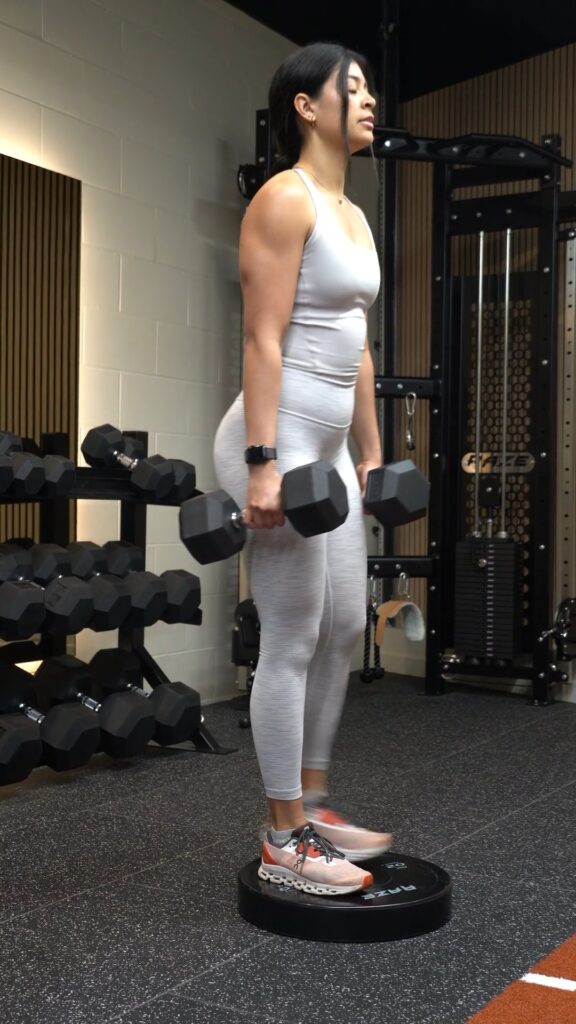
Coaching cues I use:
- “Front heel down.” Keep your whole front foot pressing into the platform.
- “Slight forward lean.” This puts more work into your glutes.
- “Control the bottom.” Don’t drop into the deepest position.
Deficit Reverse Lunge vs Regular Reverse Lunge
| Regular reverse lunge | Deficit reverse lunge | |
|---|---|---|
| Range of motion | Normal | Bigger |
| Glute stretch | Moderate | More |
| Difficulty | Easier | Harder |
| Weight used | More | Usually less |
| Best for | Beginners and heavier loading | Glute focus and progression |
Master the regular version first. See walking lunges vs reverse lunges.
How to Program It
These are my coaching recommendations, not rules from the research:
- Sets and reps: 3 sets of 8–12 reps on each leg.
- Start with body weight, then add dumbbells once you can control the full depth.
- Start with a low platform and raise it only if you can keep good form.
- Pair it with: A hip thrust or Romanian deadlift for a complete glute session. For an even harder single-leg move, try the Bulgarian split squat.
Common Mistakes
- Using a platform that’s too high. Start at 5–10 cm. Higher isn’t always better.
- An unstable platform. Make sure it won’t slide or wobble.
- Front heel lifting. Keep your whole foot down.
- Knee caving in. Keep your front knee in line with your toes.
- Going deeper than your hips allow. Only lower as far as you can control.
Summary
- A deficit reverse lunge adds range of motion by standing on a low platform.
- Training deeper squats grew the glutes more than half squats in a 10-week MRI study.
- It’s a great progression once regular reverse lunges feel easy.
- Use a low, stable platform, keep your front heel down and control the bottom.
Build Your Glute Training With 12REPS
In 12REPS, pick your workout time and the equipment you have, and the app builds a leg and glute session that fits.
Every exercise has a demo and a coach tutorial from me, and your log shows what you lifted last time, so you know when to progress.
Download 12REPS and see what you’ll get:
Sources
Related Reading
- Walking lunges vs reverse lunges
- How to do lunges
- Bulgarian split squats
- Curtsy lunges
- Can stretching build muscle?
I’m Will Duru, a personal trainer and the founder of 12REPS. I hold a BSc (Hons) in Sport and Exercise Science and have more than a decade of experience coaching people in strength training.
