December 16, 2025

6 minutes read

How to Barbell Row: Form, Cues and Common Mistakes

To barbell row, hinge forward at your hips with a flat back and let the bar hang at arm’s length. Then pull it to your lower ribs by driving your elbows back. Lower it with control and keep your torso still the whole time. Start with an empty or light bar until the hinge position feels steady.

The barbell row is one of the best ways to load your upper back and lats. It is also one of the lifts people find most awkward at first. This guide breaks the technique into small steps, shows the mistakes that come up most often, and explains how to progress.

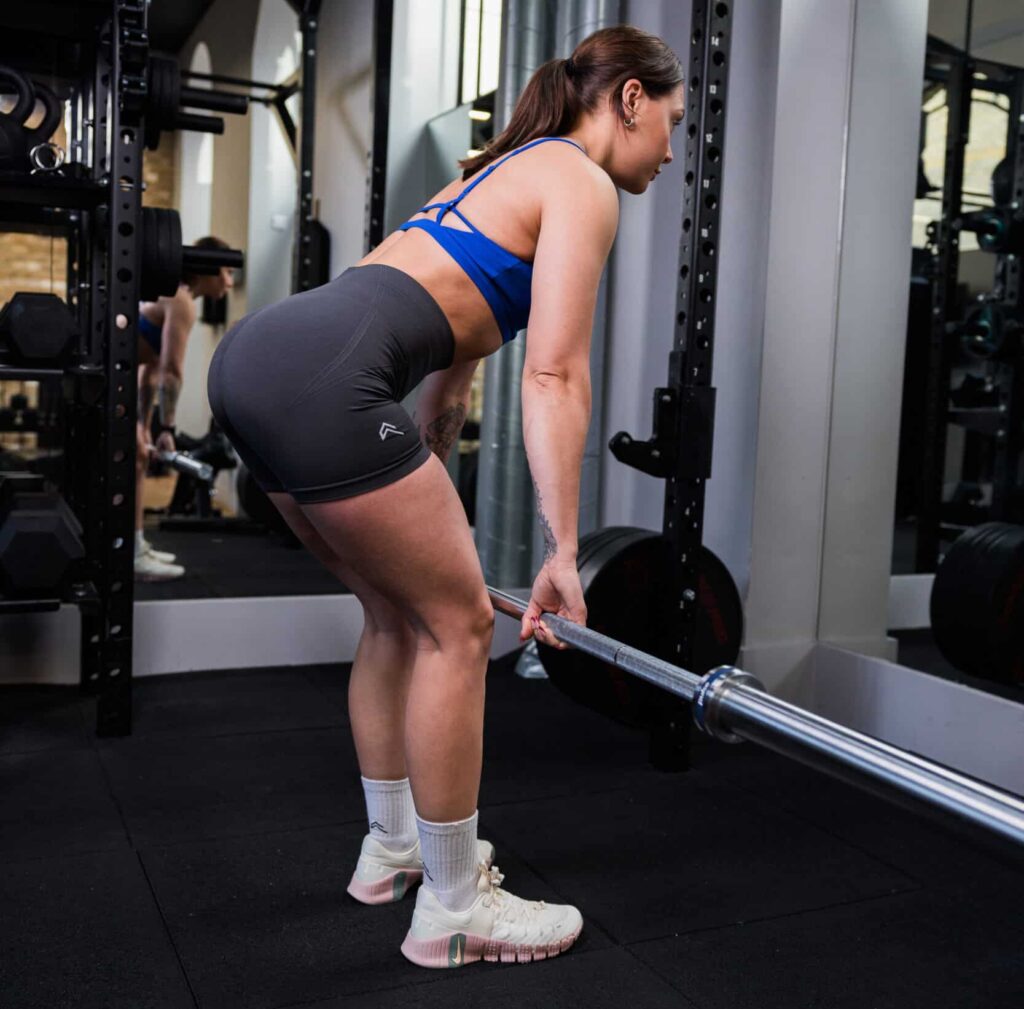
Woman bent forward gripping a barbell in a barbell row position

Barbell row at a glance

QuestionAnswer
Type of exerciseCompound horizontal pull (several joints move)
Main musclesLats, middle and lower trapezius, rhomboids, rear shoulders
EquipmentBarbell and plates
Hardest partHolding the hinge position while you pull
Good alternativesDumbbell row, chest-supported row, ring row

Rows balance pressing work such as the bench press and overhead press. They train the muscles that pull your shoulder blades back. For the step-by-step demo on its own, see the barbell bent-over row exercise page.

Video: Barbell bent-over row. Watch this first to see the start position and how far the torso leans before you pick up the bar.

Muscles worked by the barbell row

Main muscles:

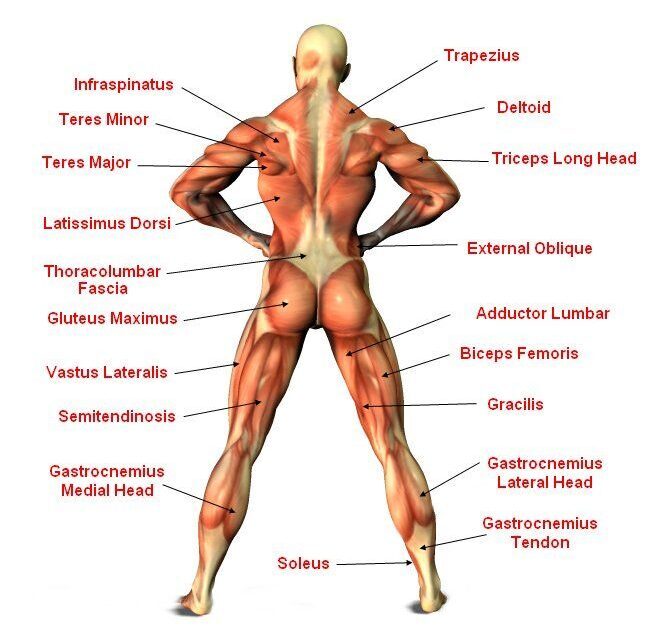
  • Latissimus dorsi (lats): the large muscles running from your upper arm down your sides to your lower back. They pull your elbows back toward your hips.
  • Middle and lower trapezius and rhomboids: between your shoulder blades. They squeeze your shoulder blades together.
  • Rear shoulders (posterior deltoids): help pull your upper arms back.

Helping muscles:

  • Biceps and forearms: bend your elbows and hold the bar.
  • Spinal erectors, glutes and hamstrings: hold your hinged position.
  • Trunk muscles: keep your torso still.

The helping muscles matter here. In a study of seven healthy men from a university, the standing bent-over row produced the highest lower-back load of the rows tested. It also produced high activation from the upper to the lower back. That is why the hinge position is the first thing to learn.

How to barbell row: step by step

Setup

  1. Bar position. Start with the bar on the floor over your mid-foot. If the bar sits too low with small plates, set it in a rack at mid-shin height or on blocks.
  2. Stance. Feet about hip-width apart, toes pointing forward or slightly out.
  3. Grip. Hold the bar with your palms facing you, hands just wider than shoulder-width. Wrap your thumbs around the bar and squeeze.
  4. Hinge. Push your hips back with a soft bend in your knees. Lean your torso forward to somewhere between about 45 degrees and close to parallel with the floor.
  5. Flat back. Keep your back in its natural position, not rounded or over-arched. Look at the floor a little in front of you.
  6. Arms long. Let the bar hang straight down from your shoulders.

The pull

  1. Brace. Breathe in and tighten your stomach before each rep.
  2. Drive your elbows back. Think of your hands as hooks. Your elbows travel back and slightly out, at roughly 45 degrees from your body.
  3. Touch low. Pull the bar to your lower ribs or upper stomach. The exact spot depends on your torso angle.
  4. Squeeze. Pull your shoulder blades together at the top and pause for a moment.

The lower

  1. Lower with control over one to two seconds until your arms are straight.
  2. Keep your torso still. Your back angle should barely change from the first rep to the last.
  3. Reset if needed. If your position slips, put the bar down and set up again rather than grinding through.

Video: How to do a barbell bent-over row. Watch this to see the elbow path and where the bar touches before your first working set.

How to learn the hinge position

Most barbell row problems start with the hinge. If you cannot hold the bent-over position, your lower back and hips take over the pull.

  • Practice without weight. Hold a broomstick along your back, touching your head, upper back and tailbone. Push your hips back until you feel a stretch in your hamstrings. Keep all three points in contact.
  • Learn the Romanian deadlift. The RDL uses the same hip hinge. Our Romanian deadlift form guide walks through it.
  • Start more upright. A torso angle of about 45 degrees is easier to hold. Lean further forward as you get used to it.

Video: Barbell RDL. Watch this to practice the hip hinge you need for the row, with the same bar position close to your legs.

Woman seen from behind gripping a loaded barbell at the start of a deadlift

Common barbell row mistakes and how to fix them

1. Using momentum

You jerk your torso up to start each rep. The fix: lower the weight until you can pull smoothly with your torso still.

2. Pulling with your arms

You curl the bar up and your elbows stay in front of your body. The fix: drive your elbows back, not your hands up.

3. Rounding your lower back

Your lower back curves as you pull. The fix: reduce the weight and brace before every rep. If you still cannot hold the position, build your hinge with RDLs first.

4. Standing too upright

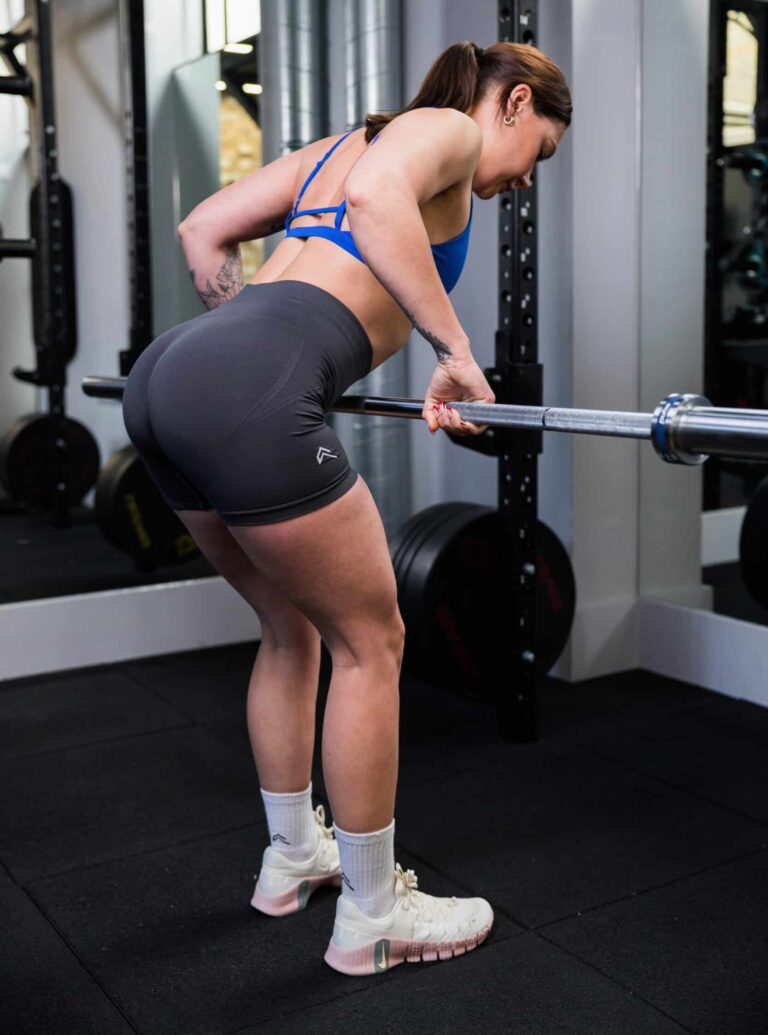
Your torso is close to vertical, so the bar travels up your body. The fix: push your hips back further and lower your chest toward the floor.

5. Flaring your elbows wide

Your elbows point straight out to the sides. This shifts the work toward your upper traps and rear shoulders. The fix: keep your elbows at about 45 degrees from your body.

6. Shoulders rolling forward at the bottom

Your upper back rounds as you lower. The fix: let your arms straighten, but keep your chest up and your shoulders from slumping toward the floor.

Woman bent forward gripping a barbell below her knees in a barbell row

Grip options and row variations

Overhand or underhand grip?

  • Overhand (palms facing you): the standard grip. Start here.
  • Underhand (palms facing away): brings your biceps in more and keeps your elbows closer to your body. Many people can lift a little more this way. Use it for variety.

Variations

  • Pendlay row: the bar returns to the floor every rep and your torso is close to parallel. It removes the bounce from each rep.
  • Dumbbell row: one arm at a time with a hand and knee on a bench. It takes load off your lower back. See the dumbbell single-arm row.
  • Chest-supported row: lie face down on an incline bench. Your back muscles work without holding a hinge. See the dumbbell incline row.
  • Ring row or inverted row: pull your body up to rings or a bar. In the same rowing study, the inverted row had the lowest lower-back load and the highest lat activation. Try the ring row.

Video: Dumbbell single arm row. If the barbell row tires your lower back first, watch this one-arm alternative and use it as a supported option.

Troubleshooting

"My lower back gets tired before my upper back"

Use a lighter bar and a slightly more upright torso. Swap in chest-supported or dumbbell rows while you build your hinge with RDLs.

"I only feel it in my arms"

Lighten the bar. Cue “elbows to back pocket” instead of “bar to chest”.

"My grip fails first"

Use straps for your hardest sets. Add grip work such as dead hangs and farmer’s carries on other days.

Woman bent forward gripping a barbell in a barbell row position

How to program barbell rows

  • Frequency: once or twice a week.
  • Sets and reps: 3 to 4 sets of 6 to 10 reps.
  • Starting weight: an empty bar for 3 sets of 8 while you learn the hinge. Add 2.5 to 5 kg when every rep looks the same.

Add weight only when every rep still looks like the first one. Progress will slow after the first few months, and that is normal.

Rows pair well with vertical pulls. Our lat pulldown and pull-up guide covers that side of your back. For a dumbbell-only session, try this dumbbell back workout.

If you want your back sessions planned for you, 12REPS sets out each workout around your goal, equipment and time. It shows a trainer demonstration for every exercise and logs your weight and reps, so you know what to beat next week. Find out how 12REPS works.

Barbell row FAQs

Is the barbell row bad for your lower back?

It loads your lower back more than most rows. That makes the hinge and a sensible weight important. If you have back pain, choose a supported row and check with a physiotherapist.

Where should the bar touch?

Between your lower ribs and your belly button. A more upright torso means a slightly higher touch point.

Barbell row or dumbbell row?

Both build your back. The barbell lets you load both sides at once. The dumbbell row lets you train one side at a time with support.

Sources

  • Comparison of different rowing exercises: trunk muscle activation and lumbar spine motion, load, and stiffness. Fenwick CMJ, Brown SHM, McGill SM. Journal of Strength and Conditioning Research, 2009. https://pubmed.ncbi.nlm.nih.gov/19197209/

Share this article

12Reps Team

The 12reps app is your ultimate fitness companion, crafting tailored workout plans, tracking your progress, and keeping you motivated every step of the way. Whether you’re at home, in the gym, or on the go, our adaptable approach fits seamlessly into your lifestyle — providing the support and guidance you need to crush your goals and stay on track.

Disclaimer: The ideas in this blog post are not medical advice. They shouldn’t be used for diagnosing, treating, or preventing any health problems. Always check with your doctor before changing your diet, sleep habits, daily activities, or exercise.  JUST12REP.COM  isn’t responsible for any injuries or harm from the suggestions, opinions, or tips in this article.

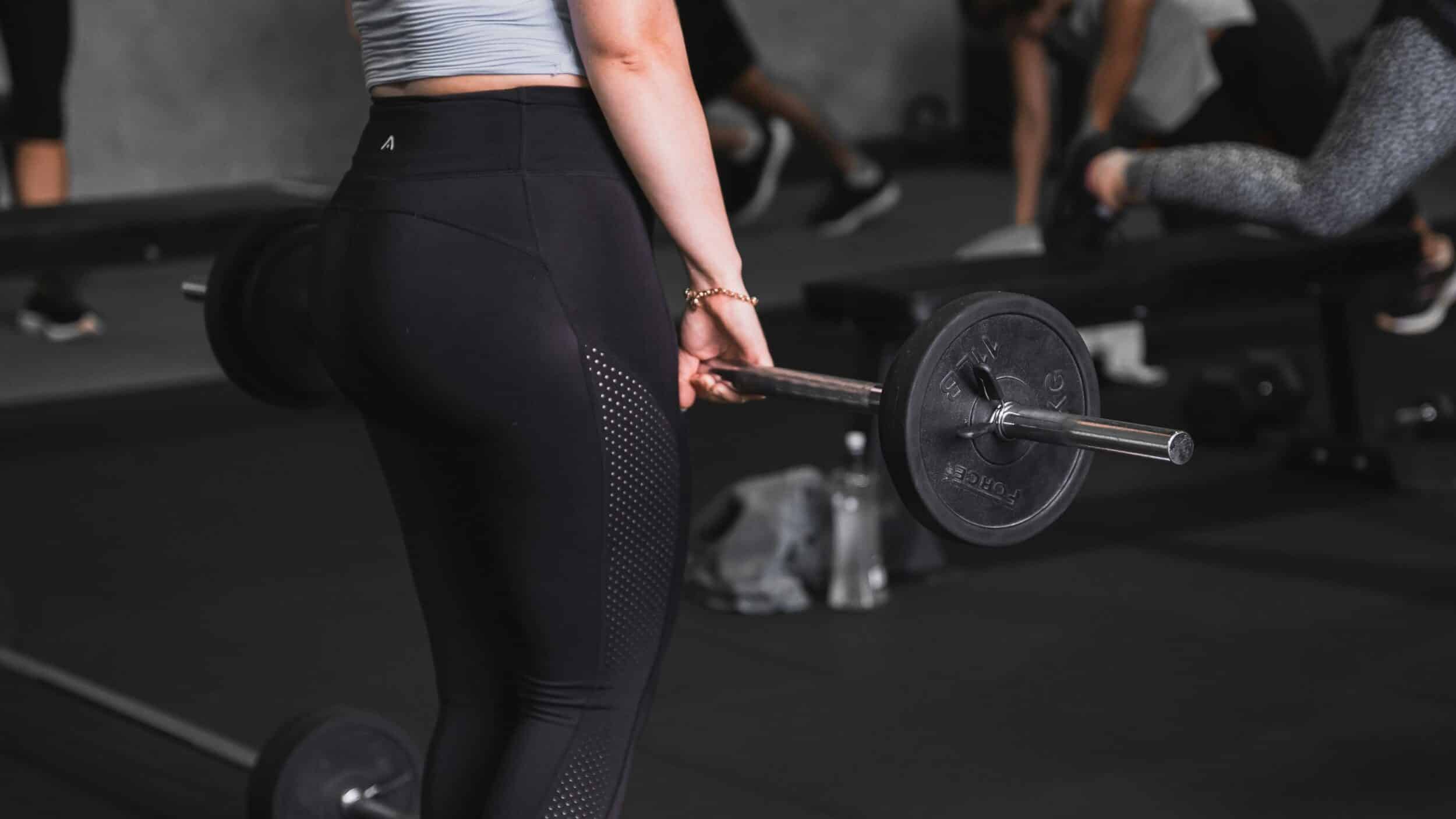
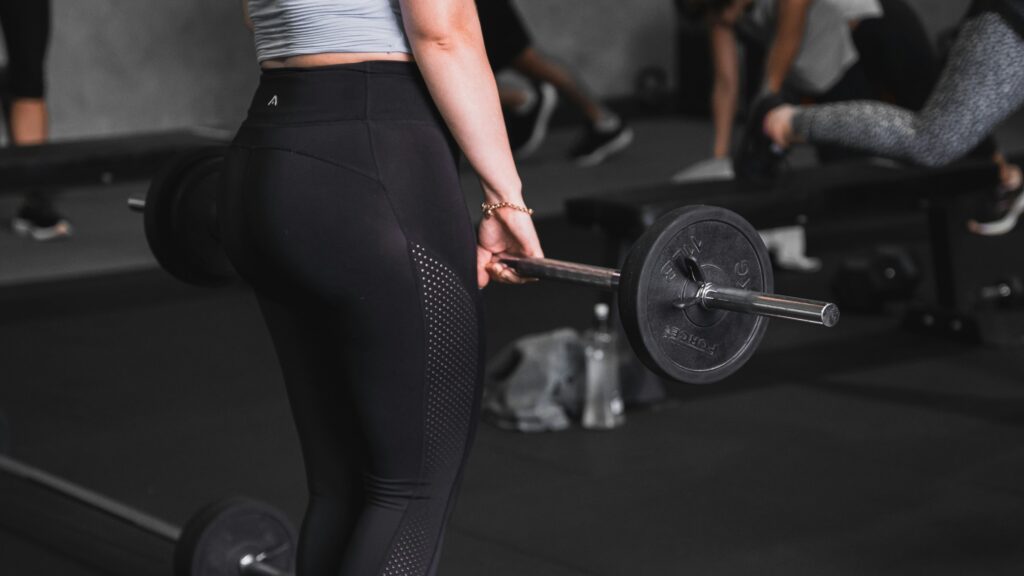
Cropped rear view of a woman in black leggings standing next to a barbell in a gym
[instagram-feed feed=1]

Stay in the loop with 12reps

We know how important it is to stay motivated and informed on your fitness journey. That’s why our newsletter is packed with everything you need to succeed:
By submitting your information, you agree to subscribe to the 12reps mailing list in order to receive my free PDF guides plus fitness video tutorials, nutrition plans and tips and exclusive offers.