



By Will Duru, personal trainer and founder of 12REPS.
The Short Answer
Full range of motion is still the best default for most people. But not all partial reps are equal.
- Short partials, where you only do the easy top part of a rep, usually build less muscle.
- Lengthened partials, where you work in the stretched, bottom part of a rep, may build as much muscle as full reps, and sometimes more.
If you use partial reps, keep the stretched part. The research is still young, so use them as a tool, not a replacement for full reps.
What Are Partial Reps and Lengthened Partials?
A full rep moves through the whole range a joint can comfortably go. A partial rep covers only part of that range.
| Type | What it means | Example on a biceps curl |
|---|---|---|
| Full range of motion | The whole comfortable range | From straight arm to fully curled |
| Lengthened partial | The bottom half, where the muscle is stretched | From straight arm to halfway up |
| Shortened partial | The top half, where the muscle is short | From halfway up to fully curled |
What the Research Says
- Full range has a small edge overall. A 2023 review by Wolf and colleagues pooled studies comparing partial and full range of motion. Overall, results slightly favored full range, but the differences were trivial to small. When partial reps were done at long muscle lengths, there was a possible advantage for muscle growth, but the result was uncertain.
- Stretched partials grew the thighs more in one study. In a 2022 study by Pedrosa and colleagues, 45 untrained women trained leg extensions with different ranges. The group working in the stretched part of the movement grew more of the lower quad than the full-range group. The group working in the short, top part grew the least.
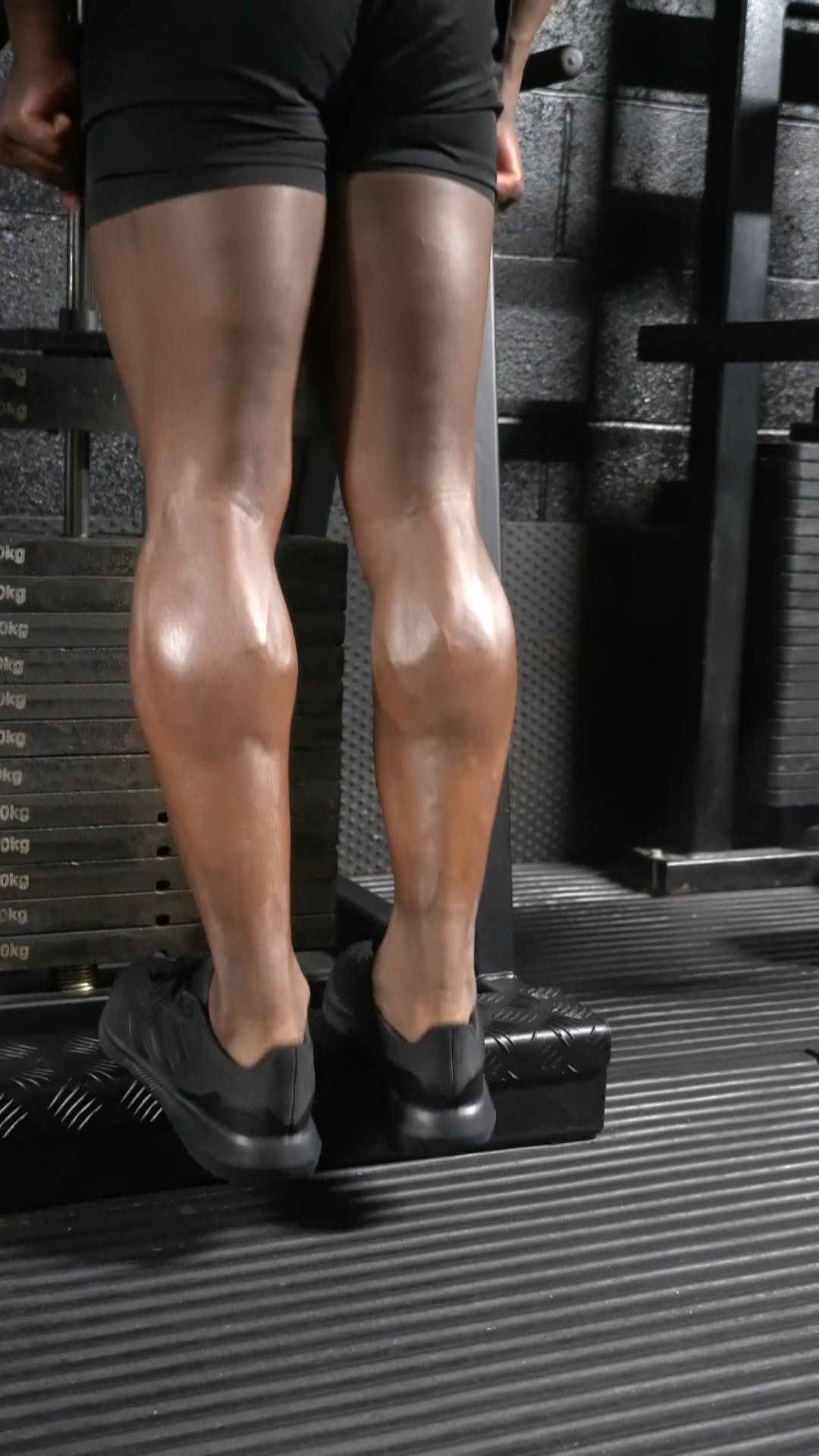
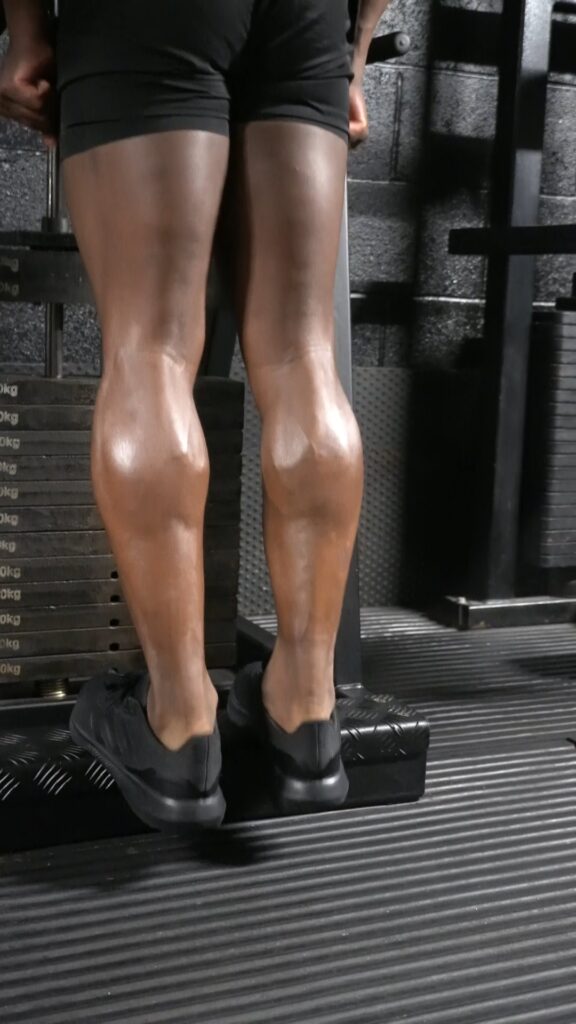
- Calves showed the same pattern. In a 2023 study by Kassiano and colleagues, 42 women trained calf raises for eight weeks. Lengthened partials grew the inner calf by about 15%, full range by about 7%, and shortened partials by about 3%. (Summary via FitCraft.)
These studies are small, and several used untrained women on one exercise. Other studies on arms have found similar results between lengthened partials and full reps. The evidence is promising, but not settled.
My view: train with full range by default, and make sure you never skip the stretched part of a rep. Lengthened partials are a useful extra, especially at the end of a set.
How to Use Lengthened Partials
- Start with full reps. Do your normal full-range reps until you are close to failure.
- Add partials at the end. When you can’t complete another full rep, do three to five extra partial reps in the bottom, stretched half.
- Or use them for a whole set. On some exercises, such as calf raises, you can do a full set of lengthened partials.
- Control the stretch. Move slowly and stay in a comfortable, pain-free range.
Best Exercises for Lengthened Partials
| Exercise | Stretched half to focus on |
|---|---|
| Calf raises | Heels low to halfway up |
| Leg extensions | Knees bent to halfway up |
| Leg curls | Legs straight to halfway curled |
| Incline and preacher curls | Arms straight to halfway up |
| Lateral raises | Arms by your sides to about halfway up |
| Dumbbell chest flys | Arms open to about halfway closed |
Be careful with heavy barbell lifts. Partial reps on squats, deadlifts and bench presses need good technique and safety bars. Read how deep should you squat for more on squat depth.
Demos from the 12REPS exercise library for two of the best exercises for lengthened partials:
Common Mistakes
- Doing only the easy half. Short, top-half reps with heavy weight build less muscle.
- Forcing the stretch. Stay in a range that feels comfortable and controlled.
- Bouncing. Control the bottom of each rep rather than rebounding out of it.
- Replacing all full reps. Full range still builds strength through the whole movement.
Summary
- Full range of motion is still the best default.
- Short, top-half partials usually build less muscle.
- Lengthened partials, in the stretched part of a rep, may build as much muscle or more.
- Add them at the end of a set or on exercises like calf raises and leg extensions.
- The research is promising but still limited.
Train With a Plan Built Around You
Want to know which exercises, sets and reps to do without second-guessing every technique trend? 12REPS builds a strength program around your goal, schedule and equipment.
Every exercise has a demo and a coach tutorial from me showing the full range of each rep, and your log shows what you lifted last time.
Download 12REPS and see what you’ll get:
Sources
- Wolf M, Androulakis-Korakakis P, Fisher J, Schoenfeld B, Steele J. Partial vs full range of motion resistance training: a systematic review and meta-analysis. Int J Strength Cond. 2023;3(1).
- Pedrosa GF, Lima FV, Schoenfeld BJ, et al. Partial range of motion training elicits favorable improvements in muscular adaptations when carried out at long muscle lengths. Eur J Sport Sci. 2022;22(8):1250–1260.
- Kassiano W, Costa B, Kunevaliki G, et al. Greater gastrocnemius muscle hypertrophy after partial range of motion training performed at long muscle lengths. J Strength Cond Res. 2023;37(9):1746–1753. Summary via FitCraft.
- American College of Sports Medicine. Progression models in resistance training for healthy adults. Med Sci Sports Exerc. 2009;41(3):687–708.
Related Reading
- How deep should you squat?
- How to grow your calves
- Are leg extensions bad for your knees?
- Preacher curl vs incline curl
- Training to failure
- How to train for muscle growth
I’m Will Duru, a personal trainer and the founder of 12REPS. I hold a BSc (Hons) in Sport and Exercise Science and have more than a decade of experience coaching people in strength training.
