



By Will Duru, personal trainer and founder of 12REPS.
The Short Answer
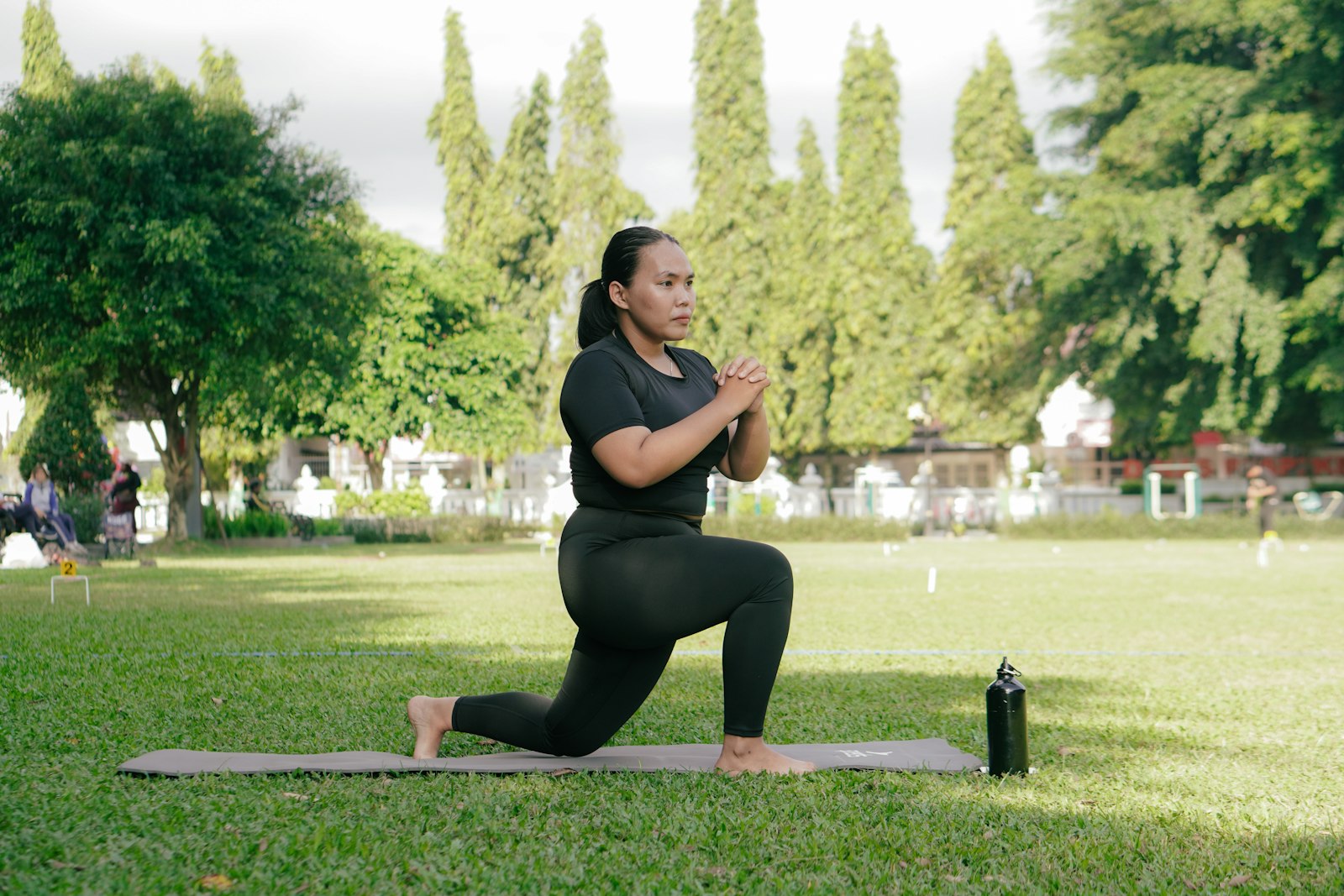
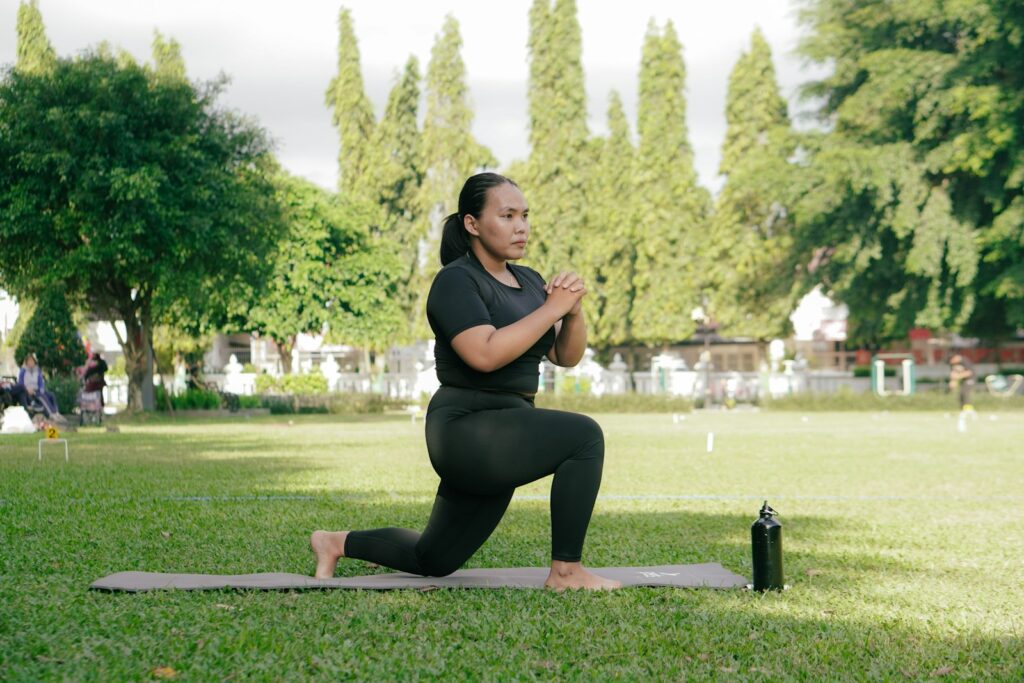
Walking lunges and reverse lunges both train your quads, glutes and inner thighs. The difference is the direction you step.
- Reverse lunges (stepping back) are easier to balance and control. Research suggests stepping back also puts less load through the front of the knee than stepping forward.
- Walking lunges (stepping forward and traveling) are harder on your balance and coordination and raise your heart rate more, but you need space to do them.
If you are a beginner, or lunges bother your knees, start with reverse lunges. If you want a bigger challenge or a conditioning finisher, use walking lunges. Many people do best with both.
Walking Lunge vs Reverse Lunge at a Glance
| Walking lunge | Reverse lunge | |
|---|---|---|
| Step direction | Forward, traveling each rep | Backward, returning to the start |
| Main muscles | Quads, glutes, adductors, calves | Glutes, quads, adductors |
| Balance demand | Higher | Lower |
| Load on the front of the knee | Higher, because you brake a forward step | Lower in research on stepping back |
| Space needed | A clear walkway or long room | About one stride |
| Best for | Conditioning, coordination and leg endurance | Beginners, heavier loads and knee-friendly training |
What the Research Says
- A 2021 study in Physical Therapy in Sport compared forward and backward lunges in 20 healthy young women. In the forward lunge, peak stress on the kneecap joint was about 10% higher, peak quadriceps force about 18% higher, and the loading rate more than double. The authors suggested the backward lunge may suit people with kneecap pain, although the participants did not have knee pain themselves.
- A 2008 study by Farrokhi and colleagues found that leaning your torso slightly forward during a lunge increased the work of the hip extensors, with more activity in the glutes and hamstrings.
- A small 2016 conference study of four people found higher activity in the glutes and quads in the reverse lunge than in forward or walking lunges. With so few participants, treat this as a hint, not proof.
The forward lunge in the 2021 study was not a walking lunge, but both involve stepping forward and braking, so it is reasonable to expect a similar pattern. My view is that the reverse lunge is the better starting point for most people, and the walking lunge is a great progression once your balance is solid.
How to Do a Reverse Lunge
Setup
- Stand tall with your feet hip width apart.
- Hold a dumbbell in each hand by your sides, or start with body weight.
- Brace your stomach.
Movement
- Take a long step back with one foot and land on the ball of that foot.
- Bend both knees and lower until your back knee is just above the floor.
- Keep most of your weight on your front foot, with your front shin roughly vertical.
- Push through the whole front foot to stand back up and bring your feet together.
- Alternate legs, or do all your reps on one side before switching.
See the bodyweight reverse lunge and plate reverse lunge in the 12REPS exercise library for more versions.
How to Do a Walking Lunge
Setup
- Find a clear path of at least 10 to 15 steps.
- Hold a dumbbell in each hand by your sides, or start with body weight.
- Stand tall and brace your stomach.
Movement
- Step forward with one leg, landing heel first, then the whole foot.
- Lower until your back knee is just above the floor.
- Push through your front foot and bring your back leg forward into the next step.
- Keep moving forward, alternating legs with each step.
- Count each step as one rep, or count one rep per leg.
New to walking lunges? Practice the bodyweight forward lunge first, then try the bodyweight version below.
Coaching Cues for Both
- “Feet on train tracks, not a tightrope.” Keep your feet hip width apart for balance.
- “Drive through the front foot.”
- “Knee tracks over your toes.” Do not let your front knee cave inward.
- “Tap the knee down softly.” Do not slam it into the floor.
- For more glutes, lean your torso slightly forward from the hips while keeping your back flat.
Common Mistakes
- Stepping too short. Your front heel lifts and your knee shoots forward. Take a longer step.
- Narrow stance. Stepping in a straight line makes you wobble. Keep your feet hip width apart.
- Front knee caving in. Push your knee out in line with your middle toes.
- Pushing off the back foot. In a reverse lunge, the front leg should do most of the work.
- Rushing. Control the lowering phase. Speed in walking lunges comes after you own the movement.
Which Lunge Should You Do?
- Choose reverse lunges if you are new to lunges, your knees are sensitive or you want to lift heavier with good control.
- Choose walking lunges if you want a balance and conditioning challenge, or you are training for sports or events with lots of moving.
- Choose both if your main goal is leg strength and muscle. Use reverse lunges as your main lunge and walking lunges as a finisher.
If any lunge causes knee pain, try a shorter range of motion or a goblet squat and speak to a qualified professional.
Sets and Reps
These are general starting points, not fixed rules.
| Goal | Exercise | Sets and reps |
|---|---|---|
| Learn the movement | Bodyweight reverse lunge | 2 to 3 sets of 8 reps per leg |
| Strength and muscle | Dumbbell reverse lunge | 3 to 4 sets of 6 to 10 reps per leg |
| Leg endurance and conditioning | Dumbbell walking lunge | 2 to 3 sets of 20 to 30 total steps |
Once you can complete every rep with good form, add a rep or move up to heavier dumbbells. The American College of Sports Medicine recommends progressing gradually like this.
Summary
- Both lunges train your quads, glutes and inner thighs.
- Reverse lunges are easier to control and put less load on the front of the knee.
- Walking lunges challenge your balance, coordination and conditioning more.
- Start with reverse lunges, then add walking lunges as a progression or finisher.
- Keep your feet hip width apart and drive through your front foot.
Train Your Legs With a Plan
Not sure where lunges fit in your leg day? 12REPS builds a strength program around your goal, schedule and equipment, with the right lunge for your level.
Every exercise has a demo and a coach tutorial from me, and your log shows what you lifted last time, so you know when to go heavier.
Download 12REPS and see what you’ll get:
Sources
- Patellofemoral joint loading during the forward and backward lunge. Phys Ther Sport. 2021;47:178–184.
- Farrokhi S, et al. Trunk position influences the kinematics, kinetics, and muscle activity of the lead lower extremity during the forward lunge exercise. J Orthop Sports Phys Ther. 2008;38(7):403–409.
- Park S, et al. Comparative analysis of lunge techniques: forward, reverse, walking lunge. ISBS Conference Proceedings. 2016.
- American College of Sports Medicine. Progression models in resistance training for healthy adults. Med Sci Sports Exerc. 2009;41(3):687–708.
Related Reading
- Bulgarian split squats: how to do them correctly
- How to do a goblet squat
- Glute bridge vs hip thrust
- Best glute medius exercises
- Dumbbell vs barbell RDL
I’m Will Duru, a personal trainer and the founder of 12REPS. I hold a BSc (Hons) in Sport and Exercise Science and have more than a decade of experience coaching people in strength training.
