




Upper/lower vs full body for women: both build strength and muscle equally well when your weekly sets match. A 3-day full body week suits you if your schedule is tight or changes often. A 4-day upper/lower week suits you if you can reliably train four days and want more time on each body part.
This guide puts the two side by side as real weeks. You get a 3-day full body plan and a 4-day upper/lower plan for women who already lift, with the same kind of exercises. Then you can compare time, sets per muscle and what happens when life gets in the way.
I’m Will Duru, a personal trainer with over 10 years’ experience in London. I program both splits, and both work well when they are set up properly.
For the full research review and plans for 2 days or 6 days a week, read full body vs split training for women.
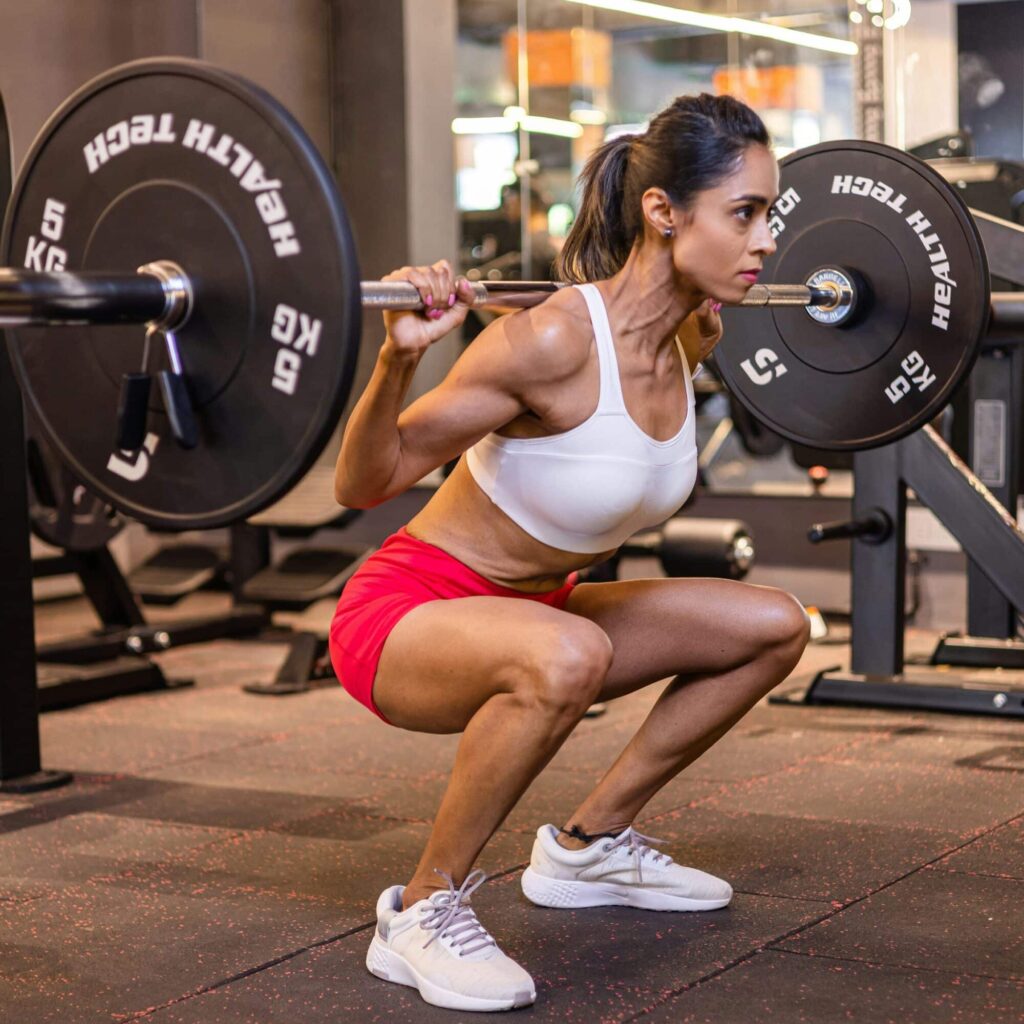
Quick answer: which one suits you?
| If this sounds like you | Choose |
|---|---|
| You can train 2 to 3 days a week, or your week is unpredictable | Full body |
| You are in your first 6 to 12 months of lifting | Full body |
| You can count on 4 days a week | Upper/lower |
| You want more glute and leg work in one session | Upper/lower |
| You prefer fewer, shorter sessions | Full body |
A full body workout trains your legs, glutes, back, chest, shoulders and arms in every session. An upper/lower split gives the upper body and the lower body their own days.

What the research says for women
A 2022 trial put 50 women who were new to lifting on one of two 12-week programs. One group trained full body twice a week. The other did an upper/lower split four times a week. Both did the same exercises and the same weekly sets, and the groups ended with similar gains in strength and muscle (Pedersen et al., 2022).
A 2024 meta-analysis of 14 studies found the same for adults in general when volume was equal (Ramos-Campo et al., 2024). For the trial’s full results and more sample plans, read full body vs split training for women.
The key phrase is “when volume was equal”. Volume means the number of hard sets each muscle does in a week. When weekly sets match, how you spread them makes little difference to muscle growth (Schoenfeld et al., 2019). So the real question is which week makes it easier for you to do those sets.
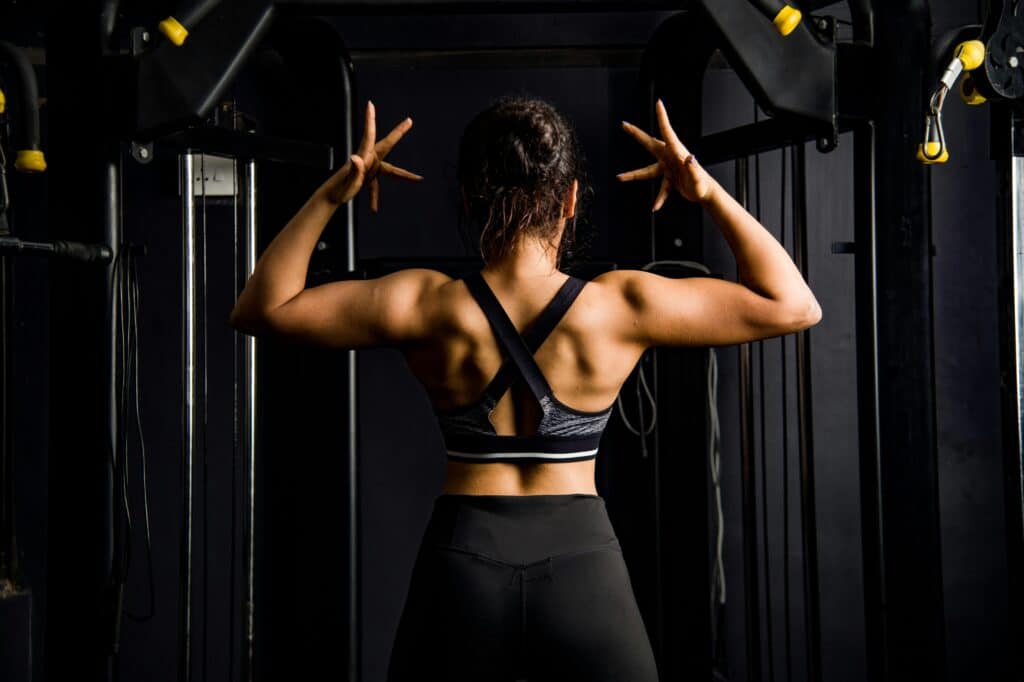
The two weeks side by side
| Plan A: full body | Plan B: upper/lower | |
|---|---|---|
| Days | Monday, Wednesday, Friday | Monday, Tuesday, Thursday, Friday |
| Session length | About 50 to 60 minutes | About 60 to 70 minutes |
| Exercises per session | 7 | 6 to 7 |
| Each muscle trained | 3 times a week (arms twice) | 2 times a week |
| Total working sets a week | 63 | 93 |
| Best for | Tight or changing schedules | A steady 4-day week and more lower-body work |
Both plans are for women who already know the main lifts. If you are new, start with fewer sets and build up.

Plan A: 3-day full body week
Monday
- Barbell squats: 4 sets of 8 to 10 reps
- Barbell bench press: 4 sets of 8 to 10 reps
- Romanian deadlifts: 3 sets of 10 to 12 reps
- Barbell rows: 3 sets of 8 to 10 reps
- Overhead press: 3 sets of 10 to 12 reps
- Biceps curls: 2 sets of 12 to 15 reps
- Triceps pushdowns: 2 sets of 12 to 15 reps
Wednesday
- Deadlifts: 4 sets of 6 to 8 reps
- Incline dumbbell press: 3 sets of 10 to 12 reps
- Bulgarian split squats: 3 sets of 10 reps each leg
- Lat pulldowns: 3 sets of 10 to 12 reps
- Lateral raises: 3 sets of 12 to 15 reps
- Face pulls: 2 sets of 15 reps
- Plank: 3 sets of 45 to 60 seconds
Friday
- Front squats: 4 sets of 8 to 10 reps
- Dumbbell bench press: 3 sets of 10 to 12 reps
- Hip thrusts: 4 sets of 10 to 12 reps
- Cable rows: 3 sets of 10 to 12 reps
- Arnold press: 3 sets of 10 to 12 reps
- Hammer curls: 2 sets of 12 reps
- Overhead triceps extension: 2 sets of 12 reps
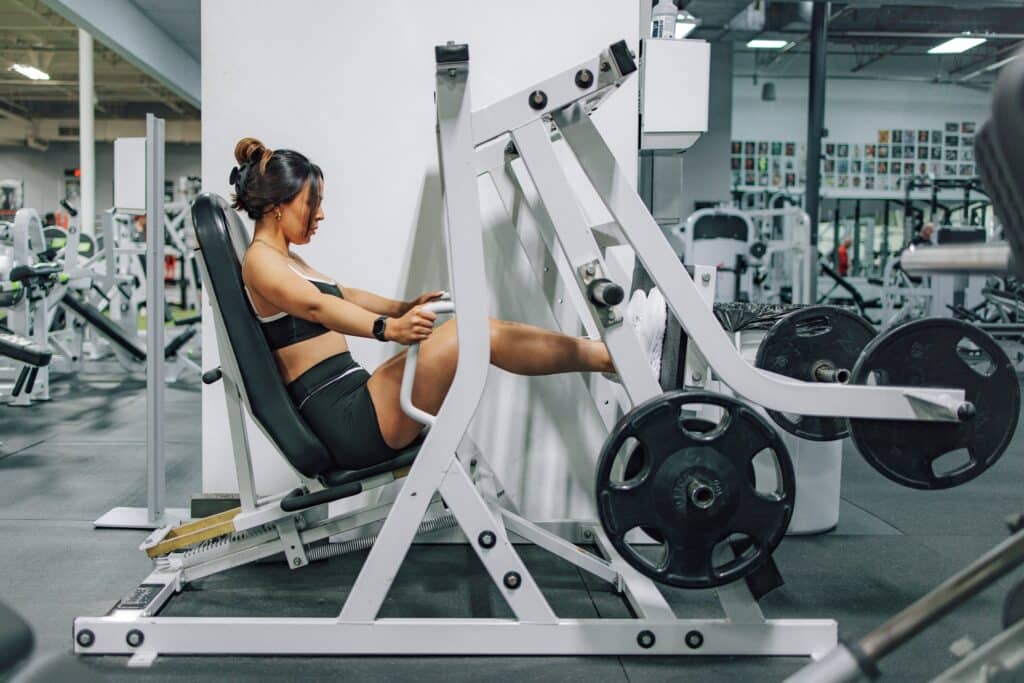
Plan B: 4-day upper/lower week
Monday (lower)
- Barbell squats: 5 sets of 8 to 10 reps
- Romanian deadlifts: 4 sets of 10 to 12 reps
- Hip thrusts: 4 sets of 10 to 12 reps
- Walking lunges: 3 sets of 12 reps each leg
- Leg curls: 3 sets of 12 to 15 reps
- Calf raises: 3 sets of 15 to 20 reps
Tuesday (upper)
- Barbell bench press: 5 sets of 8 to 10 reps
- Barbell rows: 4 sets of 8 to 10 reps
- Overhead press: 4 sets of 10 to 12 reps
- Lat pulldowns: 3 sets of 10 to 12 reps
- Lateral raises: 3 sets of 12 to 15 reps
- Biceps curls: 3 sets of 10 to 12 reps
- Triceps pushdowns: 3 sets of 12 to 15 reps
Video: How to do a barbell bent-over row. Barbell rows lead the pulling work on Tuesday here and on Monday in Plan A. Watch this to check your hip hinge and bar path before your first set.
Thursday (lower)
- Deadlifts: 5 sets of 6 to 8 reps
- Bulgarian split squats: 4 sets of 10 reps each leg
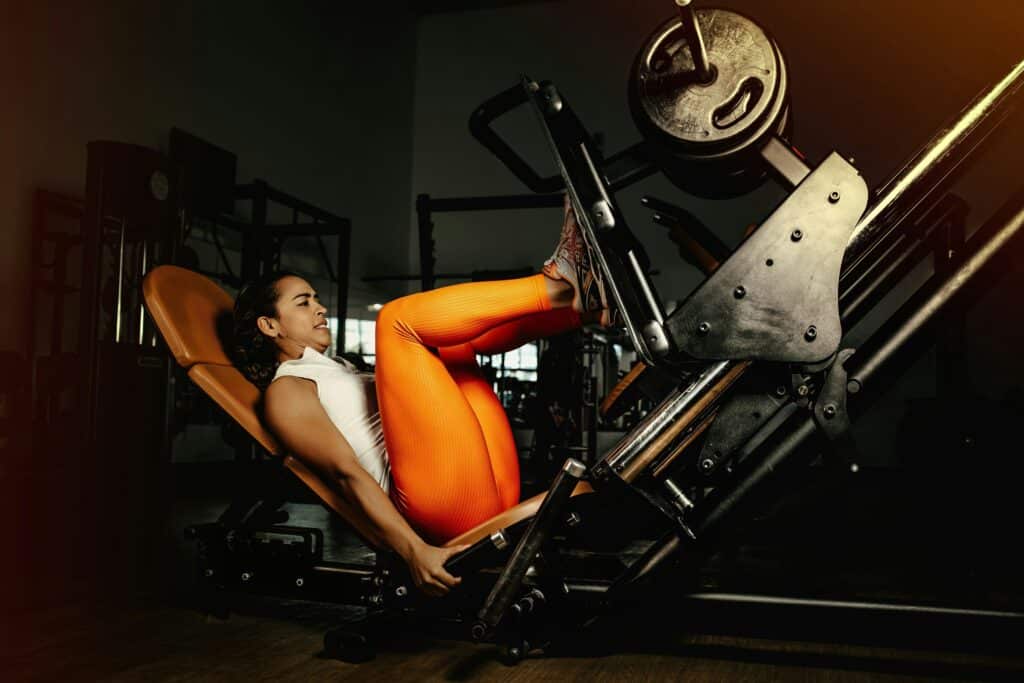
- Leg press: 4 sets of 12 to 15 reps
- Glute-ham raises: 3 sets of 8 to 10 reps
- Leg extensions: 3 sets of 12 to 15 reps
- Seated calf raises: 3 sets of 15 to 20 reps
Friday (upper)
- Incline dumbbell press: 4 sets of 10 to 12 reps
- Cable rows: 4 sets of 10 to 12 reps
- Dumbbell shoulder press: 4 sets of 10 to 12 reps
- Pull-ups or assisted pull-ups: 3 sets of as many good reps as you can
- Face pulls: 3 sets of 15 reps
- Hammer curls: 3 sets of 12 reps
- Overhead triceps extension: 3 sets of 12 reps
Video: Stronger legs and glutes: lower body strength training for women. Watch it before your Monday and Thursday sessions to see the lower-body lifts these days are built on.
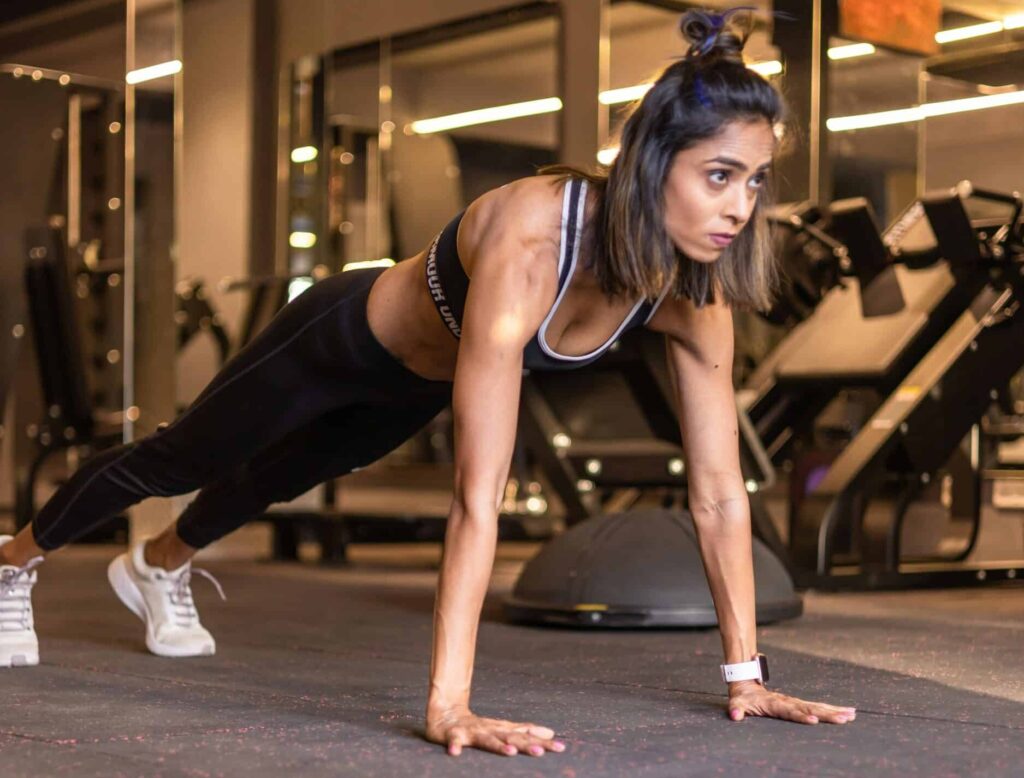
Weekly sets compared
Here are the direct working sets each muscle group gets in a week. Each set counts once, for the main muscle it trains.
| Muscle group | Plan A: full body | Plan B: upper/lower |
|---|---|---|
| Chest (presses) | 10 | 9 |
| Back (rows, pulldowns, pull-ups) | 9 | 14 |
| Shoulders (overhead presses, raises) | 9, plus 2 face pull sets | 11, plus 3 face pull sets |
| Quads (squats, lunges, leg press, extensions) | 11 | 19 |
| Glutes and hamstrings (deadlifts, RDLs, hip thrusts, curls) | 11 | 19 |
| Biceps | 4 | 6 |
| Triceps | 4 | 6 |
| Calves | 0 | 6 |
| Core (plank) | 3 | 0 |
| Total | 63 | 93 |
The ACSM 2026 position stand links higher weekly volume, about 10 sets or more per muscle, with more muscle growth, and found diminishing returns past roughly 18 to 20 sets (ACSM, 2026). Plan A sits around 9 to 11 direct sets for the big muscle groups. Plan B gives the lower body about 19, which is why many women who want stronger glutes and legs like it. See how often to train glutes.
What happens when you miss a session?
This is where the two plans differ most in real life.
- Full body: miss Wednesday and you have still trained everything on Monday and Friday.
- Upper/lower: miss Thursday and your lower body gets only one session that week. Move it to Saturday if you can, rather than skipping it.
If you often lose a day to work, children or travel, full body is the safer choice. For how many days to aim for, read how many days a week women should strength train.
How to choose between them
Answer these honestly:
- How many days can you train in a normal week, not your best week? Three or fewer points to full body. Four points to upper/lower.
- How long can each session be? Plan A runs about 50 to 60 minutes. Plan B runs about 60 to 70.
- Which part of your body do you most want to build? If it is legs and glutes, upper/lower gives them more time.
- Which would you enjoy? Some women like variety every session. Others like a full session on one area. You will stick with the one you enjoy.
How to switch from full body to upper/lower
Many women start with full body and move to upper/lower after 6 to 12 months. To make the switch smooth:
- Keep your main lifts. Squats, deadlifts or RDLs, hip thrusts, presses and rows stay. Only the days change.
- Start your working weights where you left off. You may need a little less on lifts that now come later in a session.
- Build up the sets. Plan B has more weekly sets. For the first week or two, do one set fewer per exercise, then add it back.
- Give it 12 weeks. Track your lifts so you can see whether the new split is working. See how to track your workouts.
The middle option: 3-day upper/lower/full body
If you have three days but want some of the upper/lower feel, try Monday lower, Wednesday upper and Friday full body. The Friday session trains everything a second time, while Monday and Wednesday give each half of the body a longer focus.
If you can train five or six days, a push/pull/legs split is another option. See push/pull/legs for women, or compare all three in full body vs upper/lower vs PPL.
The bottom line
For women, upper/lower vs full body is not a contest. Research shows similar strength and muscle gains when weekly sets match. Choose full body for 2 to 3 days or a busy, changing week. Choose upper/lower for a steady 4 days and more leg and glute work.
Train with a plan that fits your week
12REPS builds your training around your goal, the equipment you have and the time you’ve got. Every exercise comes with a trainer demonstration, and the app remembers what you lifted so you always know your next target. See how the 12REPS app works.
Sources
- A randomized trial on the efficacy of split-body versus full-body resistance training in non-resistance trained women. Pedersen H, Fimland MS, Schoenfeld BJ et al., BMC Sports Science, Medicine and Rehabilitation, 2022. https://doi.org/10.1186/s13102-022-00481-7
- Efficacy of Split Versus Full-Body Resistance Training on Strength and Muscle Growth: A Systematic Review With Meta-Analysis. Ramos-Campo DJ, Benito-Peinado PJ, Andreu Caravaca L, Rojo-Tirado MA, Rubio-Arias JA, Journal of Strength and Conditioning Research, 2024. https://pubmed.ncbi.nlm.nih.gov/38595233/
- How many times per week should a muscle be trained to maximize muscle hypertrophy? A systematic review and meta-analysis of studies examining the effects of resistance training frequency. Schoenfeld BJ, Grgic J, Krieger J, Journal of Sports Sciences, 2019. https://pubmed.ncbi.nlm.nih.gov/30558493/
- American College of Sports Medicine Position Stand. Resistance Training Prescription for Muscle Function, Hypertrophy, and Physical Performance in Healthy Adults: An Overview of Reviews. Currier BS, Phillips SM et al., American College of Sports Medicine, Medicine & Science in Sports & Exercise, 2026. https://doi.org/10.1249/MSS.0000000000003897
