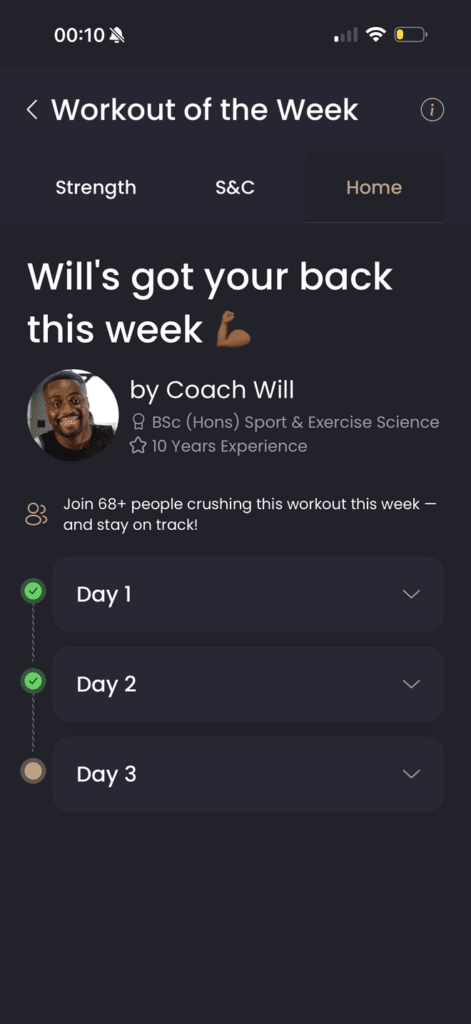



The 12REPS training philosophy rests on four strength training principles with strong research behind them. They are progressive overload, compound lifts first, training each muscle twice a week and loads that match your goal. Every 12REPS plan is built on these principles and on a plan you can repeat week after week.
Many fitness apps hand you a different workout every day. Today it is a circuit, tomorrow it is a 7-day ab challenge. Without a clear path from one week to the next, it is hard to know whether you are getting stronger.
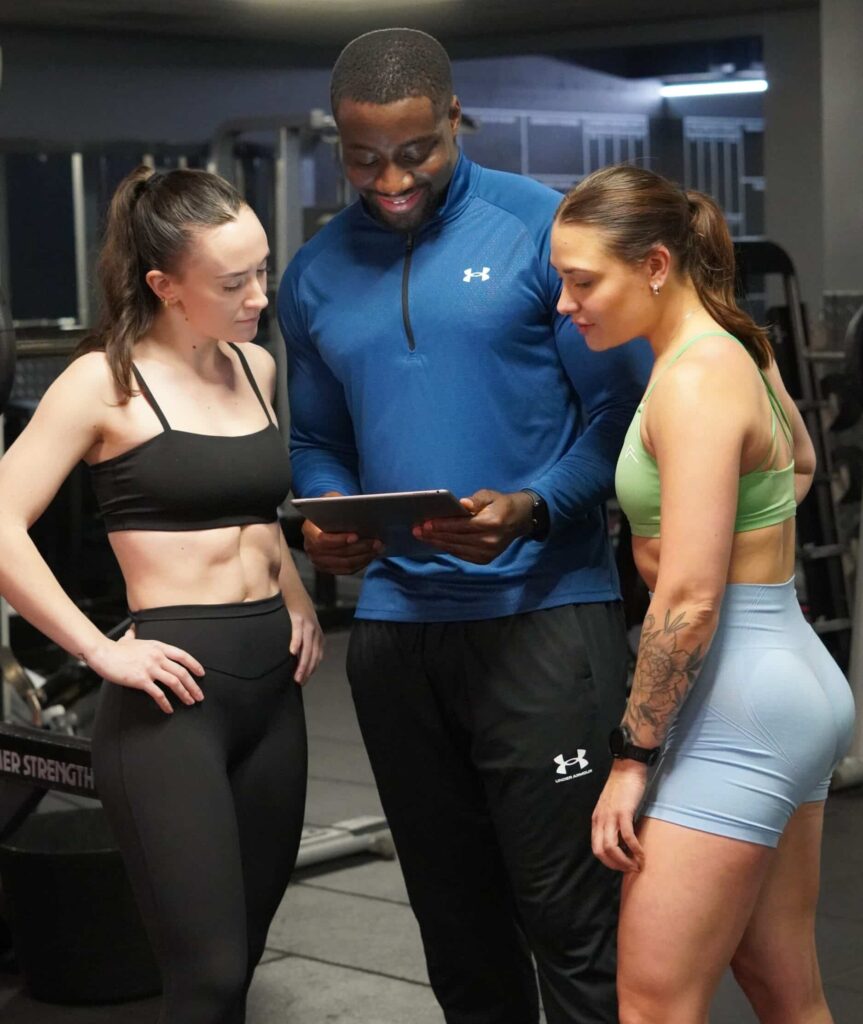
12REPS was built with qualified personal trainers, including Will Duru. This page explains each principle, why it matters and how it shows up in your training.
Principle 1: Progressive overload
Progressive overload means gradually increasing the demand on your muscles over time. You can add weight, add reps, add sets or improve the quality of each rep.
Your body adapts to what you ask of it. If you squat the same weight for the same reps for months, there is little reason for it to keep adapting. The American College of Sports Medicine (ACSM) position stand on progression models says progression is needed to keep improving. It suggests adding about 2 to 10% load once you can do one or two reps beyond your target.
A simple example
| Week | Squat | What changed |
|---|---|---|
| 1 | 40 kg, 3 sets of 8 | Starting point |
| 3 | 40 kg, 3 sets of 10 | More reps |
| 5 | 42.5 kg, 3 sets of 8 | More weight, reps reset |
| 7 | 42.5 kg, 3 sets of 10 | More reps again |
| 9 | 45 kg, 3 sets of 8 | More weight again |
This approach is often called double progression: build reps first, then add weight. Both routes work. A 2022 study comparing load and rep progression found similar muscle growth, with adding load slightly better for maximal strength.
For a full walk-through, read our complete guide to progressive overload.
How 12REPS supports progressive overload
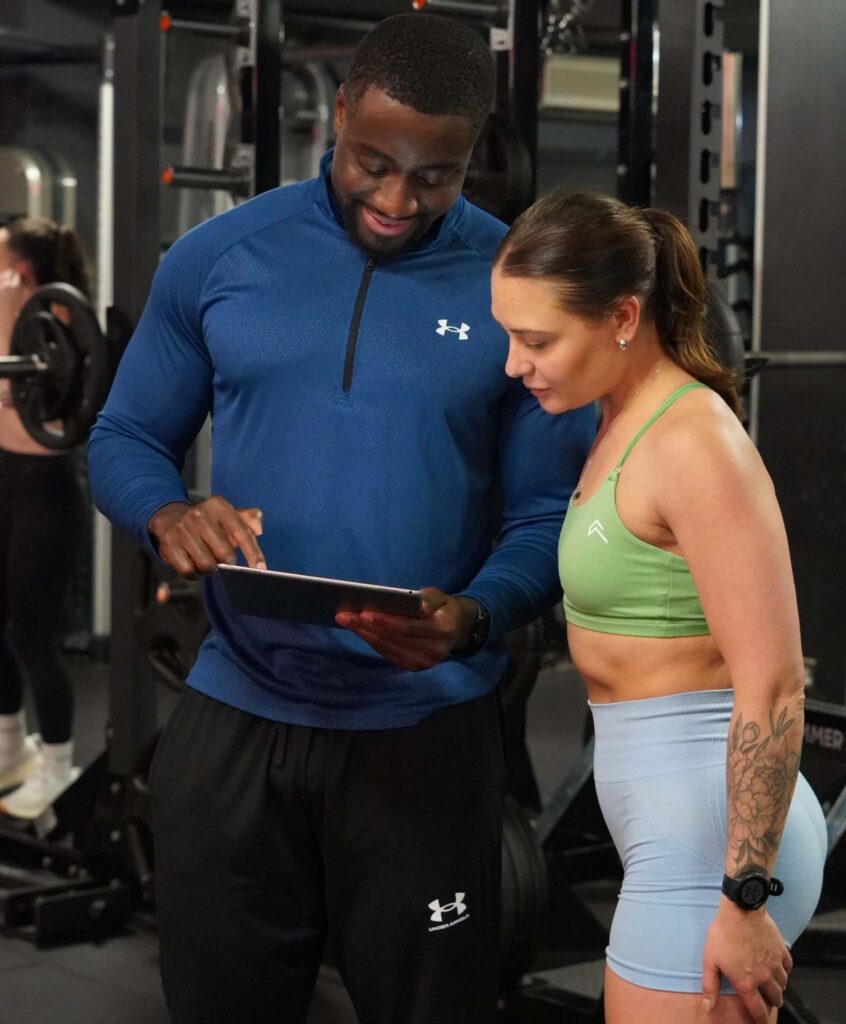
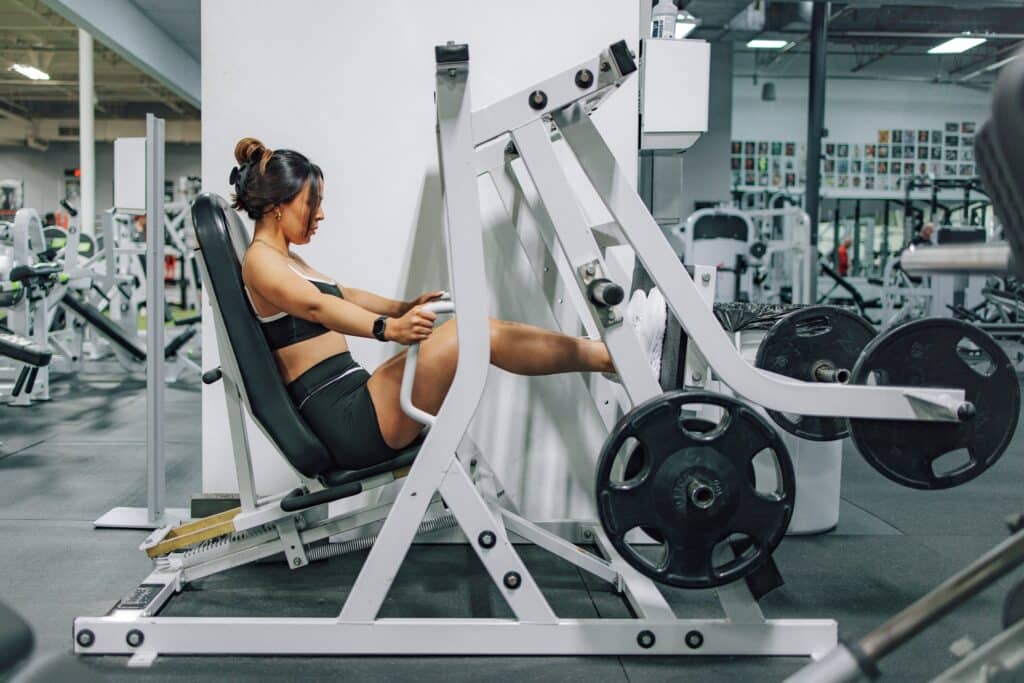
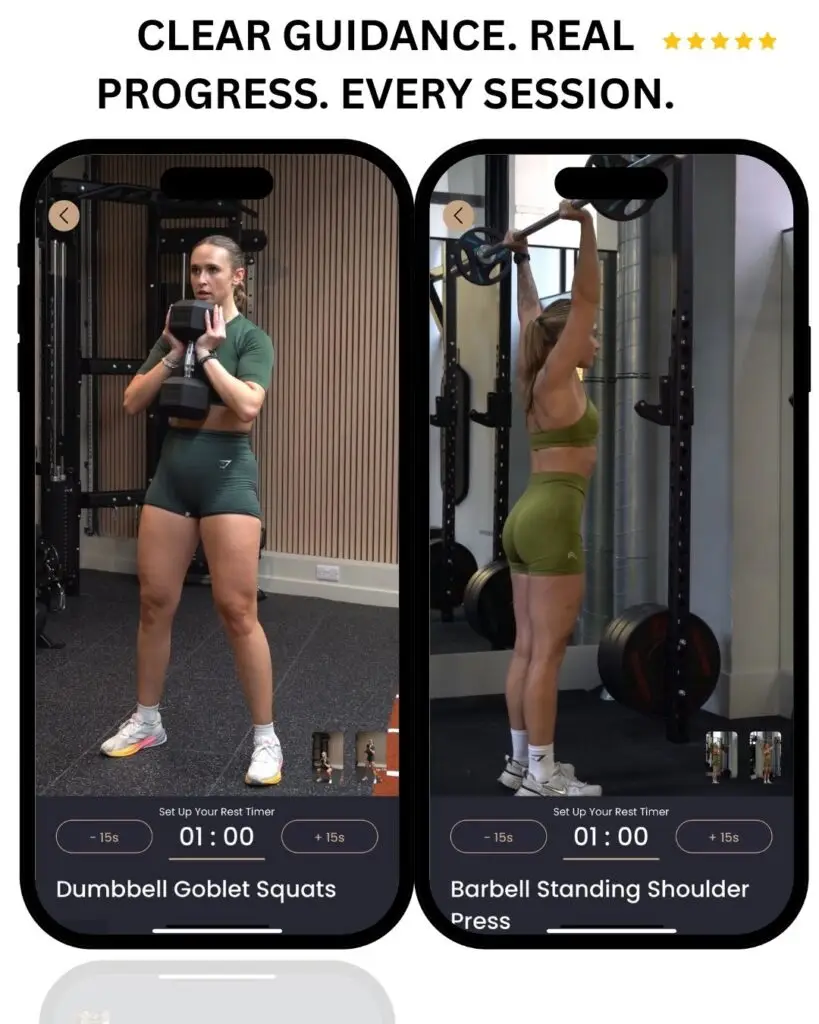
You cannot beat last week’s numbers if you do not know them. In 12REPS you tap Start Workout, watch the demonstration and enter the reps and weight for each set. The app remembers what you lifted, so every session gives you a number to beat.
The app also tracks your workouts, streaks and weekly goal, so you can see whether you are training often enough to progress. Our guide on how to track your workouts shows how to use those numbers.
Principle 2: Compound lifts first
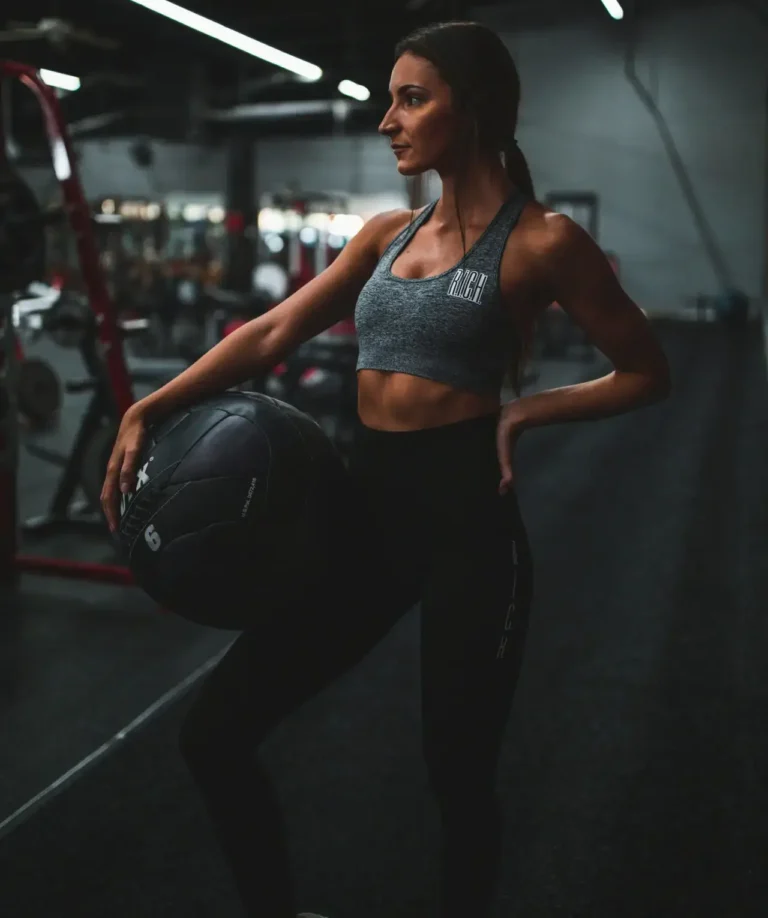
Compound exercises move more than one joint and train several muscle groups together. Isolation exercises move one joint and focus on one main muscle.
| Compound exercise | Main muscles |
|---|---|
| Squat | Quads, glutes, core |
| Deadlift or Romanian deadlift | Glutes, hamstrings, back |
| Hip thrust | Glutes, hamstrings |
| Bench press or push-up | Chest, triceps, front shoulders |
| Row | Upper back, lats, biceps |
| Overhead press | Shoulders, triceps |
Examples of isolation work are biceps curls, leg extensions and triceps pushdowns.
Compound lifts let you use heavier loads and train a lot of muscle in a short session. The ACSM position stand recommends multi-joint exercises before single-joint ones, and large muscle groups before small ones. You do them first because they need the most energy and focus.
Four movement patterns at the core
Most 12REPS strength sessions are built around these patterns:
- Squat: barbell back squat, goblet squat or front squat.
- Hip hinge: deadlift, Romanian deadlift or hip thrust.
- Push: bench press, push-ups or dumbbell press.
- Pull: barbell rows, dumbbell rows, cable rows or lat pulldowns.
Where isolation work fits
Isolation exercises still have a job. They add work for a muscle that is lagging and let you train a muscle when bigger lifts have tired you out. A typical order looks like this:
- Barbell squat
- Romanian deadlift
- Bulgarian split squat
- Leg curl
- Calf raise
Not sure which exercises to choose? See the best exercises for each muscle group.
Principle 3: Train each muscle at least twice a week
The World Health Organization’s 2020 physical activity guidelines advise adults to do muscle-strengthening activities for all major muscle groups on two or more days a week.
For muscle growth, a 2016 meta-analysis on training frequency found that training a muscle group twice a week built more muscle than once a week. Whether three times beats twice is still unclear.
Three ways to reach twice a week
| Days per week | Example split | Times each muscle is trained |
|---|---|---|
| 2 | Full body on Monday and Thursday | 2 |
| 3 | Full body on Monday, Wednesday and Friday | 3 |
| 4 | Upper and lower body, each twice | 2 |
Pick the schedule you can keep. Our workout split guide compares the options in more detail.
How much work per session?
Start with a number of sets you can recover from, then add more gradually as the work gets easier. More is not always better. If your performance keeps dropping, cut back before you add anything.
Principle 4: Choose loads that match your goal
You can build muscle across a wide range of loads. A 2017 meta-analysis of low- versus high-load training found similar muscle growth with light and heavy loads. Heavy loads produced bigger gains in maximal strength.
The ACSM position stand gives these general ranges:
| Goal | Typical load and reps |
|---|---|
| New to lifting | A weight you can lift for 8 to 12 reps |
| Maximal strength | Heavier loads, emphasizing 1 to 6 reps as you advance |
| Muscle size | 1 to 12 reps, with most sets in the 6 to 12 range |
| Muscular endurance | Lighter loads for more than 15 reps |
Whatever the range, the last few reps of a set should feel hard while your form stays clean. Our guide on strength versus hypertrophy training explains the difference.
Recovery is part of the plan
You get stronger by recovering from training, not only by doing it. Sleep, food and lighter weeks all count. When fatigue builds over several weeks, a planned lighter week can help. Read more about the deload week.
How 12REPS puts these principles into practice
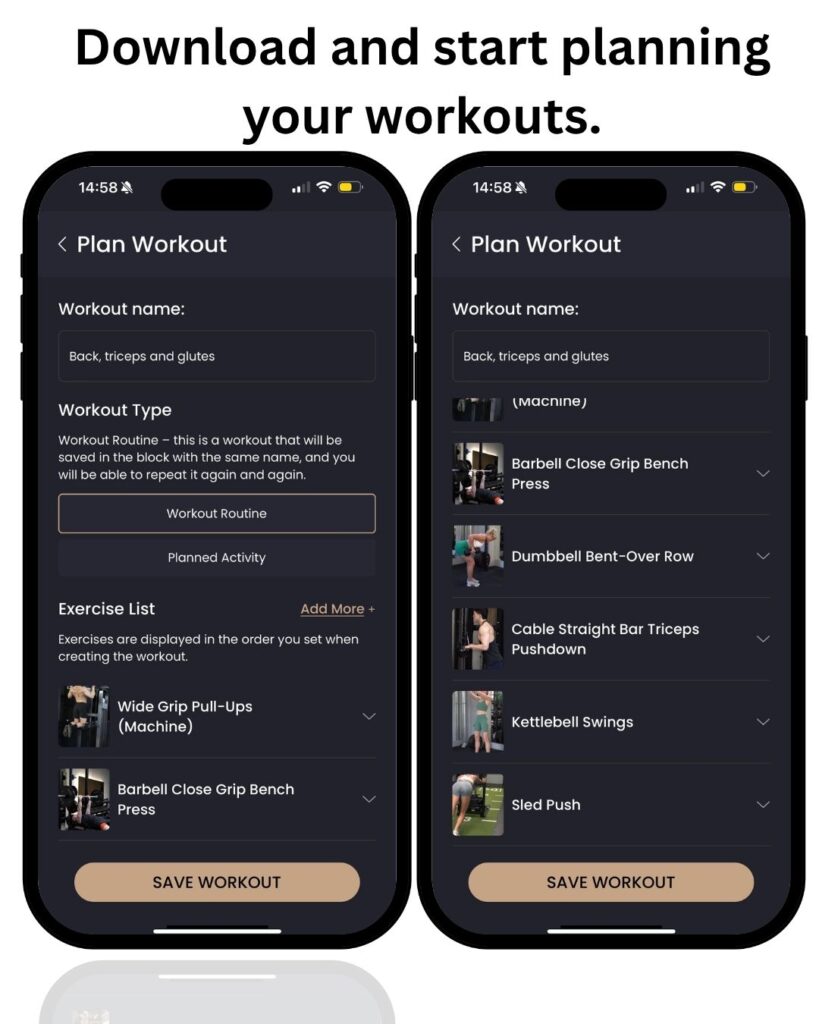
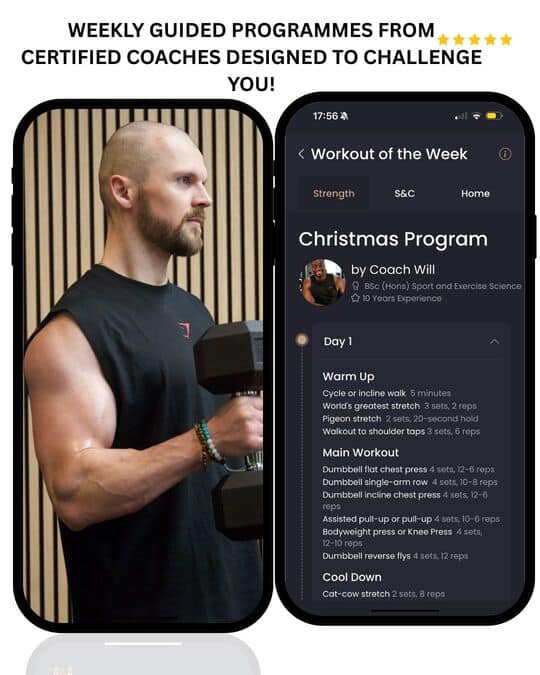
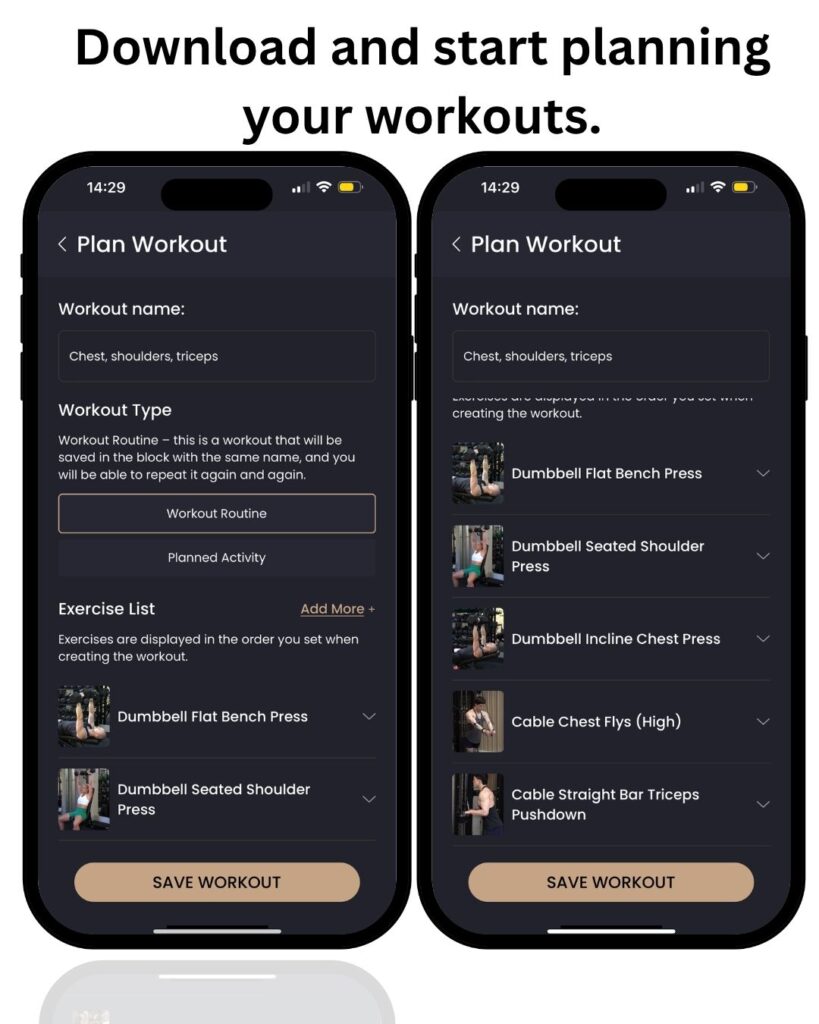
- A plan built around you: your training is built around your goal, your equipment and the time you have. Open the app and your workout is ready, for example Chest and Back, 60 minutes, 6 exercises.
- A trainer for every exercise: each exercise has a demonstration and technique breakdown from a qualified personal trainer.
- Numbers to beat: you log reps and weight for every set, and the app remembers what you lifted.
- Build your own: choose the muscle, equipment and time on the body map, and 12REPS builds the session.
- Accountability: streaks, challenges, awards, a weekly goal and a community help you keep showing up.
Video: Most fitness apps are useless for strength training. This short 12REPS video explains why random daily workouts do not help you get stronger. It shows the problem these principles are meant to solve.
What this means for you
- Track your lifts and aim to beat last week by a rep or a small amount of weight.
- Start each session with a compound lift, then add isolation work.
- Train each muscle group at least twice a week.
- Choose loads that match your goal, and make the last few reps of each set feel hard.
- Recover well, and stick with one plan long enough to see results.
None of this is new or flashy. These principles keep working because they match how muscles adapt.
Video: How long does it take to build muscle? This short 12REPS video sets realistic expectations for muscle growth. Watch it before you judge whether a plan is working.
Want these principles turned into a plan for your goal, equipment and schedule? 12REPS sets out each session and keeps a record of every set, so you know what to beat next time.
Related reading
Sources
- American College of Sports Medicine position stand: Progression models in resistance training for healthy adults. American College of Sports Medicine, 2009. https://pubmed.ncbi.nlm.nih.gov/19204579/
- Progressive overload without progressing load? The effects of load or repetition progression on muscular adaptations. Plotkin D, et al., PeerJ, 2022. https://doi.org/10.7717/peerj.14142
- Effects of resistance training frequency on measures of muscle hypertrophy: a systematic review and meta-analysis. Schoenfeld BJ, Ogborn D, Krieger JW, Sports Medicine, 2016. https://pubmed.ncbi.nlm.nih.gov/27102172/
- World Health Organization 2020 guidelines on physical activity and sedentary behaviour. World Health Organization, British Journal of Sports Medicine, 2020. https://doi.org/10.1136/bjsports-2020-102955
- Strength and hypertrophy adaptations between low- vs. high-load resistance training: a systematic review and meta-analysis. Schoenfeld BJ, Grgic J, Ogborn D, Krieger JW, Journal of Strength and Conditioning Research, 2017. https://pubmed.ncbi.nlm.nih.gov/28834797/