


By Will Duru, BSc (Hons) Sport and Exercise Science, Award-winning Personal Trainer with over 10 years of experience in strength training and optimising recovery.
Will lifting weights make you bulky? Not by accident. Women build muscle from strength training at a similar rate to men, relative to their starting size, but the total amount is modest and it comes slowly. Getting very muscular takes years of focused training, extra food and, for some competitors, drugs.
“I don’t want to get bulky” is the worry I hear most often from women before their first session. It is a fair question. Nobody wants to put time into training and end up with a body they did not choose.
This article explains what research shows about women and muscle growth, why some women feel bigger in the first few weeks, and how to lift for strength. For quick answers to other common questions, see strength training for women: 23 common questions answered.
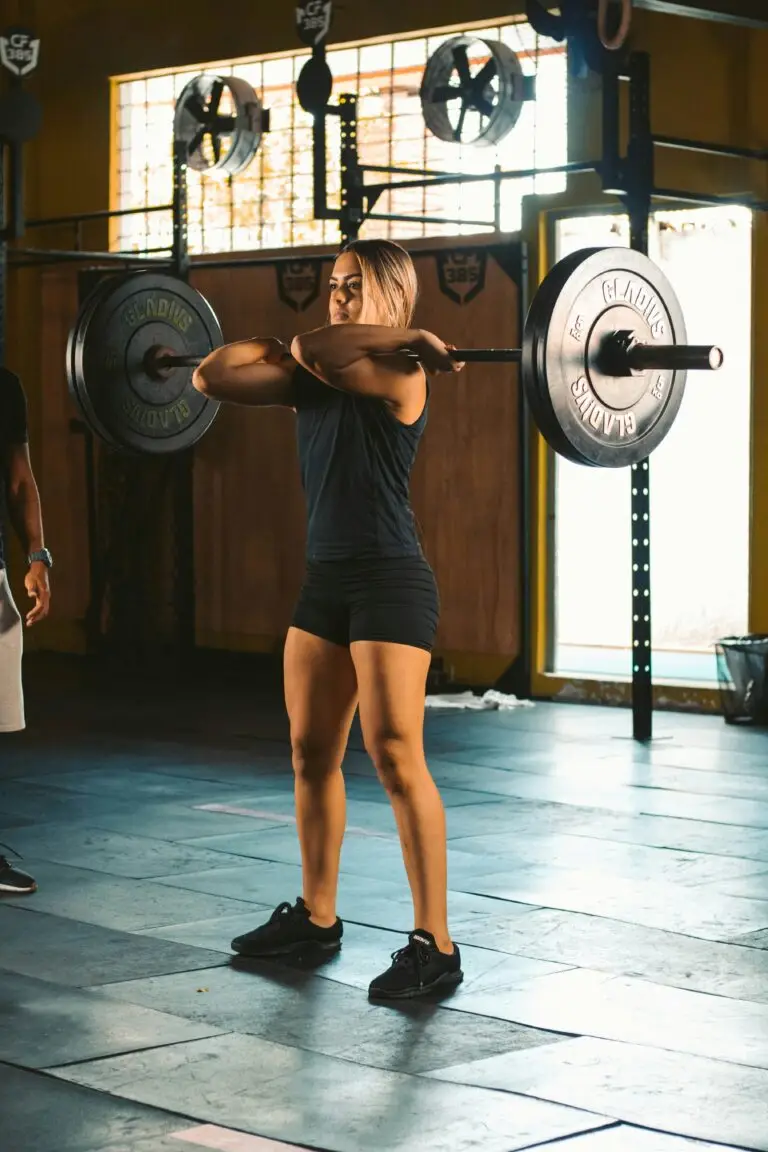
Will lifting weights make me bulky? What the research says
Muscle growth depends on your training, how much you eat, your sleep, your genes and your hormones. Hormones are a big reason why men and women tend to look different after years of lifting.
Testosterone is the biggest difference
Testosterone helps drive muscle size. A 2018 review in Endocrine Reviews reports that after puberty, men have 15 to 20 times more circulating testosterone than women. Typical ranges were 7.7 to 29.4 nmol/L (nanomoles per liter) in healthy men and 0 to 1.7 nmol/L in healthy premenopausal women.
Women still build muscle, and that is good news
Lower testosterone does not stop women from building muscle. A 2025 systematic review with meta-analysis compared men and women on resistance training programs. Men gained slightly more muscle in absolute terms. Relative to their starting size, the gains were similar.
In plain terms, your muscles respond to lifting just as a man’s do. But most women start with less muscle, so the same percentage gain adds less size. In my experience, most women look firmer and more athletic after months of training, not bigger.
Muscle grows slowly
Building muscle takes months of steady training. Nobody becomes bulky after a few sessions. If you ever feel you are gaining more size than you want, you will have plenty of time to notice and adjust.
Video: How long does it take to build muscle. This clip gives a realistic view of how slowly muscle grows, and why nobody gets bulky by accident.
Why you might feel bigger in the first few weeks
Some women feel “bulky” soon after they start lifting. This is usually not new muscle. Here is what is more often going on.
- The post-workout pump. Right after a session, worked muscles can look and feel fuller for a while. This fades within hours.
- New muscle under the same body fat. If your body fat stays the same while you add a little muscle, a tape measure may barely change, or rise slightly. How you look depends on both.
- The scale is only one number. Body weight changes from day to day for many reasons. It cannot tell muscle from fat.
Tracking strength, photos and how your clothes fit gives a fuller picture than the scale alone. Our guide on how to track your workouts shows what to record.
Video: How women should track progress: scale or photos. Watch this short clip if the scale worries you. It explains why photos and measurements show change the scale can miss.
What does "toned" actually mean?
“Toned” is not a scientific term. People usually use it to describe visible muscle shape. That shape comes from two things: the muscle you have, and how much body fat sits over it. Lifting builds the first part. Your overall eating and activity affect the second.
So the look many women want comes from building muscle, not avoiding it. For an arms-focused example, read toned arms without bulk.
What it really takes to get very muscular
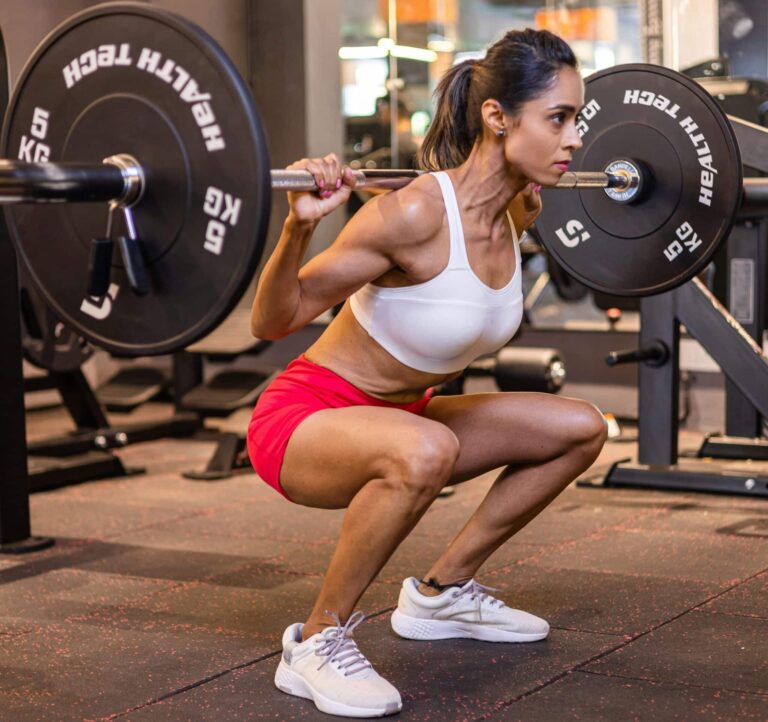
You may have seen female bodybuilders and physique athletes with a lot of muscle. They are serious athletes, and their size is the result of a deliberate plan, not an accident. That plan usually includes:
- Years of training. High-volume training, aimed at muscle size, done consistently for a long time.
- Eating more than they burn. A 2019 review in Frontiers in Nutrition notes that an energy surplus (eating more calories than you use) is often advised for muscle gain. The exact amount needed is unknown, and the authors advise starting with a modest surplus to limit fat gain.
- In some cases, drugs. A 2024 systematic review in Addiction estimated lifetime anabolic steroid use at about 16.8% among women bodybuilders, compared with about 1.4% of women in the general population. The studies varied a lot, so treat these as rough estimates.
Two or three strength sessions a week, with normal eating, is a very different thing. You cannot drift into a bodybuilder’s physique, in the same way you cannot drift into running a marathon.
How to start lifting for strength
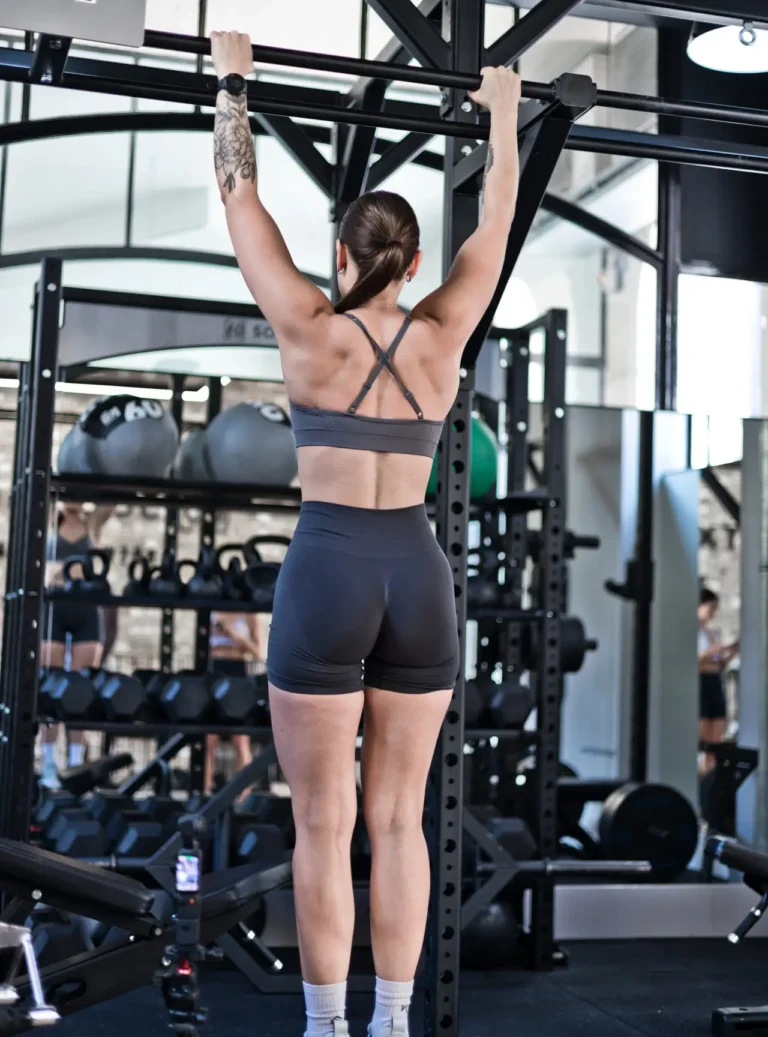
If you are ready to start, keep it simple. The NHS advises adults to do strengthening activities that work all the major muscle groups on at least 2 days a week.
- Train two to three times a week. Leave a rest day between sessions that work the same muscles.
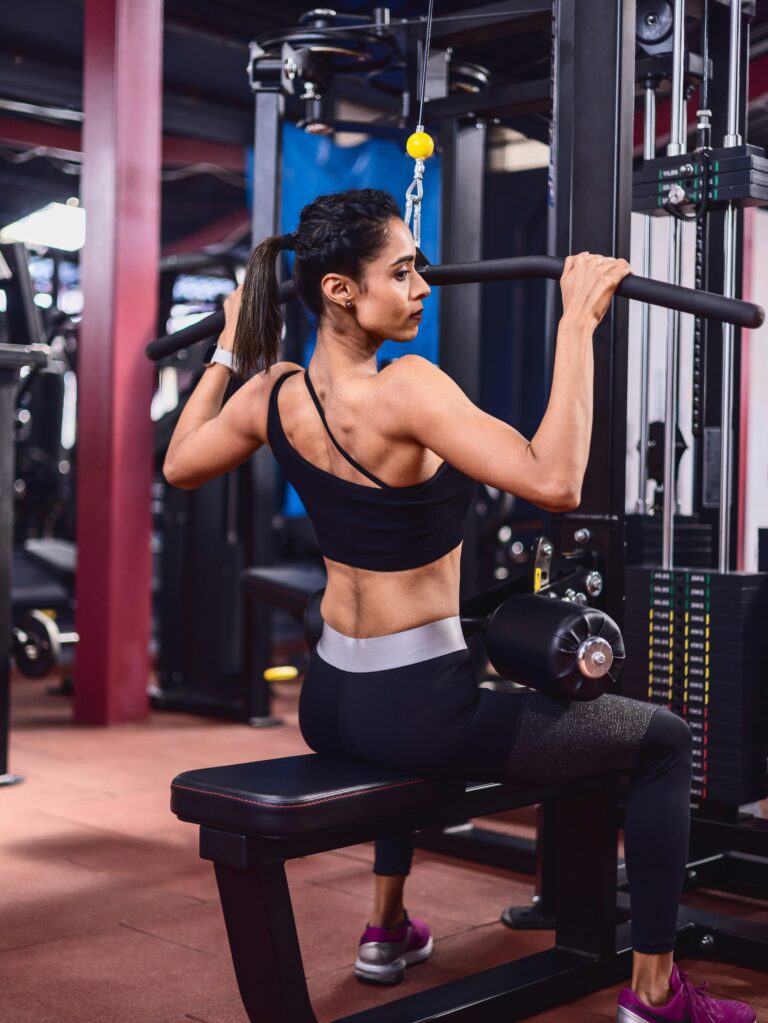
- Focus on compound exercises. These work several muscles at once: squats, deadlifts, rows, presses, and pull-ups or lat pulldowns. Our guide to barbell squats and deadlifts for women covers two of the big ones.
- Pick a weight that challenges you for 8 to 12 reps. If you can do 15 reps without much effort, it is too light. If you cannot do 6 with good form, it is too heavy.
- Use progressive overload. This means making the work a little harder over time, for example by adding a rep or a small amount of weight. Read the beginner’s guide to progressive overload for how to do it.
Not sure where to begin with weight? See how much weight should I lift.
Common questions
Should I use light weights for high reps so I don't get bulky?
There is no need. A weight you can lift many times without effort gives your muscles little reason to adapt. Choose a load that makes the last couple of reps feel hard while your form stays good. Our guide how heavy is too heavy explains how to judge this.
What if I feel I am getting bigger than I want?
You stay in control. Because muscle grows slowly, you can notice changes and adjust how much you train or eat. Keep training for strength and health while you do.
What if I actually want to build more muscle?
Then you need to train for it on purpose, with enough weekly training and enough protein. Our guide science-based strength training for women explains the evidence.
Lift with a plan
The bulky myth keeps many women on the smallest dumbbells. Lifting properly builds strength you can feel in daily life, at a pace you control. If nerves are what is holding you back, start with how to build gym confidence.
Want a plan built around your goal, your equipment and your time? The 12REPS strength training app sets out each session and shows a trainer demonstration for every exercise. It also remembers what you lifted, so you always have a number to beat.
Sources
- Circulating Testosterone as the Hormonal Basis of Sex Differences in Athletic Performance. Handelsman DJ, Hirschberg AL, Bermon S. Endocrine Reviews, 2018. https://doi.org/10.1210/er.2018-00020
- Sex differences in absolute and relative changes in muscle size following resistance training in healthy adults: a systematic review with Bayesian meta-analysis. Refalo MC, et al. PeerJ, 2025. https://doi.org/10.7717/peerj.19042
- Is an Energy Surplus Required to Maximize Skeletal Muscle Hypertrophy Associated With Resistance Training. Slater GJ, Dieter BP, Marsh DJ, Helms ER, Shaw G, Iraki J. Frontiers in Nutrition, 2019. https://doi.org/10.3389/fnut.2019.00131
- What is the prevalence of anabolic-androgenic steroid use among women? A systematic review. Piatkowski T, Whiteside B, Robertson J, Henning A, Lau EHY, Dunn M. Addiction, 2024. https://doi.org/10.1111/add.16643
- Physical activity guidelines for adults aged 19 to 64. NHS, 2024. https://www.nhs.uk/live-well/exercise/physical-activity-guidelines-for-adults-aged-19-to-64/