By Will Duru, BSc (Hons) Sport and Exercise Science Award-winning Personal Trainer with over 10 years of experience in strength training and optimising recovery.
To build gym confidence, go regularly with a simple plan and widen your comfort zone a little at a time. Confidence comes from repeated small wins, not from waiting until you feel ready. This guide sets out five steps over about eight weeks, from your first week to feeling like a regular.
Right now the gym might feel like a stage where everyone else knows their lines. In my years as a trainer, the first change many women notice is in their confidence, not their bodies. That change can be planned for, step by step.
The eight weeks are a guide, not a deadline. In a study of habit formation, a new daily behavior typically took about 66 days to feel automatic. The range was wide, from 18 to 254 days. Missing a single day did not undo progress. If you need longer, that is normal.
Goal: get used to the space and start a routine.
Week one is about showing up. You are not trying to impress anyone or set records.
Plan two or three simple workouts before you go. A plan removes the “what now?” moment in the middle of the gym floor. When you know your exercises, sets and reps, you can walk straight to your first exercise.
The NHS advises strengthening activities that work all the major muscle groups on at least 2 days a week. Two or three sessions is a good starting point.
Many gyms have a quieter area with dumbbells and mats. Learn a few basics there: goblet squats, dumbbell rows, shoulder presses and planks. These need little equipment and are good foundations.
A twenty-minute session counts. This week you are teaching yourself that you are someone who goes to the gym.
Video: 5 tips for ladies new to the gym. Watch this before your first week for a trainer’s practical tips for women starting out.
Goal: try new things, one at a time.
Each session, try one new machine or exercise. Watch someone use it, set it up and try it with no weight, start light, and ask staff if you need to. Our guide on how to use gym equipment for beginners walks through each step.
You are not trying to learn the whole gym at once. One piece at a time, the room starts to feel familiar.
If you have been doing goblet squats, try split squats. If you have been doing two-arm rows, try single-arm rows. This builds on movements you already know.
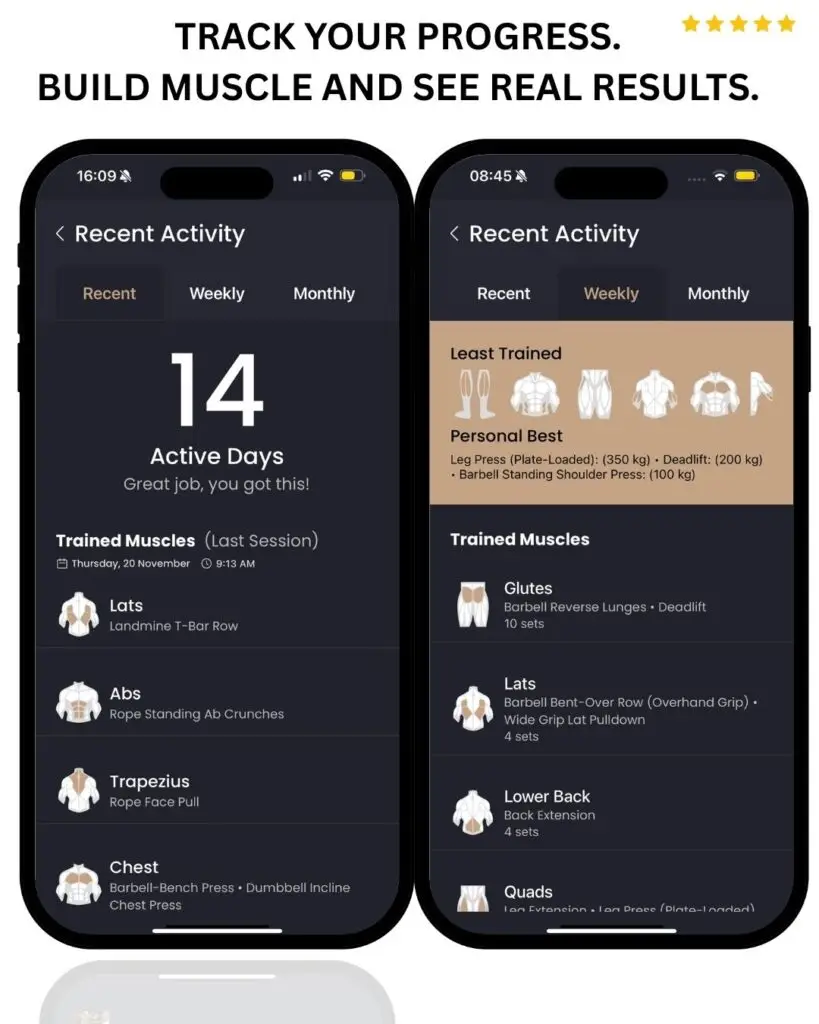
Write down every exercise, weight and rep. A growing list of exercises you can do is proof that you are progressing. Our guide on how to track your workouts shows what to record.
Goal: feel that the space and your workout are yours.
Use the squat rack, a bench in the main lifting area, or whatever your plan calls for. You have as much right to it as anyone. If someone is using what you need, ask “How many sets have you got left?” or “Can I work in with you?” These short exchanges are normal gym etiquette.
If you are often the only woman in the weights area, read how to navigate the weight room when you’re the only woman.
Having your workout open on your phone keeps you moving from one exercise to the next. It also gives you something to focus on between sets.
Progressive overload means gradually making your training harder by adding weight, reps or sets. This is when you move from going through the motions to training for results. Seeing a 10 kg dumbbell row become 12 kg over a few weeks is a real confidence boost.
Read the beginner’s guide to progressive overload for how to do it.
Goal: feel part of the gym, not an outsider.
You have probably started to see the same faces at the same times. A simple nod or hello is how many gym friendships begin. You don’t have to chat more than you want to.
A spotter stands by to help if you can’t finish a rep, for example on a bench press. If you need one, ask someone nearby to spot you for that set. Tell them what help you want, for example only if the bar stops moving.
If nobody is around, choose a weight you can control, or use the rack’s safety bars set at the right height.
Asking a trainer or another member for a tip is part of gym life. See how to ask for help at the gym without feeling embarrassed.
Video: 3 tips for ladies at the gym. This short clip shares more trainer advice for feeling at home in the gym.
Goal: become the confident person you once looked up to.
The gym now feels familiar. You know where things are and how to use them. Keep progressing, and keep logging your sessions.
Notice the nervous new person by the door and give them a friendly nod. You were in their place not long ago.
If a beginner asks how a machine adjusts, help kindly and without talking down. You don’t need to be an expert to be helpful. Offer a spot only if you know how to spot that lift.
Confidence and strength tend to grow together. A review of strength training trials found it was linked with fewer anxiety symptoms in healthy adults, and it reported improvements in self-esteem. The authors said larger trials are still needed.
It matches what I see as a trainer. As women get stronger, they tend to move through the gym differently.
Gym confidence isn’t about having a certain body or lifting the heaviest weights. It is about starting, keeping going, and making room for others along the way.
Pick your two or three training days, write your first plan, and go. If one worry is holding you back, the guides listed at the top of this article cover each one in more depth.
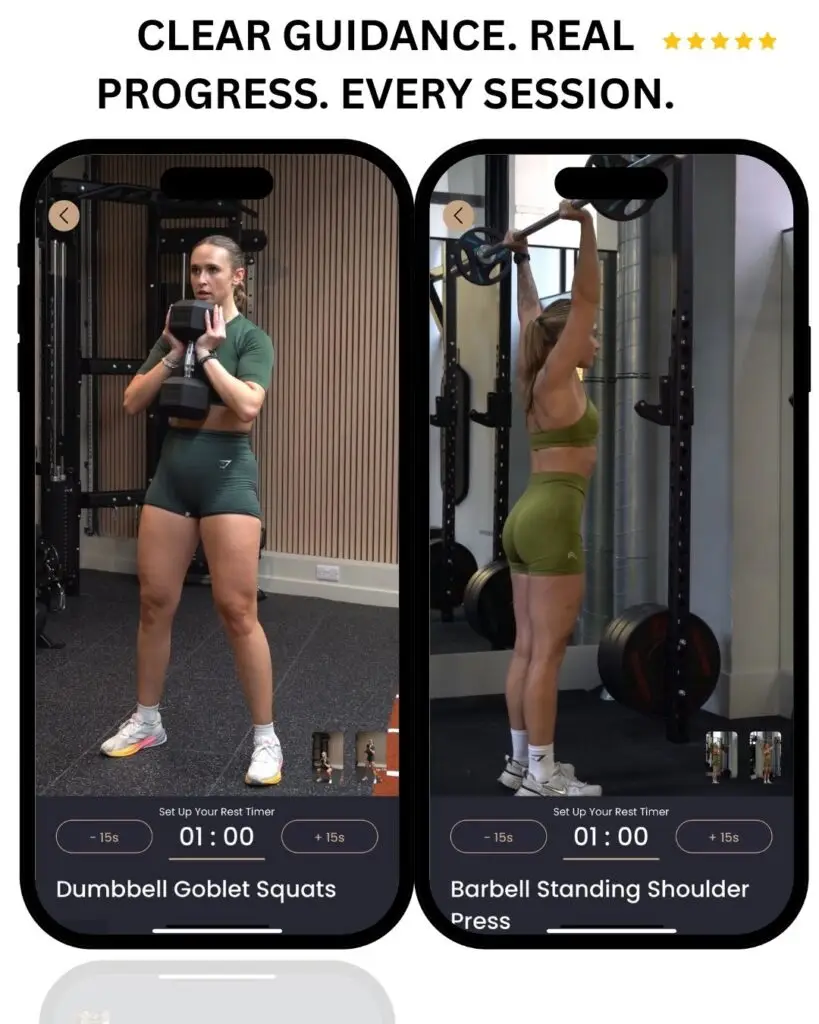
If you would rather not plan sessions yourself, 12REPS builds each workout around your goal, your equipment and your time. It shows a trainer demonstration for every exercise and tracks your sets, reps and weights, so you can see your progress week by week.
Disclaimer: The ideas in this blog post are not medical advice. They shouldn’t be used for diagnosing, treating, or preventing any health problems. Always check with your doctor before changing your diet, sleep habits, daily activities, or exercise. JUST12REP.COM isn’t responsible for any injuries or harm from the suggestions, opinions, or tips in this article.