


By Will Duru, BSc (Hons) Sport and Exercise Science, Award-winning Personal Trainer with over 10 years of experience in strength training and optimising recovery.
What is the best workout for fat loss? The best plan combines regular strength training with some cardio, done consistently enough that you keep it up for months. Research shows strength training, HIIT and steady cardio all reduce body fat, and HIIT and steady cardio give similar results overall. Fat loss itself comes from a calorie deficit, so your training works alongside your diet, not instead of it.
This is probably the question gym members ask me most often. The honest answer is that there is no single magic workout. There are, however, clear principles that make some plans work better than others.
This guide compares the main training options, explains what the research says about each, and shows how to put them together into a week. It focuses on training. For the food side, see our guides to how many calories to eat and carbs for muscle gain vs fat loss.

How fat loss actually works
To lose fat, you need to use more energy than you take in over a sustained period. This is called a calorie deficit. The International Society of Sports Nutrition (ISSN) says diets focused on fat loss are driven by a sustained calorie deficit (Aragon et al., 2017).
Exercise helps, but on its own it usually makes a modest difference to weight. The American College of Sports Medicine (ACSM) found that 150 to 250 minutes a week of moderate activity gives only modest weight loss. More than about 250 minutes a week was linked to larger losses, and activity worked better when combined with a moderate cut in calories (Donnelly et al., 2009).
What about the "afterburn" effect?
You may have heard that hard workouts keep you burning calories for a day afterward. This is called excess post-exercise oxygen consumption (EPOC). A review found EPOC makes up only about 6 to 15% of the energy cost of the exercise itself. The authors concluded that earlier hopes for EPOC as a big driver of weight loss were generally unfounded (LaForgia et al., 2006).
So choose workouts for what they do during the session and for how well you can stick with them, not for the afterburn.

Strength training for fat loss
Strength training is not only for building muscle. A 2022 meta-analysis of 58 studies found that resistance training reduced body fat percentage by about 1.5 percentage points compared with not exercising. It also reduced fat mass and visceral fat, the fat stored around your organs (Wewege et al., 2022).
Strength training also helps you keep muscle while you diet. In an eight-month trial in adults with overweight or obesity, resistance training and combined training increased lean mass more than aerobic training alone (Willis et al., 2012). The ISSN notes that higher protein intakes may help lean, trained people keep muscle in a calorie deficit (Aragon et al., 2017).
Focus your sessions on compound lifts, which work several muscle groups at once. Good examples are the barbell squat, deadlifts, rows, presses and lunges. Aim to add a little weight or a few reps over time. This is called progressive overload, and it gives your body a reason to hold on to muscle.
Video: How Strength Training Helps With Fat Loss. Watch this short 12REPS video for a trainer’s explanation of why lifting belongs in a fat loss plan.
For a full plan built around lifting, read strength training for fat loss.
Circuit training and full-body sessions
Circuit training means doing several exercises back to back with short rests, then repeating the round. It mixes strength work with a raised heart rate in one session.
A 2021 meta-analysis of 45 studies found that resistance circuit training reduced fat mass by about 4% and increased muscle mass by about 2%. It also improved strength and aerobic fitness (Ramos-Campo et al., 2021).
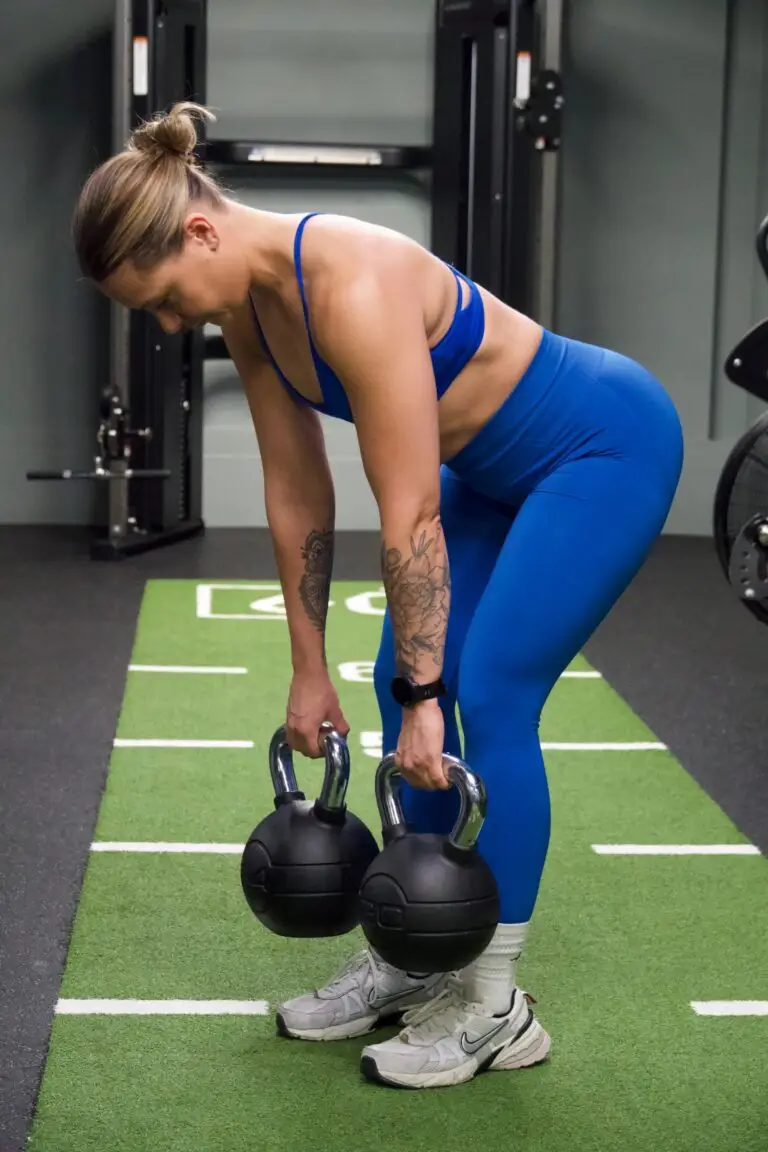
A simple gym circuit might include a squat, a row, a press and a plank, with short rests between them. You can build circuits with bodyweight, dumbbells, kettlebells or machines.
How the main options compare
| Workout type | Effect on body fat | Effect on muscle | Best for |
|---|---|---|---|
| Strength training | Reduces body fat and visceral fat | Builds or keeps muscle | Keeping muscle while you diet |
| Circuit training | Reduces fat mass | Small gain in muscle | Strength and fitness in one session |
| HIIT | Similar to steady cardio overall | Little direct effect | Short on time |
| Steady cardio | Reduces fat mass | Little direct effect | Building fitness and adding easy activity |
The sources for each row are cited in the sections around this table.
HIIT vs steady cardio for fat loss
HIIT (high-intensity interval training) alternates short, hard efforts with easier recovery. Steady cardio, such as brisk walking, cycling or jogging, keeps a moderate pace throughout.
The research is more balanced than many fitness posts suggest:
- A 2017 meta-analysis found that HIIT and moderate steady cardio both reduced whole-body fat mass and waist size. There were no significant differences between them for any body composition measure, but HIIT took about 40% less training time (Wewege et al., 2017).
- A 2019 meta-analysis found both reduced body fat percentage by a similar amount. Interval training led to a greater drop in total fat mass in kilograms (Viana et al., 2019).
- In the same eight-month trial, aerobic training reduced fat mass more than resistance training alone. Combining both gave the best mix of fat loss and lean mass gain (Willis et al., 2012).
The takeaway: HIIT saves time, and steady cardio is easier to recover from and to do more often. Pick the one you will actually do, or use both. If you want lower-intensity cardio, read what zone 2 cardio is. If you plan to lift and do cardio in one day, see cardio and weights on the same day.
Home vs gym workouts for fat loss
You do not need a full gym to train for fat loss. Both home and gym workouts can work when you train consistently and make them a little harder over time.
Home workouts
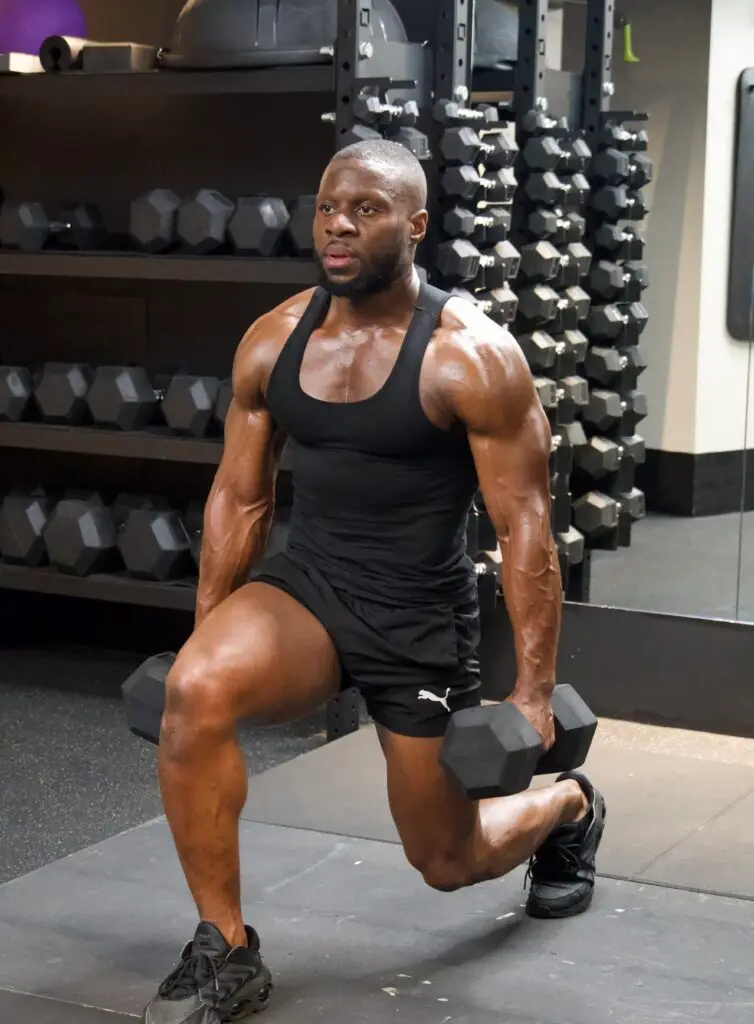
Bodyweight moves that use several muscles at once work well at home. Examples include push-ups, jump squats, mountain climbers, lunges and planks.
For example, you could do 30 seconds of each move with 30 seconds of rest between them. Repeat the circuit 4 to 6 times. As you get fitter, add a round or swap in a harder version of each move.
Video: 30 minutes Kettlebell full-body workout. If you have a kettlebell at home, this 12REPS session shows how a full-body workout can fit into half an hour.
Gym workouts
The gym gives you heavier weights and more equipment, which makes progressive overload simpler. A typical session might pair compound lifts, such as squats and rows, with a short block of intervals on a rower or bike.
How to build your weekly fat loss plan
The NHS advises adults to do at least 150 minutes of moderate activity or 75 minutes of vigorous activity a week. It also recommends muscle-strengthening activities on at least 2 days a week (NHS).
A practical week could look like this:
- Strength training on at least 2 days a week. Full-body or upper/lower sessions built on compound lifts.
- Cardio to reach the weekly minutes. Steady sessions, intervals or both, depending on your time and recovery.
- Daily movement. Walking and staying active between sessions adds up.
- Nutrition to match. A moderate calorie deficit with enough protein. Our guide on protein for female lifters explains daily targets.
Track more than the scale
Body weight goes up and down day to day. Track the weights and reps you lift, your body weight trend over weeks and how your clothes fit. If your strength holds steady while your weight trend goes down, your training is doing its job.
Fat loss workout FAQs
Is cardio or weights better for fat loss?
Both reduce body fat. Weights help you keep or build muscle, and cardio adds extra energy use. A combination gives you the benefits of both (Willis et al., 2012).
Do I need pre-workout or fat burners?
No. Supplements do not replace a calorie deficit and consistent training. If you are curious about pre-workout, read what pre-workout does.
How hard should my workouts be?
Hard enough that the last few reps of each set feel challenging, while your form stays solid. Build up gradually, especially if you are new to training.
The bottom line
The best workout for fat loss is a plan you can repeat for months. Make strength training the base, add cardio you enjoy, and pair it with a sensible calorie deficit.
If you want a plan built around your goal, your equipment and the time you have, 12REPS sets out each session for you. It shows a trainer demonstration for every exercise and lets you log your weight to see the trend over time.

Sources
- International society of sports nutrition position stand: diets and body composition. Aragon AA et al., Journal of the International Society of Sports Nutrition, 2017. https://doi.org/10.1186/s12970-017-0174-y
- American College of Sports Medicine Position Stand. Appropriate physical activity intervention strategies for weight loss and prevention of weight regain for adults. Donnelly JE et al., Medicine & Science in Sports & Exercise, 2009. https://doi.org/10.1249/MSS.0b013e3181949333
- Effects of exercise intensity and duration on the excess post-exercise oxygen consumption. LaForgia J, Withers RT, Gore CJ, Journal of Sports Sciences, 2006. https://pubmed.ncbi.nlm.nih.gov/17101527/
- The effect of resistance training in healthy adults on body fat percentage, fat mass and visceral fat: a systematic review and meta-analysis. Wewege MA et al., Sports Medicine, 2022. https://doi.org/10.1007/s40279-021-01562-2
- Effects of aerobic and/or resistance training on body mass and fat mass in overweight or obese adults. Willis LH et al., Journal of Applied Physiology, 2012. https://doi.org/10.1152/japplphysiol.01370.2011
- Effects of Resistance Circuit-Based Training on Body Composition, Strength and Cardiorespiratory Fitness: A Systematic Review and Meta-Analysis. Ramos-Campo DJ et al., Biology, 2021. https://doi.org/10.3390/biology10050377
- The effects of high-intensity interval training versus moderate-intensity continuous training on body composition in overweight and obese adults: a systematic review and meta-analysis. Wewege M et al., Obesity Reviews, 2017. https://doi.org/10.1111/obr.12532
- Is interval training the magic bullet for fat loss? A systematic review and meta-analysis comparing moderate-intensity continuous training with high-intensity interval training (HIIT). Viana RB et al., British Journal of Sports Medicine, 2019. https://doi.org/10.1136/bjsports-2018-099928
- Physical activity guidelines for adults aged 19 to 64. NHS, accessed 2026. https://www.nhs.uk/live-well/exercise/physical-activity-guidelines-for-adults-aged-19-to-64/