



By Will Duru, BSc (Hons) Sport and Exercise Science, Award winning Personal Trainer with over 10 years of experience in strength training
Forget endless cardio. The most effective way to transform your body is strength training combined with a calorie deficit.
After a decade of personal training, I have helped hundreds of clients lose fat. The ones who achieved lasting transformations all had one thing in common: they prioritised lifting weights, not hours on the treadmill.
Cardio burns calories during the session. Strength training builds muscle that burns calories 24/7. Cardio makes you a smaller version of your current shape. Strength training reshapes your body entirely.
This guide explains why strength training is superior for fat loss, provides complete programmes, and covers the nutrition strategy that makes it all work.

Why Strength Training Beats Cardio for Fat Loss
Muscle Burns More Calories at Rest
Muscle is metabolically active tissue. Each kilogram of muscle burns approximately 10 to 15 calories daily at rest. Fat burns only 2 to 3 calories per kilogram.
Build 3 to 4kg of muscle over a year, and you burn an extra 30 to 60 calories daily without additional effort. This compounds over time.
More importantly, muscle increases your total daily energy expenditure through non-exercise activity thermogenesis (NEAT). Stronger, more muscular people move more efficiently and tend to be more active throughout the day.
The Afterburn Effect
Strength training creates an oxygen debt that takes hours to repay. Your metabolism remains elevated for 24 to 48 hours post-workout as your body repairs muscle tissue.
This excess post-exercise oxygen consumption (EPOC) burns additional calories beyond what you burned during the session.
High intensity cardio also creates EPOC, but the muscle damage from resistance training produces a larger and longer-lasting effect.
Preserving Muscle During Weight Loss
When you lose weight, you lose both fat and muscle. The ratio depends heavily on your training.
Without strength training, up to 25 percent of weight lost can be muscle. This is a disaster for body composition and metabolism.
With strength training, you signal your body to preserve muscle and prioritise fat loss. Studies show resistance training during calorie deficit preserves significantly more lean mass than cardio or diet alone.
Shape Changes
Cardio makes you smaller. Strength training makes you leaner and more defined.
Two people at the same weight can look completely different depending on their muscle to fat ratio. The person who strength trains has visible muscle definition. The person who only does cardio looks “soft” even at lower weights.
From my training experience: The most dramatic visual transformations I have seen came from clients who lost relatively modest amounts of weight (8 to 12kg) while building muscle. Their bodies changed completely while the scale moved less than expected.

The Science of Fat Loss
Understanding fat loss physiology helps you train and eat more effectively.
Energy Balance
Fat loss requires a calorie deficit: consuming fewer calories than you expend. This is non-negotiable. No training programme overcomes calorie surplus.
Total Daily Energy Expenditure (TDEE) consists of:
- Basal Metabolic Rate (BMR): Calories burned at rest (60-70%)
- Thermic Effect of Food (TEF): Calories burned digesting food (10%)
- Non-Exercise Activity Thermogenesis (NEAT): Daily movement (15-20%)
- Exercise Activity Thermogenesis (EAT): Formal exercise (5-10%)
Strength training affects all four: it increases BMR through added muscle, increases TEF through higher protein intake, tends to increase NEAT, and contributes directly to EAT.
Fat Oxidation
Fat is released from storage (lipolysis) and burned for fuel (oxidation). This process is enhanced by:
- Calorie deficit (primary driver)
- Lower insulin levels (influenced by meal timing and carbohydrate intake)
- Elevated catecholamines (from exercise)
- Higher muscle mass (more mitochondria to burn fat)
Strength training enhances the hormonal environment for fat oxidation, particularly when combined with adequate protein and moderate calorie deficit.
Metabolic Adaptation
When you diet, your metabolism adapts downward. Your body becomes more efficient, burning fewer calories to preserve energy.
This metabolic adaptation is minimised by:
- Maintaining muscle mass (through strength training)
- Avoiding excessive calorie restriction
- Including refeeds or diet breaks
•Not dieting for too long continuously

How to Structure Training for Fat Loss
Training Frequency
Recommendation: 3 to 4 strength sessions per week
This provides enough stimulus to preserve and build muscle while allowing recovery during a calorie deficit.
Recovery is compromised when you are in a deficit. Training 6 days per week during aggressive dieting often backfires.
Training Volume
Recommendation: Maintain or slightly reduce volume from maintenance phases
Some coaches recommend increasing volume during fat loss phases. I disagree. Recovery is impaired in a deficit. Maintaining your normal volume is sufficient to preserve muscle.
If fatigue accumulates, reduce volume by 20 to 30 percent rather than pushing through.
Training Intensity
Recommendation: Maintain heavy compound lifts
Keep lifting heavy. This signals muscle preservation more strongly than high rep training.
Many people switch to light weights and high reps when dieting, thinking this “tones” better. This is a mistake. Light weights provide less muscle preservation stimulus.
From my training experience: Clients who maintain heavy compound lifts during fat loss preserve strength and muscle far better than those who switch to “light weight, high reps” approaches. The heavy lifting tells your body “this muscle is necessary; keep it.”
Exercise Selection
Prioritise:
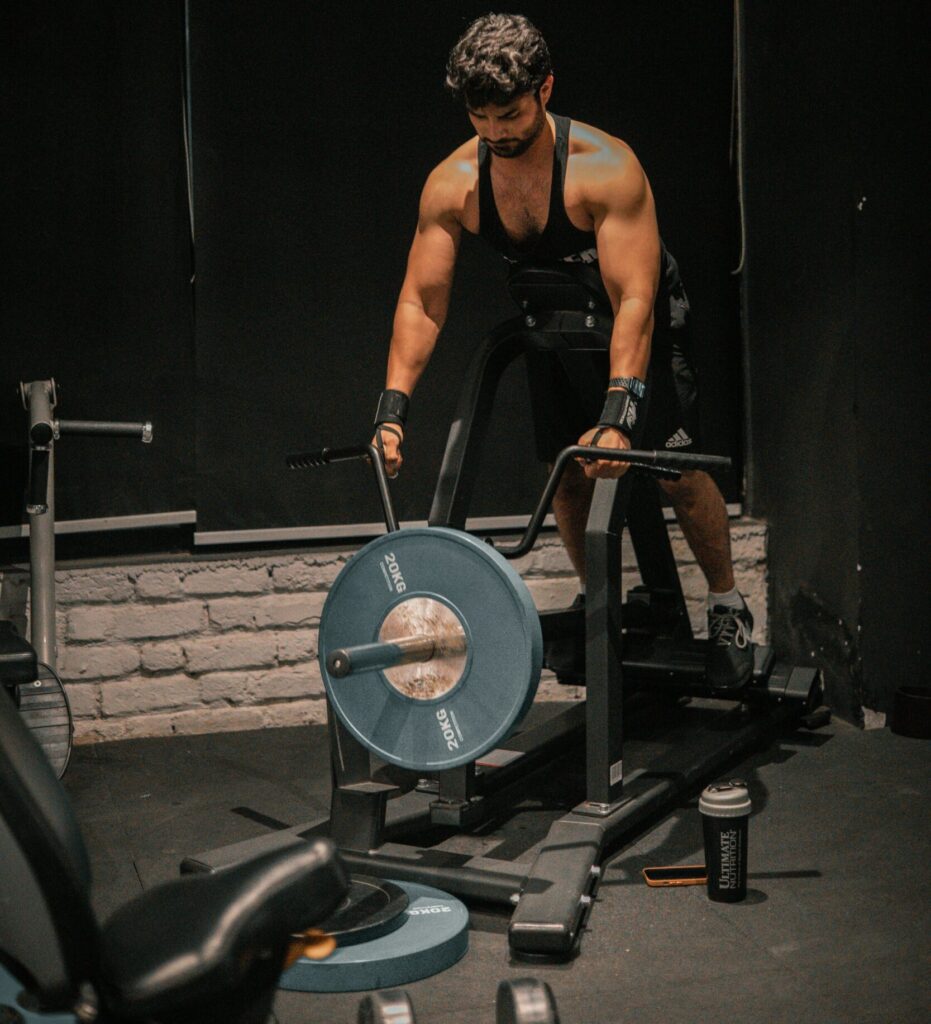
- Compound movements (squat, deadlift, bench, row, press)
- Exercises that work large muscle groups
- Movements you can progressively overload
Secondary:
- Isolation exercises for lagging areas
- Exercises you enjoy and will do consistently
Cardio During Fat Loss
Cardio is a tool, not a requirement.
If you include cardio:
- Low-intensity steady state (walking, cycling) preserves muscle better than high-intensity
- 2 to 3 sessions of 20 to 30 minutes is sufficient
- Do not rely on cardio to “burn off” poor diet choices
- Add cardio gradually rather than starting with high amounts
From my training experience: I rarely have clients do more than 3 cardio sessions weekly during fat loss phases. Most of the deficit comes from diet. Excessive cardio increases hunger, fatigue, and muscle loss risk.
The Programme: Strength Training for Fat Loss
This programme prioritises muscle preservation during calorie deficit.
Weekly Structure
Day | Session |
Monday | |
Tuesday | Upper Body |
Wednesday | Rest or Light Cardio |
Thursday | Lower Body |
Friday | Upper Body |
Saturday | Rest or Light Cardio |
Sunday | Rest |
Lower Body A (Monday)
Exercise | Sets | Reps | Rest | Notes |
Barbell Back Squat | 4 | 6, 6, 8, 8 | 3 minutes | Primary strength movement |
Romanian Deadlift | 3 | 8, 10, 10 | 2 minutes | Hamstrings and glutes |
Leg Press | 3 | 10, 12, 12 | 90 seconds | Additional quad volume |
Walking Lunge | 2 | 10 each leg | 60 seconds | Single leg work |
Leg Curl | 3 | 12, 12, 10 | 60 seconds | Hamstring isolation |
Standing Calf Raise | 3 | 15, 12, 12 | 45 seconds | Calf development |
Total working sets: 18 Estimated time: 45 to 55 minutes
Upper Body A (Tuesday)
Exercise | Sets | Reps | Rest | Notes |
Barbell Bench Press | 4 | 6, 6, 8, 8 | 3 minutes | Primary pressing |
Barbell Row | 4 | 6, 8, 8, 8 | 2 minutes | Primary pulling |
Seated Dumbbell Shoulder Press | 3 | 8, 10, 10 | 90 seconds | Shoulder development |
Lat Pulldown | 3 | 10, 10, 12 | 90 seconds | Lat width |
Face Pull | 2 | 15, 15 | 45 seconds | Rear delts, posture |
Tricep Pushdown | 2 | 12, 12 | 45 seconds | Tricep isolation |
Barbell Curl | 2 | 12, 10 | 45 seconds | Bicep isolation |
Total working sets: 20 Estimated time: 50 to 60 minutes
Lower Body B (Thursday)
Exercise | Sets | Reps | Rest | Notes |
Trap Bar Deadlift | 4 | 5, 5, 6, 6 | 3 minutes | Posterior chain strength |
Front Squat | 3 | 8, 8, 10 | 2 minutes | Quad emphasis |
Bulgarian Split Squat | 3 | 8 each leg | 90 seconds | Single leg strength |
Hip Thrust | 3 | 10, 12, 12 | 90 seconds | Glute focus |
Seated Leg Curl | 3 | 12, 12, 10 | 60 seconds | Hamstring isolation |
Seated Calf Raise | 3 | 15, 15, 12 | 45 seconds | Soleus focus |
Total working sets: 19 Estimated time: 50 to 60 minutes
Upper Body B (Friday)
Exercise | Sets | Reps | Rest | Notes |
Overhead Press | 4 | 6, 6, 8, 8 | 3 minutes | Shoulder strength |
Weighted Pull Up or Lat Pulldown | 4 | 6, 8, 8, 8 | 2 minutes | Vertical pulling |
Incline Dumbbell Press | 3 | 8, 10, 10 | 90 seconds | Upper chest |
Seated Cable Row | 3 | 10, 10, 12 | 90 seconds | Back thickness |
Dumbbell Lateral Raise | 3 | 12, 12, 15 | 45 seconds | Side delts |
Overhead Tricep Extension | 2 | 12, 12 | 45 seconds | Long head tricep |
Incline Dumbbell Curl | 2 | 12, 10 | 45 seconds | Bicep isolation |
Total working sets: 21 Estimated time: 50 to 60 minutes

Nutrition for Fat Loss
Training creates the stimulus. Nutrition determines the results.
Calorie Deficit
Recommended deficit: 300 to 500 calories below maintenance
Aggressive deficits (1000+ calories) cause more muscle loss, increased hunger, hormonal disruption, and higher rebound risk.
A moderate deficit allows fat loss while preserving muscle and maintaining energy for training.
Calculate your target:
- Estimate maintenance calories (bodyweight in kg × 28-32)
- Subtract 300 to 500 calories
- Monitor weight for 2 weeks and adjust
Protein: The Priority
Protein is crucial during fat loss for:
- Preserving muscle mass
- Increasing satiety (feeling full)
- Higher thermic effect (burns more calories to digest)
- Supporting recovery from training
Recommendation: 1.8 to 2.4 grams per kilogram of bodyweight
During a deficit, aim for the higher end of this range.
For an 80kg person: 144 to 192 grams of protein daily
Meal Timing and Structure
Distribute protein across 4 to 5 meals. Each meal should contain 30 to 50 grams of protein to maximise muscle protein synthesis throughout the day.
Eat protein around training. A meal containing protein within a few hours before and after training optimises the muscle-preserving effect.
Do not skip meals to “save” calories. This leads to excessive hunger and poor food choices later.
Sample Fat Loss Day (80kg Person, 1800 Calories)
Meal | Food | Protein | Calories |
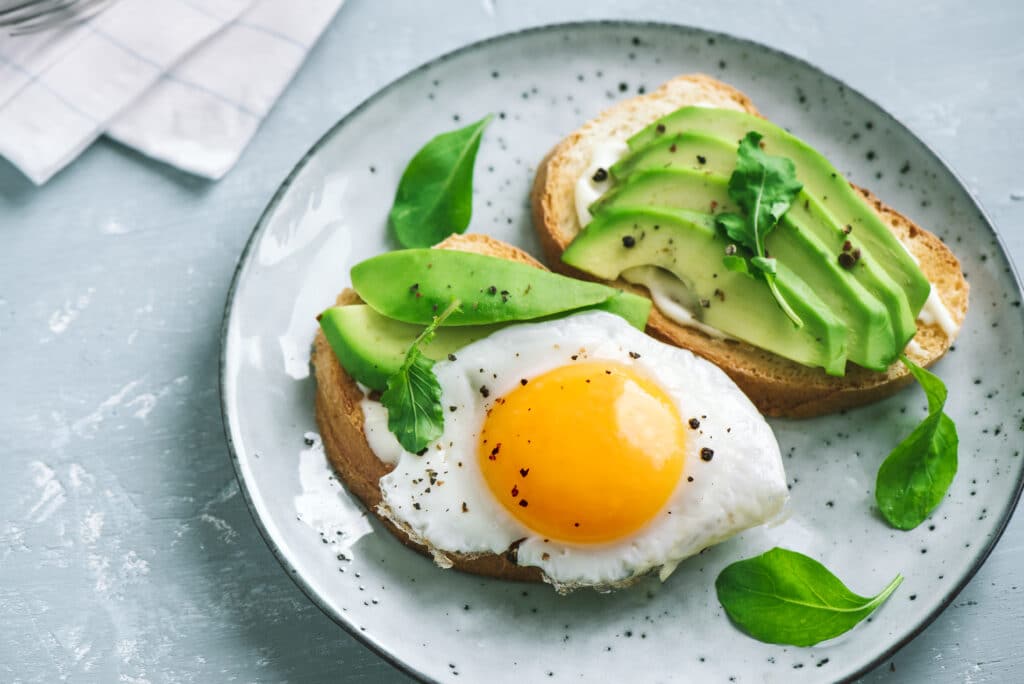
3 eggs, 2 toast, spinach | 24g | 380 | |
Snack | Greek yoghurt (200g) | 20g | 150 |
Lunch | Chicken breast (150g), rice (100g), vegetables | 45g | 450 |
Pre-workout | Apple, protein shake | 25g | 220 |
Dinner | Salmon (150g), sweet potato, broccoli | 38g | 480 |
Evening | Cottage cheese (150g) | 18g | 120 |
Total | 170g | 1800 |
Foods That Support Fat Loss
Prioritise:
- Lean proteins (chicken, fish, lean beef, eggs, Greek yoghurt)
- Vegetables (high volume, low calorie)
- Whole grains (moderate portions, sustained energy)
- Fruits (natural sweetness, vitamins)
- Healthy fats (avocado, nuts, olive oil – in controlled portions)
Limit:
- Processed foods (easy to overeat)
- Liquid calories (no satiety)
- High fat + high carb combinations (most palatable, easiest to overeat)
- Alcohol (empty calories, impairs fat oxidation, reduces inhibition around food)
Common Fat Loss Mistakes
Mistake 1: Too Much Cardio, Not Enough Lifting
Excessive cardio without strength training leads to muscle loss. You end up smaller but still soft.
The fix: Prioritise strength training. Add cardio as needed, not as the foundation.
Mistake 2: Cutting Calories Too Aggressively
Very low calorie diets cause muscle loss, metabolic adaptation, and increased hunger. They are not sustainable.
The fix: Use a moderate deficit (300 to 500 calories). Slower fat loss preserves more muscle.
Mistake 3: Switching to Light Weights
The myth that light weights “tone” persists. In reality, light weights provide less muscle preservation stimulus.
The fix: Keep lifting heavy. Maintain the weights that built your muscle to keep your muscle.
Mistake 4: Expecting Linear Progress
Fat loss is not linear. Water weight fluctuates. Hormonal cycles affect scale weight. Stress impacts everything.
The fix: Track weekly averages, not daily weights. Trust the process over weeks, not days.
Mistake 5: All-or-Nothing Mentality
One bad meal does not ruin your progress. One perfect week does not transform you.
The fix: Focus on overall consistency. 80 to 90 percent adherence beats 100 percent for 3 weeks followed by quitting.
From my training experience: The clients who achieve lasting fat loss are never the ones who are “perfect.” They are the ones who handle setbacks, get back on track quickly, and maintain consistency over months.
Tracking Your Fat Loss
Weigh Daily, Average Weekly
Daily weight fluctuates. Weekly averages reveal the true trend.
Target rate of loss: 0.5 to 1 percent of bodyweight per week
For an 80kg person: 0.4 to 0.8kg per week
Take Progress Photos
The mirror lies. Photos reveal changes you cannot see daily.
Take photos monthly: front, side, back. Same lighting, same time of day, same clothing.
Track Workouts
If your strength is maintained or increasing during a deficit, you are preserving muscle well.
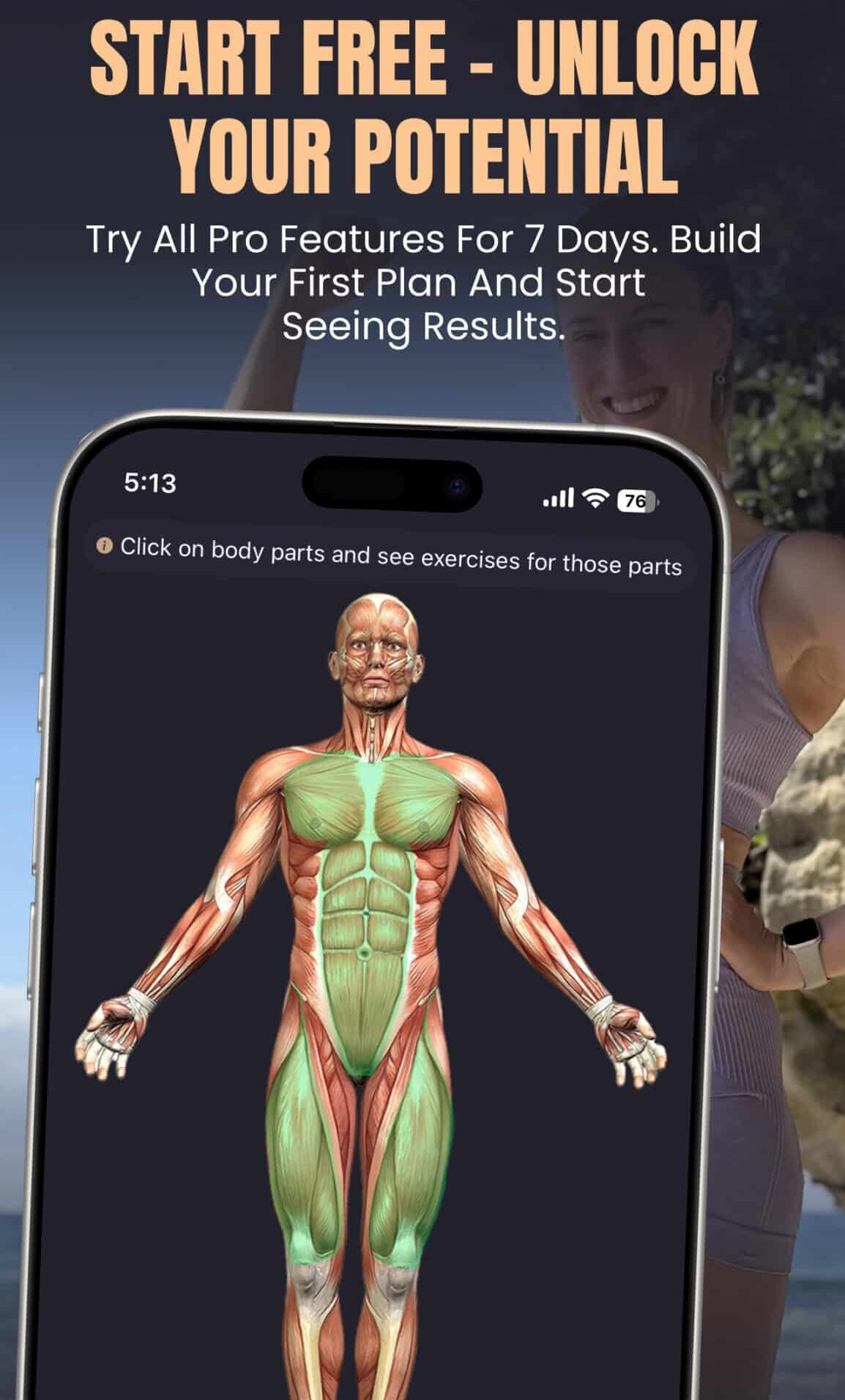
The 12REPS app tracks your weights and reps, making it easy to confirm your strength is not declining during fat loss.
Measurements
Waist circumference is a reliable indicator of fat loss, independent of scale weight.
Measure weekly: around the navel, first thing in the morning.
Realistic Expectations
Timeline
Week 1-2: Water weight loss. Scale drops quickly (mostly not fat).
Week 3-4: Adaptation. Scale may stall or fluctuate. Fat loss is happening but water is normalising.
Week 5-12: Consistent progress. 0.5 to 1kg per week average.
Month 3-6: Visible transformation. Clothes fit differently. Others notice.
Realistic Fat Loss Rates
Starting Body Fat | Realistic Weekly Loss |
30%+ | 0.7-1kg |
25-30% | 0.5-0.8kg |
20-25% | 0.4-0.6kg |
15-20% | 0.3-0.5kg |
Below 15% | 0.2-0.4kg |
Leaner individuals lose fat more slowly. This is biology, not failure.
What Success Looks Like
After 12 weeks of proper execution:
- 6 to 10kg of fat loss
- Maintained or increased strength
- Visible definition improvement
- Clothes fitting significantly better
- Sustainable habits established
Using the 12REPS App for Fat Loss
The 12REPS app supports your fat loss journey:
- Structured programmes designed for fat loss
- Progress tracking to confirm strength maintenance
- Video demonstrations for every exercise
- Workout logging to keep you accountable
Consistent tracking during fat loss is crucial. The app makes this effortless.

The Bottom Line
Strength training is the foundation of effective fat loss. It preserves muscle, increases metabolism, improves body composition, and creates the shape that cardio alone cannot.
Combine strength training with a moderate calorie deficit, high protein intake, and consistency over months. This formula works.
Do not chase quick fixes. Build sustainable habits. Trust the process.
Download the 12REPS app and start your fat loss journey with professional programming and progress tracking.
Frequently Asked Questions
Should I do strength training or cardio for fat loss?
Prioritise strength training. It preserves muscle and improves body composition. Add moderate cardio as needed for additional calorie burn.
How fast should I lose weight?
0.5 to 1 percent of bodyweight per week. Faster than this risks excessive muscle loss.
Will I lose strength when dieting?
Some strength loss is possible during aggressive deficits. With moderate deficits and proper training, most people maintain or even gain strength, especially intermediates.
Can I build muscle while losing fat?
Yes, especially if you are a beginner, returning after a break, or have significant fat to lose. This is called body recomposition. Advanced lean individuals struggle to do both simultaneously.
How much protein do I really need?
1.8 to 2.4 grams per kilogram of bodyweight. During fat loss, aim for the higher end.
Should I do fasted cardio?
It does not matter for fat loss. Total daily calorie balance determines results, not whether you ate before cardio.
References
- Stiegler, P. & Cunliffe, A. (2006). The role of diet and exercise for the maintenance of fat-free mass and resting metabolic rate during weight loss. Sports Medicine. https://pubmed.ncbi.nlm.nih.gov/16526835/
- Churchward-Venne, T.A. et al. (2013). Role of protein and amino acids in promoting lean mass accretion with resistance exercise and attenuating lean mass loss during energy deficit in humans. Amino Acids. https://pubmed.ncbi.nlm.nih.gov/23543393/
- Helms, E.R. et al. (2014). Evidence-based recommendations for natural bodybuilding contest preparation: nutrition and supplementation. Journal of the International Society of Sports Nutrition. https://pubmed.ncbi.nlm.nih.gov/24864135/
- Morton, R.W. et al. (2018). A systematic review, meta-analysis and meta-regression of the effect of protein supplementation on resistance training-induced gains in muscle mass and strength. British Journal of Sports Medicine. https://pubmed.ncbi.nlm.nih.gov/28698222/
Related Articles on just12reps.com
Article | Description | Link |
12REPS Nutrition Guide | Complete nutrition guide for all goals. | |
From Skinny Fat to Fit | Transformation guide for the skinny fat physique. | |
Skinny Fat Transformation Workout Plan | Complete programme for skinny fat individuals. | |
How to Get Stronger | Complete guide to building strength. | |
The Science of Progressive Overload | The principle that drives all progress. |
About the Author: Will Duru holds a BSc (Hons) in Sport and Exercise Science and is an award-winning personal trainer with over 10 years of experience. He has helped hundreds of clients achieve lasting fat loss through strength training and sustainable nutrition. Will created the 12REPS app to provide effective programming for fat loss and muscle building.