



By Will Duru, personal trainer and founder of 12REPS.
The Short Answer
You won’t lose much muscle from a short break. A few weeks off usually causes only small losses, and strength tends to hold up better than muscle size. Losses grow the longer you stop, and they happen faster in older adults and people who were less trained to begin with.
The good news: muscle you lose usually comes back faster than it took to build the first time. And if you can do even one short session a week, you can keep most of your gains.

What the Research Says
- A three-week break didn’t hurt long-term results. In a 2013 study by Ogasawara and colleagues, 14 young men trained the bench press for 24 weeks. One group trained nonstop. The other trained in cycles of six weeks on and three weeks off. By the end, both groups had made similar gains in muscle size and strength.
- Losses increase the longer you stop. A 2013 review by Bosquet and colleagues pooled 103 studies. Strength and power dropped after training stopped, and the losses grew with the length of the break. Losses were larger in people over 65 and in people who were less active.
- A small amount of training keeps most of your gains. In a 2011 study by Bickel and colleagues, 70 young and older adults trained for 16 weeks, then either stopped or kept training at a much lower dose for 32 weeks. In young adults, training at one-ninth of the original volume kept their muscle size. Older adults needed more training to keep their gains. Strength was largely kept, even in the group that stopped.
- Muscle seems to “remember” past training. A 2018 study by Seaborne and colleagues found that training left lasting changes in how certain genes in muscle were switched on, even after muscle size returned to normal. When people trained again, some of those genes responded more strongly. This is one possible explanation for “muscle memory.”
Most of these studies were small. Results vary from person to person, so treat the timelines below as rough guides.
A Rough Timeline
| Time off | What usually happens |
|---|---|
| 1 to 2 weeks | Little or no real muscle loss. You may feel a bit flat or less sharp at first. |
| About 3 weeks | Small losses in muscle size are possible, but strength often holds up. You usually regain it quickly. |
| 1 to 3 months | Gradual losses in size and strength, larger in older adults and beginners. |
| Several months or more | Larger losses, but muscle memory helps you rebuild faster than the first time. |
This timeline combines the research above with common coaching experience. It is a guide, not a guarantee.
Why You Might Look Smaller After a Few Days Off
If you look or feel smaller after a short break, it is usually not muscle loss. Your muscles store less water and carbohydrate when you train less, so they can look a little flatter. This usually returns within a few sessions.
How to Keep Your Gains During a Busy Period
- Keep at least one session a week. In the Bickel study, a much smaller dose kept muscle size in younger adults.
- Keep the intensity, cut the volume. Do fewer sets, but keep them challenging.
- Focus on big exercises. Squats, presses, rows and hinges train lots of muscle in little time. See my minimalist gym routine.
- If you are older, train a bit more. Older adults in the research needed a higher dose to keep their muscle.
- Eat enough protein. This helps you hold on to muscle while training less.
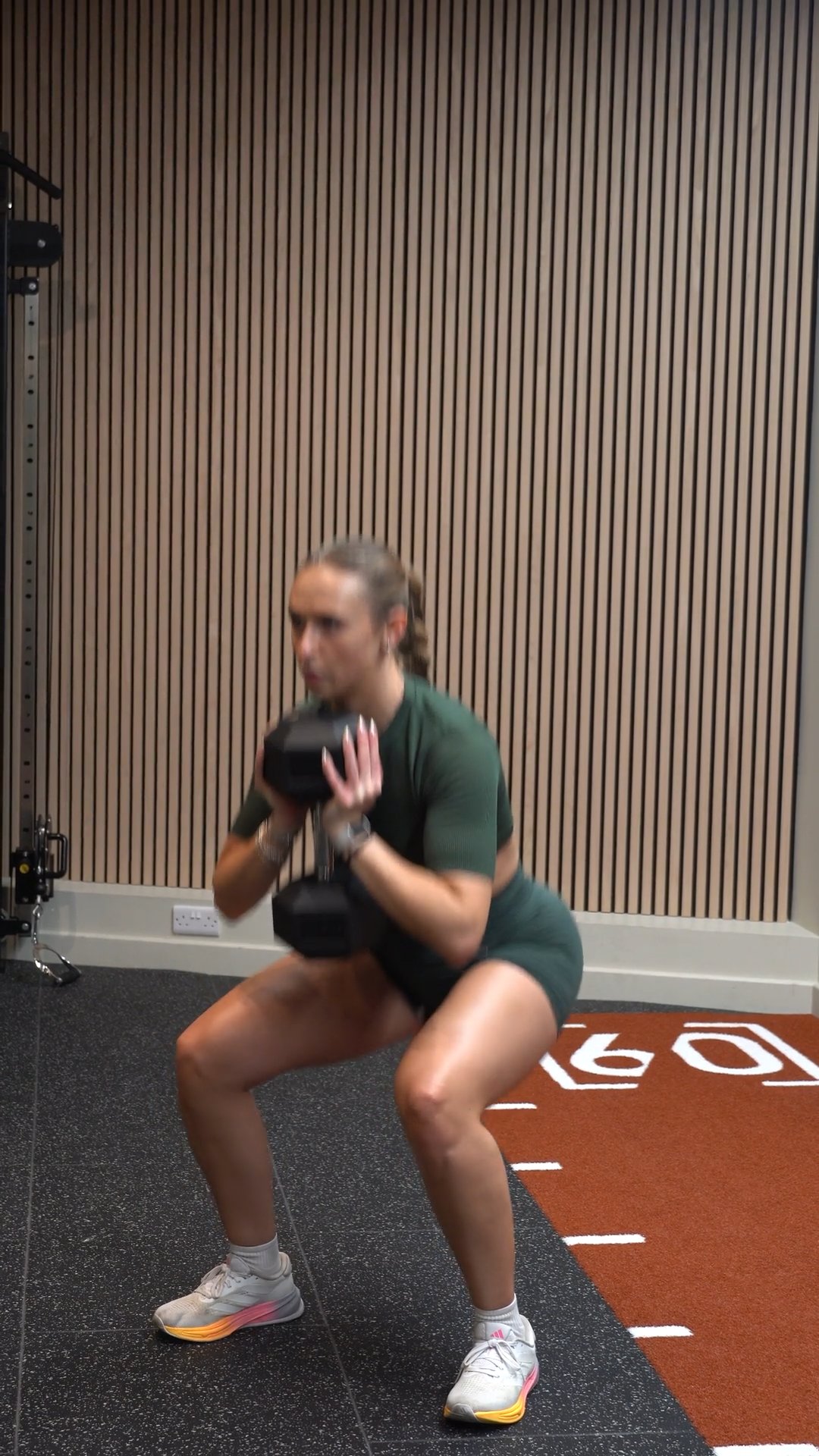
The goblet squat is a simple exercise to keep in your routine when time is short. Here is the demo from the 12REPS exercise library:
How to Come Back After a Break
- Start with lighter weights than before, roughly 70 to 80% of what you were lifting, for the first week or two.
- Do fewer sets than usual, then build back up over two to three weeks.
- Expect some soreness in your first sessions back.
- Use your old numbers as a target, not a starting point.
These steps reflect common coaching practice rather than a specific study. If your break was due to injury or illness, check with your doctor or physical therapist before returning. Read how to train around an injury for more.
Summary
- A few weeks off causes little lasting muscle loss.
- Strength usually holds up better than muscle size.
- Losses grow with longer breaks and are larger in older adults.
- A small amount of training, even one session a week, keeps most of your gains.
- Muscle tends to come back faster than it took to build.
Stay Consistent With a Plan That Fits Your Week
Busy week, holiday or a few weeks off? 12REPS builds a strength program around your goal, schedule and equipment, so you can keep training even when time is short.
Every exercise has a demo and a coach tutorial from me, and your log keeps a record of what you lifted, so you know exactly where to restart after a break.
Download 12REPS and see what you’ll get:
Sources
- Ogasawara R, Yasuda T, Ishii N, Abe T. Comparison of muscle hypertrophy following 6-month of continuous and periodic strength training. Eur J Appl Physiol. 2013;113:975–985.
- Bosquet L, Berryman N, Dupuy O, et al. Effect of training cessation on muscular performance: a meta-analysis. Scand J Med Sci Sports. 2013;23(3):e140–e149.
- Bickel CS, Cross JM, Bamman MM. Exercise dosing to retain resistance training adaptations in young and older adults. Med Sci Sports Exerc. 2011;43(7):1177–1187.
- Seaborne RA, Strauss JA, Cocks MS, et al. Human skeletal muscle possesses an epigenetic memory of hypertrophy. Sci Rep. 2018;8.
Related Reading
- Deload weeks in strength training
- How to build a gym habit that sticks
- The importance of consistency
- How many days a week should you work out?
- When will you see results?
- Strength training after 50
I’m Will Duru, a personal trainer and the founder of 12REPS. I hold a BSc (Hons) in Sport and Exercise Science and have more than a decade of experience coaching people in strength training.
