Workout A
About 40 minSquat and press
- Dumbbell goblet squat3 × 10–15
- Dumbbell close-grip chest press3 × 8–12
- Dumbbell single-arm row3 × 10–12 each side
- Dumbbell Romanian deadlift3 × 10–12
- Dumbbell lateral raise2 × 12–15

Free 3-day plan
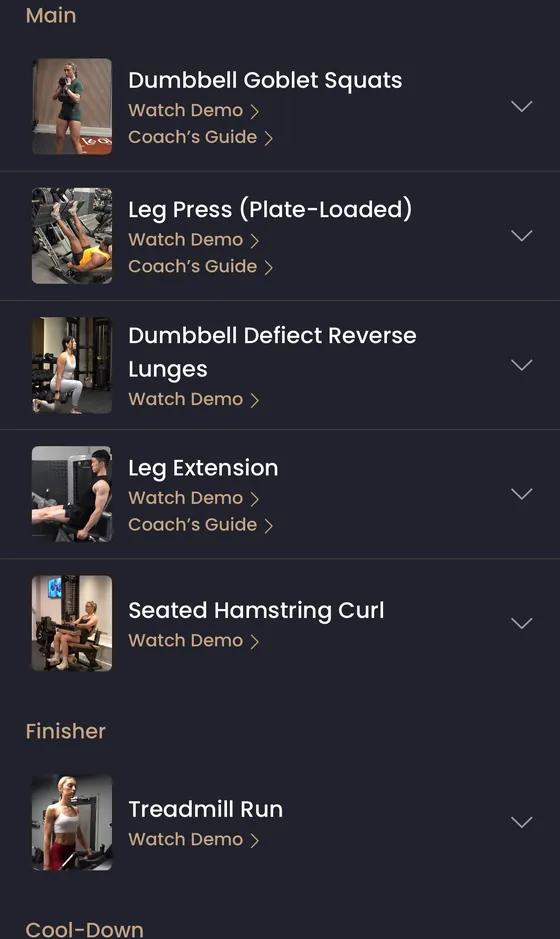
Got a pair of dumbbells and not sure what to do with them? This free 3-day dumbbell workout plan trains your whole body in about 40 minutes a session, at home or in the gym. Every exercise links to a demo from a qualified personal trainer, and you can follow it in the 12REPS app.
Jump to the planThe plan at a glance
For people new to strength training, the American College of Sports Medicine suggests training two to three days a week, working the whole body each session (ACSM, 2009). A review of 21 studies found that lighter and heavier loads built similar amounts of muscle when every set was taken to failure (Schoenfeld et al., 2017). Heavier loads still won for maximal strength.
Equipment
The 3-day plan
Warm up for five minutes, then do one or two lighter sets of your first exercise. Rest 90 seconds to two minutes between sets. Pick a weight that leaves you one to three reps short of failure at the end of each set. Tap an exercise to watch how to do it.
No bench? Do the chest presses and flies lying on the floor, press overhead sitting on a sturdy chair or standing, and swap the incline row for a single-arm row with one hand on a chair. No step? Swap step-ups for reverse lunges holding your dumbbells. Press-ups too hard? Put your hands on a bench or the edge of a sofa. For more swaps, browse the exercise library, or set your equipment in 12REPS and your workout is built around what you have.
Your week
The simplest week is Monday, Wednesday and Friday, with a rest day between each session. Use your rest days for walking, cycling or just recovering. Any three days work, as long as you leave at least one day between sessions.
Can only make two days? Rotate through the three workouts in order. Do A and B one week, then C and A the next, and keep going. You’ll still train your whole body every session.
How to progress
Start with a weight you can lift for the bottom of the rep range with two or three reps left. Each session, try to add a rep. When you hit the top of the range on every set, move up to the next dumbbell. Guidelines suggest a 2 to 10% increase once you can do one or two reps more than your target (ACSM, 2009).
Dumbbells go up in fixed steps, so the next pair can be a big jump. Going from 12 kg to 14 kg is about 17% more. If the jump is too big, stay at the top of the range for another week, slow down the lowering part of each rep, or add a set. The progressive overload calculator can help you plan your next step.
Example: goblet squat, 3 × 10–15
Illustration only. Your starting weight will be different.
Follow it in 12REPS
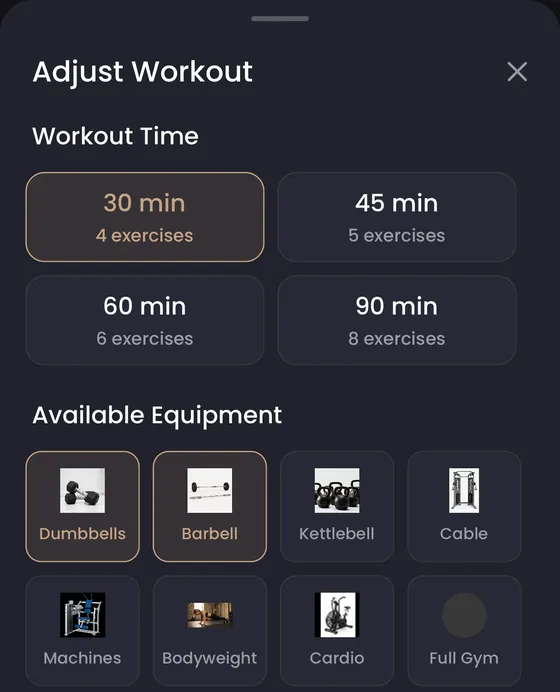
Choose 30, 45, 60 or 90 minutes and tell 12REPS what you have, from dumbbells to a full gym.
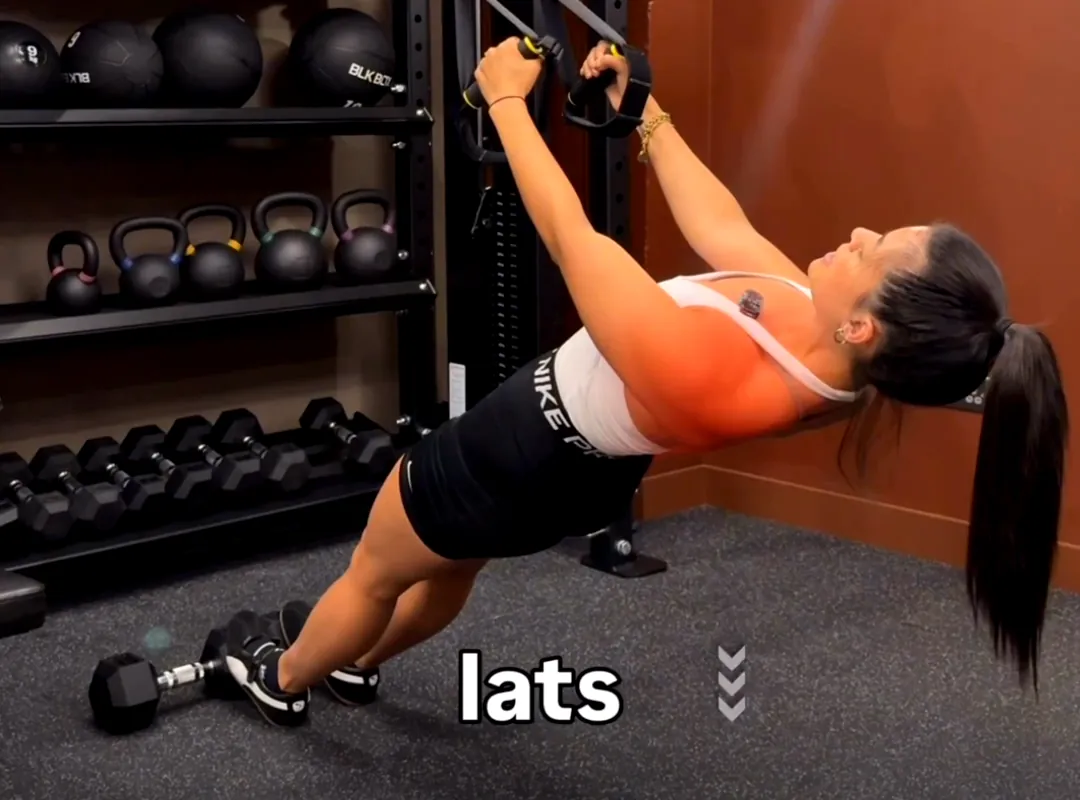
Every exercise has a demonstration and technique guide from a qualified personal trainer.
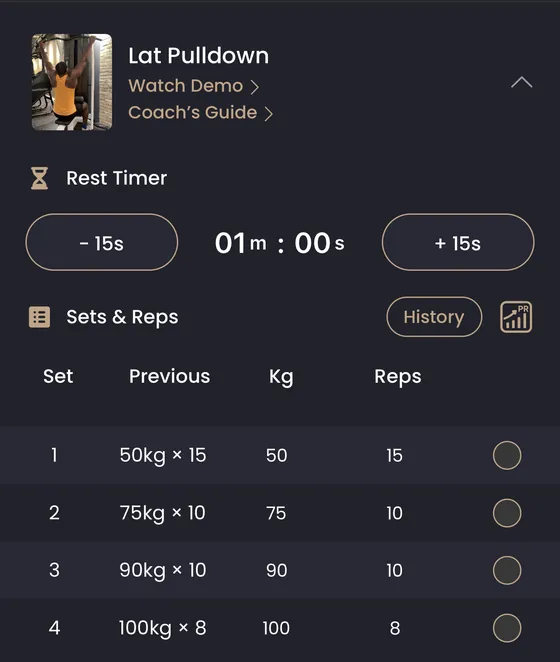
12REPS shows what you lifted last session, with a rest timer built in, so you always know your next target.
Compare plans
| Plan | Days a week | Equipment | Best for |
|---|---|---|---|
| Dumbbell workout plan | 3 | A pair of dumbbells | Home training or a quiet corner of the gym |
| Beginner gym plan | 3 | Gym machines, cables and dumbbells | Beginners with gym access |
| Upper lower split | 4 | Full gym | The next step after full body |
| Push pull legs builder | 3–6 | Full gym | People who like shorter, focused sessions |
Short on time? Try the 20-minute dumbbell workout. Want to compare equipment? Read dumbbell vs barbell bench press.
Questions
Yes. A review of 21 studies found that lighter and heavier loads built similar amounts of muscle when every set was taken to failure (Schoenfeld et al., 2017). The key is effort. If your dumbbells feel light, use the top of each rep range and finish most sets with only one or two reps left. Heavier loads still matter if your main goal is maximal strength.
Adjustable dumbbells give you the most room to grow, because your legs will usually handle more weight than your shoulders. If you buy a fixed pair, choose a weight you can goblet squat for about 10 reps with two or three left in the tank. You may want a lighter pair later for lateral raises and shoulder presses.
Yes. Press and fly on the floor, do the shoulder press seated on a sturdy chair or standing, and swap the incline row for a single-arm row with one hand on a chair. The full list of swaps is under the plan.
Yes. The exercises, sets and reps work for anyone. Choose weights that match your own strength, and add weight when you hit the top of the rep range.
UK and US guidelines both recommend at least 150 minutes of moderate activity a week alongside strength training (UK CMOs, 2019; US HHS, 2018). Walking or cycling on your rest days fits well with this plan.
Run it for 8 to 12 weeks while you keep adding reps or weight. If you get access to a gym and want to train four days a week, the upper lower split is a good next step.
Download 12REPS and your next workout is ready.
Written by Will Duru, BSc (Hons) Sport & Exercise Science, personal trainer and founder of 12REPS. This plan is general guidance for healthy adults. If you have a medical condition, an injury or are pregnant, speak to your doctor before starting a new exercise plan.