
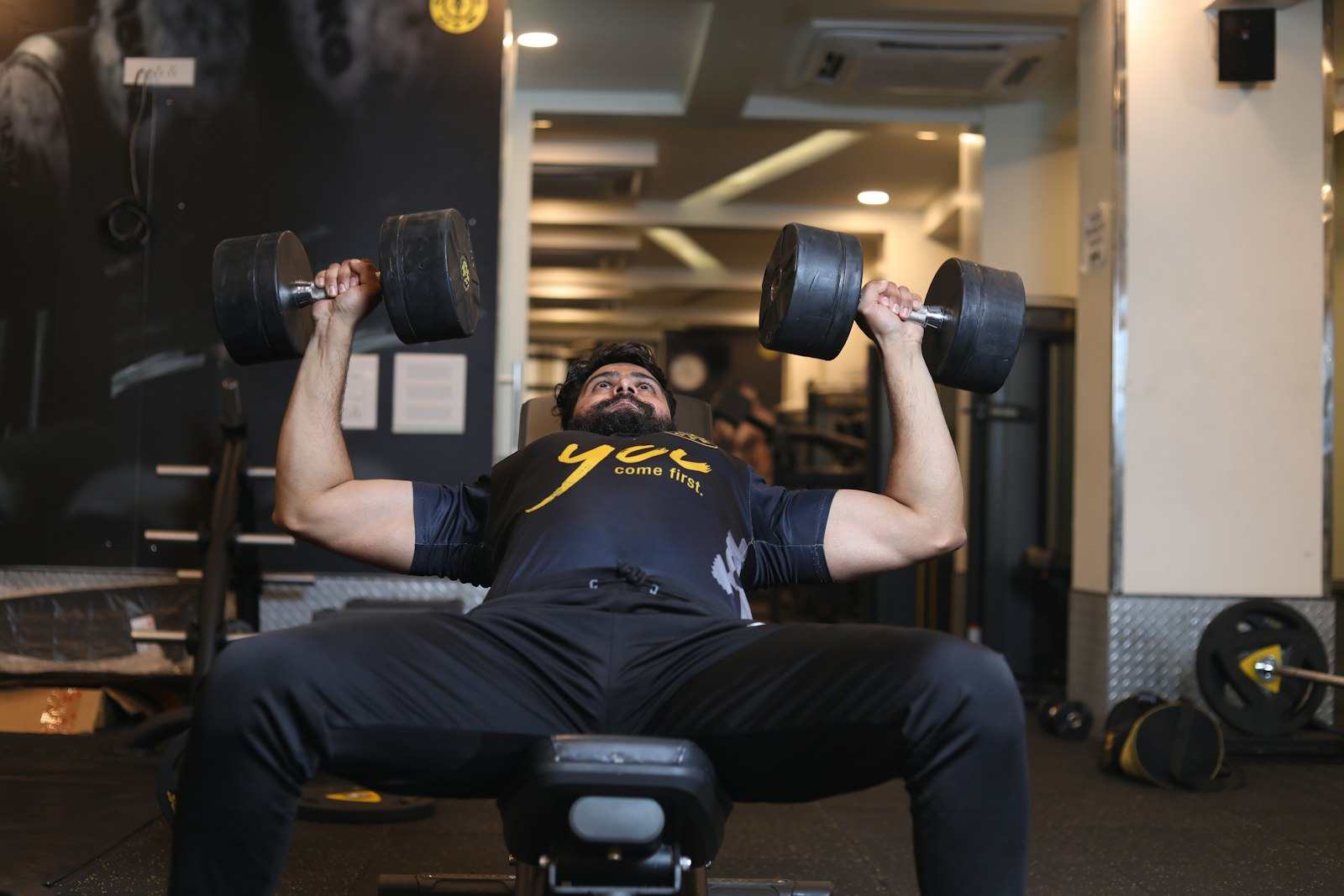



By Will Duru, personal trainer and founder of 12REPS.
The Short Answer
Both build your chest. Research shows the chest and front shoulders work about equally hard in a dumbbell and barbell bench press.
- The barbell bench press lets you lift more weight, roughly 17% more in one study, and add weight in small, easy steps. It is the better choice if you want to build maximum pressing strength.
- The dumbbell bench press lets each arm work on its own, gives your shoulders more freedom to find a comfortable path and is easier to do safely without a spotter.
For most people, the best answer is to use both across your training week or your training blocks.
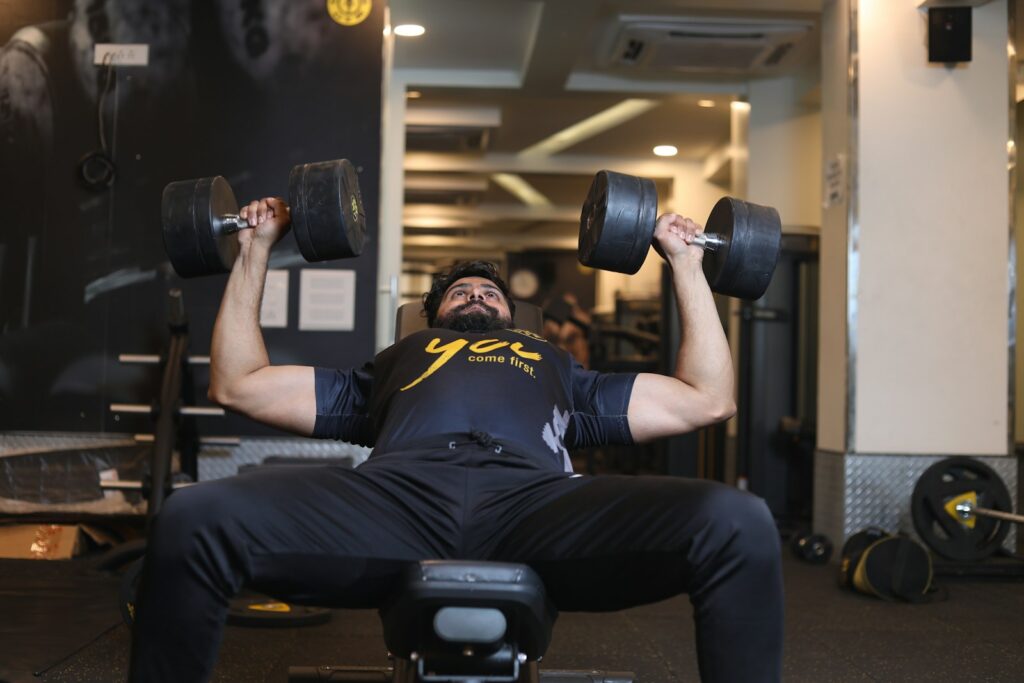
Dumbbell vs Barbell Bench Press at a Glance
| Barbell bench press | Dumbbell bench press | |
|---|---|---|
| Weight you can lift | Higher | Lower, about 17% less in research |
| Chest and front shoulder activity | Similar | Similar |
| Triceps | Work harder | Work less |
| Biceps (as stabilizers) | Work less | Work harder |
| Stability needed | Lower | Higher, each arm balances its own weight |
| Range of motion | Stops when the bar touches your chest | Hands can lower slightly deeper |
| Training alone | Needs a spotter or safety arms for heavy sets | Easier to set the weights down safely |
| Small weight jumps | Easy with small plates | Limited by dumbbell sizes |
What the Research Says
- A 2011 study by Saeterbakken and colleagues tested 12 trained men on barbell, dumbbell and Smith machine presses. Their one-rep max was about 17% lower with dumbbells than with a barbell. Chest and front shoulder activity was similar across all three. The biceps worked harder with dumbbells, and the triceps worked less.
- A 2016 training study by Saeterbakken and colleagues followed 36 trained men for 10 weeks. The groups that trained with dumbbells or on an unstable surface improved most on the exercise they practiced, and made smaller gains on the others. The Smith machine group improved more evenly across all the presses they were tested on.
The lesson is simple: you get best at the press you train. If you want a bigger barbell bench, bench with a barbell. If you want balanced, comfortable pressing for muscle, dumbbells are an excellent choice. My view is that most people should use both.
How to Do a Barbell Bench Press
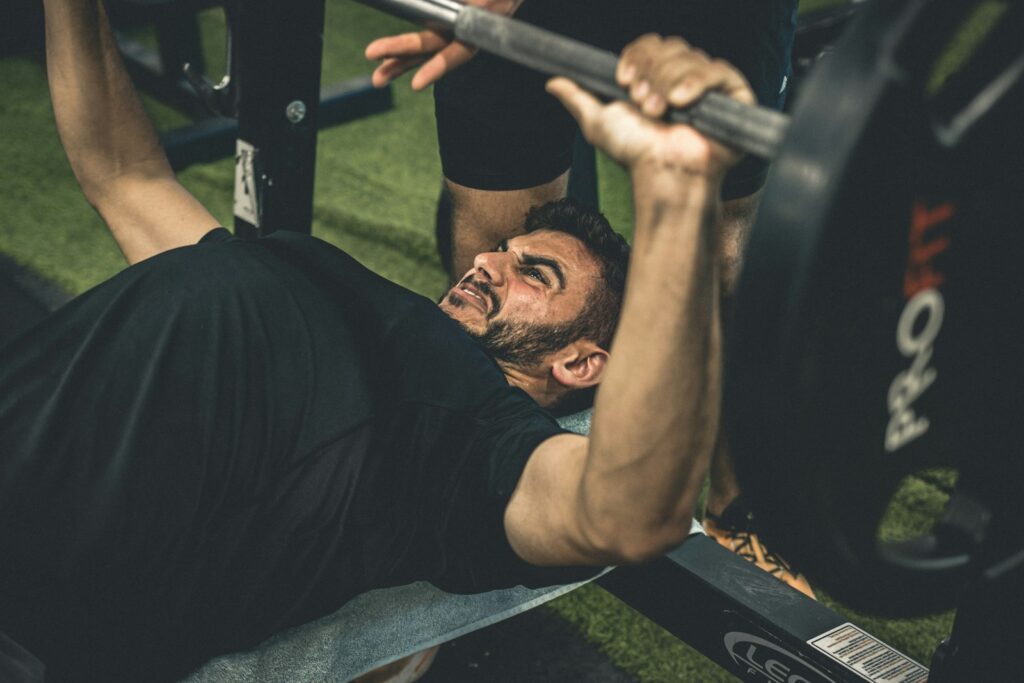
Setup
- Lie on the bench with your eyes under the bar.
- Place your feet flat on the floor and squeeze your shoulder blades together and down.
- Grip the bar a little wider than shoulder width.
- Set the safety arms in a rack, or ask someone to spot you for heavy sets.
Movement
- Lift the bar out of the rack and hold it over your shoulders with straight arms.
- Lower the bar under control to your mid chest, elbows at about 45 to 70 degrees from your body.
- Touch your chest lightly without bouncing.
- Press the bar back up and slightly back toward your shoulders.
How to Do a Dumbbell Bench Press
Setup
- Sit on the end of the bench with a dumbbell resting on each thigh.
- Lie back and use your knees to help bring the dumbbells to your chest.
- Plant your feet and squeeze your shoulder blades together and down.
Movement
- Press the dumbbells up until your arms are straight, palms facing your feet or slightly turned in.
- Lower them slowly to the sides of your chest, elbows at about 45 to 70 degrees from your body.
- Stop when you feel a good stretch across your chest without pain in your shoulders.
- Press back up, bringing the dumbbells slightly closer together at the top.
- At the end of the set, bring the dumbbells to your chest, then to your thighs as you sit up.
Common Mistakes With Both
- Flaring your elbows out to 90 degrees. This can be hard on your shoulders. Keep your elbows angled slightly toward your body.
- Bouncing the weight off your chest. Control the lowering and press from a brief touch or stretch.
- Lifting your hips off the bench. Keep your glutes on the bench and your feet on the floor.
- Loose shoulder blades. Keep them squeezed together and down to give your shoulders a stable base.
- Training heavy barbell sets alone without safety arms. Always use a rack with safety arms or a spotter.
Which Should You Choose?
- Choose the barbell if your goal is maximum pressing strength, or you want to test your bench press.
- Choose dumbbells if you train alone, your shoulders feel better with a freer path, or one side is stronger than the other.
- Choose a machine chest press if you are a beginner or want a very stable way to push hard.
A simple approach is to use the barbell as your first exercise on one chest day and dumbbells on another, or to switch between them every training block. For the upper chest, see my guide to the best incline bench angle.
Sets and Reps
These are general starting points, not fixed rules.
| Goal | Exercise | Sets and reps |
|---|---|---|
| Strength | Barbell bench press | 3 to 5 sets of 3 to 6 reps |
| Chest muscle | Barbell or dumbbell bench press | 3 to 4 sets of 6 to 12 reps |
| Beginner | Dumbbell or machine chest press | 2 to 3 sets of 8 to 12 reps |
When you can do all your reps with control, add a rep or a small amount of weight. The American College of Sports Medicine recommends adding about 2 to 10% load once you can do one or two reps more than your target on two sessions in a row.
Summary
- Dumbbell and barbell bench presses work your chest about equally.
- You can lift about 17% more with a barbell, and it is easier to add small amounts of weight.
- Dumbbells need more stability, let each arm work alone and are easier to use safely without a spotter.
- You get best at the press you train, so train the barbell if you want a bigger barbell bench.
- Most people do best using both.
Build Your Chest With a Plan
Not sure whether to bench with a barbell or dumbbells this week? 12REPS builds a strength program around your goal, schedule and equipment, and lets you swap exercises when the bench is taken.
Every exercise has a demo and a coach tutorial from me, and your log shows what you lifted last time, so you always know when to add weight.
Download 12REPS and see what you’ll get:
Sources
- Saeterbakken AH, van den Tillaar R, Fimland MS. A comparison of muscle activity and 1-RM strength of three chest-press exercises with different stability requirements. J Sports Sci. 2011;29(5):533–538.
- Saeterbakken AH, Andersen V, Behm DG, et al. Resistance-training exercises with different stability requirements: time course of task specificity. Eur J Appl Physiol. 2016;116:2247–2256.
- American College of Sports Medicine. Progression models in resistance training for healthy adults. Med Sci Sports Exerc. 2009;41(3):687–708.
Related Reading
- Push-ups vs bench press
- Best incline bench angle for upper chest
- Is the decline bench press worth it?
- Build a stronger chest: 4-exercise workout
- Seated vs standing shoulder press
I’m Will Duru, a personal trainer and the founder of 12REPS. I hold a BSc (Hons) in Sport and Exercise Science and have more than a decade of experience coaching people in strength training.
