




By Will Duru, personal trainer and founder of 12REPS.
The Short Answer
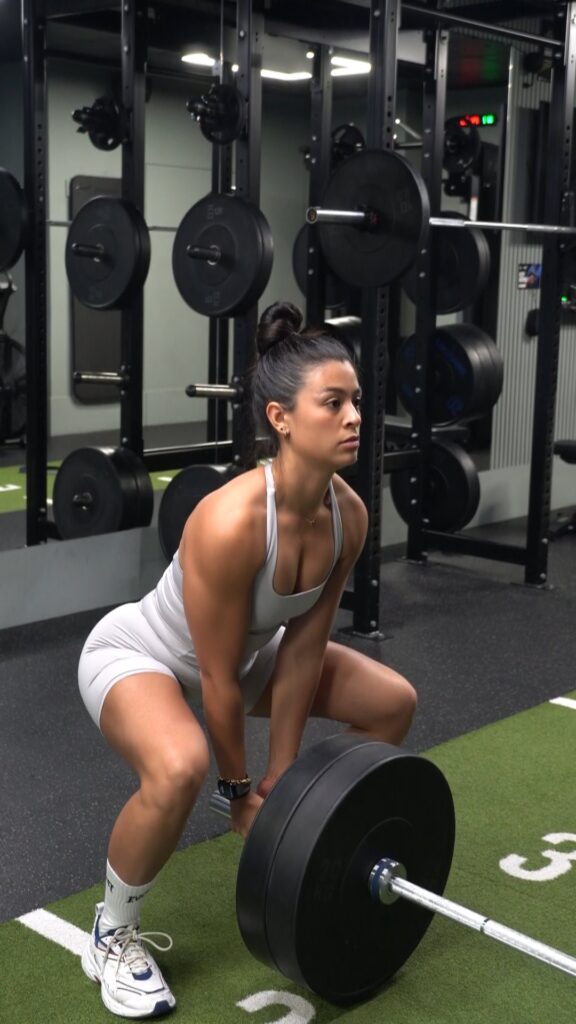
A sumo squat is a squat with a wide stance and your toes turned out. It works your quads, glutes and inner thighs (adductors), and you can do it with a kettlebell, dumbbell, landmine or barbell.
Research suggests a wider stance increases glute activity without reducing quad work. It doesn’t isolate your inner thighs as much as many people think. Sumo squats are a good option if you want more glute work, or if a wider stance feels more comfortable for your hips.
What Muscles Do Sumo Squats Work?
- Quadriceps: the front of your thighs, which straighten your knees as you stand up.
- Glutes: your main hip muscles, which drive your hips forward.
- Adductors: the inner thigh muscles, which help control your knees and hips in a wide stance.
- Hamstrings: the back of your thighs, which help extend your hips.
- Core and back: keep your torso upright and steady.
What the Research Says About Wide-Stance Squats
- More glute activity with a wider stance. A 2009 study by Paoli and colleagues tested six trained men squatting with three stance widths and three loads. With 70% of their one-rep max, the widest stance (about twice hip width) produced roughly 40% more gluteus maximus activity than a hip-width stance.
- Quads and hamstrings stayed the same. In the same study, stance width didn’t change activity in the quads, hamstrings or the adductor magnus (one of the inner thigh muscles). Every muscle worked harder as the weight increased.
- Quads unaffected in another study. A 1999 study by McCaw and Melrose tested stances from 75% to 140% of shoulder width. Stance width didn’t change quad activity, but it did affect the inner thigh and glute muscles.
Both studies measured muscle activity with sensors on the skin (electromyography, or EMG) and were small. Higher activity doesn’t guarantee more growth. The main takeaway: a sumo stance shifts a little more work to your glutes, and load matters more than foot position for overall muscle work.
How to Do a Kettlebell Sumo Squat
- Set your stance. Stand with your feet wider than your shoulders and your toes turned out about 30 to 45 degrees.
- Hold the weight. Hold a kettlebell or dumbbell with both hands, letting it hang between your legs, or hold it at your chest.
- Brace. Take a breath, tighten your midsection and keep your chest up.
- Squat down. Bend your knees and hips together. Push your knees out so they stay in line with your toes.
- Go as deep as you can control. Aim for your thighs to reach about parallel to the floor, keeping your back flat.
- Stand up. Push through your whole foot and squeeze your glutes at the top.
Sumo Squat Variations
| Variation | How it works | Best for |
|---|---|---|
| Kettlebell or dumbbell | Hold the weight between your legs | Beginners and home workouts |
| Goblet sumo squat | Hold the weight at your chest | Keeping your torso upright |
| Landmine sumo squat | Hold the end of a barbell anchored in a landmine | Heavier loads with a guided path |
| Elevated sumo squat | Stand on two plates or low boxes | A deeper range of motion |
| Barbell sumo squat | Bar on your upper back, wide stance | Experienced lifters |
The landmine version lets you load more weight while the bar follows a fixed arc:
Sumo Squat vs Regular Squat
| Sumo squat | Regular squat | |
|---|---|---|
| Stance | Wide, toes turned out | About shoulder width |
| Glute activity | Higher in research | Lower |
| Quad activity | Similar | Similar |
| Torso | More upright | Leans forward a little more |
| Equipment | Kettlebell, dumbbell, landmine, barbell | Usually barbell or goblet |
For a full guide to the standard squat, see how to squat properly and how to do a goblet squat.
Common Mistakes
- Knees caving in. Push your knees out so they track over your toes.
- Stance too wide. If you can’t squat to about parallel or your knees cave, bring your feet in a little.
- Toes and knees pointing different ways. Turn your toes out to match the direction your knees bend.
- Leaning forward. Keep your chest up and your weight over the middle of your feet.
- Cutting the depth short. Use a weight you can control through a full range. See how deep should you squat.
How to Add Sumo Squats to Your Program
- Sets and reps: 3 sets of 8 to 12 reps works well for most people.
- Placement: use it as your main squat on a lighter day, or as a second leg exercise after back squats or leg presses.
- Pair it: combine it with lateral lunges for more inner thigh and hip work, or with the best glute medius exercises.
- Progress: add weight once you can do all your reps with good form and full depth.
Warm up first with lighter sets. See my 3-phase warm-up guide.
Summary
- A sumo squat uses a wide stance with your toes turned out.
- It works your quads, glutes and inner thighs.
- Research suggests a wide stance increases glute activity without reducing quad work.
- Push your knees out over your toes and squat to a depth you can control.
- Start with a kettlebell or dumbbell, then progress to a landmine or barbell.
Plan Your Leg Day With 12REPS
Want sumo squats in a plan that fits your week? In 12REPS, tap the leg muscles you want to train, pick your workout time and equipment, and the app builds your session.
Every exercise has a demo and a coach tutorial from me, and your log shows what you lifted last time, so you know when to add weight.
Download 12REPS and see what you’ll get:
Sources
- Paoli A, Marcolin G, Petrone N. The effect of stance width on the electromyographical activity of eight superficial thigh muscles during back squat with different bar loads. J Strength Cond Res. 2009;23(1):246–250.
- McCaw ST, Melrose DR. Stance width and bar load effects on leg muscle activity during the parallel squat. Med Sci Sports Exerc. 1999;31:428–436.
Related Reading
- How to squat properly
- How to do a goblet squat
- How deep should you squat?
- Sumo vs conventional deadlift
- Lateral lunges
I’m Will Duru, a personal trainer and the founder of 12REPS. I hold a BSc (Hons) in Sport and Exercise Science and have more than a decade of experience coaching people in strength training.
