
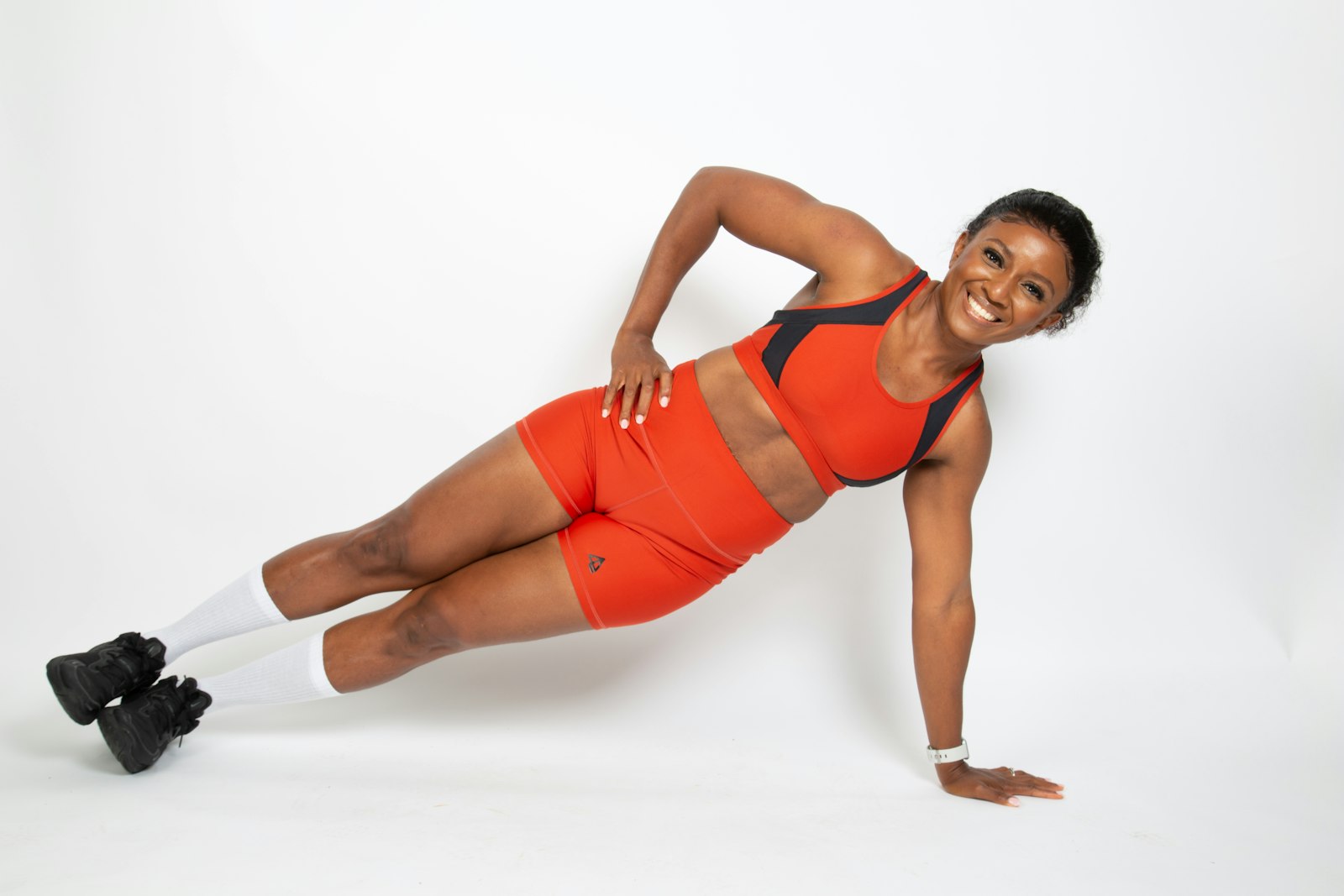



The short answer: the glute medius is the muscle on the side of your hip. It lifts your leg out to the side and keeps your pelvis level when you stand on one leg. Research shows the exercises that work it hardest are the side plank with a leg lift, single-leg squats and side-lying hip raises. Clamshells and band walks work it too, but less. A good plan uses one or two harder exercises, such as side planks and single-leg squats, plus a band exercise for extra volume.
This guide is for anyone who wants stronger hips, better balance on one leg or more developed glutes. I’ll cover what the glute medius does, what the research shows, the best exercises with demo videos, common mistakes and how to put them into your week.
What does the glute medius do?
- Moves your leg out to the side. This is called hip abduction.
- Keeps your pelvis level. When you walk, run or stand on one leg, your glute medius stops the opposite hip from dropping.
- Controls your knee. A strong glute medius helps stop your knee caving inward when you squat, lunge or land.
It sits partly under the larger gluteus maximus and works closely with the smaller gluteus minimus.
What the research says
Two well-known studies measured glute medius activity across many common exercises, using EMG as a percentage of each person’s maximum effort (%MVIC).
- A 2011 study of 26 healthy adults tested 18 exercises. The highest glute medius activity came from a side plank with the top leg lifted (103% with the working leg on the bottom, 89% with it on top), the single-leg squat (82%), an advanced clamshell variation (77%) and a front plank with one leg lifted (75%).
- A 2009 study of 21 active adults tested 12 exercises. Side-lying hip abduction produced the most glute medius activity (81%), followed by the single-leg squat (64%) and single-leg deadlift (59%). Basic clamshells were lower, at around 38–40%.
Both studies measured muscle activity in single sessions, not strength or growth over time. Still, they agree that single-leg exercises and side-lying hip raises work the glute medius harder than basic clamshells. The exercise order and programming below are based on that research and my coaching experience.
The best glute medius exercises
| Exercise | Glute medius activity in research | Equipment |
|---|---|---|
| Side plank with leg lift | 89–103% | None |
| Single-leg squat | 64–82% | None or a box |
| Side-lying hip abduction | 81% | None or ankle weight |
| Single-leg deadlift | 59% | Dumbbell or kettlebell optional |
| Clamshell | 38–40% basic, up to 77% advanced | Mini band |
| Band walks and cable hip abduction | Not measured in these two studies | Mini band or cable |
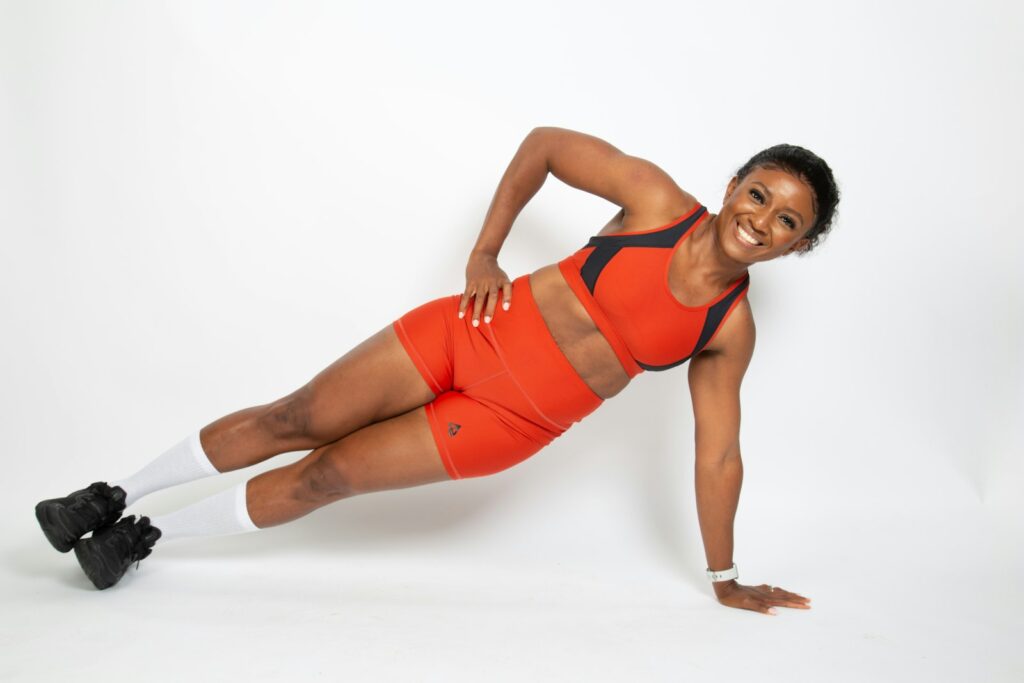
1. Side plank with leg lift
- Lie on your side with your elbow under your shoulder and your legs stacked.
- Lift your hips so your body forms a straight line from head to feet.
- Once you can hold a solid side plank, lift your top leg a few inches and lower it with control.
Start with the plain side plank shown in the demo. Holds of 20–30 seconds are a good first goal before adding the leg lift.
2. Single-leg box squat
- Stand on one leg in front of a box or bench.
- Sit back slowly until you lightly touch the box, keeping your knee in line with your toes.
- Stand back up without pushing off with the other foot.
Use a higher box to make it easier. Watch your knee: if it caves in, your glute medius is losing the battle.
3. Side-lying hip abduction
- Lie on your side with your bottom knee bent for balance and your top leg straight.
- Turn your top toes slightly down toward the floor and keep your hips stacked.
- Lift your top leg about 12 inches, slightly behind your body, then lower it slowly.
Keep the movement small and controlled. If you feel it mostly in the front of your hip, move your leg further back.
4. Mini band clamshell
- Lie on your side with your knees bent and a mini band just above your knees.
- Keep your feet together and your hips stacked.
- Lift your top knee as far as you can without rolling your hips back, then lower slowly.
Clamshells are a good warm-up or beginner exercise. To make them harder, lift your feet off the floor so you’re also squeezing the side of your hip.
5. Mini band crab walk
Place a mini band around your legs, sit into a quarter squat and take small steps sideways without letting your feet come together. It’s a popular warm-up, though the two studies above didn’t measure glute medius activity for it. You can also try the cable lateral kick or the seated band abduction for extra volume.
Common mistakes and how to fix them
| Mistake | Why it matters | Fix |
|---|---|---|
| Rolling your hips back in side-lying exercises | Your hip flexors and lower back take over | Keep your hips stacked and move only your leg |
| Lifting your leg too high | Your waist muscles take over, not your glute | Lift only as high as you can without tilting your pelvis |
| Letting your knee cave in on single-leg work | Takes load off the glute medius and stresses the knee | Push your knee slightly out over your toes |
| Rushing band exercises | Momentum does the work | Use slow, controlled reps with a short pause |
| Only doing band exercises | You miss the harder, more effective options | Include side planks or single-leg squats as well |
How to program glute medius exercises
These are starting points I use with most people.
| Exercise type | Sets | Reps or time | When |
|---|---|---|---|
| Side plank with leg lift | 2–3 | 20–40 seconds or 8–12 lifts per side | Any lower-body or core day |
| Single-leg squat or deadlift | 2–3 | 6–10 per leg | Early in your lower-body session |
| Band or side-lying exercises | 2–3 | 12–20 per side | Warm-up or end of session |
Two or three sessions a week is plenty for most people. Add load or difficulty over time, just as you would for any other muscle. If you have hip, knee or back pain, a physical therapist can tailor these exercises to you.
Summary
- The glute medius lifts your leg to the side and keeps your pelvis level on one leg.
- Side planks with a leg lift, single-leg squats and side-lying hip raises produced the highest activity in research.
- Basic clamshells and band walks work it less, so use them as warm-ups or extra volume.
- Keep your hips stacked and your knee in line with your toes.
- Combine one harder exercise with one band exercise, two or three times a week.
Train your glutes with a clear plan
Strong hips come from steady training, not random exercises. That’s where 12REPS helps.
12REPS gives you trainer-built programs with two demo videos for every exercise, including the side plank, single-leg box squat, clamshell and crab walk. The gym log tracks your sets and reps, Build Your Routine lets you add glute medius work to your own week, and the built-in timer handles your side plank holds and rest periods. Every new account starts with a 7-day free trial.
Download 12REPS and see what you’ll get:
Sources
- Boren K, Conrey C, Le Coguic J, Paprocki L, Voight M, Robinson TK. Electromyographic analysis of gluteus medius and gluteus maximus during rehabilitation exercises. International Journal of Sports Physical Therapy. 2011;6(3):206–223.
- Distefano LJ, Blackburn JT, Marshall SW, Padua DA. Gluteal muscle activation during common therapeutic exercises. Journal of Orthopaedic & Sports Physical Therapy. 2009;39(7):532–540.
Related reading
- How to Build Rounder Glutes: The Science of Glute Training for Women
- Glute Bridge vs Hip Thrust: Differences and Which Is Better for Your Glutes
- Glute Strength Training for Women: A Lower Body Gym Plan
- How to Do a Plank Properly
I’m Will Duru, a personal trainer and the founder of 12REPS. I hold a BSc (Hons) in Sport and Exercise Science and have more than a decade of experience coaching people in strength training. This article is for general education and isn’t medical advice.
