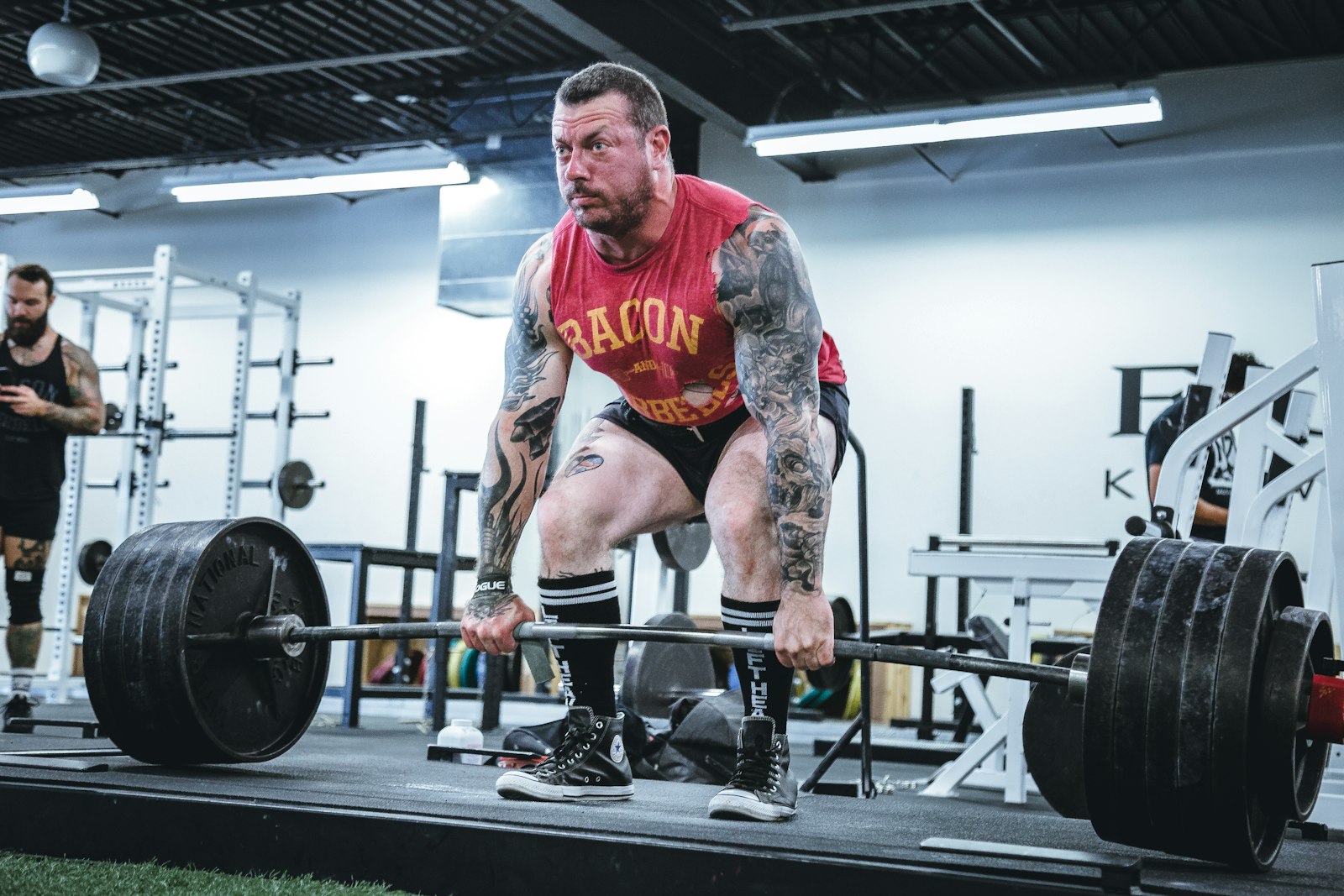
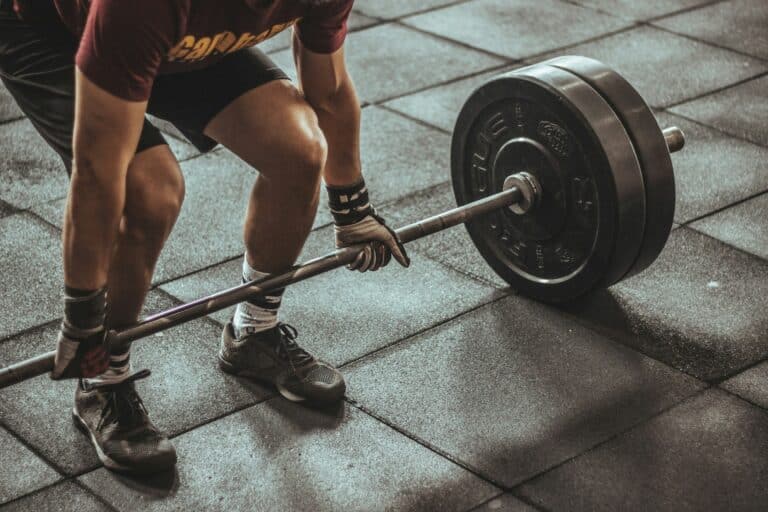


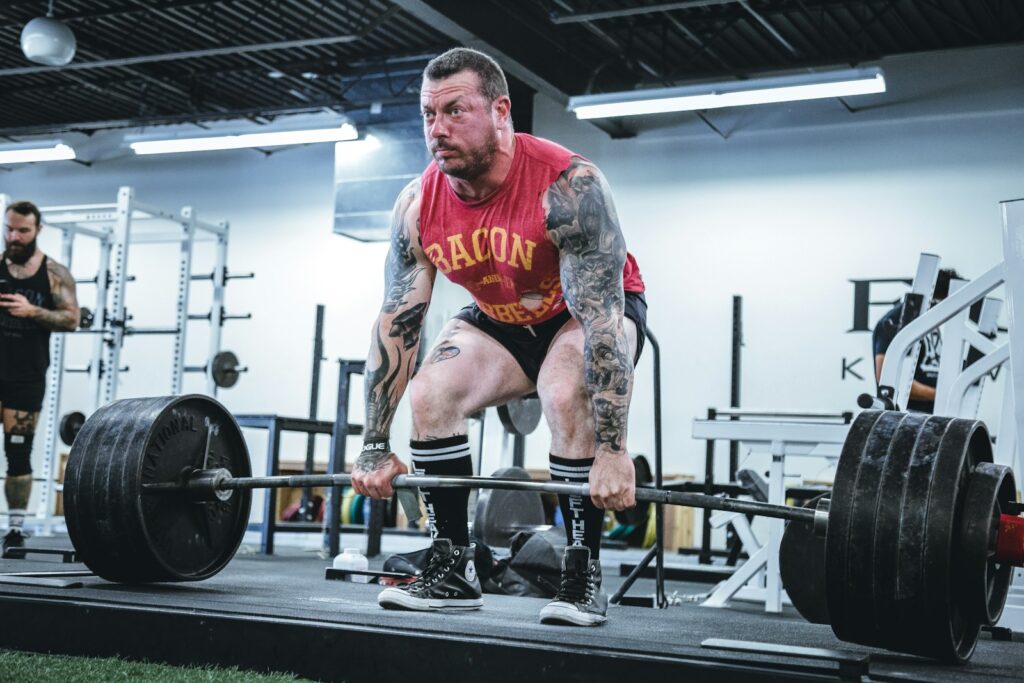
Quick answer: In a conventional deadlift, your feet are about hip-width apart and your hands grip the bar outside your knees. In a sumo deadlift, your feet are wide, your toes point out and your hands grip the bar inside your knees. Sumo keeps your torso more upright, shortens the distance the bar travels and works your quads a little more. Conventional has you lean further forward and works your hamstrings, glutes and lower back through a longer pull. Neither is better for everyone. Choose the one that fits your body and your goal.
This guide is for you if you’re choosing a deadlift style, or if one style never feels right. You’ll see how the two compare, what the research says, how to do each one and how to choose.
Sumo vs conventional deadlift: the differences
| Conventional deadlift | Sumo deadlift | |
|---|---|---|
| Stance | About hip-width | Wide, toes turned out |
| Grip | Outside your knees | Inside your knees |
| Torso | Leans further forward | More upright |
| Bar travel | Longer | Shorter |
| Works more | Hamstrings, glutes, lower back, calves | Quads, inner thighs (adductors), glutes |
| Lower-back load | A little higher | A little lower |
| Hip mobility needed | Less | More |
What the research says
- Sumo is more upright and shorter. In 24 powerlifters at a national championship, sumo lifters had a more upright torso. In the conventional deadlift, the bar traveled further and the lift took about 25% to 40% more mechanical work (Escamilla et al., 2000).
- Sumo works the quads more. In 13 college football players, sumo deadlifts produced more activity in the inner and outer quads and the shin muscle. Conventional deadlifts produced more calf activity. The authors said lifters can choose either style, depending on which muscles they want to train (Escamilla et al., 2002).
- Slightly less load on the lower back. In 57 competitive powerlifters, the sumo style reduced the load on the lower spine (at L4/L5) by about 10% compared with conventional (Cholewicki et al., 1991).
The difference in back load is small. A well-done conventional deadlift is safe for most healthy people, and a badly done sumo deadlift isn’t.
Is sumo easier or cheating?
Sumo is a legal style in powerlifting, so it isn’t cheating. The shorter bar path and more upright position mean some people can lift more weight with sumo. Others lift more with conventional. Body proportions, hip mobility and practice all play a part. I’m not aware of any research that shows one style lets everyone lift more.
How to do a conventional deadlift
Setup
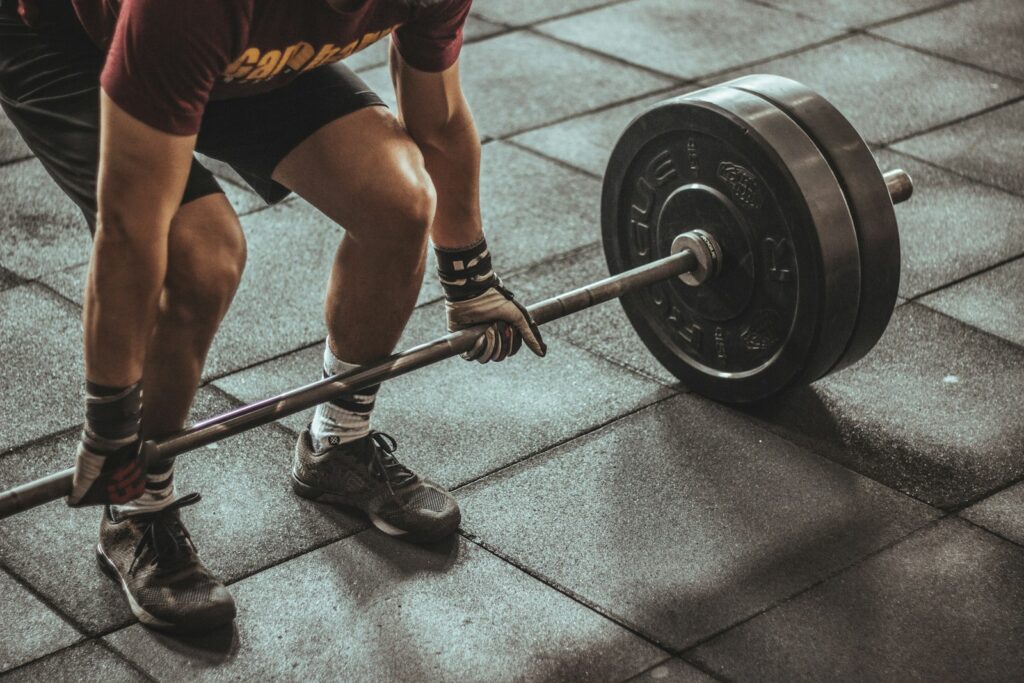
- Stand with your feet about hip-width apart and the bar over the middle of your feet.
- Hinge at your hips and grip the bar just outside your knees.
- Bend your knees until your shins touch the bar.
- Brace your stomach, pull your shoulders down and back, and take the slack out of the bar.
The movement
- Push the floor away with your legs and keep the bar close to your body.
- Once the bar passes your knees, drive your hips forward.
- Stand tall and squeeze your glutes. Don’t lean back.
- Lower the bar under control by pushing your hips back first.
Coaching cues: “Push the floor away.” “Bar stays on your legs.” “Hips and shoulders rise together.”
How to do a sumo deadlift
Setup
- Take a wide stance, about one and a half to two times shoulder-width, with your toes turned out.
- Step in so the bar is close to your shins.
- Squat down and grip the bar with your hands about shoulder-width apart, inside your knees.
- Push your knees out so they stay in line with your toes, and lift your chest.
The movement
- Brace, then push your feet “out” through the floor as you stand up.
- Keep your chest up and the bar close to your body.
- Drive your hips forward to lock out and squeeze your glutes.
- Lower under control, keeping your knees pushed out.
Coaching cues: “Spread the floor.” “Chest up.” “Knees out over your toes.”
Start with a moderate stance width. Very wide stances need a lot of hip mobility.
Common mistakes
Both styles
- Rounding your lower back. Brace hard and keep your back flat before the bar leaves the floor.
- Letting the bar drift forward. Keep it touching your legs all the way up.
- Jerking the bar. Pull the slack out first, then push.
- Leaning back at the top. Finish by standing tall, not bending backward.
Conventional
- Hips shooting up first. Your legs straighten and your back does all the work. Push with your legs from the start.
Sumo
- Knees caving in. Push them out over your toes.
- Stance too wide too soon. Start moderate and widen it as your hips allow.
- Hips too low. Sumo isn’t a squat. Set your hips just low enough to get your chest up and grip the bar.
Which one should you do?
| Your situation | My suggestion |
|---|---|
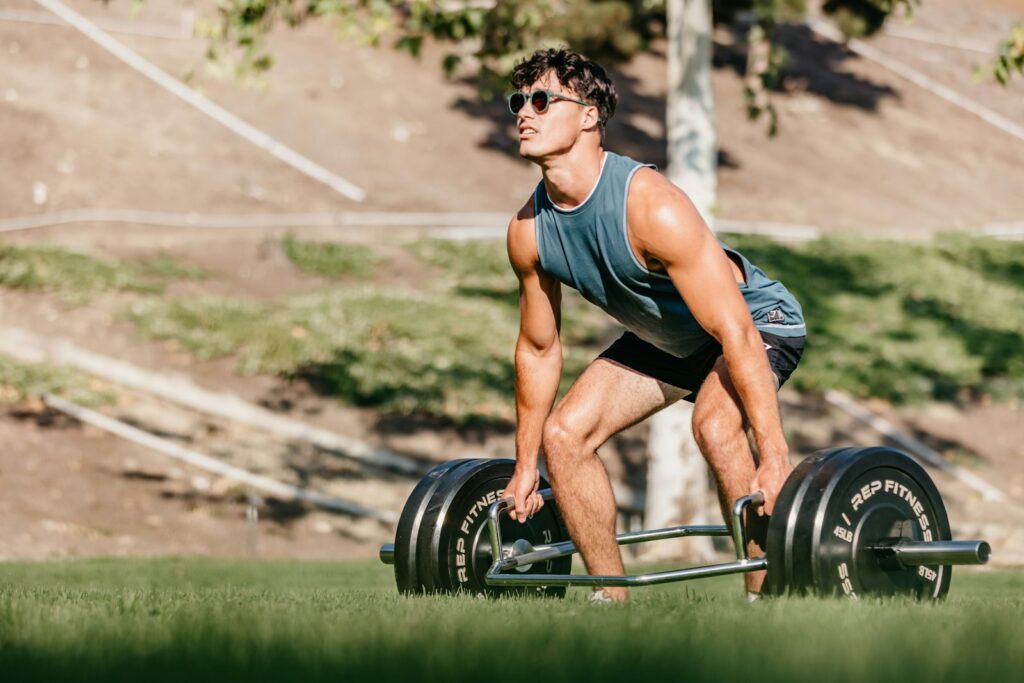
| New to deadlifts | Start with the trap bar or conventional, then try sumo |
| Want more hamstring and back work | Conventional |
| Want more quad and inner thigh work | Sumo |
| Long torso or tight hamstrings | Try sumo, which keeps you more upright |
| Stiff or sore hips in a wide stance | Conventional |
| Want both | Use one as your main lift and the other as a variation |
My advice: try both with a light weight for a few weeks. Pick the one where you can keep a flat back and push hard, and that feels better on your body. If you’re not sure, the trap bar deadlift is a great middle ground.
Sets and reps
| Goal | Sets and reps | Rest |
|---|---|---|
| Learning the lift | 3 sets of 5 with a light weight | 2 minutes |
| Strength | 3 to 5 sets of 3 to 5 | 3 to 5 minutes |
| Muscle | 3 to 4 sets of 6 to 10 | 2 to 3 minutes |
Deadlift 1 to 2 times a week. Always warm up with a few lighter sets first. Add a little weight when every rep looks the same as the first. That’s progressive overload.
Summary
- Conventional: hip-width stance, hands outside your knees, more forward lean.
- Sumo: wide stance, hands inside your knees, more upright torso and a shorter pull.
- Sumo works your quads more. Conventional works your hamstrings, glutes and lower back through a longer pull.
- Sumo puts about 10% less load on your lower back in research, but good form matters more than style.
- Neither is cheating, and neither is best for everyone. Try both and choose the one that fits you.
Get a deadlift plan that fits you
Whichever style you choose, steady progress is what makes you stronger. 12REPS gives you trainer-built programs with two demo videos for every exercise, and a gym log that shows what you lifted last time, so you know exactly when to add weight. New users get a 7-day free trial.
Download 12REPS and see what you’ll get:
Sources
- Escamilla RF et al. A three-dimensional biomechanical analysis of sumo and conventional style deadlifts. Med Sci Sports Exerc, 2000
- Escamilla RF et al. An electromyographic analysis of sumo and conventional style deadlifts. Med Sci Sports Exerc, 2002
- Cholewicki J et al. Lumbar spine loads during the lifting of extremely heavy weights. Med Sci Sports Exerc, 1991
Related reading
- How to deadlift properly: the complete guide for women
- How to do a trap bar deadlift
- Romanian deadlift (RDL) form guide
- Strength training for back pain
- How to get stronger
- The beginner’s guide to progressive overload
I’m Will Duru, a personal trainer and the founder of 12REPS. I hold a BSc (Hons) in Sport and Exercise Science and have more than a decade of experience coaching people in strength training.